Stanbic Bank
Stanbic Bank
20 C
Kampala
Stanbic Bank
Stanbic Bank
Home Blog Page 990

Museveni declares 29th August a public holiday

MUSEVENI

President Yoweri Museveni has declared Saturday, 29th August 2020, a day of National Prayers and a Public Holiday.

According to Museveni, a certain Ugandan went and told him that God had told him in a vision that he should organise National Prayers, scientifically organised, for God to deliver us from COVID 19.

“Therefore, by the powers given to the President of Uganda by Section 2(2) of the Public Holidays Act, I declare the 29th of August 2020, a day of National Prayers and a Public Holiday. Stay in your houses or Compounds and pray,” he wrote.

“I have invited a few religious leaders to come to Entebbe State House and pray together with Janet and myself when you are all watching on TV or listening on Radios,” he said

He appealed to all Ugandans to join this massive act of supplication. “Mushabe, muryaheebwa, musherure, muryazoora”, he said, adding that I remember it from our priests at Kyamate in the 1950s.

“This is in the Book of Matthew chapter 7 verse 7. In English it says: Ask, and it will be given to you; seek, and you will find; knock, and it will be opened to you.”

Stories Continues after ad

Gen Tumukunde petitions High Court, wants police summons quashed

Gen. Tumukunde.

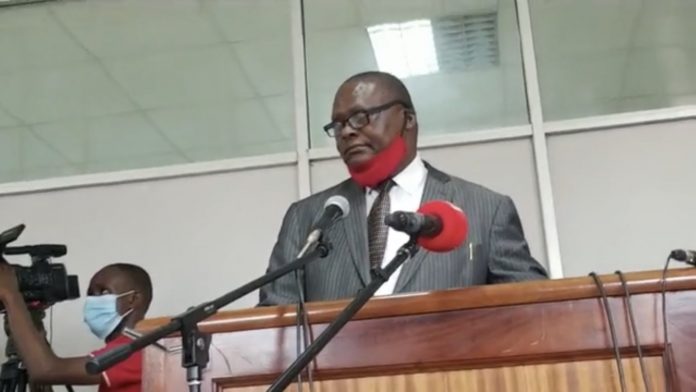
Former spy master and Security Minister Lt. Gen. Henry Tumukunde has petitioned the High Court Civil Division to quash the police summons directing him to appear before the Criminal Investigations Directorate (CID) in Kibuli.

Last week, the Directorate of Criminal Investigation Grace Akullo, summoned Gen Tumukunde over allegations that the retired spy master has been meeting veterans.

In a letter dated August 18 addressed to Lt. Gen. Henry Tumukunde, the Directorate of Criminal Investigation says they are probing

“The Directorate of Criminal Investigations is investigating allegations to the effect that on a number of occasions at your office and residence both in Kololo and other locations within the country, you held meetings with army veterans discussing issues related to politics. Your actions if true contravenes the section of the 1995 constitution and the UPDF Act.” reads CID Grace Akullo’s letter dated August 18 addressed to Lt. Gen. Henry Tumukunde.

Tumukunde worries that upon being summoned, he sent one of his lawyers, Roberts Kagoro to establish why he was summoned. To his dismay the lawyer was told to attend a meeting involving Uganda peoples Defence forces (UPDF).

Through his lawyers led by Anthony Wameli, the 1986 bush war Gen wonders whether he appears as a witness or suspect. He contends that he is a civilian having retired from the army and wants the court to restrain the respondents from interfering with the presidential aspirants activities.

He also wants the government of Uganda and security agencies to be fined with Shs 70million for interfering his political activities in a democratic state with multiparty political dispensation.

Stories Continues after ad

Covid-19: WFP reduces food and cash transfers for refugees in East Africa

wfp

Serious hunger and malnutrition loom for millions of refugees across Eastern Africa who depend on assistance from the United Nations World Food Programme (WFP) to survive, as the socio-economic impact of the COVID-19 pandemic reduces vital funding from donors.

WFP has already been forced to reduce food or cash transfers by between 10 to 30 percent for over 2.7 million refugees in Ethiopia, Uganda, Kenya, South Sudan, and Djibouti. WFP will be forced to cut deeper in the coming months unless urgent additional funding is received in time.

“Refugees are especially vulnerable to the spread of COVID-19 because they are crowded together in camps with weak or inadequate shelter, health services and access to clean water and sanitation,” said WFP Eastern Africa Regional Director Michael Dunford.

Refugees are also affected both by the wider socio-economic impact of the pandemic as well as by the disease itself. The most vulnerable women, children and elderly are increasingly at risk of becoming malnourished, which can in turn impact their immune systems and increase their risk of being infected by disease, a tragic vicious cycle in the midst of a pandemic.

“With COVID yet to peak in East Africa, we cannot turn our backs on people forced to flee and stuck in remote camps,” Dunford added. “Many have already lost the few opportunities to earn money due to the economic downturn caused by COVID-19 restrictions.”

WFP requires US$ 323 million to assist refugees in the region over the next six months – this is 22 percent greater than during the same period a year earlier.

COVID-19 restrictions closed schools in refugee camps, meaning that children missed out on vital school meals in Ethiopia, Kenya, South Sudan, Rwanda and Uganda. In all these countries except in Rwanda, funding shortages meant that WFP was unable to provide take home rations to refugee children to help them study at home and stay nourished.

Extended school closures can lead to increased teenage pregnancies, sexual abuse, early marriage, violence at home, child labour and high school dropouts. They threaten to erode hard-won gains made over the years to improve access to quality schooling for refugees in camps.

Women and girl refugees are also at heightened risk of gender-based violence, sexual exploitation and abuse, in addition to resorting to having sex for payment in order to survive. People with disabilities and unaccompanied or separated children are the most vulnerable.

“Sadly, it is the poorest and most disadvantaged who suffer the most,” said Dunford. “But we simply cannot let this happen. COVID-19 cannot be an excuse for the world to turn its back on refugees at this terrible time.”

The situation is so serious for refugees that WFP is appealing both to traditional donors and new would-be donors, such as International Financial Institutions (IFIs), to step forward and assist refugees – precisely because their vulnerability only increased with COVID-19. Donors such as the World Bank have stepped up to support governments in the region to assist poor people living in informal settlements in urban areas after millions lost their livelihoods due to the economic downturns triggered by COVID-19 restrictions.

If WFP is forced to continue cutting rations for refugees, this could prompt refugee communities to move within host countries or even across borders as they become more desperate to meet their basic needs. Such movements could not come at a worse time  with the coronavirus spreading.

WFP lauds governments in the region for continuing to host refugees and largely keeping borders open.

Stories Continues after ad

COVID-19: Over 170 countries and multiple candidate vaccines engaged in vaccine Global Access Facility

Over 170 economies are now engaged in discussions to potentially participate in COVAX, a global initiative aimed at working with vaccine manufacturers to provide countries worldwide equitable access to safe and effective vaccines, once they are licensed and approved.

COVAX currently has the world’s largest and most diverse COVID-19 vaccine portfolio – including nine candidate vaccines, with a further nine under evaluation and conversations underway with other major producers.

COVAX, the vaccines pillar of the Access to COVID-19 Tools (ACT) Accelerator, is co-led by the Coalition for Epidemic Preparedness Innovations (CEPI), Gavi, the Vaccine Alliance, and the World Health Organization (WHO) working in partnership with developed and developing country vaccine manufacturers.

In order to be able to secure enough doses of vaccines to protect the most vulnerable populations, such as health workers and the elderly, the next step for the partnership is to confirm potential self-financing participants’ intent to participate by 31 August and to turn these into binding commitments to join the COVID-19 Vaccine Global Access Facility (COVAX Facility) by 18 September, with first upfront payments to follow thereafter, and no later than 9 October 2020.

“Equal access to a COVID-19 vaccine is the key to beating the virus and paving the way for recovery from the pandemic,” said Stefan Löfven, Prime Minister of Sweden. “This cannot be a race with a few winners, and the COVAX Facility is an important part of the solution – making sure all countries can benefit from access to the world’s largest portfolio of candidates and fair and equitable distribution of vaccine doses.”

The COVAX Facility is a Gavi-coordinated pooled procurement mechanism for new COVID-19 vaccines, through which COVAX will ensure fair and equitable access to vaccines for each participating economy, using an allocation framework currently being formulated by WHO.

The COVAX Facility will do this by pooling buying power from participating economies and providing volume guarantees across a range of promising vaccine candidates, allowing those vaccine manufacturers whose expertise is essential to large scale production of the new vaccines, to make early, at-risk investments in manufacturing capacity – providing participating countries and economies with the best chance at rapid access to doses of a successful COVID-19 vaccine.

The success of COVAX hinges not only on countries signing up to the COVAX Facility, but also filling key funding gaps for both COVAX R&D work and a mechanism to support participation of lower-income economies in the COVAX Facility.

“COVID-19 is an unprecedented global health challenge that can only be met with unprecedented cooperation between governments, researchers, manufacturers and multilateral partners,” said Dr Tedros Adhanom Ghebreyesus, Director-General of WHO. “By pooling resources and acting in solidarity through the ACT Accelerator and the COVAX Facility, we can ensure that once a vaccine is available for COVID-19, it’s available equitably to all countries.”

Governments, vaccine manufacturers (in addition to their own R&D), organizations and individuals have committed US$ 1.4 billion towards vaccine R&D so far, but an additional US$1 billion is urgently needed to continue to move the portfolio forward.

A further nine candidates vaccines which complement the current CEPI portfolio are currently being evaluated for inclusion in COVAX.  Furthermore, COVAX will consider procuring vaccines that complement the portfolio from any producer in the world; conversations are already underway with a number of additional manufacturers not receiving R&D support from CEPI to procure their vaccines if they are successful. Maximizing the portfolio of vaccines increases the probability of success as individual vaccines historically have a high failure rate.

“In the scramble for a vaccine, countries can act alone – creating a few winners, and many losers – or they can come together to participate in COVAX, an initiative which is built on enlightened self-interest but also equity, leaving no country behind,” said Richard Hatchett, CEO of CEPI.

“Only by taking a global view can we protect those most at risk around the world from the terrible effects of this disease. COVAX can deliver the vaccines that could end the pandemic, but it needs countries to step forward both to join the COVAX Facility, and also to address the serious funding shortfalls, including for R&D. The decisions that are taken now about COVID-19 vaccines have the power to change our future. We must be courageous and ambitious in striving for a multilateral solution.”

A collaboration between Serum Institute of India (SII), Gavi and the Bill & Melinda Gates Foundation announced earlier this month will ensure up to 100 million doses of AstraZeneca or Novavax’s candidate vaccines, if successful, will be available to low- and middle-income economies through the COVAX Facility at just US$ 3 per dose. The arrangement also provides an option to secure additional doses if COVAX sees a need for it. Separate agreements between Gavi, CEPI and AstraZeneca, announced in June, guarantee a further 300 million doses of their candidate vaccine, if successful, for the COVAX Facility.

In addition, in June Gavi launched the COVAX Advance Market Commitment (AMC), a financing instrument aimed at supporting the participation of 92 lower and middle income economies in the COVAX Facility. The COVAX AMC has raised more than US$ 600 million against an initial target of securing US$ 2 billion seed funding from sovereign donors as well as philanthropy and the private sector, needed by the end of 2020. Funding the COVAX AMC will be critical to ensuring ability to pay is not a barrier to accessing COVID-19 vaccines, a situation which would leave the majority of the world unprotected, with the pandemic and its impact continuing unabated.

Eighty higher-income economies, which would finance the vaccines from their own public finance budgets, have so far submitted Expressions of Interest ahead of the deadline of 31 August for confirmation of intent to participate. They will partner with 92 low- and middle-income countries that will be supported by the AMC if it meets its funding targets. Together, this group of 172 countries represents more than 70% of the world’s population. Among the group are representatives from every continent and more than half of the world’s G20 economies.

“The momentum we are witnessing behind this unprecedented global effort means there could be light at the end of the tunnel: A vaccine is our best route to ending the acute phase of the pandemic and the COVAX effort is the best way to get there,” said Dr Seth Berkley, CEO of Gavi, the Vaccine Alliance. “For higher-income countries it represents a win-win: not only will you be guaranteed access to the world’s largest portfolio of vaccines, you will also be negotiating as part of a global consortium, bringing down prices and ensuring truly global access.”

Signing up to the COVAX Facility gives each country its best chance at protecting the most vulnerable members of their populations – which in turn gives the world its best chance at mitigating the toll this pandemic has taken on individuals, communities and the global economy. To make this end-to-end vision a reality, we need countries to make end-to-end commitments: funding R&D, signing up to the Facility, and supporting the COVAX AMC.”

The COVAX Facility is coordinated by Gavi, the Vaccine Alliance, and forms a key part of COVAX – the vaccines pillar of the ACT Accelerator, a ground-breaking global collaboration involving vaccine manufacturers to accelerate the development, production, and equitable access to COVID-19 tests, treatments, and vaccines. The overall aim of COVAX is to accelerate the development and manufacture of COVID-19 vaccines, and to guarantee fair and equitable access for every country in the world. It will achieve this by sharing the risks associated with vaccine development, and where necessary investing in manufacturing upfront so vaccines can be deployed at scale as soon as they are proven to be safe and effective, and pooling procurement and purchasing power to achieve sufficient volumes to end the acute phase of the pandemic by 2021.

The goal of COVAX is by the end of 2021 to deliver two billion doses of safe, effective vaccines that have passed regulatory approval and/or WHO prequalification. These vaccines will be offered equally to all participating countries, proportional to their populations, initially prioritising healthcare workers then expanding to cover vulnerable groups, such as the elderly and those with pre-existing conditions. Further doses will then be made available based on country need, vulnerability and COVID-19 threat. The COVAX Facility will also maintain a buffer of doses for emergency and humanitarian use, including dealing with severe outbreaks before they spiral out of control.

Stories Continues after ad

Victoria University launches program to help secondary teachers during Covid-19 pandemic

Victoria University has introduced a program of partnering with secondary school teachers in Kampala to improve the education sector in the country and also help them gain financially.

The University is using a new community program called “Diversify Your Skill”.

The program will help teachers build their capacity to interact better with the society in which they live, offer guidance and counseling, community remote learning and parental guidance during this Covid-19 pandemic period.

To be able to do this, the teachers will liaise with Victoria University, enroll for the program, obtain training and then proceed to fend for themselves.

Bill Nkeeto, the Acting Vice-Chancellor Victoria University told the media that the exercise is expected to generate market information about survival mechanisms of communities, interests and learning goals of university students.

He added that this will further build the Victoria university mission of ensuring transformational education and the data will contribute to the development of market-ready graduates based on an informed point of view.

“Today we had an interaction with teachers from Kampala and near communities and the reason we invited them is that we realized that there is a gap in the light of the services they offer.

“They are in the way incapacitated, so as Victoria University that engages so much with the community trying to solve people’s problems, we felt a need for them to come we tell them about us, we see how we can work together in a number of ways”.

The program also encourages teachers to recommend students to the university, and in return, they earn a fee per recommendation.

“We also promised to facilitate their budgets time and again whenever they are going on certain activities that benefit Victoria University benefit. Every student referred and joins Victoria University; the recommender will earn a commission of Shs200,000 and Shs150,000 for bachelor’s degree and diploma programs respectively,” he said.

Stories Continues after ad

Workers MP protests Kadaga’s decision, spends night on chairs

MP Sam Lyomoki

workers’ MP Sam Lyomoki has protested Speaker of Parliament Rebecca Kadaga’s decision by sleeping on parliamentary chairs for one night.

Yesterday, Kadaga ruled that the National Social Security Fund (NSSF) Amendment Bill, 2019 will be considered in the next two weeks.

The MP was captured in a series of pictures sleeping in his suite, bags aside and without any beddings. He yesterday decided to sleep at parliament after Kadaga adjourned the plenary session abruptly after Lyomoki had staged a protest.

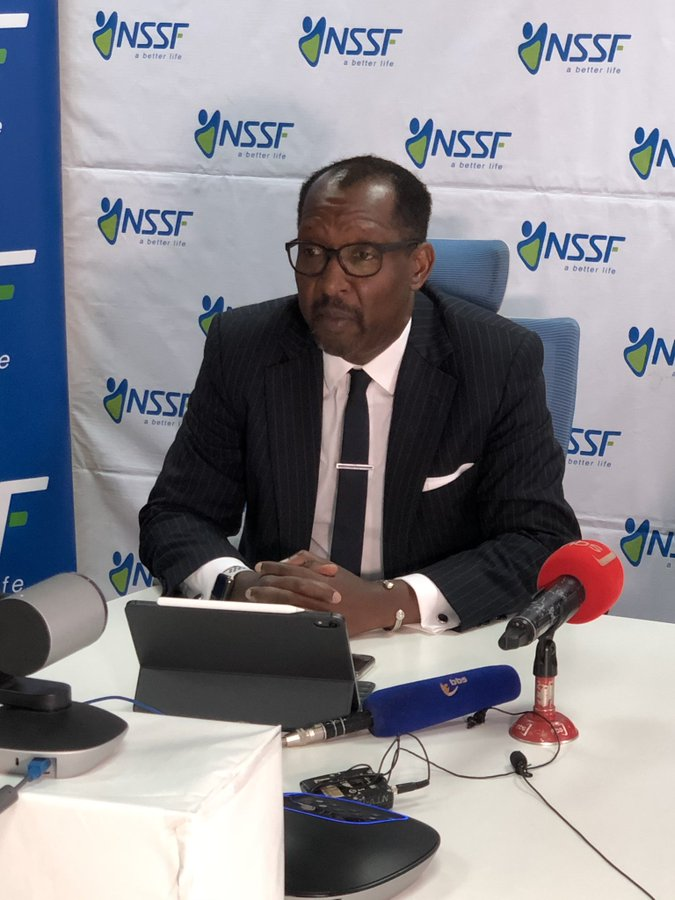
The Bill seeks to enhance the spectrum of benefits available to workers and to improve management of the NSSF. The current law was enacted in 1985 and does not adequately address emerging challenges in the management of social security in Uganda.

The movers of the bill claim that the Act in its current state does not make express provision for the representation of workers, employers and other stakeholders on the board of directors. The appointment of the Managing Director and Deputy Managing Director by the Minister without the role of the board undermines the ability of the board to supervise them.

Further, although it is in the best interest of all employees to save for retirement, the Act currently gives the Minister discretion to determine the category of employees who are eligible to contribute for their retirement.

Currently, only workers in a company that employs five or more employees are eligible to contribute for their retirement which contradicts Paragraph VII of the National Objectives of Directive Principles of State Policy under the Constitution, the ILO Convention 102 on social security and the Social Protection Policy 2015 which all call for social security coverage of all persons regardless of the number of their employees.

“The Act provides for taxation of contributions and Schreyer income which does not promote the culture of domestic long term savings that is critical for sustained economic transformation,” the movers noted.

Stories Continues after ad

Abel Kagumire appointed as new Commissioner for Customs

Abel Kagumire

Uganda Revenue Authority (URA) has appointed Abel Kagumire as its new Commissioner Customs. He replaces Dickson Kateshumbwa who resigned in May this year.

Mr. Kagumire was appointed during the URA Board of Directors their 4th 2020 Special Board Meeting held on August 26th. He has been acting in the position since May. The board made new appointments in the Senior Management Positions in departments of Customs, Corporate services and Domestic taxes.

Richard Kariisa has also been appointed the commissioner of domestic taxes and John Tinka Katungwensi has been appointed assistant commissioner in charge of large taxpayers.

Kariisa and Katungwensi are respectively replacing Henry Saka, and Silajji Kanyesigye who were averred to have been fired by the tax collection body. All the appointments assume office effective from September 1, 2020.

Since he resigned, Kateshumbwa has been campaigning to represent Sheema Municipality in Parliament.

Stories Continues after ad

ISO suspends two for allegedly campaigning for Oulanyah and Namuganza

Newly promoted Lt.Col. Emmy Katabazi.


Internal Security organisation has suspended two of their own for allegedly campaigning for Deputy Speaker Jacob Oulanyah and Junior Lands Minister Persis Namuganza who contest in the recent National Resistance Movement party elections.

Speaker Oulanyah was contesting against former Minister Sam Engola plus others for the position of Vice chairperson for Northern Region while Minister Namuganza contested against Speaker Rebecca Kadaga for the position of the Second National vice chairperson female which Kadaga won.

However, Eagle Online has learnt the two suspended officers are Capt. Arnold Katwesigye and Lt. Emmy Katabazi. Capt. Katwesigye is under the directorate of Social Economics while Lt. Katabazi is ISO’s liaison officers at Ministry of Internal Affairs on Small Arms. Eagle Online has learnt that their suspension was instigated by Minister of State for Finance David Bahati who brought it to the attention of Col. Kaka Bagyenda.

“Hon David Bahati informed DG-ISO that Capt. Arnold Katwesigye  and Lt. Emmy Katabazi mobilized NRM delegates in Kigezi to vote for Rt.Hon. Jacob Oulanyah and Hon. Namuganza.” said a source.

Stories Continues after ad

Tito Okello signs for Gor Mahia

tito okello

Kenyan giants Gor Mahia FC have confirmed the signing of striker Tito Okello from Vipers SC.

The forward has signed for the Kenyan champions from Ugandan Premier League (UPL) champions agreeing a two-year contract.

Tito’s contract with the Venoms expired, and the player jumped on the chance to play for Gor Mahia.

“I would like to thank the club’s President Lawrence Mulindwa, the management, and the technical staff and above all the fans of Vipers for the great love, care and respect rendered to me during my two years at St. Marys Kitende. I wish the club all the best in the Caf Champions League and the UPL next season.” Okello took to his social media pages to thank Vipers.

He joins a long list of Ugandan players to play for Gor Mahia. Players ranging from the Godfrey Walusimbi, Daniel Muzeyi Sserunkuma, Khalid Aucho, Shafiq Batambuze, Erisa Ssekisambu, Hashim Ssempala to Juma Balinya among others.

Gor Mahia will represent Kenya at the CAF Champions League.

Stories Continues after ad

#Covid-19:KISU offers 50% discount on fees bursaries

KISU


Kampala International School (KISU) is offering high-end bursaries to students as a special offer to alleviate the effects of #Covid-19.

Learners from all classes will benefit from the offer,with all classes fully open and operational. The school has reduced its fees to 50 per cent for new entrants.

All classes will be offered Online and will be fully operational and available to all students.

The offer of bursaries to Ugandan students comes as the #Covid-19 pandemic continues to wreck havoc in the education sector.

“KISU is offering big bursaries to Ugandans and residents  this #Covid-19 period as Covid special. All classes are online and fully operational”

KISU is number one international school which is owned by city tycoon Sudhir Ruparelia. KISU is looted in Bukoto, a suburb of Kampala and has over 600 students from all nationalities across the globe. It is built on 14 acres of land and it has all the best facilities associated with schools on international standards.

KISU curricula combines the structure, rigour and transferability of the English National Curriculum with the broad, holistic and constructive approach of the International Baccalaureate (IB).

The offer of bursaries by Kampala International School will therefore come as a welcome relief for both distressed parents and students.

Stories Continues after ad