The Electoral Commission Strategic Plan (2022/23-2026/27) seeks to consolidate the conduct of free, fair and credible elections, and promotion of good governance and security before, during and after elections.
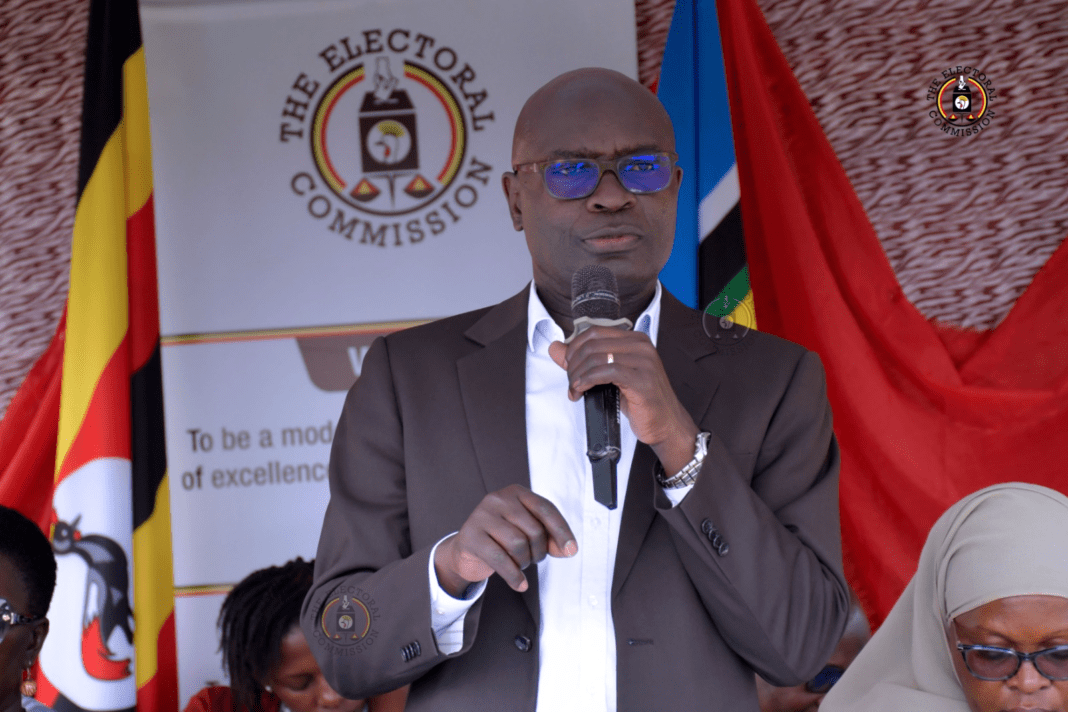
In the Electoral Commission Annual report 2024, Justice Byabakama Mugenyi Simon, Chairperson EC said that the plan will help the Commission in improving performance in respect of its mandate over the next five years.

Byabakama said that the preparation of the Electoral Commission Strategic Plan (2022/23 – 2026/27) provided an opportunity for the Commission to design programmes, strategies and actions for continuous improvement in the management of elections, noting, “This Strategic Plan runs from FY 2022/23 – 2026/2027 and will guide the conduct and administration of the 2025/2026 General Election.”
“This Strategic Plan seeks to build on the successes of the preceding plan to consolidate the conduct of free, fair and credible elections, and promotion of good governance and security before, during and after elections. The plan will help the Commission in improving performance in respect of its mandate over the next five years,” Byabakama said.
Byabakama called upon all stakeholders to support the implementation of this Strategic Plan.

“The vision of EC is to be a model institution and centre of excellence in election management. This Strategic Plan is aligned to National Development Plan III in content and to the Governance and Security Programme Implementation Action Plans (GSP-PIAPs),” he said.
The process of developing this Strategic Plan involved a comprehensive review of the previous plan, election reports, recommendations from observers and courts, extensive engagement with staff of the Commission, as well as stakeholders’ validation engagements.
A review of the EC Strategic Plan (2015/2016 – 2021/2022) indicated improved services and performance in management of elections, voter participation, inclusive stakeholders’ outreaches, political party activities, deployment of innovative tools and systems, as well as improvement in delivery of election materials.
Byakama said, “There are, however, certain noticeable constraints and challenges, including inadequate office and storage space, late enactment of enabling laws, failure to adhere to the deadline for creation of Administrative Units, the Covid-19 pandemic, voter apathy resulting into low turn up, inadequate and late release of funds, inadequate tools and equipment for mobilizing citizens to participate in elections, and misinformation by some sections of the public on electoral activities.”
He added that during the implementation of the Strategic Plan, the quality of internal and external communication will be improved by enhancing coordination among the directorates and departments of the Commission and between the Headquarters, Regions and District/City Offices, as well as between EC and other stakeholders in the electoral process.
“Special attention will be given to the deployment and use of ICT and new media platforms in the entire electoral process for efficiency and effectiveness. The Commission will strengthen digitization, research and development in order to innovate and develop projects. A key step towards building trust and ensuring effectiveness, credibility and accountability of the Strategic Plan, is the development of a Monitoring and Evaluation (M&E) Framework and System,” he revealed.
This will be accomplished through routine data collection, surveys, progress monitoring, management reviews, stakeholder meetings and annual, midterm and end term reviews.
The Strategic Plan contributes towards transforming the country from a peasant to a modern and prosperous society within a period of 30 years and achieving the overall national development goal of increased Household Incomes and Improved Quality of Life of Ugandans by 2040, as articulated in the Uganda Vision 2040.
“Over the next five years, EC shall ensure that citizens and stakeholders are adequately empowered to actively participate in governance and democratic processes,” Byabakama cited.