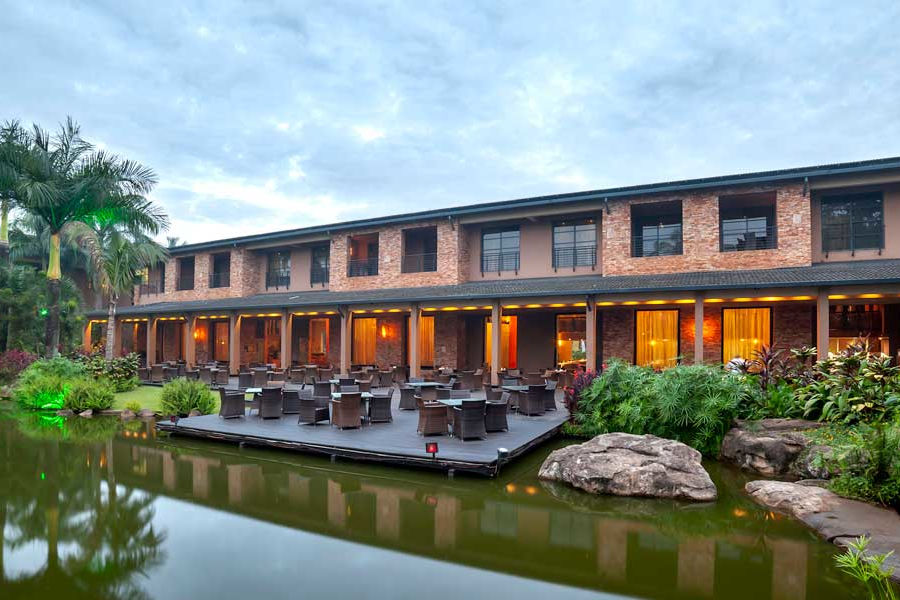
Uganda’s hospitality sector, long seen as a key driver of economic growth and tourism, is facing mounting challenges despite its immense potential.
With the country gearing up to host major continental events like the African Nations Championship (CHAN) and the 2027 Africa Cup of Nations (AFCON), experts warn that the nation’s hotel industry is not ready, largely due to excessive taxation, uneven infrastructure development, and financing bottlenecks.

The Uganda Hotel Owners Association (UHOA) has raised alarm over what it describes as one of the most burdensome tax regimes in the region.
According to UHOA Chief Executive Officer Jean Byamugisha, hoteliers are currently subjected to 26 different taxes and licenses, pushing operational costs high and making Ugandan hotels less competitive than those in neighboring countries like Kenya and Tanzania.
“Hoteliers are paying 26 different types of taxes and licenses. This is one of the reasons that makes our hotels in Uganda more expensive than those in neighboring regional countries,” said Ms. Byamugisha.

She added, “This necessitates a review of the amendment of the hotel tax regime in Uganda so that we can have all these taxes consolidated.”
Uganda is endowed with tourism assets from national parks teeming with wildlife to the Source of the Nile, but growth in the hospitality sector remains uneven. While Kampala alone hosts over 1,200 hotels, many upcountry regions remain underdeveloped and underserved. Basic graded accommodation is often missing in regional tourism hubs, straining their ability to cater to surging demand.
The Tourism Marketing Master Plan lists 3,850 hotels across Uganda, with the bulk concentrated in Kampala. However, data from the Uganda Bureau of Statistics (Ubos) puts the number at approximately 6,000. UHOA, however, considers the official master plan figure more reflective of the true hotel landscape.
“We use the Ministry of Tourism’s marketing master plan numbers because it captures the real essence of what a hotel is,” Ms. Byamugisha explained, adding, “Among the 3,850 hotels, the majority are in Kampala.”
Despite having a few five-star hotels, mainly in the capital, Uganda’s capacity to host large-scale international events is being questioned. According to the Uganda Investment Authority (UIA), the country faces a three-million-room deficit, and the UHOA estimates Uganda needs at least 10,000 additional hotel rooms to meet international requirements for CHAN and AFCON.
“Credit is another bottleneck. Many hotel owners operate on tight budgets and lack financing to upgrade or expand in time for upcoming tourism booms or international events,” added Ms. Byamugisha.
As a result, many domestic and budget-conscious travelers, including football fans and conference attendees, are turning to one- or two-star hotels, ungraded homestays, and Airbnbs, many of which are informal and ill-equipped to meet global standards.
A 2021 UHOA survey reported 6,291 hotels, 97,511 rooms, and 103,261 beds across Uganda. The UIA further revealed that 90 percent of accommodation facilities are privately owned, with Ugandans holding the majority stake.
To address the crisis, UHOA is advocating for tax consolidation and a more investor-friendly environment, warning that without urgent reforms and targeted investment, Uganda risks missing out on the economic windfall associated with hosting international events.
As the countdown to CHAN and AFCON begins, the government faces mounting pressure to act swiftly not only to bolster the country’s reputation but to safeguard the long-term viability of its tourism and hospitality sectors.