Uganda’s Finance Minister Matia Kasaija has lauded Africa’s collective commitment to placing climate-responsive economic transformation at the heart of the continent’s development agenda.
Kasaija, who also serves as Chair of the Global Coalition of Finance Ministers for Climate Action, said the newly launched Pan-African Finance Ministers Forum for Climate Action will allow African leaders to speak with one voice, rooted in the continent’s priorities and realities.

The forum will promote peer-to-peer learning, strengthen institutional capacities and integrate climate risk and adaptation strategies into economic planning while leveraging green growth opportunities.
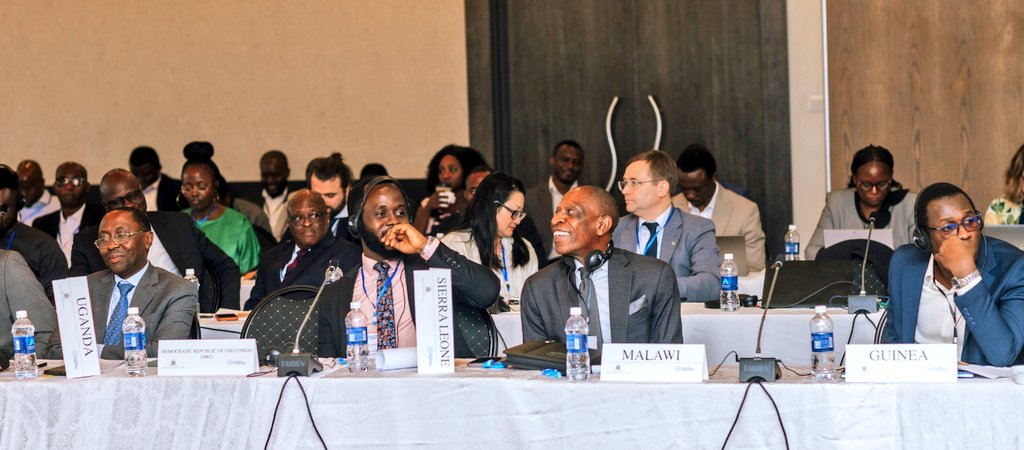
The minister’s remarks were delivered on his behalf by Dr. Albert Musisi, Commissioner for Macro-Economic Policy at Uganda’s Ministry of Finance, Planning and Economic Development during the opening of the second meeting of African Ministers of Finance in Lusaka, Zambia.
“The forum will enable finance ministries to embed climate action into public finance management, align national budgets with the Paris Agreement, promote carbon pricing, mobilize private finance, and share best practices for building low-carbon and resilient economies,” Kasaija said.

He added, “We see climate action as a catalyst for economic transformation, job creation, food security enhancement, expanded clean energy access, and protection of the natural assets on which our communities depend. This meeting is therefore timely and urgent for ministries of finance to use their fiscal power to shape macroeconomic, fiscal, and financial strategies that allow Africa to thrive.”
Dr. Sam Mugume Koojo, technical coordinator at Uganda’s Secretariat, highlighted that several African countries have already made progress in green budgeting, climate tagging and the establishment of climate finance units, green bonds, and other innovative financing instruments.
Zambia’s Accountant General, Nsandi Manza, who represented the Zambian Finance Minister, emphasized that despite Africa’s wealth of natural resources, renewable energy potential, and human capital, the continent is already experiencing the devastating impacts of climate change.
“The reality of climate vulnerability and climate opportunity defines the purpose of our meeting. Across Africa, droughts, floods, cyclones, and food insecurity are no longer distant risks, they are present and costly, reducing GDP, straining public resources and undermining long-term development gains,” Manza said. “
She added that Africa is central to the global climate solution, urging countries to translate potential into bankable and growth-enhancing economic strategies.