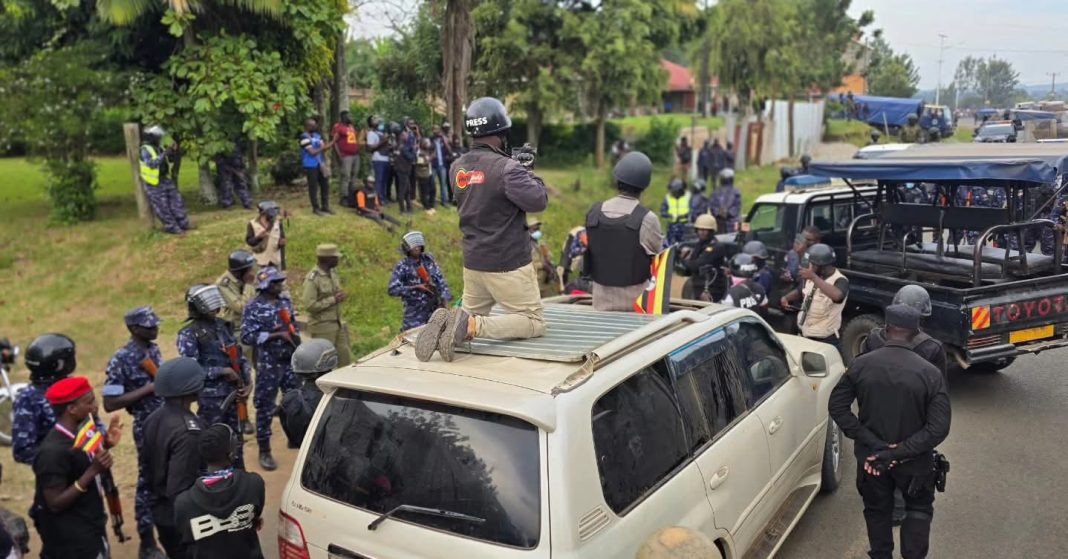
As Uganda’s campaign season intensifies ahead of the 2026 General Elections, National Unity Platform (NUP) presidential candidate Robert Kyagulanyi Ssentamu, alias Bobi Wine, has repeatedly been blocked, intercepted, and violently confronted on the campaign trail. From eastern Uganda to the west and north, his movements have been curtailed in ways that have triggered a persistent and unresolved question: is it the police acting within the law, or the political regime using state machinery to frustrate his campaign?
Kyagulanyi himself has been consistent in how he frames these encounters. In his public statements and social media posts, he rarely isolates individual institutions such as the Uganda Police Force or the military as acting independently. Instead, he repeatedly points to what he calls “the regime,” portraying security agencies as instruments executing political instructions rather than neutral enforcers of public order.

During several blocked campaigns, Kyagulanyi has stated that he is not fighting the police as an institution but a political system that fears open competition. In multiple posts on his X account, he has accused the ruling establishment of deliberately shrinking campaign space for opposition candidates, arguing that security explanations are often used to disguise political decisions.
This framing has been evident across the country. In eastern Uganda, Kyagulanyi complained of being blocked from entering towns where other candidates had already campaigned freely. In western Uganda, his convoy was intercepted and supporters arrested, prompting him to claim that the objective was to isolate him from urban voters and push him into less visible rural routes.
In northern Uganda, particularly Gulu City, his campaign was marked by chaos, violence and looting, after which he maintained that the disorder was a consequence of deliberate obstruction rather than poor crowd control.

“The regime does not want us to speak to the people,” Kyagulanyi has repeatedly stated in various forms, insisting that restrictions imposed on his campaign are not accidental or procedural but calculated. He has argued that last-minute changes to routes, denial of access to venues, and sudden security deployments are intended to exhaust, intimidate, and delegitimise his movement.
Police, on the other hand, have consistently rejected claims of political bias. Their explanations have centred on public order management, adherence to agreed campaign schedules, and concerns about crowd safety. In official statements following standoffs, police have said Kyagulanyi’s team often deviates from approved routes, makes unauthorised stopovers, or mobilises crowds beyond what security plans can accommodate. From their perspective, interventions are administrative and preventative, not political.
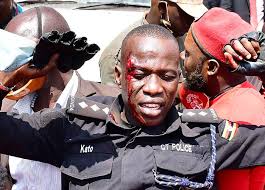
Yet the pattern of repeated disruptions has kept the debate alive. Critics of the state argue that enforcement appears selective, pointing out that other candidates rarely face similar levels of obstruction. Supporters of Kyagulanyi see the consistency of the incidents across regions as evidence of coordination rather than coincidence. To them, police explanations fail to account for why the same candidate is persistently affected.
The Gulu incident further sharpened this debate. What began as a campaign stop descended into violence, with civilians assaulted and property looted. While police later arrested suspected criminal elements, Kyagulanyi’s camp insisted that the chaos followed aggressive attempts to block his movement. Even in condemning the violence, he framed it as a symptom of repression rather than spontaneous lawlessness.
Importantly, Kyagulanyi has maintained a careful distinction in his language. He criticises “the regime” far more than individual officers, suggesting that responsibility lies with political command rather than operational enforcement. This distinction appears deliberate, aimed at separating institutional actors from the political power structure directing them.
As the campaign progresses, the lack of an agreed narrative remains stark. Police insist they are enforcing the law impartially. Kyagulanyi insists the law is being weaponized. Between these positions lies a deeper issue about trust in state institutions and the boundaries between security, politics and democratic competition.
For voters, the question is no longer only about individual incidents but about the overall climate in which the election is unfolding. Whether history will judge the disruptions as legitimate policing or political suppression will depend not just on official explanations but on whether all candidates are ultimately allowed to campaign freely, safely, and on equal footing.