The government has released Shs16.537 trillion to finance public expenditure in the third quarter of the 2025/26 financial year, with a strong focus on wages, debt obligations and strategic investments under the ATMS tenfold growth agenda.
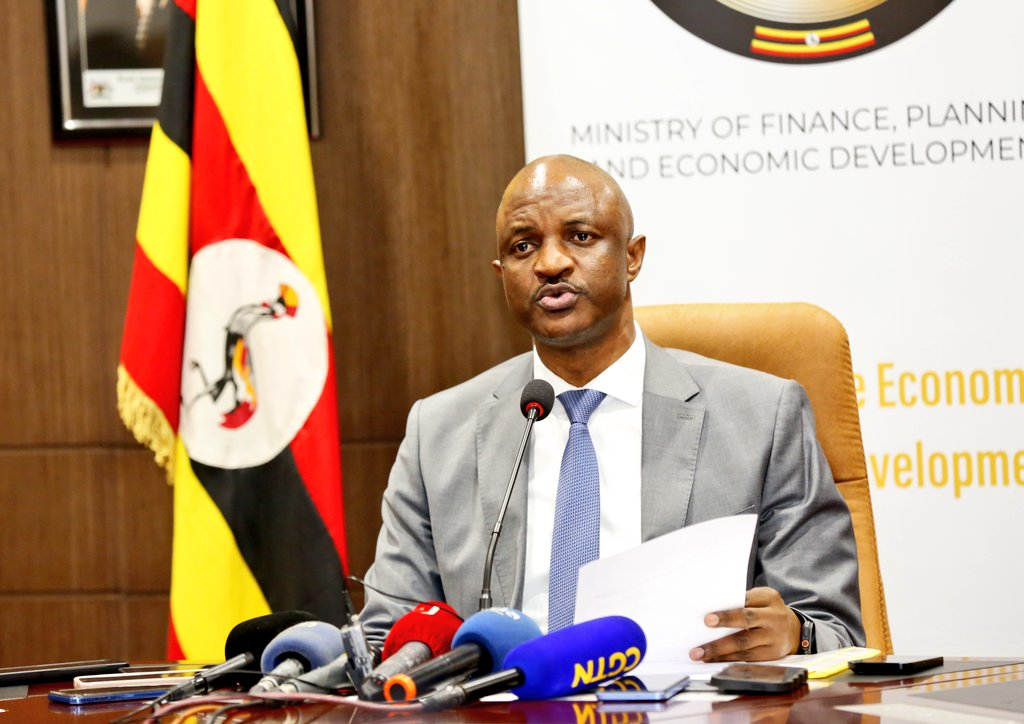
The funding framework was outlined by the Permanent Secretary and Secretary to the Treasury, Ramathan Ggoobi, who said the releases are aligned with fiscal discipline and the government’s development priorities.

“The total release for Quarter Three for FY 2025/26 amounts to Shs16.537 trillion,” Ggoobi said.
He noted that the allocation covers wages, non-wage spending, development financing, external financing, treasury operations and local revenue support.
Of the total release, Shs2.175 trillion has been allocated to wages and salaries across government, Shs2.898 trillion to non-wage recurrent expenditure, Shs514 billion to Government of Uganda development spending and Shs3.277 trillion to externally financed projects. Treasury operations, largely debt-related, take the biggest share at Shs7.591 trillion, while local revenue support amounts to Shs82 billion.

A significant portion of the funds will go towards statutory obligations and constitutional institutions. These include Shs7.59 trillion for debt and treasury operations, Shs318.24 billion for pensions and gratuity, Shs91.65 billion for Parliament, Shs28.27 billion for the Judiciary, and Shs18.351 billion for the Office of the Auditor General.
The government has also prioritised financing of the ATMS pillars—Agro-industrialisation, Tourism development, Mineral-based industrialisation, and Science, Technology and Innovation—which are central to Uganda’s tenfold growth strategy.
“Agro-industrialisation has been allocated Shs167 billion to support research and innovation, including fast-tracking the roll-out of the anti-tick vaccine,” Ggoobi said. Tourism development has received Shs32.8 billion to support promotion initiatives such as the “Explore Uganda” campaign and the development of the Uganda Martyrs Shrine at Namugongo.
Mineral-based industrial development, including oil and gas, has been allocated Shs469.69 billion to accelerate interventions aimed at achieving first oil, while Science, Technology and Innovation will receive Shs166.15 billion to expand internet connectivity and drive digitisation of the economy.
Security agencies, described as key enablers of economic growth, will also receive substantial funding. The Ministry of Defence and Veteran Affairs has been allocated Shs270.05 billion, Uganda Police Force Shs42.12 billion, Uganda Prisons Service Shs73.04 billion, and State House Shs17.92 billion, among others.
Infrastructure development remains a major priority, with the Ministry of Works and Transport receiving Shs1.34 trillion, largely under external financing, to support Uganda Airlines, railways, the Standard Gauge Railway, and road infrastructure. The Ministry of Energy and Mineral Development has been allocated Shs468.48 billion for rural electrification, transmission lines and power generation projects.
In the health sector, the Ministry of Health will receive Shs344.67 billion, while National Medical Stores has been allocated Shs245.52 billion to procure essential medicines, including bridging gaps created by the withdrawal of USAID support. Education will also benefit, with Shs115.50 billion allocated to the Ministry of Education and Sports and Shs107.453 billion to public universities.
Local governments will receive Shs519.87 billion to support service delivery and capital development projects, while revenue-generating agencies such as the Uganda Revenue Authority, National Citizenship and Immigration Control, URSB and UNBS have also received targeted funding to strengthen domestic revenue mobilisation.
As he concluded, Ggoobi urged accounting officers to focus on results and timely implementation.
“All Accounting Officers should prioritise and fast-track implementation of programmes and projects to sustain momentum for the realisation of the development results envisaged under the tenfold growth strategy,” he said.
He added that the government remains committed to macroeconomic stability, transparency and fiscal discipline. “As we continue to implement our fiscal consolidation agenda, we shall endeavour to live within our means, while keeping citizens informed on budget execution and service delivery outcomes.”