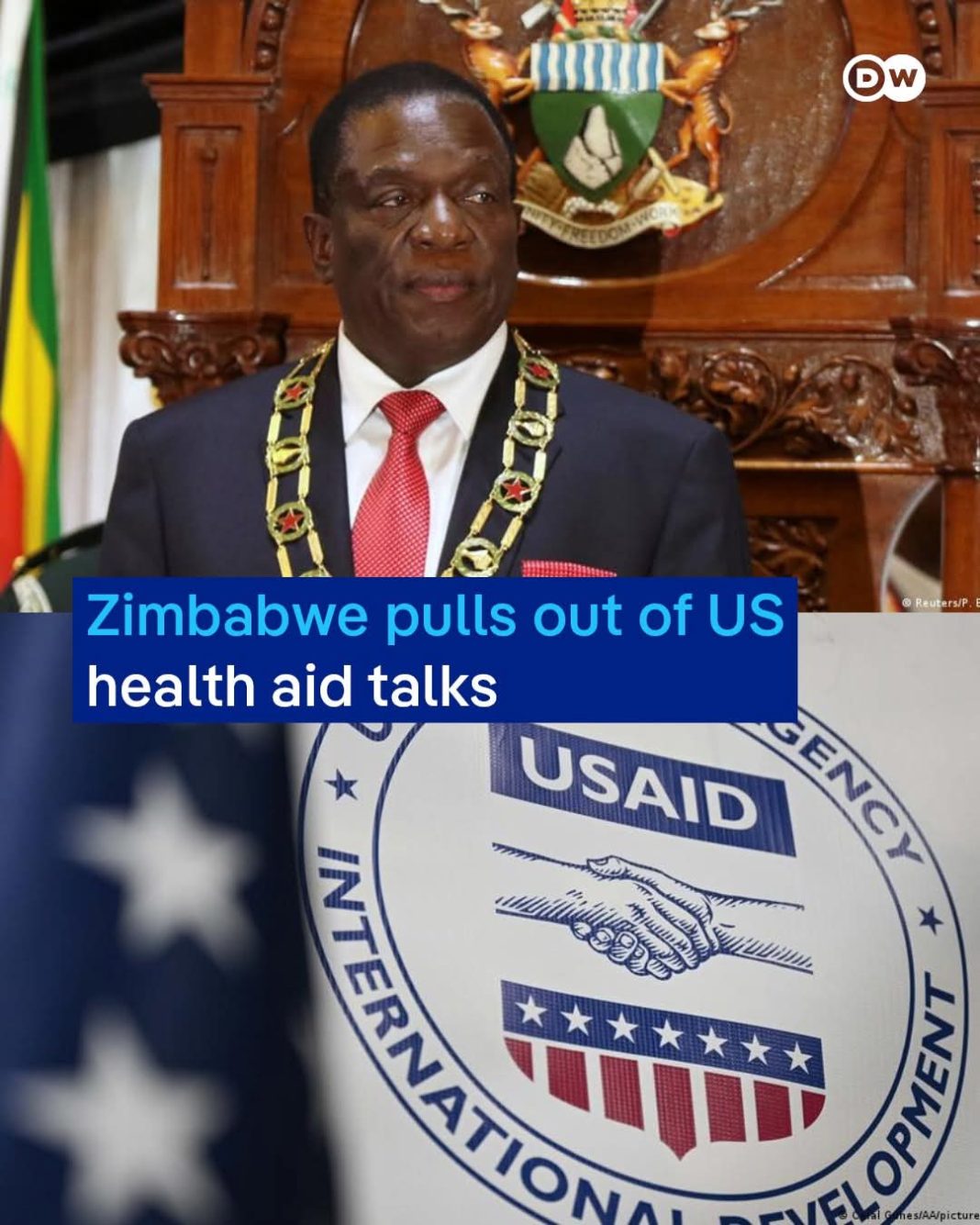
The United States has expressed regret over the Government of Zimbabwe’s decision to withdraw from negotiations on a proposed bilateral health Memorandum of Understanding that would have injected 367 million dollars into the country’s health sector over five years.
In a statement issued from Harare on February 24, 2026, the U.S. government confirmed that Zimbabwe had formally communicated its decision to pull out of the talks, bringing to a halt what would have been the largest health investment in the country by any international partner.

The proposed agreement was designed to support priority health programs, including HIV and AIDS treatment and prevention, tuberculosis, malaria, maternal and child health, and disease outbreak preparedness.
“We believe this collaboration would have delivered extraordinary benefits for Zimbabwean communities, especially the 1.2 million men, women, and children currently receiving HIV treatment through U.S.-supported programs,” said U.S. Ambassador to Zimbabwe Pamela Tremont.
She added, “We will now turn to the difficult and regrettable task of winding down our health assistance in Zimbabwe.”

According to the statement, the proposed Memorandum of Understanding was built on a co-funding model intended to promote sustainability and gradual self-reliance. Under the arrangement, Zimbabwe would have progressively increased its domestic health financing alongside American support.
The United States says it has provided more than 1.9 billion dollars in health assistance to Zimbabwe since 2006, support it credits for helping the country reach the UNAIDS 95 95 95 targets in the fight against HIV and AIDS.
The agreement was also part of a broader U.S. health collaboration framework with African nations. Sixteen African countries have so far signed similar health collaboration agreements with Washington, representing more than 18.3 billion dollars in new health funding. Of that amount, over Shs11.2 billion is U.S. assistance, while $7.1 billion dollars is co-investment from participating countries.
Ambassador Tremont emphasized accountability and shared responsibility as key pillars of the initiative.
“The United States has a responsibility to American taxpayers to invest their resources where mutual accountability, transparency, and shared commitment are assured,” she noted.
“These agreements set a higher standard for bilateral health cooperation, one that prioritizes sustainability, measurable outcomes, and shared ownership of results. The Government of Zimbabwe has assured us it is prepared to sustain the fight against HIV and AIDS, and we wish them well.”
It remains unclear what alternative funding mechanisms Zimbabwe will pursue to maintain its health programs, particularly those supporting the more than one million citizens currently on HIV treatment.