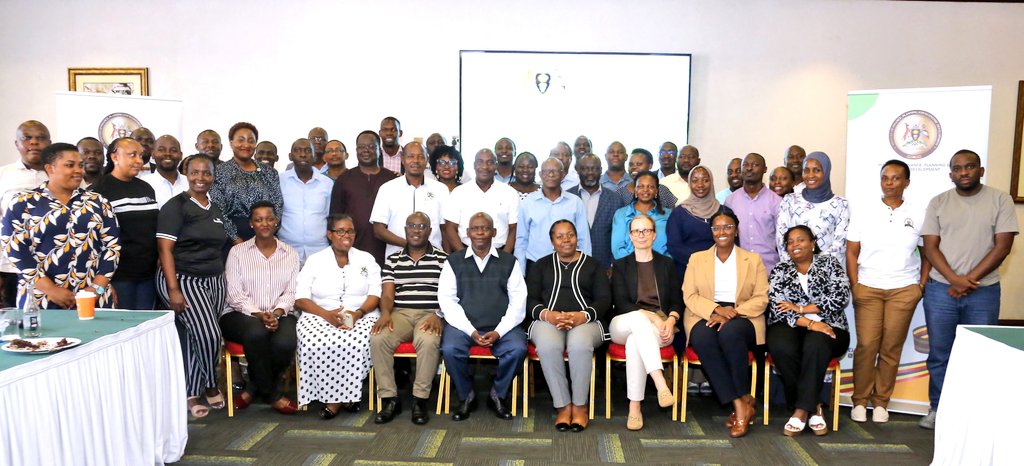
Government officials and the World Bank have initiated consultations on the next phase of the Uganda Intergovernmental Fiscal Transfers Programme (UGIFT 2.0), following the completion of the first phase in December 2025.
The discussions, which bring together a government technical team and representatives from the World Bank, are aimed at reviewing achievements and lessons from the initial phase while identifying priority interventions that will shape the successor programme.

Speaking at the close of the preliminary consultations held at Serena Hotel in Kigo, the Acting Director for Budget at the Ministry of Finance, Hannington Ashaba, urged ministries, departments and agencies implementing the programme to carefully select and justify the interventions they intend to propose.
His remarks were delivered by the Acting Commissioner for Budget Policy and Evaluation, John Muheirwoha.
“We must begin scoping realistic areas of intervention and move beyond broad wish lists,” Ashaba said.

Ashaba also emphasized the need for focused planning as the funding available for the next phase is expected to be smaller than that of the first programme.
He explained that in the coming weeks, government and the World Bank will agree on a set of priority actions that will form the basis for the programme’s implementation.
“These actions will be translated into disbursement linked indicators that are practical, measurable and implementable,” he noted.
Ashaba also expressed appreciation to the World Bank for its continued technical and financial support to Uganda’s public finance systems.
He said the partnership has played a key role in strengthening intergovernmental fiscal transfers and improving service delivery outcomes across local governments.
Officials from the World Bank, led by Barbara Magezi and Verena Fritz, commended the government team for what they described as open and constructive discussions during the consultations.
They noted that the views and proposals raised during the meetings will be consolidated to guide the development of disbursement linked indicators that will steer the implementation of the second phase of the programme.
The Uganda Intergovernmental Fiscal Transfers Programme was designed to improve the efficiency and effectiveness of fiscal transfers from the central government to local governments, particularly in sectors such as education, health, water, and infrastructure, to enhance service delivery at the grassroots level.