By Musigwa Alex
March 18, 2026
A Ugandan opposition activist has been declared wanted by police after a warrant of arrest was issued on March 14, 2026 intensifying efforts to locate her months after she disappeared following release on police bond. Esther Makumbi a community leader affiliated with the National Unity Platform (NUP) is now at the center of an escalating case that is drawing renewed scrutiny over the treatment of political dissent in Uganda.

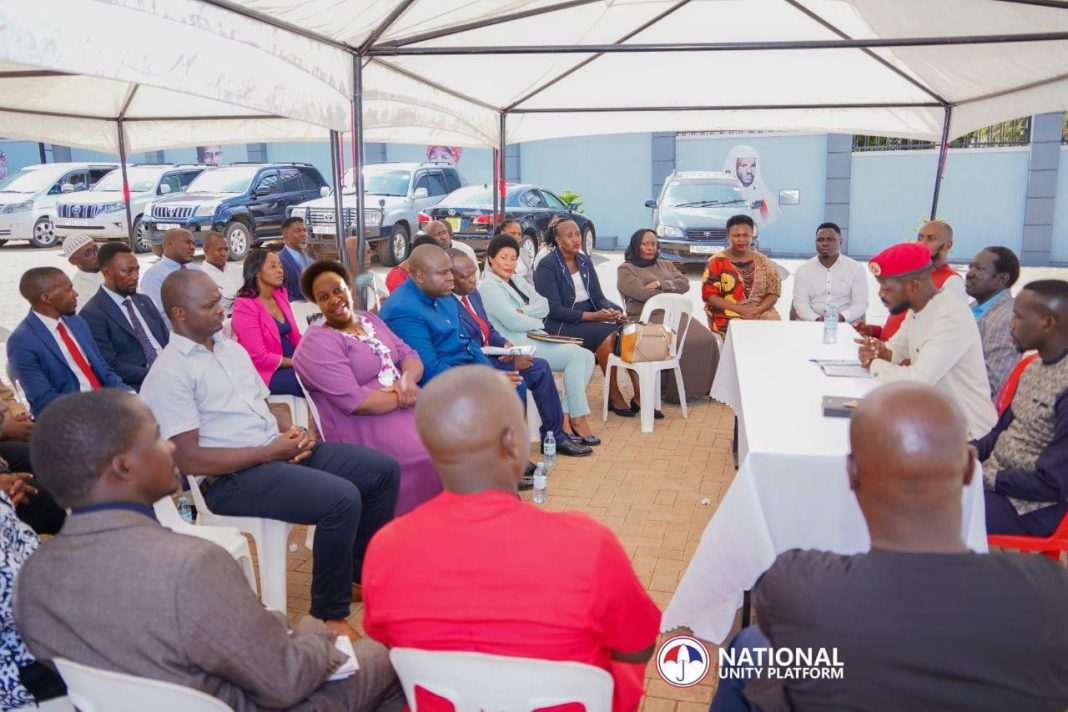
Makumbi widely known in her community as “Mama Clove” had established herself as a grassroots mobiliser working with vulnerable families while actively supporting opposition activities linked to Robert Kyagulanyi Ssentamu. Her visibility in both community leadership and political mobilisation is believed to have placed her under the attention of security operatives during the country’s tense pre-election period.
She was arrested on November 24, 2025 shortly after attending a political rally in Kampala’s Kawempe North constituency an area known for strong opposition support. Witness accounts indicate that multiple supporters were rounded up in what appeared to be a coordinated security operation immediately following the event. Makumbi was later transferred to Kawempe Police Station where she was detained before being released on police bond on November 26, 2025 with instructions to report back on December 9. She never returned.
Her failure to comply with bond conditions has now formally escalated into a legal pursuit with the March 14, 2026 arrest warrant marking a turning point in the case. Authorities consider her a fugitive and efforts to trace her whereabouts are believed to be ongoing, although no official statement has clarified the extent of the operation or whether the case has been formally presented before court.

Accounts linked to Makumbi allege that her detention was preceded by a period of unofficial custody in an undisclosed location where she was reportedly subjected to physical abuse and intense pressure to renounce her political allegiance and align with the ruling establishment. These claims which remain unaddressed publicly by authorities mirror broader allegations frequently raised by rights observers regarding the handling of opposition figures in Uganda.
Sources familiar with the situation have also pointed to emerging concerns among security circles about possible links between Makumbi’s case and networks previously associated with Waiswa Mufumbiro. While no formal charges or official statements have established such a connection individuals close to the investigation suggest that her name surfaced in discussions tied to that case raising further interest from authorities. Analysts caution however that these claims remain unverified and could reflect broader patterns of suspicion often surrounding opposition figures rather than confirmed involvement.
Following her release Makumbi is believed to have gone into hiding amid fears of re arrest and continued intimidation. Sources close to her suggest that threats persisted even after her release creating an environment in which returning to police was seen as a serious personal risk. By early 2026 several individuals involved in opposition mobilisation had reportedly withdrawn from public visibility citing similar concerns.
Her case now highlights the increasingly narrow space in which opposition activism operates in Uganda, where arrests, short-term detention and legal uncertainty often intersect. Analysts note that many such cases never proceed through formal prosecution instead unfolding through a pattern of pressure, surveillance and repeated targeting.
As of the time of publication Makumbi’s whereabouts remain unknown. Police continue to seek her under the active warrant while her supporters maintain that she is in hiding out of fear for her safety. Members of the public have been urged to report any information regarding her whereabouts to the nearest police station.