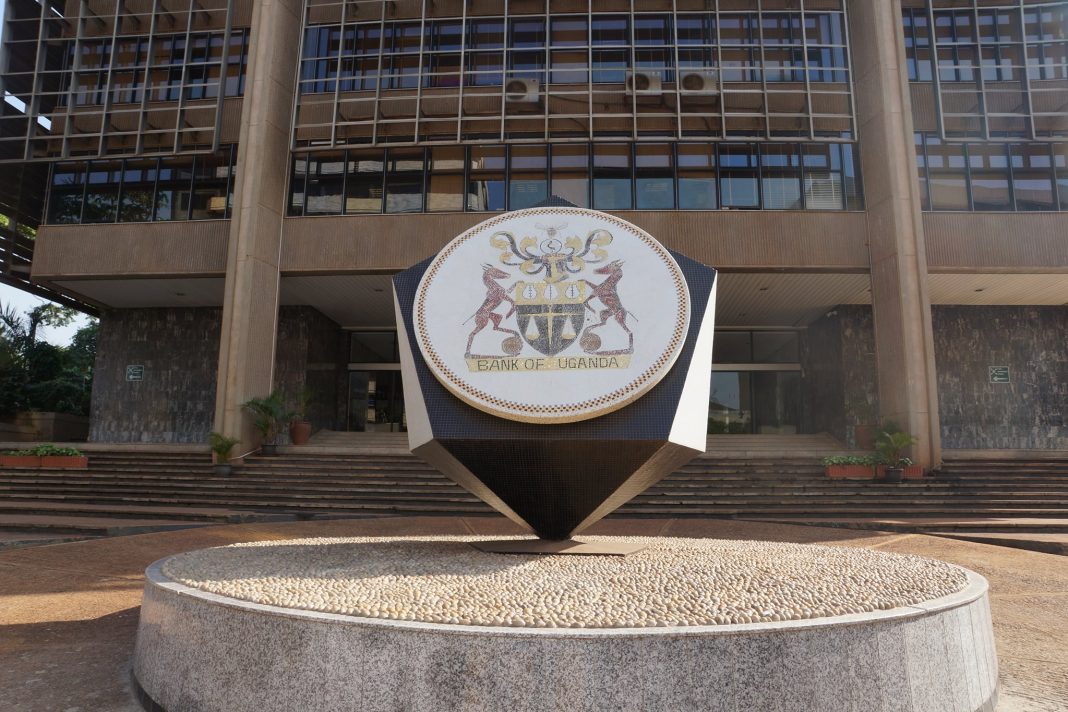
Government has quietly converted a Shs7.78 trillion temporary advance from the Bank of Uganda into long term public debt, a move that will see taxpayers commit to years of repayments amid rising pressure on the country’s finances.
According to the Parliamentary Committee on Finance report on the Ministerial Policy Statement for the 2026/27 financial year, the short term facility was restructured into 10 year Treasury Bonds, effectively shifting what was meant to be a temporary intervention into a prolonged debt obligation.

The report states that what was initially a short-term advance from the central bank has been converted into long-term Treasury Bonds, adding that Ugandans will now pay about Shs547 billion annually in principal repayments for the next decade, excluding interest costs.
The Committee further cautions that recent improvements in domestic arrears figures may not reflect an actual reduction in liabilities.
“The drop in domestic arrears from Shs13.8 trillion to Shs8.4 trillion is misleading. The debt did not disappear but was moved from one account to another,” the report notes.

At the same time, government’s appetite for domestic borrowing remains high, with projections indicating Shs11.97 trillion in the 2026/27 financial year. Legislators warn that this trend is tightening liquidity in the financial system.
“The continued reliance on domestic borrowing puts pressure on the local financial system and makes it harder for businesses and individuals to access affordable credit,” the Committee observed.
With lending rates already estimated at 18 percent, the report highlights the risk of private sector exclusion from credit markets.
“The high level of domestic borrowing will crowd out the private sector and raise the cost of borrowing for firms and households,” the Committee warned, pointing to growing challenges for small businesses and individual borrowers.
Meanwhile, the report exposes gaps in regulatory enforcement, revealing that illegal gambling machines are being smuggled into the country in parts disguised as computer components.
“The National Lotteries and Gaming Regulatory Board has identified that gaming machines are imported as motherboards and circuit boards to evade detection at border points,” the report states.
It adds that once inside Uganda, the components are assembled into fully operational machines, many of which are deployed in rural and peri urban communities without oversight.
“These unlicensed machines pay no taxes, offer no player protection, and expose serious weaknesses in border control systems,” the Committee noted.
The report also raises concern over the rising cost of commitment fees on undisbursed loans, which are projected to increase significantly.
“Commitment fees will rise from Shs63.66 billion to Shs185.6 billion, largely due to delays in project preparation and implementation,” the Committee observed, describing the payments as a burden on public resources for funds that have not yet been utilized.
Despite the expansion of the national budget from Shs72.38 trillion to Shs84.29 trillion, the Committee warns that debt servicing obligations are growing at a faster pace.
It notes that the cost of servicing domestic debt alone is expected to rise by Shs3.94 trillion, underscoring mounting strain on public finances.
Overall, the report paints a picture of a budget under increasing pressure, where rising borrowing, debt restructuring and inefficiencies in project execution are converging to deepen Uganda’s fiscal challenges.