President Yoweri Kaguta Museveni has challenged newly graduated police and immigration officers to make the fight against corruption the centrepiece of their service, describing graft as the biggest obstacle to Uganda’s development, the success of the Parish Development Model (PDM), and the delivery of quality public services.
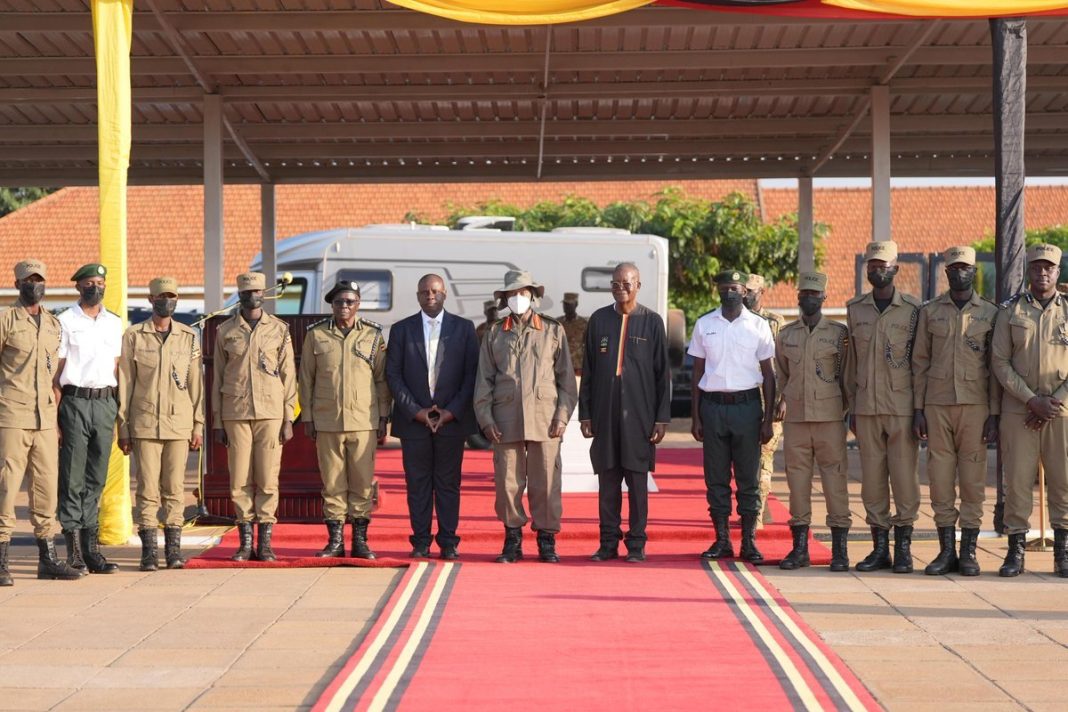
Speaking while presiding over the pass-out of 9,952 officers comprising the 25th Intake of Probationer Police Constables and the 3rd Intake of the Immigration Officers’ Course, Museveni congratulated the graduates upon successfully completing their training and urged them to serve the country with discipline, patriotism and integrity.

“I congratulate them on successfully completing their training and commend the Police leadership and instructors for producing a disciplined force,” Museveni said.
The President said the new officers must appreciate the enormous responsibility entrusted to them and ensure that they uphold the law without compromising their integrity.
“I reminded the graduates that discipline and integrity are the foundation of service. They must reject corruption, safeguard their health, and use modern tools such as forensic science, K9 units and CCTV to defeat crime,” he said.

Museveni added that security agencies must not only combat crime but also create an environment that enables economic growth and wealth creation.
“Security must also support wealth creation by protecting our people and ensuring every Ugandan joins the money economy. I wish them success as they serve Uganda with patriotism and dedication,” he said.
The President devoted much of his address to the fight against corruption, urging young Ugandans not to underestimate the role they can play in exposing and eliminating graft.
“Young people, never allow anyone to diminish your role in fighting corruption. It is corruption that is undermining the Parish Development Model, the healthcare system, and national progress,” Museveni said.
He argued that corruption cuts across nearly every challenge facing the country and continues to frustrate government programmes intended to improve the lives of ordinary Ugandans.
“Corruption is the lowest common multiplier of all the problems. Any problem you find, there is corruption behind it,” he said.
Museveni singled out the health sector as one of the areas most affected by corruption, questioning why government continues spending large sums helping patients seek specialised treatment abroad instead of strengthening Uganda’s own medical facilities.
“I get a lot of appeals to support people to go to India, to go to Turkey for treatment of cancer, treatment of diabetes. But all this money which I keep giving to people to go individually, why are you not using it to perfect our system here for cancer, for diabetes?” he asked.
The President said improving local health facilities and ensuring proper accountability would reduce the need for expensive overseas referrals while expanding access to specialised treatment for Ugandans.
Museveni also condemned reports of corruption in district recruitment processes, saying the alleged sale of government jobs deprives qualified Ugandans of opportunities and weakens public institutions.
“I hear they are selling jobs in the districts,” he said.
Turning to rural security, the President challenged the police to work more closely with communities to tackle livestock theft and the theft of agricultural produce, insisting that such crimes should be easier to solve with effective intelligence gathering.
“Rural criminals don’t come in helicopters. Even if they came in helicopters, we would hear them. They either come in vehicles, on motorcycles or on foot,” Museveni said.
He added that persistent theft of goats, cattle, coffee and other farm produce points to weaknesses in policing rather than a lack of information.
“If a crime is committed, like these rural thefts I’ve been hearing about—stealing goats, stealing coffee from the gardens—this is really a weakness because you already have the police force, and the young people know what is happening in their communities,” he said.
The President urged officers to embrace modern policing methods, including forensic investigations, CCTV surveillance, canine units and intelligence-led operations, while strengthening cooperation with local communities to deter crime.
He concluded by warning police officers against becoming part of the corruption they are expected to fight.
“You as police people, wherever you are deployed, don’t associate yourselves with corruption,” Museveni said.
Museveni has consistently argued that Uganda’s socio-economic transformation depends on strong institutions anchored on discipline, accountability and integrity.
He said security agencies have a critical role to play not only in maintaining law and order but also in protecting livelihoods, supporting wealth creation and ensuring that government programmes such as the Parish Development Model deliver tangible benefits to citizens without being undermined by corruption.