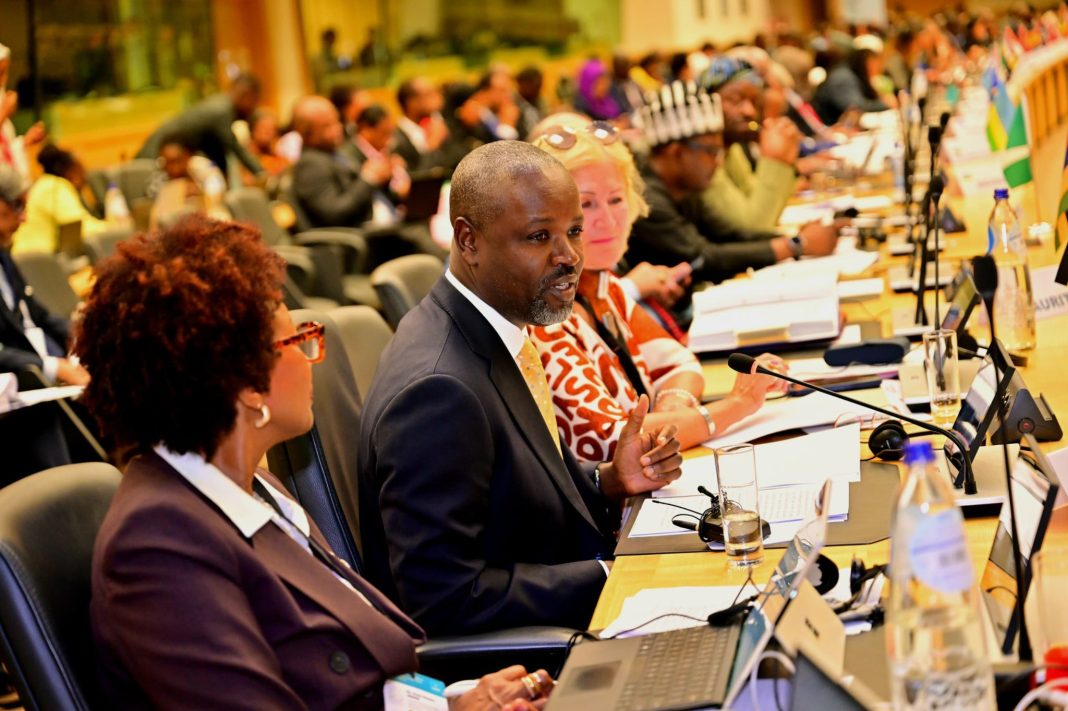
The Deputy Speaker of Parliament, Thomas Tayebwa, has called on member states of the Organisation of African, Caribbean and Pacific States (OACPS) to place value addition, industrialisation and trade at the heart of their development agenda, saying the continued export of raw materials is denying developing countries jobs, wealth and sustainable economic growth.
Tayebwa made the appeal while addressing the 121st OACPS Council of Ministers at the Egmont Palace in Brussels, Belgium, in his capacity as President of the OACPS Parliamentary Assembly and Co President of the OACPS European Union Joint Parliamentary Assembly.

He said the organisation’s future relevance will depend on its ability to champion policies that directly improve the lives of citizens through industrial development and economic transformation.
“We must place trade, industrialisation and value addition at the centre of our development agenda if we are to catch up with our peers in the developed world,” Tayebwa said.
He argued that many African and developing countries continue to lose billions of dollars by exporting raw minerals and agricultural commodities, only to import expensive finished products produced elsewhere.

“Africa and the developing world cannot achieve meaningful prosperity by exporting raw materials while importing finished products. Exporting unprocessed minerals is, in effect, exporting jobs, industries, and wealth,” he said.
Tayebwa urged governments across the 79 member bloc to invest in processing industries, strengthen regional value chains and promote manufacturing to ensure countries earn more from their natural resources while creating employment opportunities.
He noted that Africa is endowed with an estimated US$29.5 trillion in mineral wealth, representing about 20 per cent of the world’s known mineral resources. However, he said the continent continues to receive only a fraction of the value because most minerals are exported in raw or minimally processed form.
“We must process our minerals at source, build regional value chains and manufacture higher value products if we are to create employment, increase revenues and transform our economies,” Tayebwa told the meeting.
The Deputy Speaker pointed to the Democratic Republic of Congo’s investment in cobalt processing as evidence that value addition can significantly increase national revenues. He also cited Uganda’s progress in gold processing, saying it demonstrates the benefits of developing local industries around natural resources.
Tayebwa echoed President Yoweri Museveni’s long standing call for Africa to move away from exporting raw materials, saying genuine economic transformation will remain elusive unless countries retain greater value from what they produce.
He also highlighted the coffee sector, recalling Museveni’s observation that while the global coffee market is valued at about US$465 billion, coffee producing countries receive only about US$25 billion, with Africa taking just three per cent despite being one of the world’s leading producers.
According to Tayebwa, such disparities underline the urgent need for producing countries to invest in processing and manufacturing instead of relying on raw commodity exports.
“If we don’t tackle such issues, then the organisation will not be relevant to our people. We should focus on practical issues that speak to the hearts of our people and drive their transformation. That is the only way the organisation will remain relevant,” he said.
The OACPS is a bloc of 79 countries from Africa, the Caribbean and the Pacific that works to advance cooperation in trade, sustainable development, and political dialogue. Tayebwa urged the organisation to use its collective voice to champion policies that promote industrialisation, value addition, and regional integration as a pathway to creating jobs, increasing revenues, and accelerating economic development across member states.