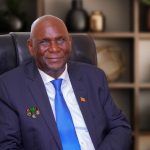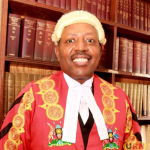
The High Court has temporarily stopped the Uganda Police Force from continuing criminal investigations against Prof. Badru Kateregga and four others, ruling that courts have the authority to intervene where ongoing investigations threaten constitutional rights or risk rendering pending court proceedings meaningless.
In a ruling delivered by Acting Justice Bonny Isaac Teko issued an interim injunction restraining police from conducting further investigations into allegations of forgery and uttering false documents under Police Reference KMP/SOUTH: GEF 078/2025 until the determination of a substantive constitutional application filed by the applicants.

The applicants, Prof. Badru Kateregga, Kateregga Muhammad, Kateregga Rashida Nassuna, Kateregga Badria and Kateregga Sarah Namazzi, had asked the court to stop the investigations, arguing that despite filing a constitutional cause and an application for a temporary injunction, police continued issuing summonses requiring them to record statements, exposing them to imminent arrest, detention and continued violation of their constitutional rights. They also alleged that the investigations were being conducted in a partial manner and that allowing them to continue would render the substantive proceedings nugatory.
The Attorney General opposed the application, arguing that the Uganda Police Force and the Director of Public Prosecutions derive their investigative powers directly from Articles 212 and 120 of the Constitution and that courts should be slow to interfere with police investigations unless exceptional circumstances are demonstrated. The State further maintained that the applicants had not established any illegality or abuse of process warranting judicial intervention.
Justice Teko, however, held that the High Court has jurisdiction to intervene whenever actions of investigative agencies threaten constitutional rights.

“Where allegations are raised that actions of investigative agencies threaten constitutional rights or amount to abuse of process, this Court cannot fold its hands on account of separation of powers. Article 50 of the Constitution empowers courts to provide redress where constitutional rights are threatened or infringed,” Justice Teko ruled.
The judge relied on the Constitutional Court decision in Centre for Health, Human Rights and Development (CEHURD) v Attorney General, saying the case affirmed the duty of courts to subject executive actions to constitutional scrutiny where violations of rights are alleged.
On whether the applicants had satisfied the requirements for an interim injunction under Order 50 Rule 3A of the Civil Procedure Rules, the court found that there was already a substantive application before it and that police had continued issuing summonses despite the pending proceedings.
Justice Teko stressed that the court was not deciding the legality of the investigations at the interim stage.
“At this stage, the Court is not required to determine conclusively whether the investigations are lawful or unlawful. That question properly belongs to the substantive application. The Court’s duty at this stage is to preserve the substratum of the dispute pending hearing of the substantive application,” the judge said.
The court found that the applicants had established a prima facie case deserving interim protection and that allowing investigations to continue before the substantive application is heard could irreparably prejudice them.
“I am satisfied that a prima facie case has been made out and that continued investigations, arrests or enforcement measures against the Applicants before determination of the substantive application may render the pending proceedings nugatory and occasion prejudice incapable of adequate remedy,” Justice Teko held.
The judge further concluded that the balance of convenience favoured maintaining the status quo.
“The Respondent will suffer no irreparable prejudice if investigations are temporarily stayed pending inter partes determination of the substantive application, whereas the Applicants risk substantial prejudice if the impugned actions proceed before their constitutional grievances are heard,” the ruling states.
Invoking Section 98 of the Civil Procedure Act, Section 37 of the Judicature Act and Order 50 Rule 3A of the Civil Procedure Rules, Justice Teko held that the High Court is empowered to grant interim relief necessary to preserve the subject matter of a dispute pending determination of the substantive application.
The court consequently ordered the Uganda Police Force, its agents, officers and servants to cease conducting further criminal investigations against the applicants in relation to the alleged forgery and uttering of false documents under KMP/SOUTH: GEF 078/2025 pending the hearing and final determination of Miscellaneous Application No. 658 of 2025. It also directed that the status quo be maintained, with costs of the application to abide the outcome of the substantive case.