Finance Minister Henry Musasizi has pledged continued government support for Uganda’s manufacturing sector as the country pushes to expand local production, value addition and exports through large scale industrial investments.
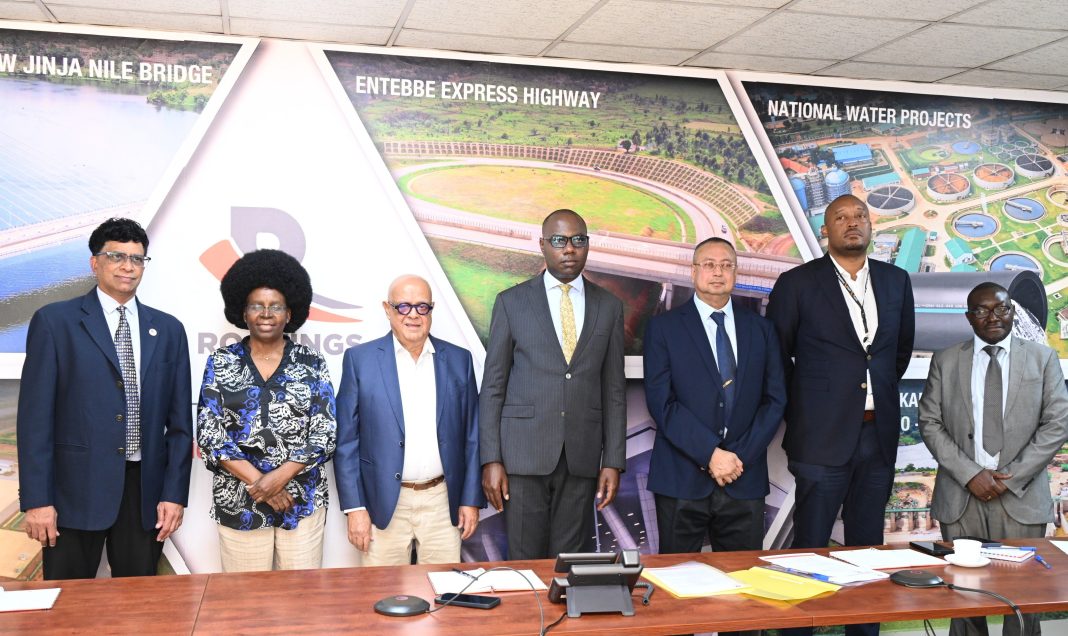
The minister made the commitment on Friday during a visit to Roofings Group’s newest manufacturing facility at the Kampala Industrial and Business Park in Namanve ahead of the official commissioning of the company’s ultra modern Cold Rolling Mill Complex.

The $125 million investment is one of the latest additions to Uganda’s growing steel manufacturing industry and is expected to significantly increase the country’s capacity to produce high value steel products for both domestic consumption and export across East and Central Africa.
The new complex has an annual production capacity of 150,000 tonnes and will manufacture Pickled Coils, Cold Rolled Coils, Aluminium Zinc Coated Coils and Colour Coated Coils, products that are widely used in construction, roofing, automotive and industrial manufacturing.
“Government remains committed to supporting manufacturers because industrialisation is central to creating jobs, increasing exports and building a stronger economy,” Musasizi said during the inspection.

He said Uganda would continue working with East African Community partner states to address taxation and trade barriers that affect manufacturers and exporters.
“We shall continue engaging our EAC partner states on taxation and other trade measures to promote a free, fair and uniform regional market,” he said.
Musasizi’s visit comes as Uganda continues implementing its industrialisation agenda under the National Development Plan, with manufacturing identified as a key driver of economic transformation. The Kampala Industrial and Business Park in Namanve has become one of the country’s largest industrial hubs, hosting dozens of manufacturers in sectors ranging from steel and pharmaceuticals to food processing and building materials.
Roofings Group Chairman and Managing Director Dr Sikander Lalani said the company’s latest investment forms part of a broader expansion strategy aimed at strengthening Uganda’s iron and steel industry through increased local processing.
“Our investments are being implemented in phases, and the broader programme is intended to deepen iron ore value addition and strengthen Uganda’s steel industry,” Lalani said.
He said the company is pursuing an integrated iron and steel project that will further reduce reliance on imported inputs while expanding local manufacturing capacity.
The company also revealed plans to establish a clinker and cement value addition project as it diversifies its industrial operations.
According to Roofings, the company currently has a total production capacity of 625,000 tonnes annually across its manufacturing plants. In 2025, it generated Shs400.1 billion in value addition, contributed Shs191.2 billion in taxes and recorded Shs229.6 billion in exports while supporting 2,224 jobs.
Its flat steel manufacturing operations account for 54 percent of value addition, placing the company among Uganda’s leading producers of high value steel products.
During the meeting, Roofings requested government to allocate an additional 70 acres of land in Namanve to facilitate construction of a downstream rebar manufacturing factory, a move the company said would further strengthen local steel production and create more employment opportunities.
The manufacturer also raised concerns about delayed refunds of the one percent Import Declaration Fee and the 1.5 percent Infrastructure Levy paid on raw materials used to manufacture exported products.
Company officials argued that timely refunds would improve exporters’ cash flow and enhance competitiveness in regional markets.
Roofings further proposed tariff adjustments on industrial metal coating paints and steel billets, saying the changes would support domestic manufacturers competing with imported finished products.
The discussions reflect wider concerns among Ugandan manufacturers, who have consistently called for harmonised trade policies within the East African Community to eliminate non tariff barriers and improve regional competitiveness.
Government has increasingly positioned industrialisation as a pillar of Uganda’s economic growth strategy, with investments in manufacturing expected to boost exports, reduce imports and create thousands of jobs as the country advances its value addition agenda.