The government has acknowledged major gaps in Uganda’s support systems for older persons, with the number of Ugandans aged 60 and above projected to reach 2.6 million by mid-2026.
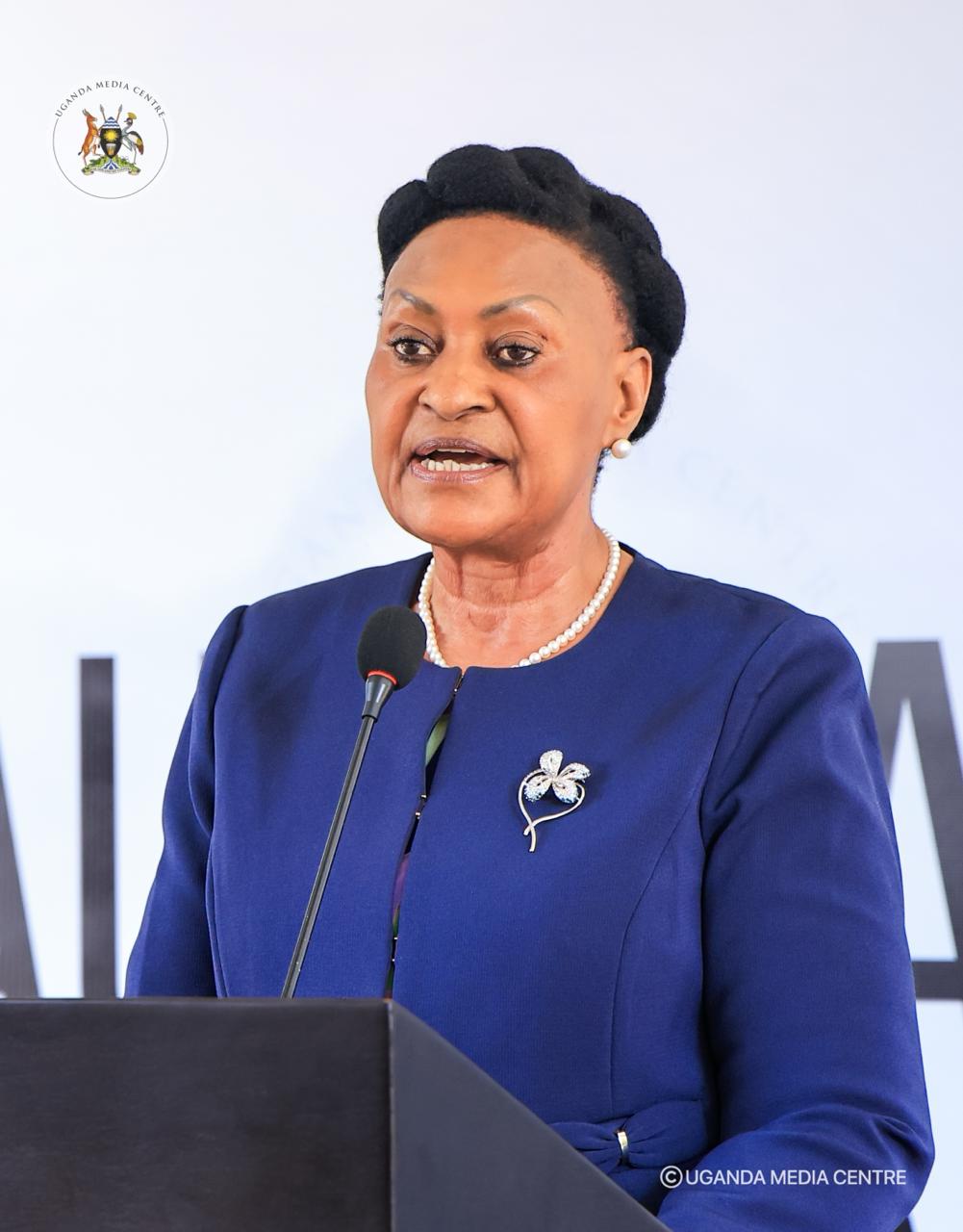
State Minister for Elderly Affairs Jacqueline Mbabazi said Uganda’s performance in meeting international commitments on ageing remains below the desired level, calling for stronger investment in healthcare, social protection and family and community-based care.

Speaking at the Uganda Media Centre in Kampala on Wednesday ahead of the International Day of Older Persons, Mbabazi said the country needs to do more to address the challenges facing its ageing population.
“A 360 degrees check on Uganda’s performance against the 62 recommendations enshrined in the Vienna International Plan of Action on Ageing, which was approved by Uganda and other UN member states in 1982, shows that we need to wake up to the challenge,” Mbabazi said.
She said a review of the 239 recommendations under the Madrid International Plan of Action on Ageing, adopted by Uganda and other UN member states in 2002, also showed that Uganda’s progress was not at a desirable level.

“In terms of access to formal social security, only about 7 percent of Ugandans have access to formal social security. The majority of older persons in the countryside are in the informal sector,” she said.
The minister also highlighted challenges in sanitation and healthcare, saying about 99 percent of households headed by older persons lack sanitation facilities suited to their needs, while 95.5 percent of older persons have no form of health insurance.
She said older persons also face high out-of-pocket medical costs, with beneficiaries of the Social Assistance Grants for Empowerment (SAGE) programme spending more than 30 percent of their allowance on healthcare.
“The out of pocket health spending is almost three times for older persons compared to the general population,” Mbabazi said.
Uganda also has a shortage of specialists trained in managing the health and social needs of older people. According to Mbabazi, the country has only one geriatrician and four social gerontologists serving an estimated 2.6 million older persons.
She said the Government wants all regional referral hospitals to have a geriatrician and every district to have a social gerontologist to provide professional care and support.
The 2024 Census, she added, found that 1.64 million households were headed by older persons who were caring for about 5.9 million dependants, mainly orphans and vulnerable children.
“This brings the total care burden to 7.5 million people under the care of older persons,” she said.
Mbabazi said the situation requires greater attention from Government, families and communities, particularly as traditional support systems come under pressure from rural-urban migration, changing family structures, economic difficulties and changing lifestyles.
“The family should therefore remain at the Centre of caring for older persons, while Government and other stakeholders strengthen systems that support families and provide alternatives for older persons who have limited or no family support,” she said.
Uganda will commemorate the International Day of Older Persons on October 1 under the theme, “Ageing with Dignity: Strengthening Care and Support Systems.”
The celebrations will be held virtually at State House, Entebbe, with President Yoweri Museveni as Chief Guest and proceedings transmitted through media platforms across the country.
The minister said the theme is intended to emphasise that longer lives should be accompanied by dignity, safety, good health, social connection and protection from neglect, isolation, poverty and abuse.
On Government programmes, Mbabazi said 318,649 older persons, mainly those aged 80 and above, received payments under the Senior Citizens Grant through SAGE during the 2025/2026 financial year.
Government is also implementing the Special Enterprise Grant for Older Persons, which targets people aged between 60 and 79 who can engage in productive activities, agriculture and other income-generating ventures.
According to the minister, the programme has benefited more than 2,948 groups, representing 18,631 individual beneficiaries, with each group eligible for up to Shs5 million.
She said Government has also allocated 10 percent of Parish Development Model funds to older persons, although access remains below the target.
“We have received reports that access to PDM by older persons remains below 3 percent instead of 10 percent, due to ageism-related discrimination – perception that older persons should not get loans since loan repayment will cause stress and ill-health. Government will explore options to overcome such challenges,” she said.
Mbabazi also disclosed that Government is working to strengthen geriatric care and pilot a health insurance scheme in response to the high medical costs faced by older persons.
Beyond healthcare and financial support, the minister said Government is strengthening family and community-based care, regulating residential care facilities and developing social care models for frail older persons and those without family support.
She also warned about abuse of older persons, including neglect, physical and emotional abuse, financial exploitation and land and property grabbing.
“We have a shameless 82 percent of perpetrators of elder abuse reported as relatives of older persons. We can stand up and stop this fellow Ugandans,” Mbabazi said.
She said the Ministry is developing an Elder Abuse Reduction Programme to improve reporting, referral and coordination among institutions responsible for protecting older persons.
Mbabazi urged families to remain the first line of care for older people, while calling on local governments, health facilities, police, courts, civil society and other institutions to strengthen services and protection.
“Ageing with dignity begins with how we care for, protect and include older persons within our families and communities,” she said.
She added that older persons should not be viewed merely as beneficiaries of Government programmes because many remain farmers, professionals, entrepreneurs, caregivers, community leaders and custodians of knowledge and experience.
The minister said Uganda’s growing elderly population makes it necessary to strengthen systems that allow older persons to remain active, independent and productive while ensuring that those who become frail or dependent receive appropriate care.
Mbabazi urged Ugandans to use the International Day of Older Persons to reflect on the welfare of the elderly and ensure they are not abandoned, denied healthcare, deprived of property or excluded from family and community life because of their age.