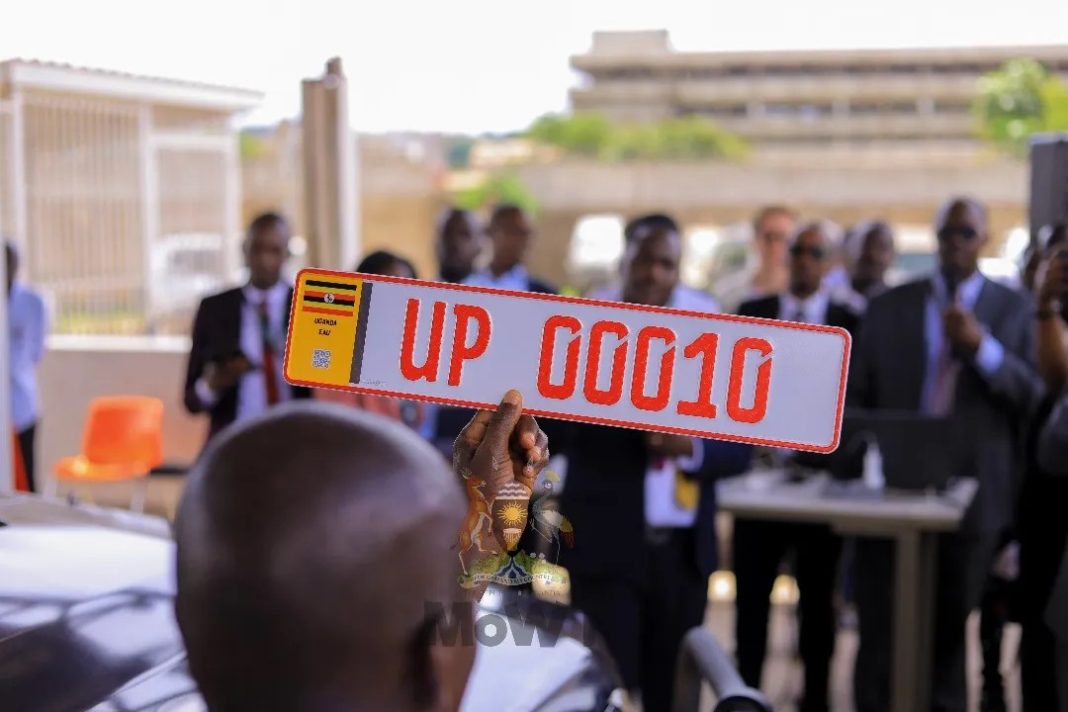
Parliament has questioned the company contracted to manufacture Uganda’s digital number plates over persistent delays that lawmakers say are costing government about Shs4 billion in tax revenue every week.
Officials of Russian based Joint Stock Company Global Security, which is implementing the digital number plate component of the Intelligent Transport Monitoring System (ITMS), appeared before Parliament’s Committee on Physical Infrastructure on Monday as lawmakers continued investigating the problems affecting the rollout.

The committee, chaired by Mbarara City South MP Mwine Mpaka, was told that daily production of number plates had fallen from about 350 sets to roughly 100, leaving motorists, motorcycle riders and vehicle dealers facing lengthy delays.
Mr Mpaka said information presented to the committee by the Ministry of Works and Transport showed that the delays were translating into substantial revenue losses for the government.
“The ministry has presented information showing that government is losing about Shs4 billion in tax revenue every week, while the number of number plates issued has dropped from about 350 to 100,” Mr Mpaka said.

The inquiry has also exposed complaints from transport sector players over the cost of the plates, delays in installation and difficulties experienced by people who have already paid but have not received their plates.
The Uganda Manufacturers Association (UMA) told MPs that giving one foreign company exclusive control over production was contributing to the bottlenecks and called for greater involvement of local manufacturers.
UMA board chairman Richard Mubiru said the digital plates were introduced partly to tackle security challenges associated with fake and duplicated number plates, but argued that the expected improvements had not been fully realised.
“From where we sit at UMA, we have not seen a breakthrough in that regard,” Mr Mubiru told the committee.
Uganda signed a 10 year agreement with Joint Stock Company Global Security in 2021 for the digital number plate project, making the Russian company the sole manufacturer of the plates under the arrangement.
UMA director of policy and research Allan Ssenyondwa separately urged government to allow companies that previously manufactured conventional plates to participate in production, arguing that the digital components could still be incorporated into locally manufactured plates.
“Let these other companies which were producing number plates be allowed to produce. The digital parts can come in as and when needed,” Mr Ssenyondwa said.
The committee also heard directly from motorcycle riders about the consequences of the delays. National Boda Boda Union chairman Frank Mawejje told MPs that riders were struggling with both the cost of registration and long waiting periods for plates.
He said the fee for a newly registered motorcycle had risen from Shs125,000 under the previous system to Shs714,300 under the digital system, placing an additional burden on riders whose motorcycles are often their main source of income.
One rider, Hassan Ssentongo, told the committee that he paid for his digital plate on July 28, 2025, but had still not received it. He said he was later asked to make another payment after raising a complaint.
The contractor, however, disputed the suggestion that the system lacks the technical capacity to handle demand.
Joint Stock Company Global Security project manager for ITMS, Damir Makhmutov, told MPs that the company had the capacity to install up to 1,500 plates a day, although actual installations remained far below that figure.
“We have the technical capability. We have enough staff to perform 1,500 installations per day. But for example, as of the 23rd of September, we have done 1,307 installations,” Mr Makhmutov said.
Mr Makhmutov attributed some of the delays to disruptions affecting the movement of consignments from abroad, including conflicts that have affected international supply chains.
He also acknowledged that the government had written to the company over shortages and delays and pressed it to improve the situation.
The complaints are not new. In July, the Ministry of Works and Transport held a stakeholder meeting over persistent delays in the issuance of digital plates, with Minister of State for Works Fred Byamukama acknowledging the problems and saying measures were being taken to restore efficiency in issuing new plates, transfers and replacements.
The ministry had earlier directed the contractor to address production bottlenecks, while Parliament began its broader inquiry after motor vehicle dealers and other stakeholders complained that shortages were affecting businesses and delaying the release and sale of vehicles.
The digital number plate system is part of the ITMS, which government has presented as a security and traffic monitoring project intended to improve vehicle identification, tracking and enforcement.
The system has previously faced controversy over the cost of plates and penalties associated with digital traffic enforcement.
Parliament’s Physical Infrastructure Committee is expected to complete its inquiry and present its findings and recommendations to the house.