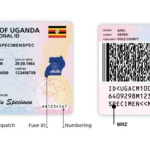
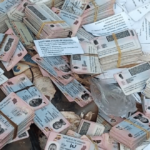
The National Identification and Registration Authority (NIRA) is stuck with about 4.5 million newly printed national identity cards that have not yet been collected by their owners, with the authority warning that it could take up to nine months to clear the backlog.
The disclosure was made by NIRA Executive Director Rosemary Kisembo while appearing before Parliament’s Committee on Commissions, Statutory Authorities and State Enterprises (COSASE), where MPs questioned delays in the issuance and activation of national identity cards.

Kisembo told the committee that NIRA has printed about 15.4 million new national identity cards but has so far distributed approximately 10 million, leaving millions of cards in its custody.
She attributed the delay largely to inadequate staffing, saying the authority is operating with 418 employees against an approved structure of 571.
Of the 418 staff, only 201 are directly involved in serving clients, a situation Kisembo said has made it difficult for NIRA to cope with the volume of people seeking registration, renewal and collection of national identity cards.

“It will take approximately nine months to distribute,” Kisembo told the committee.
The backlog comes at a time when the national identity card has become increasingly important in accessing both government and private sector services, including banking, mobile money transactions, driving permits and other services that require identity verification.
MPs also questioned why some Ugandans who have already received their new national identity cards are still unable to use them when accessing certain services.
Committee chairperson Muwada Nkunyingi raised concerns over reports of citizens being informed that their new identity cards had not yet been activated or linked to other systems.
NIRA explained that some of the difficulties are linked to the ongoing integration of external service providers with its new identification system.
The authority said the new system is already operational with some partners, while others are still completing the required connectivity and integration processes.
“If a client interacts today with MTN, they will succeed. If they interact with another one, they may not succeed. So, it depends on the readiness of the partner on their connectivity in our new environment,” NIRA said.
The authority maintained that it has provided the necessary systems, but partner institutions must also complete their side of the integration for information to be exchanged successfully.
“NIRA has put out their hand. The partner also has to put out their hand for a complete handshake for exchange of information to happen,” officials said.
The staffing challenge has been worsened by the end of the temporary workforce that supported NIRA during the mass enrolment and renewal exercise launched on May 27, 2025.
At different stages of the exercise, NIRA employed between 9,800 and 12,000 temporary workers, although the number fluctuated because of staff attrition.
The temporary workforce enabled the authority to handle the large number of Ugandans seeking new cards and renewals, but Kisembo said NIRA is now expected to return to its much smaller permanent workforce once the temporary contracts expire.
“At the end of three months, we shall go back to the point of 418 staff, of which 201 are client-facing,” she said.
NIRA is now seeking to increase its permanent staff establishment from 571 to 998 positions and recruit at least 2,700 temporary workers for 18 months.
The authority says the additional workforce would not only help clear the card backlog but also support the renewal of about six million identity cards, registration of an estimated 10.9 million Ugandans who are not yet on the national register, processing of changes in personal particulars and registration of births and deaths.
For the current financial year, NIRA received about Shs15 billion to support temporary staffing and recruited between 3,000 and 3,600 workers for three months at approximately Shs40,000 per day.
However, MPs questioned whether staffing alone could explain the delays in card collection.
George Musisi, the COSASE deputy chairperson and Kira Municipality MP, said some of the complaints received from citizens pointed to possible weaknesses in service delivery.
“It is not just about the numbers of the staff… just picking a card, not registration, picking a card is problematic,” Musisi said.
Geofrey Wokuri, the Bungokho County South MP, meanwhile raised concerns about the impact of delays on young people seeking driving permits.
He said applicants could lose money paid for driving lessons and related processes while waiting for their identification details to become active.
NIRA said the driving permit system is still being integrated with the new identification platform, although an interim solution has been put in place.
Beyond the national ID backlog, NIRA is also dealing with additional responsibilities following the transfer of marriage registration functions from the Uganda Registration Services Bureau (URSB).
The authority inherited about 1.2 million physical marriage records contained in approximately 302 archival boxes previously held off-site under a URSB arrangement.
NIRA officials told COSASE that the authority had procured and migrated a system mirroring the former URSB platform to ensure continuity of marriage registration services.
“The system is the same. It was just moved from… URSB because now URSB doesn’t have a marriage function,” officials said.
NIRA is now responsible for registering civil, church, customary, Hindu and Muslim marriages.
The national ID backlog is one of the identification challenge facing the authority. NIRA estimates that about 10.9 million Ugandans are still outside the national register, while approximately six million people who are already registered are yet to renew their identity cards.