
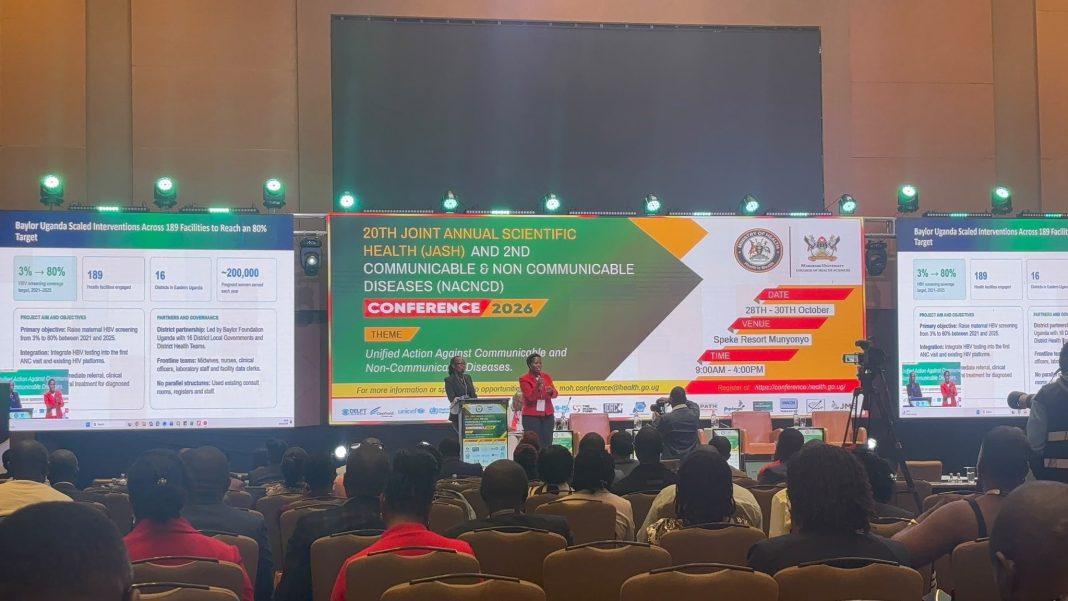
Uganda is facing gaps in its efforts to eliminate viral hepatitis as a public health threat by 2030, with only 13 of the country’s 146 districts achieving at least 80 percent coverage of the Hepatitis B birth dose vaccine, according to figures presented by the Ministry of Health.
The figures also show that only about 30 per cent of people who test positive for Hepatitis B are enrolled in care, while just 32 per cent of pregnant women who tested positive had started treatment to prevent transmission of the virus to their babies.

The gaps threaten Uganda’s progress towards the World Health Organisation’s (WHO) global targets for eliminating viral hepatitis as a public health threat by 2030, which include reducing new chronic Hepatitis B and C infections by 90 per cent and hepatitis-related deaths by 65 per cent compared with 2015 levels.
In presentations on the global and national responses to viral hepatitis, Dr Kagwa Mugaga of WHO and the Ministry of Health highlighted progress in screening, vaccination and treatment, while calling for increased investment to address persistent weaknesses in prevention and access to care.
Uganda’s response to hepatitis dates back several years. The Ministry of Health introduced Hepatitis B vaccination into routine infant immunisation in 2002, followed by free testing, treatment and vaccination services in 2015. National management guidelines for Hepatitis B and C were introduced in 2019, with updated guidelines published in July 2024 to guide prevention, screening, diagnosis, treatment and monitoring.

The Ministry has also integrated screening for Hepatitis B, HIV and syphilis into antenatal care, allowing health workers to identify infections among pregnant women and link them to appropriate services. Approximately 150,000 women are screened every quarter through this approach.
“The priority areas for investment include reliable supplies of screening kits and medicines, expanded access to viral load testing, stronger patient follow-up systems and increased community awareness,” the Ministry’s presentation indicated.
The birth dose of the Hepatitis B vaccine is particularly important because the virus can pass from an infected mother to her baby during childbirth. Infants infected at birth face a high risk of developing chronic infection, which can lead to liver cirrhosis and liver cancer later in life.
In September 2025, Uganda launched a nationwide rollout of the Hepatitis B birth dose vaccine, with support from the Government and Gavi, the Vaccine Alliance. The country aims to increase coverage and ensure that more newborns receive the vaccine within 24 hours of birth. However, reaching babies born outside health facilities and ensuring timely vaccination remain challenges.
The World Health Organisation recommends that all newborns receive the Hepatitis B birth dose as soon as possible, preferably within 24 hours, followed by completion of the recommended vaccination schedule. The vaccine is highly effective in preventing infection and its long-term complications.
Globally, the burden remains substantial. WHO’s Global Hepatitis Report 2026, published on April 28, estimates that 240 million people were living with chronic Hepatitis B and 47 million with Hepatitis C in 2024.
The report estimates that viral Hepatitis B and C caused approximately 1.34 million deaths in 2024, mainly through complications such as liver cirrhosis and liver cancer. It also warns that the world is not on track to meet the 2030 elimination targets without faster expansion of prevention, diagnosis and treatment services.
“Despite the availability of highly effective hepatitis B vaccines, preventive interventions and a curative treatment for hepatitis C, viral hepatitis remains one of the leading infectious disease killers worldwide,” WHO said in its April 2026 report.
Hepatitis B can be managed with antiviral medicines that slow the progression of liver disease and reduce the risk of severe complications. Hepatitis C, meanwhile, can be cured in most patients using direct-acting antiviral medicines, making early diagnosis and access to treatment essential to reducing deaths.
World Health Organization+1
The Ministry has identified sustained supplies of diagnostic kits and medicines, wider access to viral load testing, improved patient tracking and community sensitisation as key priorities for closing the treatment gap.
Strengthening blood transfusion safety, ensuring safe injection practices and improving surveillance are also important in preventing new infections. Integrating hepatitis services into existing health programmes could help Uganda reach more people without requiring entirely separate service delivery systems.
World Health Organization+1
The Ministry has called for sustained Government investment and stronger collaboration with development partners to expand vaccination, testing and treatment, warning that progress towards the 2030 target will depend on reaching people who remain undiagnosed or are not receiving care.
Without faster progress in protecting newborns, diagnosing infections and linking patients to treatment, Uganda risks falling short of its commitment to eliminate viral hepatitis as a public health threat by 2030.