Stanbic Bank
Stanbic Bank
19.9 C
Kampala
Stanbic Bank
Stanbic Bank
Home Blog Page 1067

EAC Heads of State Meeting postponed to a later date

The 21st Ordinary Meeting of the Summit of East African Community Heads of State that had been scheduled for Saturday February 29, 2020 in Arusha, Tanzania has been postponed to a later date.

The postponement of the 21st Meeting of the Summit comes in the wake of a request by the Republic of South Sudan, which said it was currently in the process of forming a transitional government bringing together the government and opposition groups.

Also postponed is the 41st Extra-Ordinary Meeting of the EAC Council of Ministers that was scheduled to take place from 25th to 27th February, 2020 at the EAC Headquarters in Arusha. The 41st Council was supposed to precede and make preparations for the Summit meeting.

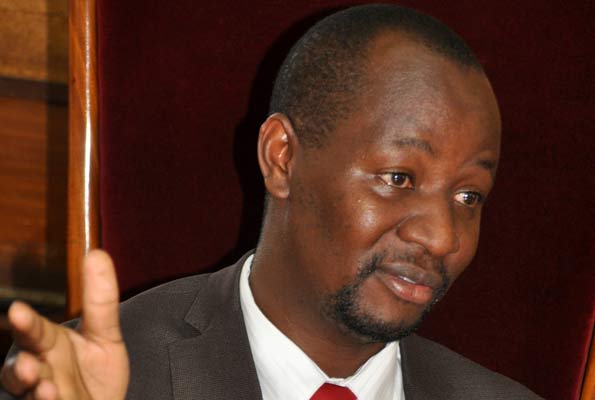
Rwanda’s Minister of State in charge of the EAC, Amb. Olivier J. P. Nduhungirehe, communicated the decision to postpone the two meetings to EAC Secretary General, Amb. Liberat Mfumukeko, in a letter dated 21st February, 2020.

“After consultation with the Chair of the Summit of EAC Heads of State, I have the honour to both inform and request you to notify Partner States that the above mentioned meetings (21st Summit of EAC Heads of State and 41st Extraordinary Council of Ministers) have been postponed to a later date due to the request of the Republic of South Sudan. A new date will be communicated later after consultations with EAC Partner States,” said Amb. Nduhungirehe.

In requesting for the postponement, Mr. Mou Mou Athian Kuol, South Sudan’s Under Secretary for EAC Affairs in the Ministry of Trade, Industry and EAC Affairs, said that the formation of the new Transitional Government of National Unity (ToGONU) would mean a lot of changes in the government and probably affect its organizational structure.

“With that in mind, the Minister, Paul Mayom Akech, has directed me to notify the EAC Secretariat of this challenge and that South Sudan will not be able to take part. Given the significance of the meeting, the Republic of South Sudan is requesting for a postponement until mid-March 2020. This will allow the newly-formed government to continue with business as usual,” wrote Mr. Mou Mou to the Secretary General.

Decision making at the EAC is by consensus with quorum being constituted by the presence of all Partner States. The absence of one Partner State would therefore mean that there would be no quorum for the Summit meeting as per the Rules of Procedure of the Summit, Rule 11.

Stories Continues after ad

Bobi Wine OTT Case: Judgement to be delivered next month

Bobi Wine

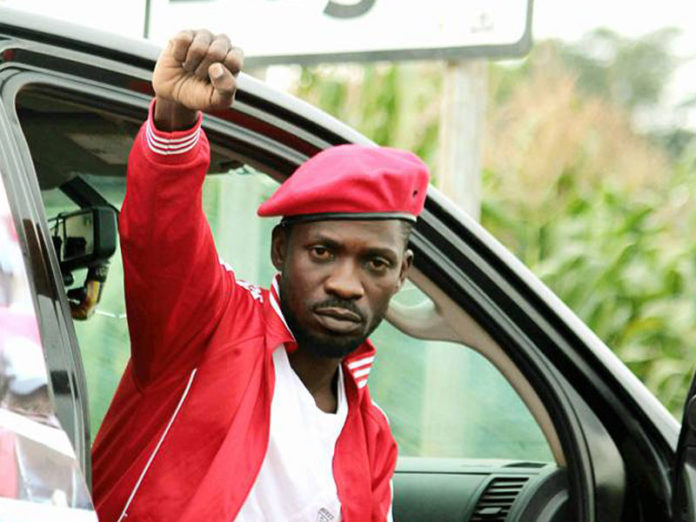
Buganda Road Court grade one Magistrate, Doreen Karungi, has adjourned the hearing of disobeying statutory case against Kyadondo East MP Robert Kyagulanyi aka Bobi Wine pending the disposal of the Constitutional petition filed before the Constitutional Court.

The adjournment follows defence lawyers led by Anthony Wameli who told court that they filed a constitutional matter before the Constitutional Court over the legality of his client’s pending criminal charges in relation to over the top tax (OTT).

According to the petition (filled in constitutional court) , Kyagulanyi wants Constitutional Court to determine whether the Public Management Act does not infringe on citizen’s right to assembly.

The Magistrate however, directed the state to file written submissions in regard to the Wine’s petition in a bid to deliver her ruling on March 24, 2020.

Wameli said it will be unfair for the court to continue trying him on charges of disobedience of statutory duty that stem from the Public Order Management Act 2013, which is being challenged by the Uganda Law society.

His co-accused include; Julius Katongole, his brother Nyanzi Fred Sentamu, David Lule and Edward Sebuufu commonly known as Eddie Mutwe.

They charges of disobedience of statutory duty when in July 11, 2018 he held a public meeting that protested the mobile money and social media tax, without notifying police contrary to provisions of the Public Order Management Act.

Stories Continues after ad

World failing to provide children with a healthy life and a climate fit for their future- WHO, UNICEF and Lancet report

Dr. Tedros Adhanom Ghebreyesus

No single country is adequately protecting children’s health, their environment and their futures, finds a landmark report released today by a Commission of over 40 child and adolescent health experts from around the world. The Commission was convened by the World Health Organization (WHO), UNICEF and The Lancet.

The report, A Future for the World’s Children?, finds that the health and future of every child and adolescent worldwide is under immediate threat from ecological degradation, climate change and exploitative marketing practices that push heavily processed fast food, sugary drinks, alcohol and tobacco at children.

“Despite improvements in child and adolescent health over the past 20 years, progress has stalled, and is set to reverse,” said former Prime Minister of New Zealand and Co-Chair of the Commission, Helen Clark. “It has been estimated that around 250 million children under five years old in low- and middle-income countries are at risk of not reaching their developmental potential, based on proxy measures of stunting and poverty. But of even greater concern, every child worldwide now faces existential threats from climate change and commercial pressures.

“Countries need to overhaul their approach to child and adolescent health, to ensure that we not only look after our children today but protect the world they will inherit in the future,” she added.

The report includes a new global index of 180 countries, comparing performance on child flourishing, including measures of child survival and well-being, such as health, education, and nutrition; sustainability, with a proxy for greenhouse gas emissions, and equity, or income gaps. [Top & Bottom 10 countries; Full Global Index on pp. 35-38] [1]

According to the report, while the poorest countries need to do more to support their children’s ability to live healthy lives, excessive carbon emissions – disproportionately from wealthier countries –  threaten the future of all children. If global warming exceeds 4°C by the year 2100 in line with current projections, this would lead to devastating health consequences for children, due to rising ocean levels, heatwaves, and proliferation of diseases like malaria and dengue, and malnutrition.

The index shows that children in Norway, the Republic of Korea, and the Netherlands have the best chance at survival and well-being, while children in Central African Republic, Chad, Somalia, Niger and Mali face the worst odds. However, when authors took per capita CO2 emissions into account, the top countries trail behind: Norway ranked 156, the Republic of Korea 166, and the Netherlands 160. Each of the three emits 210% more CO2 per capita than their 2030 target. The United States of America (USA), Australia, and Saudi Arabia are among the ten worst emitters.

“More than 2 billion people live in countries where development is hampered by humanitarian crises, conflicts, and natural disasters, problems increasingly linked with climate change,” said Minister Awa Coll-Seck from Senegal, Co-Chair of the Commission. “While some of the poorest countries have among the lowest CO2 emissions, many are exposed to the harshest impacts of a rapidly changing climate. Promoting better conditions today for children to survive and thrive nationally does not have to come at the cost of eroding children’s futures globally.”

The report also highlights the distinct threat posed to children from harmful marketing. Evidence suggests that children in some countries see as many as 30,000 advertisements on television alone in a single year, while youth exposure to vaping (e-cigarettes) advertisements increased by more than 250% in the USA over two years, reaching more than 24 million young people.

Professor Anthony Costello, one of the Commission’s authors, said: “Industry self-regulation has failed. Studies in Australia, Canada, Mexico, New Zealand and the USA – among many others – have shown that self-regulation has not hampered commercial ability to advertise to children. For example, despite industry signing up to self-regulation in Australia, children and adolescent viewers were still exposed to 51 million alcohol ads during just one year of televised football, cricket and rugby. And the reality could be much worse still: we have few facts and figures about the huge expansion of social media advertising and algorithms aimed at our children.”

Children’s exposure to commercial marketing of junk food and sugary beverages is associated with purchase of unhealthy foods and overweight and obesity, linking predatory marketing to the alarming rise in childhood obesity. The number of obese children and adolescents increased from 11 million in 1975 to 124 million in 2016 – an 11-fold increase, with dire individual and societal costs.

Dr. Richard Horton, Editor-in-Chief of The Lancet family of journals, said: “The opportunity is great. The evidence is available. The tools are at hand. From heads-of-state to local government, from UN leaders to children themselves, this Commission calls for the birth of a new era for child and adolescent health. It will take courage and commitment to deliver. It is the supreme test of our generation.”

“From the climate crisis to obesity and harmful commercial marketing, children around the world are having to contend with threats that were unimaginable just a few generations ago,” said Henrietta Fore, UNICEF Executive Director. “It is time for a rethink on child health, one which places children at the top of every government’s development agenda and puts their well-being above all considerations.”

“This report shows that the world’s decision makers are, too often, failing today’s children and youth: failing to protect their health, failing to protect their rights, and failing to protect their planet,” Dr Tedros Adhanom Ghebreyesus, Director-General of the World Health Organization said. “This must be a wakeup call for countries to invest in child health and development, ensure their voices are heard, protect their rights, and build a future that is fit for children.”

Stories Continues after ad

High Court hold Special Sessions on Land Justice across the country

Mr Tom Chemutai

The High Court has started holding Special Sessions on Land Justice in different parts of the country, targeting to clear at least 220 land cases in 60 days.

In this pilot phase, six of the sessions will be held at the Land Division in Kampala targeting 120 cases, and five other sessions will be held at the Mukono, Mbale, Masaka, Mpigi, Kabale and Jinja High Courts.

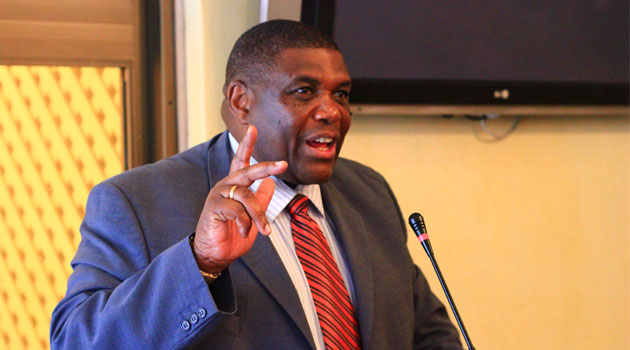
“Each judicial officer has been assigned 20 cases to dispose of within 60 days. Our projection is that each land case can be concluded in three days,” said the Ag. Chief Registrar, Mr Tom Chemutai.

The World Bank through its Competitiveness Enterprise Development Project and the Government of Uganda will jointly fund the sessions. Priority has been given to cases that have been in the court system for more than two years (backlogged cases) and those affecting implementation of key government projects, such as road construction.

The Chief Justice, Bart M. Katureebe, while meeting officials from World Bank in Kampala recently, welcomed the intervention, saying “it has the potential of expediting resolution of land cases as well as attracting future funding to address the land adjudication question in a more substantive manner”.

The Judiciary faces a perennial problem of case backlog and the problem is more severe in Land Justice where 52 per cent of the cases are more than two years old in the courts. At the Land Division, there are 11,952 cases pending in the court system, and of these at least half are backlog.

Mr Chemutai, explained that backlog in the land cases is mainly a result of shortage of Judicial Officers, low levels of automation in processing cases and inadequate resources. Other reasons include Judicial Officers’ lack of transport to visit the land in dispute, increased filing of cases fueled by a growing economy and pressure on economic resources particularly land.

“Failure to resolve land disputes has cost the country a lot of money in delayed implementation of infrastructural projects. Investment projects have equally been affected by slow land adjudication, making Uganda a high cost investment destination,” said Mr Chemutai.

He says Phase II of the project will be extended to land matters in other parts of the country, including cases in the Magistrates Courts.

Stories Continues after ad
Ugandan voters will embrace Museveni’s standards in 2021

Amb. Mayega

A daily of February 19 – 25, 2020 ran a story on page 4, thus “ EC clears 15 presidential aspirants to consult,” and went on: “…Apostle Ben Israel Sseninde, Bob Paul Akileng, Steven Kawesa, Timothy Mugerwa, Elton John Mabirizi and Bobi Wine,” all of them little-knowns, were “cleared to consult” in preparation for the 2021 presidential elections.

That, in my view, evidences the growth of our democracy since we extricated ourselves out of a monolithic political entrapment and reverted to pluralism after the plebiscite of 2005. That we can have as many, though many of them are performing “katemba,” aspiring to be president without being molested, is a complete departure from the debacles 1980 when the political space was largely restricted and ring-fenced for the powerful few. And these numbers will burgeon with time because the perennial presidential candidate, Kiiza Besigye will, for sure, declare his intentions; he has always and superbly choreographed his FDC electoral structures anyway.

In retrospection, Ugandans know that Yoweri Museveni, as incumbent president, has set our national standards higher than the bar, most especially when it comes to the restoration of our country into the international files of honor by maintaining peace, security, stability as well as ensuring steady social economic and political transformation; that is an indisputable fact, which his haters within and without our boarders must contend with. The Ugandan voters will not, as they have always done, gamble and elect flip-flops in 2021, whose character of politics is playing by renegade rules of remonstrations like Kiiza Besigye’s defiance or, indeed, Bobi Wine’s riotous shenanigans. Their admirers too, who are apologists of un-natural and alien behaviors have a stern message here as well.

A survey of the opposition pack that is seeking the office of Uganda’s chief executive office is a mixed grill of perennial losers and upstarts, none has what it takes to effectively shield our country from the insecurities in our neighborhood that simmer incessantly: both the north and the west are bedeviled with insurgent rebellions pulling in all directions and the south, in unhinged behavior, closes boarders. All that diffidence and fragility require tested leadership, which, undoubtedly, Yoweri Museveni has exhibited over decades.

The voters will not elect groups like DP and FDC who, for the most part of their internal discussions resort to fist fights as well as recalcitrant behavior. Electing them would reverse all the democratic gains from 1986 to-date and it would be a re-incarnation of the chaos during the epochal period between 1979 – 1980, a time when Uganda, for five times, changed heads of state: Idi Amin, Yusufu Lule, Godfrey Binaisa, Paul Muwanga and Milton Obote at a whooping cost to human life, property and economic stagnation. Opposition groups have failed to meld their jostling constituencies; they have elected to shout from Kampala’s bully pulpit to supercharge their political batteries and simultaneously punching beyond their weight, all coming to naught. President Yoweri Museveni’s inexplicable and unmatched public commission of over thirty years, his impeccable national and international standing all combine to pale the opposition’s fortunes and bravado, making Ugandan voters averse to that paralyzing polarization.

Kiiza Besigye’s debilitating stranglehold on the opposition, Johnny come-lately Bobi Wine’s intransigence and others in tow, while enjoying their crowded and chaotic political canvass have far, unknowingly, christened that sector as an assortment of stampeders of national progress in the eyes of the Ugandan voter. Their fiendish posturing, though politically satisfying and expedient, comes with a cost: it turns them into moonlight by Yoweri Museveni’s sunlight.

Amb. Henry Mayega

Deputy Head of Mission, Uganda Embassy, Beijing, China               

Stories Continues after ad

ISO, IGG start fresh investigations on Kasekende, Bagyenda and other top BoU officials

Embattled former Executive Director in charge of Supervision at Bank of Uganda Justine Bagyenda.


Internal Security Organisation and Inspectorate of Government have commenced fresh investigation on top Bank of Uganda officials.

According to sources, former Deputy Governor, Louis Kasekende, former Executive Director Supervision, Justine Bagyenda, Director Legal, Margaret Kasule and  Benedict Ssekabira, the director of Financial Markets Development Coordination (FMDC) are the top officials lined up for probing.

According to sources, ISO has been drawn in because previous investigations by the office of IGG have never been made public and as such, there is a likelihood that they are compromised.

“The appointment authority is unhappy with IGG delay on findings of the investigation on the top leaders at BoU. And therefore, he has instructed ISO to join the fresh investigation so as to have a genuine report” said a source.

State House Anti-Corruption Unit headed by Lt. Col. Edith Nakalema is also investigating top officials in relation to the payments they recently paid to city lawyers Timothy Kanyerezi Masembe and David Mpanga of Bowmans.

According to sources, the appointing authority is reportedly unhappy with the revelation that Bank of Uganda made losses to a tune of Shs2 trillion and yet top officials at the bank are swimming in wealth.


Earlier this website revealed that two directors at Bank of Uganda were under investigations by State House Anti-Corruption Unit for allegedly paying Shs6 billion to two city lawyers.

The two directors are Benedict Ssekabira, of Financial Markets Development Coordination (FMDC) and Margaret Kasule, director legal services.

According to sources, the two directors are alleged to have sanctioned the payment of Shs6 billion to Masembe Kanyerezi and Mpanga. Sources further allege that although this money was released as legal fees, however, its intended purposes is to cover all the legal loopholes in the case of Crane Bank Limited takeover and subsequent during receivership.

The two lawyers represented BoU and the payment for their services has been ongoing until parliament probing committee, Committee on Commissions, State Authorities and State Enterprises (COSASE) that investigated BoU over the controversial sale of seven commercial banks between 1993 and October 20, 2016.

In December 2017, the Commercial Court disqualified city lawyers Mr Kanyererezi Masembe and Mr. David Mpanga from the Sh397 billion Sudhir Ruparelia’s case against Bank of Uganda (BoU), also citing conflict of interest.

In his ruling delivered on December 21, 2017, the head of the commercial court division, Justice Wangutusi stated that Mr. David Mpanga of A.F. Mpanga Advocates and Timothy Masembe of MMAKS Advocates acted in violation of the Advocates (Professional Conduct) regulations.

Last month, it was alleged that BoU released Shs4 billion as part of the balance on Shs20 billion to the same lawyers. However, what is intriguing investigators is why paying that entire amount to the lawyers and yet some of the cases are jointly handled by BoU own lawyers.

Sources say that the payment could be part of the ploy to falsify accountability in the case of Shs478 billion.

Also what is of interests to investigators are revelation that these have ill accumulated wealth which cannot resonate with their salaries.


Stories Continues after ad

People power supporter knocked by speeding police patrol, group camps at Mulago hospital mortuary

Late Nabukenya

Supporters of People Power, a political pressure group in Uganda are currently camping at Mulago hospital mortuary demanding for the body of their comrade, Rita Nabukenya.

Ms Nabukenya was knocked by speeding police patrol as she headed to Buganda Road Mgistrate’s Court for the hearing of disobedience of statutory case against their patron, Robert Kyagulanyi.

According to Joel Ssenyonyi, the Spokesperson of group, Nabukenya was clad in People Power Attire this morning on a boda-boda (Motorcycle)  in Nakawa heading to court and thereafter she was to proceed to Pope Paul memorial hotel where Bobi wine was schedule to have his consultative meting ahead of the 2021 presidential elections.

“A police truck saw her, chased after them and run over her. We have learnt that she has since passed on. We are now at Mulago mortuary, with police tossing us around” Ssenyonyi said.

In his response Bobi Wine said, “Very sad day! Yet again, a leader of the People Power Movement has been murdered by the Museveni regime. Police officers in a patrol vehicle saw comrade Rita Nabukenya donning our attire, drove after her and knocked her dead in broad daylight. We must end this regime of blood”

Eagle Online’s efforts to reach police spokesperson were futile.

Earlier police blocked Bobi Wine’s consultative meeting at Pope Paul memorial hotel on grounds that the group did not meet all requirements to hold a rally.

“On January 31, 2020, the Director Operations AIGP Asuman Mugyenyi wrote to remind Kyagulanyi  requesting him to submit  the proposals agreed on with the Electoral Commission which has not been done.” Deputy police spokesperson Polly Namaye said earlier today.

“Police therefore, still awaits the assurance that there shall be an effort to respect law and order by abiding with agreed upon strategies in order to embark on the teams consultative meeting schedule.” She said.

Stories Continues after ad

The current Electoral Commission cannot deliver a free and credible election-FDC

Mr . Semujju Nganda


The main opposition party in Uganda, Forum for Democratic Change (FDC) has said that the current Electoral Commission cannot deliver a free and credible election as prescribed in the constitution.

According to party Spokesperson Ibrahim Semujju Nganda who doubles as Kira Municipality Member of Parliament, Electoral Commission headed by Justice Simon Byabakama has displayed signs of bias publicly in favor of Museveni who handpicked them.

“The processes leading to compilation and display of the voters’ register are contested and remain unresolved. The Electoral Commission stopped registering voters in December last year more than a year to the next general elections. And in their new register, they have omitted Ugandans who have kept registering with National Identification and Registration of Persons Authority (NIRA).” He said

Semujju said that there are citizens who registered with NIRA but are missing on the voters register yet the credibility of any election depends for a big part of the credibility of the register.

He said the laws relating to elections are not yet passed, yet the first batch of elections are  due in less than two months. In many parts of the country, election-related activities meant to be managed by Electoral Commission, biased as it, have been abandoned to Residential District Commissioners (RDC) and Internal Security Organization (ISO).

He urged EC to stop Museveni and security from interfering with the activities of his competitors, “Our mobilization as a party has and is being interfered with by police and UPDF. They are also disrupting activities of other political platforms such as People Power. The Electoral Commission has a duty to stop Police, UPDF and Museveni from disrupting election-related activities.” He added.

He said Youth, Women and people with disabilities leagues are also in the field identifying and selecting candidates for the forthcoming April national elections of interest groups.


Stories Continues after ad

When will Africa standup to challenges?

Writer of the article David Matsanga.
I have penned this article for us to think about what can be done . Many countries in Africa have not prepared themselves on this subject . Away from politics there’s a matter of grave concern which require the attention of leaders worldwide, but more specifically African leaders.
Coronavirus is a pandemic that is proving to be the biggest threat to human race today. The effects of this pandemic is going to be felt worldwide.
Considering that China is a global manufacturing hub, hosting even top American and European top tech manufacturing companies, the ramifications of the virus will also lead to global economic meltdown.
Already some of the leading manufacturing companies are laying of workers in China, and outside China because those outside China cannot get parts or equipment they need from China to operate.
Airlines are laying off workers due to reduced globa travel. Tourism industry is not spared. In short, besides human carnage, Coronavirus will affect all world economies in one way or another.
China today is a country virtually closed down, isolated, traumatized and stigmatized. Despite being one of the world’s largest economies, the situation is dire and the virus is threatening to get out of control.
Majority of people cannot go to work, hundreds of millions are virtually under house arrest, quarantined in their homes, children are out of school learning through internet classes.
Top scientists and doctors are getting infected and dying while trying to find vaccine or cure for what President Jing Ping has referred to as demon. It’s no joke.
This horror is happening in a country which is building several hospitals…each ten times the size of Kenyatta in less than two weeks time. Now they are burning all old notes to reduce the spread.
My greatest fear is what would happen if this killer virus finds its way into Africa. Obviously, Africa cannot survive global isolation, domestic quarantine, neither does she have resources in terms of medical personnel, physical isolation facilities neither management drugs.
God forbid, the virus would convert African soil into a huge cemetery of un-dug graves. I’ve heard people say the virus was manufactured in the lab specifically to clear African population for Chinese settlement but then it went out of control. I hope this is not true.
For now African governments must declare a continental emergency nationally, regionally and at AU level. This means all resources must be expended in ensuring the virus does not get here. But in case it does, massive resources are deployed to prevent spread.
Drastic measures are necessary as soon as possible. Starting point is 100 per cent severence of air and sea communication with China and Far East countries.
Countries must ensure enough stocks of body suits and face masks as well as undertake training of emergency personnel. Isolation centres, even temporary ones should be constructed and identified.
Food-stocks and preparation of officers at both central and local governments needs to be trained on how to distribute supplies. Nothing should be left to chance.
Politics should be suspended, wars must be stopped. My fellow Africans, there should be no lip service. We must be united as we face this deadly common enemy.
We are facing the greatest threat to our survival…a war which cannot be fought by the conventional armies, a mutating demon with no known cure.
I weep for my beloved continent.
Dr.David Matsanga
18.02.2020
The writer is Political scientist & Conflict Resolution Expert ,an investigative Journalist and a Pan African based in London United Kingdom can be contacted via Twitter @Dr.David Matsanga
Stories Continues after ad

Off-grid solar sector expands into $1.75 billion market serving 420 million users

solar panels


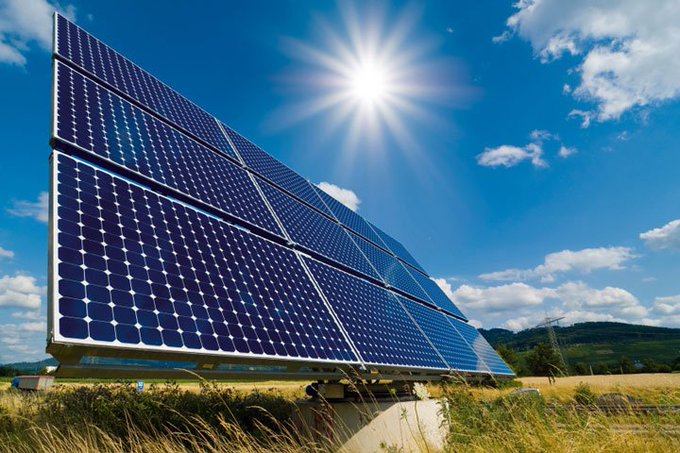
The off-grid solar sector has grown rapidly over the past decade and is now a $1.75 billion annual market serving 420 million users, with further growth predicted.

Despite its strong growth trajectory, the off-grid solar market trends report 2020 indicates that more investments are needed for the sector to continue playing a key role in achieving universal access to electricity by 2030.

Off-grid solar solutions have played a pivotal role in extending energy access to millions of people, especially in Sub-Saharan Africa and South Asia, which face some of the world’s biggest gaps in energy access rates. Policymakers, private investors and end users alike have embraced off-grid solar products as an affordable and sustainable solution for electricity access, as productive use appliances for irrigation, cooling and refrigeration have helped provide a source of income for households across the agricultural, industrial, commercial, and public sectors.

“The industry holds great promise, having reached 420 million users around the world over the past ten years and with the potential for continued growth. Still, even more financial investments will be essential to accelerate the deployment of off-grid solar solutions and reach many of the 840 million people around the world who lack access to electricity even today.” Reads in part of the report.

The 2020 edition of the Off-Grid Solar Market Trends Report is the sixth in a series of biennial reports that was launched in 2010, with the aim of measuring the pulse of the off- grid solar market. This latest edition includes the most comprehensive sales and impact data available, in-depth analysis on current market dynamics and an outlook on the future of the industry.

The report shows that, in a business-as-usual scenario, the off-grid solar sector will serve 388 million people with the most basic level of electricity access by 2030, but this growth will be insufficient to achieve universal access targets. To sustain the business-as-usual scenario over the next five years, the sector needs $1.7 billion – $2.2 billion in external investments from 2020 to 2024.

To achieve universal access, the off-grid solar sector would require between $6.6 billion – $11 billion in additional financing. Of this total need, $6.1 -$7.7 billion will need to come from investments into off-grid solar companies, and up to $3.4 billion represents public subsidies to bridge the affordability gap.

As the sector matures and productive use of off-grid solar solutions such as solar water pumps, cold storage and other products servicing public institutions become natural expansion areas, companies are increasingly focused on financial sustainability of the sector and the need to demonstrate profitability and increase transparency around operational efficiencies.


Stories Continues after ad