Stanbic Bank
Stanbic Bank
23.6 C
Kampala
Stanbic Bank
Stanbic Bank
Home Blog Page 1105

We are not aware of ‘eating’ Shs24b for Isimba Bridge – Energy minister replies Kadaga

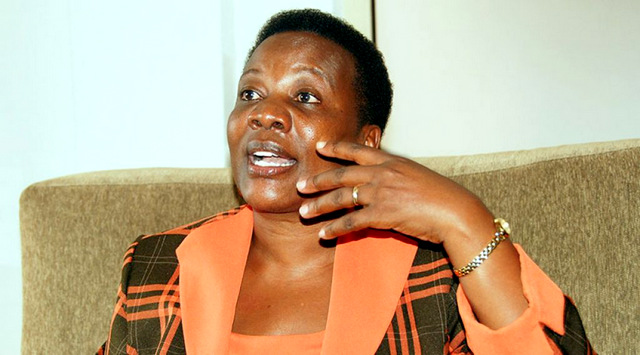
Energy minister Eng. Irene Muloni

The Minister of Energy and Mineral Development, Eng. Irene Muloni has angrily dismissed recent allegations that the ministry’s officials have swindled Shs24 billion meant for the construction of Isimba public bridge and access roads connecting Kayunga and Kamuli districts.

“We are not aware of the Shs24 billion meant for the Isimba Bridge that was allegedly eaten,” Eng. Muloni on Tuesday told journalists in Kampala at the government- owned Uganda Media Centre.

On November 13, 2019, Speaker of Parliament Rebecca Kadaga told MPs during the plenary that despite forwarding the names of the officials who allegedly stole the Shs24 billion to President Yoweri Museveni in March this year, no response or action has come from the Office of the President.

The bridge was meant to run from Kayunga to Kuva Island and another from Kuva Island to the Kamuli side. However, to date, the bridge has never been constructed although the dam was completed.

“By the way, at some stage, Shs24 billion had been chewed, Shs24 billion for that bridge had been eaten… I have been following that matter for several months, the money was eaten in the Ministry of Energy, Shs24 billion …I have written to the president. I gave him the names of the ‘eaters’. I have been waiting since March. I have not seen any action,” said Kadaga.

According to Muloni, the road designed by the contractor on top of the dam was found unsuitable for public use because the contractor had provided only one lane instead of two lanes as specified in the contract. Therefore, she said, government directed the contractor to construct a separate public bridge with two lanes as specified in the contract.

“As at 31 October 2019, the overall progress of works is approximately 20 per cent. The remaining 80 per cent is to be completed by 31 December 2020,” she said of the project that was approved in July 2019 by the Uganda National Roads Authority (UNRA).

She assured the public that the construction of the bridge and access roads is progressing well and anybody who wishes to see the ongoing works is welcome to visit the project site for a guided tour.

Stories Continues after ad

ISBAT University attains charter status, vows to uphold teaching standards

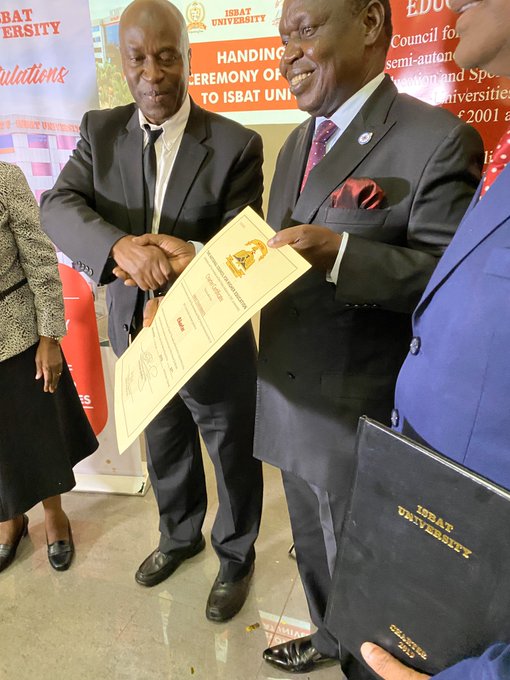
Officias display ISBAT's acquired charter

The International Business Science and Technology (ISBAT) University, has pledged to maintain its teaching standards after being granted a charter by the National Council for Higher Education (NCHE), the regulator of higher education in Uganda.

NCHE uses accreditation as a tool for quality assurance in higher institutions of learning. It is a process through which institutions are assessed based on standards set at various stages as the institutions operate on the licence to offer higher education in the country.

Isbat which officially got the charter yesterday now joins other 11 chartered private universities in Uganda on top of the nine public universities. The other chartered private universities include; Kampala International University, Kampala University, Uganda Christian University and African Bible University among others.

According to the Executive Director of NCHE, Prof Mary Okwakol, accreditation covers aspects like; premises, staffing, educational facilities, governance, financial resources and physical facilities. In processing the applications for accreditation, the NCHE follows the provisions of the University and other Tertiary Institutions Act, 2001, which empowers the Council to make regulations to ensure the provision of quality higher education.

“A charter is one of the accolades an institution should attain for provision of quality and competitive education services compared to what others institutions avail to students.  The charter license will be renewed every after five years. I implore you to distinguish yourself from other teaching institutions, and offer distinguished education services,” she said.

“Uphold teaching standards and be steady fast to do what is required of you and observer all principals of good governance, improve on infrastructures, think strategically and lobby more resources for the thriving of the institution,” she said during the handing over of  the charter document.

She called on the university to teach accredited programs using qualified staff and admit eligible students for training of competitive and qualified people. “Inappropriate treatment of students like sex for marks, under marking of students like it was in some institutions is intolerable,” she adding that every year, the university will be mandated to compile data to the NCHE for assessment.

The chairperson of NCHE, Prof. Elly Katunguka, who is also the vice chancellor of Kyambogo University, called on the Isbat University to invest in human resource and train its own staff to attain of PhDs.

“Work begins now to maintain the quality of education and change the way you do business. Providing poor quality education leads to unemployment,” he cautioned.

He then handed over the charter, charter certificate and the charter instrument signed by President Yoweri Museveni.

The Chancellor of the university, Fred Omach applauded NCHE, President Yoweri Museveni and the First Lady Janet Kataaha Museveni who doubles as the Minister of Education and Sports, for granting a charter status to Isbat University.

“Our education philosophy is good and suits all students in the region and world at large. We have students from over 26 countries and upon the attainment of this charter more will come on board to fulfill our dream of passing out well qualified and competitive candidates ready to take up jobs,” he said.

Stories Continues after ad

Africa should be in bed with China for purposes of infrastructural development

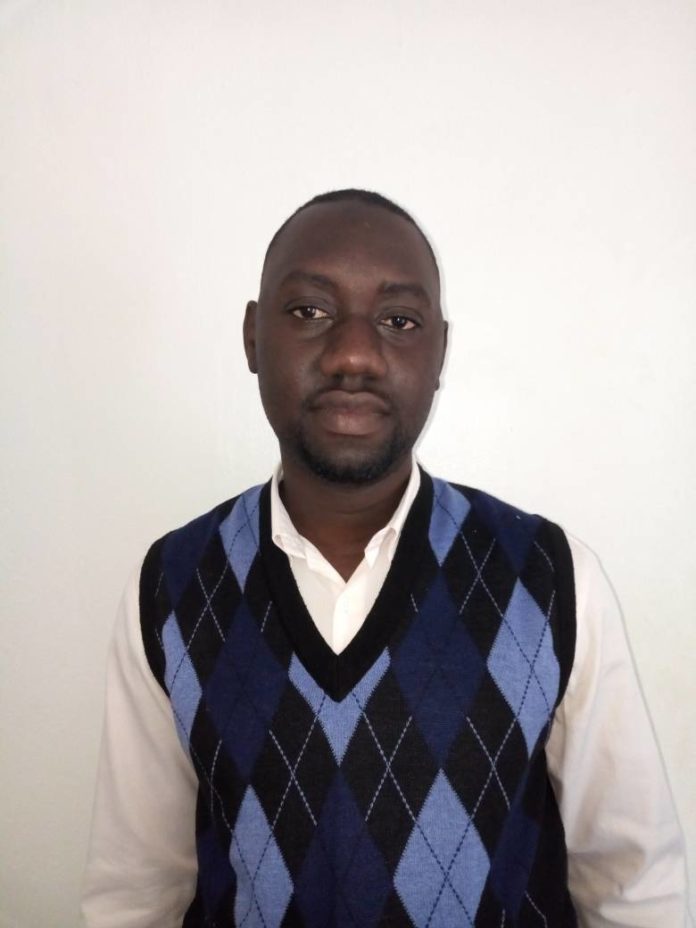
Mr. Woira


For quite some time I have been trying to compare my country Uganda and our close friend China. I see a lot that has been achieved through our partnerships and I see a lot more is still in the offing for us to gain from in the friendship between the two countries.

On my trip to China a few weeks ago, I really admired whatever step China has reached at and I salute the leaders of the great Communist party who have tirelessly made sure that all their development plans have been achieved in the allocated periods documented in their termly plans.

First, China is the fastest growing economy in the world for the last few decades and one of the defining features of china’s growth has been investment-led growth. China’s sustained high economic growth and increased competitiveness in manufacturing has been underpinned by a massive development of physical infrastructure.

Infrastructural development has greatly played an important role in promoting economic growth in China between 1975 and 2007; the results reveal that infrastructure stock, labour force, public and private investments have played an important role in economic growth in China.

More importantly, infrastructure development in China has a significant contribution to growth than both private and public investment. Further, there is unidirectional causality from infrastructure development to output growth justifying China’s high spending on infrastructural development since the early nineteen- nineties.

My experience from China suggests that it is necessary to design an economic policy that improves the physical infrastructure as well as human capital formation for sustainable economic growth in developing countries.

The Chinese believe that if you want to be rich, you need to build a road and a bridge. Which is true, as the infrastructure facilities; China has built over four decades of reform and opening-up have boosted its economic growth and helped it lift more than 800 million people out of poverty and made them well off with better services.

Infrastructure facilities are public goods that help improve productivity and people’s standards of living, even in poverty-stricken areas. For China, infrastructure has facilitated economic development, and vice-versa.

Based on my observations, I view China as the leading infrastructure finance provider on the continent as demonstrated by its pledge of $60 billion to Angola and Guinea to work on big projects including hydropower plants, an oil refinery in Nigeria, and a new city in Egypt and most of the funding which amounts to almost $47 billion out of the $60 is for infrastructure projects.

China also included infrastructure construction in its five-year plans, which have had different characteristics in different periods of economic development. Infrastructure was given the second-highest priority next only to the development of agriculture and township enterprises highlighting the concept of scientific development.

In my observation, I found that the introduction of market mechanisms in public goods supply has much promote development in China. To overcome the shortage of funds for infrastructure construction, one professor told me that the country follows the principle of marketization, where some fees is charged for the use of public goods, in order to share construction and operation costs, and promote rational and effective allocation of resources.

And using the same mechanism, the income collected from the use of the bridges, tunnels and ferries is used to repay the construction loans which is a very good model that all the African countries should just copy and paste here and in this case I recommend that Uganda starts using the model with the current Entebbe Express way and other upcoming projects like the flyovers.

China has also gradually introduced diversified investment and financing models such as build-operate-transfer, asset securitization and public-private partnership, after initially relying on financing support from the World Bank. These models have played a big role in some of China’s important infrastructure projects like Railway construction, Tunnel construction, Road construction and many more other projects.

Back to Africa, I think many countries have benefited from the infrastructural development goal by China, many of the countries are beneficiaries one being Kenya, the Standard Gauge Railway is the largest infrastructure project in Kenya since its independence in 1963. China Eximbank provided the finance for the first phase of the 472 kilometers of track between Nairobi and Mombasa at a cost of $3.2 billion.

In Uganda here, we have achieved more than enough in infrastructural development from the government of China and one of the projects that we have got is the Entebbe Express way, this road is no different from the express ways in China basing on the design and quality, the expressway was estimated to cost US $476 million and of this, US $350 million was a loan from the Exim Bank of China at 2 per cent annual interest which was a very good deal and right now the express way is very ready to use pending approval of payment mechanism by parliament..

In neighboring Ethiopia, an electric train line from Addis Ababa to Djibouti, which is also Chinese-financed, opened years ago. The cost for this more expensive type of railway was $3.4 billion for 756 kilometers.

I am very sure that this China-Africa relationship will make a way for many African countries to develop their infrastructures like the roads, bridges and the other ones that are of great importance to the various countries.

Michael Woira

Uganda Media Centre


Stories Continues after ad

Retaliation: Rwanda deports Ugandans as diplomatic relations worsen

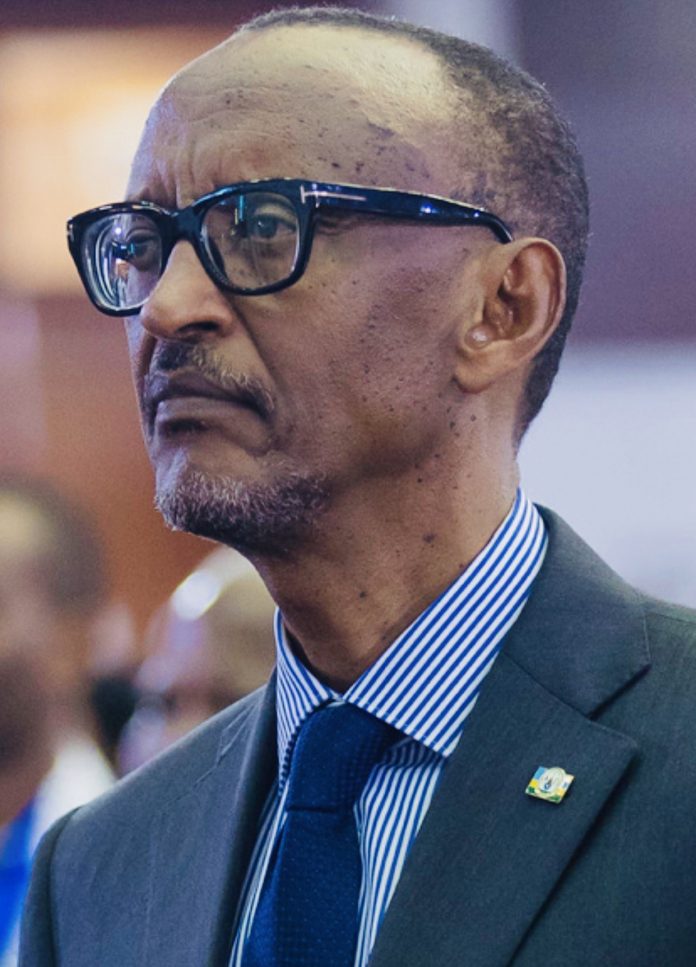
Rwandan President Paul Kagame

Authorities in Rwanda have today deported three Ugandans said to be residents of border districts of Kisoro and Kabale.

Those deported for suspected illegal entry into Rwanda are; Ivan Niringiyimana (from Kisoro), Beatha Nyiramuco (from Kisoro) and Nicholas Tumwesigye from Kabale district.

The deportation order was effected by National Intelligence and Security Service Directorate General of Immigration and Emigration.

“Reference to article 15 of the law no 04/2011 of 28/03/2011 on Immigration and Emigration in Rwanda and article 38, 39 of the Ministerial Order No.02/01 of 31/05/2011 Establishing Regulations and Procedures of Implementing Immigration and Emigration Law. The Director General of Immigration and Emigration has issued you with a deportation order and declared you prohibited immigrant,” wrote Francois Regis Gatarayiha, the Director General of Immigration and Emigration.

The deportation of Ugandans by Rwanda comes just over two months after Uganda deported 32 Rwandans, mostly men, accusing the culprits of illegally entering and staying within its territory.

According to Marcellino Bwesigye, the Acting Commissioner Legal and Inspection Services, in the Ministry of Internal Affairs, the deportees were identified by the Chieftaincy of Military Intelligence (CMI).

The deportation of Ugandans also comes a few days after the second meeting between Uganda and Rwanda to address the border closure issue was called off. The Uganda government spokesperson Ofwono Opondo, said the meeting was called off at the request of Kigali. Ofwono sated via his Twitter handle that “the media is hereby informed that the second meeting of the Adhoc Commission on Luanda MoU between Uganda and Rwanda scheduled for November 18, 2019, in Kampala has been postponed at the request of Rwanda.”

Stories Continues after ad
Curbing tax evasion: Global leaders to meet in Paris to celebrate success in implementation of tax transparency

Global tax administrators are struggling to curb tax evasion by multinational companies

In 2009, G20 Leaders declared “the era of banking secrecy is over.” Ten years later, the Global Forum on Transparency and Exchange of Information for Tax Purposes will meet to celebrate the unprecedented global success in the implementation of tax transparency and exchange of information standards.

A series of high-profile data leaks and media investigations over the past decade have raised awareness and given rise to increasing public anger over wealthy individuals’ use of shell entities and anonymous accounts to evade taxes.

The Global Forum is the world’s largest network for international cooperation in the field of taxation and financial information exchange, bringing together 158 countries and jurisdictions plus the European Union in the fight against tax evasion.

It has been instrumental in efforts to reduce and eliminate safe harbours for tax evaders and making good on G20 Leaders’ pledge to end bank secrecy.

The Global Forum’s 10th anniversary plenary provides a unique opportunity to highlight the successes realized over the past decade thanks to greater cross-border tax cooperation.

Participants, including 60+ ministerial-level delegates, will exchange views on the radical evolution of international cooperation as well as the utility and global impact of tax transparency.

Discussion will also focus on the role of tax transparency in tackling illicit financial flows and the experience gained from the implementation of the automatic exchange of financial account information.

Delegates will reflect on the future of tax transparency in the digitalised economy and approve a new agenda for future work to accelerate international cooperation against tax evasion.

Stories Continues after ad

Standard Chartered Bank involved in Sh2.2b loan dispute

Standard Chartered Bank Head office in Nairobi

Two men who guaranteed the Milling Corporation of Kenya a loan from Standard Chartered Bank in Kenya want to be enjoined in a suit filed by the corporation against the lender, Kenya’s daily, Standard Digital reports.

Brothers Diamond Lalji and Shayid Lalji, who were directors of the corporation, appeared before Justice Janet Mulwa on Thursday to argue their application after the bank raised grounds for opposition.

In a notice of motion dated July 8, 2019, the two, through lawyer Sherman Njoroge, claim they have a genuine stake in the proceedings and outcome and need to be enjoined in the suit as interested parties.

In the suit, the Corporation (plaintiff) wants the court to stop Standard Chartered Bank (defendant) from auctioning its land – Nakuru Municipality/Block 8/1 – after it defaulted on loan repayments.

The firm had used the property as security for a KSh2.2 billion loan taken between 2010 and 2015.

The brothers have now protested the move by the bank to force the auction of the property for a sale valuation of KSh696, 539,475, which is lower than the debt owed by the corporation.

Mr Njoroge told Justice Mulwa the bank would go after the brothers who were the guarantors for the remaining loan amount of KSh59,381,668. He said the interested parties could suffer loss and damages if they were not involved in the case.

 “The outcome without the involvement of the guarantors will adversely expose them to about KSh60 million in debt,” said Njoroge.

The bank claims the application by the former directors is an abuse of court process and should be dismissed. Through the firm of Hamilton Harrison and Mathews, the bank submitted that the brothers were bent on delaying the hearing of the suit. The court will give direction on the case on February 27 next year.

Stories Continues after ad

How USA and India handed economic leadership of Asia to China

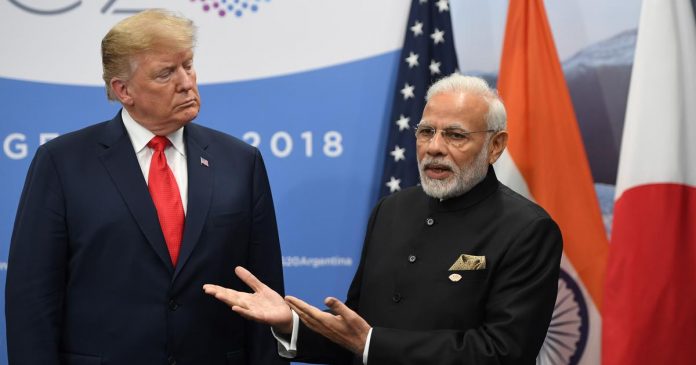
A-file-photo-of-US-President-Donald-Trump-and-Indias-Prime-Minister-Narendra-Modi.

By Joergen Oerstroem Moeller

Amid continuing tensions with Beijing, the US and India have unwittingly handed China economic leadership of Asia.

In one of his first moves as US president, Donald Trump torpedoed his predecessor Barack Obama’s initiative to establish a large economic arrangement across the Pacific with strong emphasis on technology and services, the Trans-Pacific Partnership.

Obama designed the TPP not as a mere trade agreement, but a political gesture substantiating statements on Washington’s ‘pivot to Asia’. He said openly that without the TPP, China would write the rules on trade and investment.

Trump’s decision to withdraw from the TPP laid bare his thinking on trade. Multilateral arrangements do not suit his temperament. He prefers bilateral arrangements in which the US can throw its weight around. He is not against negotiations, but these must be on his terms and culminate in an agreement in line with his image as a deal-maker. In this frame, strategic leadership or long-term considerations have no place.

Earlier this month, Indian Prime Minister Narendra Modi declined membership of the Regional Comprehensive Economic Partnership, the China-led free trade area.

India’s rejection of RCEP signals that the country does not intend to play a major role in shaping Asia’s future. It creates a genuine problem for those countries – the 10 southeast Asian nations, as well as Japan, South Korea, Australia and New Zealand – that signed on to RCEP expecting India to join. These governments will ratify the deal hoping that India, sooner rather than later, will take part in what they see as a crucial step in building Asia’s political architecture.

New Delhi’s decision puts China in a difficult position. The Belt and Road infrastructure initiative and RCEP supplement each other. They are part of Beijing’s strategy to ensure smooth access to the global economy by allowing exports and imports to flow freely. A quick glance at a map makes clear India’s importance.

China can no longer rely on labour-intensive or low-cost manufacturing as a main component of its economy. If India emerges as the next manufacturing powerhouse with financial and logistic support from China, both countries stand to benefit. Now, such a tandem seems a faraway prospect.

India’s political parties and business sector applauded almost unanimously the decision not to join RCEP. The media claimed the trade deal would have resulted in cheap Chinese goods crowding out Indian products, decimating jobs.

This reflects a lack of self-confidence. India’s deficit in relation to RCEP countries is more than $105tn, of which China accounts for half, but that warrants regulatory changes, not more protection. China used its World Trade Organisation membership to accelerate reforms. India could have done the same with RCEP, but chose instead to defend an economic structure that is incompatible with the exigencies of the global economy.

The longer India holds back, the more difficult the eventual adjustment will be. The more India depends on protectionism to ensure that inefficient domestic manufacturers can sell their products at home, the less competitive Indian companies will be. Such policies keep the Indian economy hostage and jeopardise long-run attempts to create jobs for the millions of young people entering the labour market.

Through the TPP and RCEP, the US and India respectively could have ensured the Asian power balance did not tip too far in China’s favour. This would have given the Association of Southeast Asian Nations more room for manoeuvre. The two countries’ disengagement from these deals poses a conundrum as the rest of Asia grapples with how to adjust to China’s rising power across the continent. It connotes an unbalanced Asia.

Joergen Oerstroem Moeller is Associate Research Fellow, ISEAS Yusof Ishak Institute, and a former State Secretary at the Danish foreign ministry.

Stories Continues after ad

Sure Deal boss fined Shs30m for selling dangerous cosmetics

Prossy Namwanje

A Kampala businesswoman has been charged for selling cosmetics not fit for human and fined Shs 30 million by the Specialised Utilities Wildlife and Standards Court.

Maria Prossy Namwanje aka Aunt Lususu, the proprietor of Sure Deal products was charged with counts ranging from using the Uganda National Bureau of Standards (UNBS) Quality Mark without permit, being in possession of commodities that do not conform to compulsory standards.

In a session presided over by magistrate Marion Mangeni, Namwanje pleaded guilty after a plea bargain with the UNBS.

Upon Namwanje confessing to the charges, Caroline Akugizibwe, the lawyer for UNBS informed court that they agreed to a non-custodial sentence on ground that the convict pays Shs 30 million.

She further told court that the directors of UNBS did not object to that arrangement before seeking court to endorse their agreement.

As a result, the trial magistrate Ms Mangeni endorsed the agreement between the two parties by fining the convict Shs 30 million.

Prosecution avers that on February 2, 2018, in and around Buganda Road on plot 2127, Namwanje sold several brands of the Sure Deal Cosmetics products worth 1595.8 kilograms bearing the UNBS Quality Mark, without the permission of UNBS and on the same date she was in possession of commodities not approved for human usage contravening sections of the UNBS Act.

Under the UNBS Act, no person is allowed to import, distribute, sell or have in his or her possession or control for sale or distribution any commodity for which a compulsory standard specification has been declared.

This is not the first time that a businesswoman is charged with illegal use of the UNBS Quality Mark .On February 9, 2018,Namawejje Fiona,36, commonly known as Aunt Lususu, was also charged with illegal use of the UNBS Quality Mark.

According to the charge sheet Namawejje on September 14, 2017 at Aunt Lususu Shop no.404A Nakasero Complex in Kampala District applied the UNBS Q-mark on her cosmetics products called Aunt Lususu Family Jelly, Aunt Lususu Face Clearing Jelly and Aunt Lususu Cosmetics for sale without permit from UNBS.

Namwanje’s cosmetic products were so common in the local media especially on television showing women with bleached skins as being beautiful.

Stories Continues after ad

NSSF Friends with Benefits Season 3: How savings boosted Kagenyi’s poultry business

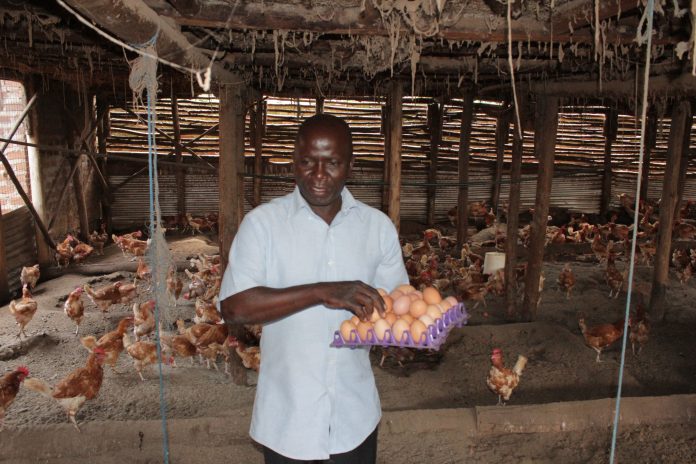
Kangenyi at his poultry farm

Sharp voices from thousands of layer and deep voices from thick broiler chicken welcomes you to Kagenyi’s poultry farm in Mukono.

 A-52-year-old, Kagenyi Fred and a former employee of Nile breweries and Coca Cola Uganda retired from active employment in 2016 at the age of 50 years old.

Kagenyi Fred whose terminal benefits from his former employer had been used up in paying bank loans and school fees for his children who were at the University during that time was struggling in his small pountry farm.

A friend convinced Kagenyi who was already 50 years old to withdraw his NSSF benefits. Kagenyi did as told by his colleague and withdrew his NSSF benefits on 2016 which were Shs220 million.

Kagenyi whose earlier side business was small scale poultry farming devised to invest in poultry by purchasing 6000 chicks from Ken chick.

“Like they say the experience is the best teacher, I decided to invest 70 percent of my NSSF benefits in poultry farming because I had a wealth of experience in the field of poultry,” Kagenyi Fred said.

Kagenyi invested 70 percent of his NSSF by constructing an improved poultry structures and adding more chicken to his farm, currently, he is rearing over 8000 chicken with different chicken breeds like croilers, broilers, and layers.

The rest of the benefits (30 percent) of his NSSF benefits were invested in planting maize and eucalyptus trees in Kyotera, Lakai District. Kagenyi explains that all his investments are inter-dependent on each other. He grows maize as feeds for his chicken, same applies to chicken droppings which he uses as manure for the maize plantation.

Kagenyi produces 80_90 trays of eggs per day and makes monthly returns of Shs7M out of his poultry farm. With his manure from the chicken droppings, his maize plantation grows is flourishing.

Kagenyi, a former employee now employees 10-15 people on his farm and has been able to educate all his children up to the University level.

However, Mr. Kagenyi is being faced with a challenge of thieves who sneak in his poultry structures and steal his chickens at night. With sadness on his, he recalls a nasty incident when thieves stole his 300 chicken at night. According to him, it was the greatest loss he ever encountered in his business.

Fluctuation of prices of eggs and diseases are other threatening challenges that effect Kagenyi’s poultry farm.

“I counter this issue of thieves by hiring a guard then for disease, to ensure cleanliness especially using the disinfectant before and after poultry work. And for prices of eggs, I really have no control over that,” Kangenyi said.

Kangenyi decided to participate in the NSSF friends with benefits competition because he wants to tell the world that experience is the best teacher and that for any investment, it should be informed by someone’s experience, not the returns. He has managed to succeed in poultry because he had enough experience.

Kagenyi’s future prospect is to be among the leading poultry farmers in Uganda with over 20,000 chicken.

Kagenyi gives an example of himself when he had received his money, he first tried maize business but he couldn’t make any returns because he had no experience in that field, and he anticipates to win and use the prize to increase the number of chickens.

Kagenyi is very proud of his former employers not because they employed him for a longer period of time but they were able to save his money with the NSSF for 20 years which he would not have done personally.

To vote for Mr. Kangenyi Fred in the NSSF Friends with Benefits competition, dial *254# or go to www.nssfug.org.

Stories Continues after ad

NSSF Friends with Benefits season 3: NSSF boosted my real estate business – Dr Seruka

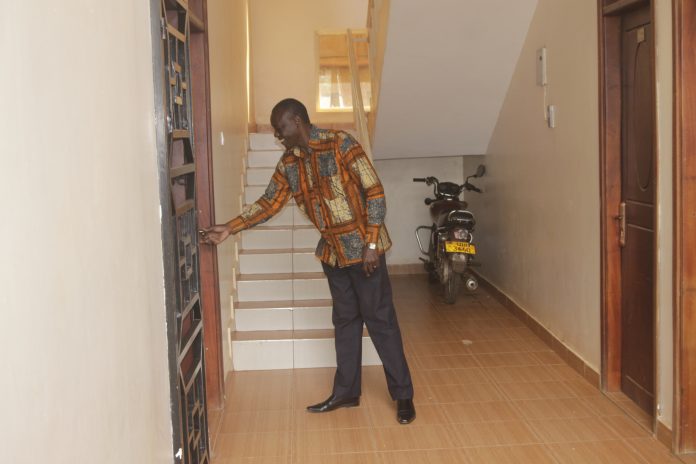
Dr. Seruka opening his office

As many Doctors rushed into the business of establishing hospitals and clinics country-wide, Dr. Seruka David Ssentongo who holds a Masters Degree in Public Health from the University of Leeds opted to invest in the real estate business.

Dr. Seruka started working in 1996 with PLAN International as a health specialist then moved on to Pathfinder under USAID, World Vision, PREFA and then KCCA where he worked as the Director of Environment and Public health. Dr Seruka has retired into consultancy and is working on contracts with World Health Organization (WHO).

Unfortunately, in 2018, his contract at KCCA expired and Dr. Seruka who was already 50 years decided to retire from active employment to move on with his real estate business. Dr Seruka was already in the real estate industry with properties in Nakasero, Muyenga, Kyanja, Kireka, Namanve and a farm in Kasanda, Mubende District.

After a period of one month of processing for his NSSF benefits, Dr Seruka received Shs420 million worth of benefits and this boosted his real estate venture because he bought condominium rentals in Najjera at Shs 200 million, semi-detached rentals in Nalumunye at UShs100 million, improved the farm by building a standard structure for goats and bought land in Mukono worth Shs70 million.

“My NSSF benefits have boosted my real estate business because after I had left full-time employment, our source of income had reduced but after withdrawing my benefits, the business improved and is now prospering,” Dr Seruka said

A very busy Dr. Seruka applauds his wife for being an enterprising woman with incredible business skills that have enabled them to identify strategic areas to purchase plots and already finished property.

Real estate business is still a young business and therefore it has many challenges that range from taxes to rent defaulters which makes its survival very improbable. Dr. Seruka says that it is very tricky to find a tenant who will abide by all the rules and regulations of the property owner.

On a personal level, Dr. Seruka has managed to educate all his children and the last born is at University, added animals at his farm and he is receiving a monthly income estimated at UGX19m from his rentals and lastly improved his consultancy.

“I decided to participate in the NSSF friends with benefits competition because I believe my story will inspire many young people out there to be able to save for their future and as someone who is passionate about young people, that’s out goal,” Dr. Seruka said

Speaking out of experience, Dr. Seruka asks all the savers to be very patient until the retirement age for them to be able to withdraw a sizable amount of their NSSF benefits that will sustain their retirement life.

To vote for Dr. Seruka David Ssentongo in the NSSF Friends with Benefits competition, dial *254# or go to www.nssfug.org

Stories Continues after ad