Stanbic Bank
Stanbic Bank
26 C
Kampala
Stanbic Bank
Stanbic Bank
Home Blog Page 1156

Ugandan companies wary about foreign competition in the oil industry

oil pipes


Evelyne Birungi Turumanya, a sole proprietor from Hoima Municipality, is doing her utmost to get set for engaging in Uganda’s expected oil and gas sector. Her restaurant/mobile food business is one of the 1004 Ugandan enterprises registered in the National Oil Suppliers database (NSD) for possible supply of services and goods based majorly on competitive bidding.

As the big oil companies continue to negotiate with government on the investments that will help start oil production in Uganda, Ms Turumanya is also making her own moves. “Since I registered I have been improving my services and taking my business seriously by keeping records,” she says. As required by the Petroleum Authority of Uganda, prior to being registered in the database, she made her business tax compliant registered her employees with the National Social Security Fund (NSSF).

However, Ms Turumanya is fearful that she does not have the technical and financial capacity to compete with foreign companies or hotels owned by foreigners but are registered in Uganda. In addition to the 1004 Ugandan businesses, there are 424 Foreign Service providers in the database that has 19 sectors that will deliver services and goods to players in the oil sector.

For instance, there are three registered companies in the food/restaurant and hotels business, like Turumanya’s. They are; Newest Catering Tanzania Limited, Les vins Yannick de VERMONT from France and Ecolog International from United Arab Emirates.

Like Ms Turumanya, other local companies/ individuals are concerned that they may not compete favorably with the Chinese, British, German, Russian and other foreign companies, which have far more experience in the sector that requires high standards.

“Much as I registered in the NSD I expect stiff competition from foreign companies which have both technical and financial capacity to do the job,” said Aisha Tumusiime who wants to participate as sole proprietor in providing transport and storage services.

Ugandan firms are expected to join foreign ones in providing services and goods for the construction of US$4 billion oil refinery and the US$ 309 million Kabaale International Airport in Hoima, the US$ 3.5 billion East African Crude Oil Pipeline (EACOP), as well as the Kampala Storage Terminal, whose tender is out.

                                            Source-PAU

The Petroleum Authority of Uganda (PAU) says that registration on the NSD does not necessary lead to automatic award of contracts but is a mandatory legal requirement for all buyers and sellers of goods and services in the country’s oil and gas sector.

A baseline study of the industry in 2013, highlighted many obstacles for Ugandan firms that may try to get oil and gas contract. Many remain unresolved for many firms. The study, for instance, highlighted access to cheap credit as a major barrier. Rates for loans in Uganda are still extremely high making it nearly impossible for interested parties to develop any business. Local bankers say the cost of capital is too high, which explains high interest rates.

The survey also highlighted quality assurance and corporate governance as lacking. “All sectors will need to upgrade the quality of their overall management standards and quality of delivery to align with oil and gas expectations,” it says. Indeed, it called for a complete transformation of sectors like transport, logistics and hazardous waste management.

Ernst Rubondo, the executive director of PAU, says several strategies are being developed to ensure that locally owned companies partake of the activities in the oil and gas sector where they are expected to supply services and materials.

He says government has reserved 15 categories of goods and services for Ugandan enterprises to provide. They include; transportation, security, foods and beverages, hotel, accommodation and catering, human resource management, office supplies, fuel supply, land surveying, clearing and forwarding and IT services among a few others.

Rubondo also says the Authority does quarterly workshops where information regarding major requirements and investment opportunities in oil and gas sector is disseminated. Upon the completion of the Front-End Engineering Design (FEED), over 1000 Ugandan companies received information on the requirements of Tilenga, Kingfisher and EACOP projects, he says.

He also adds that government is planning to establish an Industry Enhancement Centre (IEC) which be key in raising standards in health, safety, international business operations that will in the end improve competitiveness of local enterprises in oil and gas sector. Already, government and the oil companies launched the Agriculture Development Programme for the Albertine Graben. It is expected to build the capacity of farmers in the region to meet the expected demand for food.

Private players like Stanbic Bank are also supporting capacity growth in the sector has helped a total of 514 entrepreneurs from 153 companies have been trained on standards and business management for the oil sector, in the Stanbic Bank Business Incubator Programme.

However, the 2013 baseline survey pointed out that some of Uganda’s industries like those cement and steel will simply be unable to meet the sheer size of oil & gas needs, at peak demand, given the gap between the current supply and expected future demand.

Emmanuel Mugarura, the Executive officer of the Association of Uganda Oil and Gas Service Providers (AUGOS) urges local firms to partner with foreign companies, to meet these demands.

Indeed, partnerships were an effective strategy for those that are already participating. John Bosco Lubega, General Manager Geotech Solutions (U) Ltd, involved in geotechnical, geophysical and specialised construction works and services, says their entry into the oil and gas sector started in 2013 when they responded to an advert in the print media run by Total E & P Uganda B.V., for geophysical survey services at the Central Processing Facility (CPF) in Buliisa.

“We did not have the capability to go it alone then. Nonetheless, we had in 2012 worked with Geo2X S.A (Switzerland) on a geophysical component of feasibility studies for Ayago Hydropower Project. We contacted Geo2X and successfully worked together on the CPF tender, and execution of the assignment. We again worked together on the geophysical survey for the well pads in 2017/18. In 2018, we worked on the Tilenga soil investigation for enabling infrastructure trial pits and core drilling. Recently, Saipem SpA have engaged us on Topographical (Lidar Survey), Geotechnical and Hydrogeological Studies at the oil refinery in Hoima, pipeline corridor and tank farm area.”

Edgar Mugisha, Managing Partner Atacama Consulting says his firm that focuses on environment was able to get the capacity and skills and international exposure after partnering with international players in the oil and gas sector. “Partnerships are another key to consider, as they are key in the mobilisation of resources; both human and financial, he says.

He advises other local firms that they should aim at quality work as it makes one get referrals that can sustain their businesses. “There are no short-cuts when it comes to delivering quality work in the oil and gas sector,” he says.



Stories Continues after ad

Another Kagame political opponent killed in Rwanda

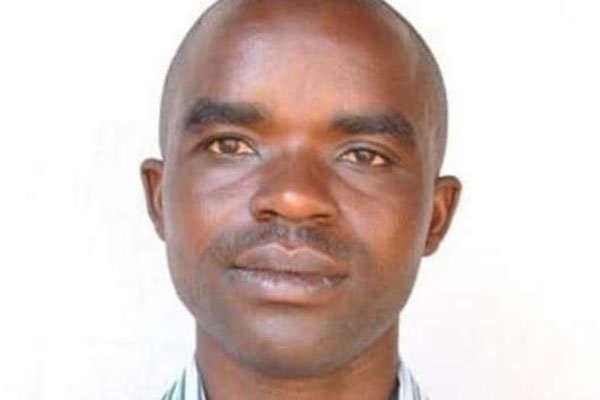
Mr. Syridio Dusabumuremy

A prominent opposition politician in Rwanda, Mr. Syridio Dusabumuremyi, has been stabbed to death, FDU-Inkingi unregistered political party has reported.

The murder of Dusabumuremyi adds to endless list of President Paul Kagame’s opponents who have been murdered within the country and in diaspora.

According to the party’s leader, Victoire Ingabire, Dusabumuremyi, the then FDU-Inkingi’s coordinator, was attacked by two assailants, at his work place.

He has been running a canteen at a health centre in the central district of Muhanga. The police has however conferment that two suspects have been nabbed, in relation to the gruesome murder and investigations are ongoing.

Ms Ingabire told BCC that the murder of Mr Dusabumuremyi is the latest in a series of attacks on members of her party with the aim of terrifying them.

Two months ago, Eugène Ndereyimana, a FDU-Inkingi representative in the east of Rwanda, went missing. He has still not been found.

In March, Anselme Mutuyimana, the party’s spokesperson, was abducted and later found dead in a forest in the west of the country.

In 2016, FDU-Inkingi member Jean Damascène Habarugira was killed.

Ms Ingabire, a leading critic of President Paul Kagame, said her party was being targeted because it strove for Rwandans rights and freedoms. “Our cause is good and we will never give up on it whatever they do,” she said.

Stories Continues after ad

Families of the 346 Ethiopia, Indonesia plane crash victims to be compensated with $145,000 each

Ethiopian-plane


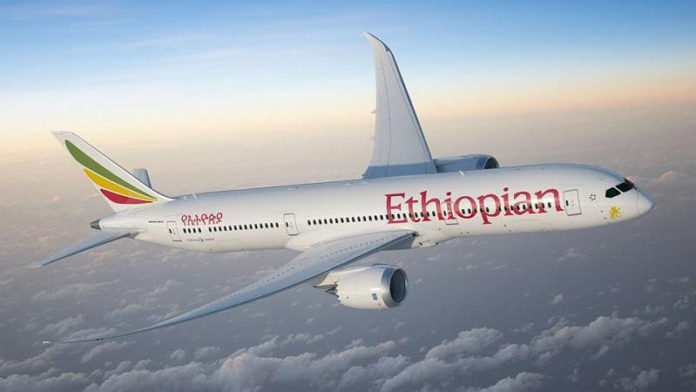
A $50 million compensation fund for the families of people killed in Boeing 737 Max plane crashes has begun taking claims. Fund officials said Monday that they have begun accepting applications, with a deadline of December 31 for submitting claims.

Boeing is providing money for the fund, which works out to nearly $145,000 for each of the 346 people who died in crashes in Indonesia in October and in Ethiopia in March. Dozens of families are suing the company, with families of about 60 victims yet to file, according to Reuters.

Families will not be required to sign away their rights to sue in order to claim compensation from Boeing’s fund, the company said.

Administrators of the fund include Kenneth Feinberg, who oversaw compensation for victims of the September 11, 2001, terror attacks.

The 737 Max has been grounded since March, shortly after the crash of Ethiopian Airlines Flight 302. The Federal Aviation Administration is meeting with international regulators to explain its review of changes that Boeing is making in the plane, including updates to a flight-control system implicated in the accidents.

Boeing CEO Dennis Muilenburg has said he hopes to win approval to resume flights in October.

Stories Continues after ad

Eastern African stand by force opens maritime search and rescue course in Entebbe

UPDF soldiers


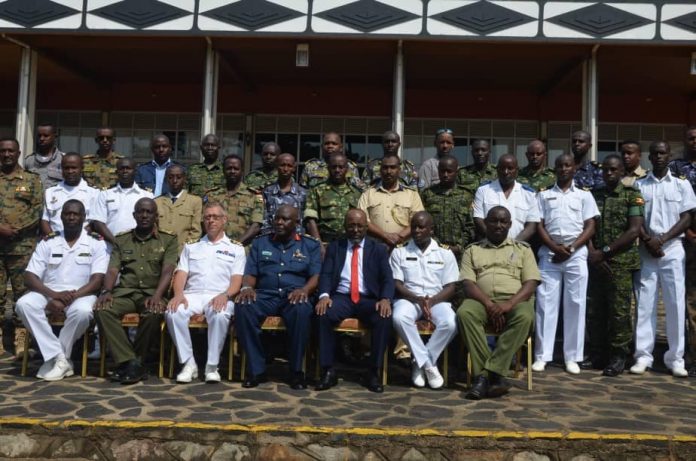
Eastern African Stand by Force (EASF) maritime search and rescue course has kicked off today at Botanical hotel -Entebbe.

The course will run for two weeks with participants from the ten member states; Burundi, Comoros, Djibouti, Ethiopia, Kenya, Rwanda, Seychelles, Somalia, Sudan and Uganda the host.

Maritime search and rescue involves Navy, coastal guards, marines, Air Force and the Civil community.

The training that will run from 23 Sept 19 to 04 Oct 19, aims at enhancing effective and competence skills in Search and Rescue (SAR ) operations. It is expected to improve the trainees’ capability to maintain the Standby Force’s capacity and readiness to intervene in regional threats of a maritime nature.

In his opening remarks, the Chief Guest and the Deputy Commander Air Force Maj Gen Gavas Mugyenyi, on behalf of the Chief of Defence Forces Gen David Muhoozi, expressed UPDF’s immense honor to be the host of such a course.” Our country has had incidents on our Waters that require various agencies to pool resources and technical requirements to save lives in our water bodies. Critical to this are skilled human resource thus the relevance of this course” Maj Gen Gavas Mugenyi said.

He further noted that His presence is an expression of the CDF’s unwavering commitment and continued support to Eastern African Standby Force (EASF) in its effort for a safe and secure maritime domine.

In addition, Maj General Gavas noted that, it is essential for all those who ply the maritime spaces to understand the search and rescue system and organisation to be able to coordinate, execute and plan maritime search and rescue operation up and down chain of command.

He encouraged the participants to have an opportunity to learn from each other’s experience.

The Director Eastern African Standby Force Dr Abdillahi Omar Bouth encouraged the participants to put all necessary effort into the course and actively engage the instructors and always have desire to learn from the opportunity availed to them.

The UPDF marines brigade commander Brig Gen Michael Nyarwa, noted that the Eastern African Standby Force is one of the five regional mechanisms of Africa’s stand by force and it has a maritime component that has now chosen Uganda as a host country because it has deployed a maritime component to secure the coast of Mogadishu.

Uganda also has a fifth of its territory covered by water bodies therefore the need for maritime search and rescue skills.

Stories Continues after ad

WHO welcomes  landmark UN declaration on universal health coverage


World leaders have adopted a high-level United Nations Political Declaration on universal health coverage (UHC), the most comprehensive set of health commitments ever adopted at this level.

“This declaration represents a landmark for global health and development,” said Dr Tedros Adhanom Ghebreyesus, Director-General at WHO. “The world has 11 years left to make good on its sustainable development goals. Universal health coverage is key to ensuring that happens.”

He added: “Universal health coverage is a political choice: today world leaders have signaled their readiness to make that choice. I congratulate them.”

The declaration comes the day after the World Health Organization (WHO) and partners flagged the need to double health coverage between now and 2030 or leave up to 5 billion people unable to access health care.

In adopting the declaration, U.N. Member States have committed to advance towards UHC by investing in four major areas around primary health care.

These include mechanisms to ensure no one suffers financial hardship because they have had to pay for healthcare out of their own pockets and implementing high-impact health interventions to combat diseases and protect women’s and children’s health.

In addition, countries must strengthen health workforce and infrastructure and reinforce governance capacity. They will report back on their progress to the U.N. General Assembly in 2023.

“Now that the world has committed to health for all, it is time to get down to the hard work of turning those commitments into results,” said Melinda Gates, Co-Chair of the Bill & Melinda Gates Foundation.

“We all have a role to play. Donors and country governments need to move beyond business as usual to bolster the primary health care systems that address the vast majority of people’s needs over their lifetimes,” said Gates.

On 24 September, WHO and 11 other multilateral organizations, which collectively channel one third of development assistance for health, will launch their Global Action Plan for health and wellbeing for all. The plan will ensure the 12 partners provide more streamlined support to countries to help deliver universal health coverage and achieve the health-related SDG targets.

Stories Continues after ad

CPC :  Women MPs discuss gender issues


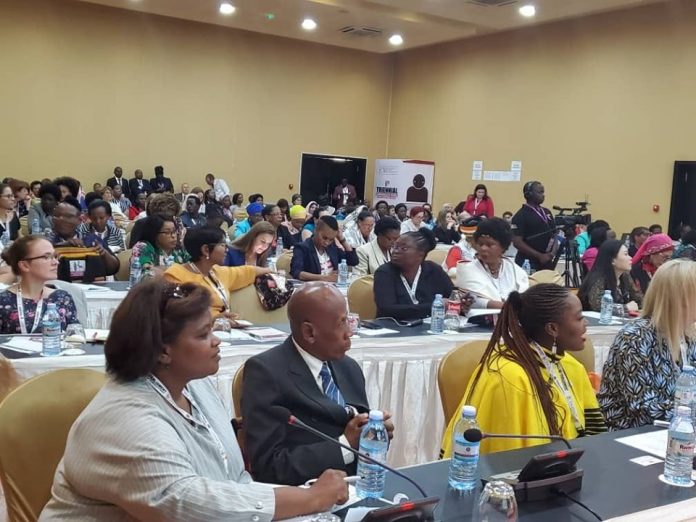
The third day of the 64 common wealth parliamentary conference (CPC) 2019, has kicked off with a Conference of Women Parliamentarians discussing empowering women as effective legislators in the 21st century.

The national leader People With Disabilities (PWDs), Safia Nalule, urged fellow legislators to develop a checklist of women issues they would like committees of Parliament address. She said Uganda’s checklist on gender enables committees to deliberate taking note of gender issues.

More than 20 speakers and deputy speakers of national and provincial legislatures are in the country for the 64th Commonwealth Parliamentary Conference that opened in Munyonyo.

Some regional speakers, although not members of the Commonwealth, which brings together former colonies and territories of the British and admitted countries, have also been invited for the conference scheduled for 22 – 29 September 2019.

The weeklong event commenced with conferences of the Commonwealth Women Parliamentarians and Small Branches from jurisdictions with a population of up to 500,000 people discussing problems and the operation of diplomatic systems in their areas.

Presiding officers, who arrived include: Lesotho, Kenya, Namibia, Sierra Leone, Tanzania, Bangladesh, St. Kitts and Nevis, Trinidad and Tobago, India, Cook Islands, Fiji, Nauru, Tonga, Cayman Islands, Dominica, Virgin Islands, The Gambia, Malta, Fiji, Bermuda, Malawi, Rwanda, South Africa, the Gambia and Zambia.

Delegations have arrived from all nine regions of the Commonwealth including Africa, India, Asia, Australia, British Islands and Mediterranean, Caribbean, Americas and the Atlantic, Canada, Pacific, South East Asia.


Stories Continues after ad

The Best FIFA 2019 Awards: List of winners and how the Cranes coach, captain voted

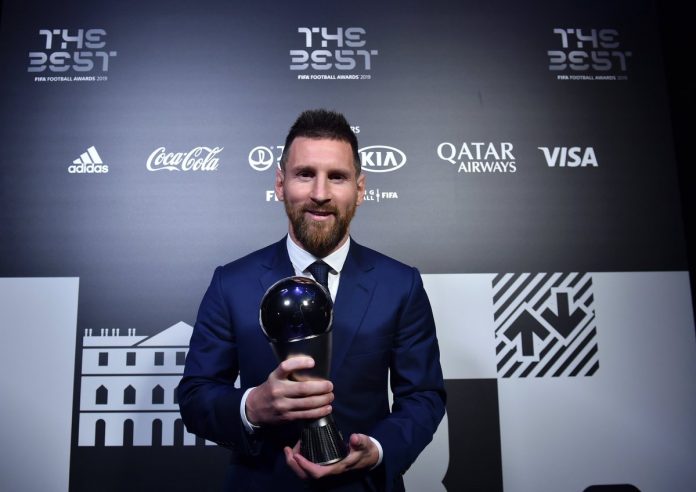
Messi 2019 player of the year


The 2019 FIFA ‘The Best’ football award winners were announced in ten different categories on Monday evening in a star-studded ceremony in Milan’s famous opera house La Scala, Italy.

Lionel Messi and Jurgen Klopp took home the leading honours for The Best FIFA Men’s Player and Men’s Coach respectively, after their outstanding 2018/19 campaigns which saw both scoop silverware and individual accolades galore.

It was a bumper year for the USA as Megan Rapinoe and Jill Ellis were rewarded for their part in the Stars and Stripes’ triumph at the FIFA Women’s World Cup France 2019 as The Best FIFA Women’s Player and Women’s Coach respectively.

Sari van Veenendaal was named the inaugural The Best FIFA Women’s Goalkeeper, joining her custodian counterpart Alisson who picked up The Best FIFA Men’s Goalkeeper award.

The FIFA Fair Play Award was taken home by Marcelo Bielsa and the Leeds United squad, after the Argentinean coach and his team ultimately sacrificed promotion for his team to uphold the values of fair play – instructing his Leeds United team to allow an equaliser after his side had gone 1-0 up with an opposition player down injured.

Uganda National team captain Denis Onyango voted for Virgil van Dijk in first, Mohamed Salah in second and Frenkie De Jong in third for the player of the year award.

Interim head Coach Abdallah Mubiru voted for Kylian Mbappe, Cristiano Ronaldo and Messi in first, second and third respectively.

The award was decided by national team coaches and captains, select members of the media and online voting.

Messi received 46 points overall, Van Dijk came second with 38 points and Ronaldo at third with 36 points.

The Best, in full:

Men’s Player: Lionel Messi

Women’s Player: Megan Rapinoe

Men’s Coach: Jurgen Klopp

Women’s Coach: Jill Ellis

Men’s Goalkeeper: Alisson

Women’s Goalkeeper: Sari van Veenendaal

Puskás Award: Daniel Zsori

Fan Award: Silvia Grecco

Fair Play Award: Marcelo Bielsa

Men’s World11: Alisson; Matthijs de Ligt, Marcelo, Sergio Ramos, Virgil van Dijk; Frenkie de Jong, Eden Hazard, Luka Modric; Cristiano Ronaldo, Kylian Mbappe, Lionel Messi

Women’s World11: Sari van Veenendaal; Lucy Bronze, Nilla Fischer, Kelley O’Hara, Wendie Renard; Julie Ertz, Amandine Henry, Rose Lavelle; Marta, Alex Morgan, Megan Rapinoe


Stories Continues after ad

Lionel Messi, Megan Rapinoe named FIFA players of the year

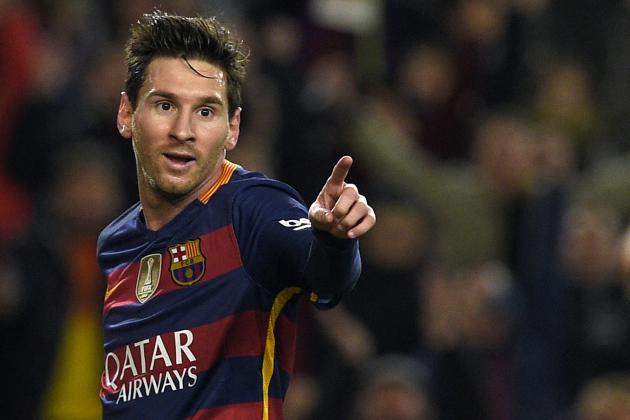
Lionel Messi


Argentinian soccer star Lionel Messi beat his rival Christiano Ronaldo to become the men’s FIFA player of the year, while American Megan Rapinoe, who led the US women’s team to this year’s World Cup victory, has been named women’s player of the year at the annual Best FIFA Football Awards on Monday.

It was the sixth time Messi won the award, putting him one ahead of Ronaldo, the Portuguese star,

The duo has dominated the award since 2008, with their string of victories only interrupted by Croatia’s Luka Modric last year.

“I want to thank those who gave this prize to me,” Messi said. “Even though individual awards are a secondary thing to me, it is a unique moment and it is good to celebrate it with my family and my children.”

Rapinoe took home her first best player award, beating teammate Alex Morgan.

The forward scored six goals to help the US defend the World Cup, earning her the Golden Boot for the tournament’s top scorer and the Golden Ball as the best player.

England forward Lucy Bronze was also a finalist.

The ceremony also saw Jill Ellis, who coached the US Women National team to World Cup victory, take home the award for women’s coach of the year, while Jurgen Klopp, who lead Liverpool to the Champions League title last season, was named coach of the year.

“Wow, what a ride,” said Ellis, who retired in July, shortly after the US beat the Netherlands 2-0 in the World Cup final.

Alisson Becker, who plays for Liverpool and Brazil’s national team, took home men’s goalkeeper of the year, while Sari Van Veenendaal, who captained the Netherlands to the final of the women’s World Cup against the US, won the women’s goalkeeper award.

FIFA, international football’s governing body, began awarding players in an annual ceremony in 1991. They have presented the awards in the ceremony’s current form since 2016.


Stories Continues after ad

Gates announces US$790 million for small-scale farmers


At the UN Climate Action Summit in New York, the Bill and Melinda Gates Foundation, the World Bank, and several governments announced financial commitments of US$790 million and assistance to enhance resilience of over 300 million small-scale food producers in the face of mounting climate impacts.

Climate change, which is bringing more droughts, flooding and extreme weather events, is already taking a severe toll on farmers, especially in developing countries. Climate change may depress growth in global agriculture yields up to 30 per cent by 2050. Meanwhile in poorer communities, where many people spend more than half of their incomes on food, food prices could rise by 20 per cent or more. These impacts would push people further into poverty and be a major setback in achieving the Sustainable Development Goals.

The commitment follows the recently released flagship report from the Global Commission on Adaptation that calls for global leadership to accelerate adaptation. The Commission finds that investing in adaptation can yield significant economic, environmental and social benefits.

The Commission is led by Ban Ki-moon, 8th Secretary General of the United Nations; Bill Gates, Co-chair of the Bill and Melinda Gates Foundation; and Kristalina Georgieva*, CEO of the World Bank, together with 31 other Commissioners. The Commission will announce several Action Tracks as part of its “Year of Action,” which goes through 2020, including at the Global Adaptation Summit hosted by the Netherlands in October 2020. Enhancing the resilience of small-holder producers is one of the core initiatives of the Commission’s track on Agriculture and Food Security.

The Bill and Melinda Gates Foundation pledged $310 million dollars over the next three years for the CGIAR. Additional financial support and resources will be provided by the Netherlands, European Commission, Sweden, Switzerland, United Kingdom, Germany, and the World Bank. (See breakdown below.)

Bill Gates, Co-chair of the Bill and Melinda Gates Foundation and the Global Commission on Adaptation, announced the financial commitments on the main stage of the UN Climate Action Summit. He was joined on stage by Egyptian President Abdel Fattah Al Sissi, Bangladesh Prime Minister Sheikh Hasina, Ghanaian President Addo Dankwa Akufo-Addo, and World Bank Group President David Malpass.

“Most people have never heard of it, but CGIAR has done more to feed the world’s poorest people than any other organization on earth,” said Bill Gates, Co-chair of the Bill & Melinda Gates Foundation and Co-chair of the Global Commission on Adaptation, speaking at the United Nations Climate Action Summit in New York. “Ultimately we need to double funding for CGIAR research to fully equip this unique and valuable institution to confront a wide range of climate challenges. These commitments are a critical down payment toward reaching that goal.”

Ban Ki-moon, 8th Secretary General of the United Nations and Co-chair of the Global Commission on Adaptation said, “Without urgent action to help the world’s smallholder farmers we risk undermining our food security for generations to come. Today’s financial commitments are a positive step forward, but more must be done to ensure the world’s farmers are equipped for long-term sustainable, climate-smart production”

“The World Bank is working towards a stepped-up effort on agricultural research in Africa. Towards this end, the Bank intends to work with its partners to develop an IDA financing package of $60 million for CGIAR-based institutions in Africa,” said Axel van Trotsenburg, World Bank Acting CEO. “Together with its on-going contributions, the Bank could potentially provide support in the order of $150 million over the next three years.”

The financial resources will support the CGIAR in developing innovations that will help smallholder farmers improve their livelihoods and build resilience in the face of climate change. The CGIAR, which hosts the world’s largest network of crop breeders focused exclusively on the needs of poor farmers, is pioneering the development of a new generation of food crops that can endure drought, floods, higher temperatures and soils tainted with salt from rising seas.

Additional initiatives under the Commission’s Agriculture and Food Security track, include: expanding access to climate-related digital advisory services for at least 100 million small-scale producers by 2030; scaling up access for at least 100 million small-scale producers to reach insurance, markets, finance, and productive safety nets; and improving access to and use of adaptation technologies and agroecological practices for 100 million small-scale producers.

Following is a breakdown of the major commitments to date:

  • The Bill and Melinda Gates Foundation has committed $310 million commitment to the CGIAR for 2020-22.The Netherlands will reorient €100 million ($110 million US$) towards food systems that are not only more productive and profitable, but also more adaptive and resilient. The Netherlands will also increase its contribution to the CGIAR to €50 million ($55 million US$) over 2 years.
  • The World Bank expects to provide about $150 million in support to CGIAR over the next three years.
  • The European Commission has committed €32.3 million ($35 million US$) for the CGIAR for 2020-21.
  • Switzerland has committed 33.1 million CHF ($33 million US$) for 2020-21 to the CGIAR.
  • Sweden has committed to increase funding for the CGIAR to 150 million SEK ($16 million US$) in 2019.
  • The UK, through DFID, is committing £45 million ($56 million US$) for the CGIAR in 2020, alongside an additional £27 million ($34 million US$) to support the Global Commission’s recommendations on agriculture.
  • Germany, through the Federal Ministry for Economic Cooperation and Development (BMZ) commits to strengthen the resilience 60 million small-scale farmers. In addition, BMZ together with partners of the InsuResilience Global Partnership, aims at scaling-up access to micro-insurance for 150 million people by 2025, of which more than 90 percent will be smallholder farmers.
Stories Continues after ad

You must face corruption charges come November -Anti-corruption court tells MP Munyagwa

COSASE Chairman Mubarak Munyagwa who is to appear before anti-corruption court


The Anti-corruption court has insists  that the Kawempe South MP and Chairperson of parliament’s committee on Commissions, State Authorities and State Enterprises (COSASE)  Mubarak Munyagwa must appear on the November 4, to face corruption charges relating to an alleged bribe he accepted while he was still mayor for Kawempe Division.

The Chief magistrate Pamella Lamunu has on Monday dismissed Munyagwa’s application that sought to block his trial.

The MP had stated that the Director of Public Prosecutions (DPP) had no right to institute corruption charges against him when the complainant lost interest.

Ms Lamunu has agreed with the DPP that criminal offences are committed against the State and not individuals.

She further added that the court is not moved by a letter written to it by the complainant Francis Kakumba expressing loss of interest in the pending court case.

It is alleged that in December 2014 at Haks Investment Limited on Sixth Street, Industrial Area, in Kampala, being a mayor of Kawempe Division, Munyagwa solicited for a gratification of Shs100 million from Francis Kakumba in exchange for him to influence Kawempe Division urban council, to nominate his son, Isaac Muyanja, for appointment as a member of the Kampala City Land Board.

That in the same period Munyagwa and place Munyagwa received US$20000 (about Shs 74million) and Shs4 million from Kakumba to nominate his son for the job.

However, Munyagwa through Lukwago and Company Advocates has since filed an application seeking to challenge the said charges in the Constitutional Court and it has not yet been determined.

He notes that on the face of the charge sheets, grave inconsistencies are exhibited and that the act of the DPP to continue prosecuting him is basing on the same is in bad faith.

Munyagwa has castigated the DPP of resurrecting the case after abandoning it for over four years, saying it was inconsistent with the constitution, more so when the complainant lost interest in the case.


Stories Continues after ad