|
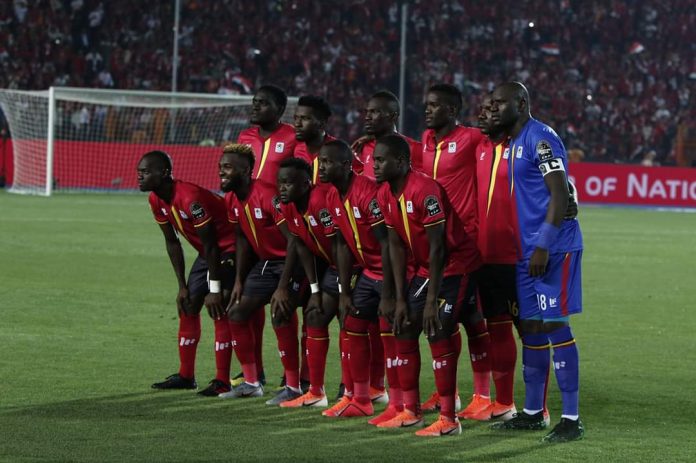
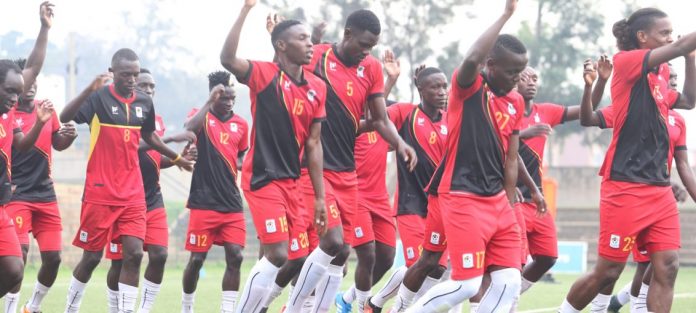
The Football Kenya Federation (FKF) have confirmed two friendly matches that they have been lined up for Harambee Stars during the upcoming international break. The Harambee Stars will play against Uganda Cranes on September 8 before another on October 10 against Libya. The game against Uganda will be played in Nairobi while the venue for their game against Libya match will be played either in Morocco or Tunisia. The federation revealed the future plans for Harambee Stars as they unveiled the new technical bench after Sebastien Migne’s contract was terminated. Francis Kimanzi was appointed the new head coach and he will be deputized by KCB’s head coach Zedekiah Otieno. Harambe Starlets Lawrence Webo will be the goalkeeper trainer. The two friendly matches will be the first duties for the new technical bench of the Kenyan national team. Kenya were knocked out of the 2020 African Nation’s Championship (Chan) qualifiers by Tanzania following a 4-1 penalty shoot-out win at Kasarani in Nairobi. Both matches in the first and the second legs ended in goalless draws. Uganda will be expected to use the friendly as preparations for the 2020 CHAN qualifier against Burundi on September 20 while Kenya will use the two friendlies to prepare for the 2021 Africa Cup of Nations Qualifiers. Kenya were pooled in Group G alongside Egypt, Togo Comoros and open up their 2021 Afcon qualification campaign against the Pharaohs of Egypt on November 11th, 2019 in Cairo.
|
Kenya lines up friendly game with Uganda Cranes
African Energy Chamber to seek energy deals with Chinese investors
|
To support growing energy cooperation and investment between China and Africa, the African Energy Chamber is organizing a working visit to Beijing next week. Led by Executive Chairman Nj Ayuk, the delegation from the Chamber will be meeting with CEOs and Chairmen from China’s state-owned energy companies and the private sector, along with key industry associations in China. The visit aims at further introducing the Chamber to the Chinese market following a series of roadshows organized in China by the Chamber over the past two years and increasing demand for investment information on Africa by Chinese investors. “The investment appetite of Chinese companies for Africa is only getting stronger given current international trade and business dynamics,” said Mickael Vogel, Director of Strategy at the Chamber. “We are receiving an increasing number of requests from Chinese companies to join the Chamber, especially to gain access to the latest investment opportunities in Africa, and to credible and reliable information on African energy markets. Our visit will be consolidating several relationships we have developed over the past two years and will lead to discussion on major energy deals for Africa.” Last year, Chinese President Xi Jinping pledged an additional $60bn for African development over the next three years during the Forum on China-Africa Cooperation. Traditionally, a large majority of Chinese investments have been made in energy and transport, especially oil & gas, power, mining, railways and airport infrastructure. As Chinese investment into Africa increases, the Chamber is assisting several Chinese companies in navigating Africa’s fast growing energy markets. The move is part of the Chamber’s support to a large and expanding base of investors seeking to do business in Africa, mostly from China, Russia, India the Middle East and Turkey.
|
Kenyans return KSh25b hidden in old bank notes
|
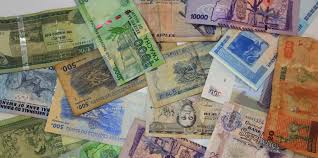
Within a month after Central Bank of Kenya (CBK) Governor Patrick Njoroge announced plans to phase out the old KSh1, 000 banknotes, a massive Sh25 billion resurfaced into circulation. This saw money outside of banks — in coins and notes — reduce by nearly one-tenth from KSh222 billion to KSh196 billion, according to the latest data from the CBK. The unusual 9.8 per cent drop in money outside of banks is the first negative annual growth since CBK started making this data public in 2015. The financial regulator acknowledges that some of the KSh196 billion could be money that Kenyans are using to buy goods and services with some in people’s pockets, but a good chunk of it could also be dirty money that has been kept out of circulation. In his Madaraka Day Speech on June 1, Dr Njoroge noted that his team has since reached the conclusion that the KSh1, 000 notes were being used for illicit financial flows in the country and region. “To deal conclusively with these concerns, all the older one thousand shillings series shall be withdrawn. By a Gazette Notice dated May 31, 2019, all persons have until October 1, 2019, to exchange those notes, after which the older one thousand shillings banknotes will cease to be legal tender,” said Dr Njoroge. Thirty days after he had made the speech, currency outside of banks dropped by almost a tenth in what is a pointer to desperation by Kenyans — some who had hidden their hard-earned and for some, illicit money in their homes — to beat the September 30 deadline. The other banknotes KSh50, Kh100, KSh200 and KSh500 old notes, will, however, remain as legal tender despite new currency being introduced under these lots. The introduction of the new currency has generated mixed reactions even as some opposed because of the sculpture of the country’s first president, which they have insisted is a portrait, contrary to the constitutional requirement that no person’s photo should feature in the new generation currency. Return of the cash into banks is given credence by a corresponding jump of money in bank accounts which increased by KSh22 billion. With the foreign currency deposits also experiencing a huge jump, it could explain where the missing Sh3 billion could have gone. It is going to be interesting to see what the July and August data, which is yet to be compiled, will reveal even as CBK governor goes on a campaign trail urging Kenyans to return the old KSh1,000 notes for replacement. There are 40 days left to the deadline, and CBK officials are on the look-out how much of the cash ‘hidden under mattresses’ will be returned. Reginald Kadzutu, a financial analyst, agreed that this is a strong indication that people are trying to beat the September 30 deadline. Mr Kadzutu noted that while the money might now be available for use by consumers, there are also fears of a spike in prices of goods and service in the coming months as Kenyans rush to spend this excess cash. “This money is now clean money and people might try to be prudent in using it, so they will buy assets,” said Kadzutu. Analysts widely blame idle cash for the slowdown in the economy, with most companies being forced to cut on production costs by laying off workers. The governor has insisted that the deadline will not be extended, warning those who will be left with the KSh1, 000 that they will have been left with nothing but “pieces of paper.” As of June 2018, there were 201 million pieces of KSh1, 000 notes, which translates to Sh201 billion. This means the KSh1, 000 notes constitute 90 per cent of the cash outside currently outside of the banking system. The injection of KSh25 billion into bank accounts coincided with the payment of pending bills by Government, reported to be around Sh10 billion. The excess cash might have contributed to the weakening of the local currency as traders, finding themselves with a lot of money, rushed to forex bureaus to buy US dollars which they could use to buy goods from the world market. Njoroge has, however, has denied any links between the return of the old banknotes and weakening of the shilling.
|
FIFA unveils youth coaching course at Njeru
| The FIFA Youth Coaches Course 2019 is underway at the FUFA Technical Centre in Njeru with a total of 29 coaches getting equipped with the modern trends and skills of the game to use in going forward as they go about their roles.
The five day course that was officially opened by 2nd Vice President Darius Mugoye on Tuesday is being facilitated by Danish FIFA instructor Kim Poulsen and has an impressive five ladies as part of the class. FUFA women development officer Joan Namusisi, national women football team ‘the Crested Cranes’ head coach Farida Bulega and one of her assistants Olive Mbekeka are some of the ladies in attendance. Other participants are mainly youth team coaches of the Uganda Premier League sides that are going to be playing in the rebranded FUFA U17 Juniors league According to Poulsen the purpose of the course is to help the participants become better coaches by appreciating the role they play in the development of players and teams while getting acquainted with modern football trends such as attacking and progression, shapes and organization, tempo and physical fitness, attacking football, mental aspects, flexibility among others. “As FUFA we have the vision of becoming the number one footballing nation in Africa on and off of the field and we believe we cannot achieve that if we don’t have the best coaches on the continent. It is therefore our hope and belief that this FIFA Youth coaches course will go a long way in improving our coaches who and to the desirable standards that will help us achieve that vision,” Mugoye told the fufa website. “You are a very lucky group because as you are well aware we have a dream of playing at the 2026 FIFA World Cup and we believe some of the players who might be playing on that team are being handled by you right now. It is therefore imperative that you get acquainted with the modern skills and trends of the game,” He added. The course that will end on Saturday is coordinated by the FUFA Football Development Director Ali Mwebe and Jackson Nyima-the FUFA Human Resource and Capacity Building Manager.
|
Museveni, Kagame sign pact as they call for immediate cross-border activities between Rwanda and Uganda
Ugandas President Yoweri Museveni and his Rwandan counterpart, Paul Kagame have signed a pact dubbed a Memorandum of Understanding of Luanda between the republic of Uganda and the republic of Rwanda to among other things resume the cross-border activities between the two countries.
According to the communiqué the republic of Uganda and the republic of Rwanda, that were considered as parties, considering the close geographical, historic and cultural ties between the two countries and their peoples and reaffirming the decisions of Quadripartite summit between the heads of state and government of the republics of Angola, Democratic Republic of Congo, Uganda and Rwanda, which took place in Luanda, Republic of Angola July 12, 2019, the parties undertake to:
“Respect the sovereignty of each other’s and of the neighbouring countries, refrain from actions conducive to destabilization or subversion in the territory of the other party and neighbouring countries, thereby eliminating all factors that may create such perception as well as that of the acts such as financing, training and infiltration of destabilizing forces” reads the communiqué sent to newsrooms.

The summit also directed the two leaders to protect and respect the rights and freedoms of the nationals of the other party residing or transiting in their national territories in accordance with the laws of that country. The leaders further asked the two East African countries to resume cross-border activities. The call to open the border comes at the time when Rwanda closed her Katuna border limiting Ugandan products from accessing Rwandan market. Rwanda further blocked her citizens from traveling to Uganda claiming Uganda was hostile neighbour.
“Resume as soon as possible the cross-border activities between both countries, including the movement of persons and goods for the development and improvement of the lives of their population”
Sudan transition: Lt. Gen. Burhan sworn in as Sovereign Council chief
The leader of Sudan’s Transitional Military Council (TMC), Lt-Gen Abdel Fattah Abdelrahman Burhan, has been sworn in as leader of the newly established sovereign council.
He will lead a group of six civilians and four other military officers as part of a planned 39-month long transition to democracy.
There will also be a prime minister and cabinet.
The new government comes after Omar al-Bashir was ousted in April.
He had been president for nearly 30 years but was removed by the military after months of protests.
On Saturday, the TMC and civilian leaders signed a deal that should pave the way to a new democratic dispensation.
Under the agreement, Gen Burhan will be in charge of the Sovereign Council, which replaces the TMC, for the first 21 months; a civilian will then take over until elections in 2022.
The other 10 members of the council were also sworn on Wednesday.
In addition, respected economist Abdalla Hamdok, who was nominated by civilian protest leaders as prime minister, is due to be sworn in.
The ministers of defence and interior, who will be part of a cabinet, will be chosen by the military.
‘We will work together’
The deal was not perfect but was an important step, Dr Mohanad Hamid, a spokesman for the umbrella opposition group, the Sudanese Professionals Association, told the BBC.
“We are positive that we are together as Sudanese, a government and people that will together push forward to improve the level of our economy, improve the level of our health system and our education,” he added.
Gen Mohamed Hamdan “Hemeti” Dagolo, the second in command in the TMC, has pledged to abide by the terms of the deal.
Who is Lt-Gen Burhan?
- Born in 1960 in the village of Gandatu, north of the capital, Khartoum
- Studied at a Sudanese military academy and later in Egypt and Jordan
- Appointed Inspector General of the army in February by President Bashir
- Named as head of TMC after removal of Mr Bashir
- Coordinated sending Sudanese troops to Yemen as part of a Saudi-led coalition

What did the two sides agree?
On 4 August the military and protesters signed a constitutional declaration which paved the way for the formation of a transitional government. A formal signing ceremony took place on 17 August.
They agreed on the following:
- Power-sharing will last for 39 months
- Elections to be held at the end of that period
- A sovereign council, cabinet and legislative body will be formed
- A general will head the council for the first 21 months, a civilian for the remaining 18
- Sovereign council will have 11 members (5 civilian and 5 military nominees plus one agreed by consensus)
- A prime minister, nominated by the pro-democracy movement, will head the cabinet
- The ministers of defence and interior will be chosen by the military
- The other positions will be taken by pro-democracy candidates
- Sovereign council and cabinet members barred from running for election
The long transition period is seen as a victory for the pro-democracy movement – the generals had threatened a snap election after the 3 June crackdown, during which more than 120 people were reportedly killed, with many of the dead dumped in the River Nile.
Demonstrators argued that Mr Bashir’s regime was so deeply entrenched that it would take time to dismantle its political network and open the way for free and fair elections.
How did the crisis unfold?
It can be traced back to December 2018, when then President Bashir’s government imposed emergency austerity measures.
Cuts to bread and fuel subsidies sparked demonstrations in the east over living standards, and the anger spread to the capital.
The protests broadened into demands for the removal of Mr Bashir, who had been in charge for 30 years.
In April, the president was overthrown by the military after sit-ins outside the defence ministry, but demonstrators then wanted to ensure authority was swiftly transferred to a civilian administration.
A council of generals led by Gen Burhan assumed power, but it has struggled to return the country to normality.
The army is not a unified force in Sudan; paramilitary organisations and various Islamist militias hold some sway.
The Rapid Support Forces (RSF) led by Hemeti – which grew out of the notorious Janjaweed militia that was accused of carrying out a genocide in the Darfur region of western Sudan – have been blamed for recent abuses.
These include the 3 June massacre.
RSF leaders have denied planning the killings, which they say were carried out by rogue elements.
Deteriorating economy to dominate G7: Expectations for meeting should be ‘extremely low’
|
By Mark Sobel
Leaders of the G7 (US, France, UK, Japan, Germany, Italy, Canada and the EU) will gather in Biarritz, France on August 24, for their annual summit. Expect a do-nothing affair, marked by notable absences. The formal agenda will be replete with critical global topics, such as gender inequality and climate change, priorities for the French presidency. But make no mistake. Nervousness and hand-wringing over the deteriorating global economy will dominate. Recent global economic developments are a significant cause for concern. Already, the International Monetary Fund has marked down its 2019 and 2020 global growth forecasts to a modest 3.2% and 3.5%, respectively. More markdowns are expected, especially in the light of intensifying trade wars and, more importantly than the direct costs of tariffs, the steepening pall over global confidence and investment. China – the world’s second largest economy – is not invited. But its economic performance will weigh heavily on the proceedings. China’s economy is slowing under the weight of last year’s deleveraging campaign, declining car production and the hit from US President Donald Trump’s trade wars. China’s sustainable growth rate is falling. The country accounts for around one-third of global growth, a smaller amount than earlier in the decade. A slowing China is a major knock on global growth. The European G7 contingent will come to Biarritz in a dismal state. The odds of the UK withdrawing from the European Union without a deal have risen sharply. Both sides are increasingly hardening positions ahead of Halloween’s deadline. Italy is a perennial threat to global financial stability due to its high debt and low growth. The country is embroiled in a political crisis, which deepened following Prime Minister Guiseppe Conte’s resignation on Tuesday. German Chancellor Angela Merkel will arrive a weakened leader in her twilight. Many fear the German economy is in recession, racked by persistent problems in the automobile sector, a declining manufacturing sector and low confidence. The French economy is performing better than its neighbours, but beset by high debt, spending and structural unemployment. The gilets jaunes have underscored the limits to French President Emmanuel Macron’s ability to carry out further reforms. Japanese Prime Minister Shinzō Abe remains ensconced. However, the latest flare up in tensions with South Korea, on top of global trade woes, threatens to weaken a less than vibrant economy. That the yen has risen amid a risk-off global economic environment adds to Abe’s perceived woes, just as he intends to pursue a consumption tax increase that will sap the outlook. Last but not least, Trump will arrive amid mounting US economic uncertainty. The relatively closed and services-oriented US economy is performing well, notwithstanding this year’s expected slowdown as fiscal support wanes. Inflation is in line with the Federal Reserve’s 2% objective, unemployment is well below the non-accelerating inflation rate of unemployment, and domestic consumption has so far held up admirably. But there is a souring mood. Manufacturing conditions are deteriorating and Trump is upping his trade war on China. US policy-makers are fretting about the spillovers from global developments, and stocks have declined amid an inverting to flat yield curve. Hopefully the leaders will come together and find solutions. Germany could provide meaningful fiscal stimulus, but it so far appears wedded to its zero deficit ‘Schwarze Null’ policy despite recent rumours. Prime Minister Abe seems intent on carrying through with the consumption tax increase, and there has been little recent discussion about further measures to mitigate its impact. UK Prime Minister Boris Johnson might be persuaded to find a Brexit deal. Italian politicians could come together for the good of the country and step back from the knife-edge of instability. Europeans could work on a more perfect union, making progress on risk sharing and a centralised fiscal capacity. The single best thing by far that could boost immediately the global outlook would be for President Trump to immediately end his trade wars. But co-operative action unlikely to happen. It requires US global leadership, which is absent. Instead, the G7 leaders will undoubtedly lean on another missing party – global central banks. Trump will continue to push the Fed to bail out the US economy from the very uncertainties created by his trade and currency wars. European eyes will fall on outgoing European Central Bank chief Mario Draghi for a glorious swan song. Though achieving Japan’s 2% inflation target is nowhere in sight, maybe there will be hope Haruhiko Kuroda, the governor Bank of Japan, can come up with new ways to provide accommodation. Expectations for Biarritz should be extremely low. The G7, fooling no one, should at least be able to paper over gaping cracks and secure agreement on a communiqué this time around. One might also hope that the foie gras and Dom Perignon will be good.
Mark Sobel is US Chairman of OMFIF.
|
Between extortion and the sanctity of petroleum contracts in Nigeria, DRC and Senegal
|
By NJ Ayuk
Last week, a commercial court in the United Kingdom gave reason to a claim by engineering company Process and Industrial Developments Ltd (P&ID), which demands over USD$9 billion from the Nigerian government over a failed gas deal. The decision follows a 2017 arbitration award and turns it into a legal judgement, which could allow P&ID to seize Nigeria’s international commercial assets. P&ID’s claim is based on a 2010 contract signed with the government of Nigeria for the construction and operation of a “gas processing plant to refine natural gas (“wet gas”) into lean gas that Nigeria would receive free of charge to power its national electric grid,” the company’s website states. Under the deal, the Nigerian government should have provided the necessary infrastructure and pipelines needed to supply gas to the plant. P&ID would build the plant for free and then operate it and commercialize the output for a period of 20 years. The company claims that over this period it would have earned USD$6.6 billion in profit, an incredible figure that becomes ever more fantastic as the company claims that the yearly 7% interest it is supposedly charging on this capital has now accrued to USD$2.4 billion, at the rate of USD$1.2 million a day, which closes the full amount at a perfectly round USD$9 billion. The whole situation is in itself extremely puzzling. Afterall P&ID, a company created specifically for this project, is claiming it is entitled to the full amount of what it would have gained over a period of 20 years of work, even though that period would not be over for another decade and some. Further, it is already charging interests on capital it would, if the project went forward, it would still be a decade away from generating. On top of that, it has chosen to pursue the matter in a British court, and has a separate law suite in an American court, when the contract was signed in Nigeria, under Nigerian law, and should be pursued in a Nigerian court, as the Nigerian legal team has repeatedly stated. Nigeria is seeking an appeal to the decision, but P&ID is not wasting any time in trying to seize Nigerian assets abroad, and it might well manage to do so, at least in part. Further, P&ID has never even broken ground on the construction of this power plant, which it claims would have benefitted so many thousands of Nigerians. The company has reportedly spent USD$40 million on preparatory work, although it is impossible to attest what that work has been. Even just looking to the amount spent, work done and compensation sought, the figures seem simply absurd. USD$9 billion corresponds to 20% of Nigeria’s foreign exchange reserves, it would be unthinkable that a nation state would pay that much capital to a small unknown enterprise that invested not but a small fraction of that amount in the country and done none of the contracted work. Further, it is perplexing that a British court would even consider such a decision. However, this issue represents an important cautionary tale for African governments everywhere. Very few things matter more in the struggle to attract investment and build a favourable business environment that will push the economy forward than the absolute sanctity of the contracts signed. Senegal’s government under President Macky Sall was very smart to avoid this kind of litigation when it was confronted with the issue of the Timis Corporation and its ownership of acreage that included the Tortue field, which is estimated to contain more than 15 tcf of discovered gas resources. If President Macky Sall would have proceeded with terminating a valid contract for the acreage, the Timis Corporation would have engaged in arbitration and would have probably gotten a favorable judgment against Senegal. In the process, the gas fields would have sat dormant and produced no returns for Senegal and its citizens. Sometimes leaders are confronted with tough choices and it takes a profile in courage to find solutions and still respect the sanctity of contracts. Even with criticism from civil society groups, Equatorial Guinea has honored contracts with U.S. oil companies that many oil analysts believe are unfavorable to the state. This principle has kept Equatorial Guinea’s oil industry stable and US firms continue to invest in new projects like the EGLNG backfilling project with Noble, Atlas Oranto, Glencore Marathon and the state. African leaders and African nations cannot afford this sort of mistakes anymore. If on the one hand, contracts must be respected, protected and followed through, the people in charge of evaluating and signing those contracts must have the project’s feasibility as the dominant reasoning behind any decision. What is the purpose of signing contracts for fantastic projects where there is neither the capital nor the conditions to pull it through. Our economies live out of their reputation too. No investor wants to work in a system where contracts are not honored and where their investments are not protected. While P&ID’s request for USD$9 billion in compensations seems absurd, companies that see the contracts they sign with African governments, or any governments, disrespected, must have the right to claim compensation, just in the same way that African leaders must be responsible for the contracts they sign and must make sure that situations like this do not repeat themselves. Enough money has been wasted on lawsuits that could be used to benefit the lives of Africans. This is true for the oil and gas industry and in any other industries. NJ Ayuk is the CEO of Centurion Law Group, Executive Chairman of the Africa Energy Chamber, author of the upcoming book, Billions at Play: The Future of African Energy and Doing Deals.
|
You must apologise to us-State House castigates New Vision
|
Officials from State House have asked Vision Group, the publishers of Uganda’s leading daily, The New Vision to apologise for running an article in today’s edition, saying the European Union (EU) is to support fight against rebels. “Our attention has been drawn to an article in the New Vision of August 21, 2019, under the headline, “EU to support fight against rebels,” on page 7.The article and its contents are completely misleading and at most an imagination of the writer,” reads the statement. The statement says none of its officials who appeared before the Public Accounts Committee (PAC) yesterday said anything to do with EU’s support to Uganda in fighting any rebels. “What is true is that a State House team led by the Comptroller Lucy Nakyobe Mbonye were in parliament to appear before the Public Accounts Committee (PAC) to answer queries arising from the Auditor General’s Report for the Financial Year 2017/2018,” the statement adds. “Nowhere in her presentation to PAC did the State House Comptroller talk about security issues as this is a docket for the Ministry of Defense and other security agencies. We do protest in the strongest terms possible this irresponsible reporting and call on the New Vision to apologize for misinforming the public. We urge the media to always endeavor to be professional in their reports to the public,” the statement concludes.
|
Fraud: IGG asks parliament to refund Shs100m
|
The Inspector General of Government (IGG), Justice Irene Mulyagonja has ordered Clerk to Parliament Jane L. Kibirige to ensure that two officials refund about Shs100 million that was meant to facilitate them attend a seminar Wilton Park, an executive agency of the UK Foreign and Commonwealth Office providing a global forum for strategic discussion. Following an allegation, an investigation by the IGG has established that Emmanuel Bakwega-Director of Clerks and Paul Wabwire -Deputy Clerk Parliamentary Affairs, did not attend the purported training over four years ago and instead spent the money on their private business. The two officials were advanced a total of Shs99, 235, 200 to attend a seminar, “Beyond aid: Innovative Governance, Financing and Partnerships for post 2015 Agenda.” The IGG in her letter dated August 8, 2019 said the duo failed to produce evidence of attending the said seminar and that the information obtained from Wilton Park through the British High Commission and its website indicates that the seminar actually took place in February 2015 and not in June 2016 as indicated by Bakwega and Wabwire. According to the IGG, Wilton Park did not invite the two officials to attend the seminar. “Wilton Park also denied issuing invitation letters, invoices and receipts that were submitted by the above officials as part of the accountability documents.” She said her investigation concluded that the two officials embezzled the money which she wants be refunded on Inspectorate of Government Assets Recovery Account 003030088000007 in Bank of Uganda. Bakwega is tasked to refund Shs48, 139,600 while Wabwire must refund 51,095,600 to the above account. Failure by the duo to refund the money will lead to prosecution. At the same time the IGG wants the duo be disciplined by the Parliamentary Commission for fraudulently accounting for the money they did not use as requested for. The officials are supposed to be disciplined within two months from the date of the IGG wrote to Clerk to Parliament. In the related transaction, the IGG wants other officials such as Kasule Abdul Kajimu, Julian Kaganzi, Patrick Lassu and Sam Bosio to be submitted to Parliamentary Commission to be reprimanded for neglect of duty and breach of procurement procedures while procuring a camera that had its parts delivered in bits. Meanwhile the Director of Information and Communications at Parliament, Chris Obore was exonerated by the IGG after it was alleged he procured a camera at Shs148 million and a stand at Sh3.4 million in June 2015. It was discovered that Obore had not joined that institution when the camera was procured.
|