Stanbic Bank
Stanbic Bank
21.1 C
Kampala
Stanbic Bank
Stanbic Bank
Home Blog Page 1201

Uganda Airlines to make first maiden commercial flight late August

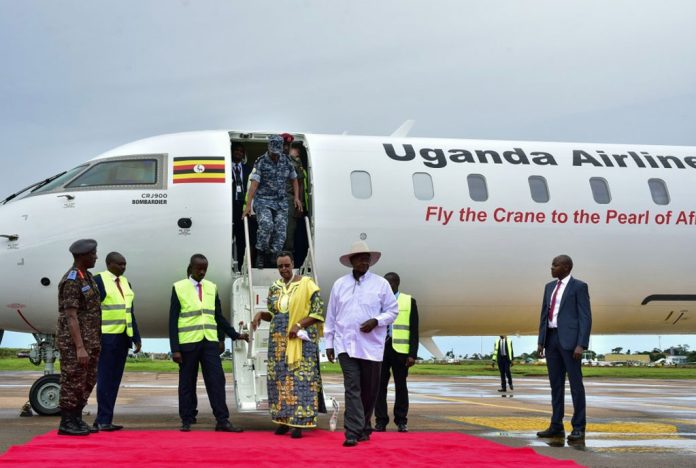
New Uganda Airlines plane after touching Entebbe International Airport

Uganda Airlines will on August 28, 2019 make its maiden commercial flight after being granted Air Operator Certificate (AOC) from Uganda civil aviation authority (UCAA) days ago.

On April 23rd, government received the first two of the four Bombardier CRJ900 regional Aircrafts which were ordered by Uganda National Airlines Company in July 2018.

According to Director Commercial, Ms Jenifer Bamuturaki, the maiden flights include Nairobi, Juba twice daily, Mogadishu three times daily, Dar-es-Salaam and Kilimanjaro once a day, Bujumbura and Mombasa thrice a week.

She said for the airline to compete, Competition and succeed, “We must have the right aircraft, investment, funding, people and appeal to customers with the right quality and service. It doesn’t matter what the competition does, if everything is done right,”

With its offices at Victoria University House on Jinja Road, Opposite Esso Corner and Victoria Mall Entebbe and others at the Main Airport, the company will begin with two months promotional fares of Nairobi Return USD 278, Juba Return USD 225, Mogadishu Return USD 590, Dar Return USD 286, Bujumbura Return USD 292, Mombasa Return USD 325, Kilimanjaro Return USD 311 inclusive of taxes.

“People are free to make their bookings at their respective offices or on our website. You are also free to pay in dollars or shillings,” she said

The third jet will be delivered this month and the fourth plane is expected in September 2019. The commercialization of the airline will start on 28 august to various destinations in Kenya, Burundi, Democratic Republic of Congo (DRC), Ghana, Nigeria, Rwanda, Somalia, South Africa, Sudan, Tanzania, Zambia, Zimbabwe and Zanzibar.

Established in May 1976, Uganda Airlines was the flag carrier of Uganda, started operations in 1977 and was liquidated in May 2001 after efforts to privatize the company failed.

According to Minister of Works and Transport Eng. Monica Azuba, the revival will promote Uganda’s tourism, trade and enhancing Country’s competitiveness in air transport and easing connectivity to and from Uganda.

She said 12 Ugandan pilots and 12 co-pilots have been trained and certified to operate the airline. The airline will operate in dual-class configuration with 76 economy and 12 first class seats.

Meanwhile the airline’s  promotional fares which will run for two months are;

Nairobi Return USD 278

Juba Return USD 225

Mogadishu Return USD 590

Dar Return USD 286

Bujumbura Return USD 292

Mombasa Return USD 325

Kilimanjaro Return USD 311

The fares are All inclusive of taxes, but clients can pay in Ugandan shillings as well.

Stories Continues after ad

Breastfeeding within an hour after birth is critical for saving newborn life

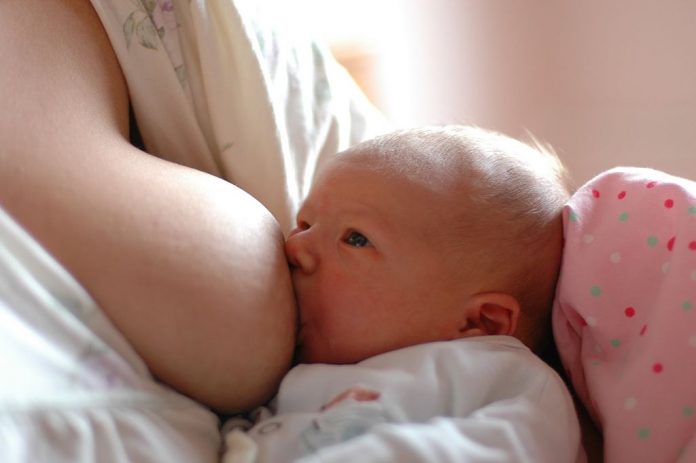
Breastfeeding a new born baby


An estimated 78 million babies or three in five  are not breastfed within the first hour of life, putting them at higher risk of death and disease and making them less likely to continue breastfeeding, say UNICEF and WHO in a new report. Most of these babies are born in low- and middle-income countries.

The report notes that newborns who breastfeed in the first hour of life are significantly more likely to survive. Even a delay of a few hours after birth could pose life-threatening consequences. Skin-to-skin contact along with suckling at the breast stimulate the mother’s production of breastmilk, including colostrum, also called the baby’s ‘first vaccine’, which is extremely rich in nutrients and antibodies.

“When it comes to the start of breastfeeding, timing is everything. In many countries, it can even be a matter of life or death,” says Henrietta H. Fore, UNICEF Executive Director. “Yet each year, millions of newborns miss out on the benefits of early breastfeeding and the reasons all too often are things we can change. Mothers simply don’t receive enough support to breastfeed within those crucial minutes after birth, even from medical personnel at health facilities.”

Breastfeeding rates within the first hour after birth are highest in Eastern and Southern Africa (65 per cent) and lowest in East Asia and the Pacific (32 per cent), the report says. Nearly nine in 10 babies born in Burundi, Sri Lanka and Vanuatu are breastfed within the first hour. By contrast, only two in 10 babies born in Azerbaijan, Chad and Montenegro do so.

“Breastfeeding gives children the best possible start in life,” says Dr Tedros Adhanom Ghebreyesus, WHO Director-General. “We must urgently scale up support to mothers – be it from family members, health care workers, employers and governments, so they can give their children the start they deserve.”

Capture the Moment, which analyzes data from 76 countries, finds that despite the importance of early initiation of breastfeeding, too many newborns are left waiting too long for different reasons, including:

Feeding newborns food or drinks, including formula: Common practices, such as discarding colostrum, an elder feeding the baby honey or health professionals giving the newborn a specific liquid, such as sugar water or infant formula, delay a newborn’s first critical contact with his or her mother.

The rise in elective C-sections: In Egypt, caesarean section rates more than doubled between 2005 and 2014, increasing from 20 per cent to 52 per cent. During the same period, rates of early initiation of breastfeeding decreased from 40 per cent to 27 per cent. A study across 51 countries notes that early initiation rates are significantly lower among newborns delivered by caesarean section. In Egypt, only 19 per cent of babies born by C-section were breastfed in the first hour after birth, compared to 39 per cent of babies born by natural delivery.

Gaps in the quality of care provided to mothers and newborns: The presence of a skilled birth attendant does not seem to affect rates of early breastfeeding, according to the report. Across 58 countries between 2005 and 2017, deliveries at health institutions grew by 18 percentage points, while early initiation rates increased by 6 percentage points. In many cases, babies are separated from their mother’s immediately after birth and guidance from health workers is limited. In Serbia, the rates increased by 43 percentage points from 2010 to 2014 due to efforts to improve the care mothers received at birth.

Earlier studies, cited in the report, show that newborns who began breastfeeding between two and 23 hours after birth had a 33 per cent greater risk of dying compared with those who began breastfeeding within one hour of birth. Among newborns who started breastfeeding a day or more after birth, the risk was more than twice as high.

The report urges governments, donors and other decision-makers to adopt strong legal measures to restrict the marketing of infant formula and other breastmilk substitutes.

The WHO and UNICEF-led Global Breastfeeding Collective also released the 2018 Global Breastfeeding Scorecard, which tracks progress for breastfeeding policies and programmes. In it, they encourage countries to advance policies and programmes that help all mothers to start breastfeeding in the first hour of their child’s life and to continue as long as they want.


Stories Continues after ad

The top five African transfers


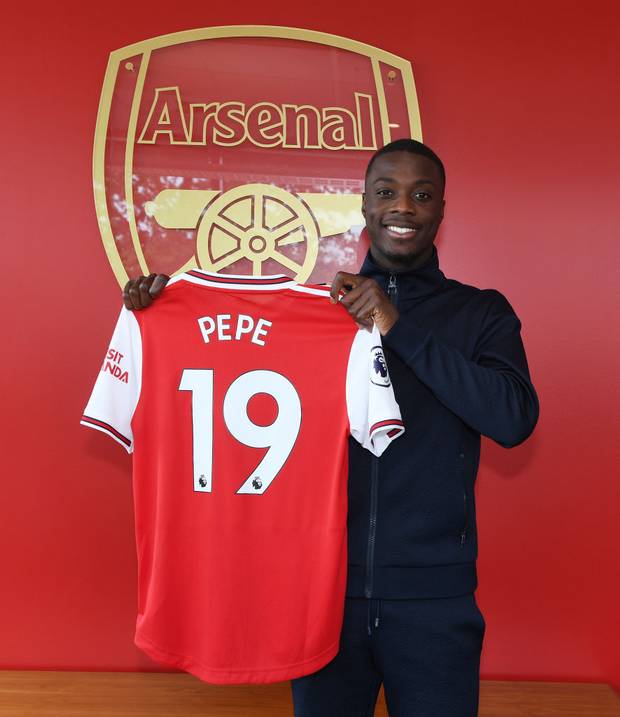
When Nicolas Pepe put pen to paper on Thursday to conclude his transfer from Lille to Arsenal, the fee of £72 million ($87 million) made the Ivorian the most expensive African footballer in the world.

AFP Sport looks at the top five transfers featuring African players.

Nicolas Pepe (Ivory Coast)

£72 million ($87 million), Lille to Arsenal, July 2019

Napoli made­­­­­ a late approach for the forward but he had shown a preference for Arsenal from the start and duly signed on the dotted line. He will earn in the region of eight million euros a year and in return Gunners fans will want goals as they dream of a return to the Champions League. Goals are Pepe’s currency — he scored 22 last season as Lille finished in a surprising second place in Ligue 1.

Cedric Bakambu (Democratic Republic of Congo)

£65.4 million ($83 million), Villarreal to Beijing Guoan, February 2018

An indication of Chinese buying power that a player of Bakumbu’s relatively modest achievements could command such a high fee. The 28-year-old was born and bred in France and made his name with Sochaux. He moved on to Bursaspor and then Villarreal for whom he banged in 32 goals in 75 appearances, catching the eye of the Chinese Super League outfit. He made his international debut in 2015 and was in the side that, in spite of his goal, lost on penalties to Madagascar in this year’s Africa Cup of Nations last 16.

Riyad Mahrez (Algeria)

£60 million ($76 million), Leicester City to Manchester City, January 2018

Riyad Mahrez stunner’s earlier in July was enough to give Algeria their first Africa Cup of Nations title in 29 years. Manchester City fans will be hoping he continues his good form as Pep Guardiola’s side eye a third straight league title. Mahrez, 28, was a revelation with the Leicester, one of the masterminds behind their extraordinary Premier League triumph in 2015-16.

Pierre-Emerick Aubameyang (Gabon)

£56 million ($71 million), Borussia Dortmund to Arsenal, January 2018,

Until the arrival of Pepe, Gabonese striker Pierre-Emerick Aubameyang was Arsenal’s most expensive signing and the fans took an instant liking for him, penning a quirky chant to the tune of Bonnie Tyler’s hit song Total Eclipse of the Heart. The former Dortmund forward responded with goals, sweeping the Gunners into this year’s Europa League final and scoring 22 last season in the Premier League, sharing the Golden Boot with two other Africans, Mo Salah and Sadio Mane, both of whom are at Liverpool.

Naby Keita (Guinea)

£52.75 ($67 million), Leipzig to Liverpool, July 2018

Liverpool thought so highly of the midfielder that they not only wrote a cheque for Leipzig to the value of £52.7 million but they also handed Keita the number eight shirt that had been unused since the departure of Steven Gerrard. Indeed, it was Gerrard himself who presented it. The 24-year-old started his career with French Ligue 2 side Istres before moving on to Red Bull Salzburg and then Leipzig. An important part of the Reds midfield he missed the Champions League victory through injury but he was back with Guinea for the Africa Cup of Nations.

Stories Continues after ad

South Korean fans to sue Cristiano Ronaldo after he sits out friendly

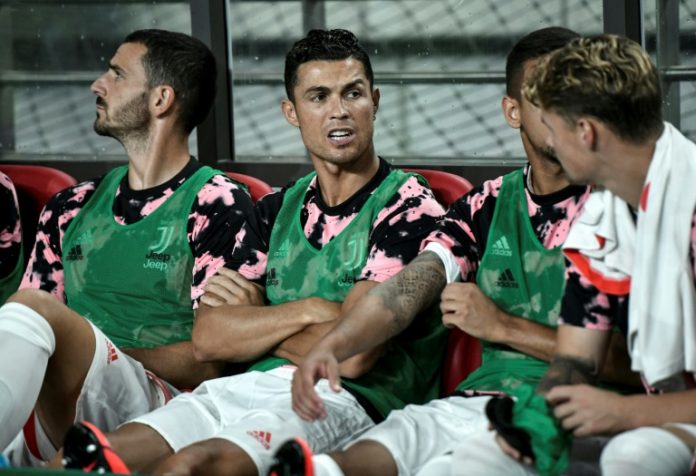
Ronaldo on the bench


Football fans in South Korea are taking legal action to seek compensation after Cristiano Ronaldo failed to play in a friendly during Juventus’ pre-season tour in Seoul last week.

Ronaldo had been contracted to play at least 45 minutes against K League All Stars, according to event organisers The Fasta Inc, but ultimately sat out the entire game at a packed Seoul World Cup Stadium.

An online community was formed on South Korea’s Naver web portal to protest Ronaldo’s lack of participation, and two members reached out to lawyer Kim Min-ki to file a lawsuit against the match organisers.

“Many purchased tickets to see Ronaldo. The Fasta publicised that the company had a deal with Juventus which stipulated Ronaldo would play for at least 45 minutes and that Ronaldo would hold a fan signing event,” Kim told Reuters.

Phone calls to The Fasta by Reuters were not answered, while officials at Juventus did not immediately reply to requests for comment.

The lawsuit is seeking compensation of 70,000 won ($59) per ticket, 1,000 won for the ticket commission fee, and 1 million won ($847) each for compensation for “mental anguish”.

“Normally in such cases the plaintiffs will be refunded the price of the tickets, but I put this under a special case since the company, through false advertising, took advantage of the football star’s fans,” Kim added.

“For now we have two plaintiffs who sued the company, but I have been getting a lot of calls today and I assume there will be some 60,000 more.

“As for the mental anguish part, I’d like to say some of them are raucous fans, the real avid fans. So for them it is very painful because they love Ronaldo and want to protect him, but they can’t, given the situation.”

The Fasta CEO Robin Chang confirmed to local broadcaster SBS that the contract stipulated Ronaldo play 45 minutes and said she found out that the 34-year-old would not take part 10 minutes into the second half.

“When I went to argue with (Pavel) Nedved, the vice president of Juventus, all he said was ‘I also wish Ronaldo ran, but he doesn’t want to. Sorry, there’s nothing I can do.’ I was so frustrated,” Chang told SBS.

The Fasta issued a press release on Saturday saying Juventus did not abide by the terms of the contract. South Korea’s professional soccer governing body, K League, said on Tuesday that it had sent a letter of protest to Juventus for violating the contract. Reuters.


Stories Continues after ad

Equity Group’s gross profit jump 10%

Dr James Mwangi, CEO Equity Group Holdings Plc


A growth in lending created a 10 per cent rise in first half pretax profit at Kenya’s Equity Group Holdings plc, according to the latest financial statement.

The Group’s chief executive officer, James Mwangi said he was confident the government would remove a cap on lending rates, further boosting demand for credit.

The cap, introduced in 2016 to curb high interest rates on loans, prevents banks from charging more than four percentage points above the central bank’s benchmark lending rate, currently 9 per cent.

The move has resulted in borrowers perceived as too risky being locked out of the market, squeezing economic growth, Mwangi told investors on Thursday.

“We are very optimistic (it will be removed). The pains of this interest capping have been a big challenge,” Mwangi said.

“The interest cap has done its last breath.”

The finance ministry proposed removing the cap in June, saying it had starved small businesses of credit. However, some lawmakers have vowed to block the repeal.

Equity, which also operates in Uganda, Tanzania, South Sudan, Democratic Republic of Congo and Rwanda, made a first half pretax profit of KShs17 billion Kenyan shillings ($165 million), with interest income up 9 per cent to KShs27.7 billion.

Net loans to customers rose 17 per cent to KShs320.9 billion, topping the group’s target of 10 to 15 percent, Mwangi said.

He attributed the growth to new distribution channels, including mobile phone lending apps.

Equity’s banking business in Kenya, where it is the biggest lender by customers, provides the bulk of profits. Regional businesses contributed 18 percent to the first half total, unchanged from the same period last year.

The net interest margin dipped to 8.0 per cent from 8.2 percent the year before, while the bad debt ratio rose to 8.6 per cent from 8.4 percent, but held well below the Kenyan industry average of 12.7 per cent, Equity said.

Customer deposits jumped to Ksh458.6 billion from 393.69 billion the year before, while total assets rose to Kshs638.7 billion from KShs542.02 billion.


Stories Continues after ad

Parliament tasks recruitment companies to bring back Ugandan workers stranded in Arab countries

Speaker Jacob Oulanyah

Parliament has tasked the Uganda Association of External Recruitment Agencies (UAERA) to expeditiously handle the repatriation of workers stranded in Arab countries, with some said to be  under working under harsh conditions.

The Deputy Speaker, Jacob Oulanyah, said labour export agencies that are licensed and operating within the law, subscribe to UAERA through payment of insurance, and should handle repatriation or treatment of workers.

“So there should not be any burden to any parent that their child is stranded somewhere and they are looking for money to repatriate them or that they should refund money before they are brought back,” said.

The Deputy Speaker made the remarks in response to a concern raised by Mukono Municipality MP, Betty Nambooze. Nambooze said that youth who sought employment abroad through labour agencies were stuck and unable to return to Uganda.

Nambooze noted that following the Deputy Speaker’s directive on18 July 2019, several girls are stranded at the Uganda embassy in the United Arab Emirates as they wait for support to return home.

“The ambassador was even captured on video chasing the girls away. It is very painful that a Ugandan in Dubai is being chased away by their own ambassador,” said Nambooze.

She observed that there are new cases of Ugandans stranded abroad and that victims of trafficking by unlicensed recruitment agencies had increased.

“It is very sad that one of my constituents died in Riyadh last week under circumstances yet to be established; so we need guidance on how to handle these new cases,” Nambooze said.

According to the Coordination Office for Prevention of Trafficking in Persons under the Ministry of Gender, Labour and Social Development, as of 10 May 2017, there were 66 licensed private recruitment companies.

Stories Continues after ad

Erisa Sekisambu joins KCCA FC

Erisa Sekisambu in the middle.


KCCA FC have signed Erisa Sekisambu from Kenyan side Gor Mahia on a one year deal.

Sekisambu becomes Mike Mutebi’s first signing in this transfer window and it is confirmed he has been given shirt number 11.

The number 11 shirt has been formerly worn by Allan Kyambadde who has now requested to wear shirt 20 during the next season.

“I am glad to be joining a winning team, because my ambition is to win trophies. I cannot wait to get started.” Sekisambu is quoted by kcca fc website.

The Uganda Premier League is very familiar to Sekisambu who played for SC Villa, Express, URA and Vipers before moving to Gor Mahia where we played football from 2018/19 season winning the Kenyan Premier League.

Statistics about Erisa Sekisambu;

2011/12 – he played 10 games for SC VILLA and scored two goals.

2012/13 – he played 13 games for Express and scored six goals.

2013/14 – he played 14 games for URA and scored seven goals.

2014/15 – he played 31 games for SC VILLA and scored 14 games.

2015 – 2018 – he played 78 games for Vipers SC and scored 46 goals

Attachments area

Stories Continues after ad

Court convicts Stella Nyanzi on cyber harassment, stands to serve three years in prison

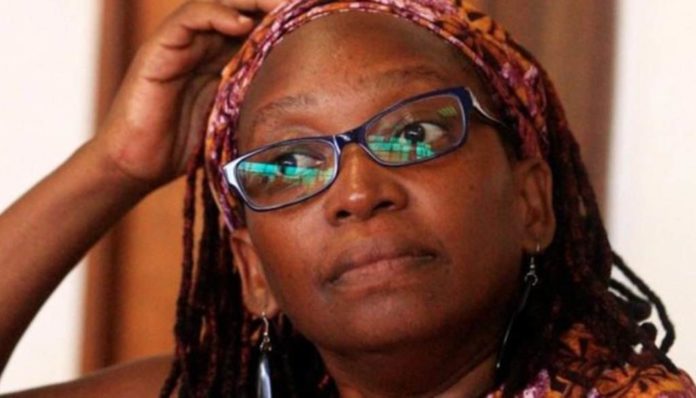
Dr Stella Nyanzi, File photo.
 

Buganda Road Magistrate’s Court has convicted the controversial Makerere University researcher, Dr. Stella Nyanzi for cyber harassment and acquitted her of charges of offensive communication.

DR Stella Nyanzi who has been on remands for eight months, was arrested in November last on accusations of insulting President Museveni and his mother, the late Esteri Kokundeka through a vulgar Facebook post.

Appearing before court this afternoon, Buganda Road Magistrate Gladys Kamasanyu found her guilty of charges of cyber harassment and acquitted her of offensive Communication charges.

“Facebook post corrupts the minds of young generation and that it doesn’t in anyway communicate any message. It is vulgar. It was offensive.” She said in her ruling. Dr. Nyanzi stands to face three years in prison or pay a fine of Shs1.4 million.

In December last year, court presided over by Ms Kamasanyu, remanded Nyanzi to Luzira prison until January 10, 2019 after she objected to the charges of alleged cyber harassment on grounds that they are defective and cannot stand.

Dr. Nyanzi once in court turned down court’s offer of releasing her on bail. Still claimed that the president should go to court and testify on how she insulted him and his mother.

Her case has since faced a number of adjournment on issues of the absence of Magistrate Kamasanyu. In December, she adjourned the matter was to give the state time to respond after they claimed they had been ambushed by the defence lawyer Isaac Ssemakadde who had filed to court asking that the case be dismissed for duplication among others.

She later ran to High Court seeking for an order to be retried on the same matter saying the sitting magistrate had been biased and didn’t accord her a fair hearing.

In her ruling High Court Judge Jane Francis Abodo dismissed the petition in which Nyanzi wanted court to block lower court (Buganda Road Magistrate’s Court) from delivering its judgement on the matter before it.


Stories Continues after ad

Abdu Lumala joins Desabre’s Pyramids

Abdu Lumala


Uganda Cranes winger Abdu Lumala has been unveiled by Egyptian Premier League side Pyramids Football Club, which is coached by former Uganda Cranes head coach Sebastien Desabre.

The 22-year-old completes his switch to Egypt on a free transfer from Swedish side Kalmar FF after a year loan spell at Syrianska.

Throughout his career, Abdu had contributed to 21 goals and 12 assists in 130 games for clubs including Superettan, Allsvenskan, and Svenska Cupen.

Lumala had a good performance and was a top performer with Uganda Cranes in the Africa Nations cup, participating in all the four games up to the round of 16 stage.

He joins Derrick Nsibambi at Smouha Sports Club and midfielder Khalid Aucho at Misr Lel Makkasa Sporting Club among the players playing professional football in Egypt.

Pyramids was founded as Al Assiouty Sport in 2008 but in the summer of 2018, the Chairman of the Saudi Sports Authority Turki Al Sheikh took over the team and the team’s name was changed from Al Assiouty Sport to Pyramids FC.

In their brief history as a club, Pyramids have so far had four managers and Desabre is the fifth.


Stories Continues after ad

Macroeconomic management weakens while social inclusion policies improve slightly in Africa’s poorest countries

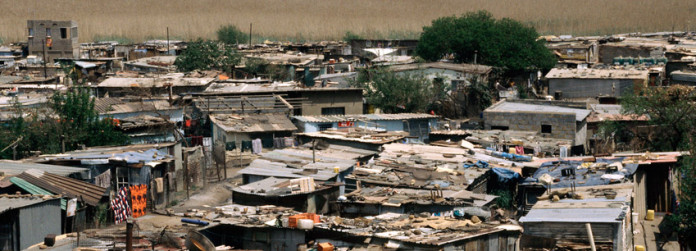
Globalization, market and poverty in South Africa


Africa’s poorest countries saw little to no progress on average in improving the quality of their policy and institutional frameworks in 2018, according to the World Bank’s annual Country Policy and Institutional Assessment (CPIA) released today.

The average CPIA score in Africa’s 38 International Development Association (IDA)-eligible countries in 2018 remained unchanged at 3.1 on a scale of 0 to 6, with some areas of social policy seeing improvements while macroeconomic management weakened.

The rule of law, accountability and transparency, and the quality of public administration remained major areas that impede the efficient use of public resources across the region.

This year’s CPIA Africa report takes a closer look at debt management, as the median government debt-to-GDP ratio reached 54.9  of GDP in 2018, an 18.5 percentage-point increase since 2013. At the same time, the share of foreign currency bonds in total external debt increased by 10 per cent while the shares of debt owed to commercial and non-Paris Club creditors rose by 5 percentage points since 2010, and sovereign bond issuances have increased rapidly.

“Some African countries are at risk of mortgaging their people’s futures in favor of today’s consumption,” said Albert Zeufack, Chief Economist for Africa at the World Bank. “When countries spend most of their revenue servicing debt, fewer resources are left for education, health, and critical services for their people. This stops progress in its tracks.”

Taken together, the increase in debt levels paired with the shift of external debt toward more market- based, more expensive, and riskier sources of finance have increased debt vulnerabilities substantially among IDA countries in Sub-Saharan Africa. The report recommends that countries improve their debt management capabilities and systems, which can enhance transparency and help stabilize the economy in the long-term.

Rwanda continues to top the CPIA ratings both in Africa and around the globe with a score of 4.0, followed in the region by Cabo Verde (3.8) and Kenya, Senegal, and Uganda (all at 3.7). South Sudan remained the lowest-scoring country on the CPIA with a score of 1.5.

Fragile countries in Sub-Saharan Africa improved slightly in the areas of gender equality, human development, and environmental stability, which bodes well for their ability to tackle the drivers of conflict and exclusion.

In fact, fragile countries in Africa saw stronger performance in social inclusion than fragile countries in other parts of the world. Non-fragile IDA countries in Africa performed on par with their global peers overall, with the notable exception of social inclusion policies, where they underperformed especially on the issue of gender equality.

“Improvements in social inclusion and service delivery have historically been crucial elements of countries’ transitions out of fragility, so even modest steps count,” said Gerard Kambou, Senior Economist and Lead Author of the CPIA report. “African countries, fragile and non-fragile, need to keep the focus on gender, education, health, climate, and governance issues alongside macroeconomic management if they want to see true and lasting progress.”

The report recommends that Africa’s IDA countries accelerate business regulatory reforms to support private sector development and improve domestic revenue mobilization in addition to strengthening their debt management. The report team plans to hold discussions on this year’s results and recommendations in several African countries in September 2019.

Stories Continues after ad