Stanbic Bank
Stanbic Bank
27.2 C
Kampala
Stanbic Bank
Stanbic Bank
Home Blog Page 1213

Cranes drawn in group B for 2021 Afcon qualifiers

Uganda Cranes
 

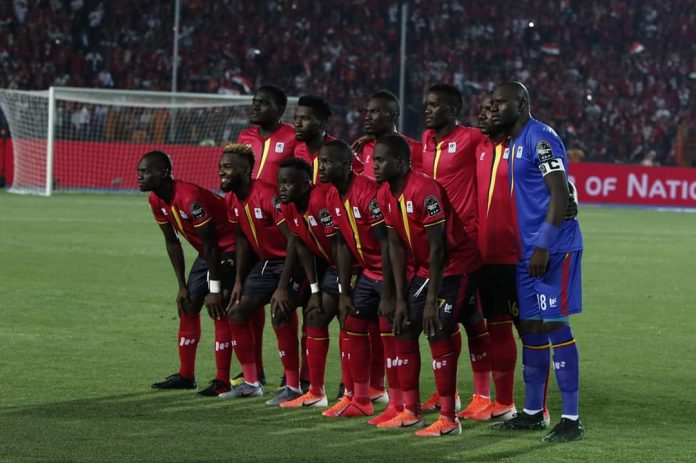
Uganda Cranes have been drawn in Group B for the qualification campaign to the 2021 Africa Cup of Nations tournament in Cameroon.

The other countries in the group are Burkina Faso, Malawi and the winner between South Sudan and Seychelles in the preliminary round.

The group draw was conducted at Mariott Hotel in Zamalek, Cairo, Egypt on Thursday, 18th July after the Caf Ordinary Annual General meeting.

There are 12 groups and the winners and runners-up from each group will qualify for the 2021 AFCON tournament.

Hosts Cameroon is guaranteed a place so only one other team qualify from their group.

The two legged four preliminary ties will be played in October. Group stage matches will kickoff in November with two Match Days.

The dates of the qualifiers will be confirmed by Confederation of African Football (CAF) in due course.

Groups

A: Mali, Guinea, Namibia, Liberia or Chad

B: Burkina Faso, Uganda, Malawi, South Sudan or Seychelles

C: Ghana, South Africa, Sudan, Mauritius or Sao Tome and Principe

D: Democratic Republic of Congo, Gabon, Angola, Djibouti or Gambia

E: Morocco, Mauritania, Central African Republic, Burundi

F: Cameroon, Cape Verde Islands, Rwanda, Mozambique

G: Egypt, Kenya, Togo, Comoros Islands

H: Algeria, Zambia, Zimbabwe, Botswana

I: Senegal, Congo, Guinea Bissau, Eswatini

J: Tunisia, Libya, Equatorial Guinea, Tanzania

K: Ivory Coast, Niger, Madagascar, Ethiopia

L: Nigeria, Benin, Sierra Leone, Lesotho

Stories Continues after ad

Bank of Uganda spent $33m on unstable system

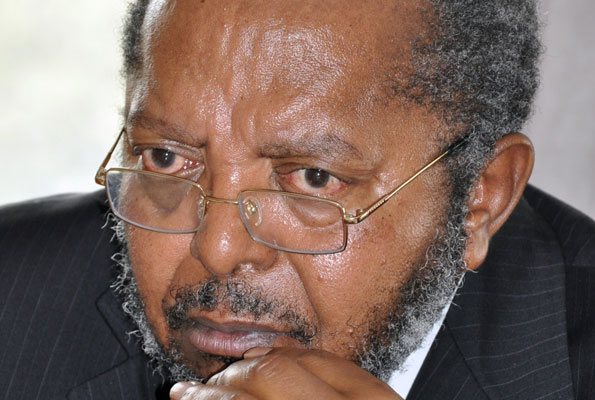
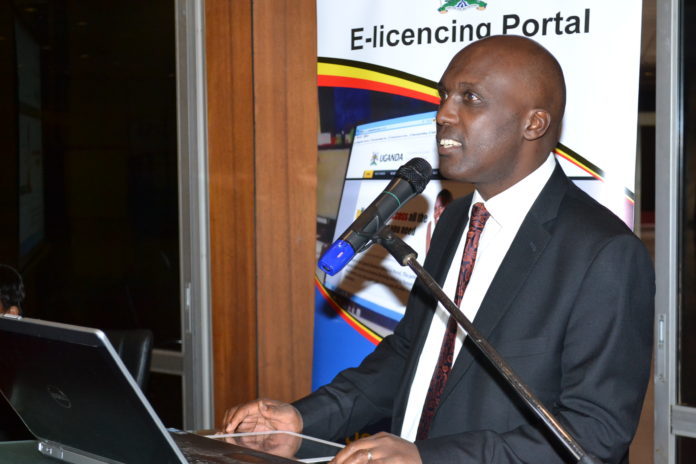
BoU Governor Emmanuel Tumusiime-Mutebile.
 

Bank of Uganda (BoU) spent US $33 million on its Real Time Settlement System (RTGS) that had a malfunction on Wednesday, sources say.

In a statement yesterday BoU Governor Emmanuel Tumusiime-Mutebile said the system experienced a temporary malfunction and it did not crash as reported in the sections of the local media.

“It should be noted that this was not a system crash as has been portrayed in the media. There was a brief disruption in transaction processing in the morning which was resolved shortly thereafter,” Tumusiime-Mutebile said.

He added that the payment systems remain stable, fully operational and reliable.

However, sources say the RTGS is supposed to have two back-up systems in case of a malfunction or crash. Sources say they doubt whether the two systems were installed on computers at the central bank.

The system’s brief breakdown on Wednesday affected government payments and interbank transactions.

RTGS systems are usually operated by a country’s central bank as it is seen as a critical infrastructure for a country’s economy. Economists say that an efficient national payment system reduces the cost of exchanging goods and services, and is indispensable to the functioning of the interbank, money, and capital markets.

A weak payment system may severely drag on the stability and developmental capacity of a national economy; its failures can result in inefficient use of financial resources, inequitable risk-sharing among agents, actual losses for participants, and loss of confidence in the financial system and in the very use of money.

Sources say in the likelihood that occurrence occur, the banks revert back to manual systems where it drags for sometimes for a simple transaction to be carried out and also poses a risk of funds being stolen in the process.


Stories Continues after ad

Gov’t moves to sell off sunken MV Kabalega and MV Barbus

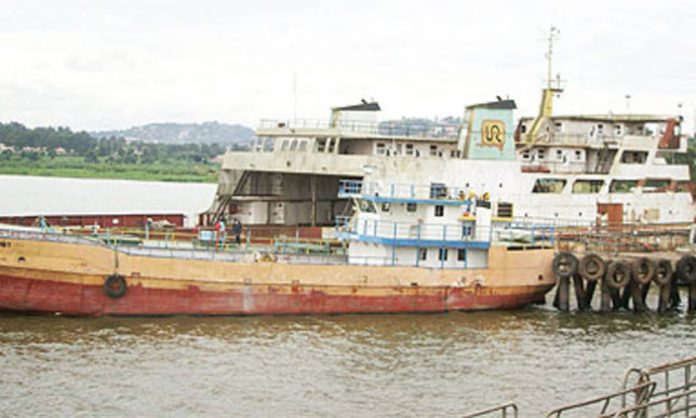
Marine vessel


The Ministry of Finance, Planning and Economic Development, has called for bids for the purchase of the famous MV Kabalega which sank in Lake Victoria in 2005 and is believed to be 80 metres deep South West of Port Bell.

Another marine vessel that the Ministry wants to sell off is MV Barbus which is partially submerged at Port Bell dock.

The two marine vessels belong to Uganda Railways Corporation (URC) and being disposed of under the Privatisation and Utility Sector Reform Project (PUSRP).

MV Kabalega which is a passenger Wagon Ferry, Twin Screw vessel has an estimated weight of 1,121 tons while MV Barbus which is a passenger, single screw vessel is estimated at 120 tons. MV Kalangala was constructed in 1940 while MV Barbus was constructed in 1984.

The bid security for MV Kabalega is Shs106.5 million while that of MV Barbus is Shs11.4 million. Contract award is set for December 5, 2019.

The bids come a few weeks after the Uganda National Roads Authority (UNRA) set afloat the MV Sigulu ferry onto the waters of Lake Victoria after seven months of construction at Masese landing site. The vessel will connect Namayingo district to the Islands of Lolwe and Sigulu, providing safe means of transport to the communities of Namayingo, Lolwe and Sigulu Islands at no cost

The modern ferry which has a passenger capacity of 300 was constructed by Johs Gram-Hanssen (JGH), Western Marine Shipyard Limited Joint Venture. It has a Pay Load (Weight it can carry) 200 Tones, 15 Medium Vehicles and7 Knots (14 km/hr) Speed.

The bids also come after the Ministry of Works and Transport unveiled plans for the construction of Bukasa Port on shores of Lake Victoria. The port will provide reliable, effective and sustainable multi-modal transport system along the Central and Northern Corridor.

Expected to serve as trio-modal cargo handling facility for road, rail and water transport, the port will sit on 400 hectares on the shores of Lake Victoria.  Bukasa Port will serve as an International Transportation Logistic and Business Hub center for assembling, de-commissioning, storage & re-distribution of exports/imports.

According to the ministry, the Port will be constructed in three phases, which include:

Phase 1: covers preparation of Master Plan, Preliminary Design, and construction of start-up infrastructure, Dredging, Pilling and Swamp Surcharging. This Phase will be completed in April 2020.

Phase 2: covers construction of Bukasa Port to capacity of 2.3 million tons per year, construction of shipyard and floating dock. This Phase is expected to be completed by 2021.

Phase 3: covers future extension of the Port to the capacity of 5.2 million tons and to the maximum peak of 7.5 million tons. That Phase is expected to be completed by 2030.


Stories Continues after ad

UNBS Aligns water standards to international standards

Utility companies involved in the supply of drinking and waste water services are now expected to uphold the highest standard of customer service following the adoption of international standard related to drinking and waste water services, officials announced on Thursday in a statement.

According to the statement, water and sanitation experts under the Uganda National Bureau of Standards (UNBS) Technical Sub Committee on water and sanitation have resolved to adopt the ISO standard on drinking and waste water services. In this case, drinking water refers to treated piped water.

The Standard (DUS ISO 24510:2007) aims at improving user experience and compelling utility companies to be responsive to customer needs. It gives power to customers and users to raise complaints against a service provider if the guidelines stipulated in the standard are not met.

The standard was revised to include guidelines on satisfying users’ needs and expectations and clarity of billing and response to billing complaints. Other guidelines adopted include: managing wastewater utilities, treatment of wastewater and residues removed from wastewater, service assessment criteria and related performance indicators, among others.

Stories Continues after ad

Former IGP Kisembo dead

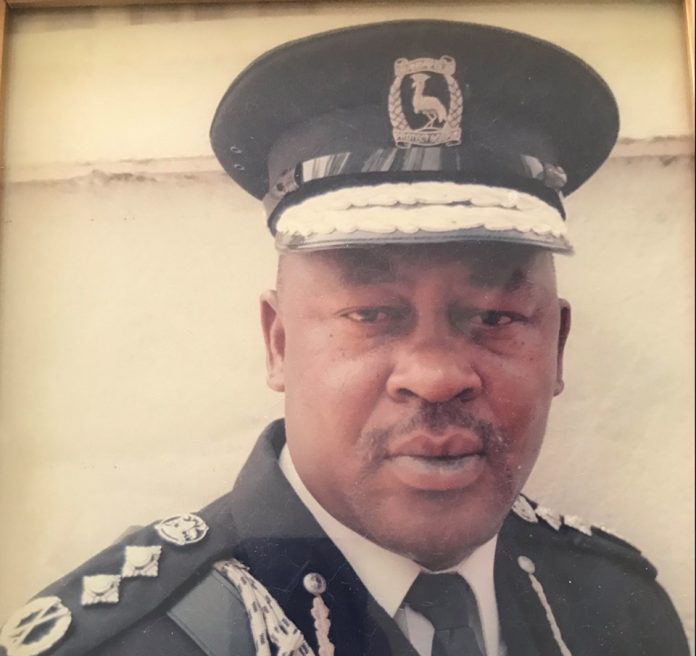
Late John Kisembo

Former Inspector General Of Police John Kisembo has passed away. The deceased was the IGP from 1998 to 2001.

Mr. Kisembo died at Platinum hospital where he was admitted for treatment. He replaced  John Cossy Odomel and joined Police in 1980 as a graduate.


Below is the police statement on the passing on of former IGP


The police are mourning the sudden and un expected passing of former IGP John Kisembo, which occurred today, 18th, July 2019, at 3:15 pm, at platinum hospital, Kampala

The late was IGP from the year 1999 to 2001, and we will never forget the excellent leadership he gave to the Uganda Police Force during the many years he served. At the time of his death, he was the Ag Director UNAFRI.

The IGP has reached out to the family of the deceased, and extended his prayers and thoughts to them during this time of sadness. We would like to thank all members of the UPF, UNAFRI, and the public who have reached out to the family in this time of sadness. We ask them to continue praying for family.

The IGP has further tasked the Director Welfare and Production to work with the family to ensure he is honoured in a way befitting his life and position in the UPF.

We shall progressively, update the public and all mourners on funeral arrangements.

May the soul of former IGP John Kisembo rest in eternal peace.


CP Fred Enanga

PRO Uganda Police Force.

18th July 2019 .

Stories Continues after ad

Gov’t condemns, warns Pastor Bugingo

'Pastor' Bugingo. Photo credit, New Vision.


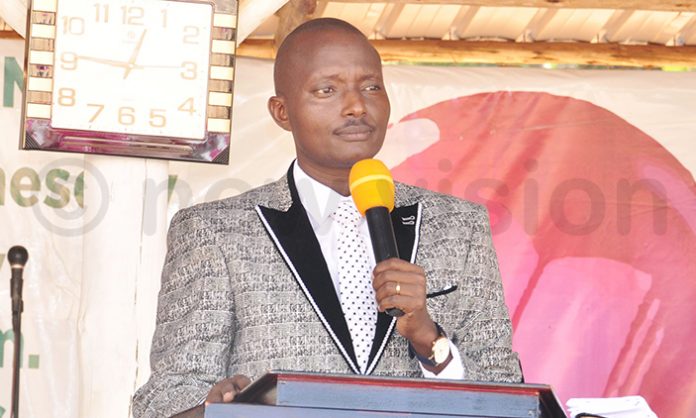
Parliament has warned the controversial house of prayer ministry’s (HPM) pastor, Aloysius Bugingo over offensive, utterances against his estranged wife Teddy Naluswa Bugingo.

In a speech that has since gone viral, Bugingo remarked that his wife is suffering from fistula, which he said has been a major problem in the marriage for over 10 years.

He would quickly be criticized by women groups, who later held demonstrations, which were dispersed by police, leaving scores arrested. Bugingo would later boast that government couldn’t arrest him, a speech widely criticized.

Acting Information and National Guidance Minister, Chris Baryomunsi, said government took note of the offensive communication uttered by the pastor and the Uganda Communications Commission has since written to him warning him not to offensively communicate again.

“It is wrong for anybody to condemn a woman simply because she has that kind of condition…I want to join you in condemning that act,” he said during the plenary.

Baryomunsi sought to reassure MPs that the Uganda Communications Commission (UCC) is studying the footage and recordings containing Bugingo’s remarks to ascertain if they breach the minimum broadcasting standards.

MP Nabilah Naggayi Ssempala complained about the alleged utterances, by way of raising a matter of national importance.

“As MPs we are in shock and as mothers we are in pain…no person should be condemned because of an illness, he has been ashaming and degrading his wife and the mother of his children,” said MP Nagayi.

Chief Opposition Whip Ibrahim Ssemujju) read double standards in government’s position on the issue.

“Joseph Kabuleta who is also a pastor has been jailed for days for offensive communication and has been released without charge, for this one [Bugingo], you have just warned him…do you have standards?” said Ssemujju.

An adamant Baryomunsi maintained that the law will be applied without discrimination. “Nobody should use the pretext of faith to break the law,” said Baryomunsi.

In the recent past, the controversial pastor has been battling a breaking marriage, which has seen him make public utterances seen to be targeting his wife, who he is seeking to divorce.

Stories Continues after ad

Moses Magogo elected on the CAF Executive Committee

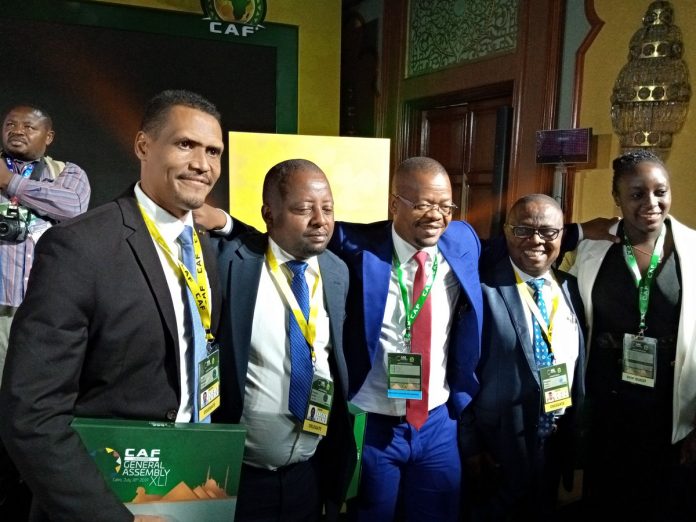
Eng. Magogo is joined by others after the vote.


FUFA President Eng. Moses Magogo has been elected as the new Caf Executive Member for the East and Central zone.

Magogo obtained 33 votes out of 54 defeating the President of Tanzania Football Federation (TFF) Tenga Leodegar who received 19.

The election took place during the 41st Ordinary General Assembly for the Confederation of African Football Association (CAF) at Aida ballroom in Cairo, Egypt on Thursday, 18th July 2019.

Magogo replaces Tenga who was re-elected unopposed four years ago after Djibouti’s Hassan Suleiman stepped down.

The Central and East zone consists of all the Council for East and Central African Football Associations (CECAFA) countries that include Uganda, Kenya, Tanzania, Rwanda, Zanzibar, Somalia, Burundi, Ethiopia, Eritrea, Djibouti, Sudan and South Sudan.

Magogo was co-opted as an executive committee member of Caf by Ahmad Ahmad in 2017 but is now a full member after winning with the most votes.

Senegal’s Augustin Senghor is for the Western Zone A, Sita Sangare (Burkina Faso) is for Western Zone B and Central Africa Republic’s Patrice Edouard Ngaissona is for Central zone.

Libya’s Abdulhakim Abraheem Abdulrarazzik Al Shalmani won the Northern region vote.


Stories Continues after ad

Ugandan security ‘expert’  Dixon Bond to handle 2019 Afcon final

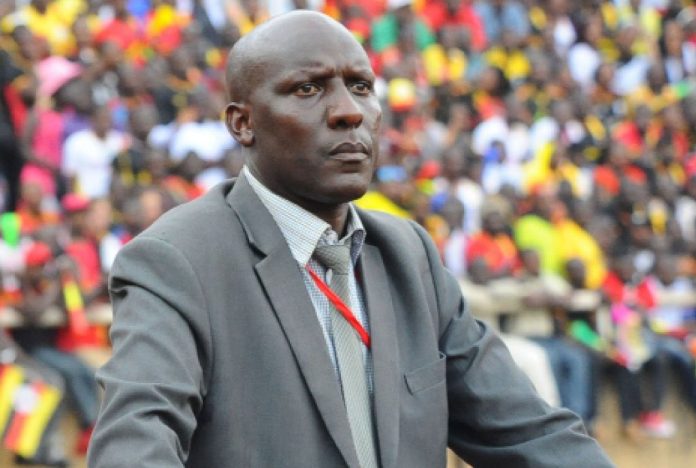
Dixon Bond Okello


Experienced FUFA, CAF and FIFA Ugandan security personnel Dixon Bond Okello has been selected to head security matters at the 2019 Africa Cup of Nations final between Senegal and Algeria on Friday 19th July.

Okello has been at various sporting events concerning matters of security concerning big crowds. He was at the 2010 Fifa World Cup in South Africa and the 2012 Olympic Games in London.

He has been a regular figure at Caf events like the champions league and confederations cup games and currently among the security officers for the 2019 FIFA U-20 World Cup in Poland.

Okello’s experience over the years in handling high profile Caf engagements has seen him handle highly charged Caf Competitive matches on the continent.

Elsewhere, Cameroonian centre referee Alioum Alioum with two of his assistants in Evarist Menkouande and Elvis Nguegoue, also coming from Cameroon, will handle Africa’s biggest showpiece.

Zakhele Siwela of South Africa has been appointed as the fourth official for the final while Efraim Benjamin Kramer will head the doping control for the match.

Over 32 editions of Africa’s showpiece football tournament, this is just the fifth final that witnesses two local (African) coaches on helm of the finalists’ technical staff. Just four times before the final was an All-African coaches affair. Senegal are searching for the first title while Algeria their second.

Attachments area

Stories Continues after ad

Why Museveni directed Minister Anite to audit UTL

URSB's Bemanya at a past event, whom Minister Anite seem to be against.


President Museveni has directed State Minister for Privatisation and Investment, Evelyn Anite to institute an audit in the activities of the struggling Uganda Telecommunication Limited (UTL).

In a letter dated July 16, 2019, Museveni said he had “heard of some allegations”.
“This is to direct you to institute an audit in the activities that are going on in Uganda Telecommunication Limited,” reads part of Museveni’s letter, a copy of which was seen Eagle Online.

For more than two years, UTL has been placed under administration and there is no sign that the company will change for the better.
In early 2017, UTL was in debts of more than Shs700 billion when the Libyans, who held 69 per cent shares, left.
At that time, government had to liquidate the firm or save its collapse by putting it under provisional administration to allow a search process for competent investors to take it over.

In May 2017, UTL went under Administration Deed and government appointed the Registrar General of Uganda Registration Services Bureau (URSB), Twebaze Bemanya, as the provisional administrator.
One of his tasks was to find an investor to buy UTL within six months. Others were to clear liabilities to all creditors.

However, the company did not attract a new investor and Bemanya’s provisional administration was extended twice by the Finance Ministry.

In May 2018, Museveni ordered that all government ministries, departments and agencies (MDAs) sign up UTL as their sole provider for internet services as part of efforts to make the company more attractive to a prospective investor.
Also the National Backbone Infrastructure (NBI) would be given to UTL by the National Information and Technology Authority (NITA) to ensure fiber network connectivity across the country.

A Shs200b debt UTL owed to government was also written off and turned into shares under Uganda Development Corporation (UDC).
In April last year, Cabinet extended UTL’s operational licence for 20 more years. This also included a directive that Uganda Communications Commission (UCC) expands the UTL reach to cover the whole country.
UTL  remains indebted to the tune of Shs536b, according to a bi-annual progress report for November 22, 2018 to May 22 this year that the administrator sent to the Commercial Court, all creditors and shareholders indicated.

The relationship between UTL and UCC is also on the rocks.
In an April 29 letter, Godfrey Mutabazi, the regulator’s executive director, wrote to Bemanya, saying it may not renew the UTL licence in June 2020 because the latter had not met the application process requirements under the law.

He also said  that UTL owes his agency Shs49.8 billion in pre-administration debt and Shs10.2 billion as part of the administration. Mutabazi also accused the company of failing to comply with the Uganda Communications Act 2013 which requires an installation of an Intelligence Network Monitoring System (INMS) to enable state agencies monitor telephone calls for security purposes.

He further faulted UTL for underutilising assigned mobile and fixed phone numbers, not complying with the directive on implementing Location Based Services (LBS), not submitting any of its networks and end-user device/terminals to UCC for approval; poor quality of service, using networks that no longer have manufacturer’s support services and failure to seek UCC approval prior to using short codes used by other network services.

Bemanya versus Anite
There has also been a protracted fight between Mr Bemanya and the Ministry of Finance.
Early this year, the ministry failed to have UTL audited on two occassions. The first was when Finance minister Matia Kasaija requested the Auditor General, John Muwanga, to audit UTL.
In April, Mr Muwanga wrote back to the ministry, saying he could not audit the company because “it is being supervised by court.”
The second attempt was by State Minister for Privatisation and Investment, Evelyn Anite, who asked Bemanya to allow the ministry audit the company.

Bemanya declined, saying such an exercise can only be conducted after the lapse of the Administration Deed in November.
After a week of confrontation through letters between Ms Anite and Attorney General, William Byaruhanga, and his deputy Mwesigwa Rukutana, President Museveni last Thursday ordered Justice and Constitutional Affairs minister Kahinda Otafiire to ensure UTL issues are presented before Cabinet before any further action is taken. The President insists efforts to revamp UTL through getting another investor must be explored first and Cabinet must take a decision on that.

The following day, Otafiire wrote to Bemanya to expedite the process of finding an investor before the company is liquidated.
“As the administrator of the company, you are requested to expedite the process of sourcing a strategic investor. You are required to continuously update me on the progress to enable me report to Cabinet accordingly,” Otafiire stated.
There are also other limitations that undermine the successful search for an investor for UTL as listed in the 2017 audit report of PricewaterhouseCoopers Uganda.

Anite in her recent communication said some individuals were oraginsing to take over UTL properties.

It noted that there was need for a restructuring plan that would include conversion of the Shs224 billion debt UTL owes to Ucom, a company owned by the Libyans, into equity.
The firm also recommended that the Uganda Posts and Telecommunications Corporation pension liability of Shs206 billion be taken over by government and converting the combined debt of Shs134 billion owed to government entities such as Uganda Revenue Authority, National Social Security Fund and UCC into equity.
The auditors argued that this would reduce the debt to Shs145 billion. However, this has not been done.


Stories Continues after ad

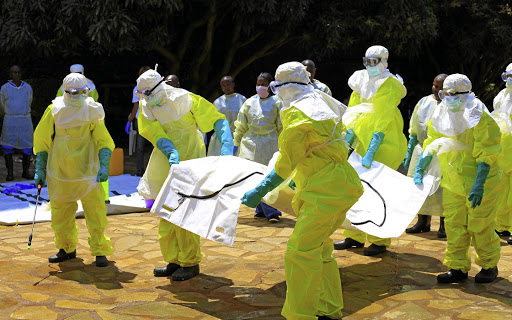
Ebola outbreak in the Democratic Republic of the Congo declared a Public Health Emergency of International Concern

Congolese officials and the World Health Organization officials wear protective suits as they participate in a training against the Ebola virus near the town of Beni in North Kivu province of the Democratic Republic of Congo, August 11, 2018. REUTERS/Samuel Mambo

The director general of world health organisation (WHO), Dr. Tedros Adhanom Ghebreyesus has declared the Ebola virus disease (EVD) outbreak in the Democratic Republic of the Congo (DRC) a Public Health Emergency of International Concern (PHEIC).

The declaration followed a meeting of the International Health Regulations Emergency Committee for EVD in the DRC. The Committee cited recent developments in the outbreak in making its recommendation, including the first confirmed case in Goma, a city of almost two million people on the border with Rwanda, and the gateway to the rest of DRC and the world.

This was the fourth meeting of the Emergency Committee since the outbreak was declared on 1 August 2018.

“It is time for the world to take notice and redouble our efforts. We need to work together in solidarity with the DRC to end this outbreak and build a better health system,” said Dr. Tedros. “Extraordinary work has been done for almost a year under the most difficult circumstances. We all owe it to these responders coming from not just WHO but also government, partners and communities — to shoulder more of the burden.”

The Committee expressed disappointment about delays in funding which have constrained the response. They also reinforced the need to protect livelihoods of the people most affected by the outbreak by keeping transport routes and borders open. It is essential to avoid the punitive economic consequences of travel and trade restrictions on affected communities.

“It is important that the world follows these recommendations. It is also crucial that states do not use the PHEIC as an excuse to impose trade or travel restrictions, which would have a negative impact on the response and on the lives and livelihoods of people in the region,” said Professor Robert Steffen, chair of the Emergency Committee.

Since it was declared almost a year ago the outbreak has been classified as a level 3 emergency – the most serious – by WHO, triggering the highest level of mobilization from WHO. The UN has also recognized the seriousness of the emergency by activating the Humanitarian System-wide Scale-Up to support the Ebola response.

Stories Continues after ad