Stanbic Bank
Stanbic Bank
16.8 C
Kampala
Stanbic Bank
Stanbic Bank
Home Blog Page 1263

Rehabilitation of 375km Tororo-Mbale to Gulu railway in Uganda to begin in July

Railway line

The refurbishment of Uganda’s 375 kilometer Tororo-Mbale to Gulu meter gauge railway line is planned to begin in July this year. This was announced by the states Ministry of Works and Transport after government managed to secure a loan of US$26.8 million grant from the European Union (EU) to fund the project.

Monica Azuba Ntege, the minister of works and transport, said that the loan will work on the physical rehabilitation of the railway line, supervision of the construction works, capacity building of the Uganda Railway Corporation (URC) and compensation of about 4,000 projected affected people whose crops and building structures might be destroyed during the reconstruction process.

The government of Uganda will also inject US$15.1m into the project and an extra US $29.3m will be needed for the completion of the entire project. The project shall be executed by the Uganda Railways Corporation overseen by the Ministry of Works and Transport.

Tororo-Gulu railway line

The line provided a link between the East African Northern Corridor to the port of Mombasa and Eastern Uganda to Northern Uganda, as well as South Sudan and the Democratic Republic of Congo. It has however been out of service over the past two decades due to actions of war by the Lord’s Resistance Army in addition to unfair competition by overloaded trucks.

The rehabilitation is part of the government’s efforts to modernize the railway system in the country especially after it ended the operations of the Rift Valley Railways.

Due to its closeness to the Albertine region, the railway line instead of road will be used for transportation of equipment and inputs for the construction and operations of the oilfields because of their bulk nature which makes it impossible for them to be transported by trucks or other on road.

Stories Continues after ad

Uganda protests entry of Rwandan forces into its territory

Rwanda's Foreign Affairs Minister, Amb. Richard Sezibera.

Uganda has protested the entry of Rwandan soldiers into its territory without clearance last Friday as they chased a Rwandan national who they killed together with a Ugandan citizen.

“The government of Uganda protests in the strongest terms the violation of its territorial integrity by the Rwandan soldiers on the Ugandan territory and the criminal brutal and violent act by the Rwandan soldiers, on unarmed civilians,” The Ministry of Foreign Affairs says in a statement, urging the Rwandan government to bring culprits to book.

Meanwhile the Deputy Inspector General of Police (DIGP), Maj. Gen. Sabiiti Muzeyi, will today handover the body of John Batista, a Rwandan citizen who was shot dead on Friday by a Rwandan soldier while attempting to cross into Uganda.

According to government spokesperson Ofwono Opondo, the function will take place at Katuna border Kabale. He said the body will be handed over after government received a postmortem report detailing what caused the death of Rwandan national.

The cross boarder shooting occurred, on Friday May 24, 2019, at around 8pm, at Hamisavu, trading center, Kiruhura village, Kasekye Parish, Kamwezi Sub County, in Rukiga District.

The Rwandan national, John Batista, was a businessman, who attempted to cross into Rwanda on a motorcycle loaded with his merchandise, but turned back upon noticing security presence across the border.

Police spokesperson, Fred Enanga said, Peter was chased and intercepted by two armed Rwandan soldiers, a distance of about 80 meters into Ugandan territory at Hamisavu trading center. The victim resisted attempts to arrest him and was shot to the head and killed instantly.

“The armed soldiers, in addition, shot dead a Ugandan identified as Nyesiga Alex, who was trying to intervene. They immediately withdrew, after failed attempts to remove the body of the Rwandan victim. The two bodies were transferred to Kamwezi Health Center IV for further post-mortem analysis.” Said Mr. Enanga.

Stories Continues after ad

Standards body gets new solar battery and panel testing equipment

C8000 Advanced Battery Testing System

Uganda National Bureau of Standards (UNBS) has received electrical testing laboratory equipment that conducts tests on solar Photovoltaic (PV) equipment.

The donation was received from the Department for International Development (DFID) through the United Nations Capital Development Fund (UNCDF).

This is part of the activities where UNCDF contracted CREEC in partnership with Energy Without Borders to implement a Consumer Protection and Awareness campaign on behalf of the Uganda Solar Energy Association [USEA] for off-grid solar in support of the priority actions outlined in the Energy Africa Compact with support from the Department for International Development (DFID).

As part of the program, several activities have been carried out namely; developing a quality assurance framework for the solar sector, awareness campaigns and solar technician trainings conducted both in West Nile and the Eastern region and a capacity building training for both UNBS and URA market surveillance team.

The two laboratory testing equipment- the Cadex C8000 battery testing system and the Seaward PV200 solar panel tester were received by the Acting Executive Director Ms. Patricia Ejalu.

While handing over the equipment, the UNCDF representative noted that local development is about improving quality of life at the grassroots level.

“Increasing the capacity and fiscal space of authorities such as UNBS can empower secondary cities, towns, and rural areas to contribute in important ways to national social and economic development goals. This calls for an approach that mobilizes public and private resources, especially at the domestic level, for investment in resilient local economies and societies,” he said.

Speaking at the handover ceremony held at UNBS headquarters, Ms Ejalu thanked UNCDF, CREEC and DFID for the much needed support saying it goes a long way in ensuring that the solar equipment market is able to rely on UNBS test methods to ensure safe and long lasting products.

“As the standards body charged with the mandate of ensuring that products on the market are safe, we are continually trying to deliver on our mission with limited budgets. As a result, essential equipment for testing is often too costly and inaccessible and yet the industry is growing. We are grateful to our partners and donors for this generous donation to help in this regard,” she said.

This equipment will go a long way in building the capacity of UNBS and increase the quality of solar panels and batteries on the Ugandan market.

The handover was officiated by top officials from DFID Uganda, UNCDF, USEA, and CREEC.

Attachments area

Stories Continues after ad

BoU gives facelift to Bwizibwera Maternal and Child Health Unit

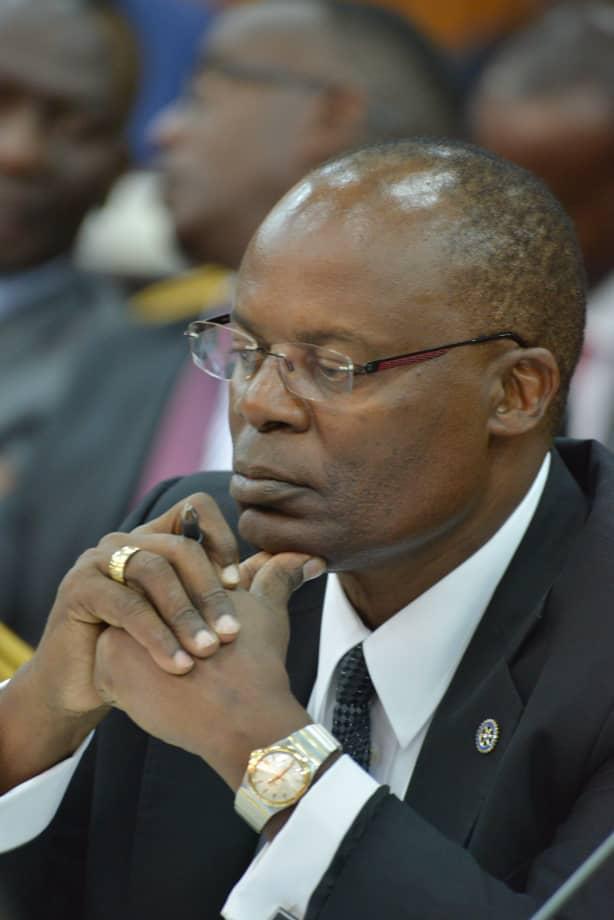
Dr Louis Kasekende-Deputy-Governor Bank-of-Uganda

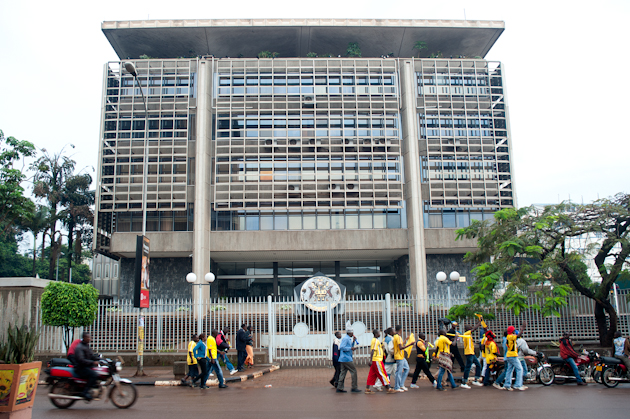
Bwizibwera Maternal and Child Health Unit now looks better after months of refurbishment sponsored by the Bank of Uganda (BoU). The refurbishment is part of BoU’s corporate social responsibility (CSR) programme that has a series of activities ongoing to mark 50 years of the existence of central bank.

Apart from the intervention in the health sector, BoU’s CSR activities also include planting of trees in the urban centres that host our upcountry offices as a contribution to operationalising the Uganda Green Growth Development Strategy (UGGDS).

The aim of the CSR event was to raise funds for maternal and child health care in Mbarara, Mbale, Arua and Gulu where the Bank has presence.

Speaking at the function deputy governor, Dr. Louis Kasekende, said Bwizibwera Health Centre IV was identified as the beneficiary to the Bank’s donation after consultation with Mbarara District Officials.

“We chose the health sector because it would benefit a large segment of the population and mirror the BoU’s national character and also because of the undeniable impact that improved health has on the growth of our country through improved labour productivity,” he said.

He said better health through easier access to quality health care can reduce the disease burden and the associated costs thereby allowing more time for households to attend to economic activities, earn more and perhaps save and invest more.

“Various empirical research studies have found that health expenditures and health outcomes have significant impact on growth and incomes per capita, either directly or indirectly.”

He handed over the equipment to the rehabilitated Bwizibwera Maternal and Child Health Unit to the district leadership and the community. The donation includes medical equipment , water harvest system, solar system and outdoor bathrooms and toilet, among others.

Attachments area

Stories Continues after ad

Victoria University introduces new programs in logistics and transport

The Victoria University main Campus

In the highly demanding, ever-changing and uncertain world, a young adult needs certain kinds of survival skills outside of the traditional protected academic and home environments. That is why Victoria University in a bid to open up the university to the general public has added the accredited programs in the logistics and transport sector which was launched on May 23, 2019 at Kabira Country Club.

Victory University did that in partnership with the Chartered Institute of Logistics and Transport (CILT) in the UK, a membership organization for professionals involved in the movement of goods and people and their associated supply chains. It was first established in 1919 and registered as a charity organization and part of the CILT international family with over 33,000 members in countries across the world.

Members of the Institute are involved in the management and design of infrastructure, systems, processes and information flows and in the creation, management and development of effective organisations. The work of our members impacts directly on people, society and the environment, on business profitability and economic growth.

Assoc. Prof Krishna N. Sharma is a well know youngest Vice Chancellor of Victoria University Kampala –Uganda said his happy to run the professional programs under Logistics and transport at Victoria University and applauds the Dean of Business and Management for initiating this idea and bringing on board as partner like the Chartered Institute of Logistics and Transport to run these accredited programs.

The accredited programs are designed by CILT to thoroughly equip participants with ‘street-smart’ tools and skills preparing them to effectively transition from a student mindset to a creative, problem solving and value adding young adult, ready to step into the Logistics and Transport world with enthusiasm, hope and a clear purpose.

Mr. Geoffrey Etyang the Chairman of the Chartered Institute of Logistics and Transport –Uganda chapter said, “Victoria University is the 2nd university besides UMI to run these accredited programs and the first to run the Advanced Diploma in Logistics and Transport.”

Ms. Faridah Ashaba, Founder and the Chief Executive Officer of Bambino Life Foundation and a woman Pilot was part of the guest speakers. She said, “she believes in breaking stereotypes in people that think that women cannot do men’s work.” She further added that as a woman in a male dominated industry she intends to use her position as a woman pilot to inspire ladies to take opportunities in this industry so as to expand their horizons.

In a video from the International Ambassador of CILT Uganda, Chief Teete Owusu, he said that if any women do enroll at Victoria University for this particular course, they shall get a discount off tuition. This is done to empower women and remove the stereotype norm of the logistics and transport sector aimed for men.”

The Event’s Guest of Honour and Main Speaker; Aggrey Henry Bagiire the Minister of State for Transport said, “his proud to be a partner of Victoria University to educate and attract individuals to the logistics and transport sector. Lifelong learning will be a clear necessity in imparting knowledge and building skills today in the sector.” Bagiire further added in his speech that “the growth of population is presenting a challenge for those working in the logistics and transport sector and in Kampala city, the daily day time population is over 3 million people and moving such masses to destinations is a challenge and Victoria university is coming in at the time when the service is badly needed, he thanked the directors and Management for introducing the course.”

He said the ministry was taking initiatives to support the Logistics and transport sector but that human resource is needed to manage the sector’s opportunities. “The Ministry Of Works and Transport would like to affirm its continued partnership with Victoria University under the provisions of skills and knowledge to interested individuals in the logistics and transport sector,” he said.

Victoria University, is accredited by the Uganda National Council for Higher Education (UNCHE) and Uganda Midwifery Council.

The university stands out as a pivot of academic excellence, offering a fresh and intellectually thriving environment that nurtures critical and progressive thinkers. The institution is committed to the advancement of higher education worldwide. Currently its students come from countries such as Congo, Nigeria, Ghana, Pakistan, India, South Sudan, Kenya, Tanzania, Rwanda, Burundi, Eritrea and Somalia among others

The university has established courses tailored to the needs of the African Market, with the courses offered strategically focused at employment-oriented education and aimed at Creating Scholars empowered to provide cutting edge solutions.

Leadership, critical thinking, excellence, leadership, student, centeredness, professionalism, innovation, passion, humanity and integrity are the core values that are part of the Victoria University experience.

Due to international and local collaborations, students at the university are assured of extensive hands on training every semester which enables the learners to acquire distinctive skills and knowledge of a working environment and making them competitive in any market after graduating.

Victoria University is a research active institution where students enjoy the benefits of working with experts who are well informed and up to date with new research and developments in their respective disciplines.

Some of the guests who witnessed the launch were directors of the university, council members, vice chancellor of Victoria University, Embassy representatives from the Nigerian High Commission, Somalia, Kenya High Commission, Burundian Embassy plus some delegates from Red cross, Ministry of Gender, National Water and Sewerage Corporation, media, Victoria university staff, Victoria university students, Mulago Hospital, secondary school career masters from schools like Vienna College, Turkish light academy, Bethany High school, Godel logistics, Crane Management Services, Premier Recruitment and many other bodies.

Stories Continues after ad

For the first time, I want to eat a frog and a fat one at that to fulfill Chinua Achebe’s things fall apart

Local Government Minister, Tom Butime.

By Nabendeh Wamoto

No rational Mumasaba can be happy with any explanation on Cabinet’s discriminative decision for the delay of Mbale city up to 1st July, 2021 and did I hear right the President complaining early this year that his (President) Ministers were sleeping? I must add that in Uganda those with authority don’t care and those few who care have no authority.

I don’t own poultry so the myth that in Africa when you find an old man eating chicken you would know that the man is sick or it was the chicken that was sick!!!

Upgrading Mbale municipality to city status are not issues of the spirit or issues of the soul, they are strict issues of the economy, morality and politics. For young Ugandans and for starters who occasionally consult me often, Mbale was the first municipality with Mengo (later Kampala) were declared as towns on the same day as early as 1906. The former therefore, would have qualified for city status a long time ago had there been no political purges of the 1970s and early 80s accompanied by the on-going shortage of hard-nosed bargainers/negotiators in Bugisu.

Actually President Milton Obote’s post-independence government declared Mbale a city in the late 1960s and embarked on its infrastructure upgrading including the tarmac road to Wanale hill as a precursor towards its commissioning which unfortunately was obstructed by then Col. Idi Amin’s takeover in 1971. One of the chief custodians of these historical facts about Mbale town and Bugisu as a whole is non-other than Gen. Yoweri K Museveni who interestingly chaired that ill-fated Monday Cabinet meeting that resolved the same. Bugisu and Mbale of that time produced exemplary, committed servant leaders and scholars of international stature and again then young Yoweri Museveni was a direct beneficiary as he received his initial, ideological classroom induction at Lumumba Research Bureau at Namakwekwe, Mbale in 1965 under the tutelage of the late Masaba Natoolo.

I will withhold and reserve some of the sensitive secret data regarding the training for obvious reasons. Factors instigating Bugisu peoples’ outpouring about the delay of Mbale city status to 2021 are an ill comparison to our (Bagisu) forefathers (read leaders) in the face of hungry children that they (parents) don’t complain or lament but provide solutions by hook or crook even when there was no food in the house. They would set a fire, place an empty cooking pot on the fire filled with stones and water then boil for as long as it would take just to provide hope to the children who would rather retire into sleep that it is the food that took long to be ready (in this case until 2021).

 Mbale is presently a commercial epicenter in the whole Eastern region, along the Northern corridor because of her proximity to Kenya, a neighbor with potent economy and more specifically the on-going construction of Mbale-Lwakhakha highway to Uganda-Kenya boarder.

 Bugisu co-operative union established a very powerful estate department and owns a string of buildings and land in Mbale and almost all neighboring areas.
 In 1960 and 1970, during the world coffee boom BCU was able to contribute tremendously to the development of not only Mbale, Bugisu but areas like Teso, Bukedi, Sebei etc by constructing Teso college Aloet, Bukedi college Kachonga, Tororo girls, Sebei college, Tegeres.

Nabendeh Wamoto S.P (0776-658433)
simonwamoto@yahoo.co.uk

Stories Continues after ad

Uganda-Rwanda relations worsen as Rwandan security shoot two dead Rukiga district

The territorial police in Kigezi is investigating the shooting to death of two male adults, one a Ugandan and the other Rwandan, by the Rwandan security forces, an incident which has worsened relations between the two countries. The murder occurred, yesterday at around 8pm, at Hamisavu, trading center, Kiruhura village, Kasekye Parish, Kamwezi Sub County, in Rukiga District, according to Uganda Police Spokesperson Fred Enanga.

The Rwandan citizen, identified as Peter Nyengye was a businessman, who attempted to cross into Rwanda on a motorcycle, loaded with his merchandise, but turned back upon noticing security presence across the border. He was however, chased and intercepted by two armed Rwandan soldiers, a distance of about 80 meters, into Ugandan territory, at Hamisavu trading center.

“The victim resisted attempts to arrest him, and was shot to the head and killed instantly. The armed soldiers. In addition, shot dead a Ugandan identified as Alex Nyesiga, who was trying to intervene. They immediately withdrew, after failed attempts to remove the body of the Rwandan victim. The two bodies were transferred to Kamwezi Health Center IV for further post-mortem analysis,” Enanga says.

“The police strongly condemn the violent acts of killing innocent civilians with impunity, regardless of their immigration status. In this very instance, there was no justification for the illegal entry and use of deadly force by the Rwandan military, due to the presence of alternative, adequate and effective remedies available at our disposal,” reads part of Uganda Police statement on the matter.

“For instance, in the recent past, 44 Rwandan nationals, who had illegally entered Uganda, were intercepted in Kasese district and deported to Rwanda in a very peaceful manner,” it adds.

As we forward the matter to the National Security Committee and Ministry of Foreign Affairs for better management, we would wish to urge our counterparts, to respect the rights of citizens along the border and avoid acts of provocation that can easily destabilize the prevailing peace along the border, says Enanga.

The latest incident comes at the time when Uganda has accused Rwanda of imposing a trade embargo on its goods as it does not allow the goods to enter Rwanda. Rwanda accuses Uganda of harboring rebels opposed to Kigali regime but Uganda denies the allegations, calling them unfounded. Rwanda has gone ahead to block its citizens from entering Uganda on allegations that Ugandan security mistreats them when they arrive in the country.

Stories Continues after ad

Comesa, UNCTAD launch deal to establish regional trade information portals

The Common Market for Eastern and Southern Africa (COMESA) and United National Conference on Trade and Development (UNCTAD) have today launched a Co-delegation Agreement to implement trade facilitation projects in the region.

UNCTAD Secretary General Dr Mukhisa Kituyi and his COMESA counterpart Chileshe Kapwepwe launched the Agreement Friday at the COMESA Headquarters in Lusaka, Zambia.

Under the Agreement, COMESA delegates to UNCTAD the design and development of national and regional Trade Information Portals (TIPs) and the Customs Automation Regional Centre (CARC).

The two activities are worth 3 million euros and will be funded from an 85 million euros kitty provided by the European Union to COMESA under the 11th European Development Fund Trade Facilitation Programme. Out of this amount, 68 million euros will be used to implement trade facilitation and small-scale cross border trade.

The TIPs will facilitate easy access to essential trade information in one platform while the CARC will support technical and functional training on the Automated System for Customs Data (ASYCUDA) World Platform thereby improving skills to develop and use applications. This is in addition to developing the latest ASYCUDA Applications to enhance trade facilitation systems at the national, regional and continental levels.

COMESA Secretary General said the co-delegation was informed by UNCTAD’s experience and expertise in promoting trade facilitation, and capacity in modernizing Customs Administrations, and ASYCUDA being its intellectual property.

“I am confident that UNCTAD will deliver the expected outcomes as enshrined in the Co-delegation Agreement,” she said.

In his address Kituyi said the engine of regional integration and the deepening integration through trade is largely dependent on the success of COMESA as the regional organization with the largest member states and a very substantial component of the African economy.

“You are the core and not only of the Tripartite (Tree Trade Area) but at the very base of how to develop the architecture and practicalities of Africa’s Continental Free Trade Area (CFTA),” he said.

“In no way are we going to downplay the centrality facilitated in trade, not only as a way of making Africa competitive but also overcoming the challenges particularly of landlocked countries on the continent which faces the daunting task in competitively trading with the rest of the world.”

He said UNCTAD, is a proud partner of COMESA and its Member States, having carried out substantial work together in creation and strengthening of national trade facilitation committees.

“We offer from our expertise and our experience backstopping to the trade facilitation subcommittee of COMESA, and I would like to share with the Secretary General our willingness and availability [as UNCTAD] to build on the co-delegation agreement other shared responsibilities,” Kituyi said.

Stories Continues after ad

Eccas benchmarking on Comesa in trade facilitation

The Economic Commission of Central African States (ECCAS) has mounted a mission to Eastern and Southern Africa (COMESA) to benchmark on the latter’s successful trade facilitation programmes.

Fifteen officials comprising of economists, customs, trade, agriculture, legal and programme experts were sent to learn best practices from their COMESA counterparts.

The study visit aims at strengthening institutional capacities and develop the competencies of ECCAS and its national institutions in order to promote trade facilitation mechanisms through a sharing of experiences on best practices developed in the COMESA and EAC.

Assistant Secretary General of COMESA Dr Kipyego Cheluget, who interacted with the delegation said COMESA’s niche was trade and investment and had therefore designed trade facilitation programme that have been benchmarked across the African continent.

“For example, the COMESA Yellow Card, a single insurance cover for motorists traversing across member States is a runaway success whose contribution to regional trade is big,” Dr Cheluget said.

ECCAS hopes that its interaction with COMESA experts will improve the level of competencies of its experts in promoting a regional mechanism which makes it possible to reduce delays, better management of transit operations and the smooth flow of intra-regional trade in Central Africa.

The delegation will on Saturday, 25 tour of the One Stop Border Post at Chirundu on the border between Zambia and Zimbabwe to see how its functions. The establishment of the border post is one of the COMESA trade facilitation projects and reduced the transit time for trucks from nine days to one.

Stories Continues after ad

IUCEA awards Shs3.7b to establish incubation centers at Africa Centers of Excellence

The Inter-University Council for East Africa (IUCEA), a Regional Facilitation Unit for the World Bank-supported Africa Centers of Excellence for East and Southern Africa Project (ACE II) has selected incubation centers to be hosted at four of the Africa Centers of Excellence (ACEs).

Each of the four centers will receive a financial award of US$ 250,000 (about Shs925 million) from the World Bank grant of One million dollars (about Shs3.7 billion), seed fund for the establishment of the regional incubation centers for East and Southern Africa.

The ACEs selected to host the Incubation Centers are: ACEESD – African Center of Excellence in Energy for Sustainable Development, University of Rwanda, CREATES – Center for Research Advancement, Teaching Excellence and Sustainability in Food and Nutrition Security, Nelson Mandela African Institution of Science and Technology, Tanzania,

Otheres are; PHARMBIOTRAC – Center for Pharm-Bio Technology and Traditional Technology, Mbarara University of Science and Technology, Uganda and PTRE – Center of Excellence in Phytochemicals, Textile and Renewable Energy based at Moi University, Kenya

IUCEA received 15 proposals in response to a call that was issued in June 2018. The call invited any African Center of Excellence participating in the ACE II Project to submit proposals to host Incubation Centers through a co-financing arrangement in the four priority areas of the ACE II Project which include health, industry, agriculture, and education/applied statistics. The proposals were evaluated through a rigorous 3-step process by an international team of experts with extensive experience in business incubation, start-ups creation and successful commercialization of innovations and covered a diverse array of important topics — such as energy for sustainable development, innovative drugs development, food and nutrition security, among others — that are critical to the development of the region.

In the evaluation process priority was given to ACEs that already had good enough products that may require improvement, promotion for wider markets and potential for business incubation, i.e. the process of nurturing of early stage ventures to success. Another key criterion considered was the capacity to source additional sources of co-financing for the Center, to ensure the long-term financial sustainability of the incubation center.

According to Dr. K. A. Appiah, a member of the Regional Steering Committee of the ACE II project who chaired the Independence Selection Panel, “the quality of the proposals that were submitted was quite high, and it was a difficult decision to have to select only 4 out of the 15 proposals submitted,” he said.  He added, “We hope that more funding can be made available by host governments and other institutions to fund other incubation centers. Our international team of experts were very impressed and eager to work with the selected ACEs to ensure that the selected incubation centers are successful in commercializing research innovations towards job creation and economic growth.”

The selection panel recommended that although the fifth selected institution, Center for Innovative Drugs Development and Therapeutic Trials for Africa (CDT-Africa) could not be funded, the proposal “was one of the best and needed to be considered as a non-funded Incubation Center.”

The IUCEA and the World Bank believe that such incubation centers will help build important linkages between academia and industry to help galvanize business growth in these priority areas that are critical to long-term growth and development of the region.

“The World Bank believes strongly in the innovation potential of African research, as a key lever in the continued economic development of the continent, and these incubations centers will serve as important hubs where the impact of research can be transformed to commercial opportunities. We hope these centers will be the first among many to follow,” said Dr. Roberta Malee Bassett, Senior Education Specialist, World Bank and Task Team Leader for ACE II Project.

The Eastern and Southern Africa Higher Education Centers of Excellence (ACE II) Project supports the governments of Ethiopia, Kenya, Malawi, Mozambique, Rwanda, Tanzania, Uganda, and Zambia in strengthening selected African Centers of Excellence (ACEs) to deliver quality post-graduate education and build collaborative research capacity in the priority areas of (i) Industry, (ii) Agriculture, (iii) Health, (iv) Education, and (v) Applied Statistics.

Stories Continues after ad