Stanbic Bank
Stanbic Bank
20 C
Kampala
Stanbic Bank
Stanbic Bank
Home Blog Page 1302

Uganda launches second competitive licensing round for petroleum exploration

Oil exploration is a long process

Uganda’s Minister of Energy and Mineral Development, Eng. Irene Muloni has launched second open competitive licensing round in respect to Petroleum exploration, development and production in Uganda.

At the launch that took place in Mombasa, Kenya yesterday during The 9th East African Petroleum Conference and Exhibition 2019, Muloni disclosed that the licensing round covers five (5) Exploration Blocks in the Albertine Graben, which is the most prospective area of exploration, development, and production in Uganda. The Blocks are:-LR2_2019_Block01 (Avivi), area coverage of 1026km2; LR2_2019_Block02 (Omuka), area coverage of 750km2; LR2_2019_Block03 (Kasuruban), area coverage of 1285km2; LR2_2019_Block04 (Turaco), area coverage of 637km2; and LR2_2019_Block05 (Ngaji), area coverage of 1230km2.

The Minister hailed President Yoweri Kaguta Museveni for his visionary leadership and strong guidance he has given to the sector since 10th February 1986. She also commended the EAC Partner States for the support they have provided in facilitating the development of the oil and gas sector in Uganda and the region at large.

The licensing round was driven by a number of factors including, among others, the establishment of additional resources and reserves to the current confirmed 6 billion barrels of oil out of which about 1.4 billion barrels are recoverable, and 500 billion cubic feet of non-associated gas; and existence of comprehensive and robust legal, regulatory and institutional frameworks which guarantee certainty to investors. The second launch follows the first licensing round through competitive bidding undertaken in 2017.

Uganda made its first commercial oil discovery in 2006. To date, over 121 wells have been drilled with a success rate of over 88 per cent. Preparations are under way to commence production following the issuance of production licenses to Total E&P Uganda B.V, Tullow Uganda Operations Pty Ltd, and CNOOC Uganda Ltd. The commercialization of the oil in Uganda will involve export of part of crude oil by the East Africa Crude Oil Pipeline through Tanga Port in Tanzania.

The 9th East African Petroleum Conference and Exhibition 2019 is being attended by Ministers in charge of the sectors in the Partner States; Honorable Members of East African Legislative Assembly; Honorable Members of National Parliaments; Members of the Diplomatic Corps, Development Partners and investors; Petroleum Sector Business Community; and Members of the EAC Regional Petroleum Conference and Exhibition Steering Committee.

Stories Continues after ad

IMF warns of Uganda’s rising debt

Finance Minister; Matia Kasaija

Uganda’s public debt may grow to 50.7 percent of its gross domestic product as the nation borrows for infrastructure investment ahead of planned oil production and in a bid to become a middle-income economy by 2040, the International Monetary Fund (IMF) has said.

The debt may rise to that level by the end of June 2022 from a projected 42.2 percent of GDP in this financial year, the Washington-based lender said in an Article IV report on Uganda’s economy. Obligations to external lenders may account for more than a third of GDP from 27.7 percent this year, the report said.

“While Uganda’s debt level remains at low risk of debt distress, directors cautioned that debt metrics had weakened, some investment projects may not generate the envisaged return, and interest payments are rising,” the IMF said.

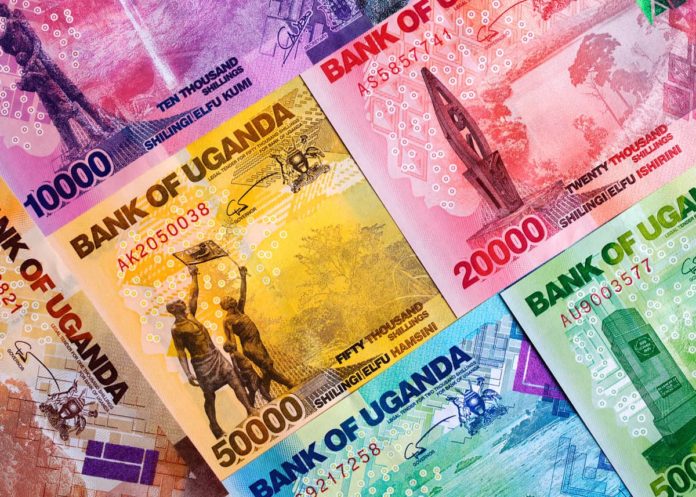
Uganda’s debt jumped 22 percent to Shs44.7 trillion (US$11.9 billion) in the fiscal year ending June 2018 as government borrowed to build roads and hydroelectric dams.

Interest payments are projected to take as much as 20 percent of revenue in 2019-20, a level typically only associated with countries at high risk, or in debt distress, the IMF said. Tax cuts and exemptions would hamper revenue collection, the lender said.

“Uganda’s external position is weaker than the level implied by fundamentals and desirable policies,” the IMF said.

East Africa’s third-biggest economy, whose government projects oil production will begin in 2022, may expand by 6.3 percent in the 12 months through June 2019 and 6.6 percent in 2023-24, IMF said.

Stories Continues after ad

Proline FC promoted back to the Uganda Premier League

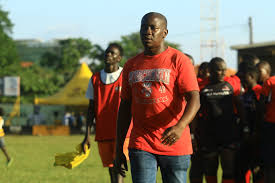
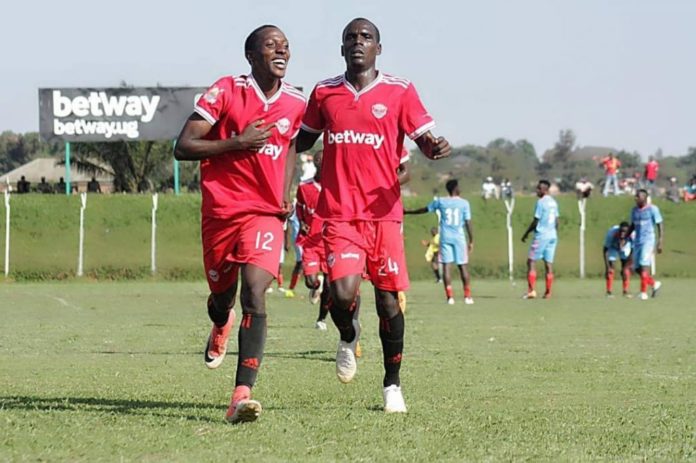
Proline FC

Proline Football Club on Thursday, May 9th sealed promotion back to the StarTimes Uganda Premier League after just one season in the Fufa Big League.

This was after their 2-0 against Kabale Sharp FC at the Kabale Municipal Ground on the final day of the Big League season.

Two first half goals from Joseph Mandela and Bright Anukani were enough to seal automatic promotion, as well as ending the season with 42 points from 20 games.

Shafiq Bisaso’s side became the second team to be promoted to the 2019/20 StarTimes Uganda Premier League after Wakiso Giants FC.

The FUFA Big League was started in 2009 as the second tier of Ugandan football and three clubs are promoted each season to the Uganda Premier League.

It consists of two groups; the Elgon and Rwenzori group where the table leaders in each qualify directly.

Prolibe were promoted as the Rwenzori group winners while Wakiso Giants were promoted as the Elgon group leader.

The other four (those finishing second and third in both groups) are engaged in a promotional play off.

Proline will end their successful season seeking for their first-ever Uganda Cup trophy against Bright Stars in the final on 25th May, 2019 at the Masaka Recreational Stadium.

Ndejje University FC, Nyamitobora FC and Paidha Black Angels SC are the three clubs that were relegated from the 2018/19 Uganda Premier League and will play in the Fufa Big League next season.

Stories Continues after ad

Umeme’s gross profit jump 11% in 2018

Patrick Bitature

The year 2018 was good business for national electricity distributor, UMEME as its gross profit grew 11 percent to Shs581 billion from Shs525 billion realised in 2017, according to financials in annual report 2018 which was released during the shareholders annual general meeting held in Kampala on Thursday.

According to the financial statement, the 11 per cent rise gross profit in 2018 was on account of revenue growth and improved margins underpinned by capital investments allowed for recovery in the tariff and improved operational efficiencies.

The profit increased as the company’s net revenue jumped to about Shs1, 493 billion in 2018 from Shs1, 485 billion. The rise in revenue came as electricity sales increased by 13 per cent to Shs1.6 trillion in 2018 from Shs1.4 trillion in 2017.

The revenue increased as units of electricity sold in Gigawatt hours (GWh) rose by 9.1 per cent to 3,011 GWh in 2018 from 2,760 GWh in 2017, boosted by improved supply, increased industrial demand and reduction in energy losses which stand at 16.6 per cent from 17. 2 per cent in 2017.

Umeme board Chairman Patrick Bitature while addressing shareholders in Kampala said the customers connected to the grid have increased fourfold to 1.3 million at the end of 2018 from 290,000 as of 2005 when the company signed 20-year concession with government to distribute electricity in the country. Prepaid metering has been rolled to 950, 000 of the customers, contributing 24 percent to the company’s revenue.

Bitature said there has been improvement in revenue collections with the five-year collection averaging 99 per cent as of 2018 from 80 per cent at the start of the concession.

“Umeme has been innovative, implementing technologies like pre-paid metering and network automation to improve our service experience,” Bitature said as he also introduced new members on his board that embodies national and foreign faces mingled to attract international financing but also push the company forward.

“…I am pleased to note the willingness of government to engage with the company and agree on terms of an extended concession,” Bitature told journalists when asked to brief them on the latest about the negotiations at hand.

Investment in the distribution network

The financial statement shows that during the year ending 2018, UMEME invested Shs231 billion in the distribution network, leading to the cumulative investment of Shs2.3 trillion over the last 14 years. “We recognise the urgency of additional investments required in the network on account of increased generation capacity and the implementation of the mile connections programme,” Bitature said.

Umeme has also been able to double the size of the distribution network to 33.146km of distribution lines and over 12,500 transformers at the end of 2018. He said this has made the electricity distribution network to be more safe, reliable and efficient.

Extension of the concession beyond 2025

Both Bitature and Umeme Managing Director Celestino Babungi reported that there good signs that government could extend the concession beyond 2025 when the current one ends. They said the company would unlock funding opportunities for long term capital to finance projected investments worth US $450 million for the next six years.

As part of future plans the two Umeme gurus said the company was looking at investing in concrete poles which last for 40-50 years as the company progressively does away with wooden poles which have various disadvantages of rotting as well as burning during bushfires.

Stories Continues after ad

Bright Stars eliminate Express to set up Uganda Cup final with Proline

Uganda cup trophy

Bright Stars FC have progressed to the 2019 Stanbic Uganda Cup final after eliminating Express FC in the second semifinal played on Thursday afternoon at Wankulukuku stadium.

Express took an early lead through John Revita who scored a free kick after 4 minutes while second-half substitute James Angu leveled it for the visitors 9 minutes from time forcing the game into penalties after a 2-2 aggregate score.

Nelson Senkatuka, Rajab Kakooza and Farouk Katongole scored for Bright Stars while Angu and Walusimbi missed theirs.

Disan Galiwango and John Revita scored their penalties while Davis Mayanja, Michale Birungi and Sadiq Ssekyembe missed for the Red Eagles.

Bright stars progressed to the final after emerging victorious with 3-2 on penalties.

Both teams will be in search of their first-ever Uganda Cup trophy.

The 2019 Uganda Cup final will be played on May 25th at the Masaka Recreational Stadium.

The winning club of the Uganda Cup will walk away with Shs40 million, runners up Shs20 million, semi-finalists Shs10 million while the quarter finalists walked away with Shs5 million.

The winner of the competition represents Uganda in the Caf Confederation Cup as per the rules of the competition. KCCA FC are the defending champions.

Express FC and KCCA FC are the teams that have won the Uganda Cup most, with ten times each.

Stories Continues after ad

IMF commends Uganda’s macroeconomic performance and development gains over the last three decades

IMF Mission Chief for Uganda Axel Schimmelpfennig

International monastery fund (IMF) has commended Uganda’s macroeconomic performance and development gains over the last three decades, including halving its poverty rate.

This was during IMF Executive Board discussion of 2019 Article IV Consultation with Uganda, where they said the country’s economy continues its recovery.

Under Article IV of the IMF’s Articles of Agreement, the IMF holds bilateral discussions with members, usually every year. A staff team visited Uganda and collected economic and financial information, and discusses with officials in the country’s economic developments and policies. On return to headquarters, the staff prepared a report, which formed the basis for discussion by the Executive Board.

Bank Directors encouraged further progress towards poverty reduction and shared prosperity, through strong macroeconomic policies, human capital development, and improvements in institutions and governance with continued IMF capacity development support.

Directors welcomed the authorities’ intention to develop a fiscal rule to manage future oil revenues and encouraged the authorities to consider adopting an interim debt ceiling to guide fiscal policy. Directors also stressed the need to improve fiscal policy formulation and implementation including through a more binding approach to the annual budget process and encouraged the authorities to promptly adopt and implement the Domestic Revenue Mobilization Strategy given Uganda’s still low revenue collection.

Directors noted that a more balanced expenditure composition between infrastructure and social development (especially for the youth, women and low‑skilled workers) would better support inclusive growth and highlighted the need for spending prioritization, addressing domestic arrears and continued efforts to strengthen public finance and investment management practices.

While Uganda’s debt level remains at low risk of debt distress, Directors cautioned that debt metrics had weakened, some investment projects may not generate the envisaged return, and interest payments are rising. Directors thus called on the authorities to keep debt below 50 percent of GDP in nominal terms over the medium term to safeguard the hard‑earned favorable debt sustainability rating.

Directors agreed that inflation targeting continues to serve Uganda well under the central bank’s stewardship. They indicated that monetary policy could remain supportive for now and agreed on building reserves opportunistically under a flexible exchange rate regime given external vulnerabilities. Directors also urged the authorities to strengthen the Bank of Uganda’s financial position through recapitalization and expenditure measures.

Directors concurred that bank supervision and regulation are generally sound and noted the importance of a more favorable business environment and greater access to finance for a private sector‑led growth.

Finally, Directors welcomed the improvements in Uganda’s compliance with the AML/CFT standards and its decision to begin accession to the Extractive Industries Transparency Initiative. They called for further efforts to strengthen governance and reduce corruption, including addressing weak implementation of the relevant legal framework.

Stories Continues after ad

Victoria University VC releases book on Physiotherapy and Occupational Therapy

Prof. Krishna N. Sharma releasing his book.

Assoc. Prof. Krishna N. Sharma, who recently bagged the record of Youngest Vice-Chancellor of Victoria university Kampala-Uganda has just released his latest paperback book Advanced Techniques in Physiotherapy and Occupational Therapy (ISBN 9789388958509).

Prof. Sharma said that this 246 paged book is for physiotherapy and occupational therapy students and professionals. The book is designed after considering undergraduate and postgraduate PT/OT curricula of several international Universities.

the Uganda Physiotherapy Association said, “They are happy and proud that the Vice Chancellor of Victoria University has taken lead and written this book that will guide Granduands in the physiotherapy and occupational therapy field.”

The book encompasses of 32 advance orthopedic/manual therapy, neurological, vestibular and cardiopulmonary physiotherapy and occupational therapy techniques. The content is in-depth but precise and concise, written in simple English that makes almost all the chapters 15 minutes read. The book is enhanced with easy-to-comprehend figures, flowcharts, and photographs.

This book is published by Jaypee Brothers Medical Publishers (P) Ltd., New Delhi, India; a 50 years old leading medical publication with 3,500 titles in its list and 350 new products added each year. Jaypee has a network of more than 1100 booksellers in India.

Jaypee products are being distributed globally by renowned distributors in the USA, Central and South America, UK, Canada, Europe, Africa, Middle East, South East Asia, North Asia and in the Australia/Pacific Region.

The book preview is available on https://books.google.co.ug/books?id=V3KSDwAAQBAJ and the paperback copy can be bought on publication’s official website- www.jaypeebrothers.com and several other bookstores and e-commerce sites. The book can be made available in Ugandan book stores based on demand.

It is notable that this youngest Vice-Chancellor is also a renowned academician and prolific author. He has written several books on medical and health sciences, music and literature and a few of them were listed in the bestsellers list on amazon.com.

Apart from academic management, he is also active in the field of pain management.After years of his experience and supervising more than 60 researches, he developed his own therapeutic manual therapy techniques- Krishna’s Kinetikinetic Manual Therapy (KKMT) which is being taught and practiced in several countries.

Stories Continues after ad

Former Buganda minister Arthur Bagunywa passes on

Late Arthur Bagunywa appearing on NBS TV, one of his last appearances. Photo Credit, NBS TV.

The former minister in Buganda kingdom, Arthur Bagunywa Nkalubo has passed on at Platinum Hospital along Buganda Road.

Nkalubo died this morning at around 10:00 and is expected to be laid to rest at his ancestral home in Singo County Mityana district.

Bagunywa served Buganda kingdom in many ministerial capacities and these include that of Education, Local Government among other positions.

The veteran politician, monarchist and educationist was the father to former Buganda Kingdom Cabinet Minister for Youth and Employment Florence Bagunywa Nkalubo.

According to information obtained from one of the family members, the deceased will be taken to his Rubaga home next to Red Cross Headquarters where there will be a requiem mass.

Stories Continues after ad

2019 Champions League final: Tottenham Hotspur vs Liverpool

UCL final

The teams to contest for the 2019 UEFA Champions League glory have been confirmed, and it is an all-English final.

Liverpool booked their place with a famous comeback against Barcelona on Tuesday, and Tottenham did likewise on Wednesday, recovering from a home first-leg defeat and a 2-0 second-leg deficit to win 3-2 at Ajax and progress on away goals.

It will be the first all-English Champions League final since 2008, when Manchester United defeated Chelsea 6-5 on penalties at the Luzhniki Stadium in Moscow, Russia.

The Estadio Metropolitano in the Spanish capital Madrid will stage this year’s fixture. The home of Atlético Madrid, the venue was officially opened in September 2017, replacing the club’s former home, the Estadio Vicente Calderón.

The UEFA Champions League final is the first major European decider to be played at the arena. The final was most recently held at the Santiago Bernabéu, home to Real Madrid, in 2010.

The referee for the final will be announced in the weeks leading up to the game.

Tottenham are the nominal home team as a result of a draw made for administrative purposes following March’s draws for the final stages of the competition.

Tottenham route to the final

Qualified: 3rd in Premier League

Group B runners-up

Round of 16: 4-0 agg v Dortmund

Quarter-finals: 4-4 agg v Manchester City (won on away goals)

Semi-finals: 3-3 agg v Ajax (won on away goals)

Liverpool route to the final

Qualified: 4th in Premier League

Group C runners-up

Round of 16: 3-1 agg v Bayern

Quarter-finals: 6-1 agg v Porto

Semi-finals: 4-3 agg v Barcelona

Stories Continues after ad

Crisis as ULS calls meeting on arbitration and mediation centre in Kampala

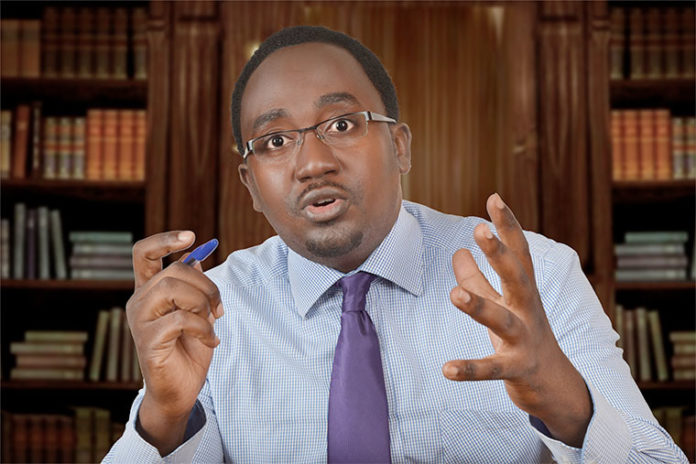
Lawyer Timothy Masembe Kanyerezi

The Uganda Law Society (ULS) has called for crisis meeting to handle issues regarding the legality of the arbitration and mediation centre which was launched recently but allegedly operating without the consent of its members.

Some disgruntled lawyers have accused ULS executive and Uganda Bankers Association (UBA) for establishing the International Centre for Arbitration and Mediation in Kampala (ICAMEK) to help protect and assist the public most especially in commercial matters or disputes.

ULS is one of the subscribers to ICAMEK whose directors are John Fisher Kanyemibwa and former ULS President Francis Gimara, with law firm, MMKAS Advocates as the company secretary.

According to USL President Simon Peter Kinobe, the members’ extra ordinary meeting has been set for May 22, 2019 and is aimed at reaching a consensus on the issue.

“It is unfortunate that instead of seeking clarification and without citing relevant provisions of the law, one of our members took to social media to smutch the good reputation of our society,” he said.

Nelson Walusimbi, one of the complainants said that ICAMEK was established without authorization by the members and that the idea has never been presented to ULS Annual General Meeting.

Kinobe however said the accusation is misplaced because the issue of ICAMEK was discussed in the recent Annual General Assembly in Entebbe where all members were present and that no objection was raised by any member.

He says ULS executive, using ULS Act as provided incorporated ICAMEK as a company limited by guarantee for the sole purpose arbitration. He said the beneficiaries would be clients and young lawyers that will participate in the arbitral process as both arbitrators and consultants.

He urged ULS members to support any initiative that would encourage the growth of young lawyers and development of alternative avenues of business.

Stories Continues after ad