Stanbic Bank
Stanbic Bank
17.5 C
Kampala
Stanbic Bank
Stanbic Bank
Home Blog Page 1303

Minister urges local horticulture firms on standards

Vincent Bamulangaki Ssempjja.

Uganda stands to lose the European Union (EU) market for its flowers, fruits and vegetables exports if exporters do not adhere to the set standards, the Minister of Agriculture, Animal Industry and Fisheries (MAAIF) Vincent Bamulangaki Ssempjja has warned.

“The country stands to lose this important market for our flowers, fruits and vegetables exports if the business people do not adhere to the set standards,” he said in a statement, adding that commodities mainly affected are peppers, Annona (Kitafeli) and Roses.

Minister Ssempijja said Uganda is experiencing declines in export earnings from some of these commodities, due to non-compliance with Sanitary and Phytosanitary Standards. “Presence of harmful organisms and excess pesticide residues are the major causes of these rejections,” he said.

The EU recently warned of Uganda’s quality of horticulture products.

Under the International Plant Protection Convention (IPPC), and the World Trade Organisation Sanitary and Phytosanitary Agreement (WTO-SPS) of which Uganda is a signatory, the private sector players in the horticulture sector are supposed to ensure that the standards are met.

According to the minister, Uganda continues to enjoy a significant share in export volumes worth US $100 million(Shs370 billion), per year, for roses, fruits and vegetables to the European Union (EU) block, North America and the Middle East. “There is still more room for growth and expansion to new potential markets for fruits and vegetables in the region and the Middle East, if well managed, existing exports for fruits, vegetables and flowers…could be increased by at least ten times with sufficient investment,” he said.

He said ministry has put in place rigid and serious interventions to avert and protect the export market through the following measures such as appointing a national task force comprised of both private sector and technical staff to specifically guide compliance for fruits and vegetables exports, guide on development of strategies to ensure Uganda products maintain the current markets, but also penetrate new niche markets among others.

Stories Continues after ad

SC Villa fined shs1m for unsporting behaviour

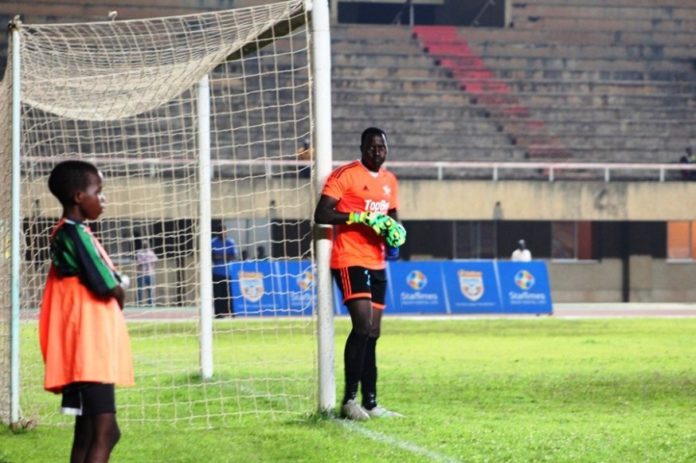
Ali Kimera looks at ball boy

Sports Club Villa Jogoo have been fined one million shillings by FUFA because their ball boys they deployed on match day kept on hiding the balls on the pitch.

The said acts of unsporting behaviour are alleged to have happened in the Uganda Premier League game between SC Villa and Mbarara City on Wednesday, April 3, 2019 at Namboole Stadium.

“SC Villa fined UGX 1M following unsporting behavior by the ball boys they deployed on match day with Mbarara City FC on 3rd April 2019 at Namboole. The ball boys kept hiding the balls when Villa was in the lead in the 2nd half.” Fufa said on social media.

The sixteen-time Ugandan champions have also been given one week to have paid the fine.

“Villa given 7 days to pay the fine.” Fufa added.

The match ended 2-1 in favour of SC Villa. Albert Mugisa and Ronald Magwali scored for the Jogoos while Jude Ssemugabi scored for the Ankole lions.

However, the match was overshadowed by two deadly mistakes from Mbarara City goalie Ali Kimera, who was later suspended immediately after the match due to allegations of match-fixing. Also affected was the club’s goalkeeping coach Yusuf Ssenyonjo.

The Jogoos are 12th on the 16-table log with 26 points, 5 above the relegation zone.

Their next game is away to Express FC in Wankulukuku on Thursday, 11 April.

Stories Continues after ad

Security agencies arrest kidnappers of American tourist

Ms Kimberley shortly after the rescue

The joint security team has arrested some of the suspected kidnappers of an American tourist Ms. Kimberly Sue Endicott and a Senior Tour Guide, Jean Paul Mirenge- Remezo, who were rescued days ago.

“The intelligence led operation which was calculated and tactical, in the early stages is now progressing unhindered, with raids and extensive searches in Kanungu district, where the suspects were arrested and the neighboring areas,” said Police Spokesperson Fred Enanga in a press statement.

Enanga appreciated the role security team for the work so far done as far as the kidnapping incident is concerned. “We want to applaud the Joint Security team, for ensuring the kidnapping incident, where the captors were armed, in a very dynamic setting, did not go wrong, and for their breakthrough in attempts to crack down, the criminal gang,” he said in statement of April 9.

“We continue to remain committed to the safety of the community, and also thank all stakeholders including the US Embassy, the Tourism Sector, families and friends, and the Media for their patience and support during the recovery efforts,” he said.

The security team on April 7, rescued Ms. Kimberley Sue Endicott and Mirenge who were kidnapped on gunpoint last Tuesday, April 2, 2019, while on an evening game drive at Queen Elizabeth National park.

The two were recovered unharmed, in good health and in the safe hands of the joint security team.

United States President Donald Trump on Monday urged Uganda to find the kidnappers of an American tourist who has been freed, amid conflicting reports over whether a ransom was paid for her release.

Kim Endicott of Costa Mesa, California was released by her abductors over the weekend and was to turned over to the US ambassador on Monday, Ugandan police said.

Trump pressed Uganda’s government to capture the culprits Monday, tweeting: “Uganda must find the kidnappers of the American Tourist and guide before people will feel safe in going there. Bring them to justice openly and quickly!” Over the weekend Trump tweeted that he was pleased the tourist and guide had been released.

Ugandan police spokesman Fred Enanga told a news conference on Monday that he did not believe a ransom had been paid.

A Uganda-based tour official said, however, that a ransom was paid to secure Endicott’s freedom. The tourist was released, “not rescued,” after money was paid “otherwise she wouldn’t be back,” said a tourism professional with knowledge of Endicott’s trip. He spoke on condition of anonymity because he was not authorized to speak to the press.

Many officials, including from the US Embassy, were involved in efforts to secure the release of the kidnapping victims, he said. He couldn’t say how much was paid or who paid.

Ugandan officials have said the kidnapping victims were rescued from armed kidnappers who are still at large.

Ugandan President Yoweri Museveni said on Twitter that the security forces “shall deal with these isolated pockets of criminals”.

The kidnappers had demanded a $500 000 ransom after grabbing Endicott and her driver from a group of tourists on an evening game drive on April 2, police said.

Stories Continues after ad

The kidnap of tourists won’t deter us from marketing Uganda

Mr Nabendeh Wamoto

By Nabende Wamoto

The Superpower leader’s statements to their citizens and the world are almost policy so after the rescue of the abducted female American tourist, Ms. Kimberly Sue Endicott and her Ugandan tour guide Jean Paul Mirenge, two serious statements were made, first by President Donald Trump of the USA quote ‘’pleased to report that the American tourist and tour guide have been released, Uganda must find the kidnappers before people will feel safe in going there’’. His (Trump) American ambassador Ms. Malac Deborah echoed ‘’ we appreciate the government of Uganda’s assistance and hope the kidnappers are quickly caught and prosecuted’’.

Secondly President Yoweri K. Museveni also said “I want to reassure the country and our tourists that Uganda is safe and we shall continue to improve the security”.

There is urgent need for a farm trip organised by government of Uganda for international tour operators, travel agents and the media to visit all Uganda’s protected areas.

Now given the above President Trump and ambassador Malac, last sentences (arrest and prosecute) is what would determine Uganda’s tourism destiny and those who market the country led by the principal, H.E President Museveni Prof. Ephraim Kamuntu and his deputy Godfrey Kiwanda, Uganda Wildlife Authority (park custodians), Uganda Tourism Board must work doubly hard in their public relations to change the American’s current message.

Time for honeymoon is over; there is more to the country beyond curvy women marketing. The mighty Nile punctuated by the spectacular Murchison falls, with the world’s most thrilling commercial white-water rafting. There are the snow-capped peaks of the Ruwenzori Mountain, with tantalizing challenge to dedicated mountaineers, the Virunga Volcanoes and Mount Elgon both of which offer highly rewarding hiking opportunities through scintillating high land scenery.

More sedately, the Myriad islands of Lake Victoria and Bunyonyi in the South western region of Uganda. The country boasts abundant forest –fringed crater lakes that stroll the rift valley floor and escarpment around Fort portal. Bujagali near Jinja is the lunching point of white water rafting across the Nile in the East also one of the safest in the world, passing through three heart-stopping grades, five rapids in one day and Bujagali also provides Kayaking, squad-biking and 44meter-high bungee jumps from a cliff above the Nile.

The mountain gorilla is the most endangered; yet the bulkiest, most peaceable gentle giants, are fewer than 700 individuals that survive today all over the world, shared between Uganda’s Bwindi National Park and the Virunga mountains shared by Rwanda and Democratic Republic of Congo.

Nabendeh Wamoto S.P (0752-658433)
simonwamoto@yahoo.co.uk / wamotonabendeh@gmail.com

Stories Continues after ad

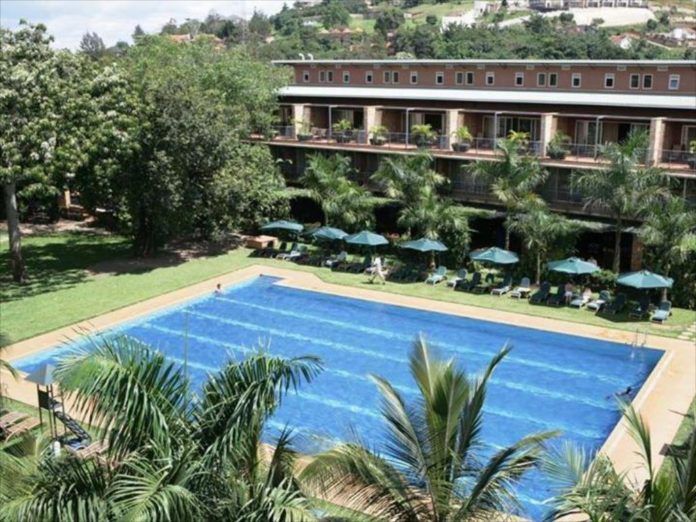
Kabira Country Club Easter Carnival to create new and lasting memories for families

The place to be for Easter Carnival for families .

Kabira Country Club, a five star hotel in Bukoto, Kampala, is yet again set to host a fun- filled Easter Carnival just like it did last year as many families attended. This year’s Kabira Country Club Easter Carnival happens on Saturday April 13, 2019. There is no cover charge for this event. It’s as free.

And according to the hotel, the doors to the event will open at 11am and close at 6pm in the evening as families and friends go back to their homes.

“The carnival comes with incredible offers on delicatessen, artisan market with over 100 vendors, Entertainment with a live band. We have plenty of Kids’ activities lined up including face painting, egg painting, egg treasure hunt, full access to the playground fitted jumping castles, swings and more games,” says Vismay Maniyar, the general manager of Kabira Country Club.

Maniyar says the upcoming Easter Weekend at Kabira Country Club is designed to make new memories for the families.

Kabira Country Club is known to have East Africa’s most prestigious and well equipped, health, fitness and leisure club. We also stage many events, corporate and social, and a highly acclaimed conference venue, offering exceptional state-of-the-art conference facilities.

Stories Continues after ad

URA officials in trouble over disappearance of 9000 litres of fuel

COSASE chairperson, Mubaraka Munyagwa.

Top officials of Uganda Revenue Authority (URA) were on Tuesday grilled by parliament’s Committee on Commissions, State Authorities and State Enterprises (COSASE) over the disappearance of about 9000 litres of fuel that had been seized and withheld at one of its points.

The fuel belonged to Shell and was on transit to neighbouring countries when it was seized some time back by URA officials in Malaba border post on the Uganda-Kenya border.

The officials led by URA Commissioner Doris Akol failed to explain how the fuel disappeared from custody and only blamed it on the UPDF officer who they said was sent back to the army after the disappearance of the fuel he was guarding.

Shell is demanding compensation in billions of shillings for the loss of its fuel under URA watch. The MPs were bitter that URA was careless and now wants Ugandan taxpayers to pay for the lost fuel.

COSASE Chairperson Mubarak Munyagwa said URA officials were involved in the dubious deal. He added: “People are losing business to errant Uganda Revenue Authority (URA) officials. This is a tip of the iceberg. To help tax payers, we must investigate this.”

Stories Continues after ad

Museveni to commission Soroti Fruit Factory

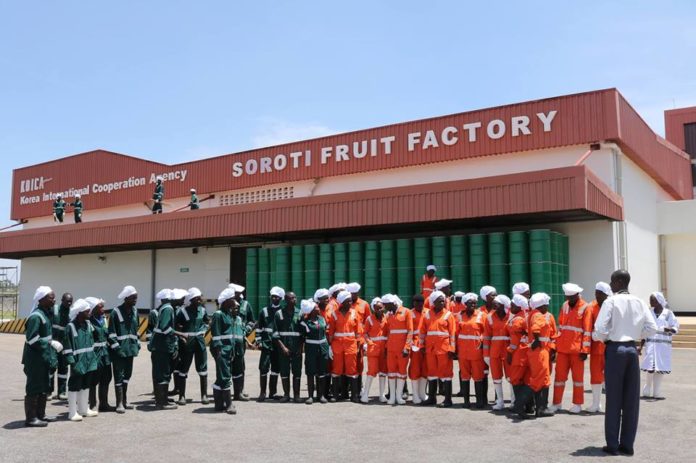
President Yoweri Museveni is this Saturday expected to commission the newly constructed multi-billion, Soroti fruit factory situated in Arapai Sub County, Soroti district following four years construction processes that started in 2015.

The factory has been built by Korea International Cooperation Agency (KOICA) who signed a memorandum of understanding with the government of Uganda through Uganda Development Cooperation in partnership with the Teso Tropical Fruit Growers Cooperative Union (TETFGCU) who decided to establish a fruit processing factory in Soroti District to take advantage of the abundant citrus crop in the Teso sub-region and the high yield per tree.

The government of Uganda provided land, water, electricity and tarmac roads as the government of South Korea committed $7.4 million for the machinery and training of factory personnel.

Construction of the factory began in April 2015 and was scheduled to be completed in May 2016, Installation and commissioning the machinery and equipment was anticipated to be done by October same year.

The factory was scheduled to commence commercial operation in November 2016 however after years of delay, the factory began test runs of its production lines in May 2018, with commercial commissioning planned for August 2018.

Production is planned to be phased, starting with one, eight hour shift and gradually increasing to two and eventually three daily shifts.

The factory produces juice from oranges, mangoes, pineapples and very soon Teso Juice -Teju will hit the Ugandan market.

Stories Continues after ad

2018 bad year for Dfcu after Crane bank acquisition helped it perform wonders in 2017

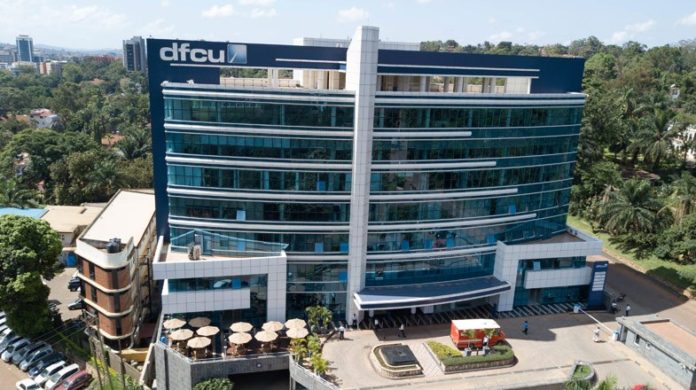
Dfcu Bank headquarters in Kampala.

An extract of Dfcu bank Financial Statements for the year ended 31 December 2018 shows that the bank during that period earned gross profit of about Shs84 billion compared to Shs169 billion realised after acquiring Crane Bank (CBL) assets on January 25, 2017.

The latest financial statement which was approved by the bank’s managing director Mathias Katamba and Board Chairman Jimmy Mugerwa shows that it performed poorly in the year ended 2018 compared to 2017 when it made wonders, making a profit of Shs114 billion in half year, thanks to CBL controversial acquisition.

During the accounting period 2018 Dfcu bank earned about Shs61.7 billion in net profit compared to about Shs127.8 billion earned in 2017 where the bank was one of the top earners that year.

According to the financial statement, the bank’s total expenditure in 2018 was Shs326.2 billion compared to Shs350.8 billion in 2017.

Meanwhile the financial statement shows Dfcu had its core capital to risk weighted assets (RWA) decline to 17.74 per cent from 18.56 per cent in 2017. While total qualifying capital to RWA declined to 20 per cent from 22.24 per cent in 2017, all showing underperformance for a bank that had acquired its rival CBL at almost no cost, according to the report of parliament’s Committee on Commissions, Statutory Authorities and State Enterprises (COSASE) which grilled Bank of Uganda (BoU) officials over irregular closure and liquidation of seven commercial banks.

To further show that business was not good for Dfcu bank in the year ended 31st December 2018, its cash and balances with BoU declined to about Shs356 billion from about Shs362.3 billion in the previous year.

Further the bank’s total assets which also contribute to the strength of a financial institution declined to Shs2.9 trillion from Shs3 trillion in 2017. The Acquision of CBL on January 25, 2017 boosted Dfcu bank’s assets that accounting year. At the time Dfcu bank acquired CBL, the latter had total assets of about One trillion Shillings even though BoU said then were overshadowed by liabilities.

Further total shareholders’ equity declined to about Shs498.8 billion in 2018 from about Shs508.8 billion.

Meanwhile Dfcu bank had customer deposits remain almost constant at about Shs2 trillion in 2018 showing a decline of 0.4 per cent that year from Shs1.987 trillion in the year 2017.

The financial statement also shows that Dfcu bank’s reserves declined to about Shs8 billion in 2018 compared to about Shs11 billion reserved in 2017.

Due to the poor performance on the net profit scale in 2018, the proposed dividends to shareholders declined to 24.7 billion from Shs51 billion in 2017.

How CBL boosted Dfcu bank performance

The acquisition of Crane Bank in January 2017 was one of the major factors why dfcu Bank was Uganda’s largest bank, by profitability that year.
In its 2017 half year results, the bank revealed an after-tax profit surge of Shs114 billion, compared to Shs23 billion over the same period in 2016.
In a statement then, Dfcu confirmed that the profitability was driven by the acquisition of CBL assets.
“The performance is largely attributed to the January 2017 acquisition of Crane Bank assets and assumption of liabilities by Dfcu Bank that presented numerous opportunities in line with Dfcu’s growth aspirations,” said the bank in a statement then.

CBL assets brought in terms of loans and advances, contributed to a rise in interest income for the bank. The asset base expanded to Shs3 trillion in part because of the customer loan growth by 55.5 per cent to Shs1.3 trillion. This led to the increment in interest income – the largest contributor to the total income of the bank.

Crane Bank had been taken-over by BoU after it claimed its capital had fallen below the minimum requirement set by the regulator. Dfcu acquired all cash, deposits, loans and advances, furniture and branches.

Stories Continues after ad

African migrations: opportunity not crisis, says Mo Ibrahim

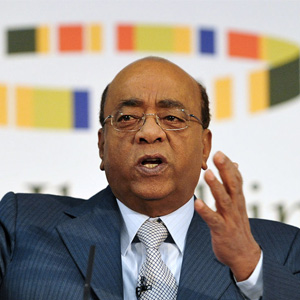
Mo Ibrahim

Debating and discussing African migrations, youth and jobs, the 2019 Ibrahim Governance Weekend, held in Abidjan 5-7 April, heard that the global view of African migrations urgently needs to be reset since distorted data leads to inadequate policies. African migrations present an opportunity for both the continent and the world, and yet today this topic triggers an emotional reaction and is generally misunderstood.

Driven by the need for jobs and economic opportunity, most African migrations begin and end on the continent. Their arrival in host countries is welcomed, with many Africans saying they would like more migrants in their country. The number travelling beyond Africa are comparatively few, totalling only 14 per cent of the global migrant population in 2017, significantly less than Asia, 41% and Europe, 24 per cent.

Mo Ibrahim, Chairman of the Mo Ibrahim Foundation, said: “Migration in Africa, and around the world, is largely about aspiration, not desperation. Africans leaving their home countries are looking for the chance to work and contribute to their host countries. African governments should welcome migrants while ensuring that their own citizens – our continent’s greatest asset – have the education and economic opportunities they deserve. Now is the time to take action before it’s too late for our young people.”

The Ibrahim Forum brings together a powerful coalition of African and global leaders to discuss an issue that is critical to the continent’s future. The 2019 Ibrahim Forum focused on the Foundation’s latest report, Africa’s Youth: Jobs or Migration? In recognition of the importance of young people to Africa’s development, this year the Foundation welcomed back the Now Generation Forum, a meeting of young leaders from 35 countries whose recommendations fed into the discussion.

The first session of the Ibrahim Forum – Setting the picture right on African migrations – explored African perspectives on migration, highlighting that human mobility is not a recent phenomenon but a dynamic that has contributed to progress over many centuries.

Ellen Johnson Sirleaf, former President of Liberia, 2017 Ibrahim Laureate and Chairperson of the High-Level Panel on International Migration in Africa, said: “In recent times, there has been a lot of movement of young Africans across borders in search of opportunity. This has created a fear and a very emotional response…but there is no migrant crisis. The majority of those who cross borders do so legally; they carry with them capital, knowledge, skills, technology; they pay taxes; and they form a sizeable part of the GDP of their host countries.”

Vera Songwe, Executive Secretary of the United Nations Economic Commission for Africa, highlighted how a lack of economic opportunity is driving Africans to leave their home countries: “The conversation on migration is essentially a conversation on governance and what our leaders need to do to ensure Africans do not go outside the continent. 80 per cent of those Africans migrating say they are doing do because they don’t have jobs, because our countries don’t have the right business or policy environments.”

In the second session – The African youth bulge confronted by jobless growth – panellists discussed the current and future challenges of the African job market, including the unexploited potential of agriculture and the changes expected from the Fourth Industrial Revolution.

Abdourahmane Cissé, Minister of Petroleum, Energy and Renewable Energy of Côte d’Ivoire, outlined his country’s efforts to create economic opportunities for its youth. “Innovation is key, yes, but if you want people to innovate, you need to ensure they have access to the necessary resources, particularly information technology. In Côte d’Ivoire, we have focussed on vocational training and technical skills, and invested in areas that help students access jobs, including creating tax incentives to provide internships and hire recent graduates. We need to see many more young people engaged in politics so that they can be part of the discussions about their future.”

Hailemariam Desalegn Boshe, former Prime Minister of Ethiopia, said: “Our youth are deeply dissatisfied. They feel economically, socially and politically marginalised. African leaders and civil society should address these issues with a sense of urgency. Let’s look at the education and skills that our young people actually need, focussing on what is necessary for the current economic situation in Africa.”

Akinwumi Adesina, President of the African Development Bank Group, highlighted the importance of involving more young Africans in agriculture: “We always talk about the great potential of our continent, but nobody can eat potential. We need to take this great demographic asset that we have – our young people – and turn it into an economic powerhouse, both for ourselves and the rest of the world. We’ve got to get young people into agriculture and create a new group of ‘agri-preneurs’”.

Natasha Kimani, Head of Programmes at Well Told Story and a member of the Now Generation Forum, argued for a fresh perspective. “We need to change how we talk about young people and how we talk to young people. Instead of assuming we know what they need, why don’t we ask them? And as young people, if we want to thrive, we must hold our governments accountable. We need to put our leaders on the spot and ask them difficult questions. Don’t be afraid to challenge authority and ask for what you deserve – because the more you ask, the more you get!”

In the third session – The way forward: bolstering mobility, updating skills, sharing responsibilities – panellists explored options to strengthen the capacity of the continent to make the most of its greatest resource, its human capital, and ensure no one if left behind.

Arancha González, Executive Director of the International Trade Centre, said: “The countries where mobility works are the countries which manage mobility, that don’t leave mobility purely to market forces…We have to recognise that migrants are often different – different in religion, culture, colour, sexual preference – this also needs to be discussed and managed. Mobility introduces diversity and diversity means strength.”

Festus Mogae, former President of Botswana and 2008 Ibrahim Laureate, stressed the importance of responsible leadership in managing migration. “African leaders and governments should go out of their way to explain to their populations that migrants often benefit the countries into which they migrate, correcting the misperception that migrants are taking local jobs.”

Closing the session, Oumar Seydi, Africa Director of the Bill & Melinda Gates Foundation, highlighted the challenge of population growth. “The elephant in the room is family planning. If you look at the data, you see that the countries with the highest population growth have also tended to be the poorest ones. In our experience, investing in family planning is one of the most effective tools that countries have to break the poverty cycle. It enables women to plan their futures and fulfil their potential.”

The 2019 Ibrahim Governance Weekend opened with a Leadership Ceremony, celebrating progress in African leadership and governance. The evening featured a special tribute to Kofi Annan, reflecting on the legacy he left and the inspiration he continues to be. Thoughts and memories were shared by, among others: Mo Ibrahim, Chairman of the Mo Ibrahim Foundation; H.E. Amina J. Mohammed, Deputy Secretary-General of the United Nations; Kojo Annan; Mark Malloch-Brown, former United Nations Deputy Secretary-General; and Bono.

Addressing over 1,200 guests, President Alassane Ouattara of Ivory Coast said: “Kofi Annan was more than a friend of Côte d’Ivoire, he was the son of our country and a brother who shared our pain. The name of Kofi Annan is tightly linked to the return of peace and security in our country. He was determined not to let our country sink and did not hesitate to use the full authority of the United Nations and his exceptional ability for negotiation. This nation owes him a lot.”

The weekend wrapped up with a star-studded music concert at the Palais de la Culture featuring some of Côte d’Ivoire’s and Africa’s biggest stars, including: Fally Ipupa, Youssou N’Dour, Serge Beynaud and Safarel Obiang. Addressing the crowd of young Ivorians, Mo Ibrahim said: “You are the future”.

The 2019 Ibrahim Forum discussed latest findings from the Ibrahim Forum Report, including:

· In 2017, migrants represented only 3.4 per cent of the global population, a marginal increase from 2.9 per cent in 1990

· African migrants in 2017 amounted to 2.9 per cent of the continent’s population

· African migrations represented around 14 per cent of the global migrant population, much less than Asia and Europe’s shares (41 per cent and 24 per cent) in 2017

· In 2017, the top ten bilateral corridors in Africa accounted for less than the single bilateral corridor between Mexico and the US

· Africa itself hosts a growing part of the global migrant population (+67 per cent since 2000)

· Rwanda is the third most welcoming country to migrants at a world level. Egypt is the least accepting on the continent

· More than 70 per cent of sub-Saharan African migrants move within the continent

· South Africa receives the largest share of African migrants, followed by Côte d’Ivoire and Uganda

· Almost 80 per cent of African migrants are driven by the hope for better economic or social prospects

· Migrants spend approximately 85 per cent of their incomes in their destination country

· The estimated contribution of migrants to local GDPs is estimated at 19 per cent in Côte d’Ivoire, 13 per cent in Rwanda and 9 per cent in South Africa.

· Insecurity is not the major factor for African migrations: in 2017, refugees accounted for only around 20 per cent of African migrants

· Almost 90 per cent of African refugees stay within the continent

· Italy, Germany and France altogether host less than 4 per cent of African refugees

· Around 60 per cent of Africa’s population is currently less than 25 years old, and more than a third is aged between 15-34

· Between 2019 and 2100, Africa’s youth is expected to grow by 181.4 per cent, while Europe’s will shrink by 21.4 per cent and Asia’s by 27.7 per cent

· Only half of those who would qualify for lower secondary education in sub-Saharan Africa, are enrolled

· The average match between education and skills needed by businesses is worse in Africa than in the rest of the world

· Unemployment is considered by far the most important problem by African youth

· In Egypt, Ghana, Morocco, Nigeria and South Africa at least 75 per cent of the youth think that their governments do not care about their needs.

Stories Continues after ad

Van Dijk votes for Sterling as PFA Player of the Year

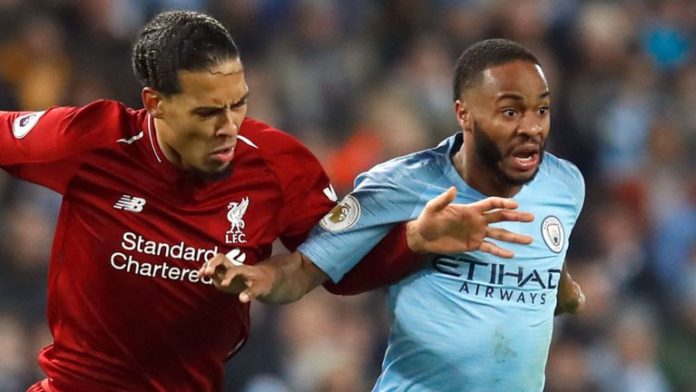
Van-dijk and raheem-sterling

Liverpool defender Virgil van Dijk says he voted for Manchester City’s Raheem Sterling to be named PFA player of the year.

Van Dijk is one of the favourites for the award after helping Liverpool deliver a sustained Premier League title challenge, while Sterling has scored 15 league goals for City, their rivals for the league crown.

“I voted for Raheem Sterling,” Van Dijk told reporters. “I did what I thought and I thought he deserves it. He’s had a fantastic season. I could have voted for Bernardo Silva as well and another couple of players from Manchester City.

“But I’m just being honest. I think he has improved a lot as a player.”

PFA rules prohibit players from voting for their team mates.

Liverpool, who have kept 17 clean sheets in the league this season, are also still in the hunt for the Champions League trophy and play Porto in the first leg of their quarter-final later on Tuesday.

Van Dijk said he was focused on winning with the team, not on individual accolades. “Individual trophies? I don’t know,” the Dutchman added.

“Of course, you’re going to be proud, that’s something you have to be, but all the hard work in the training ground is something we all did together.

“It is to win something as a team, a collective thing as a club. Hopefully that is something that will happen.”

The awards ceremony takes place on Sunday 28th April.

Stories Continues after ad