Stanbic Bank
Stanbic Bank
17.5 C
Kampala
Stanbic Bank
Stanbic Bank
Home Blog Page 1304

Gor Mahia sign Hashim Sempala from Tusker FC

Sempala signing a new deal at Gor

Kenyan Premier League reigning champions Gor Mahia FC have completed the signing of Ugandan midfielder Hashim Sempala from league rivals Tusker FC on transfer deadline day.

Sempala has penned a two-year deal with the 17-time record Kenyan champions.

Gor Mahia confirmed the signing on their twitter account, “Gor Mahia sign midfielder Hashim Sempala from Tusker. The Ugandan signed a two-year-deal. Welcome to Gor Mahia midfielder Hashim Sempala.”

He joins left back Shafik Batambuze and forward Erisa Ssekisambu, becoming the third Ugandan at the Kenyan side.

Sempala has previously played for BUL FC, URA FC, KCCA FC and Express FC in Uganda before he crossed to Tusker FC in 2016.

The Ugandan midfielder becomes the fifth foreign player at Gor Mahia. His signing means the club has exhausted the foreign quota provided by the league organizers Kenyan Premier League.

Stories Continues after ad

Sub Saharan Africa registers 2.3% in 2018

Growth in sub-Saharan Africa in 2018 is estimated at 2.3 per cent, 0.4 percentage points lower than our October estimate, and down from 2.5 per cent in 2017, according to the April issue of Africa’s Pulse.

This slower-than-expected growth comes from both global and domestic factors.

Globally: a volatile economic and financial environment, including trade tensions, protectionism, and recovering but uncertain commodity prices is having obvious negative impacts on some African economies.

Domestically: macroeconomic instability including poorly managed debt, inflation, and deficits; political and regulatory uncertainty; and fragility are holding back African growth.

We expect growth in Sub-Saharan Africa to recover to 2.8 percent in 2019 supported by exports, private consumption, a rebound in agriculture, and an increase in mining production and services in some countries.

Although regional growth is expected to rebound in 2019, it will have remained below 3 percent since 2015.

A closer look:

In Nigeria, growth reached 1.9 per cent in 2018, up from 0.8 per cent in 2017, reflecting a modest pick-up in the non-oil economy.

South Africa came out of recession in Q3 of 2018, but growth was subdued at 0.8 per cent over the year, as policy uncertainty held back investment.

Angola, the region’s third largest economy, remained in recession, with growth falling sharply as oil production stayed weak.

Growth picked up in some resource-intensive-countries like the Democratic Republic of Congo and Niger, as stronger mining production and commodity prices boosted activity alongside a rebound in agricultural production and public investment in infrastructure.

In others, like Liberia and Zambia, growth was subdued, as high inflation and elevated debt levels continued to weigh on investor sentiment.

In the Central African Economic and Monetary Community, a fragile recovery continued as reform efforts to reduce fiscal and external imbalances slowed in some countries.

Non-resource-intensive economies such as Kenya, Rwanda, Uganda, and several in the West African Economic and Monetary Union, including Benin and Côte d’Ivoire recorded solid economic growth in 2018.

Special Topic: Fragility

More than half of the world’s fragile countries are in sub-Saharan Africa. Two-thirds of the underperforming countries in terms of growth in the region are fragile.

Fragility in a handful of countries is costing the entire continent over half a percentage point of growth per year. That is 2.6 percentage points over five years.

This is not just an economic issue. Fragility is not only keeping African countries from creating jobs and reducing poverty as quickly as they could; it also comes at a cost in terms of social cohesion and the social contract between citizens and governments.

The good news is, we know that countries can successfully escape fragility. Two of the fastest growing economies on the continent were once fragile: Ethiopia and Rwanda.

There are lessons to be learned from these countries. They improved their policy environment, strengthened their institutions, and strengthened state capacity to deliver services to their people. This has led to stronger growth and a more attractive climate for private investors.

As the drivers and nature of fragility evolve, so too must the approach to overcoming it. Countries still must focus on strong domestic institutions, rule of law, and state capacity, but it is increasingly clear that at the same time, solutions must be collective, not country-by-country.

In corridors such as the Sahel, the Horn of Africa, the Lake Chad region, and the Great Lakes, the perpetrators of violence and terrorism often cross borders, and people are forced to flee that violence either within or across borders. Drought and floods do not respect national borders, and nomads move irrespective of borders.

Tackling fragility will require countries to work together to find lasting solutions for a more stable and secure future.

Digital Transformation

Digital Transformation will unlock new pathways for inclusive growth, innovation, job creation, service delivery, and poverty reduction in Africa

While Africa has made great strides in mobile connectivity, the continent lags the rest of the world in access to broadband. There is still a long way to go.

Across the entire African continent, including sub-Saharan and North Africa, the digital transformation could increase growth per capita by 1.5 percentage points per year and reduce the poverty headcount by .7 percentage points per year.

The benefits of the digital transformation in sub-Saharan Africa are even higher: it can increase growth by nearly two percentage points per year and reduce poverty by nearly one percentage point per year.

When paired with stronger investments in human capital, impacts across the African continent can be more than doubled: 3.8-4 percentage points of growth and 1.9-2 percentage points poverty reduction per year.

The digital economy will create more jobs, encourage entrepreneurship for youth, raise productivity of farmers, bring more women into the labor force, and create new markets – all of which boosts growth.

For those growth dividends to materialize, it is critical to create much-needed digital infrastructure; put the right regulatory frameworks in place; to invest in skills that allow workers, entrepreneurs, and government officials to seize opportunities in the digital world; and to build accountable institutions that use the internet to empower citizens.

Stories Continues after ad

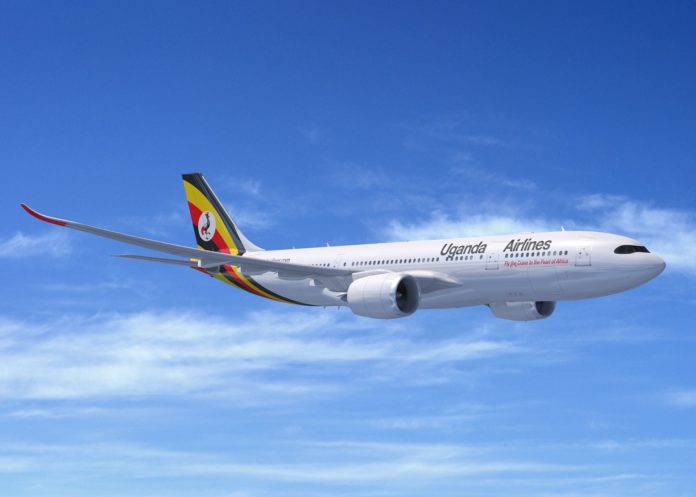
Uganda Airlines firms up an order commitment for two Airbus A330-800

A330-800-Uganda-Airlines jet

The revamped Uganda Airlines, the national carrier of Uganda, has firmed up its order for two A330-800 airliners, the latest version of the most popular A330 wide body airliner.

Fitted with the new Airspace by Airbus cabin, the A330neo will bring a range of benefits to Uganda Airlines and its customers, offering unrivalled efficiencies combined with the most modern cabin.

Uganda Airlines’ A330-800s will be configured to accommodate 261 passengers in a tri-class layout – 20 in Business Class, 28 in Premium Economy and 213 in Economy Class. It is not yet known on which routes the African airline operator will deploy its new planes.

According to the European manufacturer, Uganda’s flag carrier plans to use the A330-800s to develop its medium and long-haul network. The state-owned company currently has no aircraft in its fleet.

Launched in July 2014, the A330neo Family is the new generation A330, comprising two versions: the A330-800 and A330-900 sharing 99 percent commonality. It builds on the proven economics, versatility and reliability of the A330 Family, while reducing fuel consumption by about 25 percent per seat versus previous generation competitors and increasing range by up to 1,500 nm compared to the majority of A330s in operation.

The A330neo is powered by Rolls-Royce’s latest-generation Trent 7000 engines and features a new wing with increased span and new A350 XWB-inspired Sharklets. The cabin provides the comfort of the new Airspace amenities including state-of-the-art passenger inflight entertainment and Wifi connectivity systems, amongst others.

Founded in May 1976, Uganda Airlines started operations in 1977. But the airline ceased operations in 2001 due to financial difficulties.

In 2018, after long discussions and consultations, the government decided to relaunch Uganda Airlines with six new aircraft.

Apart from the two Airbus A330-800, the airline has four Bombardier CRJ900ER in its order book waiting to be delivered.

Stories Continues after ad

AfDB calls for universal health coverage

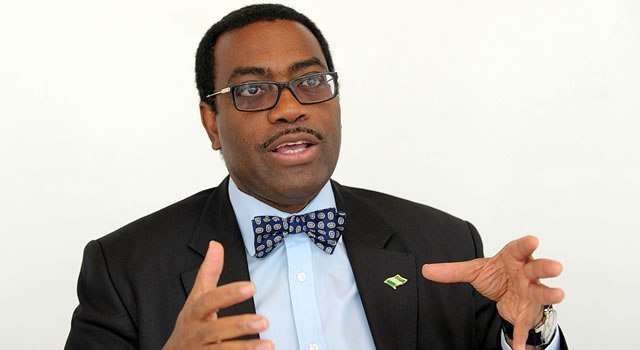
ADB President, Dr. Akinwumi Adesina

The African Development Bank (AfDB) Group has renewed its call for a firmer commitment to pledges made by countries for universal health coverage (UHC) for all individuals and communities.

At least half of the world’s population still do not have full coverage of essential health services, according UHC as individuals and communities being able to receive basic health services without suffering financial hardship.

Africa is the most affected by the double or triple burden of malnutrition, as countries show a combination of under nutrition, micronutrient deficiencies and overweight or obesity.

According to the Director of Human Capital, Youth and Skills Development at the Bank, Mr. Oley Dibba-Wadda, and the Bank supports national efforts to accelerate investments in UHC.

Of the 41 countries globally that struggle with all three forms of malnutrition, 30 are in Africa. This triple burden of malnutrition predisposes the continent to non-communicable diseases, and its associated health costs. Preventative nutrition services therefore need to be urgently scaled up.

He said it recognizes inclusive economic growth must be accompanied by strong efforts to improve equitable access to care for vulnerable individuals and communities. Due consideration will also be given to complementary investments in education and skills development as well as jobs for youth.

“The Bank’s advocacy and support for Universal Health Coverage goals is hinged on its commitments and continued support for Africa’s health sector goals, and calls by development experts for increased public and private investment in primary healthcare, which is the foundation of ‘Universal Health Coverage (UHC)’, the theme for this year’s World Health Day.”

He said the journey towards UHC means taking steps towards equity, focusing on development priorities, social inclusion and cohesion.

Health experts at the Bank are also advocating for institutional investments in data management and data analytics technology, to better track health sector developments and trends at national and sub-national levels. These measures are needed to recalibrate the sector’s job creation potential, deepening its contributions to economic and social development.

Dibba-Wadda further observed that mitigating poor health outcomes, preventing malnutrition and consequently achieving UHC in Africa would require pro-active measures by stakeholders to integrate cost-effective interventions into regular healthcare plans and systems.

“The Bank remains fully committed to addressing malnutrition in Africa, in all its ramifications. Available data for 2018 shows that 58.7 million children in Africa were stunted, 13.8 million children were wasted and 9.7 million children were overweight,” he said.

Stories Continues after ad

Kasekende wanted to hoodwink us on fresh audit of Shs478 billion –AG

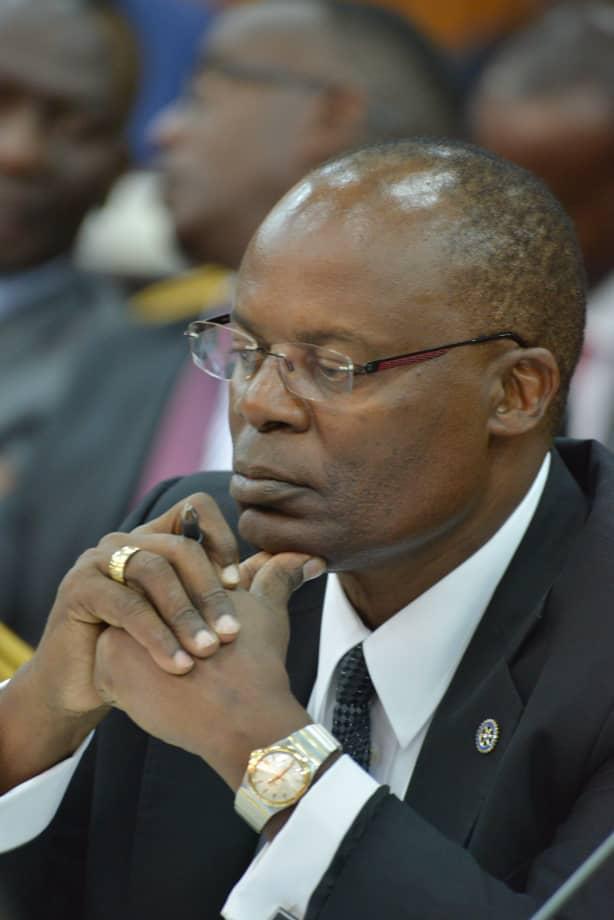
Former BoU Deputy Governor, Dr. Louis Kasekende.

An official from the Office of the Auditor General (AG) has told Eagle Online that the Bank of Uganda (BoU) Deputy Governor Dr Louise Kasekende wanted to take advantage of that office and hoodwink auditors there when he requested for a fresh audit of Shs478 billion that the central bank claims was injected in Crane Bank Limited (CBL) while under statutory management between October 20, 2016 and January 25, 2017.

“They wanted to hoodwink us that the verification is honest yet it’s a trick…They are stuck because they denied auditor General documents and this is a crime under national Audit Act,” the official who preferred to remain anonymous said, adding that it is Kasekende and his colleagues at BoU to blame for failing to account for the money that was drawn from taxpayers’ coffers.

On January 25, 2017, BoU transferred CBL to DFCU Bank at Shs200 billion, moreover to be paid from the collections of CBL’s bad book of Shs570 billion, which meant that DFCU Bank acquired its rival CBL without paying a single coin.

“Am told the reason why BoU wants verification of Crane Bank cash is for court purposes. They want AG to clear them. Half of Shs478 billion was diverted. Now they are trying to forge accountability. Asking now for verification is to somehow save themselves. It should not be allowed now when Kasekende resisted it despite AG wanted it. In fact direct beneficiaries were largely Justine Bagyenda, Kasekende and Benedict Sekabira,” he said.

The official said his boss John Muwanga who is the Auditor General (AG) has declined to touch any crane bank documents until he gets clearance from parliament, even though the MPs talked to said they finished their work after they debated Committee on Commissions, Statutory Authorities and State Enterprise (COSASE) report.

“Ask yourself if indeed BoU injected 478 billion in Crane Bank, why did they sale it? This money was enough to restore the financial position to required standards. Big question who benefited from this

Who had taken those documents? Why did they hide crane bank documents?”

Muwanga days ago rejected fresh requests to carry a fresh audit on the Shs478 billion the central bank alleges to have injected in Crane Bank after the takeover.

In a letter dated March 11, 2019, Kasekende wrote to AG requesting for the said inquiry but Mr. Muwanga in his reply dated April 4, 2019 to Dr. Kasekende said he couldn’t carry out the verification because the report on the same subject was already with the Speaker.

“Regrettably, I am unable to undertake the verification since the report has been issued to the Rt. Hon. Speaker of Parliament on February 18, 2018. Any additional verification on the already issued report can only be undertaken with the authority of parliament. We will keep the documents and wait for further communication from COSASE” reads Mr Muwanga’s letter which was copied to the Speaker, Rebecca Kadaga and the chairperson, Committee on Commissions, Statutory Authorities and State Enterprises (COSASE).

Kasekende had requested the AG to undertake a verification of documents that had not been availed during the audit.
During the probe, Dr. Kasekende said when they put CBL in receivership, they acted as lender on side and borrower on the other side, something the then Committee Chairman Abdu Katuntu said created controversy in terms of accountability and transparency.

The MPs argued that BoU officials should have used a private or official receiver to manage CBL instead of doing it themselves. Interestingly BoU wants CBL shareholders to refund the Shs478 billion yet they did not enter into any contract with CBL’s shareholders.

CBL shareholders led by Sudhir Ruparelia told the probe that they would not pay that money since they don’t know where it came from, who received and how it was used. BoU officials have no documentation about the use of the money. CBL needed Shs157 billion to stay afloat even as BoU spent Shs478 billion on its liquidation.

BoU on the other handed has not presented any accountability of the money it says it spent as liquidity support to CBL as well as other service costs related to its liquidation.
The probe of BoU by the MPs was a result of the Auditor General John Muwanga’s report on commercial banks which faulted BoU for the closure of banks without following proper guidelines. Some of the other banks closed include; Teefe Trust Bank, Global Trust Bank Uganda, International Credit Bank, Cooperative Bank and Greenland Bank.

AG report on did a special Audit Report on the Shs478 Billion Injected into CBL by Bank of Uganda and it pinned the central bank officials for failure to account for Shs478 billion.

The Auditor General Muwanga carried out the audit as ordered by COSASE on December 20, 2018.
BoU officials during their exit meeting with COSASE failed to account for Shs478 billion they say they spent as liquidity support and other intervention costs on CBL receivership between October 20, 2016 and January 25, 2017.

Muwanga in the report released on August 27, 2018, says out of Shs478 billion injected into CBL, a sum of Shs157.9 billion had been recovered from Dfcu Bank and CBL Non-Performing assets leaving an outstanding balance of Shs320.8 billion at the time of writing the report. CBL at the time was sold to Dfcu Bank while it only needed about Shs157 billion to remain afloat.

However, Muwanga noted in the report that much as BoU has a financial crisis management plan which provides for decision-making in the event of a systemic shock to the banking sector, the plan does not provide the process of injection of liquidity support to financial institutions during the statutory management period like it happened with CBL. MPs told BoU Governor Emmanuel Tumusiime-Mutebile and his staff who were appearing before COSASE to ensure that the loophole is closed.

According Muwanga in his August 27, 2018 report on seven defunct banks, BoU presented about Shs466.6 billion as money injected in CBL as liquidity support but in his scrutiny of documents, he established that about Shs459.50 billion was spent for this purpose, leading to a variance of Shs7.1billion.

Dr. Kasekende told COSASE that the money was spent as; telegraphic transfers (TTs) and LC payments, Real Time Gross Settlement (RTGS), clearing and cash requirement requests.
An extra Shs12.2 billion was also spent on service providers including MMAKS Advocates who pocketed about Shs4.2 billion. The latest report on Shs478 billion spent on CBL did not however audit the Shs12 billion paid by BoU to service providers, reasoning that it was extensively dealt with by the MPs.

Stories Continues after ad

IGP to handover Ms. Kimberley Sue Endicott to US Embassy

Ms Kimberley shortly after the rescue

Police spokesperson, Fred Enanga, has said the inspector general of police (IGP) Martin Okoth Ochola is set to hand over Ms. Kimberley Sue Endicott, the American tourist who was rescued yesterday, to the U.S. Ambassador to Uganda Deborah Malac, at the American Embassy in Kampala.

Ms Kimbley and his drive, a senior game guide identified as Jean Paul Milenge Romezo were last week kidnapped by four unknown gunmen who staged an ambush at Katoke gate in Queen Elizabeth national park.

According to Mr. Enanga, the gunmen used the victim’s cellphone to demand a ransom of US $500,000, equivalent to Shs 1.85 billion police.

Speaking at police headquarters earlier in this morning, Enanga said the victim had been held captive however they were released because of the implicit threat of the use of force, after the armed captors, knew they were being pursued.

“At this stage we cannot provide specific details on how the rescue mission was accomplished, for future operational security and tactical reasons,” he said

He said the operation to arrest the culprits is ongoing with the close coordination of our counterparts from the DRC, whom we have been working with for the last five days.

“We want to reassure all our citizens and visitors, that their safety and security is our number one priority. The successful recovery of the captives, serves as a reminder to those enemies who want to harm our own people including visitor’s, that we will do everything possible within our means to defend them,” he said.

“We wish both, Ms. Kimberley Sue Endicott and her safari guide, Jean Paul Milenge, a happy reunion with their families, as we continue to appraise the kidnap and rescue operation, to ensure such an occurrence does not happen again,” he concluded.

Stories Continues after ad

Uganda stagnant in latest World Rugby rankings

Rugby Cranes

The Uganda National Rugby team, known as the Rugby Cranes have remained unchanged in the April World Rugby rankings.

The Rugby Cranes maintained their 42nd position with a total of 48.34 points and also 6th in Africa.

South Africa (5), Namibia (22), Kenya (31), Zimbabwe (39) and Tunisia (41) are the top five African countries.

The top ten ranked teams also remained unchanged – New Zealand, Ireland, Wales, England, South Africa, Australia, Scotland, France, Fiji and Argentina.

Finland, up by five places to 92 were the biggest movers while Austria were the worst movers, dropping by 6 slots to position 84.

Saint Vincent and the Grenadines, Denmark, Barbados and India were all climbers who improved by one slot to 78, 79, 80 and 81 respectively while Pakistan, Mauritius Norway and Rwanda all fell down by one place to 93, 94, 95 and 96 respectively.

The rankings are calculated using a ‘Points Exchange’ system, in which sides take points off each other based on the match result. Whatever one side gains, the other loses.

The exchanges are based on the match result, the relative strength of each team, and the margin of victory, and there is an allowance for home advantage.

Points exchanges are doubled during the World Cup Finals to recognize the unique importance of this event, but all other full international matches are treated the same, to be as fair as possible to countries playing a different mix of friendly and competitive matches across the world.

Any match that is not a full international between two member countries does not count at all. All member countries have a rating, typically between 0 and 100. The top side in the world will normally have a rating above 90.

Stories Continues after ad

Eden Hazard nears Real Madrid move

Eden_Hazard

Real Madrid are increasingly confident of signing Eden Hazard this summer, according to Sky Sports News.

However, Chelsea are holding out for £100m despite Hazard having just over a year left on his contract.

The situation is made complicated by Chelsea’s two-window transfer ban, which will come into effect this summer, with the Blues’ appeal to be heard on Thursday.

The Belgium star admitted earlier this season that he was torn between signing a new deal at Stamford Bridge or make a long-talked-about switch the Bernabeu.

“Sometimes in my head, I wake up in the morning and think I want to go,” he said last October. “Sometimes I think I want to stay. It is a hard decision. It is my future.”

Hazard also spoke of his desire to leave for the Spanish giants after a stellar World Cup showing for his country, believing he had one big move left in his career.

“That’s why I spoke after the World Cup and I said that I think it is time to change because I played a great World Cup,” he said. “I am really in the game, I am playing good football at the moment. Real Madrid is the best club in the world. I don’t want to lie today.”

Hazard, who turned 28 in January, signed for Chelsea in a £32million deal from French club Lille in 2012 and he has gone on to score 106 goals in 341 appearances.

The Belgian is currently top of the goal assists charts in the Premier League this season.

Stories Continues after ad

How to be a leader when machines are smarter than you

Martin Zwilling

By Martin Zwilling

The majority of business professionals I meet these days accept that we are now deep in the digital age, where mountains of data are gathered on everything we do, online and offline. Yet most executives are struggling with how to harness this data with artificial intelligence and machine learning, and use it to hone their intuition and improve their business leadership.

In fact, I believe that to be a successful leader in this new era requires a different way of thinking and a different set of skills, to complement the gut instinct reliance of past leaders. Leaders today need to understand and utilize the algorithmic compute power of artificial intelligence that supports the hyper-personalization in everything from shopping to news delivery to dating today.

Some people call this the emergence and development of a new type of leader, called the algorithmic leader, who can steer the course through the world of big data, machine learning, and the constantly changing demands of new customers and social trends. I found some real insights on this direction in a new book, “The Algorithmic Leader,” by Mike Walsh.

Walsh is a global consultant and thought leader on designing companies for the 21st century, and he has listened and consulted with many leaders on how to thrive in this era of disruptive technological change. He offers a set of operating principles that I will subset here for aspiring future leaders who need to move from the past analog-era thinking to the new digital age:

Work backward from the future. Only your human element can imagine what life might be like in ten years. Focus on experiences, not devices, as Steve Jobs did back in 2007 when he introduced the iPhone as a new experience, not a phone, then used technology to make it happen. He anticipated his future customers and what they might want.

Aim for 10x gains, not 10 percent. Your job is thinking big enough about your future opportunities, and letting the data and machine learning do the incremental work. The challenge of being an algorithmic leader is to be brave enough to pursue opportunities that deliver results in multiples, not just margins, and continuous change to stay ahead.

Leverage data and compute power for rapid growth. This requires computational thinking to formulate challenges and solutions in a form that can be effectively carried out by information processing systems, rather than leader intuition. If artificial intelligence can expedite gaming wins, think what it might do in healthcare and other complex arenas.

Embrace uncertainty as the opportunity. In the analog era, uncertainty increased the risk and the cost of all change, and taking more time reduced the risk. Now you have the challenge of keeping ahead of competitors and trends, with more data, a probabilistic mindset, and rapid machine learning to give you the edge, if you use all of these wisely.

Foster a culture of algorithmic teams. Rather than controlling people through process, reinforce the principles of the new era, and provide the autonomous environment that people need to leverage data and machine learning. Look for ways to collect data on how to work, and design ways for all to continually check for results and new approaches.

Automate work and elevate people jobs. Make automation not only an opportunity to elevate your teams, but also an invitation to profoundly reimagine what people do. What things can you and they do that simply couldn’t be done without the new smarter algorithms? Find the new jobs inside the old ones, and invest in the skills required.

Humanize, don’t standardize, the customer experience. The most successful organizations in the algorithmic age will embrace the complexity of human behavior and translate it into individualized, immersive experiences. Include human judgment to avoid errors, bias, or inhuman choices. Human relationships are still top priority for customers.

Connect teams to a purpose, not just profit. People at work need a sense of identity and purpose, as well as material things. Don’t let algorithms manage more and more of your interactions with your teams. You as a leader must still be the role model for changing the way you work, and finding a personal connection to a purpose for work.

Overall, every aspiring leader in this new world must remember that artificial intelligence and algorithms are just tools. There are no robot overlords coming for your job, unless you choose to create some. For now at least, humans remain in the driver seat, and your customers are all humans, so keep that as top-of-mind as you lead new approaches in your business.

The writer is a veteran startup mentor, executive, blogger, author, tech professional, professor, and investor. Published on Forbes, Entrepreneur, Inc, Huffington Post.

Stories Continues after ad

Contractors to begin building works on Namanve Data Center

Artistic impression of Datat Centre

Construction works on the multimillion dollar Namanve Data Center is set to begin soon after Ugandan data centre provider Raxio Data Centre Limited launched the project.

In February 2019, Ugandan cloud service provider Hamilton Cloud Services finalized an agreement to collocate their servers in Raxio Data Centre in Namanve, which will make the company’s first officially signed customer for service when it opens its doors in October 2019.

“Today is an exciting day for Raxio. Not only are we proud to announce Hamilton as our first officially signed customer- but Hamilton is also a uniquely strategic kind of partner that will give other Raxio customers and opportunity to enjoy a seamlessly integrated data centre and local cloud service experience under one roof,” said James Byaruhanga, General Manager at Raxio.

Namanve data center

Roko Construction won the contract from a total of six companies that were invited to bid for the civil works in a competitive process that started at the end of last year. The company will be responsible for all civil engineering works to be done.

Robert Mullins and Brooks Washington, both Raxio directors and James Byaruhanga, the Raxio general manager signed the contract on behalf of Raxio, while Mark Koehler and Willie Swanepoel the Roko managing director respectively signed on behalf of Roko.

Robert Mullins said that the project has already received clearance from Mukono municipality as well as received an Environment Impact Assessment (EIA) approval certificate from National Environment Management Authority (NEMA).

“We are in the process of selecting other contractors to handle electrical and other associated works. We expect to conclude this process soon. All in all we expect to go live by November 2019,” said Mullins.

The project dubbed the located at the Namanve Industrial and Business Park was designed by UK-based Future-tech and Symbion Uganda. It will hold more than 400 data centre racks. As a result firms and institutions in the area will save their data locally, and reduce hosting costs.

The data centre facility is being developed to Tier III standards and will be the first truly carrier-neutral co-location facility of its standard. An investment of US $15m will be put through for the development over its life-cycle.

The number of internet users in East Africa stood at 92 million in January 2018, with predictions of reaching 100 million users by end of 2018, and keep growing at an average 20% annually over the next 5 years.

86.4% of IT managers working for Uganda government ministries, departments and agencies (MDAs) recently surveyed by National Information Technology Authority (NITA), said that shared services offered in data centres, such as cloud services significantly cut ICT related costs while 77.3% hailed them for the increased productivity and flexibility amongst a host of other benefits.

“Many of the data centres in the region are fairly old. Before Raxio decided to enter the market, we did not have any single tier III data centre in the region and that has been a significant constraint to achieve the kind of uptimes that a digital economy demands and that is why we’re interested in a partnership with Raxio,” said Joachim Steuerwald, the Oracle Cloud Platform sales director for East Africa.

Stories Continues after ad