Stanbic Bank
Stanbic Bank
27.8 C
Kampala
Stanbic Bank
Stanbic Bank
Home Blog Page 1305

Taiwan embraces first same-sex marriages in historic day for Asia

Taiwan’s first official same-sex weddings kicked off Friday in a landmark moment for LGBT rights in Asia as gay couples took the historic step of registering as married, the culmination of a three-decade fight for equality.

Shane Lin and Marc Yuan, a couple who fell in love at college, were the first to arrive at a government office in downtown Taipei.

Dressed in matching suits, they embraced and kissed in front of a huge media scrum before signing their marriage certificates.

They were followed by playwright LiYing Chien and her girlfriend, a cartoonist who goes by the pen name Cynical Chick.

Taiwan made history last week when it became the first place in Asia to legalise gay marriage, sparking jubilation among huge crowds of gay rights supporters on the streets of Taipei.

But the issue has also caused deep divisions on an island that remains staunchly conservative, especially outside of the cities and among older generations.

Some 300 same-sex couples are expected to register on Friday, according to local authorities, around 150 in the capital Taipei which boasts a thriving and vocal gay community.

The city hall will co-host an outdoor wedding party near the famous Taipei 101 skyscraper, with local and foreign dignitaries expected to attend.

‘Nervous’

Among those planning to tie the knot on Friday was social worker Huang Mei-yu, marrying her partner You Ya-ting.

“I am feeling nervous even though we already had a ceremony in 2012,” she told AFP, referring to a religious blessing conducted by a progressive Buddhist master.

“But I am also very happy as it’s faster than I had expected. I had thought I would have to wait 10 more years,” she added.

Legal recognition of their love, Huang said, was a crucial step and might help others accept the relationship.

“Now that same-sex marriage is legally recognised, I think my parents might finally feel that it’s real and stop trying to talk me into getting married (to a man),” she said.

For veteran gay rights activist Chi Chia-wei, Friday’s weddings are the culmination of a three-decade long fight trying to persuade successive governments to change the law.

It was Chi who eventually petitioned Taiwan’s Constitutional Court leading to a 2017 judgement that denying same-sex couples the right to marry was unconstitutional.

Facing an imminent court deadline, parliament finally passed a bill last Friday allowing same-sex couples to form “exclusive permanent unions” and another clause that would let them apply for a “marriage registration” with government agencies.

“I feel very happy that same-sex couples can finally register and be listed as each other’s spouse. I am honoured to witness Friday’s marriage registrations,” he told AFP.

Conservative pushback

In the last decade Taiwan has placed itself at the vanguard of gay rights in Asia but the issue has polarised society.

Conservative and religious groups mobilised after the court ruling and comfortably won a series of referendums last November in which voters comprehensively rejected defining marriage as anything other than a union between a man and a woman.

Conservative lawmakers put forward rival bills that offered something closer to limited same-sex unions but those measures failed as parliament comfortably passed the gay marriage law.

However, the new law still has restrictions not faced by heterosexual couples.

Same-sex couples can currently only adopt their partners’ biological children and can only wed foreigners from countries where gay marriage is also recognised.

Gay rights groups say they are willing to accept partial equality for now in the hopes of winning later legal battles over issues such as adoption, surrogacy and marrying foreigners.

Opponents have vowed to punish President Tsai Ing-wen and the lawmakers who supported the gay marriage law at January’s elections when Taiwanese will elect both a new president and a new parliament.


Stories Continues after ad

Proline and Bright Stars face off in 2019 Uganda Cup final

There will be a new champion in the history of the Uganda Cup when Proline FC take on Bright Stars FC in the 45th edition’s final tomorrow Saturday in Masaka.

Both teams reached the final for their first time in history, having maneuvered through the respective stages from the round of 64 stage through to the final.

Nelson Senkatuka, the Bright Stars captain who is part of the Cosafa sqaud, has been granted permission alongside Proline’s duo Bright Anukani and defender Mustapha Mujjuzi to take part in the final.

After winning the Fufa Big League title against Wakiso Giants and sealing automatic promotion to the StarTimes Uganda Premier League next season, Shafic Bisaso’s Proline will need to finish their successful season with a second trophy in their hands.

Fred Kajoba’s Bright stars finished 8th in the Uganda Premier League on 41 points and the Uganda Cranes goalkeeping coach will be in search of another Uganda Cup medal after winning the trophy in 2011 with Simba FC.

How the clubs progressed; Proline eliminated Light SS in the round of 64 stage, eliminated Nyamityobora in the round of 32, Onduparaka in the round of 16, Vipers in the quarters and Kyetume in the semi-final to storm the final.

Bright Stars eliminated Kazo Excel in the round of 64 stage, eliminated Bumate on penalties in the round of 32. In the last 16, they defeated URA 2-1 before sealing a semifinal spot off a 1-0 win against Nebbi Central. They progressed to the final after eliminating record-holders Express FC in penalties.

The game will be handled by Sabila Ali as the center referee and will be assisted by Mark Ssonko and Issa Masembe as the first and second assistant referees respectively.

Oloya William will be the fourth Official while the Referees’ Assessor will be Amin Bbosa Nkono.

The winning club will walk away with Shs40 million while the runners up with Shs20 million.

The winner of the competition represents Uganda in the Caf Confederation Cup as per the rules of the competition.

Stories Continues after ad

Finance ministry, partners embark on tree planting ahead of reading of 2019/20 budget

The Ministry of Finance Planning and Economic Development (MOFPED) in conjunction with Uganda Revenue Authority (URA) and the Civil Society Budget Advocacy Group (CSBAG) on Friday embarked on tree planting along Bombo Road as part of their national corporate social responsibility ahead of the reading of Shs40.4 trillion national budget on June 13, 2019.

The planting of the trees, presided over by the Finance Minister Matia Kasaija, is part of the activities earmarked in the national budget month launched on May 14, 2019 and will end on June 21, 2019, with breakfast meetings in Arua, Lira, Soroti, Kampala, Hoima and Kabale, targeting regional small and medium enterprises (SMEs) seen as an engine of economic growth.

Soon a range of activities are to take place such as; donation of scholastic materials at East Kololo Primary School, national budget march from the Constitutional Square to Kololo Ceremonial Grounds, Service excellence exhibition at Kololo Ceremonial Grounds, Budget Speech Day and post budget dialogue at the Serena International Conference Centre.

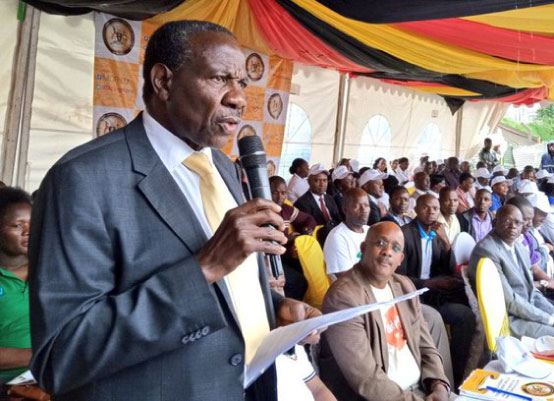
Speaking at finance ministry, Kasaija, said tree planting is aimed highlighting the importance of environmental conservation but also contribute and promote efforts of the greening campaign by Kampala Capital City Authority (KCCA).

 “As a government, we set a target to reverse a trend in environmental degradation and increase the percentage of the land covered by vital ecosystems from the current 19.9 per cent to 24 per cent by 2024,” he said.

“Tree planting is a key activity because Uganda’s economy is majorly dependent on climate-sensitive sectors like Agriculture and Tourism. This calls for paying more attention to the environment for a sustainable economic growth,” he said.

 “Industrialization leads to deforestation and pollution. Trees are the heroes of all these effects. Healthy ecosystems are critical for provision of food, water and many other services that the growing human population needs thus the exercise comes in handy” said Kasaija.

He called on people to pay more attention to environmental issues such as climate change, if Uganda’s economic growth is to be sustained.

Parliament passed Shs40.4 trillion budget for the financial year 2019/2020 an increment of Shs8 trillion from Shs 32 trillion earmarked in the current financial year 2018/19.

According to the report of the parliament’s Budget Committee presented 74.5 per cent of the budget is expected to be domestically financed while 24.5 per cent by External resources.

Stories Continues after ad

Court adjourns case of disobeying statutory orders against Bobi wine

Bobi Wine in court.

The Buganda Road Magistrate Court has adjourned the hearing of a case in which Kyadondo East MP, Robert Kyagulanyi aka Bobi wine is accused of disobeying statutory orders.


Bobi Wine is accused of participating in a demo in July 2018 against social media tax where Ugandans have to pay Shs200 daily to access social media platforms.
Magistrate Esther Nahirya, allowed prosecution’s request to adjourn the hearing to July 10, 2019 to enable them table the evidence against the defendant.
However Bobi Wine was absent but was represented by his lawyers led by Bugiri Municipality MP, Asuman Basalirwa.  Basalirwa told court that his client was unable to be in court because he was out of the country on official duties.
Basalirwa said Court had granted their request to have the prosecution avail them all materials containing evidence against their client. This, he said, would help them present a strong defence for their client.


Bobi wine was on May 2, 2019 granted bail of Shs1 million cash after spending three days on remand at Luzira prison. He was arrested on 30 April 2019 at Kalerwe market on his way to Criminal Investigation Department (CID) Kibuli where had been summoned over allegations of breaching of police guidelines and traffic rules.

Stories Continues after ad

Rapper Fresh Kid finally unveiled at Kampala Parents School

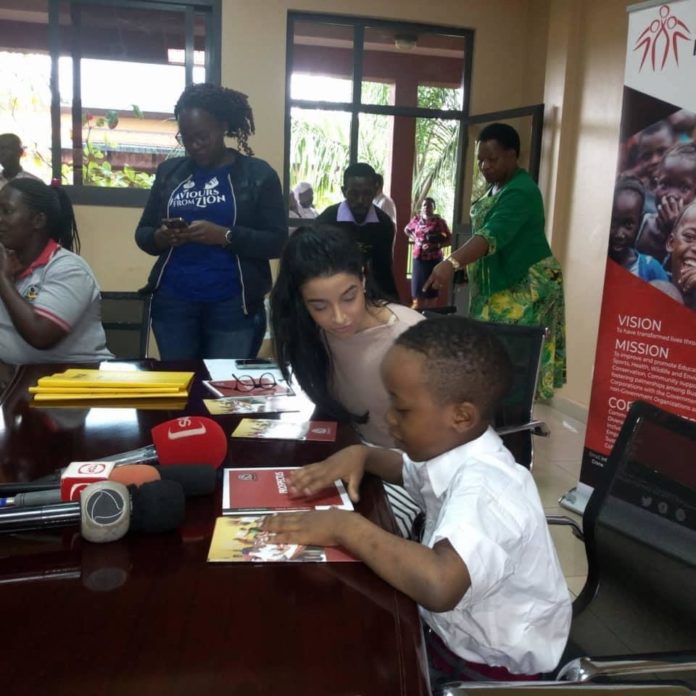
Seven-year old Ugandan rapper, Patrick Senyonjo, aka Fresh Kid, has finally been unveiled At Kampala Parents School following MoU with Ruparelia Foundation.
The musician thanked the Ruparelia family for the opportunity as he promised to study as he develops his music career.

In Mid-April, Sudhir Ruparelia’s family has gave the young musician scholarship at Kampala Parents School.
Rajiv Ruparelia, the Managing Director Crane Management Services, said then the award of the scholarship to Fresh kid was in line with Ruparelia Foundation and but would also boost the young man’s education path.

“I was moved by his ambition being only seven years old. I would love to see him become a guide and inspiration to many young people out there hence, Ruparelia Foundation is presenting this young man with a full scholarship from the Ruparelia Foundation to go to Kampala Parents School,” Rajiv said then.

Fresh Kid’s promising career almost ground to a halt when State Minister for Youth & Children Affairs Florence Nakiwala Kiyingi ordered him to stop singing and return to school but should later soften, allowing the musician to have a special timetable for his music.

At Kampala Parents, a day school, Fresh Kid has a chance to pursue his music career and study in one of the best schools in the country, something that his underprivileged background wouldn’t have allowed him, if his talent hadn’t opened the doors.

Fresh Kid was recently nominated in the 2019 Carolina Music Video Awards. The rapper earned his nomination in the category of the best video for the month of April 2019. His song entitled ‘Bambi’ that displayed the ghetto livelihood in its video helped him get the nod.

Stories Continues after ad

FUFA and U17 team coach Kwasi end contract by mutual consent

FUFA appointed Samuel Fabin Kwasi in March 2019 as the head coach for the national U-17 and U-20 teams for a period of one year.
But two months within the contract, the Federation has today mutually terminated the contract of the Ghanaian.


According to Fufa, the reason for his termination was that he asked to go and handle family matters back home thus not being able to continue with the job.
Kwasi was in charge of the Uganda Cubs that competed at the 2019 AFCON finals in Tanzania from 14th-28th April 2019 where the Cubs failed to progress past the group stages.


The statement from Fufa read;
“FUFA and National Junior Teams’ (U17 and U20) head coach Mr. Kwasi Fabin Samuel have agreed to end the contract between the two parties by mutual consent.
“FUFA is happy with the work done by Mr. Kwasi in the period he has been in Uganda. However a request by the coach to go and handle family matters back home thus not able to continue with the job, saw the Executive consent to his request’
“Kwasi was in charge of the Uganda U-17 team which participated in the AFCON Finals in Tanzania from 14th-28th April 2019.
“FUFA wishes Kwasi all the best in his future endeavors.
“It is Our Game, It is Our Country.”
Kwasi is a former head coach for the Ghana U-17 national team at the 2017 FIFA U17 World Cup in India where the team finished at the quarterfinals.

Stories Continues after ad

UDB and AfDB sign Shs74b deal to support SMEs

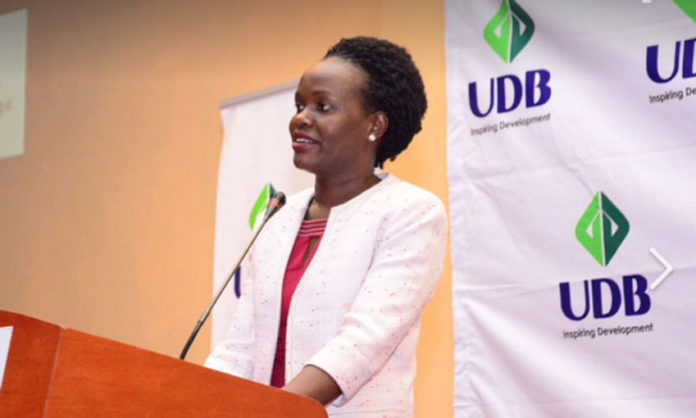
UDB MD Patricia Ojangole

Uganda Development Bank Limited (UDB) and the African Development Bank (AfDB) have signed an agreement for funding worth US$20 million (about Shs74 billion). The signing ceremony took place on Wednesday at UDB’s Head Office at Rwenzori Towers, Nakasero.

This follows the approval by parliament earlier this year, of a sovereign guarantee to secure this funding. The funding, extended to UDB as a line of credit, shall be on-lent to Small and Medium Enterprises (SMEs) and infrastructural projects in Uganda, at favourable interest rates.

The funding is a significant intervention for UDB whose clientele is 90 percent SMEs. The funding will further bolster the Bank’s capacity to provide medium and long-term development financing to business enterprises operating in the priority sectors of the economy as outlined in the country’s national development plan (NDP II) and in line with AfDB’s “High 5” priority areas.  This funding comes along with a technical assistance grant to support UDB in strengthening her institutional capacity and assuring sustainability of the Bank’s operations.

Patricia Ojangole, the Managing Director UDB expressed her pleasure and reiterated the Bank’s commitment to accelerating socio-economic development through sustainable financial interventions. “The Bank continues to register sustained improvements in performance as evidenced by the positive trends in financial performance and development outcomes over the last couple of years; funding partnerships such as these are fundamental to enabling us not only to be a sustainable institution but more importantly enable us fulfil our mandate,” Ms Ojangole said.

Kennedy Mbekeani, the Country Manager African Development Bank expressed his appreciation to the Hon. Matia Kasaija, Minister of Finance, Planning and Economic Development whom he said has been the anchor between the two banks. He pledged his support to working with UDB to build relationships with the beneficiaries of the funding. “We are committed to coming up with innovative ways to support all stakeholders,” he said.

The African Development Bank is a multilateral development finance institution whose overall objective is to support African countries’ economic development and social progress by promoting investment of public and private capital in projects and programmes designed to reduce poverty and improve living conditions.

Stories Continues after ad

EAC to hold simulation exercise at Namanga border to prepare for cross border disease outbreaks

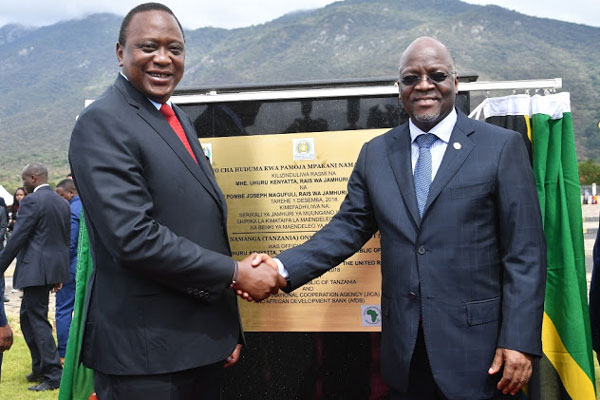
The East African Community (EAC) Secretariat will convene a cross border field simulation exercise (FSX) at the Namanga border between Kenya and Tanzania from June11-14, 2019 as directed by the EAC Sectoral Council of Ministers of Health in 2015, according to the latest press release from the secretariat.


According to the press release, FSX aims to enhance the status of preparedness for and response to infectious disease outbreaks in the EAC, thereby making the region safe for the people and businesses in the region. An estimated 250 participants from Kenya, Tanzania, Burundi, Rwanda, South Sudan and Uganda and representatives from regional, supra-regional and international institutions and organisations will participate in the exercise.
Experts say seventy-five percent of infectious diseases are transmitted between animals and humans. Outbreaks affect agriculture, trade and tourism and the lives and livelihoods of the people. “Involving these sectors in prevention, response and mitigation reflects what is called the “One Health” disease management approach,” officials say.


The EAC region has experienced cases of Ebola, Rift Valley, Marburg and Crimean Congo Hemorrhagic fevers, Cholera, Polio and Plague among others. The current Ebola Virus Disease outbreak in the Democratic Republic of Congo (DRC), which has so far caused over 1,600 human cases and more than 1,000 deaths, remains a major threat to the health and socio-economic wellbeing of the people of East Africa, says the press release.

“Therefore, the region needs to be prepared and the ongoing efforts to operationalize national and regional contingency plans need to be strengthened. In this regard, the planned cross-border Field Simulation Exercise aims to strengthen the capacities of all people involved in preventing and responding to infectious disease outbreaks across different professions and sectors of society.”


An FSX is an interactive instrument to evaluate the status of preparedness for and response to disease outbreaks of organisations or other entities in the EAC region. It simulates a situation under real conditions which could occur at any time. The FSX allows participants to identify strengths and weaknesses and can facilitate practical corrective actions at all levels.


It will be used to assess coordination and collaboration mechanisms, emergency response deployment, logistics and administrative processes, risk and crisis communication as well as emergency management and leadership. Findings from the FSX will be used to further improve preparedness and response capacities in the EAC region and beyond.


The scenario of the exercise will mimic a cross border disease outbreak, aggravated by environmental factors and with impact on humans and animals, agriculture, trade and tourism, and the economy as a whole. Early warning, infections and deaths in animals and human beings will prompt the reporting and activation of national and regional preparedness and response mechanisms emphasising the importance of the One Health approach and of appropriate risk and crisis communication as well as cross border collaboration.

Based on the recent need to prepare EAC Partner States for Ebola due to the current outbreak in DRC, the fictitious component will feature a virus that will mutate into a pathogen that can be transmitted between humans causing severe fever and bleeding resulting in increased numbers of cases and deaths. This will help in assessing and building EAC Secretariat’s and Partner States’ capacities to prepare and respond to an Ebola-like situation.


The cross-border field simulation exercise is supported by the “Support to Pandemic Preparedness in the EAC Region” project, which the Deutsche Gesellschaft für Internationale Zusammenarbeit (GIZ) GmbH implements on behalf of the German Government and the EAC. The World Health Organization is providing technical support throughout the planning and implementation of FSX in line with its mandate of implementing the International Health Regulations globally.

Stories Continues after ad

History of the AFCON trophy

Ahead of the 2019 Africa Cup of Nations tournament to be held in Egypt from 21st June to 19th July, we take a brief look at the history of the iconic trophy.
Throughout the history of the African Cup of Nations, three different trophies have been awarded to the winners of the competition.


The original trophy, made of silver, was the Abdelaziz Abdallah Salem Trophy, named after the first CAF president, Egyptian Abdelaziz Abdallah Salem.
As the first winner of three African Cup of Nations tournaments, Ghana obtained the right to permanently hold the trophy in 1978.


The second trophy was awarded from 1980 to 2000, and was named “Trophy of African Unity” or “African Unity Cup”. It was given to CAF by the Supreme Council for Sports in Africa prior to the 1980 tournament and it was a cylindrical piece with the Olympic rings over a map of the continent engraved on it.


It sat on a squared base and had stylized triangular handles. Cameroon won the Unity Cup indefinitely after they became three-time champions in 2000.
In 2001, the third trophy was revealed, a gold-plated cup designed and made in Italy. Cameroon, permanent holders of the previous trophy, were the first nation to be awarded the new trophy after they won the 2002 edition.
Egypt won the gold-plated cup indefinitely after they became three-time champions in 2010, in an unprecedented achievement by winning three consecutive continental titles (2006, 2008 and 2010).


Unlike previous winners who would have then taken the trophy home, Egypt were presented with a special full size replica that they were allowed to keep. First and second time winners usually get a smaller sized replica for their trophy cabinets.
Egypt is still the most successful nation in the cup’s history, winning the tournament a record of seven times. Cameroon follows with five titles and Ghana four.

Stories Continues after ad

Global firm enables customers to request its financial services on WhatsApp

More than 1-billion people in over 180 countries use WhatsApp to stay in touch with friends and family, anytime and anywhere. It is this very reason that has driven Wari to integrate with the WhatsApp Business solution to enable customers – through strategic partnerships – to request its financial services around the world on WhatsApp.

On WhatsApp, Wari customers will be able to easily request access to frequently used services and request to initiate financial operations that include: Opening an Account, topping-up balances, sending and receiving Money and purchasing of airtime as well as Payment of Bills.


The introduction of MyWari on WhatsApp provides customers the convenience to transact and communicate directly as well as easily carry out all their operations. This Wari service on WhatsApp is currently available in the following languages: (French, English, Spanish, Italian, Portuguese) with Russian and Arabic coming soon. This will allow Wari to cater to a broader customer base with the aim of enhancing the user experience across different continents and languages.

In addition, Wari’s financial services availability on WhatsApp will enable millions of consumers to request to initiate financial transactions, regardless of where they may be located in the world.

“We have been working for several months to globalise our platform through strategic acquisitions and partnerships on all continents. We are always aiming to create a standard to interconnect people in all countries and to make financial inclusion a reality, thus building tomorrow’s world,” says Kabirou Mbodje, Wari President and CEO.

The Wari WhatsApp business solution is appropriately aligned with Wari’s ambitions to offer its customers innovative experiences through intuitive interfaces. Furthermore, it places Wari in a great position in the digital, social integration space on the international stage.

Mbodje says that plans to expand the digital offering have always been on the cards. “We are steadily and decisively pursuing our development of wide-ranging services and distribution channels,” he adds.

This offering on WhatsApp is allowing Wari to position itself as a pioneer in the digital world while pursuing its global development. “This new partnership with WhatsApp further confirms our strategic goal of ensuring our key services are accessible to the masses through a digital evolution,” concludes Mbodje.
Launched in 2010, is a digital platform offering financial services with high social added value intended for the public, companies, institutions and merchants.

The Wari digital financial platform and its services, available to this day in more than 60 countries, via 500, 000 direct points of service and partners worldwide, including 45, 000 in Africa, offers a wide range of products and services: Wari accounts, payment of water and electricity bills, TV subscription, purchase of airtime, games and lotteries, sending and receiving money, Wari bank card, insurance to name a few and can handle all payment methods (cash, bank account, bank cards, wallets and vouchers among others.

Stories Continues after ad