Stanbic Bank
Stanbic Bank
27.8 C
Kampala
Stanbic Bank
Stanbic Bank
Home Blog Page 1306

Uganda positions herself as a multifaceted filming destination and hub at Cannes Film Festival

The Ugandan team by yesterday was hosting the Uganda Day at the Pavilion Afrique – Cannes Film Festival. Several engagements including Panel discussion are ongoing.

In its first year at Cannes, Pavillon Afriques is one of the busiest, unique, networking and business hub at the festival this year. Uganda joined a line-up of participating countries including Nigeria, Kenya, Tanzania, South Africa, Jamaica, USA, Brazil among others.

Godfrey Mutabaazi the Executive Director – UCC and Head of the Uganda Delegation notes this is a unique opportunity for Uganda to position local film trade and promotion that outlines the diversity and plurality of Uganda at an International level to drive television content. Uganda has the potential of becoming a centre for filming in Africa.

The Pavillion Afrique is an exclusive business platform where film industry stakeholders are meeting to discuss potential trade in Cinematography taking advantage of the unique atmosphere of the Festival de Cannes.

The festival is situated within the heart of the Marché du Film, which is the world’s biggest gathering of film industry professionals seeking to expand professional networks, develop partnerships and sell films.

Under the theme ‘Connecting the Past, Present and Future’; Pavillon packs a full schedule with a mix of private and public sector round-table discussions on film financing and content distribution, a series of country destination seminars, celebrity-hosted panels, leadership workshops, film screenings and more, the programme is the most fascinating hub out of Cannes in 2019.

In a continued efforts to promote Uganda as a premier tourist and film hub within the region, the Uganda Tourism Board (UTB) and Uganda Communications Commission are participating at the Pavilion Afriques at the prestigious Cannes Film Festival that started on May 14 and will end on 25 May 2019 in France.

Pavillon Afrique is the first tent within the Film Market section of the Cannes Film Festival dedicated exclusively to the business of Film in the African continent and the diaspora.

Stories Continues after ad

American pastor ‘gave 50,000 Ugandans a “miracle cure” for malaria and HIV that was actually industrial strength BLEACH’

A pastor from New Jersey has been accused of giving up to 50,000 Ugandans a ‘miracle cure’ for malaria and HIV/Aids made from industrial strength bleach.

Pastor Robert Baldwin, 52, along with Sam Little – a former clairvoyant from England who is part-funding the project – are touting MMS (Miracle Mineral Solution) to poor Ugandans.

People and infants are being treated with chlorine dioxide – a noxious substance the FDA warns can cause nausea, vomiting, diarrhea, and symptoms of severe dehydration.

Baldwin is reportedly shipping MMS in bulk to the African country where he has trained some 1,200 clerics to treat the faithful after Sunday sermons.

Furthermore, he is offering smartphones to those who are ‘committed’ to the project, agencies reprot.

His ministry, Global Healing, described its belief in ‘using the power of Almighty God … to greatly reduce the loss of life,’ on its now deleted website.

According to Fiona O’Leary, a campaigner who spoke to The Guardian, she had a conversation with Baldwin in which he told her he distributed MMS through the church to ‘stay under the radar.’

The Guardian reported Baldwin told O’Leary: ‘When you draw attention to MMS you run the risk of getting in trouble with the government or drug companies. You have to do it low key. That’s why I set it up through the church.’

He reportedly told her he did not even refer to it as MMS because online algorithms could detect it and instead called it ‘healing water.’

He said that babies were given a half dose and that it caused no harm, just diarrhea.

The pastor – who trained as a nurse – is said to have little medical expertise.

But he strongly denied the claims made in The Guardian, telling NJ.com he had to shut down his social media accounts and website because ‘people are calling me Satan.’

‘All I wanted to do is help people using natural healing therapies,’ Baldwin said.

In addition he denied administering the phony medicine, telling the paper: ‘I just educate. I don’t treat anybody.’

His 25-year-old English backer, Little, told The Guardian he had donated $10,000 to Baldwin’s ministry and had also spent $30,000 building a home for Ugandan children.

‘Somebody in my family was cured of cancer with MMS,’ the paper quote Little as saying. ‘I started researching online and saw more and more videos of people being cured. That’s when I decided to test it myself on malaria and traveled to Africa.’

In a video posted on YouTube, which has been deleted, Little is said to have documented a trial of MMS at a small hospital in Kyenjojo district, western Uganda.

He is said to be seen in the film telling medical staff about MMS and watching them administer it to small children, including a baby of around 14 months.

Little, who has no medical background, cites a 2018 study by the University of Dusseldorf in Germany which tested chlorine dioxide on 500 malaria patients in Cameroon.

The Guardian contacted the university which stated the study had been reviewed and was found to be ‘scientifically worthless, contradictory and in part ethically problematic.’

The FDA have said: ‘The U.S. Food and Drug Administration is warning consumers not to take Miracle Mineral Solution, an oral liquid also known as “Miracle Mineral Supplement” or “MMS.” The product, when used as directed, produces an industrial bleach that can cause serious harm to health.

‘The FDA has received several reports of health injuries from consumers using this product, including severe nausea, vomiting, and life-threatening low blood pressure from dehydration.

‘Consumers who have MMS should stop using it immediately and throw it away.

‘MMS is distributed on Internet sites and online auctions by multiple independent distributors. Although the products share the MMS name, the look of the labeling may vary.’

Stories Continues after ad

People’s mindsets have to change if they want to get rid of Museveni – Gen Muntu

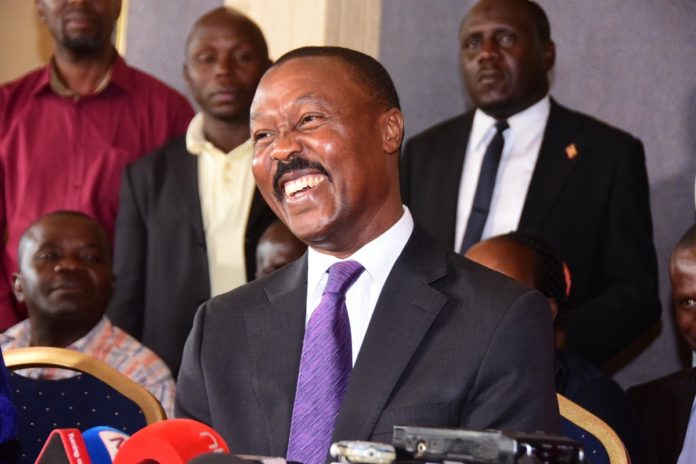
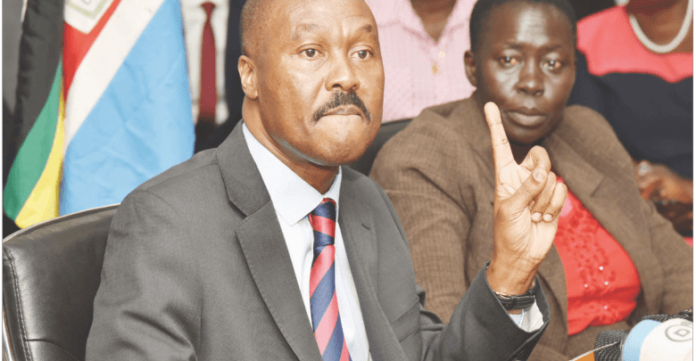
Gen. Mugisha Muntu

The National Coordinator of the Alliance for National Transformation (ANT), Rtd Maj Gen. Gregory Mugisha Muntu, has said Ugandans must change their mindsets is they are to remove President Yoweri Museveni and his National Resistance Movement (NRM) from power.

Muntu, said during the official unveiling of ANT after 13 months when Muntu and his close associates embarked on leaving Forum for Democratic Change (FDC) Party. The party’s move is to transform this country, first through popularizing it and recruiting party members in the first three months, Muntu said while addressing delegates on Wednesday at the Kampala Serena International Conference Centre.

“President Museveni carries around a sack of money you, find the youth anxiously waiting to receive, it’s not sustainable at all, not anywhere in the world. We must change our mindsets, we must reject the habit of handouts,” he said.

“Most times, we criticize the current regime over many things that are physical but to me, the worst form of damage is when you crash the spirits of the people. That is what we must change in this country,” said.

He said the current government leaders cannot clean up politics, alleging that the leaders are chasing for their own selfish interests. They have no will, they have no capacity, they are trapped, You cannot transform a country whose spirits have been crushed but there is nothing on this planet that someone has done that we are not able to do in this country so the burden falls on our shoulders,” he said.

Muntu said Uganda’s problems have always come from settling for less than more, stating that it’s time Ugandans came together to do more. He added endurance was needed. “We must do more than just survive, and we must do more as a nation and we must come together without fear,” he said.

“We have no reason to fear fellow citizens. We are not asking Ugandans to do the impossible. We are asking that they recognize that when working together even in the most difficult problems can be overcome.”

He also urged his counterparts in the opposition to practice politics that is mature if they are to attract the support of Ugandans.

Earlier, Alice Alaso, also a proponent of the party asked Ugandans to top blaming colonisation for the mess in Uganda’s politics. “Even when we teargas ourselves we blame the colonialists! It has come to a point where we must accept responsibility and sort out this mess,” she said.

“We steal our own money and claim that the problem started with the colonialists. We must own our mistakes and correct them. We are ready to run the marathon that will bring transformation in this country,” she said.

Quoting president Nyerere, Tanzania’s MP, Upendo Furaha, said, “We want to light a torch that will put light on top of Mt. Kilimanjaro to bring peace where there is no peace, love where there is no love, respect where there is none. May the bulb of The Alliance for national transformation will bring hope, love and peace where there is none.”

Attachments area

Stories Continues after ad

Launch of ANT further signifies divisionism in Uganda’s opposition as country moves towards 2021 general elections

ANT, the new political party national promoters, Mugisha Muntu and Alice Alaso

By Francis Mwesigye

Ugandans today witnessed the launch of the Alliance for National Transformation (ANT) in Kampala, the latest political party in Uganda, whose chief proponent is Rtd Maj.Gen. Mugisha Muntu.

While speaking at the launch Muntu said his party would involve itself in activities that transform Ugandans including contributing to all sectors such as education, agriculture, health as well as competing in politics in a bid to take over power from President Yoweri Museveni’s National Resistance Movement (NRM).

Muntu, the National Coordinator of the party pledged that it would soon begin countrywide mobilisation campaigns as it seeks to capture the support of the masses, which now is within the armpits of the NRM which has established structures in the rural areas compared to parties in the opposition. This does the NRM better as 2021 general elections come nearer with the launch of campaigns expected mid next year.

Watching among the audience, as Muntu made the pledges were veteran politicians like; Amanya Mushega, Yona Kanyomozi, Prof. Morris Ogenga Latigo and senior counsel Prof. Frederick Ssempebwa, among other delegates, some invited from abroad. In attendance were also DP boss Norbert Mao, MP Robert Kyakulanyi of People Power.

To note is that ANT’s launch in Kampala today comes at the time when the opposition political parties are totally divided that they don’t have a joint plan of uprooting Museveni’s NRM from power, yet the latter seems to be growing stronger and stronger as Museveni goes around the country with his poverty eradication mobilisation tours, which opponents say are aimed at 2021 presidential election.

Analysts say that Muntu who broke away from the Forum for Democratic Change (FDC), the party which he helped found, should have joined the Democratic Party (DP) which is second to FDC in terms of opposition strength instead of forming ANT which has added to the weakening of the opposition due to due sharing of sympathiers, thus giving the NRM an upper hand.

Muntu’s ANT also comes at the time when FDC’s former president Rtd. Col Dr. Kizza Besigye and Kyagulanyi aka Bobi Wine have emerged strong and popular as evidenced from their recent engagements with Ugandans, both in urban and some sections of rural districts. It’s unlikely that any candidate presented by ANT for 2021 presidential election will beat the two politicians who gained political support as individuals. Interestingly ANT comes at the time when some politicians like Dr. Abed Bwanika and Michael Mabike are urging Besigye to stand down for Bobi Wine come 2021 elections.

Muntu’s departure from the FDC as he stated was due to the antagonistic way leaders there approached issues, especially the street demos which he never liked. DP is more of a peaceful party that he should have joined to boost rather than weaken the opposition by founding ANT, the new kid on the block that has many mountains to climb.

Much as Muntu indicated he would work with other opposition political parties, all that is there to see is that the party wants to present its own candidate come 2021 presidential election and most probably it will be Muntu himself. Bwanika and Mabike are also likely to ask Muntu to stand down for Bobi Wine come 2021. The inner circle in the NRM is praying for the disorganization of the opposition to continue because in that way they would have clung to their votes as opposition shares theirs.

The puzzle now for ANT is whether to compete as a party to weaken the opposition or whether to join a coalition which has its own problems as regards the suitability of candidates at various levels of leadership. Watchers of events as they unfold in the opposition say they will remain weak and NRM will regain power again come 2021.

Stories Continues after ad

Minister Kasaija blames districts for delay in servants’ salaries

Finance Minister, Matia Kasaija

The Minister of Finance, Planning and Economic Development, Matia Kasaija, has blamed district officials for the delayed payment of salaries of some civil servants in the local governments.

Kasaija was responding to concerns raised by Members of Parliament during plenary that the ministry had released money for the payment of salaries to the respective local governments during last quarter release in April 2019.

“I can assure this House that wages and salaries were disbursed to the districts and the problem is not here in the central but at the districts,” said Kasaija.

MP David Abala, (Ngora County), raised the alarm on the non-payment of salaries for the civil servants and local leaders in Ngora District who had not been paid for the last two months.

“The local leaders in the districts are complaining that they have not been paid for a long period yet they have done their work. The Minister should be in position to explain why the civil servants are languishing without pay,” he said.

He also noted that the pensioners in the district had also not been paid over a period of time.

Workers Member of Parliament, Agnes Kunihira, noted that there were various regions that had actually not received any money.

“There are 78 districts in which public servants and teachers have not received their salaries over time,” she said.

Stories Continues after ad

Gov’t launches operationalisation of five cities

Local Government Minister, Tom Butime.

Government has launched the operationalization of five cities that were recently elevated from municipality status. The cities to be include Arua, Mbarara, Gulu, Fort Portal and Jinja. They assume city status in the fiscal year 2020/2021.

On May 20, 2019, Cabinet approved the phased operationalization of nine cities which will be spread over three financial years, starting 2020/21.

According to minister of local government, Col. (rtd) Tom Butime, government in line with the National Urban Policy will continue to carry out planning and other preparatory activities for the Cities to start on the scheduled dates.

“The Cities will further be facilitated to attract both internal and external funding for garbage management, environment management, infrastructural improvement, ICT Improvement, Tourism and leisure facilities and security, “he said.

The second batch of two cities which include Mbale and Hoima, the Oil city will be operationalized in the financial year 2021/ 2022 and The Third batch of two Cities that include Lira and Entebbe will be operationalized in the F/ Y 2022/2023.

“The over concentration of development in Kampala has exerted pressure on the overall functioning of the City Infrastructure and services resulting into mushrooming of slums with their associated problems.” He said adding that the proposed Cities will reduce pressure on Kampala Capital City by absorbing the demands of the economic actors who would get their needs addressed by the new Cities.

He said the six cities where studies for elevation are underway and scheduled to be concluded by the end of financial year 2019/20 include Moroto Nakasongola, Soroti, Masaka, Kabale and Wakiso.

“They will commence operations in the F/Y 2023/24. Each of the cities will comprise of two city divisions that will be equivalent to municipalities for easy administration and coordination.”

He said Urbanization is the heart of successful economic growth of any country in the world, therefore investment in these regional and strategic Cities will play a distinctive role in Uganda’s drive for equitable socio-economic development, transformation and poverty reduction.

Butime, said Uganda’s urban areas have already become the engine of the Country’s development contributing 70 per cent of the National GDP. There is no doubt that the future of Uganda’s growth will continue to lie in new cities which will be strategic and Regional.

Stories Continues after ad

Kenyans accuse Ugandan housemaids of taking over their jobs

Housemaid in uniform

The influx of girls migrating from Uganda to Nairobi looking for housemaid jobs is making life difficult for local house helps who now want government to do something about it.

The girls come in illegally, they are desperate and can take any amount of money, according to one Kenyan domestic worker who told the BBC. “Employers now prefer Ugandan workers for they accept low wages and don’t travel back to Uganda often,” she said.

She says employers now pay locals very low wages because the Ugandan ladies accept low pay.

In Uganda, women as young as 17 years are migrating to Kenya to find housemaid jobs. They mostly come from the eastern districts of Mbale, Bududa, Namisindwa, Manafwa, Busia, Tororo and others.

Esther 21, told the BBC that some house help jobs in Uganda only pay about Sh29,600 per month which is not enough to fend for needs maids which forces them to migrate to Kenya for the currency is stronger against the Ugandan currency. Most maids who migrate to Kenya to do domestic work are school drops but others migrate to earn money so that can help them go back to school.

Bad conditions of living

Edith Murogo who works for the centre of domestic training and development told the British broadcaster that the abundance of girls looking for jobs is making employers take advantage of their situation.

“Domestic workers are a special group of people for the conditions they work under. They are confined. They are not allowed to leave the employers house. They work in slavery condition,” Murogo says.

The organisation plans to sponsor 17-year-old Scovia who worked as a house help before the police found her without documentation and were deported.

“I am an orphan. I always desired to read so I left Uganda came to Kenya to find a job as a housekeeper. The employer mistreats you and sometimes beats you if you do not comply with her rules.”

They now ask the employers to treat them as normal people for they did not choose to be poor and needy.

“We are people like our employers. We have the same needs. They should treat us with dignity,” Esther says.

The BBC Africa Eye reveals how on arrival in Nairobi, the girls find accommodation in informal settlements, several of them decide to share a house to cost share on costs.

Esther now in Nairobi knocking door to door looking for a maid job says she leaves with her three Ugandan friends and each pays Khs500 per month for the house.

“We leave three girls each paying Ksh500 per month on this corrugated iron sheet house with no electricity. We share one mattress,” she says.

Esther works in a restaurant from 6 am to 6 pm for little pay.

“I walk for a long distance to work for they don’t pay me enough,” she says.

She says there is so much insecurity where she leaves. Their house was robbed off some days back.

“Where will we go? We just have to stay here, it’s cheaper ”she says.

Esther’s roommate Racheal who is a house-help says she does not get food from her employer.

Stories Continues after ad

Janet Museveni’s open a letter to all Ugandan children who call her Maama by choice

Minister of Education and Sports Janet Kataha Museveni

The Bible informs us that ancient Egypt was the political and economic powerhouse of its day. The Pharaoh who was king had unrivaled influence and power over the known world. The Children of Israel who came to Egypt first as guests or refugees of famine, soon had a reversal of fortunes and became the slaves of Egypt for 400 years.

Amazingly as Providence would have it Moses, who was the son of Hebrew slaves, was adopted by Pharaoh’s sister and raised as a prince of Egypt. He received the best education in the Arts, Sciences, Architecture and Warfare. As a young person, I loved the movie adaptation of this story called, “The Ten Commandments” starring Charlton Heston as Moses and Yul Brynner as the Pharaoh Rameses.

In the film, the grandeur and splendor of ancient Egypt is captured in its architecture, science, war machinery and wealth. The only mischaracterization in the film is the casting of the Egyptians as Europeans whereas it is clear from the drawings inside the pyramids, that the original Egyptians were black Africans.

In addition, in 2 Chronicles 8:11, the Bible tells of how Solomon built a palace for his wife, the daughter of Pharaoh, yet he didn’t accord this honor to his other wives or concubines. The Bible also tells the story of the queen of Sheba or Ethiopia who visited King Solomon and gave gifts of gold, precious stones and spices. 2 Chron.9:1

All these accounts show that the Africa of antiquity was not only prosperous and wealthy but more so a political and global hegemon.

The question that I have pondered many times over the years is,”What happened to Africa?”

Africa committed the grave sin of enslaving the children of Israel for 400 years, which returned to haunt the African continent with the advent of the evil trans-Atlantic slave trade. This year 2019, marks the 400th anniversary of the first African slaves arriving in America and the ensuing exploitation of African people. This anniversary is a watershed moment in our history and a time for prayer, reflection and firm resolution as we look to the future

The strongest and brightest Africans were carried to America to serve as cheap labour to build the economies of the western hemisphere. It was African youth and strength that fuelled the Industrial revolution and once it was underway, the Europeans returned to the African continent in search of raw materials and the scramble and carving up of Africa followed. The age of colonialism meant that Africa became a spectator to global and even their own local affairs. African communities were disconnected from each other and from their land. They were forced to grow cash crops that had no linkage to the local needs of the community and only served to strengthen the disenfranchisement of local communities and tie them in dependence to Europe.

Africans were deemed unable to take care of their own affairs and thus began the culture of being told what to do for ourselves. For it is in Africa, that other people tell you what is apparently in your own best interest as though you are incapable of making that decision on your own. I am not one of those who believe that Africa’s problems are all in the past, but I do think it is important for us to understand where we went wrong in order to not repeat history.

My heart’s cry is also going out to parents who are praying for the soul of our country and the future of our children. Parents who understand that the battle we are facing will be won on our knees in prayer. It will not be won through money or donors, it can only be won by sustained and prevailing prayer.

I believe that God has been waiting for Africans to awaken from deep slumber and realize that our greatest obstacles are internal rather than external. Our weaknesses are our own petty and selfish differences. The magnifying of small differences and totally obscuring the many ties that bind us and our historical, cultural and spiritual interests. All that is sacrificed on the altar of personal ambition and ego and the thirst for unjust gain. My prayer is that in this time, Uganda will break out of that vicious cycle and choose another path, the path of doing well, to build our nation by being and doing the best.

Many times, I have felt deep frustration as I wonder what unique solutions or innovations Africa brings to the world. Do we feel compelled to do what others have not done in order to bring to the table a perspective that is uniquely African and thus take our place among the nations?

Even in the area of agriculture, where we have a comparative advantage and could outgrow and out produce anyone in the world, even there we have not fully harnessed our natural resources and still depend on the rains to grow our crops. Our national parks and natural beauty and wildlife is God given, but have we been good stewards to use these resources to their maximum potential for the good of our communities?

I was quite challenged to learn that when China decided to modernize their economic policies to become a mixed economy, they asked their population to make a nominal contribution to raise the money for this work. Every citizen paid a nominal fee of say 1/- in order to support and start up this work and raise the capital to fund their own programs. The principle here is self-reliance and community ownership of their work and responsibilities as citizens.

The Chinese probably knew that they had few true friends who had their long-term interests for stability and development at heart. So instead of looking outward, they looked inward to their own people. They didn’t wait for “Development Partners” as we often do in Africa, rather they succeeded by building their internal capacity and studied other world systems picking what worked and discarding what didn’t work for them.

There is a story I like to share with women in the country whenever I have an opportunity to do so. I visited Bangladesh many years ago and learned of the story of how a wealthy philanthropist saw an opportunity to help women become self-reliant contributors to their society. This Bangladesh philanthropist knew the power of investing in women and made an initial contribution to a SACCO for rural women. He knew that the rural woman was one of the most marginalized and overlooked members of the society and yet they formed the foundation or bedrock of family and thus national life. So he worked hard to gain their trust and convinced them to begin to take small loans to improve their lives. These women who started out as being very intimidated and scared of taking loans knowing that they could never pay them back, soon became more confident and started prospering. The philanthropist helped the women to form large working groups and as the women borrowed more money and worked hard to pay this money back, the fruits of transformation started to show. They sent their children to school, they built decent homes for their families and their lives changed for the better.

Soon after that, the World Bank came knocking on their door, they had noticed the success of their SACCO and now wanted to invest more money with them and perhaps help them run their banks. The Bangladeshi women considered this offer, but their answer was ultimately, ”thanks but no thanks.” They responded to the officials saying when they were in dire poverty and the banks had this money all the while and never came to help them. Now that they had their own money they did not need anybody’s help!”

That story absolutely uplifts my spirit because it reinforces my belief that real transformation does not come from big International Organizations but rather from simple personal decisions made by ordinary people. Therefore, my prayer for Ugandan families, mothers and fathers, men and women who are working hard to build their families one day at a time is that God will help us to raise children who will become serious, responsible and productive citizens that seek to make a positive contribution to their society. Children who will strive to build their schools, Technical Colleges and Universities, leaving a positive legacy behind instead of strikes and riots that only destroy what has already been built. These children can only come from stable homes built on a solid foundation of prayer.

Recently I was happy to launch the work of a local charity called Hill City Foundation. This organization gives scholarships to bright and deserving students whose families are not able to meet the cost of tuition. In addition, the organization gives mentorship and seed money to young graduates to help guide them as they begin their journey into the workforce. I was so overjoyed as I launched this foundation because it was a sign to me that finally the tide is beginning to turn and Africans are maturing and understanding the barriers to our blessings. If we as Ugandans can heed the commandment to” Love your neighbor as yourself,” we will be able to be a blessing to others & God will in turn bless us.

However, if we continually refuse to bless others we will remain as we are, or worse be diminished. If we are profiting from unjust gain, then we are heaping problems and curses on ourselves and our families. Can you imagine a home that is built with embezzled government funds earmarked for establishing a community school or hospital? You have denied that community a basic need and put your personal needs above those of others. You may succeed in hiding your wrongdoing and may even be well regarded by friends and colleagues who share your mindset, but ultimately we have one Judge who sees and knows all and nothing is hidden from His sight. He is the One who blesses or withholds blessing and therefore we should not delude ourselves. We must raise our children to know they have a responsibility to their family, community and their nation.

Finally, we all need to be reminded that it is God who created Africa and Uganda for a purpose. He lovingly made everything beautiful for His children to enjoy. And I believe He has been waiting for us to choose to become the people that will work hard to develop this beautiful land for the glory of His Name and the good of His people. It is not an easy task by any means, but it is possible. The Bible says we “will live by the sweat of our brow” and that is what we are called to do as far as our country is concerned. But if we pray, He will guide us as He always has and if we are obedient to Him, He will multiply and bless the work of our hands so that poverty and insufficiency will become a thing of the past.

May God bless you!

Stories Continues after ad

Emmanuel Okwi, Murushid Jjuuko win league title in Tanzania

Emmanuel-Okwi

Uganda Cranes striker Emmanuel Okwi featured for Simba SC in Tanzania as they sealed the 2018/19 league title with a 2-0 victory over Singida United at the Namfua Stadium.

Defender Murushid Jjuuko was not part of the 18-man matchday squad due to an injury but has been instrumental for the team throughout their title-winning season.

Meddie Kagere and team captain John Bocco scored a goal each to seal a maiden victory clinching the second successive title in a row for the Msimbazi Reds.

The victory took Simba to 91 points at the top the table, eight points ahead of second-placed Young Africans SC who have 83 points with only two games to the end of the season.

The feat means Simba now have 20 Tanzania Mainland Premier League titles, seven adrift of their main rivals Yanga.

They will take on Biashara United on May 25th, at the Uhuru stadium where they will lift the trophy before winding up their campaign against Mtibwa Sugar at the Jamhuri stadium on May 28th.

Simba will now represent Tanzania in the Caf Champions League next season.

They will also play against Sevilla on Thursday 23rd May at Benjamin Mkapa National Stadium in a club friendly match.

Both Okwi and Jjuuko are part of the Uganda Cranes 2019 Africa Cup of Nations squad and will join up with the camp in Abu Dhabi after completion of the season.

Stories Continues after ad
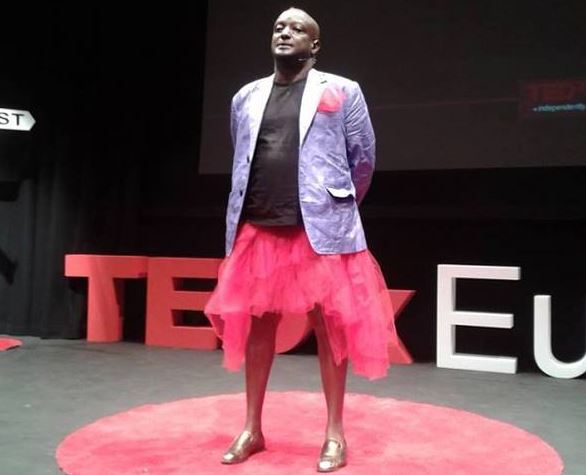
Binyavanga Wainaina: Kenyan author and gay rights activist dies

Late Binyavanga Wainaina

AGENCIES

Prize-winning Kenyan writer Binyavanga Wainaina has died after a short illness at the age of 48.

He won the Caine Prize for African writing in 2002 and was best known around the world for his satirical essay How to Write About Africa.

Wainaina was also named among Time Magazine’s 100 most influential people in 2014 for his gay rights activism.

He “demystified and humanized homosexuality” author Chimamanda Ngozi Adichie wrote at the time.

Wainaina was one of the first high-profile Kenyans to openly declare he was gay and “he felt an obligation to chip away at the shame” that people felt about being gay, Adichie added.

Last year he announced plans to marry his long-time partner at a wedding in South Africa. The announcement divided opinion in Kenya where homosexual acts are illegal.

He suffered a stroke in 2015.

His brother James Wainaina told the BBC that his family wants to celebrate his life.

“We are in a life celebration mood, we’re looking at this from a human level; it’s a human story.

“Allow that humanness to shine, people are hurting,” he said.

Tributes have been pouring in on Twitter:

Quotes from How to Write About Africa:

§ Treat Africa as if it were one country

§ Mention near the beginning how much you love Africa, how you fell in love with the place and can’t live without her

§ Be sure to leave the strong impression that without your intervention and your important book, Africa is doomed

§ Your African characters may include naked warriors, loyal servants, diviners and seers, ancient wise men living in hermitic splendour. Or corrupt politicians, inept polygamous travel-guides, and prostitutes you have slept with

§ Readers will be put off if you don’t mention the light in Africa. And sunsets, the African sunset is a must. It is always big and red. There is always a big sky

Stories Continues after ad