Stanbic Bank
Stanbic Bank
17.3 C
Kampala
Stanbic Bank
Stanbic Bank
Home Blog Page 1305

UPL: Sam Ssimbwa, David Bagoole crowned March’s best

Sam Ssimbwa, coach for month of March.

The 2018/19 StarTimes Uganda Premier League monthly Awards for March 2019 took place on Monday morning at Kati Kati Bar & Restaurant, off Lugogo By-Pass in Kampala.

URA FC Head Coach Sam Ssimbwa and Kirinya Jinja SSS midfielder David Bagoole were named the Pilsner Coach and Player for the month of March 2019 respectively.

David Bagoole beat KCCA’s Nicholas Kasozi and Cromwell Rwothomio of URA FC to the top gong.

Bagoole scored two goals in March, against Nyamityobora and SC Villa and picked up one man of the match performance.

Sam Ssimbwa won the Pilsner Coach of the month of March after his side’s impressive run in the Uganda Premier League which saw his side pip Mbarara City to the third position.

Ssimbwa managed two wins (against Express and Paidha Black Angels) and one draw (against BUL FC) out of the three league games.

The Tax Collectors coach beat Mike Mutebi of KCCA FC and Tooro United’s Wasswa Bbosa to the award.

Both coach Ssimbwa and David Bagoole walked away with a reward of one million Ugandan shillings.

Bagoole, Player for March

At the start of this season, Pilsner Lager signed a partnership deal worth 450m Ugx with the StarTimes Uganda Premier League to award the competition’s best players and coaches for the next three years.

The awards are named ‘Pilsner man of the match award’ and the monthly awards named ‘Pilsner player of the month award’ and ‘Pilsner coach of the month award’.

The Pilsner man of the match walks away with one hundred thousand shillings (Ugx 100,000) after every match.

Stories Continues after ad

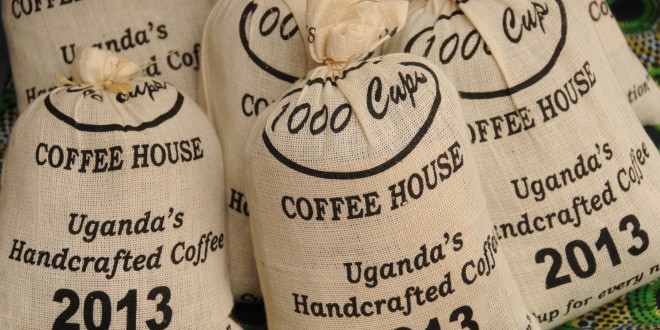
Coffee exports fetch $32.6m in February

Coffee for export

Coffee exports in February 2019 amounted to 323,828 60-kilo bags worth US$32.65 million, Uganda Coffee Development Authority (UCDA) says in the latest report.

This comprised 261,852 bags (US$24.24 million) of Robusta and 61,976 bags (US$ 8.41 million) of Arabica. However, according to the report, this was a decrease of 16.68 per cent and 21.19 per cent in quantity and value respectively from the same month last year.

By comparing quantity of coffee exported by type in the same month of last coffee year (February 2017/18 and 2018/19), Robusta registered a percentage decrease in both quantity and value (11.19 per cent and 17.29 per cent) respectively.

Arabica exports also registered a percentage decrease in both quantity and value (33.93 percent and 30.61 percent respectively.

Coffee exports for the last 12 months (March 2018-February 2019) amounted to 4.10 million bags worth US $423 million compared to 4.76 million worth US $542 million the previous year, a 13.95 per cent and 22.06 per cent reduction in both quantity and value respectively.

Notable factors that led to this were: Low global prices on account of higher crop in Brazil which affected export prices and high stocks at exporter level of over 1 million bags and a drought effect in some regions.

The destinations of Uganda’s coffee exports during the month of February 2019 were as: Exports to Italy had the highest market share with 29.64 per cent compared to 11.77 per cent in January, it was followed by Germany with 13.13 per cent compared to 15.26 per cent in January, Sudan had 11.89 per cent compared to 13.11 per cent in January, Belgium and Spain had 6.11 per cent and 4.11 per cent compared to 4.84 per cent and 5.59 per cent respectively.

Coffee exports to Africa amounted to 59,430bags, a market share of 18.35 per cent compared to 62,860 bags the previous month.

Stories Continues after ad

Tackling corruption in gov’t

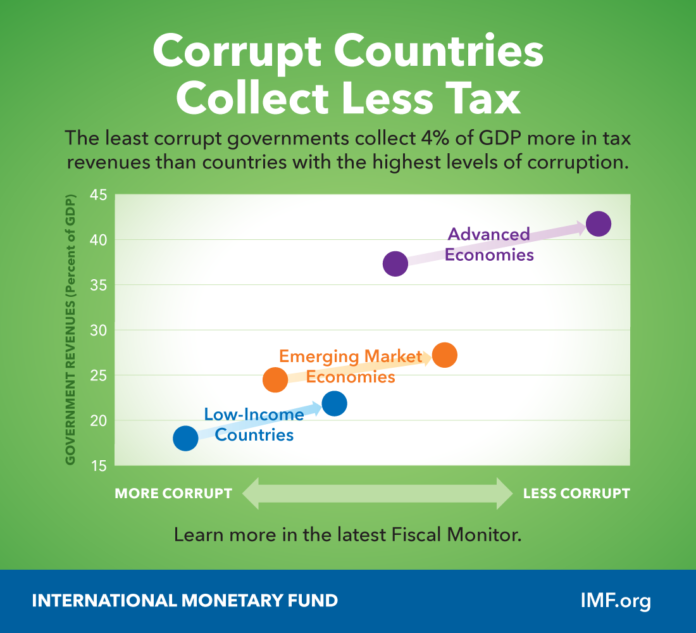
Corrupt countries collect less taxes

By Vitor Gaspar, Paolo Mauro and Paulo Medas

No country is immune to corruption. The abuse of public office for private gain erodes people’s trust in government and institutions, makes public policies less effective and fair, and siphons taxpayers’ money away from schools, roads, and hospitals.

While the wasted money is important, the cost is about much more. Corruption corrodes the government’s ability to help grow the economy in a way that benefits all citizens.

But the political will to build strong and transparent institutions can turn the tide against corruption. In our new Fiscal Monitor, we shine a light on fiscal institutions and policies, like tax administration or procurement practices, and show how they can fight corruption.

Political will can turn the tide against corruption.

Corruption helps evade taxes

We analyze more than 180 countries and find that more corrupt countries collect fewer taxes, as people pay bribes to avoid them, including through tax loopholes designed in exchange for kickbacks. Also, when taxpayers believe their governments are corrupt, they are more likely to evade paying taxes.

We show that overall, the least corrupt governments collect 4 percent of GDP more in tax revenues than countries at the same level of economic development with the highest levels of corruption.

A few countries’ reforms generated even higher revenues. Georgia, for example, reduced corruption significantly and tax revenues more than doubled, rising by 13 percentage points of GDP between 2003 and 2008. Rwanda’s reforms to fight corruption since the mid-1990s bore fruit, and tax revenues increased by 6 percentage points of GDP.

Corruption also prevents people from benefiting fully from the wealth created by their country’s natural resources. Because the exploration of oil or mining generates huge profits, it creates strong incentives for corruption. Our research shows that resource-rich countries, on average, have weaker institutions and higher corruption.

Corruption wastes taxpayers’ money

The Fiscal Monitor shows that countries with lower levels of perceived corruption have significantly less waste in public investment projects. We estimate that the most corrupt emerging market economies waste twice as much money as the least corrupt ones.

Governments waste taxpayers’ money when they spend it on cost overruns due to kickbacks or bid rigging in public procurement. So, when a country is less corrupt, it invests money more efficiently and fairly.

Corruption also distorts government priorities. For example, among low-income countries, the share of the budget dedicated to education and health is one-third lower in more corrupt countries. It also impacts the effectiveness of social spending. In more corrupt countries school-age students have lower test scores.

Corruption is also a problem in state-owned enterprises, such as some countries’ oil companies, and public utilities like electric and water companies. Our analysis suggests that these enterprises are less efficient in countries with high levels of corruption.

Where there is political will, there is a way

Fighting corruption requires political will to create strong fiscal institutions that promote integrity and accountability throughout the public sector.

Based on the research, here are some lessons for countries to help them build effective institutions that curb vulnerabilities to corruption:

Invest in high levels of transparency and independent external scrutiny. This allows audit agencies and the public at large to provide effective oversight. For example, Colombia, Costa Rica, and Paraguay are using an online platform that allows citizens to monitor the physical and financial progress of investment projects. Norway has developed a high standard of transparency to manage its natural resources. Our analysis also shows that a free press enhances the benefits of fiscal transparency. In Brazil, the results of audits impacted the reelection prospects of officials suspected of misuse of public money, but the impact was greater in areas with local radio stations.

Reform institutions. The chances for success are greater when countries design reforms to tackle corruption from all angles. For example, reforms to tax administration will have a greater payoff if tax laws are simpler and they reduce officials’ scope for discretion. To help countries, the IMF has built comprehensive diagnostics on the quality of fiscal institutions, including public investment management, revenue administration, and fiscal transparency.

Build a professional civil service. Transparent, merit-based hiring and pay reduce the opportunities for corruption. The heads of agencies, ministries, and public enterprises must promote ethical behavior by setting a clear tone at the top.

Keep pace with new challenges as technology and opportunities for wrongdoing evolve. Focus on areas of higher risk—such as procurement, revenue administration, and management of natural resources—as well as effective internal controls. In Chile and Korea, for example, electronic procurement systems have been powerful tools to curtail corruption by promoting transparency and improving competition.

More cooperation to fight corruption. Countries can also join efforts to make it harder for corruption to cross borders. For example, more than 40 countries have already made it a crime for their companies to pay bribes to gain business abroad under the OECD anti-corruption convention. Countries can also aggressively pursue anti–money laundering activities and reduce transnational opportunities to hide corrupt money in opaque financial centers.

Curbing corruption is a challenge that requires persevering on many fronts, but one that pays huge dividends. It starts with political will, continuously strengthening institutions to promote integrity and accountability, and global cooperation.

Stories Continues after ad

Diseases cost the African Region $2.4 trillion a year, WHO says

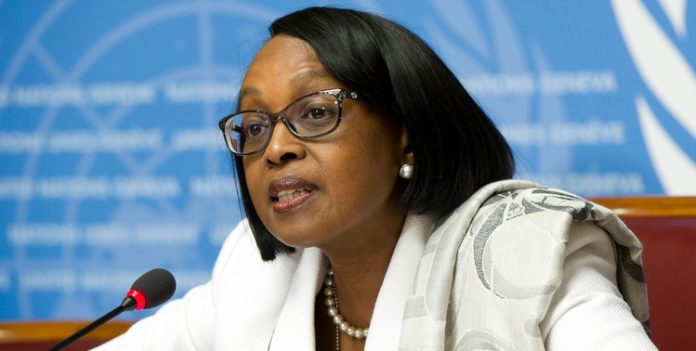
Dr Matshidiso Moeti

The World Health Organization (WHO) estimates that nearly 630 million years of healthy life were lost in 2015 due to the diseases afflicting the population across its 47 Member States in Africa, now amounting to a loss of more than 2.4 trillion international dollars ($) from the region’s gross domestic product value annually. An international dollar is a hypothetical unit of currency that has the same purchasing power that the US dollar has in the United States.

Noncommunicable diseases have overtaken infectious diseases as the largest drain on productivity, accounting for 37 per cent of the disease burden. Other culprits for lost healthy years are communicable and parasitic diseases; maternal, neonatal and nutrition-related conditions; and injuries.

Around 47%, or $ 796 billion, of this lost productivity value could be avoided in 2030 if the Sustainable Development Goals related to these health conditions are achieved, WHO found.

“Four years into the implementation of countries’ efforts towards achieving UHC, current average expenditure on health in the Region falls short of this expectation,” the WHO Regional Director for Africa, Dr Matshidiso Moeti, writes in the foreword to A Heavy Burden: The Productivity Cost of Illness in Africa, which was launched during the second WHO Africa Health Forum this week in Cabo Verde.

As a target of Sustainable Development Goal 3, universal health coverage would require countries in the WHO African Region to spend, on average, at least $ 271 per capita per year on health, or 7.5% of the region’s gross domestic product.

According to United Nations Conference on Trade and Development estimates, attaining the 17 Sustainable Development Goals will require spending ranging from $ 1.5 trillion to $ 2.5 trillion per year until 2030, or up to $ 37.5 trillion. Low-income countries will need an additional $ 671 billion dollars ($ 76 per capita on average) until 2030 to attain the health-related Sustainable Development Goals (SDG).

To achieve the health-related SDG targets, countries must invest adequately in the development of resilient national and local health systems to effectively, affordably and efficiently deliver the integrated packages of proven cost-effective interventions contained in relevant programmatic global strategies and plans to target populations in need.

The findings of the WHO study on disease burden suggest that health systems strengthening should focus on rich as well as poor countries and on all ages as well as on the specific disease categories.

Five countries (the Democratic Republic of the Congo, Ethiopia, Nigeria, South Africa and the United Republic of Tanzania) accounted for almost 50% of the total years lost in healthy life (or DALYs) accrued in the WHO African Region.

The unpredictability of public revenues combined with mounting debt pressure is limiting the potential fiscal space that can be made available for health. Private financing sources have filled the gap, but either with out-of-pocket expenses that result in financial hardship or insufficient voluntary private health insurance that is not effective in extending service coverage to those that need it.

As the report emphasizes, achieving the Sustainable Development Goals by 2030, including the target of universal health coverage, will require political will and greater focus on government-led planning and financing for health. It will also necessitate greater outlays from public revenue, reforms to raise additional revenue and strategic purchasing mechanisms. And it will require that people usually left behind be put at the centre of health financing reform.

“This report illustrates how achievement of the critical health SDG targets, including universal health coverage, would contribute to poverty eradication efforts on a large scale, reduce disparities in lifespan, tackle social exclusion and promote political stability and economic development in the WHO African Region,” says Grace Kabaniha, Health Economist in the WHO Regional Office for Africa. “It also provides much-needed evidence that ministries of health can use in dialogue on resource allocation with ministries of finance. It adds to the body of evidence showing that health is a strategic investment for development.”

Stories Continues after ad

AIGP Akullo commends EU for support against drug trafficking

Grace Akullo, CID boss

The Director Criminal Investigations, AIGP Grace Akullo has commended the European Union for their efforts in the fight against drug trafficking in Uganda.

In a message read for her by the Deputy Director, Senior Commissioner of Police Joseph Obwona yesterday during the closing ceremony of a three-day workshop on passenger profiling at Protea Hotel in Entebbe, she said profiling will help in tracking traffickers easily both in departures and arrival.

Akullo said that drug traffickers are highly organized, not bound by the borders in their operations and have all the money it takes to transact business adding, it takes highly trained, committed and professional officers to fight the crime.

“I am with confidence that this training has equipped our officers with extra skills to fight drug trafficking,” she said.

She revealed that most of the drugs that are trafficked do not originate from Uganda.

“Some come as far east and others some south America. These drugs are brought by passengers many of whom are not Ugandans. When drugs reach Uganda, they are repackaged and sent to destination countries. There is need to have a mechanism of tracking the movement of suspicious travelers. This workshop therefore came in handy to equip these officers with more skills to detect suspicious travelers.

Zarugaba Tinka the acting commissioner anti-narcotics, said the workshop has strengthened the officers in the anti-narcotics department with skills in detection of passengers who are suspected to be narcotic traffickers to be arrested and investigated before the delivery of drugs.

Stories Continues after ad
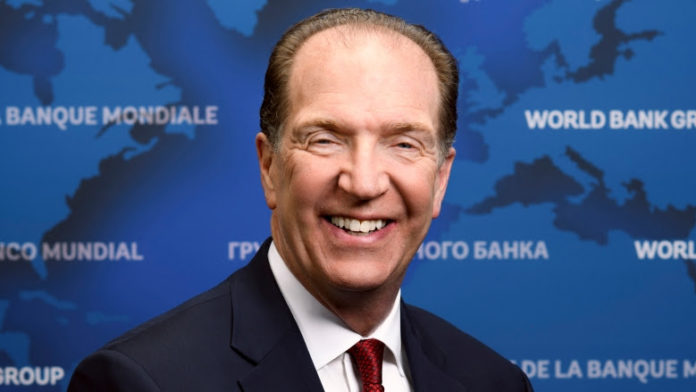
David Malpass selected the 13th President of the World Bank Group

Mr. Malpass

The Executive Directors of the World Bank today unanimously selected David R. Malpass as President of the World Bank Group for a five-year term beginning on Tuesday, April 9, 2019. The Board expressed its deep gratitude to Interim President Kristalina Georgieva for her dedication and leadership in recent months.

The Executive Directors followed the selection process agreed in 2011. The process included an open, transparent nomination where any national of the Bank’s membership could be proposed by any Executive Director or Governor through an Executive Director. This was then followed by thorough due diligence and a comprehensive interview of Mr. Malpass by the Executive Directors.

The Board looks forward to working with him on the implementation of the Forward Look and the capital package agreement as articulated in the Sustainable Financing for Sustainable Development Paper.

He previously served as Under Secretary of the Treasury for International Affairs for the United States. As Under Secretary, he represented the United States in international settings, including the G-7 and G-20 Deputy Finance Ministerial, World Bank-IMF Spring and Annual Meetings, and meetings of the Financial Stability Board, the Organization for Economic Cooperation and Development, and the Overseas Private Investment Corporation.

In his role as Under Secretary, Malpass played a crucial role in several major World Bank Group reforms and initiatives, including the recent capital increase for IBRD and IFC. He was also instrumental in advancing the Debt Transparency Initiative, adopted by the World Bank and IMF, to increase public disclosure of debt and thereby reduce the frequency and severity of debt crises.

Prior to becoming Under Secretary, he was an international economist and founder of a macroeconomics research firm based in New York City.

Earlier in his career,

Malpass served as the U.S. Deputy Assistant Secretary of the Treasury for Developing Nations and Deputy Assistant Secretary of State for Latin American Economic Affairs. In these roles, he focused on an array of economic, budget, and foreign policy issues, such as the United States’ involvement in multilateral institutions, including the World Bank.

He has served on the boards of the Council of the Americas, Economic Club of New York, and the National Committee on US–China Relations. Malpass earned his bachelor’s degree from Colorado College and his MBA from the University of Denver. He undertook advanced graduate work in international economics at the School of Foreign Service at Georgetown University.

The World Bank President is Chair of the Boards of Directors of the International Bank for Reconstruction and Development (IBRD) and the International Development Association (IDA). The President is also ex officio Chair of the Boards of Directors of the International Finance Corporation (IFC), the Multilateral Investment Guarantee Agency (MIGA), and the Administrative Council of the International Centre for Settlement of Investment Disputes (ICSID).

Stories Continues after ad
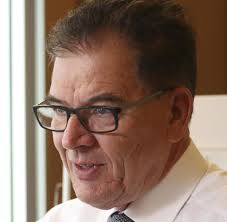
Rwanda expels German Ambassador

Amb. Peter Woeste

KAMPALA-The German Ambassador to Rwanda, Peter Woeste has left Rwanda under unclear circumstances, a German newspaper Welt has reported.

Ambassador Woeste, according to the newspaper left Kigali after Rwanda intelligence authorities accessed an email he had written to the headquarters in Berlin, criticising the Rwanda government.

The Rwandan Ambassador to Uganda, Maj Gen Frank Mugambage’s phone was off and couldn’t not be reached for a comment.

This is the second time Rwanda government is expelling the German ambassador. In 2008 Rwanda expelled Germany’s envoy and recalled its own following a dispute over the arrest of the former head of protocol in the president’s office, Rose Kabuye.

At that time, Ms Kabuye was detained in Frankfurt in connection with the killing of former President Juvenal Habyarimana that triggered the 1994 genocide.

Habyabarimana’s death allegedly triggered the killing of some 800,000 Rwandan

Stories Continues after ad
We have no option but to fight Kagame- rebel leader

Maj Sankara Callixte

KAMPALA-The Spokesperson of Rwanda’s National Liberation Front Maj Sankara Callixte has said they have no option but to fight President Paul Kagame, who he described as “a dictator and murderer”.

In an interview with Eagle online Maj Sankara said the kidnap of refugees, harassing of the opposition and lack of freedom of expression are the reasons why his group has launched an armed struggle against the Kigali regime in Nyungwe National Park in Rwanda near Burundi border.

“MRCD and our FLN we are a revolutionary movement, we are fighting for democracy! Kagame and his junta they are killing, torturing, kidnapping, non-freedom of expression, non-independent media, opposition leaders some of them are in jail for nothing, thousands of Rwandans are refuges in different countries most of them fear to lose their lives,” he said.

Mouvement Rwandais pour le Changement démocratique [MRCD] is the political and FLN is the armed wing of the a coalition of three political parties, PDR Ihumure headed by Paul Rusesabagina, CNRD headed by Gen Wilson Irategeka and RRM headed by Major Callixte Sankara that have launched an armed struggle against Kagame.

Maj Sankara said on Friday that the Rwanda Defence Forces had shelled the Bweyeye area which is heavily forested.

“They have also deployed heavily on the road from Kigali to Ruzizi which connects to the border with DR Congo. We warn people not to use that road,” he said.

Maj Sankara said the refugees would want to go back home but it’s not possible because “even exile the refugees are being hunted and killed”.

“Rwanda is in dictatorship and our mission is to liberate our compatriots oppressed by Kagame and his RPF and put in Rwanda a democratic government capable to live in peace,” he said. “12 millions of Rwandans have been taken is hostage by small group of criminals! All the economy of the country, big companies are in the hand of Kagame and RPF,”

Stories Continues after ad

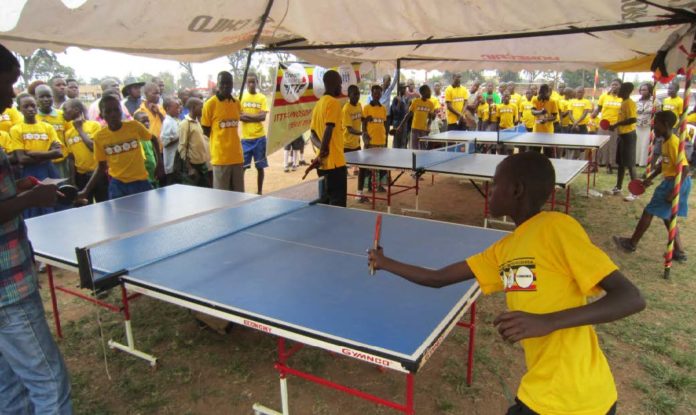
Uganda to host World Table Tennis Day 2019

Table Tennis

The International Table Tennis Federation (ITTF) Foundation announced its plan to stage World Table Tennis Day’s main event for the very first time in Africa, when the spotlight will be on Kampala, Uganda.

The annual celebration of sport in society: Saturday 6 April is World Table Tennis Day 2019 and it’s set to be more special than ever!

Now in its fifth edition, the annual day of celebration centres around bringing people together to promote social inclusion.

ITTF Foundation is not only working together with Continental and National Associations, but also with partners and non-profit organisations to build dreams for people everywhere and harness the power of table tennis as a vehicle for positive social action.

This year’s main event will be hosted by Slum Ping Pong in Kampala, using the sport to break barriers and develop positive messages on children’s, girls’ and women’s rights. It will also include celebrations with Hoima Network of Child Rights Clubs (HONECRIC) in Hoima (Bunyoro).

While Slum Ping Pong was chosen recently to receive ITTF Foundation funding through the TT Dream Building Fund, Honecric has been supported by former ITTF Development since 2013.

This year, on April 6, both organisations will be taking centre-stage of the award-winning programme ‘Table Tennis for All’ (TT4ALL), whose vision is to make table tennis accessible to a broad public, focusing on minority groups and promoting popular, universal and inclusive play.

ITTF Foundation Director, Leandro Olvech will also be launching Slum Ping Pong’s three-year programme, which aims to use table tennis as a tool to provide 100 children with access to education by integrating them into schools and therefore presenting greater life opportunities for young people in slums.

This project started two years ago and can now be accelerated thanks to the additional funding provided by the TT Dream Building Fund, which recently announced its inaugural 2019 grant recipients from among 74 applications in 31 countries.

With just a day to go until World Table Tennis Day 2019 celebrations get going on 6 April, ITTF Foundation has already registered almost 800 events in approximately 100 countries, which will be taking place around the globe.

With previous annual celebrations officiated in Argentina, Nepal, USA, Denmark and Jordan, this year’s event shines a spotlight on the power of table tennis to advance social change in Africa.

Hoima Network of Child Rights Clubs (HONECRIC), whose project is aimed at developing technical and life skills for children and youth in six primary schools,reducing early school dropout rates and encouraging the inclusion of children with and without disabilities through table tennis since 2013 in Uganda’s Western rural district of Hoima, will be working alongside local project partners: The Uganda Society for Disabled Children (USDC), TackleAfrica, The Open Society Initiative for Eastern Africa (OSIEA), Hoima District Local Government-Education department and Uganda Table Tennis Association (UTTA).

Site visits to both the HONECRIC and Slum Ping Pong’s projects will provide an opportunity to showcase ITTF Foundation’s commitment to TT4ALL’s vision and to changing lives through table tennis.

Following the motto “Nothing is impossible for those who believe”, Mr. Ibrahim Hamadtou, the famous Egyptian player who plays without hands is the role model for this main celebration and will definitely encourage kids and youth to believe in their dreams! Story via www.ittf.com

Stories Continues after ad

East Africa’s economy races ahead of its African peers, modest growth forecast for the rest of the continent

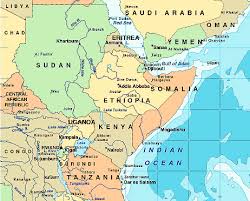
Map of East Africa

Economic growth in East Africa is soaring ahead of other regions on the continent at close to seven per cent while the overall outlook for the rest of Africa is cautious, but positive. Job creation and ramping up manufacturing will continue to be major priority areas for creating growth and employment across the continent the African Development Bank regional reports noted.

The Bank launched four of its five regional economic outlook reports this week in Abuja, Yaounde, Nairobi and Pretoria, with specific forecasts for West, Central, East and South Africa. The reports follow the January launch of the 2019 African Economic Outlook, which provides a broader, continent-wide perspective.

East Africa is leading the continent with GDP growth estimated at 5.7 percent in 2018, followed by North Africa at 4.9 per cent, West Africa at 3.3 per cent, Central Africa at 2.2 per cent, and Southern Africa at 1.2 per cent.

Economic growth across Eastern Africa will remain at a robust 5.9 percent in 2019, making it a promising investment and manufacturing destination. Within the region, Ethiopia is in the lead as the fastest growing economy with a predicted 8.2 per cent growth in 2019, while Rwanda (7.8 per cent); Tanzania (6.6 per cent); Kenya (6 per cent), Djibouti (5.9 per cent) and Uganda(5.3 per cent) follow behind.

Growth in Central Africa is gradually recovering, but remains below the average for Africa as a whole. It is supported by recovering commodity prices and higher agricultural output. The region is one of the continents least integrated, with potential for reforms and greater linkages, the Central Africa regional report said.

The West Africa Regional Economic Outlook calls on the region to explore innovative means of raising revenue through reforms that enhance tax collection, minimize tax evasion, and curb illicit financial flows. Between 2014 and 2017, West Africa’s GDP growth trailed the rate for Africa as a whole, though it was faster than in Central and Southern Africa. Countries bucking the downward trend, such as Cote d’Ivoire, Ghana and Senegal, continue to offer positive examples of economic recovery in a sober economic environment.

Growth in Southern Africa is expected to remain moderate in 2019 and 2020 after a modest recovery in 2017 and 2018. Southern Africa’s subdued growth is due mainly to economic stagnation in South Africa, the largest regional economy, which has a ripple effect on neighboring countries.

All the regions face similar risks to their economic prospects in 2019–20, these include rising debt, fragility, population growth and climate change.

Job creation, regional integration, key areas for focus

From East to West, North to South, and across Central Africa, employment remains a major concern and concerted efforts must be made to keep up with growth rates, the reports noted. The flagship African Economic Outlook Report pinpoints industrialization as a key to the continent’s employment conundrum. Regional integration, the special theme for this year’s report, is seen as a key gateway to Africa’s economic growth, with a borderless Africa being the foundation of a competitive continental market.

The report outlines five trade policy actions that could bring Africa’s total gains to 4.5 percent of its GDP, or $134 billion a year. First is eliminating all of today’s applied bilateral tariffs in Africa. Second is keeping rules of origin simple, flexible, and transparent. Third is removing all nontariff barriers on goods and services trade on a most-favored-nation basis. Fourth is implementing the World Trade Organization’s Trade Facilitation Agreement to reduce the time it takes to cross borders and the transaction costs tied to nontariff measures. Fifth is negotiating with other developing countries to reduce by half their tariffs and nontariff barriers on a most-favored-nation basis.

Stories Continues after ad