


Stories Continues after ad
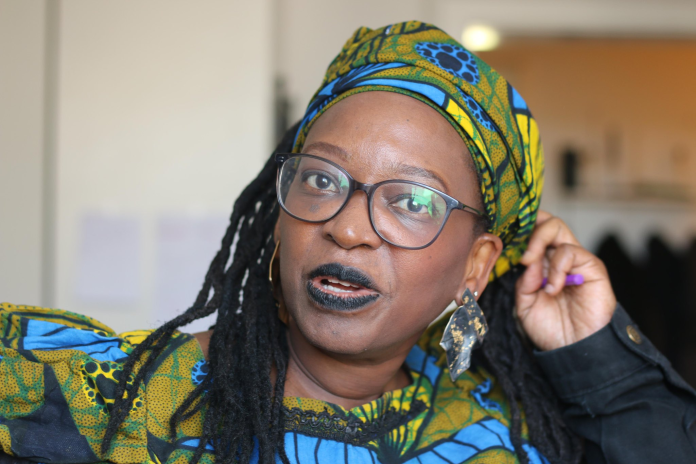
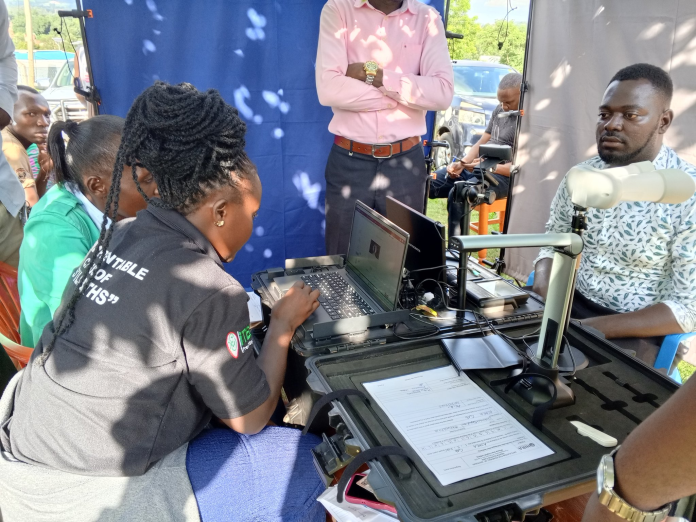
The National Identification and Registration Authority (NIRA) has today officially launched a massive nationwide identity card enrolment and renewal campaign, targeting over 30 million Ugandans.
The exercise is expected to last between six to ten months, covering all districts and parishes across Uganda.
The rollout, seen as one of the country’s most ambitious citizen data initiatives, seeks to renew 15.8 million national IDs set to expire by June 2025 and to register an additional 17.2 million Ugandans—particularly children below 17 and citizens who missed earlier enrolment drives.
“This exercise will be conducted at the parish level, operating six days a week from Monday to Saturday,” said NIRA Executive Director Rosemary Kisembo at the launch. “Citizens can choose to register or renew either by first pre-registering online and completing the process at the parish or by registering entirely at the parish manually.”
To support the exercise, NIRA has deployed 5,300 biometric kits to districts, reserving 365 for emergencies. Each parish will have at least 10 kits, with more sent to areas of higher population. Ugandans will be required to present themselves in person with proper documentation. For individuals seeking to change ID details such as names or dates of birth, a Shs200,000 fee applies unless the error originated from NIRA itself.
The government is expected to spend approximately Shs666.85 billion on the exercise. Of this, Shs183 billion will go toward purchasing new ID cards, Shs293 billion on technology infrastructure, including data centres and biometric kits, and Shs190.85 billion to pay 13,864 staff working on the project.
The exercise adopts a “comb and clean” strategy at the parish level—Uganda has 10,594 parishes—using a zone-based categorisation to streamline the process. Vulnerable groups, such as children under five, expectant mothers, the elderly, and persons living with disabilities, will be prioritised under Zone A and E. Other zones focus on mass enrolment, ID renewals, and card issuance.
Kisembo defended the exercise, describing it as a crucial step toward updating the national registry and enhancing the integrity of government services, elections, and social protection programs such as the Social Assistance Grant for Empowerment (SAGE).
“Let us all get involved in this exercise,” she urged. “This is about citizenship, identity, and access to services.”
With just over a year to the next general elections, the success—or failure—of this exercise will likely shape voter registration, public trust, and service delivery across Uganda. How efficiently NIRA and its partners navigate logistical, political, and technological challenges in the coming months will be critical.
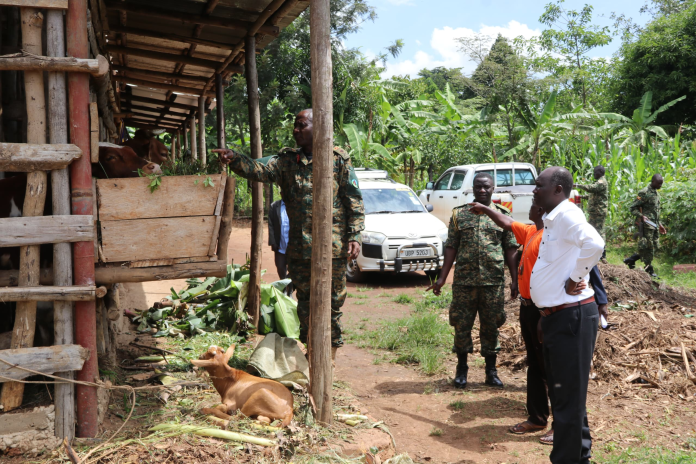
Sironko District has recorded substantial progress under the Parish Development Model (PDM), with 55,075 individuals benefitting from the initiative since its inception.
The figures were revealed during a stakeholder engagement at the district headquarters, chaired by Brig Gen Godfrey Muwanguzi, Acting Deputy Chief Coordinator of Operation Wealth Creation (OWC) from the Uganda Peoples’ Defence Forces (UPDF).
Speaking to local government leaders and SACCO executives, Brig Gen Muwanguzi underscored the need for patriotism and adherence to the Ministry of Local Government’s implementation guidelines.
“The Ministry has outlined clear roles for each level of government. I urge you to be patriotic and apply these guidelines diligently,” he said.
He likened the Parish Revolving Funds to community banks, urging stakeholders to manage them responsibly and strictly in line with PDM protocols.
Sironko, which hosts Uganda’s highest number of parishes—224 across Budadiri East and Budadiri West, covering 1,545 villages—has seen this extensive reach play a pivotal role in its high level of PDM participation. Chief Administrative Officer Mr Nelson Kidera credited this breadth for the district’s progress and praised OWC coordinators for their dedication.
“Their commitment has been vital in delivering services to the community,” he remarked.
District Production Officer Dr Patrick Charles Okori reported that Sironko has received UGX 57.79 billion through the Parish Revolving Fund, with a disbursement rate of 95.29%. The funds have supported 1,692 enterprise groups engaged in agriculture and livestock, including coffee, dairy, bananas, horticulture, piggery, poultry, and fishing.
However, Dr Okori acknowledged persistent challenges affecting full implementation. These include data discrepancies between the Parish-Based Management Information System (PDMIS) and the Financial Inclusion System (FIS), manipulation of beneficiary lists by certain Parish Development Committees, corruption among some SACCO leaders, and difficulties in accessing remote areas.
Despite these issues, SACCO executives commended the government for simplifying the application process. They noted that acquiring PDM funds now requires only a national ID, in contrast to the burdensome procedures previously associated with bank loans.
The PDM, launched by President Yoweri Kaguta Museveni in February 2022, aims to transition 33% of Ugandan households from subsistence farming to commercial agriculture. Each eligible household receives UGX 1 million to invest in income-generating agricultural activities.
After the meeting, Brig Gen Muwanguzi, accompanied by district technical officials, visited selected beneficiaries to observe how the funds are being utilised at the grassroots.
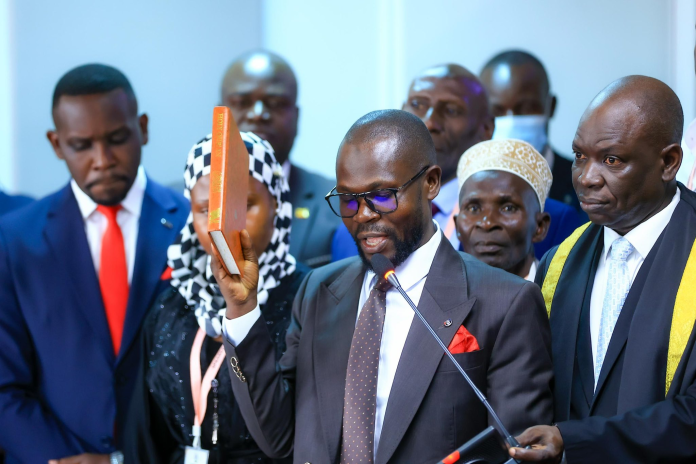
The High Court has nullified the election of Luyimbazi Elias Nalukoola as the Member of Parliament for Kawempe Division North, citing violations of the Parliamentary Elections Act.
In a ruling delivered by Justice Bernard Namanya on Monday, the court found sufficient grounds to set aside Nalukoola’s election, effectively rendering the Kawempe Division North parliamentary seat vacant.
“That the election of Luyimbazi Elias Nalukoola as a Directly Elected Member of Parliament for Kawempe Division North constituency in Kampala District is set aside,” the court ruled.
Justice Namanya further directed the Electoral Commission to organize a fresh election for the constituency.
“The Electoral Commission is ordered to conduct a fresh election for the Directly Elected Member of Parliament for Kawempe Division North constituency in Kampala District,” the order reads.
The judgment, issued under Section 80, 82 (4)(c), and 82 (6)(c) of the Parliamentary Elections Act (Cap. 177), concluded a contested legal battle over the integrity of the 2021 parliamentary elections in Kawempe North. While the court did not detail the exact breaches in this excerpt, such rulings typically arise from irregularities such as voter bribery, falsification of results, or non-compliance with electoral guidelines.
The court also ruled that each party would bear its own legal costs, stating:
“Each party shall meet its own costs.”
The ruling follows an election petition filed by NRM’s Faridah Nambi.
This decision opens up a new political showdown in one of Kampala’s most dynamic constituencies, as potential candidates now prepare for a by-election under tight scrutiny. The ruling could also set precedent for ongoing election petitions across the country.

New Zealand, 26 May 2025 – A growing number of online players in New Zealand are making the switch from free casino games to real money casinos, as the appetite for authentic gaming experiences and the thrill of real wins continues to rise.
Recent trends show that Kiwi players are no longer content with demo slots and practice rounds. Instead, they are increasingly seeking out real money casinos in New Zealand that offer licensed, secure, and mobile-friendly platforms with actual cash payouts.
What Real Money Casinos Offer That Free Games Don’t
The difference between free and real money casino games goes far beyond stakes. Real money platforms offer a more complete and rewarding experience:
This richer gaming environment is one reason players are migrating from casual demo platforms to full-featured real money casinos.
Expert Insight: What the Data Shows
“We’ve noticed a significant increase in traffic from users searching for legitimate real money casinos in New Zealand,” says Terri Radford, site analyst at PlayCasino.co.nz. “More players are looking for platforms that are licensed, safe, and payout-focused — and they’re willing to deposit real funds for a premium experience.”
He adds: “A lot of users tell us they started on free games, but once they understood how bonuses worked, they wanted to try real money casinos. Our guides and reviews help them make informed choices and avoid risky or unlicensed operators.”
Why Real Money Casinos Are Trending in NZ
Several factors are contributing to this national shift:
As more New Zealanders explore these benefits, the real money segment is quickly outpacing free-to-play alternatives.
How to Start Playing at Real Money Casinos Safely
If you’re ready to try real money play, here are three key steps:
Where NZ Players Can Find the Best Real Money Casinos
With hundreds of sites online, it can be difficult to know which casinos are safe, fair, and actually worth your time. That’s why savvy players are turning to PlayCasino.co.nz — New Zealand’s most trusted resource for discovering real money casinos.
The site offers expert reviews, comparisons, bonus rankings, and transparent safety checks, helping players confidently choose the right platform for their needs.
Whether you’re a casual player ready to make your first deposit or a seasoned gamer searching for better rewards and faster payouts, PlayCasino.co.nz makes it easy to find the best real money casinos in New Zealand.
A Broader Shift in NZ’s Online Gambling Landscape
This migration toward real money gaming reflects a broader change in how Kiwis approach digital entertainment. As mobile data gets cheaper, payment systems improve, and regulatory awareness grows, more players are embracing the full experience of real money gaming and mobile casinos — not just for the thrill, but for the genuine rewards.
Industry analysts expect New Zealand real money casino market to keep growing steadily through 2025 and beyond.
For more information or to explore the top-rated real money casinos in NZ, visit PlayCasino.co.nz.
| # | Mobile Casino | Welcome Bonus Package | Bonus Code |
| 1 | SlotBox Casino | 100% up to $1,000 + 100 Free Spins | N/A |
| 2 | Grand Rush Casino | $4,000 Free + 40 Spins on 7 Chakras | N/A |
| 3 | Jackpot City Casino | 100% up to NZ$400 Free Welcome Bonus | N/A |
| 4 | Kiwis Treasure Casino | 50 Free Spins for $1 Deposit | N/A |
| 5 | Lucky Dreams Casino | 100% Bonus Up To $500 + 100 Free Spins | N/A |
| 6 | Lets Lucky Casino | 100% Deposit Bonus Up To $1500 | N/A |
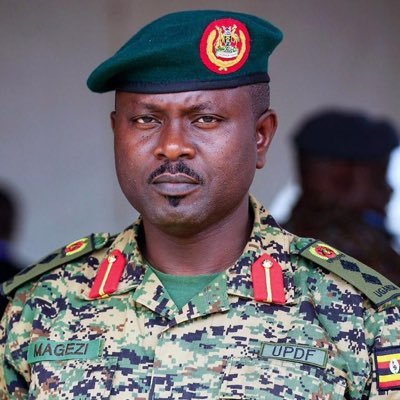
Activists affiliated with the opposition National Unity Platform (NUP) party implicated
The Uganda People’s Defence Forces (UPDF) has warned against foreign interference and ongoing subversive activities aimed at destabilizing the country ahead of the 2026 general elections.
According to Acting Director of Defence Public Information, Col. Chris Magezi, security and intelligence services have over the past few months arrested and interrogated several suspects linked to organized armed rebellion, plans to bomb public places and acts of economic sabotage through the vandalism of electricity infrastructure.
“In the case of extensive vandalization of electricity infrastructure, some of the most affected districts are Wakiso, Mukono, Kayunga, Luweero, Nakaseke, Kiboga, Nakasongola, Mityana, Mubende, Mpigi, and the greater Masaka region,” Magezi revealed.
He noted that some of the arrested suspects had previously posed as activists affiliated with the opposition National Unity Platform (NUP) party.
He added, “Many have accordingly been charged in courts of law and remanded in custody pending trial.”
Magezi said the Inter-Agency Security Committee, chaired by the UPDF Chief of Defence Forces and composed of the Uganda Police Force, Prisons Services, and intelligence agencies, is actively coordinating to dismantle subversive and terrorist cells operating in Kampala’s metropolitan ghettos.
“These groups are luring unsuspecting youths into rebel activities with the goal of disrupting peace and the upcoming general elections. We will take firm action against the ring leaders, organisers, and funders,” he added.
He further accused certain accredited European diplomatic missions, particularly the German Embassy, of financing and mobilizing anti-government groups.
“We are particularly concerned about the illegal and clandestine activities of the German Ambassador in Uganda, His Excellency Mathias Schauer,” said Magezi. “These actions violate the 1961 Vienna Diplomatic Conventions and Uganda is engaging the concerned foreign mission through appropriate diplomatic channels.”
The UPDF condemned any foreign influence in Uganda’s internal affairs and pledged decisive action.
“The youths of Uganda are advised to avoid falling into traps set by enemy political actors. Instead, they should embrace government wealth creation programmes and youth initiatives for their long-term wellbeing,” Magezi urged.
He noted that all domestic and foreign actors found destabilizing Uganda will be “identified, isolated, and dealt with firmly in accordance with the laws of the land.”
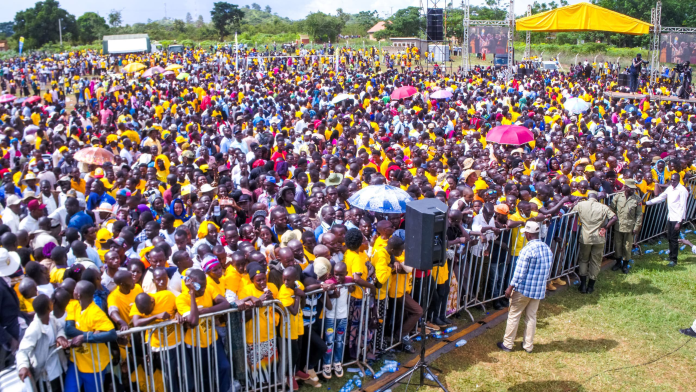
President Yoweri Kaguta Museveni has called on Ugandans to take the Parish Development Model (PDM) seriously, describing it as a powerful tool to lift citizens out of poverty and generate far more jobs than the government can offer.
Speaking during a rally at Wabinyonyi playground in Nakasongola District on May 22, 2025, the President emphasized that grassroots wealth creation particularly through commercial agriculture and small-scale enterprises is the foundation for sustainable job creation in Uganda. He warned against the overreliance on limited government jobs, urging the public to shift their focus to private sector opportunities facilitated by initiatives like PDM.
“People waste a lot of time looking for government jobs. And the leaders also don’t explain very well that in a developing country, there are more jobs in the private sector than in the government because the government jobs are few. The government jobs (civil servants, police, the army, teachers, and health workers) are 480,000. The population of Uganda is 46 million. So, how can they be satisfied? The people who are doing the PDM era are already employing people,” President Museveni said.
President Museveni gave an example of the Minister of State for Transport, Fred Byamukama, who is employing 26 people on his 4-acre model farm, and one Nyakana Richard of Rwengaaju in Kabarole, who is employing 15 people, using 1.2 acres of land.
“Uganda has 40 million acres of arable land. I was calculating that if we used only seven million acres like Nyakana has done, and each acre created 15 jobs, we would have 105 million jobs, more than all the people of Uganda. We would have so many jobs to the extent of importing workers,” the President noted.
President Museveni added that the factories are already employing 1.2 million people, three times more than in the government.
“You, the parents, need to advise your children that the government jobs are limited. You prepare yourself to work in commercial farms, factories, and service sectors or become a job creator in the commercial agricultural sector,” he stressed.
The President hinged his address on six pillars, namely, peace, security, development, wealth, health, and education, as key to achieving socio-economic transformation, while emphasizing that they should be handled carefully through prioritization in the spirit of patriotism.
“You people should continue supporting the NRM, which believes in unity for all Ugandans, and that’s one of the pillars of peace,” he said.
President Museveni emphasized that whereas development (enkulakulana) reflected in social services such as roads, health centers, schools, and electricity is crucial, wealth creation and fighting household poverty should be everybody’s concern.
“This road to Gulu was tarmacked soon after independence and has been tarmacked since that time for 60 years, but up to now, there are poor people residing around it. So, NRM does not want you to only talk about development but also household incomes,” he said, adding that it’s the reason the NRM, since 1995 has been supporting the wealth creation drive through initiatives such as Entandikwa, NAADS, Operation Wealth Creation (OWC), Emyooga, and now PDM.
The President pointed out a few people who have listened and are doing well, such as Joseph Ijara of Serere, who uses two and a half acres to do poultry and livestock, earning him more than Shs1 billion a year through selling eggs and milk, with profits amounting to over Shs800 million per year. Others are Hajjat Mariam Baiga in Ssekamuli, Bamunaanika in Luwero, Nalubowa Aida of Nakaseke, and a 64-year-old Tumusiime Deziranta who just started with Shs1 million from PDM and is doing well.
According to President Museveni, if the PDM is taken seriously, the parish SACCOs will reach an extent of owning banks worth Shs 1.6 billion in 10 years, and this will save them the burden of running to money lenders who charge them exorbitant profits.
After two years, a PDM beneficiary who received Shs 1 million is expected to return it with an interest of Shs 120,000 only.
“So please, don’t neglect this. I heard people blaming the Sacco leaders for prioritizing family members and friends. This is because you don’t go there. A parish Sacco is for everybody above 18 years in that parish, and when you meet, that’s how you elect your Sacco leaders. Be active and get involved,” President Museveni stressed.
President Museveni also promised to set up a special fund for the fishermen after leaders appreciated him for protecting the lakes through the fisheries protection unit, which has streamlined fishing activities.
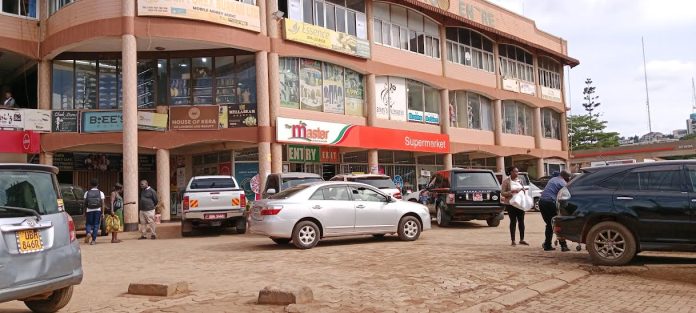
Uganda’s economy continued to show strong signs of recovery in April 2025, driven by a surge in business activity, robust export growth and stable financial conditions, according to the Ministry of Finance’s latest Performance of the Economy Monthly Report.
The report highlights that the Purchasing Managers’ Index (PMI) rose to 55.3 in April, up from 52.9 in March, signaling improved private sector conditions. The uptick was attributed to rising consumer demand, new orders, and increased output across various sectors.
The Composite Index of Economic Activity [CIEA] also ticked up to 170.6 in March, reflecting broad-based growth across agriculture, industry, and services. Business confidence remained strong, with the Business Tendency Index [BTI] climbing to 59.32, driven by optimism in the construction, manufacturing, and wholesale trade sectors.
“Private sector confidence is clearly on the rise. The data show that firms are seeing stronger demand and ramping up activity in response,” says the report.
However, the report says inflationary pressures increased slightly as annual headline inflation rose to 3.5 percent in April from 3.4 percent in March, while core inflation accelerated to 3.9 percent, largely due to higher prices for staple foods such as maize and meat, and increased service costs in hotels and restaurants.
Food crop inflation, however, eased to 2.4 percent, and Energy, Fuel, and Utilities [EFU] inflation fell to 0 percent, reflecting lower fuel prices and reduced electricity tariffs.
The report mentions the Central Bank Rate [CBR] being held steady at 9.75 percent in April by the Bank of Uganda for the seventh consecutive month to anchor inflation expectations. The Ugandan shilling depreciated marginally by 0.04 percent, settling at an average mid-rate of Shs3,669.18 per US dollar.
Lending rates for shilling loans declined to 17.74 percent in March, down from 18.76 percent in February, while foreign currency loan rates edged up slightly to 8.51 percent.
The government raised Shs767.55 billion through domestic securities, allocating Shs452.43 billion to refinance maturing debt and Shs315.12 billion for its budgetary needs.
Uganda’s merchandise exports surged by 40.6 percent year-on-year to US$ 899.1 million, buoyed by increased revenues from coffee, cocoa, mineral products, sugar, and fish. Coffee exports alone jumped 206.8 percent, driven by higher global prices and volumes.
Imports rose by 7.3 percent to $1.11 billion, primarily due to government project imports and private sector demand. This led to a 46.3 percent year-on-year reduction in the trade deficit, which stood at $213.63 million in March.
“The impressive growth in coffee and cocoa exports is a promising sign for Uganda’s balance of trade,” says the report. “However, rising imports have led to a slight widening of the monthly trade gap.”
The Middle East remained Uganda’s top export market, accounting for 37.1 percent of exports, followed by the East African Community [EAC] at 20.1 percent.
Despite economic gains, Uganda recorded a fiscal deficit of Shs1.81 trillion, overshooting projections by nearly Shs600 billion. Revenue shortfalls, particularly in international trade taxes, and overspending contributed to the gap.
Regionally, inflation rose in most EAC states. Uganda, Kenya, Rwanda, and South Sudan all recorded upticks, attributed to higher food and beverage prices. Uganda’s inflation rose to 3.5 percent, Kenya’s to 4.1 percent, Rwanda’s to 6.3 percent, and South Sudan’s to 16 percent.
Conversely, inflation declined in Tanzania and Burundi due to lower food costs. The Ugandan Shilling, along with other regional currencies, depreciated slightly against the US dollar, mirroring global currency trends.
Uganda’s trade deficit with EAC partners widened to $152.97 million, driven by a 46.5 percent rise in imports and a 12.3 percent drop in exports. Trade surpluses were recorded with DR Congo, South Sudan, and Rwanda, while deficits persisted with Kenya, Tanzania, and Burundi.
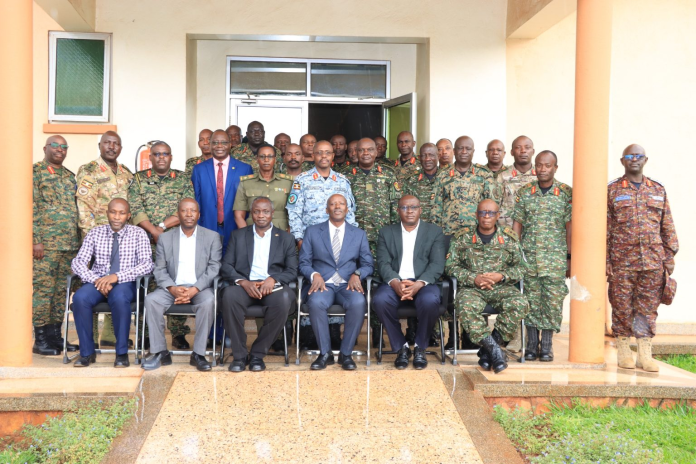
The Uganda Peoples’ Defence Forces (UPDF) has established its inaugural Scientific Advisory Committee (SAC), an initiative designed to enhance disease surveillance and bolster the military’s readiness to respond to emerging health threats.
Chaired by Prof Dr Moses Joloba of Makerere University, the committee brings together leading experts including Prof Byarugaba Denis (Makerere University), Prof Peter Olupot (Busitema University), Dr Susan Nabadda (Ministry of Health), and Col Dr Kyobe Bbosa, the Ministry’s Incident Commander.
Speaking on behalf of the Permanent Secretary of the Ministry of Defence and Veteran Affairs (MODVA), Mrs Rosette Byengoma, Under Secretary for Logistics Mr Francis Ngabirano Kahiriita highlighted the critical role of health in national defence.
“There is need for a deeper understanding of known, unknown, anticipated, and unanticipated health threats to the Force and its operating environment,” he said.
“One of the strategic responses to these challenges is rooted in science, and this is why the SAC was constituted.”
Mr Ngabirano praised the committee’s members for their commitment and expertise, calling them a national asset.
“SAC is expected to advise on current and future biological threats, identify knowledge gaps, and promote national and international collaboration. Its work will support force health protection and contribute to Uganda’s socio-economic transformation,” he added.
He expressed gratitude to President Yoweri Kaguta Museveni for his guidance, and to the Chief of Defence Forces, Gen Muhoozi Kainerugaba, for approving the initiative.
Maj Gen Dr Ambrose Musinguzi, head of the Joint Staff Health Services, reaffirmed the committee’s role in fortifying Uganda’s disease surveillance capabilities.
“We saw it necessary to put mechanisms in place to detect, protect against, and respond to emerging infectious diseases. The SAC will play a critical role in advancing this mission,” he said.
Prof Dr Joloba welcomed the collaboration, noting the UPDF’s potential to positively impact public health through its existing infrastructure.
“We are grateful for this opportunity. The UPDF has made important contributions to public health, and we are excited to be part of this journey. Through collaboration, we can address pressing health issues not just nationally but across the region,” he said.
He underscored the global precedent for military involvement in healthcare. “Globally, the military has been instrumental in health interventions. The UPDF is well-positioned to do the same, and we must harness this potential,” he added.

The Deputy Governor of Bank of Uganda, Prof. Augustus Nuwagaba, has reaffirmed the central bank’s commitment to fostering inclusive economic growth and financial stability during a town hall meeting in Bushenyi District on May 23, 2025.
Addressing a packed hall of residents, local leaders, and business owners, Prof. Nuwagaba outlined the multifaceted role of the central bank in Uganda’s socio-economic transformation, emphasizing that the Bank’s influence reaches far beyond monetary policy.
“The Bank of Uganda, established in 1966, is the nation’s central bank. Its principal mandate is to ensure price stability and to maintain a sound financial system — two pillars that underpin Uganda’s socio-economic transformation,” said Prof. Nuwagaba. “These functions are not abstract; they influence the everyday economic realities of Ugandans — from the price of a loaf of bread to the safety of your savings in commercial banks.”
The town hall was part of an outreach initiative aimed at educating Ugandans on the role of the central bank in their daily lives. The Deputy Governor explained the Bank’s key areas of focus, including inflation control, supervision of financial institutions and promotion of digital payments, financial inclusion, and sustainability in finance.
Highlighting the importance of stable inflation, Nuwagaba noted,
“By maintaining low and stable inflation, we protect the purchasing power of households, particularly those with fixed or limited incomes — from the corrosive effects of rising prices.”
He praised Uganda’s resilience in maintaining inflation below 5% despite global economic shocks and commended the role of transparent, data-driven monetary policy in anchoring inflation expectations.
The Deputy Governor also drew attention to the importance of financial sector regulation, the increasing relevance of mobile money, and the significance of national payment systems in everyday commerce.
“We ensure that these payment systems are secure, efficient, and accessible, enabling businesses and households to move money reliably and affordably,” he said.
In a district where agriculture is a dominant economic activity, Nuwagaba urged residents to take advantage of the Agricultural Credit Facility (ACF), which offers loans at interest rates of up to 12% per annum to farmers and agribusinesses through supervised financial institutions.
“I strongly encourage the farmers and entrepreneurs of Bushenyi, Mitooma, and surrounding areas to take full advantage of this facility,” he said.
He further noted the ongoing impact of the Small Business Recovery Fund (SBRF), a post-COVID initiative providing affordable credit to SMEs that show potential for recovery.
Beyond finance, the central bank is also integrating Environmental, Social, and Governance (ESG) principles into its operations and encouraging sustainable banking practices. Through initiatives like the Sustainability Standards and Certification Initiative, the Bank supports climate-conscious lending and corporate responsibility programs, including health centre upgrades in areas like Mitooma.
Prof. Nuwagaba concluded his address with a strong message of partnership and service:
“The Bank of Uganda is deeply committed to price stability and building a strong, stable, resilient, and inclusive financial system that serves all Ugandans. We recognise that true development is not measured by GDP alone, but by the everyday well-being of all citizens.”
The town hall wrapped up with a Q&A session, where BoU experts engaged directly with residents on issues such as interest rates, loan accessibility, and the safety of their deposits.
The event marked another milestone in the Bank’s strategic plan (2022–2027) to deepen public engagement and promote sustainable, people-centered economic growth across the country.