Stanbic Bank
Stanbic Bank
26.7 C
Kampala
Stanbic Bank
Stanbic Bank
Home Blog Page 1410

BoU security officials further remanded

Beatrice Kyambadde

Two Bank of Uganda security officials have further been sent back to the coolers of Luzira prison until Monday, a day when Court is expected to deliver its decision about their bail applications.

Ms. Beatrice Kyambadde and Charles Mollo are grappling with charges of negligence of duty leveled against them by City Hall grade one Magistrates Court on Tuesday this week.

The two however, have appeared before two separate magistrates who vowed to deliver their ruling on suspect’s bail applications.

Kyambadde appeared before his worship Patrick Tulisuna and Mollo before Justice Beatrice Khainza.

Prosecution led by Joy Kalungi avers that Kyambadde committed the offence in February 2015 and Mollo in March the same when one decline to stop the former supervisor of banks in bank of Uganda Justine Bagyenda from accessing her former work place and their failure to check bags containing confidential documents that she had sneaked out.

Prior to presentation of their sureties and fulfilling the requirements for them to be released on bail, Prosecution gave no objection to their applications however both magistrates adjourned the matter to Monday next week.

Ms Kyambadde and Mr Mollo were keeping the access gates that the former BoU executive director for Supervision, Ms Justine Bagyenda used to take out bags suspected to be carrying bank documents.

The two security assistants were arrested alongside Bagyenda’s bodyguard Juliet Adikot and her driver Job Turyahabwe on orders of the Abdu Katuntu, the chairman of parliamentary committee probing BoU over the closure of commercial banks.

Stories Continues after ad

World Bank to fund rehabilitation of Tororo-Mbale-Soroti-Lira-Kamdini road

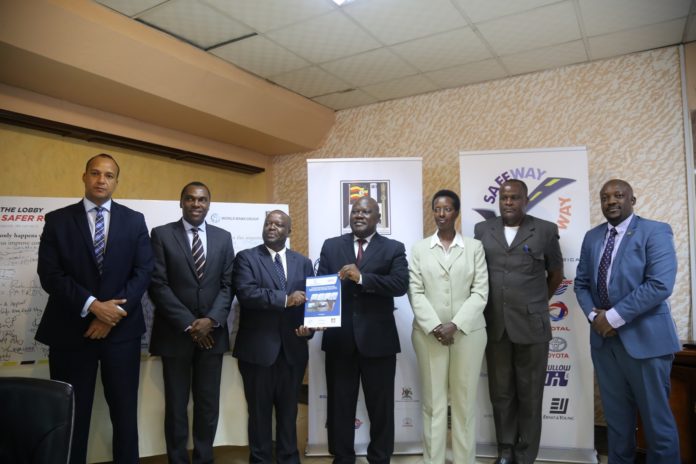
Launching the NERAMP Road Safety Inspection report, Dec 6, 2018

The World Bank on Thursday launched a road inspection report of the North Eastern Road Corridor which calls for improvement of safety measures to make the road safer for all users. The 340km stretch, known as the North Eastern Road Corridor Asset Management Project (NERAMP) covers the Tororo-Mbale-Soroti-Lira-Kamdini road, and is about to undergo rehabilitation and improvements funded by the World Bank.

The report, funded by the Bank’s Global Road Safety Facility, was disseminated to stakeholders at a workshop held at Hotel Africana. It identified several challenges including rapid urbanization along the corridor, poor road design that is inconsistent with the geographical terrain, ineffective and limited speed control measures as well as steep embankments and slopes. A total of 98 accident blackspots were identified in the corridor – equivalent to one blackspot every 3.5km.

“Uganda has made important strides in the past decade to reduce communicable diseases, maternal deaths, and improve the overall life expectancy. Therefore, a concerted action on road safety would bring additional far-reaching benefits for the public health sector, and economic development,“ said Tony Thompson, Country Manager, World Bank.

A World Bank assessment of 135 countries, shows reducing road traffic deaths by 10 percent raises per capita real GDP by 3.6 percent over 24 years. The study, The High Toll of Traffic Injuries: Unacceptable and Preventable, finds that countries that do not invest in road safety lose anywhere between 7 and 22% in potential per capita GDP growth over the same period, which underlines the importance of investing in road safety.


“There is need for UNRA to develop a proper accident data collection and storage mechanism as part of safety appraisal of the designs and maintenance. This can be done internally with Uganda Traffic Police,” said Dr. Godfrey Mwesige, a road safety specialist who carried out the NERAMP road safety inspection.

The report is expected to inform a much safer and detailed engineering design of the NERAMP as well as to enhance road safety management capacity in the project corridor. Proposed safety measures include, changing the design of the road to make it more consistent to the terrain, improving the cross section from two-lanes to four-lanes with guardrails in the towns of Tororo, Mbale, Soroti and Lira and at the Manafwa steep descend, use of speed guns, installation of speed humps, and delineation of horizontal curves to enhance safety for night-time driving with chevron signs.

The Minister of State for Transport, Aggrey Henry Bagiire welcomed the World Bank’s support to the transport sector, a priority for government to drive growth and prosperity but noted the importance of ensuring that the designs and safety measures are forward-looking and cater to the rising population and urbanization trends. “The designs need to change to reflect the changing circumstances. If roads are safe by design, it is possible to reduce road accident deaths by as much as 30 percent,” the minister said.

The Traffic and Road Safety department of the Uganda National Roads Authority (UNRA) will play a leading role in implementing the safety interventions in the project corridor, including raising public awareness and supporting traffic authorities in enforcement.

“The Unit will be coordinating and liaising with all key stakeholders, including the police, the contractor, and the National Road Safety Council. The Unit will follow up on the NERAMP road safety performance and compliance to requirements of the national road safety standards and programs,” said Allen Kagina, Executive Director, Uganda National Roads Authority (UNRA). “UNRA will strive to continually engage all these partners and to recognise the unique role each of them has to play”.

Two other road safety audit surveys will be carried out during the project life cycle to inform further safety measures and assess the quality of implementation. The NERAMP project is the first of its kind in Uganda to apply the cost-effective Output and Performance Based Road Contract (OPRC) – where payments for management and maintenance of road infrastructure is linked to the contractor successfully meeting or exceeding defined minimum performance indicators.

The project’s development objective is to reduce transport costs, enhance road safety and improve and preserve the road assets sustainably along the north eastern road corridor. The road safety audit is part of a multi-faceted Legislative Action Plan aimed at addressing road safety issues in Uganda, in partnership with Safe Way Right Way, financed by the Global Road Safety Facility (GRSF).

The GRSF is a global partnership program administered by the World Bank with the mission to help address the growing crisis of road carnage in low and middle-income countries. The facility provides funding, knowledge, and technical assistance designed to scale-up the efforts of low- and middle-income countries to build their scientific, technological and managerial capacities.

Stories Continues after ad

Observe Human Rights – IGP

The Inspector General of Police (IGP), JM Okoth Ochola has urged Police Officers to observe human rights and fight discrimination of women in the course of implementing their duties.

In a speech read for him by the Deputy Inspector General of Police Brig. Sabiiti Mzeei, IGP said the fight against discrimination and by extension violence against women is a national priority with long standing commitment and mechanism to implement the supporting policy and legal framework.

Under the theme ‘Promoting gender equality at workplace in the Uganda Police Force’, the function that was organised by the department of Women Affairs in police, was held at Sliver Spring Hotel in the commemoration of 16 days of activism 2018.

“As an institution, police has paid particular attention in the development strategy which explains the early integration of women into police for over sixty years ago, the institution has invested in training program for officers, enhanced selection criteria and developing human resource especially for women who now play an important role in the implementation of the strategic Policy plan of the institution,” he said.

“We deeply stress the highest commitment of the institution for the promotion of human right as well as the role of female police officers, by recognizing the principal of equally between men and women as a principal of constitutional value entitled in the constitutive Act of our Plan-African organization, ” he said.

Assistant commissioner of police (ACP) Esther Akwango said, Women Affairs department is looking forward in galvanizing action to end violence against women and girls in Uganda and enhance awareness of the gender concepts, identifying manifestations of violence.

During this commemoration, the department is also committed itself to addressing gender based violence and ensure effective implementation, breaking silence and increase awareness on the mandate of the department.

The Women Affairs department was formed in 2014 with the objective of building a strong force of women officers dedicated to the transformation of the Uganda Police Force, through the elimination of gender imbalances and the improvement of service delivery.

Stories Continues after ad

IFC identifies more than 100 start-ups that could speed up innovation in Africa

The International Finance Corporation (IFC), a member of the World Bank Group, in cooperation with Egypt’s Ministry of Investment and International Cooperation (MIIC) have selected more than 100 high-potential start-ups to participate in a new initiative designed to spur innovation and job creation across the African continent.

The start-ups include Vezeeta, Avidbeam and Next Protein. They and other selected companies will participate in Africa’s Next Start-Ups program, a joint IFC-MIIC effort that helps provide up-and-coming small businesses with funding and advice. The program connects such companies with potential investors, financial institutions, business leaders, and policymakers. It is designed to support the continent’s budding start-up culture and create opportunities for entrepreneurs, who often struggle to secure growth capital and have few places to turn for guidance.

As part of the program, the start-ups and other entrepreneurs will attend the Africa 2018 Forum in Sharm El Sheikh, Egypt, from December 7 through December 9. The Africa 2018 Forum will take place under the guidance of Egyptian President Abdel Fattah el-Sisi.

“Africa is brimming with entrepreneurs whose drive and creativity have the potential to transform the industries in which they work,” said Philippe Le Houérou, IFC’s Chief Executive Officer. “With the right support, African start-ups can help create the high-quality jobs that are so urgently needed while reducing poverty and finding solutions to some of the continent’s most urgent challenges.”

More than 500 business from 35 African countries applied to be part of the program. The companies selected represent those with the greatest potential to achieve a positive impact on their communities. They come from across the African continent—including Burkina Faso, Egypt, Ghana, Kenya, Morocco, Nigeria, and South Africa. They operate in a range of sectors, including education, health care, logistics, and software.

The initiative is part of IFC’s advisory program in MENA, which aims to boost access to finance, ease business regulations, support entrepreneurs, and help businesses improve governance. With over 56 active projects across 15 countries, IFC’s advisory services are made possible with support from our development partners—Switzerland’s State Secretariat for Economic Affairs (SECO) and the UK’s Department for International Development (DFID).

Stories Continues after ad

Gov’t launches national Heme path flow cytometry Lab for cancer diagnosis and Hepatitis B

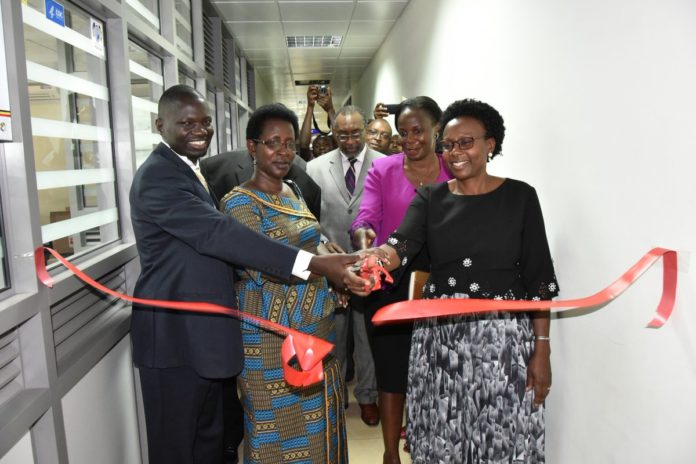
Health Minister Jane Ruth Aceng has commissioned the national Heme path flow cytometry Laboratory for cancer diagnosis and Hepatitis B viral load lab at Uganda national health laboratories services (UNHLS), Nakawa.

Alluding to UNHLS, they seek to build effective and sustainable National Laboratories quality management systems to be able to provide results of the highest quality and putting up over 25 facilities accredited to ISO 15189 by 2020 and 100 labs certified to international standards.

Currently Uganda has established a number of National Reference laboratories such as National Tuberculosis reference Lab, National Microbiology ref Lab, viral load ref Lab, National Sickle cell ref Lab and most of them have attained international accreditation.

The minister said, Heme Path Flow Cytometry Lab will play critical roles and improve on the diagnosis of particular blood cancers especially lymphomas and Leukemia.

She said three of Uganda’s Laboratories in Kiryandongo General Hospital, Kayunga General Hospital and St. Raphael of St. Francis Nsambya Hospital have received International accreditation.

“The Government is committed in the fight against viral Hepatitis and the commissioning of the Hepatitis B viral load lab is part of the demonstration of this commitment to advance the fight against it,” she noted.

According to permanent secretary of ministry of health Dr. Diana Atwine, the launch of the National Heme Path Flow Cytometry reference lab for cancer diagnosis is a major step towards improving areas of diagnosis. One can’t proceed with treatment without accurate diagnosis.

She said ref Lab for Cancer diagnosis and the Hepatitis B viral load lab will not only solve availability issues but also accessibility, which have been limiting early detection efforts.

“These very high-level technologies will be critical in helping our doctors to plan the most appropriate course of treatment as well as monitoring effectiveness,” she said.

Stories Continues after ad

Bagyenda sold Global Trust Bank to Dfcu Bank after sharing confidential information

Embattled former Executive Director in charge of Supervision at Bank of Uganda Justine Bagyenda.

The former Bank of Uganda (BoU) executive director of supervision, Justine Bagyenda, transferred some assets and liabilities of Global Trust Bank Uganda (GTBU) to DFCU Bank after signing an agreement with Juma Kisaame, the then Managing Director of Dfcu Bank, Parliament’s Committee on Commissions, Statutory Authorities and State Enterprises (Cosase) established Thursday in the on-going probe of the central bank over the controversial sale of seven defunct banks.

The MPs also established that Bagyenda signed the agreement document with Kisaame after sharing the confidential information of Global Trust Bank with him, which violates Section 40 of BoU Act. Discussions had been going on between BoU and potential buyers (Dfcu Bank).

GTBU was closed on July 25, 2014 on grounds of undercapitalization and corporate governance weaknesses among other reasons. BoU legal counsel Margaret Kasule said BOU took over the management of GTBU in line with Section 88(1) of the Financial Institutions Act 2004. But using Section 95(1) (b) of the Financial Institutions Act 2004, Bagyenda and Dfcu’s Kisaame arranged for the purchase of assets and assumption of some of the liabilities of GTBU.

On July 25, 2014, Bagyenda and Kisaame who represented Dfcu Bank signed a Purchase of assets and Assumption of liabilities agreement (P&A) where certain assets were transferred and liabilities assumed by Dfcu as per Article 10.2. The remaining assets were to be retained by BoU.
“You are not supposed to discuss issues of a financial institution with third parties against section 40 of BoU Act. Why did you disclose the affairs of the bank with the third party?” Katuntu asked.

BoU legal counsel Margaret Kasule who was put on oath, when asked by Katuntu whether she was consulted when Bagyenda sold the bank, replied in the negative. However she said her department drafted the sale agreement with Dfcu Bank.

Bagyenda did not also consult with the BoU Governor Prof. Emmanuel Tumusiime-Mutebile. The Governor when asked by MPs expressed ignorance of the agreement between Bagyenda and Kisaame.

Bagyenda also said there were no BoU minutes regarding the sale of Global Trust Bank. That was confirmed by the Auditor General John Muwanga who in his special report of BoU on defunct banks said negotiation minutes for the transaction were missing. Mr. Muwanga had been ordered by parliament to investigate BoU after former shareholders of defunct banks called for an inquiry, claiming unfair closure of their banks.

When asked by Katuntu whether BoU was ever a receiver of Global Trust Bank, Bagyenda said: “No but we liquidate.” She said there was no bid or bid requirement.

Under the agreement, it was agreed that part of the loan portfolio (assets in Escrow) worth Shs21.4 billion of GTBU not assumed by the purchaser (Dfcu Bank) would be managed by the purchaser as an agent of the Liquidator. Any proceeds realized from the assets would be shared between the Liquidator and the purchaser at a ratio of 65 percent and 35 percent respectively.

According to the monthly collection report from Dfcu, a total of Shs6. 29 billion has been collected as at December 2017, with 65 percent of these collections amounting to Shs 4,093,052,663 has so far been recovered and transferred to GTBU recovery account in BoU while the rest remained with Dfcu Bank which now had become an agent of BoU. The balance of Shs15.13 billion was yet to be recovered.

Further there was no third party to run the Escrow account, which means Dfcu Bank was doing it illegally. According to Wikipedia, An escrow is a contractual arrangement in which a third party receives and disburses money or documents for the primary transacting parties, with the disbursement dependent on conditions agreed to by the transacting parties, or an account established by a broker for holding funds on behalf of the broker’s principal or some other person until the consummation or termination of a transaction. In the transactions Dfcu Bank acted as a broker and principal.

Dfcu Bank did not do the valuation of the assets of GTBU but depended on that done by Dfcu Bank. This wasn’t in accordance with the law under which GTBU assets were sold. Worse still, in his report, Mr. Muwanga noted that BoU transferred performing loans and overdrafts at Shs22. 6 billion, representing 80 percent of the book value of Shs28. 28 billion. This implies that Dfcu Bank acquired the loan portfolio at 20 percent discount.

Mr. Muwanga says in his report that the evaluation of the alternatives and assumptions on which the evaluation was based were not provided for verification and therefore he could not determine the justification for transferring the performing loans at a 20 percent discount.

However, total assets transferred to Dfcu Bank were worth Shs68,95 billion. They included performing loans and overdrafts, treasury securities and cash balances (both forex and current account in BoU).

On the other hand total liabilities transferred under Bagyenda-Dfcu Bank arrangement were worth Shs70.98 billion.

Stories Continues after ad

CAF Champions League: Vipers progress to next round, set to face Algerian side

Ndugwa celebrating Vipers goal against Al-Merrikh in 2018

Uganda Premier League reigning champions Vipers Sports Club defeated Sudanese side Al-Merriekh 1-0 in the 2nd leg of Caf champions league preliminary round tie at St Mary’s Stadium to reach the next round.

The match ended in a 2-2 aggregate score over both legs but Vipers progressed on away goals rule.

Abraham Ndugwa’s early second half goal was enough to guide the Venoms to a prestigious win, a result that ensured they edge closer to making the group stages for their first time.

The win meant Vipers SC will now face Algerian club Sportive Constantine to fight for a place in the group stages.

The Algerian side knocked out Gambian champions GAMTEL 1-0 to set up a tie with the Venoms.

The first leg will be played between 14th to 16th December 2018 in Algiers with the return leg a week later between 21st to 23rd December at St. Mary’s Stadium, Kitende.

The victor of the fixture over the two legs will qualify for the group stages while the loser will drop to the Caf Confederations cup.

The winners of the next round of the qualification round will be a total of 15 clubs that will join CAF Champions League Winner (Season 2018) in the group matches of the 2018-2019 season.

The draw for the 2018/19 CAF Champions League group stage will take place on 28th December 2018.

Meanwhile, KCCA FC, Uganda’s representatives in the Caf confederations cup, will face the Tanzanian cup winners Mtibwa Sugar in the first round of the group stage qualifiers within the same period.

The winner of the fixture over the two legs will await a draw where they will face one of the sides that will have been eliminated from the Caf Champions League at the first round stage.

Stories Continues after ad

Gulu prepares to host International Human Rights Day celebrations

International human rights day.

The Civil Society Organisations (CSOs) in Gulu district in partnership with the United Nations Human Rights Council and other human rights bodies are preparing to commemorate the 70th Human Rights Day slated for the December 10, in Gulu town. The Day will be marked under the theme, “Stand up for Human Rights”.

Addressing Journalists at Northern Uganda Media Club “NUMEC), Nicolas Ogwang, the regional manager Uganda Human Rights Commission (UHRC)-Gulu, said that celebrating the Day is derived from the Universal Declaration of Human Rights on December 10, 1948. He said it important to mark the Day as it enables people across the world to know their rights, become actors and work hard to ensure that rights of other people are respected.

Geoffrey Okello director NGO Forum also noted that they are taking this period for education and awareness on human rights. The Day’s celebrations in Uganda will run concurrently with 16 days of gender activism.

However, Immaculate Acayo quality assurance program manager at Gulu Women Economic Development & Globalization (GWED G ) said a lot of inequalities exist ranging from gender based violence, discrimination, denial of women’s and orphan’s rights to properties among others. She said it was high time such issues are addressed. She called concerted efforts combat human rights abuses in communities.

Chali Olawole Mongadji, from the United Nations Human Rights Office of the High Commissioner said that the event is important as it strengthens the human rights law.

The preparation team is to visit the prisoners at Gulu main prison and dialogue with them on human right matter.

In Uganda, the Uganda Human Rights Commission (UHRC) is mandated to ensure that people’s rights are protected.

Article 52 (1) of the 1995 Constitution lays down the following functions of the Commission: To investigate , at its own initiative or on a complaint made by any person or group of persons against the violation of any human right, visit jails, prisons, and places of detention or related facilities with a view of assessing and inspecting conditions of the inmates and make recommendations, to establish a continuing programme of research, education and information to enhance respect of human rights.

Others are to: To recommend to Parliament effective measures to promote human rights including provision of compensation to victims of violations of human rights or their families, create and sustain within society the awareness of the provisions of this constitution as the fundamental law of the people of Uganda, educate and encourage the public to defend this Constitution at all times against all forms of abuse and violation, formulate , implement, and oversee programmes intended to inculcate in the citizens of Uganda awareness of their civic responsibilities and an appreciation of their rights and obligations as free people and monitor the Government’s compliance with intentional treaty and convention obligations on human rights.

Article 52 (2) also requires the Commission to publish periodical reports and submit annual reports to Parliament on the state of human rights and freedoms in the country.

The Universal Declaration of Human Rights (UDHR) is a milestone document in the history of human rights. Drafted by representatives with different legal and cultural backgrounds from all regions of the world, the Declaration was proclaimed by the United Nations General Assembly in Paris on 10 December 10, 1948 General Assembly resolution as a common standard of achievements for all peoples and all nations.

Stories Continues after ad

CAA asks to manage Soroti Flying School

Soroti Flying School

The Managing Director of the Civil Aviation Authority Uganda (CAA), Dr. David Kakuba, has asked government to transfer the management of the East African Aviation School in Soroti to the agency so that it can make maximum use of the institution that trains pilots.

Dr. Kakuba made the request on Thursday during the Aviation Week Engagement Breakfast Meeting held at Kampala Serena Hotel under the theme: “Working together to ensure NO country is left behind”.

The Aviation Week is celebrated internationally between December 1-7, every year to commemorate the memorable week of meetings that led to the signing of the famous Chicago Convention, Kakuba said.

He said CAA in 2017 increased international passengers to 1.62 million up from 118,000 in 1991. He said Entebbe International Airport registered 120,000 more international passengers in 2018, compared to the same period last year.

He said CAA has just been awarded the prestigious ISO 9001:2015 Quality Management Systems Certification.

He said CAA attaches great importance on regulation of the transport. “We strive to see that every operator adheres to the International standards,” Kakuba said.

He said CCA currently manages 14 airports and that together with the government they are developing the Kabaale International Airport. He added that CCA has passed out 25 well trained fire fighters and marine trainees.

He said it was high time government changed the title of CAA MD. “It is only Uganda which has a CAA Managing Director. The rest of the world has Director Generals,” he said.

CAA Board Member, Mackenzie Ogweng, said the amendment of the CAA Bill will enable Uganda score highly in International Civil Aviation Organisation (ICAO) audit. He said the Bill if passed will harmonise the current title of CAA MD with the rest of similar authorities in the world.

He said the CAA Board needs time to grow the number of passengers from 1.6 million to six million. There is commitment to deliver on the CAA mandate.

Addressing guests, the Minister of Works and Transport Monica Ntege Azuba said the CAA Amendment Bill is on the Order Paper but that it has just delayed because of other urgent issues. “We are discussing CAA using the Soroti training school instead of building a new one,” she said.

The Minister congratulated for recently being awarded the ISO 9001:2015 Certification.

She said government’s resolve is to promote business in the aviation sector. “Several Airlines are planning to commence operations in Uganda starting in Feb 2019,” she said, adding that there is need to fully utilise the aviation infrastructure. “We have appointed marketing people market Uganda abroad. 2018 has been a landmark year for Uganda’s aviation,” she said.

Former Minister of Tourism (Seychelles), Alain St. Ange, who was the key speaker at the event, urged government to market Uganda’s tourism potential. “The major emphasis in the development of the aviation industry should be placed on the visibility of Uganda. The key unique selling points of Uganda are not top in the search rankings. The source of the Nile comes from Uganda and this is really beautiful. The ministry of tourism must push the assets of Uganda,” she said.

He urged government to work with the private sector to help develop the aviation industry as well as the tourism industry. “It is good that the CAA has a representative on the Uganda Tourism Board,” she said.

He said Kabaale International Airport will be of no significance if Uganda is not marketed as a tourist destination. “If you don’t market Uganda as a key tourist destination, the new airport would not help much in development of the aviation industry. The hospitality is important too,” he said.

He advised the ministries of Works and Tourism to develop a new strategy for international visibility of Uganda. “Sell Uganda. Don’t expect the world to know about the beautiful country without informing the world. You must tell the world about Uganda,” she said.

Stories Continues after ad

Businessman Charles Muhangi dead

DEAD: Charles Muhangi

City businessman and rally driver Charles Muhangi is dead.
Muhangi was found dead at his Buziga home. He has been at loggerheads with fellow city businessman Drake Lubega over the ownership of Qualicel Bus Terminal, Qualicel building and Nabukera Plaza.

Mr Muhangi claimed ownership of the 0.518 hectare of the land on which Qualicel Bus Terminal, Qualicel building and Nabukera Plaza.

The President Yoweri Museveni last month met Muhangi and Lubega at State House, the meeting centred around the court dispute and the standoff.

Stories Continues after ad