Stanbic Bank
Stanbic Bank
28 C
Kampala
Stanbic Bank
Stanbic Bank
Home Blog Page 1474

Uganda to host ICC Men’s WT20 Africa regional finals in 2019

Cricket Cranes

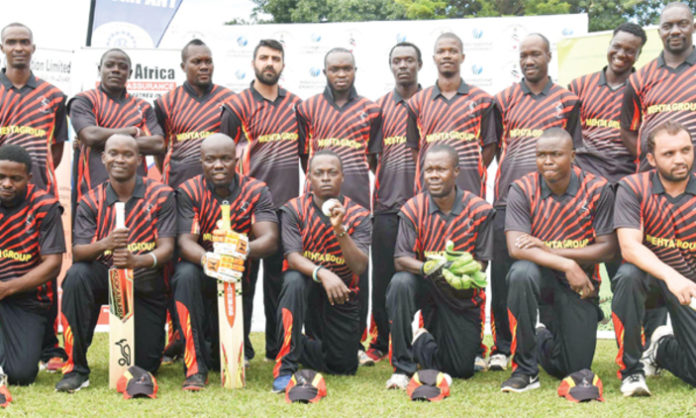
Uganda Cricket Association have been awarded the hosting rights for ICC World T20 Africa regional finals for qualification towards ICC World T20 2020 global qualifiers in May 2019.

The development was confirmed by Patricia Kambarami, the development officer for International Cricket Council in the African region.
Six teams will compete at the 2019 ICC World Twenty20 Africa Regional Finals in Kampala.

Nigeria, Ghana, Uganda and Kenya already qualified from the two sub-regional qualifiers held in Nigeria and Rwanda and now await two qualifiers from Group “C” sub-regional qualifiers (the South African region), to be held in Botswana shortly.

Botswana, along with Lesotho, Malawi, Mozambique, St. Helena, Namibia, Swaziland and Zambia will be competing in the 8-nation qualifiers and two teams will progress.

The tournament will be held from 17th to 29th May, 2019 and will see the top 2 teams from the 6-nation event advance to global qualifiers for 2020 ICC World T20 in Australia.

Stories Continues after ad

Ghana set to grab six points from cancelled Sierra Leone clash

Ghana Black Stars

African Football governing body, Confederation of African Football (CAF) could award Ghana Black Stars with six points from its back-to-back Africa Cup of Nations qualifying matches against Sierra Leone as the body decided to call off the matches and they won’t be rescheduled.

Early this month, FIFA suspended Sierra Leone from international football because of government interference in the running of the country’s football association.
Caf said the games had been “cancelled as the Sierra Leone Football Association did not meet the conditions stipulated in the letter sent by Caf on Fifa’s decision to suspend the federation”.

A communique from CAF informed the Ghana Football Association’s (GFA), Normalization Committee that “the CAN 2019 Qualifier match (Ghana vs Sierra Leone) & (Sierra Leone vs Ghana) on the 11th and 14th of October respectively have been cancelled.”
CAF said the matches were cancelled as Sierra Leone did not meet conditions for the lifting of the Fifa-imposed suspension of the country’s FA. However, Sierra Leone have denied any wrongdoing.
African football’s governing body also confirmed that the matches will not be rescheduled but are yet to clarify whether the points will be awarded to the Black Stars.

The CAF Executive Committee could also decide to completely remove Sierra Leone from the qualifying group which means the Black Stars qualifying group will be left with three teams.
Sierra Leone are one of four teams with three points in Group F, which also includes Ethiopia and Kenya.

However if Sierra Leone meets the FIFA conditions and return to the qualifiers, they will lose the six points against Ghana and play the remaining two group matches.

Stories Continues after ad

Lesotho team arrive in Uganda for Afcon qualifier against Cranes

The Lesotho National Football team arrived in Uganda yesterday night ahead of their third 2019 AFCON qualification match against the Cranes on Saturday 13th, October.

They will conduct a training session at Namboole stadium before the encounter on Saturday as per the FIFA rules which dictate that the away side trains on the pitch the where the match will be played.

Uganda faces Lesotho on Saturday at the Mandela National stadium in the first leg before Cranes head to Maseru in Lesotho to face-off again with the Likuena on Tuesday, 16th October.

Meanwhile, Egyptian match officials will handle the first leg of the 2019 AFCON qualifier at Namboole.

Amin Mohamed Omar will be the centre referee. He will be assisted by Samir Gamal Saad and Mahmoud El Regal as the first and second assistant referees respectively.

For the second leg in Lesotho, officials from Comoros will be in charge of the match.

They are; Ali Mohammed Adelaid, who will be the centre referee while Soulaimane Amaldine and Said Omar Chebli as the first and second assistants.

Cranes still top Group L with 4 points from two matches played. Lesotho are second with two points, on level with Tanzania while Cape Verde are bottom with no point.

Tanzania Taifa Stars will be playing Cape Verde in the other group fixture on the same days.

Coach Desabre will be seeking for his second victory since he was appointed. He has won only once, against São Tomé and Príncipe (3-1) in a friendly and picked up five draws and four defeats.

The 2019 AFCON tournament will be hosted in Cameroon. The competition will be held in June and July with 24 teams to take part.

Lesotho’s Full squad;

Goalkeepers: Samuel Khetsekile (FC Masheshena), Lomani Mphuthi (LDF FC), Mohau Kuenane (Free Agent)

Defenders: Kopano Tseka (Lioli Football club), Mafa Moremoholo (Lioli Football club), Nkau Lerotholi (LMPS), Basia Makepe (LMPS)

Midfielders: Tsepo Toloane (LDF), Tsotleho Jane (unattached), Hlompho Kalake (Bantu FC), Mabuti Potloane (Matlama Football club), Tumelo Khutlang, Luciano Matsoso – (Black Leopards), Jane Thaba Ntso (Matlama)

Strikers: Masoabi Nkoto (Real Kings FC), Motebang Sera (Matlama), Setho Moshoeshoe, Thapelo Tale – (LCS)

Stories Continues after ad

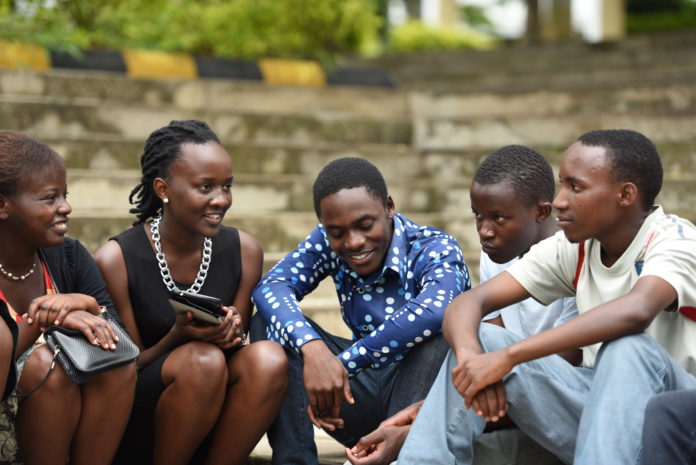
Jobs of the future require more investment in people-report

Isabelle Kubwimana (Youth Think Tank Researcher)

By George Mangula

Greater investments in people’s health and education are urgent in a rapidly evolving labour market increasingly shaped by technology, according to the World Development Report 2019: The Changing Nature of Work.

Commenting on the report, World Bank Group President Jim Yong Kim, said the nature of work is not only changing but it’s changing rapidly. “We don’t know what jobs children in primary school today will compete for, because many of those jobs don’t exist yet,” he said.

He said the great challenge is to equip them with the skills they’ll need no matter what future jobs look like – skills such as problem-solving and critical thinking, as well as interpersonal skills like empathy and collaboration. “By measuring countries according to how well they’re investing in their people, we hope to help governments take active steps to better prepare their people to compete in the economy of the future,” he said.

The number of robots operating worldwide is rising rapidly, the report says, stoking fears of a jobs meltdown. But technology is laying down a path to create jobs, increase productivity and deliver effective public services. Fears surrounding innovation, which has already transformed living standards, are unfounded.

Digital technology spurs rapid innovation and growth, disrupting old production patterns and blurring the boundaries of firms. New business models, such as digital platforms, evolve at dizzying speed from local start-ups to global behemoths – often with few tangible assets or employees.

New platform marketplaces are connecting people more quickly than ever before. This “scale without mass” delivers economic opportunity to millions of people, regardless of where they live.

New markets and jobs are driving demand for employees with teamwork, communication and problem-solving skills. Technological change is eliminating repetitive “codifiable” jobs but replacing them with new types of employment: in Europe alone, there will be estimated 23 million new jobs this century.

Technology is changing not just how people work but also the terms on which they work, creating more non-traditional jobs and short-term “gigs.” This is making some work more accessible and flexible, but raises concerns about income instability and the lack of social protection.

Four out of five people in developing countries have never known what it means to live with social protection. With two billion people working in the informal sector, unprotected by stable wage employment, social welfare, or the benefits of education – new working patterns are adding to a dilemma that predates the latest technological wave.

Adjusting to the changing nature of work requires enhanced social protection. New ways of protecting people, regardless of employment status, are needed.

The report challenges governments to take better care of their citizens, calling for a universal guaranteed minimum level of social protection. Full social inclusion will be costly, but it can be achieved with reforms in labor market regulation in some countries and, globally, a long overdue overhaul of taxation policy.

With the boundaries of firms transcending borders and physical assets, it’s easier to shift profits to low-tax jurisdictions, which means billions of dollars go untaxed. The report calls for updates to the international tax system, taking into account the globalized digital economy.

As digital firms – with relatively few tangible assets, increase and grow, withholding taxes are also becoming more relevant. Current taxation patterns reveal large discrepancies, especially between poorer and richer countries. High-income countries collect a much larger share of their national output in direct taxes, while middle and low-income countries rely more on consumption and trade taxes.

The 2019 World Development Report features a chapter containing the recently released Human Capital Index, part of a broader World Bank Group project that recognizes human capital as driver of inclusive growth. In addition to the Index, the Human Capital Project includes a program to strengthen research and measurement on human capital, as well as support to countries to accelerate progress in human capital outcomes.

Stories Continues after ad

31 confirmed dead in Bududa as River Suume bursts its banks

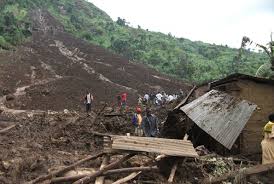
Two market centres on the slopes of Mt. Elgon were competently decimated when river Suume in Bukalasi subcountry in the landslide prone District of Bududa burst its banks carrying whatever it found in its way into the larger River Manafa, killing at least 31 residents.

According to Martin Owor, Commissioner for Disaster Preparedness and Management, about 31 bodies were confirmed dead by yesterday, but many more are feared dead. Recovery efforts had been restricted due limited accessibility and navigation in the area as the river ripped off all brigades linking the remote villages to the rest of the district and creating a huge sludge rift separating either sides if the river.

“Most of the people were caught at the trading centre, the landslide pushed huge boulders into a river which burst its banks and the water swept away the people,” Owor said.

The incident took place during the afternoon down pour and most of the victims were those who were operating in the two centres, of Nalutungu and Anchenor, those who were enjoying the afternoon local brew or those who had taken shelter from the rain on their way to their destinations but it was not a market day in any of the two centre. Animals too were not spared.

Others were those whose homes were in close vicinity to the river banks or those who were found on the roads in the way of the river where it passed including boda boda riders who were braving the afternoon rain. Two of them lost their bikes one was carried away while the third one lost both of the passengers but survived with injuries from the rolling rocks.

The catastrophe was a surprise to the residents who were going about with their usual chores un aware of the heavy rains within the Mt. Elgon Nation Park that had triggered heavy flooding and mudslides that gained momentum carrying trees and rocks as rolled down the mountain slopes.

Relief teams are now combing the area to search and rescue survivors, Owor said.

“There are people who were displaced and they need shelter, food and all other support and we’re moving that relief to the area,” he said.

The disaster occurred just a few kilomenters from the 2010 disaster of the next village of Nametsi in which over 30 homesteads were completely buried and unknown number of lives lost. Similar disasters are common in this area but residents have taken low response to Government efforts to leave the mountainous areas.

Stories Continues after ad
World’s largest sleep study shows too much sleep as bad as too little

Couple in bed with relationship difficulties

What’s being billed as the world’s largest sleep study suggests that getting too much sleep might be just as bad as not getting enough of it.

The study, led by Western University in London, Ont., was launched in June 2017 and involved more than 40,000 people from around the world.

According to researchers, the data suggests that consistently sleeping more or less than the recommended seven to eight hours per night can have a major impact on brain functions.

“The key thing here is that that’s on a regular basis,” said Dr. Conor Wild, the study’s lead author and a research associate at the university’s Owen Lab.

“So if you’re sleeping 11 hours every single day over a month, that could have an effect on your brain much like sleeping too little every day for a month.”

Western’s Brain and Mind Institute collected data from more than 40,000 people around the world for the study, with participants filling out an extensive questionnaire before moving on to a series of online cognitive tests.

“These are tests we’ve used for decades to understand specific functions in the brain and we’ve adapted them to turn them into little games to play on your iPad, phone, or your PC and that gave us information about how their brains were functioning.”

Speaking on London Live on 980 CFPL, Wild added that researchers were most surprised at the number of people reporting less sleep than recommended. Roughly half of the 40,000 participants reported typically sleeping less than 6.3 hours per night.

“A lot of people were sleeping four hours a night on average, and that had an effect of being 10 years older in terms of their performance on some of these tests.”

The research found that reasoning and verbal abilities were most strongly impacted by too much or too little sleep, while short-term memory performance was relatively unaffected

Wild noted that there’s no one-size-fits-all approach to sleep.

“However, on average, across all the people we were looking at, this seems to be the trend,” he explained.

“One of the things we really want to dig in a bit more with this data and some more studies is really kind of examining this individual variability and how much does this result hold for individuals or are there some things that, maybe if you do this a lot or it’s part of your occupation, maybe it doesn’t have an effect. There are still some lingering questions.”

Stories Continues after ad

Uganda to mark world food day in Karamoja

Nabuin ZonalAgricultural Research and Development Institute.

Uganda is set to celebrate world food day that is aimed at Heightening awareness on hunger, food security and promotion of yield enhancing technologies to increase productivity in agricultural sector.

According to Food and Agriculture Organization (FAO) statistics, more than 1 billion people suffer from hunger as 36 million lose their lives. This means that one in every six people on Earth don’t get enough food to live a healthy life. Every five seconds a child under five years dies because of hunger, or of directly related causes.

The climax of activities will take place on October 6,at the Nabuin Zonal Agricultural Research and Development Institute in Karamoja sub-region. Under that theme ‘A Zero Hunger World by 2030 is Possible’, celebrations will focus on hunger, under nutrition, malnutrition and how these variables impact on development.

In the intervention to promote food and nutrition security, Ministry of agriculture has developed a number of policies which include the Food and Nutrition Policy (2003), the National Agricultural Policy (2013) and the National Action Plan for Nutrition (2015) and the National Agricultural Extension Policy (2015).

The Agriculture Sector Strategic Plan (2015/16-2019/20) which pushes for dietary diversification to ensure food security and promotes 15 priority commodity interventions for maize, bean, rice, cassava , banana, fruits (citrus, pineapples, mangoes), vegetables, coffee, tea, potato and dairy, beef, fisheries, poultry and apiary commodities products.

FAO indicates that Zero tolerance to hunger can help build a safer and prosperous world for everyone. FAO notes that, a dollar invested in hunger prevention could return between $15 and $139 in benefits and Zero hunger could save the lives of 3.1 million children a year.
“Ending child under nutrition could increase a developing country’s GDP by 16.5 percent and ending nutrition-related child mortality could increase a workforce by 9.4 percent,”

Stories Continues after ad

SA ratifies FTA, joins Uganda and two others

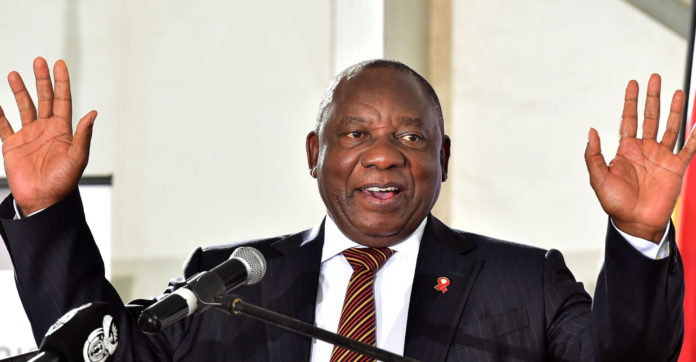
Cyril-Ramaphosa

South Africa has ratified the Tripartite Free Trade Agreement (FTA)becoming the fourth country to do so after Egypt, Uganda and Kenya. This is according to a notification sent by the South African Government to the Chair of the Tripartite Task Force, Ms. Chileshe Kapwepwe, who is the Secretary General of COMESA.

“This is excellent news,” said the Secretary General. “This development moves the tripartite process to near operationalization.”

The process of ratification has been set in motion in a number of member states and it is expected that this target will be reached by end of April 2019, which is the deadline that the Tripartite member states set for themselves. With this latest development, 10 more ratifications are now needed for the Agreement to enter into force.

“This development adds to the aura of expectations around the Tripartite Free Trade Area Agreement which groups 29 of the 55 countries negotiating the African continental Free Trade Area,” the COMESA Director of Trade and Customs, Dr Francis Mangeni, who is also a member of the technical negotiating team, said in Lusaka today, adding that all the Annexes to the TFTA Agreement have been concluded.

Transitional arrangements

On the basis of the provisions on transitional arrangements, he explained, once the threshold for minimum number of ratifications is achieved, then implementation of the Agreement commences immediately, on the basis of the principle of variable geometry. This is aided further, by the fact that exchange of tariff offers is near complete.

All the member states, save for Southern Africa Customs Union (SACU) countries, EAC countries and Egypt chose to offer their respective Regional Economic Communities’ preferential arrangements and were therefore not negotiating tariff offers.

“The negotiations between EAC and Egypt are complete,” Dr Mangeni said. “Those between SACU/Egypt and SACU/EAC are nearing completion. In the latter case, divergence has narrowed down to just one product line. All the negotiating parties have agreed to a deadline of December 2018.”

Rules of Origin

Negotiations on the Tripartite rules of origin are highly advanced. From the total of 5,387 tariff lines, Rules of Origin have now been developed for 3,267 tariff lines (At 6-digit HS 12 version), representing 60.8 per cent of all the tariff lines. In addition, a draft manual on application of the Rules of Origin has been developed and is ready for use. Trade can therefore commence on all the aforesaid tariff lines.

A number of tripartite instruments have also been developed and are now ready for use. The tripartite guidelines on implementation of Trade Remedies are ready for use and so are certificates of origin, export declaration and import declaration forms among others.

In addition, the Tripartite Agreement on the Movement of Business Persons has also been finalized and will be ready for use once it undergoes legal scrubbing.

“This latest ratification, moves the Tripartite process one step closer to the implementation stage, and it is likely to present more scope for early harvest and by extension, prospects for fast tracking the continental integration agenda,” Dr Mangeni said.

Stories Continues after ad
Kyangwali locals want OPM officials investigated over torture

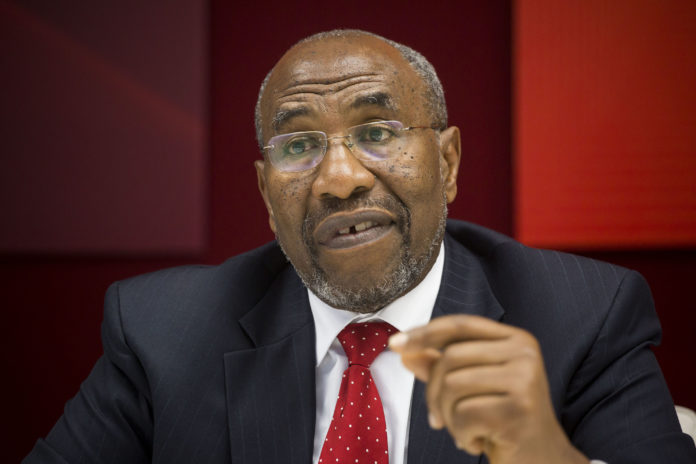
Ruhakana Rugunda, Uganda's Prime Minister.

The indigenous people of the contested Kyangwali refugee settlement have demanded for an independent investigation into their eviction, crimes against humanity and torture allegedly by officials from the Office of the Prime Minister.

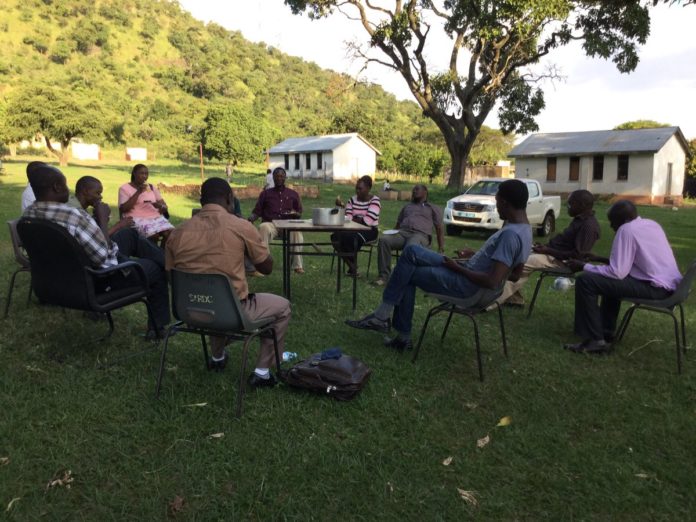
The residents made the demand while meeting the Committee on Presidential Affairs during a fact-finding visit to the contested land in Hoima district. The MPs were in the area between October 5-7, 2018.

“Government efforts to better the lives of refugees has rendered us landless in our own country,” Said Issayana Peter, a father of six, who claims he owned 10 acres of land in the area on which he had a banana plantation, fruit trees and other food crops.

During the public hearing held at Kyangwali refugee camp headquarters, witnesses narrated gruesome acts of torture by the army and police allegedly aided by the Principal Settlement Officer, Bafaki Charles, who works with the Office of the Prime Minister (OPM) and Lutaaya Vianey from Ministry of Lands.

“By the 1950s, I was not born when this refugee settlement was established; I also rely on documents available,” Bafaki responded while making his presentation to the Committee.

The locals rubbished the 2013 Oketta Report which recommended forceful eviction.

On 20 August 2013, over 60,000 residents were evicted by the army and police in Bukinda Parish to secure land for hosting Congolese refugees. The families later sued government, claiming to have lived with refugees since the 1960s when the refugee resettlement was started.

On 27 April 2015, Justice Simon Byabakama, who was the then Masindi Resident Judge, ordered the boundaries of the contested land to be resurveyed to ascertain whether the land claimed by the evicted families is within the resettlement scheme.

A joint survey report was submitted to court, which is yet to rule on the matter.

During the hearing of the case, some families were allowed back on the land.
“Currently we are being squeezed in one acre per family, forced to relocate and given no compensation for the development on our land. We pray that we follow the 1998 survey and life continues,” said the representative of Bukinda residents, Nestori Tumwesigye.

Sunday Matia, a resident of Bukinda village says the refugee settlement camp officials and the police came to his home one afternoon and directed him to leave in three days as his land had been allocated to a refugee family. Sunday, who is 39 years, blames government for reportedly grabbing his ancestral land.

Hon. Daniel Muheirwe (Buhaguzi County) who presented the petition to Parliament on 19 September 2018, said the land hosting Kyangwali refugee settlement was donated by the Bunyoro kingdom in 1950 to host Rwandan refugees.
“In 1998, government demarcated boundaries for the 91 square-km piece of land and the boundaries have been respected by the local communities. I wonder why government plans to extend the boundaries of Kyangwali refugee settlement by annexing 28 villages in Kasonga Parish,” said Muheirwe in his petition.
As a result, on 20 September 2018, Parliament directed the Office of the Prime Minister to immediately halt the proposed expansion of Kyangwali refugee settlement until the contested issues are resolved.
Parliament has tasked the Committee to assess the problem and report back to the House.

The Committee will also visit Bunyoro Kingdom authorities to ascertain the size and boundaries of the land, which was allocated to host Rwandese refugees in the 1950s.
Communities neighboring the refugee settlement are living in fear of eviction and have appealed to their leaders to intervene since some families have already been relocated.

The evicted people are from 31 villages in Kasonga parish.

Stories Continues after ad
MP Zaake to gov’t: We are just seeking for transfer of power

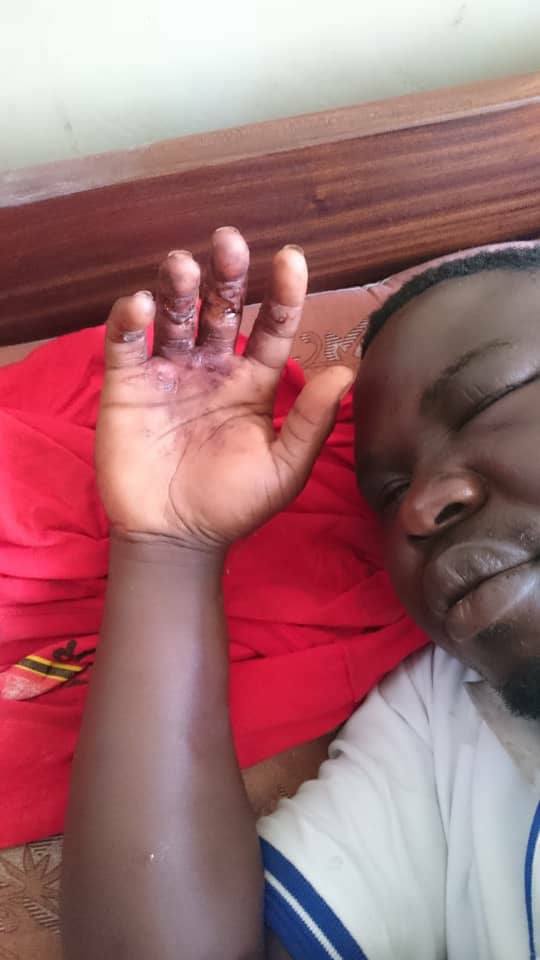
Mityana Municipality MP, Francis Zaake in pain after he was tortured by Special Forces in Gulu.

Controversial Mityana Municipality Member of Parliament, Francis Zaake Butebi, is tomorrow expected to jet back after spending one month in India where he had gone for medical treatment.

The MP is among the 36 suspects grappling with treason charges that were leveled against them. The group is allegedly to have smashed one of the president’s vehicle windscreen in the procession from holding their conclusive rallies a head of Arua municipality by-election that was won by Independent and FDC leaning candidate Kassiano Wadri.

In his statement Zaake said, security agencies of Special Forces Command (SFC) and police excessively battered him during and after his arrest to the extent that he could no longer feel the pain. “I think that after failing to kill me during the ‘Togikwatako’ Saga, they thought that another opportunity had presented itself to them to completely eliminate me,” he added

As his life continued deteriorating in the Gulu Police cells, the MP was later dumped at Rubaga hospital by unknown people. After spending two weeks on life supporting machines, Zaake was charged with treason and cleared to leave the country.

The Independent legislator noted that, in the struggle to oust president Museveni out of power, God will erect many youths reading from the same script as himself, “trust me when the late Cerinah Nebanda was brutally murdered, many of us joined the struggle and here we are exactly reading from the same script as her,” he added.

He contended that, Health workers that attended to him in Rubaga Hospital were intimidated during and after his admission by the state, he however, applauded them for braving the storm. Narrating the ordeal, he said in Mannipal Hospital, through Ugandan Embassy, the state of Uganda attempted to conspire and obtain his medical documents but due to professional ethics exhibited by medical workers, their efforts didn’t not yield.

Zaake said, there has been propaganda orchestrated by the state to justify their wrong doing that People Power is a violent group. “That is not true, we are non-violent, and we associate ourselves with the principle of Mahatma Gandhi which states that an eye for an eye leaves the whole world blind. We can never be violent and never shall we ever be, two wrongs can’t make a right,”

“We are just seeking for transfer of power to a generation that will address the current constitutional crisis that befalls us as a Country and we intend to do this with utmost tranquility unless otherwise the state plants a bad group among us,”

Stories Continues after ad