Stanbic Bank
Stanbic Bank
21.3 C
Kampala
Stanbic Bank
Stanbic Bank
Home Blog Page 1578

450,000 innovators endorse African Innovation Policy

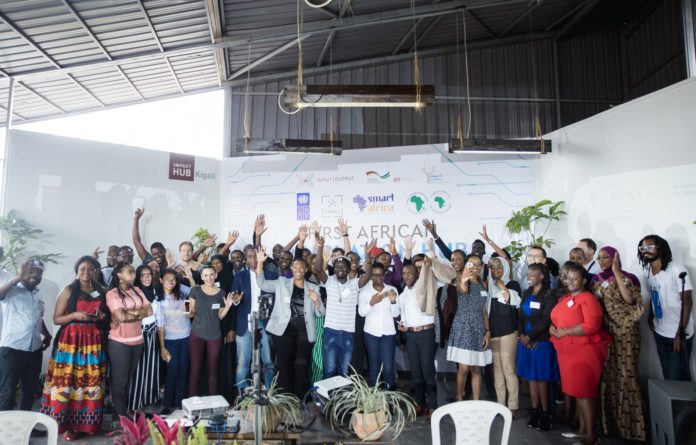
Participants at the event.

About 90 innovation hubs representing more than 450,000 innovators and networks across 32 countries have endorsed the African Innovation Policy Manifesto in Kigali Rwanda.

The representatives of the innovation groups were in Rwanda, to co-design better innovation and entrepreneurship policies.

The event was organized on the sidelines of the Transform Africa Summit in Kigali that took place from May 8-9 under the theme “Accelerating Africa’s Single Digital Market”.

The Summit brought together stakeholders within the ICT space in the continent to discuss the role and power of digital technologies, including blockchain, the Internet of Things (IoT), Big Data, Artificial Intelligence, Virtual and Augmented reality, among others.

Participants discussed key public policy areas and to co-write the i4policy communiqué in view of accelerating digital transformation and contributing to more equitable, inclusive and sustainable development of economies and societies. Participants took ownership of the sessions by leading and facilitating the discussions as well as volunteering to translate for their French-speaking peers.

The first version of the i4policy vision was first drafted in October 2016 when a smaller group of African innovation hubs, bloggers, entrepreneurs and community catalysts, met in Kigali to discuss their public policy challenges.

The current manifesto was achieved through collaborative discussions, with input from the innovation hub managers physically at the event, as well as communities participating virtually from across the continent.

The policy manifesto focuses on seven key areas: education, research and development; digital infrastructure; public multidisciplinary spaces; business registration; finance for innovation and entrepreneurship; local and regional markets; and taxation systems.

The African Innovation Hub Convention was also an opportunity for the leaders of existing hub networks and associations active around the continent to share their work and progress with the gathering, with a view to strengthening existing networks and ties between innovation communities on content as well as policy visions.

Rym Jarou, the Talent and Capacity Building Manager at Smart Tunisia spoke about how the recently passed Tunisian Startup Act came to be and shared learnings from that process that can serve as a useful example for startup ecosystems and their respective policy makers across the continent.

“It is time for innovation for policy in Africa”, said Markos Lemma from Iceaddis, Ethiopia. “We are not asking our governments to listen to us anymore. Instead, we will work with them to co-create policies that work for the innovation community. It is not a demand-supply relationship we want to have with policy makers. We want to have a relationship of cooperation and collaboration,” she said.

The hub gathering was co-organised by i4policy, Jamaafunding, Kumasi Hive, the African Agribusiness Incubator Network and Impact Hub Kigali with support from Deutsche Gesellschaft für Internationale Zusammenarbeit (GIZ), the International Organization of la Francophonie (OIF), the United Nations Development Programme (UNDP) and the African Development Bank Group (AfDB) among others.The African Union Commission attended as observers.

In many African countries, there are significant barriers to growth for small and medium enterprises, and it gets even more difficult for innovative startups that leverage technologies outside the scope of current legislation, according to Dana Elhassan, at the African Development Bank.

“Our mandate at the African Development Bank is to foster inclusive growth for the economies of our member states. But a theoretical, top down approach is no longer sufficient for the purposes of guiding the governments who look to us for advice. Interacting with innovators and entrepreneurs in the context of this bottom-up policy deliberation gives us an opportunity to use our convening power to recommend policy interventions that best serve the interests for which they are intended”, she said.

The i4policy Alliance has begun formalizing a legal structure, bottom-up governance structure and values. A second hub gathering will be organized later this year to validate the legal structure and importantly to provide a practical bottom-up training for hub managers on policy support methodologies developed by the community. For example, Kumasi Hive together with 29 other hubs in Ghana formed the Tech and Business Hubs Network (TBHN) to work with the Government to improve the regulatory environment for innovation.

Participants called for the:
● Easing mobility for Africans to travel in Africa
● Adopting the African Declaration on Internet Rights and Freedoms
● simplifying the regulatory environment: starting and closing a business and paying taxes must be easier and cheaper and fines should be reduced
● redesigning education curricula together with a broad coalition of partners, such as labs and civic spaces, to emphasize critical thinking and digital skills, among others
● Increased investment in R&D to accelerate indigenous innovation

Stories Continues after ad

Sadolin opens more two color centres in Kampala

Uganda’s major paint maker, Sadolin has opened two more color centres-one in Ntinda and the other in Nakawa Industrial Area in a bid to bring its services and products nearer to clients.

According to Matia Ssebiranda, the Marketing Manager of AkzoNobel which owns the Sadolin brand, the color centres are being established through franchise agreements with local entrepreneurs and Sadolin.

The launch of the two color centres in Ntinda and Nakawa Industrial Area bring the number to three in Uganda and East Africa, Sadolin having launched the first one recently at Freedom City Shopping Mall in Makindye Division.

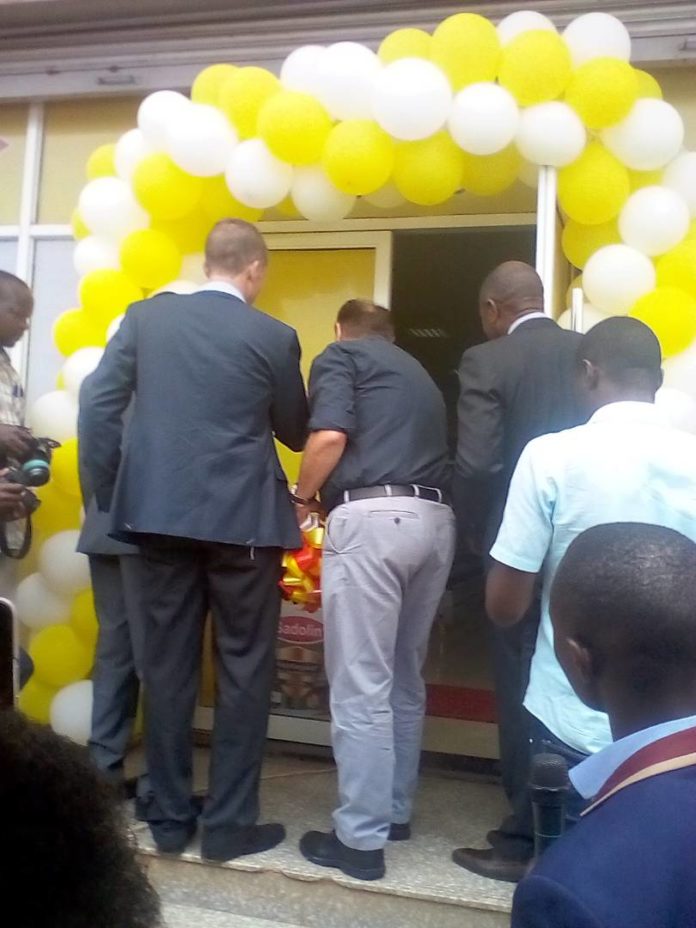
Speaking at the inauguration of the color centre in Nakawa Industrial Area, AkzoNobel’s planning and Execution Manager, Deon Nieuwoudt said the new concept of the color centres was the best option in the color business where clients are helped to buy the color of their choice, which can be obtained out of the mixture of the existing ones.

Nieuwoudt said AkzoNobel was committed to expanding the Sadolin footprint in Uganda through firming up franchise agreements with local entrepreneurs, a development, he said helps in job creation. He said Sadolin had trained color experts and placed them in color centres to attend to clients’ needs.

“The concept of the color centres aims to extend Sadolin product to customers through experiential shopping and to give local entrepreneurs the opportunity to expand their business frontiers by being part of the Sadolin chain while tapping into our expertise,” he said.
He said that the innovation of establishing color centres will enhance the company’s customer care, proximity of the Sadolin product as well as partnership with local entrepreneurs.

He said that the new innovation of color centres come with a business model where entrepreneurs can be helped by Sadolin to acquire bank loans for their business needs. Under the color centres’ model local investors can invest from Shs50m upwards but Nieuwoudt said even small business units would benefit in the near future.

James Kiwanuka, the proprietor of the Nakawa’s Sadolin Color Centre James Kiwanuka while speaking at the launch said the new innovation would boost the construction industry as it provided new shopping experiences but also that it boosts tax collections and employment.

The Chairman of the Construction and Hardware Dealers Association (CHADA), Hajji Abbas Mutyaba commended Sadolin for the new innovation in the local color/paint business saying: “This establishment signals growth and expansion in both the paint and construction industry.” He said new color centres would entice investors to expand as well as distribute products at competitive standards.

Sadolin produces emulsion products, gloss products, wood paint and custom-made paints in ranging from pack sizes of half a litre to 20 litres.

Stories Continues after ad

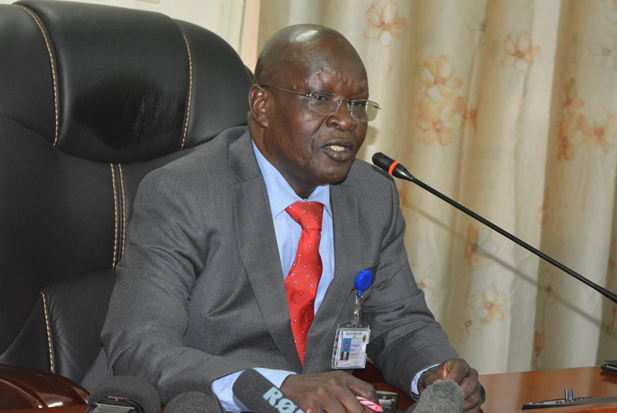
Salva Kiir sacks South Sudan Central Bank Governor, deputy

Dr Othom Rago Ajak

governor Dr Othom Rago Ajak just after a year in office.

It is not clear why the two senior bank officials were removed from their positions.

The dismissals come amidst continuing ballooning inflation rates and fluctuating market prices and just months after the president revealed that the country is broke.

Dr Othom was appointed to the government’s main monetary reserve in January 2017 after the former bank governor Kornelio Koryom was relieved.

During his appointment, he had promised to improve the economic situation of the country.

Stories Continues after ad

You are misplaced, Gen. Tumwine tells MPs over Nommo Gallery

Gen. Elly Tumwine.

Security Minister, Gen. Elly Tumwine has fired back at legislators who called for him to quite Nommo Gallery over allegations of nonpayment of rent.

Nommo Gallery is a subsidiary of Uganda National Cultural Centre (UNCC).
In a phone interview with Eagle Online, Gen. Tumwine says the facts are clear as those of 2013 and that his company Creations Limited does not owe Nommo Gallery any single penny.

“The facts are clear as those of 2013 and there is no single arrear owned by me to Nommo Gallery. It is very sad that a parliamentary committee has never invited me for an interface but just went ahead to make recommendations based on hearsay.” Gen. Tuwmine said.
He added “The Speaker wrote to the line minister demanding to establish whether it was true that I was receiving payment as alleged from government and there was no evidence on those allegations.”
Early this week, Parliament directed that Gen. Tumwine vacates Nommo Gallery, on allegation that he occupies the facility since 1998.

Kadaga said, “The issue of Nommo Gallery is a serious indictment of this house that we have been budgeting for Nommo when it has been appropriated by one individual. If we don’t treat this impunity, one day, someone will come and take over Parliament and claim that it is his house claiming that he fought in the bush; so this House directs Gen. Tumwine to pay off the rent but also to vacate because it is a public facility.”

The Speaker of Parliament, Rebecca Kadaga’s order followed the release of a report by the Parliamentary Committee on Gender, Labour and Social Development, which indicated that Gen Tumwine owes in excess of Shs1.6 billion in accumulated rent arrears. Asked by Eagle Online whether it is factual that he owes Shs1.6 billion in arrears to the facility, Gen. Tumwine said, “I have never occupied any government land and I don’t owe the facility any rent arrears.

The land was given to Artisans by government in 1964 and so it isn’t government land. Mind you I don’t also receive any money from government as alleged that Nommo Gallery receives Shs44.6 million” he said.

The issue of Nommo Gallery has dragged on since 2013 when it emerged that Gen. Tumwine had been occupying the facility for over years without remitting rent to Ministry of Gender.

Stories Continues after ad

Economic mobility in developing countries has stalled for the last 30 years- new World Bank Report

Generations of poor people in developing countries are trapped in a cycle of poverty determined by their circumstance at birth and unable to ascend the economic ladder due to inequality of opportunity, says the World Bank Group’s ‘Fair Progress? Economic Mobility across Generations Around the World’ report, released on Wednesday.

Mobility has stalled for the last 30 years, says the report, which tracks economic mobility between parents and their children through the prism of education, a critical asset that influences an individual’s lifetime earnings. It looks at people born between 1940 and 1980, and finds that 46 out of 50 countries with the lowest rates of mobility from the bottom to the top are in the developing world.

Gender gaps, however, are closing with girls in high-income countries now out-performing boys in tertiary education and catching up in the developing world. In the not too distant future, the share of girls with more education than their parents will exceed the equivalent share for boys globally.

The ability to move up the economic ladder, irrespective of the socioeconomic background of one’s parents, contributes to reducing poverty and inequality, and may help boost economic growth by giving everyone a chance to use their talents, the report notes.

People living in more mobile societies are more optimistic about their children’s future, which is likely to lead to a more aspirational and cohesive society. “All parents want their children to have better lives than their own, yet the aspirations of too many people – especially poor people – are thwarted by unequal opportunities,” said World Bank Chief Executive Officer Kristalina Georgieva.

“We need to invest in children from a very early age so that they are well-nourished and well-educated; ensure that local communities are a safe place for children to grow, learn, and thrive; and level the economic playing field by creating good jobs and improving access to finance.” The report draws on a newly developed Global Database of Intergenerational Mobility with unprecedented coverage of 148 countries, home to 96 per cent of the world’s population.
It paints a uniquely detailed picture of socio-economic mobility and inequality of opportunity around the world. It also sheds light on the patterns and drivers of income mobility and their relationship with educational mobility by examining available data from 75 countries. The data show that, on average, upward mobility from the bottom has declined and the numbers of people remaining trapped at the bottom has increased in developing economies.

For individuals born in poorer households, the opportunity to climb up the ladder is narrowing in many economies in which average living standards are already much lower compared with high-income economies.

“Countries with higher mobility in education are better placed to generate future growth, as well as reduce poverty and inequality. And, conversely, stalled mobility raises concerns about future progress, particularly for Africa and South Asia, where most of the world’s poor live and where the prospects of children are still too strongly tied to the socioeconomic status of their parents,” said Carolina Sanchez, Senior Director of the Poverty and Equity Global Practice at the World Bank. But the report also finds huge variation in the extent of intergenerational mobility in the developing world.

For example, only 12 per cent of the people born in the 1980s in the Central African Republic, Guinea, and South Sudan have achieved education levels higher than their parents, compared with 89 percent of people from South Korea and 85 per cent from Thailand.

A close examination of six large developing countries – Brazil, China, Egypt, India, Indonesia, and Nigeria – reveals that economic mobility rose in all of them from the 1940s to the 1980s, albeit to varying degrees. However, since the 1960s, progress has slowed in four of these countries and completely stalled in China and Nigeria.
The global trends in gender convergence are seen in Brazil, China, Egypt, and Indonesia, where the mobility gaps between girls and boys are close to zero. No such convergence has taken place in India or Nigeria, where the gender gaps are almost as large today as they were a half century ago.

However, the rise in educational mobility in many high-income economies and in parts of East Asia, Latin America, and the Middle East gives some room for optimism, suggesting that inequality of opportunity can be reduced with the right policy actions.

Educational mobility in Brazil, Egypt, and Indonesia, for example, increased significantly from people born in the 1940s to those born in the 1980s – even though income mobility remains low in these countries. “This report paints a sobering but nuanced picture of economic mobility and inequality of opportunity in the developing world.

On the one hand, the average developing country has very low rates of economic mobility across generations and, most worryingly, there has been no real improvement in the last three decades. On the other hand, the experience of some countries shows that with political will and the right policies, that can be changed,” said Francisco Ferreira, Senior Advisor on poverty and inequality at the World Bank.

Stories Continues after ad

FDC ups pressure on police to release NRM chairman

Mr Ziwa has been denied police bond because he is a police deserter and therefore a flight risk

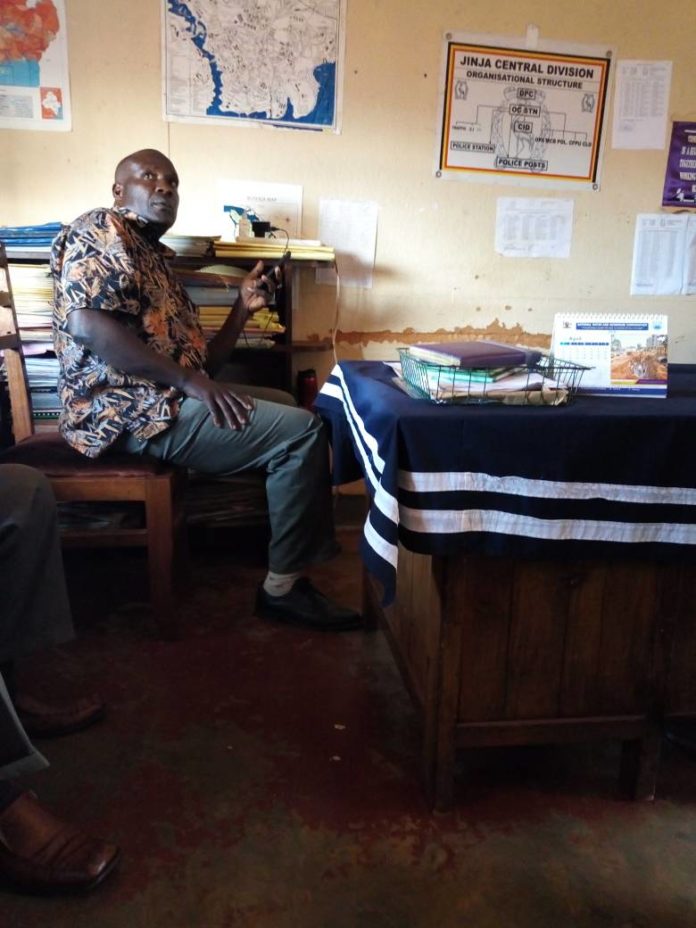
Jinja: A group of Forum for Democratic Change (FDC) leaders has stormed Jinja Central Police Station demanding the immediate release of NRM’s party chairman for Jinja Municipality, Julius Ziwa.

Mr Ziwa was arrested on Tuesday accused of desertion from police and election malpractices that marred the just concluded Jinja East MP by-election.

Ziwa supported the FDC candidate, Mr Paul Mwiru who trounced NRM’s Nathan Igeme. Kiira Regional Police Commander, Onsesmus Mwesigwa says Mr Ziwa is a serving marine officer at the rank of Inspector of Police.

That he used the rank to assault, insult, intimidate, character assassinate and sabotage candidates and bribe voters and procure names of voters other than those registered in the voter’s register which is contrary to Section 29 of the Elections Act.

But Jinja FDC diehards led by Municipal Council Speaker, Morrison Bizitu and party chairman for Jinja East constituency, Xavia Kasagira have today camped at Jinja CPS. They contend that the suspect must either be granted police bond or produced in courts of law.

We love our political opponent

Asked why it is them (FDC) asking police to release the NRM chairman, Mr Bizitu said: Leaving political differences aside, Mr Ziwa is a Ugandan who is entitled to a police bond like any other person.

“So we are demanding that he is either released or produced in courts of law on whatever charges,” he added before admitting that they were fighting for him because he openly supported their candidate, Mr Mwiru.

Police say, Mr Ziwa deserted the force some years back and that they have been looking for him because ‘he is supposed to live in the barracks’.

Rumour has it that some 5 year ago Mr Ziwa was suspended from the force over indiscipline. He got disgruntled and decided to apply for an early retirement which was never granted.

“He is a flight risk should he be granted bond. We shall hold him until the Human Resource Directorate of the force pronounces itself on his fate.” Mwesigwa says.

Ziwa’s woes stems from a meeting he chaired early this year in which he turned against his party flagger bearer, Igeme, criticized him and exposed his weaknesses and that of the party as he campaigned for Igeme’s rival.

On Saturday January 20, 2018 it is said that Ziwa met with NRM village chairpersons of Walukuba and Masese parishes in Jinja east and lured them to declare loss of moral support and confidence in Igeme.

Saul to Paul?

This meeting which Ziwa called in his capacity as NRM chairman of Jinja Municipality was held at Walukuba Community centre.

“We need to have a leader that can lobby for us. We have many challenges such as the sorry state of our health centre IV. Besides, however much we vote for NRM, we have benefited nothing much,” he is quoted to have told the meeting.

He took the same crusade to the radios and rallies a move believed to have weakened the NRM candidate and the party at large.

Efforts by the party Secretary General, Justine Kasule Lumumba to have Ziwa tone down yielded no fruits.

Even Igeme himself asked for forgiveness from Ziwa in case he had angered him or disappointed him in whichever way but Ziwa insisted the time was up for him.

Last month NRM lawyers petitioned the High Court in Jinja praying that it nullified Mwiru’s victory and declare their client, Nathan Igeme Nabeta as the duly elected Member of Parliament for Jinja East.

NRM insists that the election was riddled with electoral malpractices including multiple voting by known members of the opposition, voter bribery, intimidation and violence against Nabeta’s supporters.

Stories Continues after ad

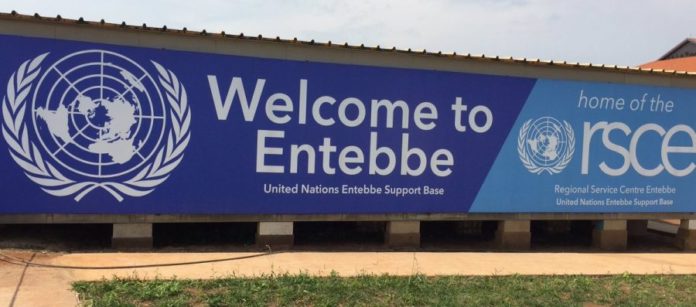
Entebbe UN base survival lies in the hands of Fifth Committee

UN Service Center at Entebbe Uganda

Kampala: Whether the United Nations Service Centre remains at Entebbe or moves to Kenya is now in the hands of the UN’s Fifth Committee—the Advisory Committee on Administrative and Budgetary Questions (ACABQ).

Addressing Parliament, Prime Minister Ruhakana Rugunda said the president has already sent a petition of protest and its government’s hope that the committee will reconsider.

“Our voice will be heard, our voice will be respected and the UN service center will remain in Uganda at Entebbe, it is unfair for UN base to be relocated it to our Neighbor Kenya,” the Prime Minister said.

In April UN Secretary General Antonio Guterres wrote a report to the committee after a review of 45 cities and he recommended for relocation of the base from Entebbe to either Nairobi, Mexico City, Kuala Lumpur, or Budapest.

The report will be debated and a decision taken by the Fifth committee sitting this month before going to the General Assembly plenary.

This afternoon, Lwemiyaga county MP Theodore Ssekikubo moved a motion imploring government to advocate for having the UN service base in Entebbe, saying it has contributed to financial advancement of this country through an estimated USD30 million revenue that is received every year.

Mr Ssekikubo said Uganda is taking part in peace missions all over Africa and urged to consider what Uganda is doing to foster peace.

“We should not let it go, Two weeks ago UN staff at Entebbe called me and told me about their fate, they want us to come in and roar our voices for this country to continue hosting UN base, in case it is relocated over 1000 Ugandans will be rendered unemployed,” he said.

He noted that UN staff use Ugandan hotels, eat Ugandan food and use Ugandan facilities, “We therefore need government to fight and retain this center,” he added.

Mbale Municipality MP Jack Wamanga Wamai said it is not too late for Uganda to lobby and have the base remain at Entebbe.

“We can talk to Kenya, to UN, we should put up a fight, we have done well with UNICEF, we are very peaceful, we have championed the emancipation of women, many UN officials are married to Ugandans, it would be so unfair,” he added.

Stories Continues after ad

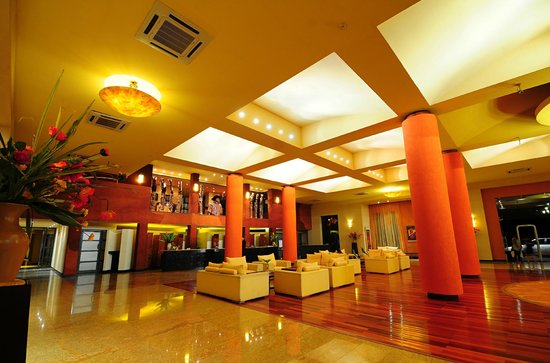
Munyonyo Commonwealth Speke Resort scoops global award

Speke-poolside-events-venue

Munyonyo Commonwealth Speke Resort has been recognized by Booking.com with a prestigious global award. The hotel has received the Guest Review Award for 2017.

Booking.com is an online OTS (Booking engine) where people go to book for hotel services around the world. Established in 1996 in Amsterdam, Booking.com has grown from a small Dutch startup to one of the largest travel e-commerce companies in the world. Part of Booking Holdings Inc.


Booking.com now employs more than 15,000 employees in 198 offices, in 70 countries worldwide.
While giving out this award, Booking.com looks at properties with an average review score of 8.0 and 10.

In their remarks booking.com said that Munyonyo Commonwealth Resort has offered great guest experiences and that the Guest Review Awards are a great way to showcase the achievement.

Stories Continues after ad

No compensation for leopard victim, UWA denies retrieving boy’s eyes

The Leopard that killed Baby Elisha Nabugyere at Queen Elizabeth National Game Park after being taken out of action

Kampala: The family of Elisha Nabugyere, the three year kid who was eaten by a leopard, will not be compensated for their loss.

Uganda Wildlife Authority compensation policy only caters for staff but not their family members.

The wildlife authority management will only look deep in their hearts to feel sorry for the little lad and pass on a package of their choice strictly out of compassion.

‘’With such accidents involving relatives of our staff members, the matter can be considered on compassionate and humanitarian grounds,” Mr Bashir Hangi, the UWA Communications Manager adding that management is still reading the tea leaves to see what it can do for the family though, he insisted, it is not mandatory.

He however said that workers are allowed to stay in the game parks with their families albeit insurance covering only workers.

He was echoing his boss’ last week’s sentiments when we asked him about compensation arrangements.

“You can not compensate for death of a human being,” the UWA Executive Director Sam Mwanda. “We shall do something but certainly not compensating for life.”

The late lad’s father police superintendent Francis Manana says he has never received a formal communication from the Uganda Wildlife Authority about the death of his son.

Meanwhile there were reports indicating that when killer leopard was hunted down and killed, the eyes of the deceased boy were retrieved from its intestines before it was buried.
However, the UWA refuted the claim.

“We only removed the skin for souvenir purposes and later buried the animal on police orders,’’ Mr Hangi said.
The father of the killed boy had earlier petitioned UWA to provide him with the boy’s retrieved eyes for a special burial arrangement following the purported rumor.

Nabugyere was last week killed by the leopard after him wandering from his nanny. His bones and skull were buried last week at his father’s ancestral home in Sironko.

Stories Continues after ad

Bad business as 24 banks incur Shs212b in bad loans

Customers-queue-up-inside-KCB-bank.

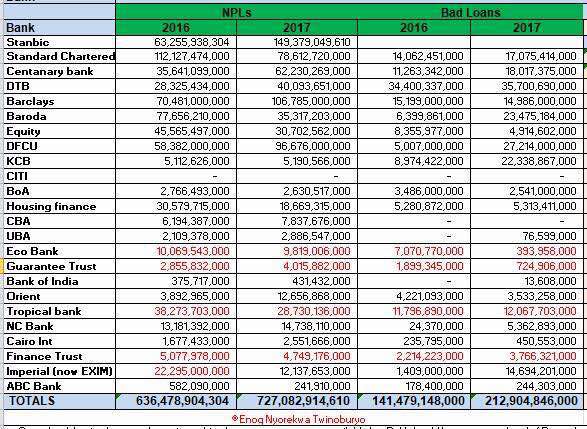
The loan business in Uganda’s banking sector was not good for 24 commercial banks in the year ended December 2017 as they realized a combined bad loan of over Shs212.90 billion compared to over Shs141.48 billion of bad loans posted in the year 2016.

The Longman Business English Dictionary defines a bad loan as; a loan where repayments are not being made as originally agreed between the borrower and the lender, and which may never be repaid.
Data indicates that Diamond Trust Bank (DTB), DFCU, Bank of Baroda and Kenya Commercial Bank Uganda had the worst loans in that reporting period.

DTB’s bad loans rose 3.8 per cent to reach Shs35.7 billion from Shs34.4 billion in the 2016.
DFCU, which acquired Crane Bank in January 2017, had 444 per cent rise in bad loans that year as the amount hit Shs27.2 billion from about Shs5.01 billion.

Bank of Baroda in 2017 had a sharp rise of 267.2 per cent in bad loans which were estimated at Shs23.5 billion from Shs6.4 billion recorded in 2016.
KCB’s bad loans in 2017 jumped 149 per cent to an estimated Shs22.34 billion from Shs8.97 billion in the previous year.

NC Bank had the sharpest rise of 21906 per cent in 2017 as bad loans went up to about Shs5.36 billion from Shs24.37 million.
However some banks like Equity Bank and Eco Bank had business of loans transactions improve slightly in 2017. Equity Bank had its bad loans come down to Shs4.91billion from Shs8.36 billion in 2016. On the other hand Eco Bank eased its bad loans to about Shs394 million in 2017 from Shs7.07 billion in 2016.

On the side of the non-performing loans (NPLs), all the 24 commercial banks in the year 2017 accumulated Shs727.08 billion compared to Shs636.48 billion in the year 2016.

Data shows that Stanbic Bank had the highest figure of Shs149.38 billion as NPLs in the year 2017 from Shs63.26 billion in 2016. On the other hand ABC Bank had the lowest NPLs of about Shs241 billion in 2017 compared to Shs582.09 million in 2016.

Banks supervisors consider a loan to be non-performing when more than 90 days have elapsed without the borrower paying the agreed installments.

a bank needs to keep the level of bad loans at a minimum so that it can still earn a profit from giving out loans. NPLs are a fact of life in the banking industry, as borrowers lose their jobs or businesses and fail to pay back.

Analysts say that once the value of non-performing loans exceeds a certain level, the bank’s profitability suffers because it earns less money from its credit business. As such banks need to put money aside a provision of some money, as a safety net, in case they need to write down or write off the loan.

A bank with too much bad loan, economists say, cannot properly provide investors with the credit they need to invest. If this happens to many banks on a large scale, it affects the whole economy.

Stories Continues after ad