Stanbic Bank
Stanbic Bank
23.3 C
Kampala
Stanbic Bank
Stanbic Bank
Home Blog Page 1595

Govt looks for Prof. Balunywa’s replacement at MUBS

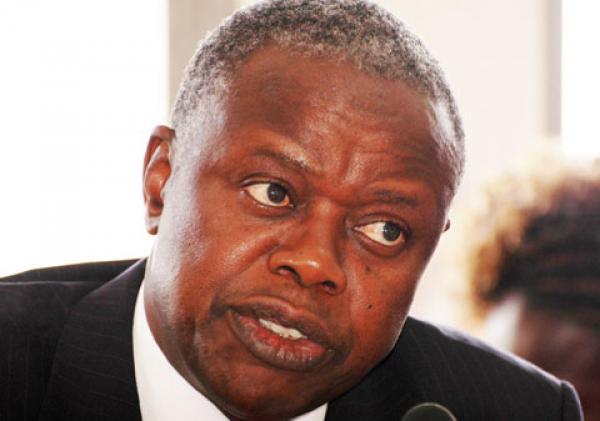
SET TO LEAVE MUBS: Prof. Wasswa Balunywa

The Minister for Education and Sports Janet Museveni has instructed the Education Service Commission to embark on the process of getting a new Principal for Makerere University Business School (MUBS) to replace Professor Waswa Balunywa.

Prof. Balunywa, whose tenure expires in May, has been at the helm of MUBS since 1997, but was appointed Principal in 2003and his contract has since been renewed on a three to five year basis.

According to a letter dated April 11, Mrs. Museveni implored the ESC Permanent Secretary to make a formal submission on the job specifications, duties and age requirement for the post.

And subsequently, quoting section 83 of the Universities and other Tertiary Institutions Act 2001, the Minister instructed the ESC to advertise for the position.

Prof. Balunywa is the brain behind the institution that started with a single bachelor and master’s programme but now has 16 undergraduate, eight graduate and two doctoral programmes, and with campuses in Jinja, Mbarara, Mbale and Arua.


Stories Continues after ad

Arsene Wenger to leave Arsenal at the end of the season

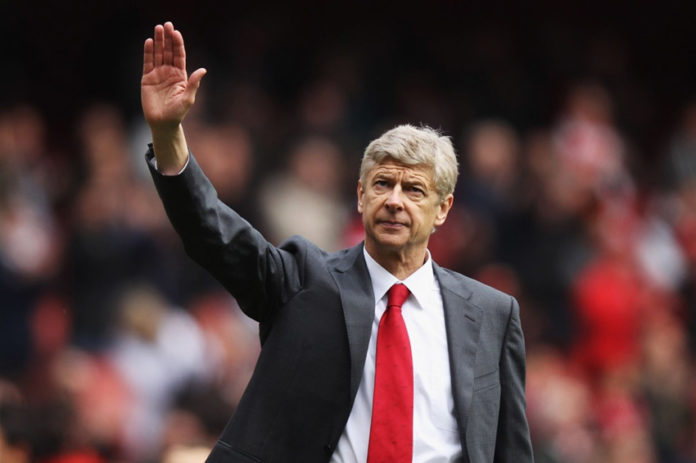
Arsene-Wenger

Arsenal manager, Arsene Wenger will leave Arsenal Football Club at the end of the season after almost 22 years at the club having won three Premier League titles and a record seven Football Association Cups.

Arsenal made the surprise announcement on Friday morning. Wenger signed a fresh two-year contract extension last summer.

The 68-year-old French manager released a statement on the Arsenal club website as it reads below:

“After careful consideration and following discussions with the club, I feel it is the right time for me to step down at the end of the season. I am grateful for having had the privilege to serve the club for so many memorable years. I managed the club with full commitment and integrity. I want to thank the staff, the players, the Directors and the fans who make this club so special. I urge our fans to stand behind the team to finish on a high. To all the Arsenal lovers take care of the values of the club. My love and support for ever.”

Wenger was appointed Arsenal’s manager in September 1996 and led the gunners to the double in his first full season in charge.

Another double followed in 2002 before the Invincibles campaign, when Arsenal won the 2003-2004 title without losing a single game.

Since 2005, Arsenal went nine years without winning a major trophy until 2014 in which they won the FA Cup.

The announcement comes after Arsenal board became concerned about declining attendances at the Emirates stadium. But today’s announcement suggests he has finally accepted he can no longer take the club forward.

Stories Continues after ad

Jennifer Musisi to speak at Mo Ibrahim Forum in Kigali

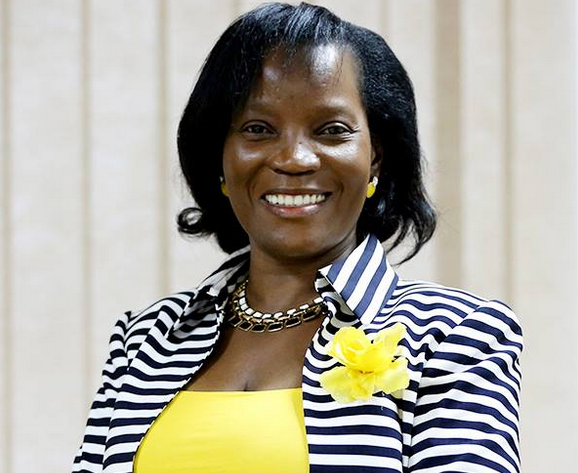
KCCA ED Jennifer Musisi

The profile of the Executive Director of Kampala Capital City Authority (KCCA), Dr.Jennifer Musisi continues to rise, and latest information is that she will be one of the keynote speakers at the 2018 Mo Ibrahim Forum in Kigali next weekend.

Over 10 prominent African nationals are expected to deliver speeches at the forum including Rwandan President Paul Kagame, who is the current Chairman of the African Union (AU).

Donald Kaberuka, Chairman and Managing Partner Southbridge Partners, former President, African Development Bank is also expected to speak at the forum.

For the first time, the Forum will be preceded on Friday 27 by a ‘Next Generation Forum’ where the young people will discuss as citizens what they expect from their public services, and as potential jobseekers the attractiveness, or lack of, of civil service, at national, local or regional level.

Dr Jennifer Musisi and other presenters will discuss the 2018 Ibrahim Forum Report released this week by the MO Ibrahim Foundation, based in London.

The Forum will focus on Public Service in Africa: its key relation to good governance and effective leadership, new challenges and current shortcomings, and the ways and means to strengthen it and make it appealing to the next generation.

Mo Ibrahim, Chair of the Mo Ibrahim Foundation says public service is the pillar of governance. “Without strong public services and committed public servants, there will be no efficient delivery of expected public goods and services, nor implementation of any commitment, however strongly voiced,” he says.

The debates will be moderated by Nancy Kacungira, Presenter, BBC News, and Ngaire Woods, Dean, Blavatnik School of Government, Oxford University

The 2018 Report first looks at the demand addressed to African public services, pointing at growing expectations from citizens. New demands stem from the 21st century’s multiple challenges and Africa’s specific young and urbanising demography: solidarity, protection against various criminal threats, jobs, business enabling environment, culture, climate change mitigation, rural sector development. These pile up on traditional demands – safety and security, health, education, justice – for which citizens’ dissatisfaction appears growing.

An additional load is the multiplication of multilateral commitments: SDGs, AU’s 2063 Agenda.  Many actors could be responsible for all these, within the public sector – African Union, Regional communities, national governments, cities, or outside of it – private sector, multilateral donors. This calls for a careful assessment of who is best positioned to address these demands and who has to pay for the delivery, the report says.

The Report further assesses the current state of African public services and their key challenges, both from the job attractiveness side and from the delivery side. On average, African public services display a continent-wide lack of capacity. They remain a relatively small employer, at a cost higher than in other regions, with large country disparities.

In health, education and security, public supply is far from answering the demand. Partly to answer the exponential demand, partly to substitute failing public supply, a growing range of non-state actors have become key providers of public goods and services, to an extent that may have sometimes prevented national governments from owning public policies, the report say. “Public employees in Africa are on average better educated than in the private sector and are also twice older on average than the population they serve,” it reads.

The report notes that job motivation is mainly about job security rather than wages, mobility within or outside public service is almost non- existent, political dependence is strong, working equipment is scarce, corruption is among the highest at global level, “ghost public servants” populate many services, while too many of the best-trained choose to work abroad.

The report notes that building public services in post-conflict settings, often from scratch, represents a specific challenge. But on a young continent whose ability to leap-frog has been often displayed, potential solutions and best practices exist: monetary and non-monetary incentives, internal and external mobility, capacity building, new technologies…

Concluding, the Report highlights the need to build a sound contract between citizens and public service providers. Trust being key to any sound deal, transparency and accountability need to be ensured, and commitments implemented.

On a continent where external financial flows are still equivalent to almost half of domestic tax revenues, where tax revenues only amount to less than 15% GDP on average, and where a majority of citizens are in favour of paying for their public services, strengthening tax collection is a key path to autonomy and ownership.


Report Highlights:

  • Only three countries – Libya, Mauritius and Tunisia, have at least one doctor per 1,000 people
  • Filling the void left by public services, private security, private education, and private health are rising exponentially, with the risk of widening inequalities on the continent
  • DRC and Kenya have some of the smallest police force rates globally, with around 100 officers per 100,000 people
  • Cairo’s population is larger than each of the 36 least populous countries on the continent
  • Five out of the ten African countries with the largest public health expenditures as a % of total government expenditure are also among the ten countries with the highest share of external financing of their total health expenditure
  • 30% to 50% of Africa’s total tax liability remains uncollected
  • The average size of the informal sector in sub-Saharan Africa is estimated at 42% of gross national income, reaching 60% in Nigeria, Tanzania and Zimbabwe
  • Sub-Saharan Africa, the average for private health expenditure is 57.4%, more than twice the level of Europe & Central Asia
  • In Nigeria, roughly 82.3 million bribes were paid in 2016, equivalent to 39% of the combined federal and state education budget
  • Mauritius is the only country where civil servants are appointed and evaluated entirely based on professional criteria, according to Global Integrity
  • Africa loses around $2.0 billion annually through brain drain in the health sector
  • 22% of Africa’s population who had contact with a public service in 2015 said they paid a bribe, mostly to the police and the courts
  • Ghana is the only country where civil servants operate entirely freely without political interference, according to Global Integrity
  • In e-government, Africa lags far behind the global average In Rwanda, the delivery time of an emergency blood supply with drones is reduced to 30 minutes from three hours by road
  • Many Indices point to a low and decreasing level of open government practices in Africa
  • Over the past decade, the African average for the Accountability of Public Officials has deteriorated, with the pace of decline worsening over the last five years
  • A majority of African citizens are in favour of paying for public services
  • Only seven African countries have a complete birth registration system
  • In Rwanda, the delivery time of an emergency blood supply with drones is reduced to 30 minutes from three hours by road


Stories Continues after ad

South Sudan army chief dead

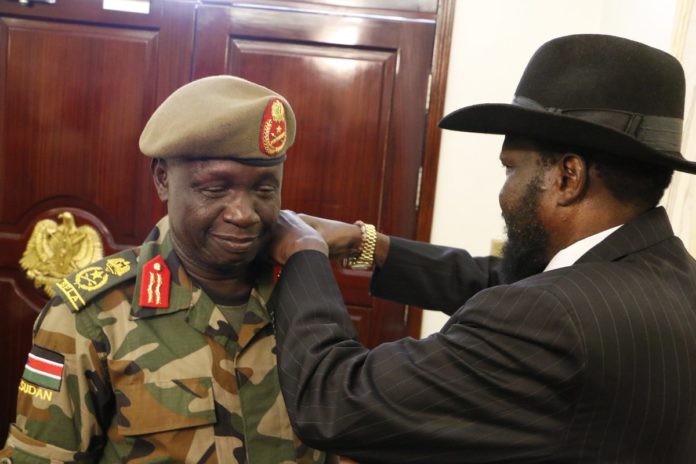
FLASHBACK: President Kiir decorates late Gen. James Ajong Mawut

South Sudan Chief of Defence Forces (CDF) General James Ajong Mawut has died.

According to a source, Gen. Ajong, who was appointed army boss by President Salva Kiir in May last year, reportedly passed on early today at the Egypt Military Hospital in Cairo.

A week ago media reports indicated General Ajong had died in a Kenyan hospital but he came out to deny the reports. At the time the General however admitted he was unwell and had undergone treatment for the kidney in Egypt.

South Sudan President Salva Kiir Mayadit has announced three days of national mourning for the fallen SPLA Chief who replaced General Paul Awan Malong as head of the South Sudan forces.


NB: We apologise for the earlier mix-up of photos and any inconvenience it may have caused.

Stories Continues after ad

Misuse of Shs13b puts Lady Justice Bamugemereire’s Commission in disrepute

Justice Catherine Bamugemereire

The Lady Justice Catherine Bamugemereire’ Commission of inquiry into land matters is yet to conclude its work, it is need of more money but its failure to account for all the Shs13 billion provided by the Ministry of Finance is likely to put the commissioners in disrepute given that they are investigating issues of corruption, transparency, ethics as well as exhibition of professionalism, among a few others. It could easy turn to be accused as the corrupt investigation corruption.

The Commission of Inquiry into land matters is in spotlight over extravagant expenditure even as it has not traversed all parts of the country. Many victims of land grabbing are still waiting whether Lady Justice Catherine Bamugemereire and her staff will reach their areas but when they here issues of mismanagement of billions of shillings in the commission, their hopes fade.in total, Justice Bamuemereire earns Shs68 million from chairing the commission but also continues earning her monthly salary as judge.

Remember the commission has received over 4500 cases that need its attention. But how will this be handled given the mismanagement of the allocated funds. The commission is also limited by time.
The Commission of inquiry was set up in 2016 to look into the effectiveness of the law and processes of land acquisition, administration, management and registration in Uganda following increasing land conflicts. Since they began work on May 3, 2017, they have been able to hand in an interim report to President Yoweri Museveni who appointed the commissioners.

Having failed to account for the first batch of the money, it appears the commissioners and their technical staffers thought that handing the interim report would force the ministry of finance officials to hand them the extra Shs7 billion needed to complete the inquiry. The refusal by the financial ministry officials to give the Commission the extra cash means Justice Bamugemereire should reign over the accounting officers to provide the accountability of the money used, with supporting documents attached. This is a normal accounting requirement yet accountants at the Commission didn’t do that. Where were they picked from?

Looking at the cash rewards of the Commissioners for the work they do, one only concludes that this country might never master the art of using the little financial resource it has. The commissioners are paid about $200 (about Shs720, 000) per sitting and $690 (about Shs2.5 million) per day whenever they travel abroad.
The team’s travelled to Ghana, United Kingdom, and South Africa where they have spent about seven days, cost the taxpayer about Shs470 million paid to the seven commissioners. If there was careful use of the Shs13b the commissioners could not be now crying for extra funding from the treasury. Readers would want to know the value that the officials’ trip outside country in as far as the work was concerned. Interestingly, the countries they have visited have different land tenure systems from that of Uganda and one wonder why the commission could visit such countries.

However, to blame also is the Finance Ministry, Time has come for the ministry to negotiate for the best rates on behalf of government agencies when it comes to hiring facilities like hotels and other items. This is because the ministry of finance mobilizes the funds and knows how hard it is to gather the money for public use. It should be able to guide other ministries and agencies and commissions on certain expenditures.
The plead that the last four months had had the commission staff work without any pay or allowances should be a learning lesson that money should be spent spa ring and with the country at heart. The country that still relies partially on donor funds cannot have its employees spent recklessly. That the Ministry of Finance, out of the extra Shs7 billion needed, can only extend Shs2 billion is indicative that the commission has not provided value for the first money provided.

With a backlog of so many files remaining to be attended to, it remains to be seen whether Justice Catherine Bamugemereire and her staff will successfully conclude their work in early May, 2018. It they fail they take the blame for failure to utilize the limited resources in the best way possible. They should have known that Uganda is chocking

Stories Continues after ad
Tech, low prices responsible for East Africa’s rapid growth – report

An official demonstrates how issues are handled

East Africa is the fastest growing region in Africa and according to a new report released by FinTechs, it has a combined GDP growth rate of 6.2 per cent.

Growth in the region has been driven by low commodity prices, regional integration efforts as well as heavy public investments. In addition, a decreasing inflation rate, low depreciation rates and a stable tax revenue to GDP ratio have all contributed to over 315 per cent increase in FDI inflows to the region over the last decade.

Private sector innovation has led to a technology revolution in the region. In particular, the M-Pesa revolution, government investments in Konza City, and the launch of innovation labs in the country have made Kenya the technology hub of Africa. This niche market is estimated to be worth $1billion by 2019.

This revolution has also brought about an increased flow of VC funding to the region. In 2016, out of a total of $121.9 million invested in East Africa startups, Kenya accounted for 76 per cent of this amount.

Identifying the immense technological opportunities present not just in the region, but also the continent, multinationals have set up offices to leverage the market.

Kenya serves as the regional office for most of these multinationals which include Google, IBM, Oracle, and Visa International.

East Africa has one of the fastest growing population in the world; growing at 2.7 per cent CAGR compared to the global rate of 1.2 per cent, creating a huge demand for basic services which includes financial services.

Given the already low penetration of formal financial services across all the countries, this increasing population is bound to widen the gap further and with a larger portion of the population concentrated in the rural areas, there is an increased need to come up with innovative ways of increasing access and usage of financial services especially in the rural areas henceforth the main reason behind Fintechs success in the region.

Apart from Kenya, the deposit penetration and access to banking services in the other East Africa countries is relatively low.

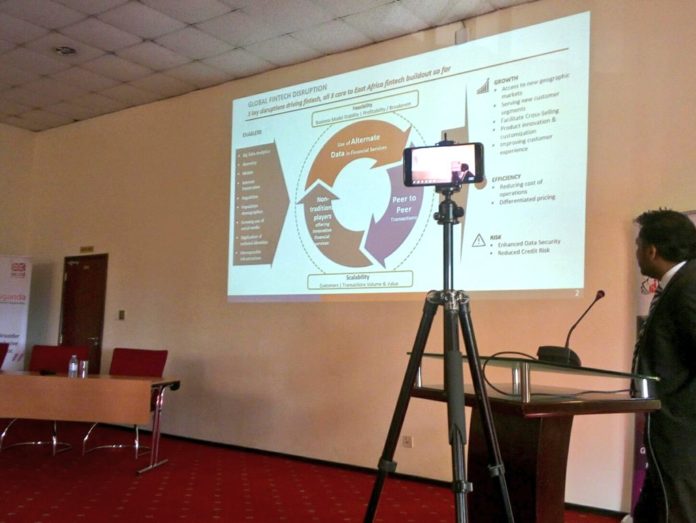
It’s thus not surprising that East Africa has always been hailed as the torchbearer to the fintech industry, driven by the same key – Use of alternate data, Peer to peer transactions, and the rise of non-traditional players offering financial services.

But the principle enabler in the region has been strong mobile and internet penetration, in the bottom of the pyramid segments, which have driven success using basic ussd technology.

Although currently low at 19 per cent, internet penetration in the region has been growing driven by a number of factors including the increase in smartphone adoption, rising middle class, increase in purchasing power, as well as ICT developments in the region.

Internet penetration subsequently enables e-commerce, online payment and processing, social media activities, distribution of financial services and the collection of large amount of data resulting from these activities. All these activities give rise to FinTechs.

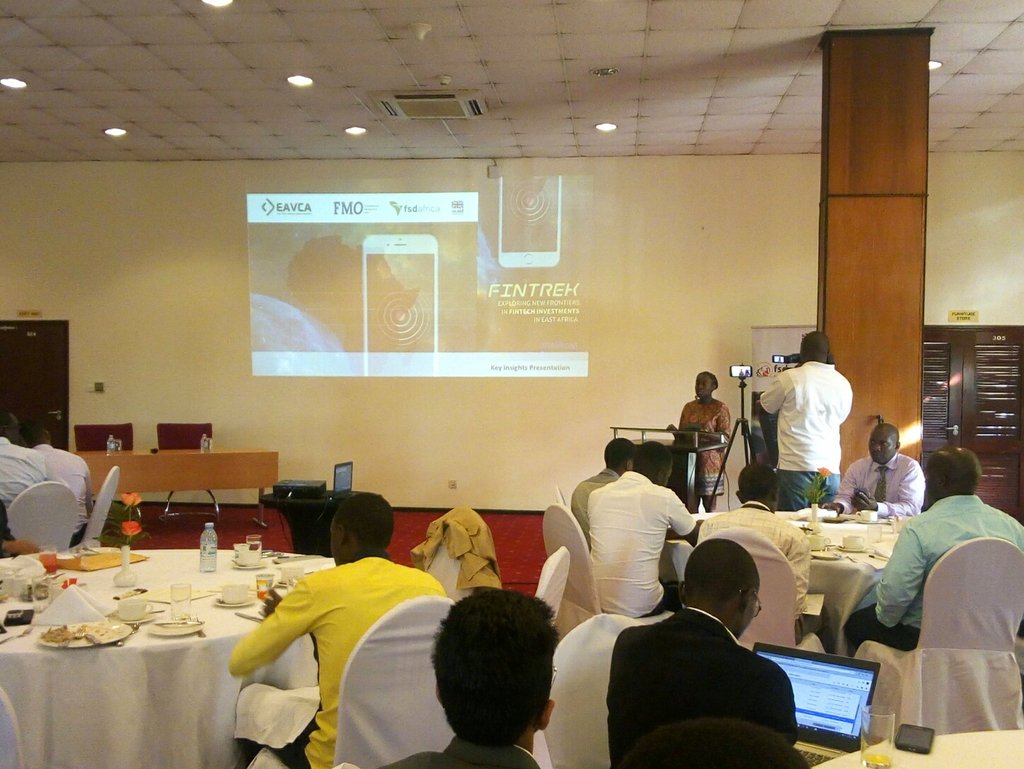
Commenting on the findings, Evans Osano, the Capital Markets Development Director at FSD Africa, said: “We are excited to have supported the Fintrek market research report together with FMO, Intellecap and EAVCA as partners and launching it to the investment marketplace as a whole.”

“The Fintech sector in East Africa is gaining momentum and has grown tremendously; CAGR 65 per cent in the last seven years. Fintech innovations continue to disrupt financial markets. We expect this disruption to spread further into the capital markets,” Osano added.

Given the increased interest from investors in this sector looking for potential investment opportunities not only for sectoral and risk diversification but also better returns, Osano said they believe the findings of this report will augment investments and partnerships within the Fintech space.

Speaking at the same event,  Financial Sector Deepening Uganda (FSDU) Executive Director Jacqueline Musiitwa said that the FinTech industry have developed fast and is increasingly getting acknowledged as a financial services sector of the 21st century.

Universally, it is accepted that FinTech has the potential to reduce costs and improve efficiency, allow customers to transact seamlessly and in real time, and improve providers’ understanding of customer behaviour and needs, allowing for the personalisation of financial services.

FinTech innovation in global financial markets is disrupting incumbent players in the financial market.

“At FSDU we strive to promulgate and enhance the cause to include majority of women, men and other disadvantaged Ugandans and refugees who are financially excluded to be able to access financial services. We do this by ensuring that we generate evidence and use such evidence to supports devolution of inclusive policies and products.”


Stories Continues after ad

Protect girls and women for a successful Commonwealth – Kadaga

Speaker Rebecca Kadaga speaking to delegates at fourth CWWF in London.

The Speaker of Parliament Rebecca Kadaga has called on heads of state of the Commonwealth member countries to come out with actions and way forward on issues pertaining to the protection of the rights of women and girls especially in developing countries.

“For CHOGM 2019, the heads of state should be asked to report among themselves on how far they have gone with the issue of combatting violence and achieving SDGs,” Kadaga said.

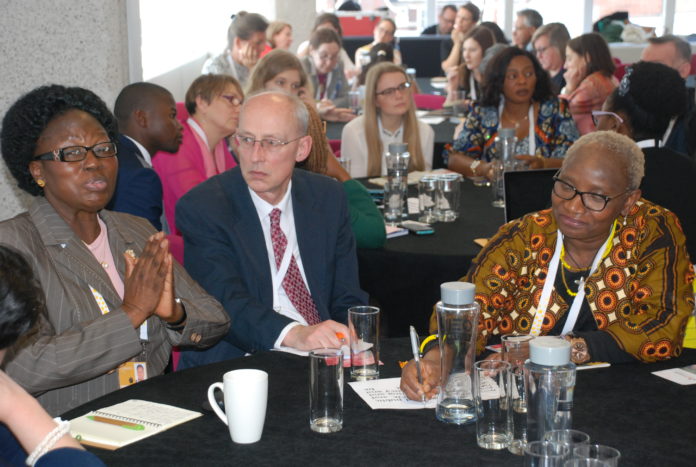
The Speaker made the remarks on the third day of the fourth Commonwealth Women’s Forum that sought to discuss issues which commonwealth heads of state could pick on for discussion during the 2018 Commonwealth Heads of Government Meeting.
The meeting that themed on eliminating harmful practices: child and early forced marriage and female genital mutilation, raised concern from women activists from countries where prevalence was very high.

Kadaga told the meeting that there was an urgent need to set up cross-border strategies especially in sub-Saharan Africa, to limit crossovers by perpetrators of female genital mutilation.
“Nobody is taking interest on the continent. They talk about it but I’ve never heard the African Union speak about FGM on the continent yet more than half the countries that practice it are in Africa,” said Kadaga.

Presenters at the meeting noted that it was necessary to involve the family and community at large, in the fight against FGM and early child marriages, adding that political will and apt legislation would go a long way in achieving success.

Also on the agenda was the involvement of women in leadership and electoral positions, which participants cited as far from success given that many societies hadn’t embraced emancipation of women as yet.

“Our laws are not specific on violence against women. They deal with disruption of elections at polling stations, but not with actual violence that goes on in homes and against female candidates,” Kadaga told the meeting.

She also made mention of the perennial issue of education where so many children were out of school; and commended governments like Ghana and Sierra Leone for committing to free quality education for 12 years.
The three day Commonwealth Women’s Forum also discussed empowerment of women with disabilities, eliminating child mortality in commonwealth member countries and promoting girl child education among others.

Stories Continues after ad

We want him out: NRM’s Igeme drags FDC’s Paul Mwiru to court

ANT's Paul Mwiru

The much anticipated petition by the ruling National Resistance Movement (NRM) party challenging the election of the Forum for Democratic Change (FDC)’s Paul Mwiru as Jinja East legislator has become practical.
NRM lawyers today presented the petition to the High Court in Jinja, praying that Mwiru’s victory is nullified.
Mwiru was declared winner of the hotly contested race against NRM’s Nathan Igeme Nabeeta.
According to the results announced by the Electoral Commission, Mwiru got 6,654 while his closes challenger; Nabeta got 5,043. The two were followed by an independent candidate – Faisal Masaba who managed 117 votes.
The rest of the candidates trailed scoring below one hundred votes each. This was the fourth time the two were facing off. And if NRM, which has decided to challenge the result in court wins, there might be a fifth face-off ahead.
Although voting was delayed by the downpour that started around 6am and went on throughout the afternoon, voters turned up in good numbers at the various polling stations.
Rigged
But a day after the elections, NRM Secretary General, Justine Kasule Lumumba called a press conference and rejected the results.
At the press conference Lumumba who was flanked by the party spokesman, Rogers Mulindwa, Jinja West MP, Moses Grace Balyeku and Igeme himself.
Lumumba said that the election was riddled with electoral malpractices including, multiple voting by known members of the opposition, voter bribery, intimidation, violence against Nabeta’s supporters.

“We are in possession of evidence that the election was riddled with malpractices and we have submitted this evidenced so far collected to our legal team to assess and advise us on our next move,” said Ms Lumumba.

Lumumba added that if the legal team finds it suitable, they will challenge the results in the courts of law.
“Known NRM supporters were warned of dire consequences should NRM emerge victorious; goons were stationed at residences of many NRM supporters to scare them away from polling stations,” she said

NRM further charged that the chairman of its election taskforce had been roughed up and windscreens of their buses smashed by opposition supporters. During a briefing on cabinet decisions at the Uganda Media Centre on Tuesday March 20, 2018, information minister Frank Tumwebaze said Lumumba had briefed ministers on the legal action the party intends to take.

Arrests
Since Monday April 9, 2018, police in Jinja in collaboration with other security operatives have been carrying out arrests in Jinja Municipality East.
Among those who were only released on police bond after five days of detention is at various police stations are Jinja Municipal council Speaker Morrison Bizitu, former Walukuba Masese Division LC III chairman, Muhammed Musisi Kibugudhu Badman, Jinja Central Division councilor representing PWDs, Joseph Kintu and another FDC supporter, Peter Nagano. These were arrested together with 10 Electoral Commission officials who presided over the recently conducted Jinja East by election.

It is alleged that the ‘Mwiru supporters’ who served as polling officials illegally added ghost voters in the registration Database.

Section 29 of the Election Commission Act states that any person who by himself or herself or any other person procures the registration of himself or herself or any other person on a voters roll for a constituency, knowing that he or she or that other person is not entitled to be registered on that voters roll or is already registered on it or on another voters roll or by himself or herself or any other person procures the registration of a fictitious person, commits an offence and is liable on conviction to a fine not exceeding thirty currency points or to imprisonment not exceeding one year or to both.

Evidence
Butalejja Resident District Commissioner, Richard Gulume Balyaino told this writer on Saturday last week that “our camp has been receiving evidence to confirm that Mwiru rigged.” Gulume, a resident of Jinja and who was in the Igeme campaign team said the party had obtained video footage, audios, still photos and confessions from some of the FDC stalwarts who executed the rigging, voter bribery, intimidation of voters and threatened violence.

In fact several election observers claimed that the election was marred by violence, intimidation, voter bribery and other electoral malpractices coupled with heavy.
The Igeme camp also accused the heavily deployed police of connivance with Mwiru to only look on as he broke the electoral laws.

In the aftermath, the Kiira Regional Police Commander, Gerald Twishime and the Jinja Central Divisional Police Commander, Martin Mbabazi were suspended and put under investigations.
Ready
But on knowledge that the ruling party has gone to court, the FDC camps says it is not at all scared. FDC vice president eastern region, Salaam Musumba said last evening: There we go again!
“They (NRM) learnt nothing and forgot nothing. If they had a good case like that, why did they first arrest innocent people? Ok we go to court,” one FDC supporter said.

Jinja Central Division LC III chairman, Kirunda Mubarak said NRM was simply again wasting their resources. In fact he described the petition as a fake dollar saying that they (FDC) had the trust and the will of the citizens of Jinja East.
Notwithstanding the FDC’s take, a journalist who covered the election and spoke on condition of anonymity said the NRM claims hold water. The journalist said he had witnessed incidents at Main Street primary school polling station, where opposition youths prevent those perceived to be NRM supporters from proceeding to vote.

“I have the footage my brother. And remember at one press conference Mwiru himself incited his supporter when he told them to kill anyone who would stand in their way,” says the reporter.
Should the NRM win the case in court, Mwiru and Igeme will go for the fifth contest.

Stories Continues after ad

Court refuses to compel Facebook to disclose TVO’s identity, location

Facebook

Ugandan lawyer sued Facebook Ireland over allegedly defamatory posts by an anonymous blogger
A Ugandan lawyer who has sued Facebook Ireland over allegedly defamatory posts by an anonymous blogger has lost his appeal seeking the identity and location of the blogger.

The Court of Appeal said lawyer Fred Muwema’s right to also bring defamation proceedings against a blogger who goes under the pseudonym TVO (Tom Voltaire Okwalinga) was outweighed by the risk to life or bodily integrity of TVO from the Ugandan authorities if his identity is disclosed.

Mr Muwema claims he was defamed in a number of posts by TVO.
He brought defamation proceedings and sought orders to have the posts taken down by Facebook Ireland because it provides the social media service to all users outside of the US and Canada.
The posts were removed but Mr Muwema also sought the identity of TVO so that he could join him in the defamation proceedings against Facebook, which denies his claims.

Facebook opposed revealing TVO’s identity without a court order. It argued there was evidence to show, if the identity was disclosed, TVO would be exposed to arrest and ill-treatment at the hands of the Ugandan authorities.
TVO has posted material critical of the Ugandan government which also wants to know his identity.

In the High Court last year, Mr Justice Donald Binchy refused to order identity disclosure saying the threat to TVO was sufficiently serious that Mr Muwema’s right to a good name had to take second place to TVO’s right to life and bodily integrity.
Facebook had provided evidence from award-winning Ugandan human rights lawyer, Nicholas Opiyo, who said a man called Shaka Robert, who he said was widely believed to be TVO, had been subjected to abuse of his rights by the Ugandan authorities over online activism.

Mr Opiyo represents Mr Robert and says his client has been held in a detention centre in Kierka, Kampala, notorious for torture, and held incommunicado in breach of his constitutional rights.
Despite getting a court order directing Mr Robert’s release, Mr Opiyo said the authorities had refused to comply and instead charged Mr Robert with “disguising himself as TVO between 2011 and 2015” and with posting statements on Facebook to “disturb the right of privacy” of Ugandan President Yoweri Museveni.

Mr Robert was eventually released on bail but when he attempted to travel for a holiday, was again arrested at Entebbe Airport and accused of theft before being later released in the dead of night, Mr Opiyo said.
Anyone arrested on suspicion of being TVO is subjected to extreme abuse of their rights, often in violation of court orders, he said.
Mr Muwema, in his appeal, said the High Court had placed too much weight on the “hearsay affidavit evidence” of Mr Opiyo and of Facebook’s own lawyer in Ireland, Jack Gilbert, and an Amnesty International report.
It was argued the trial judge placed too little reliance on Mr Muwema’s affidavit which said, among other things, that Facebook’s claims about Uganda were unnecessarily alarmist.

Mr Muwema also said the justice system in Uganda is generally fully functional and serves justice to everyone, including government critics and “compares favourbly to other leading countries in Africa”.
Facebook opposed the appeal.

Giving the decision of the three-judge Court of Appeal, Mr Justice Michael Peart said he would not interfere with the High Court decision.
It was inevitable the risk established by the evidence should be considered to outweigh Mr Muwema’s right to bring proceedings against TVO, he said.

Mr Muwema, he noted, already has a defamation case against Facebook and, if successful, will be compensated. Facebook is defending the claim, including on the basis that it is not a publisher of the defamatory material, the judge also noted.

Stories Continues after ad

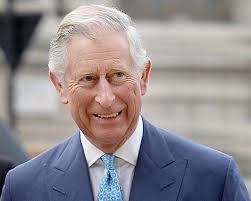
Queen Elizabeth backs son Prince Charles to take over Commonwealth role

Prince Charles

Queen Elizabeth II has said it is her ‘sincere wish’ that her son, Prince Charles, carries on her work as leader of the Commonwealth ahead of a critical decision on who shall serve as head of the group due on Friday.

Speaking at the opening of the Commonwealth Heads of Government meeting in London on Thursday, her Majesty said she never could have guessed that in 1952 when she became leader of what was then eight nations, it would later comprise 53 and 2.4 billion people.

“It is my sincere wish that the Commonwealth will continue to offer stability and continuity for future generations, and will decide that one day The Prince of Wales should carry on the important work started by my father in 1949,” she said, ahead of her 92nd birthday on Saturday.

“By continuing to treasure and reinvigorate our associations and activities, I believe we will secure a safer, more prosperous and sustainable world for those who follow us: a world where the Commonwealth’s generosity of spirit can bring its gentle touch of healing and hope to all.”

The comments are the first by the monarch to tacitly address the issue of succession at what is widely regarded to be her last Heads of Government meeting as she no longer travels long distances.

The next biannual summit will take place in Malaysia and she recently sent Prince Charles as her representative to the Commonwealth Games on the Gold Coast.

However the Queen also noted she was “mindful as always that this summit of Commonwealth leaders draws its mandate and authority from our member countries collectively” in declaring the summit open.

Leaders will discuss the issue of succession at a leaders’s retreat on Friday at Windsor, where Prince Harry and Meghan Markle will marry in just under one month’s time.

While the monarch does not have to serve as head of the Commonwealth, Australia supports the “continuation of the British monarch” in the role, Foreign Minister Julie Bishop said this week.

UK Prime Minister Theresa May also paid tribute to the Queen in her opening speech, offering “heartfelt thanks” for her service in the role over many decades.

“Over many years you have been the Commonwealth’s most steadfast and permanent champion,” she said.

“You have seen us through some of our most serious challenges. And we commit to sustaining this Commonwealth, which you have so carefully nurtured.

“For your service, for your dedication, for your constancy – we thank you.”

Prince Charles described the meeting as an “occasion to celebrate with renewed pride our remarkable Commonwealth family.”

“The modern commonwealth has a vital role to play in building bridges between our countries,” he said.

“I pray that this CHOGM meeting will not ony revitalise the bonds between our countries but give the Commonwealth a renewed relevance to all its citizens.”

It’s the first time the UK has hosted the summit since 1997 in which leaders will meet to discuss global issues like climate change, trade, security and democracy.

On Thursday evening UK time, the Queen will host a dinner at Buckingham Palace for heads of government and their spouses and partners ahead of a leader’s retreat on Friday at Windsor Castle


Stories Continues after ad