Stanbic Bank
Stanbic Bank
25.7 C
Kampala
Stanbic Bank
Stanbic Bank
Home Blog Page 1607

Soy company first beneficiary of EU’s Yield Fund, receives Shs1.6bn

European Union funded Yield Uganda; an Investment Fund has made its maiden investment in Uganda committing Shs1.6 billion to Sesaco Limitd, a soy processing company.

The investment aims at improving the company’s
production facilities while stabilising and preparing the business for a larger expansion and growth in the future.

As part of Yield Fund package, Sesaco will enjoy benefits from Business Development Support to the technical and governance aspects of the business. A family-owned company, Sesaco is located in Kyengera Town, near Kampala.

It processes, packages and sells several high-protein soy products, including soy cup, and soy, maize and millet flours which have various nutritional benefits.

Majority of customers for Sesaco’s products are NGOs and institutions which provide food to underprivileged and malnourished persons, including refugees.

“We are excited to have Yield Fund for believing in us and investing in our business. Their commitment to supporting the agribusiness sector in Uganda will be encouraging to many. We also look forward to an interesting relationship with the PCP team which has considerable experience investing in agribusinesses in the entire East African region,” said Sesaco’s founder and Chief Executive Officer, Charles Nsubuga.

The European Union Ambassador. Attilio Pacifici expressed his satisfaction with completion of the Fund’s maiden investment.

“The first investment of Yield Fund marks an important milestone. It is the result of continued efforts and commitment from the European Union to support the agribusiness sector by lowering the cost and risk of investment. In accessing long-term capital needed for the modernization and expansion of their business, Sesaco is expected to create jobs and contribute to Uganda’s economic growth,” he said.

The International Fund for Agricultural Development (IFAD) is involved in the management of Yield Fund.

Speaking on behalf of IFAD, its Country Manager Alessandro Marini said, “IFAD is pleased with this first investment of Yield Fund to Sesaco. The vision of the company to expand its network of smallholders and improving nutrition offering in the country is a journey that we are happy to support. IFAD is keen to support the local agro-SMEs, like Sesaco, who provide a positive impact proposition and clear linkages and markets to the smallholder farmers of Uganda”.

Edward Isingoma Matsiko, PCP Partner responsible for the transaction said: “Sesaco is a story of hard work, commitment and passion. With this
Investment of Yield Fund, we believe the company will be able to modernize its operations and increase efficiency”.

The business has enormous growth potential: with increased production from farmers who will benefit economically from soy farming and better internal operations, Sesaco will deliver a greater product to the Ugandan consumer.

“We are delighted to spearhead the company’s growth in this first phase of our investment.”

The Fund was launched in January 2017 with commitments of €12million, anchored by €10 million from the European Union (EU) through the International Fund for Agricultural Development (IFAD), and €2million committed by National Social Security Fund Uganda (NSSF).

The Fund offers innovative financial products such as equity, semi-equity and debt funding.

Additionally, an integral and complementary part of the Fund’s investment process will be used to support the operations of its investee companies through matching grants for Business Development Support (BDS) funded by the EU.

Stories Continues after ad

Traffic mess as Museveni closes roads

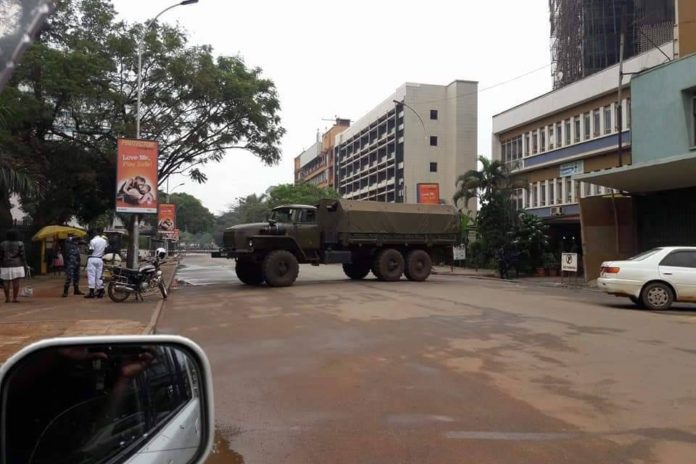
Motorists using roads that ring around Parliament have endured hellish gridlocks this afternoon after President Museveni’s Special Forces Command (SFC) operatives closed off major access roads.
By 7:00am,SFC operatives had closed off the busy Parliament Avenue and adjacent roads, cathching motorists unawares and forcing them to make dangerous U-turns in the middle of roads, triggering chaotic traffic snarl-ups.
No prior notice was given to motorists on social media warning about the planned closure of the roads and matters were made worse that Museveni who was expected at Parliament by 9:00am showed up way past 3:00pm.

The closure of Parliament Avenue, a notoriously busy intersection, meant that connection to City Hall, Prison’s Headquarters, Ministry of
Education, Ministry of Justice and other hectic government
installations was cut.
To add to the traffic chaos, the National Theatre was hosting students who were being ferried in buses, causing more congestion.
Some motorists spent hours stuck in the congestion and could be seen angrily exchanging with traffic officers
Inside Parliament, MPs were involved in angry exchanges with SFC operatives as they forced them to use the lower parking.
Mr Museveni was at Parliament to launch the Uganda Parliamentary Forum on Malaria and Mass Action against Malaria (MAAM).

Stories Continues after ad

MTN apologises to Bagyenda over leaked Shs500m mobile money transactions

Embattled former Executive Director in charge of Supervision at Bank of Uganda Justine Bagyenda.

Mobile Telecommunication giants MTN has apologized to former Executive Director in charge of Supervision at Bank of Uganda Justine Bagyenda over leaked account details of her mobile money transactions.
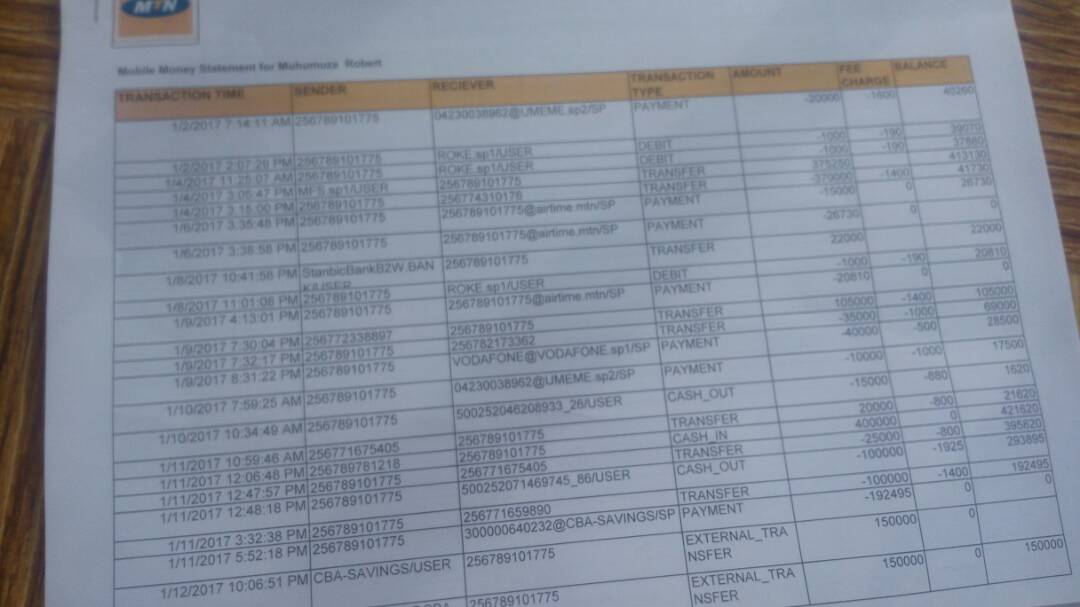
A fortnight ago, Eagle Online exposed the account details of Ms. Bagyenda with particulars indicating that she have transacted ‘Shs500 million in three years on her mobile money account.
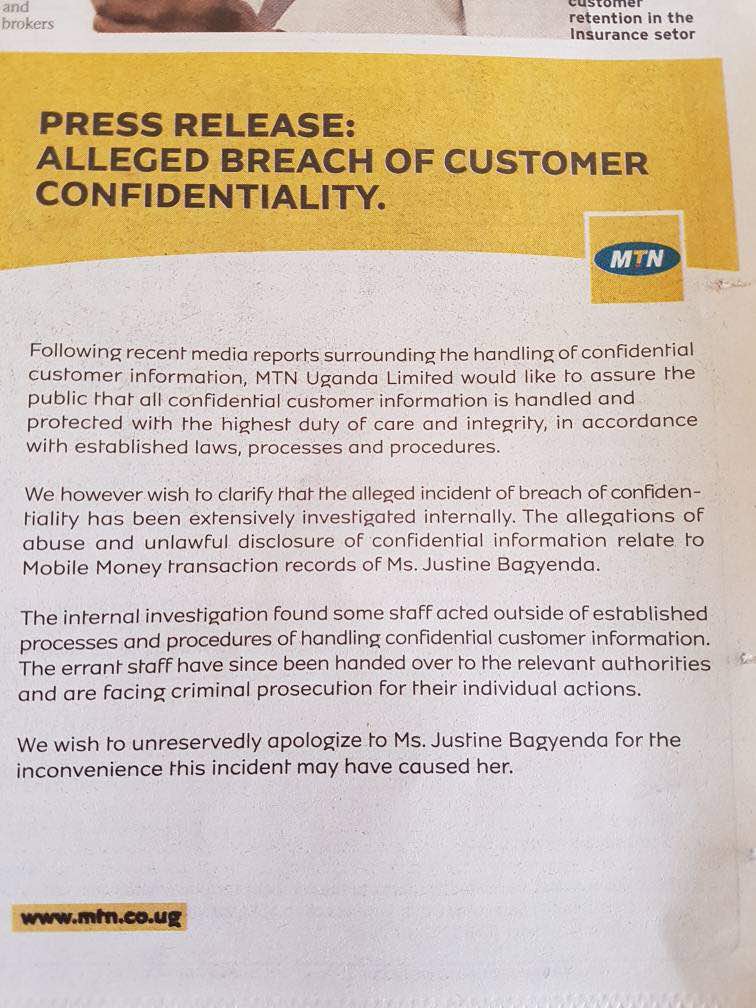
MTN says following recent media reports surrounding the handling of confidential customer information, MTN Uganda would like to assure the public that all confidential customer information is handled and protected with highest duty of care and integrity, in accordance with established laws, processes and procedures.
“We however, wish to clarify that the alledged incident of breach of confidentiality has been extensively investigated internally. The allegations of abuse and unlawful disclosure of confidential information relate to mobile money transaction records of Ms Justine Bagyenda. Reads the apology.

“The internal investigation found staff acted outside of established processes and procedures of handling confidential customer information. The errant staff have since been handed over to the relevant authorities and are facing criminal prosecution for their individual actions. We wish to unreservedly apologise to Ms Justine Bagyenda for the inconvenience this incident may have caused her.
Leaked documents from telecommunication giant, MTN reveal that former Executive Director in charge of Supervision, Justine Bagyenda made mobile money transaction of close to Shs500 million on her number in three years.
The documents show that Bagyenda and her son, a one Robert Muhumuza both could have transacted to Shs500 million although most of the transactions on their numbers where deposits from other number. Much of the money didn’t last as it is immediately dispatched to other accounts.

She has been supervising any cash transaction in the country given her former role as in-charge of supervision at the central bank mobile money inclusive.
Eagle Online early reported that in two years, embattled Bank of Uganda Executive Director Justine Bagyenda wired Shs683 million to an account in Centenary Rural Development Bank held in the name of Kenny Muwonge, a man believed be her errand boy, as bank documents in possession show.

Stories Continues after ad

Son to top army officer kidnapped as abductors demand Shs15m ransom

On Thursday night the son to Lt. Col. Francis Ongia by name of Denis Alyenyo aged 33 years was kidnapped by unidentified people from his home at Magamaga Barracks in Jinja.

However the family got to know about the incident after the kidnappers calling the mother of Alyenyo using his phone and informing her that they are only willing to work with her and all they need is Shs15 million and that she is not supposed to even to tell media or husband about the kidnap.

She immediately informed husband as she was given a chance to talk to their son who was crying in pain which indicates he was being tortured. Col. Ongia immediately went to check where Alyenyo was staying and they found the door open and = neighbours were not aware of what had happened to Alyenyo.

According to Lt. Col. Francis Ongia is reported to have said that “we expect these people came and he knew them and he opened for them to come in and they immediately took him because he left his spectacles which he can’t do without”

Col. Further narrated to the neighbours to his son that “if money is what will bring my son back am willing even to give more because you have seen what these people are able to do but I want to know that my son is still alive”

At police in Jinja they say “he was kidnapped by people he knew as there where no brawls heard by the neighbours and expect there where misunderstandings between them or with his father. But Col. Ongia denied any of the allegations
Denis Alyenyo has been working with the Ministry of Defence as a civilian in Magamaga Barracks however he has also been running canteens in the barracks.

Stories Continues after ad

PwC, KPMG, Deloitte &Touch have conflict of interest in BOU-Crane Bank investigations-sources

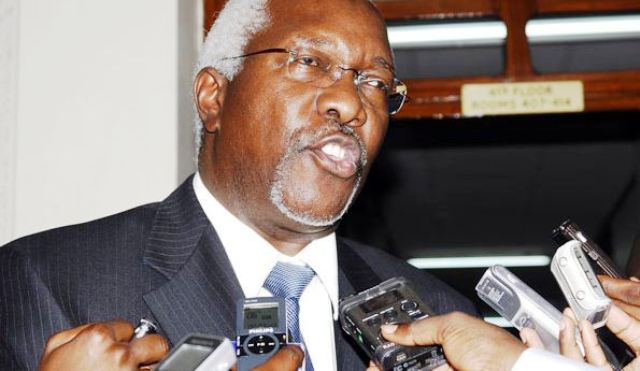
Auditor General, John Muwanga

Three firms shortlisted for the impending Bank of Uganda (BOU) investigations over the sale of Crane Bank may have to pull out the process if the investigations are to be considered credible.
The five firms shortlisted are KPMG, Pricewaterhouse Coopers (PwC), Deloitte and Touch. However, it should be noted that KPMG and Pricewaterhouse Coopers worked with defunct Crane Bank as its auditors.
Pricewaterhouse Coopers did a forensic audit upon which BOU relied on as a basis to file a case in a commercial court division, claiming one of the major shareholders Sudhir Ruparelia and Meera Investments has duped the bank of about Shs400 billion. The case is pending in court awaiting hearing.
On the other hand KPMG and Deloitte and Touch are said to have worked for defunct Crane Bank, which also, for purposes of transparency puts the two firms out of the process. They have also worked for BoU and Auditor General on several other inquiries.
Elsewhere, PwC was banned in India whereas KPMG was banned in South Africa for double dealing, which is against the code of ethics of the accounting profession.
India’s securities regulator has banned the global accountancy firm PwC from auditing listed companies in the country for two years, after it failed to spot a $1.7bn fraud at the defunct Satyam Computer Services. In a damning 108-page report, the Securities and Exchange Board of India wrote that PwC had neglected to check “glaring anomalies” in the financial details reported by Satyam, whose downfall was one of India’s worst financial scandals in recent years.
Business Leadership South Africa (BLSA) has decided to suspend KPMG’s membership pending the outcome of an independent investigation.
The BLSA board says it recognises the considerable steps announced by KPMG to change its leadership and start a process of “cultural change”. However the organisation cannot ignore the gravity of the firm’s conduct.
The auditing firm has lost several clients after the firm released the findings of its internal investigation which revealed serious failings in the work it did for Gupta-linked companies and Sars.
BLSA’s CEO Bonang Mohale says the organisation took this bold step because what KPMG has done goes against its values.
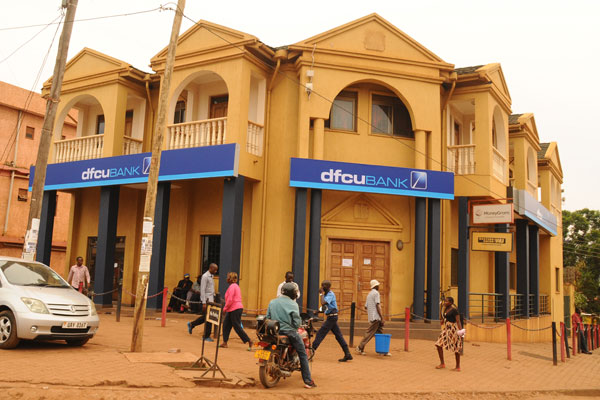
The controversial sale of Crane Bank of its competitor dfcu Bank early last year by Bank of Uganda (BOU) caused outcry within the banking industry as well as the general public, something government has followed and now BOU is to face an investigation which is expected to dig out the rot in the central bank’s regulatory operations.
The Auditor General (AG) John Muwanga has for purposes of transparency listed five audit firms from which he will pick to carry out the investigations that should pin BOU Governor Emmanuel Tumusiime-Mutebile and sacked director for supervision Justine Bagyenda. Whether it gives them advantage or disadvantage will be known when the best bidder is selected to do the job that is likely to change regulatory operations at the central bank but also bring to surface the overlooked issues as BOU sold Crane Bank to dfcu at Shs200 billion against held assets worth Shs1.3b, leave alone the loans Crane Bank was in the process of recovering.
Meanwhile, Abdu Katuntu (Bugweri Constituency), the Chairperson of Parliament’s Committee on Commissions Statutory Authorities and State Enterprises (COSASE) has welcomed the move to shortlist the firms but also expressed that any auditor must do a professional job in case they win the bid. According to MP Katuntu, parliament wants the AG to audit the management and sale of defunct commercial banks in the country. Parliament also wants an investigation into disputed agreements BOU signed with dfcu Bank and issues such as supervision, guidelines and policies.
Reports say President Yoweri Museveni is keen on knowing what exactly happened as BOU sold Crane Bank. He is also not happy with the operations at the central bank, sources say. Days ago he held a meeting with Mutebile and Irene Mulyagonja, the Inspector General of Government (IGG). It followed a dispute on staff changes at BOU.
The IGG had received complaints from the affected staff. Former owners of Crane Bank accuse BOU management of selling their bank without their approval. They argue they were kept out of negotiations, which they say contravenes provisions of the Financial Institutions Act which governs the local banking industry. Having acquired Crane Bank, dfcu has been earning profits as reported for the two halves of 2017. The first half saw dfcu make profit of Shs114 billion; this was far higher than the profit it made in second as reported late last month.

Stories Continues after ad

Jay-Z cried when discovered mum was gay

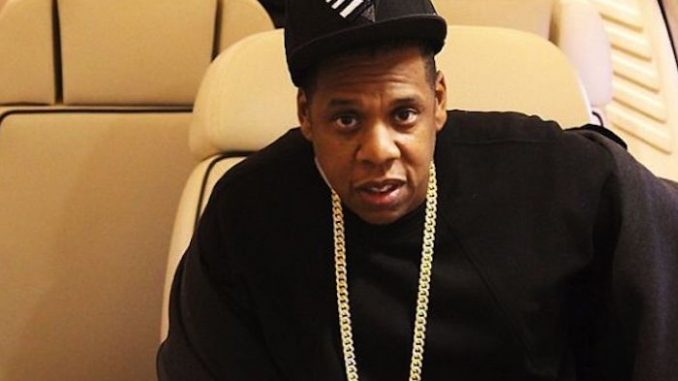
Jay-Z says he cried with relief when his mum told him that she is gay.
“I was so happy for her that she was free,” the rapper told David Letterman on his new Netflix show.
Jay-Z raps about the moment in the song Smile, on his latest album 4:44.
“Mama had four kids, but she’s a lesbian/Had to pretend so long that she’s a thespian. Had to hide in the closet, so she medicate/Society shame and the pain was too much to take.”
Later in the track the 47-year-old says he’s happy his mother has found love again.
“Imagine having lived your life for someone else. And you think you’re protecting your kids,” Jay-Z said on My Next Guest Needs No Introduction.
 Newsbeat documentary: My Lesbian Mums
“For my mother to have to live as someone that she wasn’t and hide and like, protect her kids — and didn’t want to embarrass her kids… for all this time.
“For her to sit in front of me and tell me, ‘I think I love someone’. I mean, I really cried.”
The rapper says he’d known for a long time but only spoke to his mum about it eight months ago, when the album was being recorded.
“I knew. But this was the first time we had the conversation,” Jay-Z said.
“And the first time I heard her say she loved her partner, like, ‘I feel like I love somebody’. She said, ‘I feel like’. She held that little bit back, still.
“She didn’t say, ‘I’m in love’, she said, ‘I feel like I love someone’, and I just, I cried.
“I don’t even believe in crying because you’re happy. I don’t even know what that is. What is that?”
The Jay-Z episode of My Next Guest Needs No Introduction starts streaming on Netflix on 6 April.

Stories Continues after ad

NOTU, other trade unions opposes salary increase for workers

NOTU Secretary General, Christopher Peter Werike (R) and Usher Wilson Owere the NOTU

National organization of trade union (NOTU) with seven affiliated public service labour unions has protested government’s move to enhance workers pays without consulting workers.
Last year civil servants from various government institutions went on industrial actions demanding for among others pay raise and improvement in the their working conditions.
However, this year a leaked document from the Ministry of Finance, Planning and Economic Development indicated that among others servant, primary teachers who currently earn Shs377, 781 will start earning Shs621, 320.
According to a document released by Secretary General of NOTU Peter Christopher Werikhe inviting unions to an emergence meeting today, government is not only unlawful but unfair, to raise their salaries without negotiating with them.
‘’It is calculated at undermining workers and their trade unions as this must be resisted with all energies of various unions put together, Salaries must be negotiated for between government and trade union, therefore it is wrong for government to create an impression that it is doing workers and trade unions a favor.”
The meeting with trade unions will is expected to mark the endorsement and rubber stamp government unfair proposals and not to negotiate and sign a collective bargaining agreement between the parties before implementation as is required by law.
“Government approved and communicated to the accounting officers what it believes to be a salary enhancement and a letter of Permanent Secretary to the Treasurer and Ministry of Finance dated March 20, 2018 addressed to Accounting Officers for implementation of the same, It is no longer a secret, but abuse of the right of workers and their trade unions and cannot be accepted.” Reads part of the document.
He noted that government should accept that their alleged salary increment is mere drafts proposals for negotiations between it and trade union.
Seven affiliated public service labour unions include Uganda medical workers union (UMWU), Uganda nurse and midwives union (UNMU), Uganda national teachers union (UNATU) , National union of educational institutions (NUEI), Uganda local government workers union (ULGAWU), national union of government and allied workers (NUGAW) and Uganda government

Stories Continues after ad

Sale of Crane Bank to DFCU: AG kicks starts process to investigate BOU

The Former Crane Bank Ntinda branch, which DFCU took over and illegally rebranded in its name, was ordered by the court to vacate and compensate Meera Investments because the property belongs to Meera.

The controversial sale of Crane Bank of its competitor dfcu Bank early last year by Bank of Uganda (BOU) caused outcry within the banking industry as well as the general public, something government has followed and now BOU is to face an investigation which is expected to dig out the rot in the central bank’s regulatory operations. The Auditor General (AG) John Muwanga has for purposes of transparency listed five audit firms from which he will pick to carry out the investigations that should pin BOU Governor Emmanuel Tumusiime-Mutebile and sacked director for supervision Justine Bagyenda. The five firms shortlisted are KPMG, Pricewaterhouse Coopers (PwC), Deloitte and Touch and Tomson and Company. However, it should be noted that KPMG and Pricewaterhouse Coopers worked with Crane Bank as its auditors. Whether it gives them advantage or disadvantage will be known when the best bidder is selected to do the job that is likely to change regulatory operations at the central bank but also bring to surface the overlooked issues as BOU sold Crane Bank to dfcu at Shs200 billion against held assets worth Shs1.3b, leave alone the loans Crane Bank was in the process of recovering. Worth noting also is that BOU used a forensic report done by PwC on Crane Bank as a basis to file a case in a commercial court division, claiming one of the major shareholders Sudhir Ruparelia and Meera Investments has duped the bank of about Shs400 billion.The case is court, pending hearing. Meanwhile, Abdu Katuntu (Bugweri Constituency), the Chairperson of Parliament’s Committee on Commissions Statutory Authorities and State Enterprises (COSASE) has welcomed the move to shortlist the firms but also expressed that any auditor must do a professional job in case they win the bid. According to MP Katuntu, parliament wants the AG to audit the management and sale of defunct commercial banks in the country. Parliament also wants an investigation into disputed agreements BOU signed with dfcu Bank and issues such as supervision, guidelines and policies. Reports say President Yoweri Museveni is keen on knowing what exactly happened as BOU sold Crane Bank. He is also not happy with the operations at the central bank, sources say. Days ago he held a meeting with Mutebile and Irene Mulyagonja, the Inspector General of Government (IGG). It followed a dispute on staff changes at BOU. The IGG had received complaints from the affected staff. Former owners of Crane Bank accuse BOU management of selling their bank without their approval. They argue they were kept out of negotiations, which they say contravenes provisions of the Financial Institutions Act which governs the local banking industry. Having acquired Crane Bank, dfcu has been earning profits as reported for the two halves of 2017. The first half saw dfcu make profit of Shs114 billion; this was far higher than the profit it made in second as reported late last month.

Stories Continues after ad

Museveni, Kategaya were not friends – Aliker

RIP. Eriya Kategaya

Senior Presidential Advisor Martin Aliker is known for shooting from the hip and in a 2013 interview he told Dr. Sue Onslow of the Institute of Commonwealth Studies at University of London that President Yoweri Museveni and former strong ally, First Deputy Prime Minister Eriya Kategeya, were not particularly friends at the time the celebrated Dental Surgeon served in Cabinet.
According to Dr. Aliker, Kategaya, a one-time strong comrade of Museveni who at the time also served as foreign minister would be by-passed in hierarchy and he (Aliker), expressly assigned foreign duties by the President.
‘Museveni appointed me as a Minister of State for International Affairs, but my letter of appointment said: “You report directly to me.” So, I was like a teenage son, because Kategaya knew that he was not my boss. But because of his personality and because of his not being a friend of Museveni, he was willing to accept me. But I felt sometimes very awkward because Museveni would call me, would send me overseas, without Kategaya knowing anything about it’, Dr. Aliker is quoted as saying in the interview.
In 2003 Kategaya and a few other ministers including Miria Matembe fell out with the National Resistance Movement (NRM) after opposing the amendment of the Constitution to remove the tw0-five-year term cap. He was subsequently fired.
Meanwhile, in the wide-ranging 2013 interview, Dr. Aliker also talked about his immense global connections and how Mr. Museveni leveraged those connections to cause rapport with the western powers like the United States and United Kingdom, with former Libyan President Muammar Gaddafi.
‘I was…to the last of his days, the go-between. I went to visit Gaddafi several times – on behalf of my government and some other foreign governments as well,’ Dr Aliker told interviewer Dr. Sue Onslow.
He added: ‘And he (Gaddafi), went to Museveni as Chairman of the OAU and asked him if he could talk to the Americans. Museveni had no connection with the Americans, so he called me and he asked me to go and plead with the Americans to allow the case to be transferred to the UK. I remember telling him, I said, “Sir, I have succeeded in doing many things for you, but this one is going to be difficult because American public opinion is very much against the Libyans.” And he said, “Oh, well, you just go and add your little voice.” So, I called a friend in Washington who organised for me to meet with people from the CIA, and I was shocked – I made the request and they said, “We have no objection transferring the case to the UK, because British law is the same as ours.” And they said, “We will allow this case to be transferred to the UK.” And as I got up to leave, they said to me, “This time we are not going to shoot the messenger. We would have liked to shoot the sender.”’
Dr. Aliker also talks about how he, on being appointed international affairs minister in 1996, helped mend the Uganda-Sudan relations that had broken down in 1995.
‘In 1995, Uganda and the Sudan had broken diplomatic relations, [and] so he brought me in as minister in ‘96. And my first job was to go to Sudan to mend fences. Between ’96 and 2002, I visited Khartoum eight times – talking with Bashir. My conversations with Bashir were not less than two hours – mostly three to four hours. So, Bashir and I know one another quite well,’ Dr. Aliker was quoted saying.
A dental surgeon of long-standing credentials, Dr. Aliker has been involved in politics at the highest levels of Uganda’s statecraft, with General Tito Okello, a former President, suggesting his name for the post-Idi Amin presidency in 1979.
According to Dr. Aliker, shortly before his ouster on July 27, 1985 former President Apollo Milton Obote also offered him to choose between being either Minister of Finance or Foreign Affairs, options that he turned down.

Stories Continues after ad

US withdraws from global coffee organisation

WITHDREW: US under President Donald Trump

The United States government has written to the International Coffee Organization (ICO) that it is withdrawing from an agreement signed in 2007, an international commodity agreement between coffee producing and consuming countries, aimed at strengthening the global coffee sector.

Uganda, the second largest exporter of coffee is a member of ICO and a signatory to the agreement.

Mr José Sette, Executive Director of the ICO, the intergovernmental organization responsible for administering the Agreement, expressed regret for the US Government’s decision to withdraw, but also expressed confidence that relations between the ICO and the American coffee community would continue to be close.

“The private sector in the US, represented by the National Coffee Association and the Specialty Coffee Association, is very supportive of the ICO and we will continue to work closely with both associations. With regard to the US Government, a previous US administration took the decision to withdraw from the International Coffee Agreement and later returned,” ICO’s Tuesday press release quoted Sette as saying.

“We hope that the international coffee community will once again see the US Government back among our membership and join us in continuing to tackle the complex challenges facing the world coffee sector in which 25 million producers, mostly smallholders, and over 125 million people directly or indirectly depend on coffee for their livelihood,” he says.

According to the Rules of the Organization, the withdrawal of the United States as a signatory of the International Coffee Agreement 2007 takes effect on 3 June 2018.

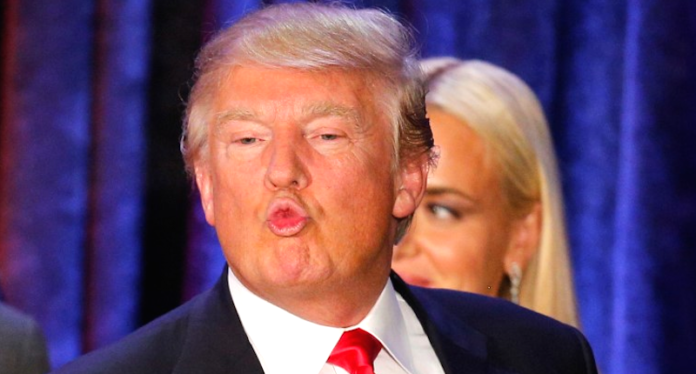
The press release however does not give the reasons why the US has decided to withdraw from the agreement. However, ever since coming to power, US President Donald Trump is on campaign to delink his country from agreements that he feels do not have economic sense to its citizens.

ICO is the main intergovernmental organization for coffee, bringing together exporting and importing Governments to tackle the challenges facing the world coffee sector through international cooperation. Our Members represent the Governments of 98% of the world’s coffee producing countries and 83% of consuming countries.

The International Coffee Agreement is an international commodity agreement between coffee producing and consuming countries to strengthen the global coffee sector and promote its sustainable expansion in a market- based environment for the betterment of all participants.

According to the press release, ICO the controlling body of the Agreement, represents most coffee producing and consuming countries. The current 2007 agreement has 44 exporting Members and seven importing members (the European Union represents all its member States as one Member).

The original agreement was signed in 1962 for a five-year period, and since then there have been six subsequent agreements in 1968, 1976, 1983, 1994, 2001 and 2007.

Stories Continues after ad