Stanbic Bank
Stanbic Bank
26.5 C
Kampala
Stanbic Bank
Stanbic Bank
Home Blog Page 1666

Museveni meets security chiefs over ongoing crackdown

Gen. Yoweri Kaguta Museveni

President Yoweri Museveni last night met security chiefs at State House Entebbe as the army continues the hunt for members of the notorious Boda Boda 2010.

The meeting, which reportedly kicked off shortly after Red Pepper directors and editors’ meeting with the president, discussed the current crackdown on the members of the Boda Boda 2010 group.

According to sources, the President was angered by the revelation that some elements within security, especially the police, were working with criminals to rob and kill people.

“The president was really annoyed with the findings that emerged following the ongoing crackdown on the criminals, indicating that some people within forces are criminals or work with criminals,” the source said.

The source added: “He therefore, wants all those implicated arrested and tried in the military court martial. Soon more are going to be arrested after the investigations.”

Senior Presidential Press Secretary to the President, Don Wanyama said he didn’t have details of the meeting and therefore, wouldn’t comment.


Stories Continues after ad

Butaleja to host Tarahe Sita celebrations

The Uganda People’s Defense Forces have released the program for the 37th Tarehe Sita anniversary celebrations and the 1st East African Community Armed Forces Day to take place on February 6, 2018 at Boma Grounds in Butaleja district.

In a statement released by the UPDF publicist Brig. Richard Karemire, said the week-long celebrations to be held under the theme: ‘Reaffirming the Contribution of the Armed Forces towards Regional Integration for our Strategic Security, Development and Prosperity’, will commence on Tuesday, January 30 with an official national launch at the Ministry of Defense and Veteran Affairs/UPDF headquarters in Mbuya.

“The UPDF will be joined during the week-long activities by the East African Community Partner States Armed Forces from the East African Community (EAC) countries of Burundi, Kenya, Rwanda, South Sudan and Tanzania,” noted Brig. Karemire.

According to the UPDF spokesperson, the decision for the collaboration is in line with the decision by the Army Council to link the military and ‘wanainchi’ as the EAC countries integrate.

He also said there would be a regional launch in Butaleja District on Wednesday January 31, and that district launches will be conducted on Thursday, February 1 at the district headquarters of Pallisa, Budaka, Kibuku, Tororo and Busia.

“Civil military activities will therefore be conducted by the medical and engineering contingents of all the forces in all the districts of Butaleja, Pallisa, Budaka, Kibuku, Tororo and Busia,” Brig. Karemire disclosed.

Further, he said, the rest of UPDF formations and units including those deployed abroad will carry out various activities in support of communities in their areas of operation.

Tarehe Sita week is marked annually in commemoration of the first armed attack on Kabamba Army Barracks on February 6, 1981, during which President Yoweri Museveni launched the five-year guerrilla war that eventually propelled him to power on January 26, 1986.

Stories Continues after ad

UMA Back2School Bazaar on in Kampala

UMA Executive Diretector Daniel Birungi

With less than two weeks left to the opening of the first school term of 2018, the UMA Back to School Expo/Bazaar is on for five days starting Wednesday at KCCA grounds in Lugogo, Kampala.

The Uganda Manufacturers Association (UMA) Executive Director Daniel Birungi says the event will help local manufacturers and other interested exhibitors to engage directly with the public, in a bid aimed at encouraging Ugandans consume locally made products in support of the Buy Uganda, Build Uganda (BUBU) agenda.

According to Birungi, the Expo has been organized to provide a one-stop shopping experience for parents ahead of the school opening on February 5, 2018. The exhibitors lined up represent sectors including foods and beverages, healthcare, textiles, personal care, toiletries, stationery, plastics and foam products.

Others include confectionery, dairy, banking and Insurance services, education services, design, publishing, and general merchandise.

The Expo also features career guidance and skilling sessions, raffles, a medical camp, and a dedicated children’s play area that will help to draw more visitors.

Birungi says entry to the Expo is free, a major factor in attracting more visitors.

“We anticipate receipt of 20,000 show visitors daily who will be mainly parents and students looking to fulfill their back to school requirements,” Birungi says.

Stories Continues after ad

Red Pepper journos off the hook

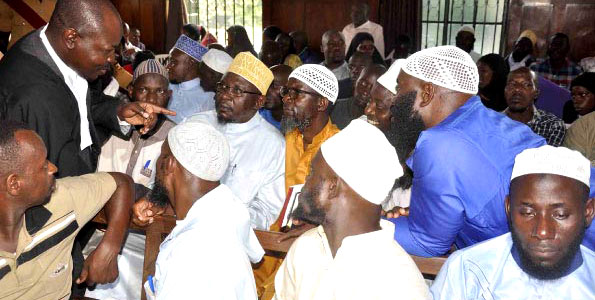
PARDONED: Red Pepper Directors and Editors in the dock. Their case was adjourned to February 14.

President Yoweri Museveni has reportedly pardoned the eight Red Pepper journalists and directors who are currently facing charges of offensive communication, defamation and ‘disturbing the peace’ of the President.

In a statement by the Red Pepper team, they said that in a meeting held at State House last night, Museveni also promised to immediately order the police to vacate their Headquarters in Namanve.

According to the team, the ‘presidential pardon’ followed both formal and informal negotiations with government, and that in the meeting Museveni warned them against being reckless, encouraging them to instead stick to professional ethics.

Dubbed the ‘Red Pepper Eight’, the Directors and Editors include Arinaitwe Rugyendo, Richard Kintu, James Mujuni, Patrick Mugumya, Richard Tusiime, Johnson Musingunzi, Ben Byarabaha and Francis Tumusiime, who said the President told them that their publication was about to bring problems to Uganda.

The eight were arrested in November over the publication of a story which indicated that President Yoweri Museveni wanted to cause the overthrow of the Rwandan government led by President Paul Kagame and since then their offices were condoned off by police.

In December last year, the eight were granted bail by Magistrate Samuel Kagoda, and were set to return to court on February 14.

Meanwhile, given the doctrine of ‘separation of powers’, by press time it was not possible to ascertain the fate of the court case against the ‘Red Pepper Eight’ since the issue is now seems to be ‘balancing’ between the Executive and Judiciary.

This is the second time such an conundrum is surfacing in Ugandan media, after the 2013 case against the Daily Monitor, after it published contents of a controversial letter written by General David Sejusa, which led to the 14-day closure of the Daily Monitor and subsequent trial of its journalists.

Stories Continues after ad

Kibuli SS headteacher bows out after nasty expose’

OUT: Hajji Ali Mugagga's letter announcing he is 'going on leave'.

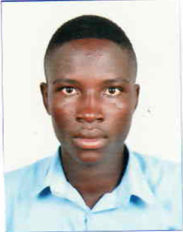
The headteacher of Kibuli Senior Secondary School Hajji Ali Mugagga, who has been variously accused of sexually molesting girls at the school by a one Leonard Ronald Egesa, has ‘gone on leave’.

In a ‘handover’ letter to his deputy in charge of welfare Hajjat Mastula Nambajjwe, Hajji Mugagga says he is proceeding on a 36-day leave effective today.

However, communication from the school suggests Hajji Mugagga may not return.

‘Effective 24th January 2018, Hajjat Mastulah Nambajjwe (Deputy Headmistress – Welfare) will be the Acting Head Teacher.

This will be pending the Board of Governor meeting following the handover by the former headmaster Hajj Mugagga Ali hand over.

All activities remain normal and the school will resume as per the start of term. We regret all the inconvenience that will be caused by this development,’ the communication indicates.

It is not clear whether Mr. Egesa is a parent at the school, but it should be noted that over the past few days he has been posting a series of warning on Facebook, urging parents to withdraw their daughters from the school and then have them tested for HIV/Aids.

Indeed, in an FB post yesterday, Egesa threatened to spill more nasty beans and also to expose the Ministry of Education officials behind the continued stay of Hajji Mugagga, if the latter did not relinquish office today.


Below Eagle Online reproduces Mr. Leornard Ronald Egesa’s letter dubbed ‘MY STATEMENT ON THE LATEST DEVELOPMENTS AT KIBULI S.S’

Like I mentioned earlier on, I completed my investigations in November 2017 and decided to watch the conduct of the school’s Board of Governors and other stakeholders. After realising that the matter was swept under the carpet, I made efforts to reach the Head teacher himself to ask him to do what he has done today, but he did not take my calls. I sent him a text message and clearly presented this option. He still never replied.

I called the Vice Chair of the Board of Governors and wanted to relay the same message, but she was attending a function and promised to call me back, but she did not. I am still waiting for her call.

I made calls to top honchos in the Ministry of Education and Sports and informed them about what I was going to do, but they showed that there was nothing they would do at the time. I had already weighed the various options and got a win-win solution for all stakeholders; putting into consideration that part of my evidence that is in the custody of trusted Police Officers is graphic in nature and could cause serious damage to the family and former students of the Head teacher, I had to be very careful with how I handle this matter.

I decided to issue a precautionary notice that some people with a poor grasp of the Queen’s language misinterpreted to be a disclosure of the man’s health status whereas not. The wording in that public notice was carefully selected so as not to be alarmist. It was worded in a way that was to bring the matter to our attention.

On Sunday, the Ministry reached out to me asking me to write to them a letter with the same complaints, I reminded them that we have unfinished business, but am not a vindictive person. I offered them free advice. My advice was simple; Talk to the man and ask him to take leave and constitute an inquiry. I offered further advice on the nature and form of the inquiry in the open letter I wrote to the First Lady – I hope it is considered (if not, we shall innovate from within the action taken). I gave the Ministry this option because it was inexpensive and I know that Hajj knows in his heart of hearts that we are trying to give him a dignified exit.

I have exercised a great deal of restraint and maturity in handling this matter because I know that even with this weakness, Hajj Mugagga has been a performer at Gombe SS and Lubiri SS before and secondly, he has mature children that would be greatly hurt by presentation of graphic and audio evidence. I have suffered a bunch of simpletons ranging from teenagers to mature ladies and men on my timeline and inbox, but I have tried to respond to most of them with grace and at times making fun of their thoughtless comments. There is no amount of insult that will make me deviate from the earlier plan of giving him a smooth exit while protecting the victims and sending a clear message to other paedophiles on the loose.

I am privy to the lengthy discussions that have taken place at the Ministry and at the school’s Board of Governors’ meetings, but I must politely advise both parties to take note of the following:

1. The safest option is for Hajj. Mugagga to go for ‘early’ retirement in public interest. We can not surely continue punching a man that is already down. He can quietly move on with life. This is purely on humanitarian grounds.

2. Any attempts to put the messenger or his evidence on trial with the aim of working to reinstate the man will open a can of worms that you may fail to control. I am just a face of a revolution whose real fighters are quiet and carefully watching. Mind you, he has financial mismanagement problems that are worse than those we discovered in Old Kampala.

3. If you go ahead with the inquiry, do it with the victims at the centre and not with the aim of defeating justice.

4. This matter is already with the Police and I will not engage any other hungry police officers seeking to benefit from blackmail of the man in the spotlight. Some unethical Police officers have already seen an opportunity to milk the man. Please note that this is a sophisticated matter being handled by a team of sophisticated men and women.

5. Whatever you do, please know that Hajj. Mugagga knows the truth. All he needs is HONEST advice to save the remaining image and move on. Any advice to the contrary will lead him into a thankless fight that he cannot win.

I remain the leader of a revolution that is aimed at returning sanity to our public institutions. We will go slowly, but we shall get there.

In the words of Senior Counsel Mohammed Mbabazi; Lies can complete a sprint, but not a marathon.

Aluta Continua.


Stories Continues after ad

Guidelines for funding new research and development


By Martin Zwilling

As an advisor to new business owners, and an occasional angel investor, I see new business proposals daily, many seeking investors to fund early research and development (R&D) of a new product idea. Unfortunately, most entrepreneurs don’t realize that the words “research” and “development” are red flags to investors, and all such proposals are routinely discarded.

Although it may seem counter-intuitive, angel investors and venture capitalists (VCs) are looking for solutions that are already complete, with some real market traction, that need funding to be scaled to a large market, with potential for rapid growth and a large return. Funding new product research and development is just too risky, with a large time delay before any return is likely.

In fact, there are people and organizations amenable to very early stage opportunities, so my advice is target your proposals to the right people to match the stage of your effort. Broadcasting or repeatedly hitting the wrong people is not only is a waste of time, but it kills your credibility with those investors later when you really may need their help. Here are the guidelines I recommend:

Recruit friends and family at any stage. People who know you, trust you, and believe in you above all else are always candidates for requesting an investment. In the trade, this category of investors is called friends, family and fools (FFF), and is the primary source of funding for entrepreneurs with no prior track record in business or technology.

Look to academia and the government for basic research. If you are looking to fund a technology study, before any specific commercial product can be considered, you need to focus on relevant large organizations with deep pockets. Sources include government grants, universities, and large enterprises searching for next generation products.

Find private fund incubators for technology pilots. If you project is more in the applied research stage, ready to solve practical problems, but haven’t yet named a final product, the investment sources should be extended to include large private and public fund initiatives, such as AMA IBM Healthcare or Environmental / CleanTech Projects.

Explore crowdfunding for the prototype stage. Funding for commercial product prototypes is still R&D in the eyes of most VC investors, but in business areas with large consumer opportunities, this activity will catch the eyes of crowdfunding investors. It’s still considered high risk for investment, since manufacturing and quality issues are likely.

Target specialized VCs for the certification stage. These days, almost every new product is not deemed scalable until it has been certified as meeting a multitude of quality and agency standards, including the Environmental Protection Agency (EPA) and Food & Drug Administration (FDA) clinical trials. Industry specific VCs may jump in at this stage.

All professional investors love the scaling stage. Solution development at this stage is the process of scaling up for manufacturing and marketing rollout. The technology is now embodied in a replicable solution, and has been sold to at least one customer. Your fundability with investors now depends on traction and perceived execution capability.

Reinvest early returns to expand the product line. Even for mature startups, there is always a need for further product development and research to compete and diversify the business, and investors understand this. But to prevent confusion with basic R&D, these costs should never be called out as a major category in your use of funds to investors.

Fortunately, in many attractive business domains, including mobile software, Internet apps and ecommerce, the cost of product development is at an all-time low. Developers are finding powerful tools to build mobile apps and websites for a few thousand, rather than millions of dollars. They don’t need the long research and development cycles of a new technology.

Thus smart entrepreneurs often find personal funding for solution development, and save investor funding pitches for the larger scaling-up marketing costs later. Build solutions, not technology, and don’t waste your time and credibility talking to angels and VCs until you have something of interest to them.


Stories Continues after ad

Gov’t dispatches experts to districts affected by hemorrhagic fevers

Health Minister Dr Jane Ruth Aceng

The Government has dispatched a team of experts to tackle the Crimean-Congo Hemorrhagic Fever (CCHF) and Rift Valley Fever (RVF) that have hit the cattle corridor districts of Nakaseke, Luwero, Sembabule, Kyegegwa, Lyantonde, Mubende and Gomba.

According to the statement released in Kampala Tuesday, the team of experts from the ministries of health and agriculture that includes epidemiologists, clinicians, veterinarians, communicators and laboratory specialists, will support the districts to set up appropriate response activities, including the spraying of ticks and other insects that is ongoing in the selected districts within the cattle corridor.

Further, the statement indicates that since August 2017, when suspected cases were reported, four cases of the CCHF and five cases of the RVF have been confirmed, with the latest cases being reported on the 19th of January 2018 in Nakaseke and Buikwe, respectively.

Further, the statement adds that one person from Nakaseke district has died of CCHF while three people from Buikwe, Kiboga and Mityana, have died of RVF.

‘An inter-ministerial committee, coordinated by the Ministry of Health has been undertaking measures’, the statement reads in part.  It says government is in the process to assess other districts even as there is an ongoing dissemination of reading materials in the local dialect and English for easy sensitization of the public.

The statement says cooked meat and boiled milk do not transmit the above diseases but has urged the handlers of these products to use personal protective gear, committing further that the inter- ministerial committee will keep the public informed of any new development.

Stories Continues after ad

NITA Uganda acquaints SFC with government IT procedures

NITA-U officials led by ED James Saaka and those of SFC led by Col. Gerald Ahimbisibwe pose for a photo

The National Information Technology Authority Uganda (NITA-U) Tuesday visited the Special Forces Command (SFC) in Entebbe to sensitize officers there on the Authority’s ongoing work to make access to Government services easier through online communication.

SFC is a specialized component of the Uganda People’s Defense Forces (UPDF) tasked with carrying out specialized missions or operations at short notice and therefore, digitization is a key component to enhance their work, officials say.

For five years now, NITA-U has been collaborating with SFC to enable the implementation of the Special Forces Command Information Security Programme.

Speaking during the presentation, NITA-U’s Executive Director James Saaka applauded the Special Forces Command for their continued effort to operate a powerful and versatile special operations force that is responsive to the requirements of Uganda. He further highlighted NITA-U’s plans to integrate all Government systems.

“We are going to undertake an initiative to integrate all government systems. This Integration will ensure simplicity, efficiency of access to Government services in a secure environment,” Saaka said.

He said that by using a single User ID (National Identification Number), citizens will have easy access to Government services. “Additionally, this will promote transparency for Government as data sharing across agencies will be seamless and digitized,” he added.

The Special Forces team led by Col. Gerald Ahimbisibwe, Director Personnel and Administration, was also briefed on the various eGovernment services available at www.ecitizen.go.ug.

Col. Ahimbisibwe appreciated the role NITA-U has played to promote ICT in Uganda.

NITA-U officials committed to continue offering specialized technical support to the SFC. NITA-U also handed over laptops and other solutions to SFC which will be used to enhance the operational capacity of the SFC. This is in addition to the already existing ICT training programs that’ NITA-U extends to SFC

The NITA-U team shared the eGovernment services roadmap that included the following services that will be soon be launched, namely:

  • Electronic Government Procurement: This is a web-based system that covers the full procurement lifecycle, all procurement modalities, and keeps a record and audit trail of all procurement activities. This will ease & automate the government procurement process
  • Government ePayment Gateway: This a Government e-Payment gateway that will facilitate electronic payments for Government services in a bid to make service delivery more efficient and responsive to the needs of the citizens and as well promote online business.
  • Unified Messaging and Collaboration System: This system will provide Email, Voice, Video, Social and Instant Messaging services to government offices. This will promote collaboration among Government Departments and Local Governments.
  • Government SMS Gateway: The Government SMS Gateway will allow government entities to push SMS notifications to citizens through its various e-services and applications. This will allow for a rich online experience.
  • Electronic Voucher (eVoucher): To be implemented in 42 Districts reaching 450,000 farmers over a period of 3 years. The eVoucher provides a mechanism for tracing the delivery of subsidized farm inputs, improved agricultural infrastructure, post-harvest handling technologies and competitive price for inputs and outputs.


Stories Continues after ad

AI calls for immediate investigation into deaths of anti-Kabila protestors

Coffins of people killed in the DRC

Amnesty International (AI) has called for an immediate investigation and prosecuting people suspected of being responsible for killing and injuring dozens of peaceful protesters in the Democratic Republic of Congo capital Kinshasa.

‘This brutal response by the security forces to peaceful protests goes to show once again that repression has become the norm in the DRC, in blatant violation of the country’s constitution and its international human rights obligations’, Jean-Mobert Senga, Amnesty International’s Researcher on the DRC said in a statement.

He added: “Such repression must not be allowed to continue. Those suspected to be responsible for it at all levels must be held accountable in fair trials. The authorities must also immediately and unconditionally release all peaceful protesters who are detained.”

Further, according to Jean-Mobert Senga, Internet and telephone services were shut down across the country and remained cut off yesterday.

“Due to the shutdown, some injured protesters were unable to access emergency help,” said Jean-Mobert Senga.

“This flagrant disregard for people’s lives and human rights is totally unacceptable. The DRC authorities must immediately restore communications and desist from cutting them off in future.”

Thousands of peaceful protesters rallied across the country in protests called by the Catholic Church to demand that President Joseph Kabila step down ahead of elections in December.

The protesters were countered by security forces who shot live rounds at them killing at least six and injuring at least 49, according to the UN’s mission in the country.

This is the second time protests have been violently repressed by the security forces in less than a month.

Many other protests against President Kabila’s continued stay in power have also been met with heavy-handed responses over the last three years.

The Catholic Church also brokered an agreement on elections between the ruling party and the opposition in December 2016.

The agreement stipulates that President Kabila shall not run in the forthcoming election. It also calls for the implementation of a number of confidence-building measures ahead of the polls including the release of political prisoners and the freedom for opposition politicians to return from exile to allow what stakeholders called ‘inclusive, peaceful and credible elections.’


Stories Continues after ad

Over 1000 to attend coffee conference in Kampala

Former Prime Minister, Dr David Livingstone Ruhakana Rugunda.

Uganda will host the 16th African Fine Coffee Conference and Exhibition, from February 14-16, 2018, providing local dealers a unique opportunity to market their coffee to international buyers.

“Over 1,500 international industry traders, producers, buyers and professionals will converge in Kampala for 3 days of intense discussions on policy and trade development across the African Coffee Value Chain,” the Uganda Coffee Development Authority (UCDA) says in a public notice.

Prime Minister, Dr. Ruhakana Rugunda is expected to preside over the conference’s opening ceremony at the Kampala Serena Hotel.

According to the organizers, the conference is a ‘buyer-oriented event’ that will bring together stakeholders from all over the world to build key trading relationships and discuss issues impacting on production, trading environment and policy interventions necessary to grow the coffee industry worldwide.

The conference and exhibition in Uganda follows the recent ones held in 2016 and 2017 in Dar-es-salaam, Tanzania and Addis Ababa, Ethiopia, respectively.

Delegates will also participate in a three- day pre-conference coffee safari to selected coffee farms. Over 100 exhibitors-local and international are expected to showcase their coffee products, machinery and packaging amongst others.

Major types of Uganda coffee

Blessed with two rainy seasons, good soils and climatic conditions, Uganda provides the world with a steady supply of Arabica and Robusta coffees throughout the year. The country’s high altitudes and cool equatorial climate promote slow ripening and give rise to some of the best coffees produced by Africa’s smallholder farmers.

Production

With an average export of 3.5 million 60-kg bags in the past five years, Uganda is Africa’s second-biggest coffee producer behind Ethiopia, and the continent’s largest Robusta exporter. “The country has over a century-long tradition of coffee production. The crop is grown by smallholder farmers in most of the country, with an exception of the arid North-East. It is estimated that one third of all rural households, or roughly 1.2 million families, are involved in producing coffee,” says a recent brief on the crop.

Growing coffee is an important strategy for rural poor households in Uganda to climb out of poverty as they create wealth. Statistics from UCDA shows that farmers grow on average between 0.5 and 3 acres of coffee, and often intercrop it with banana plants and shade trees to mitigate the impact of climate change seen in increased temperatures irregular rainfall on the crop production.

Robusta, which is native to the humid rainforests on the Western borders of Uganda, is grown at altitudes of 1,200 to 1,500 meters above sea level throughout the country. As a result of the high altitudes at which it is grown, Uganda’s Robusta is often classed amongst the world’s finest Robusta coffees.

But Robusta production was hard hit by an epidemic of Coffee Wilt Disease (CWD) that eliminated half of the Robusta tree population. With the recent release of CWD resistant varieties, Uganda’s coffee sector is working hard to multiply these using both clonal and tissue culture approaches in order to replant the lost acreages as soon as possible. “We expect to see the benefits of this in terms of a significant increase in Robusta production within the next five to ten years,” says a local coffee production expert.

On the other hand, Uganda’s Arabica coffee is produced in the mountainous regions on the extreme ends of the country. “We have seen a steady increase of the export share of Arabica over the past two decades from less than 10% to 20-25% of total exports,” says UCDA. The washed Arabica coffees are sourced from the slopes of Mt. Elgon, a volcanic mountain in the East and from the West-Nile (Paidha) bordering DR Congo. The natural Arabicas, or Drugars, come from the foot slopes of the snow-capped Rwenzori Mountains in the west.

Cupping characteristics

Baristas say Ugandan Robusta has a rich aroma, a full body with winey flavours and is just the perfect finish for espresso blends. The natural Arabica, Drugar, is described as sweet with fruity notes and has a low acidity, whereas the washed Arabica has a rich full body, good aroma and well balanced citrus flavours.

The country’s year-on-year coffee earnings jumped 66.71 percent to reach US$544.59 million in the year 2016/17 compared to US$326.68 million the country earned in 2015/16, official records show.

President Yoweri Museveni last year launched the Coffee Roadmap aimed at increasing coffee exports to at least 20 million 60-kg bags per year by 2025, targeting the market in China.


Stories Continues after ad