Stanbic Bank
Stanbic Bank
26.5 C
Kampala
Stanbic Bank
Stanbic Bank
Home Blog Page 1667

Over 1000 to attend coffee conference in Kampala

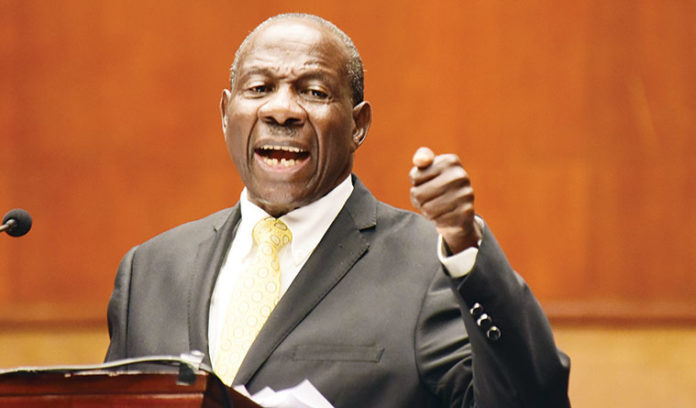
Former Prime Minister, Dr David Livingstone Ruhakana Rugunda.

Uganda will host the 16th African Fine Coffee Conference and Exhibition, from February 14-16, 2018, providing local dealers a unique opportunity to market their coffee to international buyers.

“Over 1,500 international industry traders, producers, buyers and professionals will converge in Kampala for 3 days of intense discussions on policy and trade development across the African Coffee Value Chain,” the Uganda Coffee Development Authority (UCDA) says in a public notice.

Prime Minister, Dr. Ruhakana Rugunda is expected to preside over the conference’s opening ceremony at the Kampala Serena Hotel.

According to the organizers, the conference is a ‘buyer-oriented event’ that will bring together stakeholders from all over the world to build key trading relationships and discuss issues impacting on production, trading environment and policy interventions necessary to grow the coffee industry worldwide.

The conference and exhibition in Uganda follows the recent ones held in 2016 and 2017 in Dar-es-salaam, Tanzania and Addis Ababa, Ethiopia, respectively.

Delegates will also participate in a three- day pre-conference coffee safari to selected coffee farms. Over 100 exhibitors-local and international are expected to showcase their coffee products, machinery and packaging amongst others.

Major types of Uganda coffee

Blessed with two rainy seasons, good soils and climatic conditions, Uganda provides the world with a steady supply of Arabica and Robusta coffees throughout the year. The country’s high altitudes and cool equatorial climate promote slow ripening and give rise to some of the best coffees produced by Africa’s smallholder farmers.

Production

With an average export of 3.5 million 60-kg bags in the past five years, Uganda is Africa’s second-biggest coffee producer behind Ethiopia, and the continent’s largest Robusta exporter. “The country has over a century-long tradition of coffee production. The crop is grown by smallholder farmers in most of the country, with an exception of the arid North-East. It is estimated that one third of all rural households, or roughly 1.2 million families, are involved in producing coffee,” says a recent brief on the crop.

Growing coffee is an important strategy for rural poor households in Uganda to climb out of poverty as they create wealth. Statistics from UCDA shows that farmers grow on average between 0.5 and 3 acres of coffee, and often intercrop it with banana plants and shade trees to mitigate the impact of climate change seen in increased temperatures irregular rainfall on the crop production.

Robusta, which is native to the humid rainforests on the Western borders of Uganda, is grown at altitudes of 1,200 to 1,500 meters above sea level throughout the country. As a result of the high altitudes at which it is grown, Uganda’s Robusta is often classed amongst the world’s finest Robusta coffees.

But Robusta production was hard hit by an epidemic of Coffee Wilt Disease (CWD) that eliminated half of the Robusta tree population. With the recent release of CWD resistant varieties, Uganda’s coffee sector is working hard to multiply these using both clonal and tissue culture approaches in order to replant the lost acreages as soon as possible. “We expect to see the benefits of this in terms of a significant increase in Robusta production within the next five to ten years,” says a local coffee production expert.

On the other hand, Uganda’s Arabica coffee is produced in the mountainous regions on the extreme ends of the country. “We have seen a steady increase of the export share of Arabica over the past two decades from less than 10% to 20-25% of total exports,” says UCDA. The washed Arabica coffees are sourced from the slopes of Mt. Elgon, a volcanic mountain in the East and from the West-Nile (Paidha) bordering DR Congo. The natural Arabicas, or Drugars, come from the foot slopes of the snow-capped Rwenzori Mountains in the west.

Cupping characteristics

Baristas say Ugandan Robusta has a rich aroma, a full body with winey flavours and is just the perfect finish for espresso blends. The natural Arabica, Drugar, is described as sweet with fruity notes and has a low acidity, whereas the washed Arabica has a rich full body, good aroma and well balanced citrus flavours.

The country’s year-on-year coffee earnings jumped 66.71 percent to reach US$544.59 million in the year 2016/17 compared to US$326.68 million the country earned in 2015/16, official records show.

President Yoweri Museveni last year launched the Coffee Roadmap aimed at increasing coffee exports to at least 20 million 60-kg bags per year by 2025, targeting the market in China.


Stories Continues after ad

Kutesa, German envoy hold talks

Uganda's_Foreign_Affairs Minister,_Sam_Kutesa.

Foreign Affairs minister Sam Kutesa has today held a meeting with the German Ambassador Albrecht Conze at the Ministry of Foreign Affairs.

Amb. Conze delivered an invitation from Sigmar Gabriel, the German foreign affairs minister, for Kutesa to attend the Berlin Energy Transition Dialogue, 2018, to be hosted at the Federal Foreign Office in Berlin in April. The Berlin Energy Transition Dialogue has been hosted by the Federal Foreign Office for the past three years to promote fruitful exchange with international partners.

In 2017, Foreign and Energy Ministers met with some 2000 participants from more than 90 countries to discuss ways in which national governments and energy sector stakeholders could contribute to meeting the goals of the Paris Agreement and the 2030 Agenda.

The purpose of the 2018 meeting will be to discuss with Foreign and Energy Ministers the global challenges of an energy transition that spans all sectors.

Kutesa accepted the invitation reiterating Uganda’s commitment to the Paris Agreement and the 2030 Agenda for Sustainable Development and stating that Uganda was interested in discovering ways of offering innovative solutions to affordable off-grid solar energy in the rural areas.


Stories Continues after ad

Mowzey Radio out of danger – Case Hospital

The late Mowzey Radio

Celebrated Ugandan Moses Ssekibogo popularly known as Mowzey Radio was last night involved in a bar fight that left him nearly dead.

Earlier reports had even indicated that the ‘Kuku’ singer had died, but it turned out he was in coma and hospitalised in the Intensive Care Unit of Case Hospital, which has just spoken out on the health status of the musician.

According to a statement, the musician’s health has improved compared to last night.

“Yesterday night, Radio was involved in an accident and he is currently receiving the best treatment at Case Clinic. The situation is not alarming as being reported on social media by some people. We would like to make it clear that RADIO is getting better and right now is out of coma. Please disregard all the unnecessary reports going around,” the Case Hospital management wrote.

Though, he still needs prayers from his fans, the hospital added.

“We do appreciate all your love and support during this time. Continue praying for our brother,” the statement added.

According to information at our desk, Mowzey Radio was beaten from a popular hangout joint in Entebbe known as The Bar.

He was beaten into comma by a yet to be identified person who was with the bar owner.

Earlier, Radio had reportedly arrived at the bar in company of renowned producer, Washington.

He then reportedly downed a couple of bottles of whiskeys before getting tipsy. It is said he accidentally poured his whiskey on the table where the bar owner was seated, sparking off the beating.

Fortunately, he made it to Case Hospital and by 3am, had undergone a successful operation.


Stories Continues after ad

MPs in bitter exchange over Defence Minister’s ‘arrogance’

Clerk to Parliament, Adolf Mwesige.

Drama ensued during proceedings of the Parliamentary Defence Committee, when the Minister of Defence Adolf Mwesige attempted to walk out of the session before answering questions paused by opposition legislators.

This was after the Vice Chairperson of the Defence Committee Kezekia Mbogo, adjourned the meeting before the Minister could provide responses to the questions raised about UPDF’s budget framework for 2018/2019, leaving opposition MPs Theodore Ssekikuubo, Muwanga Kivumbi and Gilbert Olanya, furious and baying for Mwesige’s blood.

The three opposition MPs had raised a number of questions concerning the report on investigations on the aircraft that crushed in Kenya enroute Somalia, and demanding answers as to why Ugandan troops are reportedly still camped in the Democratic Republic of Congo (DRC).

However, the Minister declined to offer responses, prompting Mbogo to ask him to take leave, a matter the MPs didn’t take lightly, sparking off a fight as they blocked Mwesige from leaving the meeting room before clarifying on the issues raised.

With the Minister defiant, the MPs turned rowdy, took siege of the venue and locked the door, shouting on top of their voices amid calls  to have the meeting called back to order.

“You tell us when he is (Mwesige) going to answer our questions, if not then we shall not allow him out. Let us go back and sit, call the meeting back to order and let them all sit down. Afande, you are mature enough you can’t just push me this way just go back and sit and let the meeting be adjourned properly,” Ssekikubo shouted.

With the situation getting out of hand, another MP Gerald Rwemulikya Ibanda stepped in defending Mwesige by demanding the rowdy MPs to allow the Minister and his team leave, but the MPs declined, chidingly asking the Ntoroko legislator when he resigned as legislator to take up the role of Sergeant at Arms.

“These queries must be answered by UPDF because they are keeping them, they must tell us but our chairman is here saying it isn’t of concern; we need to know the ordering of the army across the borders. It is parliament to authorises that, we need answers,” Ssekikubo said.

After the bitter exchange, Mbogo was able to contain the nasty situation and pleaded with MPs to allow the Defence team leave and settle the matter in their internal meeting.

In the ensuing chaos, the aggrieved opposition MPs accused their NRM counterparts of acting as ‘spokespersons of ministries’ at the expense of national interests.

“We are not supposed to speak for the ministry like our colleague from Ntoroko did. We need to take him for some kind of induction. We need to go for an induction to know our roles,” Butambala MP Muwanga Kivumbi said.

He was supported by Gilbert Olanya who said: “We have the duty of protecting our soldiers and our country. I support the calling of a meeting of the committee to examine the role of the chairperson. Judith Nabakooba had problems with managing this Committee, she had challenges and we thought that since you are a senior member you could manage doing our oversight work properly.”

Lubaga South MP Kato Lubwama blamed the issue on ‘egocentric’ committee heads whom he described as being arrogant.

“The biggest problem here we have is that some people think they are bigger than others. All of us are MPs, but it comes at a point when you don’t want all of us to speak. You are a chairman yes, but all of us are part of this committee. You must respect us and if we have a mandate to remove him let us do,” Lubwama fumed.

He added: “Go back to school and learn these things, everyone here assumes he is a star, let me take my water but you should note that you have to go back to school and learn these things.”


Stories Continues after ad

Museveni supports Trump on ‘shithole’ comments

LIKE MINDED THINKING: A photo montage of US President Donald Trump and his Ugandan counterpart Yoweri Museveni

President Yoweri Museveni has professed ‘undying admiration’ for his US counterpart Donald Trump, saying there was nothing wrong with the ‘shithole’ remarks the US President made about Africa.

The President made the remarks during the State of Nation Address for East African Legislative Assembly that is holding its session in Uganda.

“I love Trump. Americans have the best President ever. I love Trump because he tells Africans frankly. Africans need to solve their problems, they need to be strong. Africa is weak and it’s their fault,” Mr. Museveni said, taking a divergent stance from his colleagues who have since implored Trump to apologise.

Museveni’s remarks follow reports from the international media in which Trump was quoted in a January 12, 2018 meeting with of representatives from Congress, called to discuss a bipartisan immigration deal.

In the meeting, Trump protested the proposal to protect immigrants from Haiti, El Salvador and African countries, with the US President reportedly saying: “Why are we having all these people from shithole countries come here? Why do we need more Haitians? Take them out.”

The meeting in the US followed a pronouncement on September 5, 2017, when United States Attorney General Jeff Sessions announced that President Trump would be rescinding the Obama-era DACA program, which protects undocumented immigrants brought to the United States as children, known as Dreamers, from deportation.

Trump, whose remarks were met with fury from across the globe, with the African Union demanding an apology, reportedly said that the US should instead bring in more immigrants from countries like Norway.

However, Museveni didn’t deem it fit for Trump to apologise, saying that it was time Africa admitted being weak and consequently devise means of making the continent strong.

“In the world, you can’t survive when you are not strong. If you aren’t strong and somebody tells you are weak, I love that person because he is doing my work. I have been telling Africans these things, but from another angle,” Museveni said.

Earlier, President Museveni had lashed out at the EALA members for engaging in meaningless fights over speakership, calling on them on to work for the prosperity of the people of the community as well as the integration of the region.

“When you talk about integration, know that you are fighting for prosperity, don’t go there to fight for speakership. Rumours aren’t marketed, they can’t sale. If those people (EALA) are there, they should be there to facilitate not fight, otherwise, they should come back to look after their goats,” Mr. Museveni said.


Stories Continues after ad

Moze Radio in coma after brawl in Entebbe

HOSPITALISED: musician Moses Sekiboogo aka Moze Radio

Renowned musician Moses Sekiboogo aka Moze Radio is fighting for his life at Case Hospital after being involved in a brawl in Entebbe yesterday night.

According to a source, Moze Radio was thrown headfast, hitting his head hard on the ground, in the process.

Koko Bar and Lounge proprietor Simon Rusoke

“He is at Case hospital; he was involved in a brawl in Entebbe and has a damaged brain,” the source said.

Moze Radio’s friend, entertainment guru Simon Rusoke, who is also the proprietor of the Ntinda-based Koko Bar, confirmed the ugly incident.

“Yes it is true; I wish he recovers fast,” Rusoke told The EagleOnline shortly after his joint had posted the news of Moze Radio’s predicament.

‘A very quick recovery to our partner and customer Moze Radio.
The supremely talented Good Lyfe star was reportedly involved in a brawl last night, and is said to be fighting for his life at Case Clinic in Kampala,’ the management of Koko Bar wrote on its Facebook page

Stories Continues after ad
Coca-Cola invests over US$1m in global plan to create ‘world without waste’

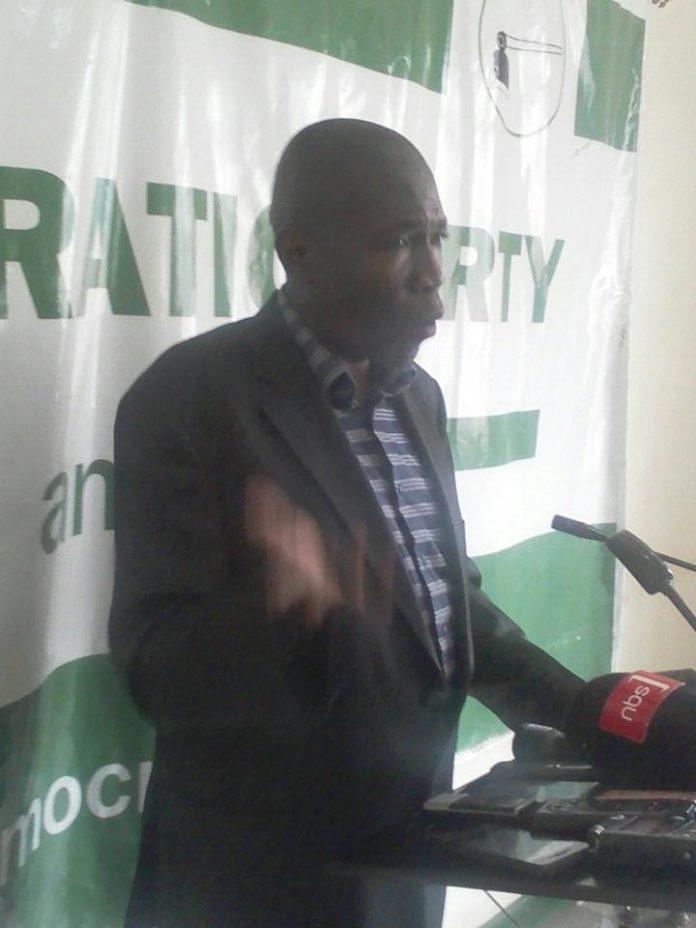
James Quincey, President and CEO of The Coca-Cola Company

The Coca-Cola Company announced today that it is fundamentally reshaping its approach to packaging, with a global goal to help collect and recycle the equivalent of 100% of its packaging by 2030.

This goal is the centerpiece of the Company’s new packaging vision for the US1.6 million initiative dubbed ‘World without Waste’, which the Coca-Cola system intends to back with a multi-year investment that includes ongoing work to make packaging 100% recyclable.

This begins with the understanding that food and beverage containers are an important part of people’s modern lives but that there is much more to be done to reduce packaging waste globally.

“The world has a packaging problem – and, like all companies, we have a responsibility to help solve it,” said James Quincey, President and CEO of The Coca-Cola Company.

“Through our World without Waste vision, we are investing in our planet and our packaging to help make this problem a thing of the past,” Quincey added.

The Company and its bottling partners are pursuing several key goals like Investing in the planet: By 2030, for every bottle or can the Coca-Cola system sells globally, we aim to help take one back so it has more than one life.”

The Company is investing its marketing dollars and skills behind this 100% collection goal to help people understand what, how and where to recycle. We will support collection of packaging across the industry, including bottles and cans from other companies.

The Coca-Cola system will work with local communities, industry partners, our customers, and consumers to help address issues like packaging litter and marine debris.

Investing in packaging: To achieve its collection goal, The Coca-Cola Company is continuing to work toward making all of its packaging 100% recyclable globally.

The Company is building better bottles, whether through more recycled content, by developing plant-based resins, or by reducing the amount of plastic in each container.

By 2030, the Coca-Cola system also aims to make bottles with an average of 50% recycled content.

The goal is to set a new global standard for beverage packaging. Currently, the majority of the Company’s packaging is recyclable.

The Coca-Cola Company will work to achieve these goals with the help of several global partners including the Ellen MacArthur Foundation’s New Plastics Economy initiative, The Ocean Conservancy/Trash Free Seas Alliance and World Wildlife Fund (The Cascading Materials Vision and Bioplastic Feedstock Alliance).

Coca-Cola will also launch efforts with new partners at the regional and local level and plans to work with its key customers to help motivate consumers to recycle more packaging.

These efforts are part of the Company’s larger strategy to grow with conscience, by becoming a total beverage company that grows the right way.

Speaking about the announcement locally, Kelvin Balogun, President of Coca-Cola Southern and East Africa said: “The Company has already taken great strides in reducing, reusing and recycling our packaging. We have worked closely with our bottling partners, local and national authorities, and recycling partners to improve the collection and local recycling rate of our cans, plastics and glass bottles.”

Wrapping up the announcement, James Quincey said: “Bottles and cans shouldn’t harm our planet, and a litter-free world is possible. Companies like ours must be leaders. Consumers around the world care about our planet, and they want and expect companies to take action. That’s exactly what we’re going to do, and we invite others to join us on this critical journey.”

Since its inception six years ago, US$1.6million has been invested in the ‘World without Waste’ programme resulting in 2,034 tonnes of waste collected.


Stories Continues after ad
South African jazz maestro Masekela dead

RIP: Legendary South African jazz trumpeter Hugh Masekela id dead

Legendary South African jazz trumpeter Hugh Masekela, a leading figure in the struggle to end apartheid and ‘the father of South African jazz’, has died aged 78.

In a statement, his family said he had ‘passed peacefully’ in Johannesburg ‘after a protracted and courageous battle with prostate cancer’.

Masekela, a regular visitor and respectable entertainer of Ugandan jazz enthusiasts, gained global recognition with his distinctive Afro-Jazz sound and hits such as Soweto Blues, a 1977 song became synonymous with the anti-apartheid movement.

In a statement, South African President Jacob Zuma said Masekela’s death was ‘an immeasurable loss to the music industry and to the country at large’.

Zuma continued: “His contribution to the struggle for liberation will never be forgotten.”

Born in the South African town of Witbank in 1939, Masekela was inspired to learn the trumpet after seeing Kirk Douglas play Bix Beiderbecke in the 1950 film Young Man with a Horn.

He persuaded one of his teachers – the anti-apartheid crusader Father Trevor Huddleston – to buy him an instrument, promising to stay out of trouble in return.

In 1960, aged 21, he left South Africa to begin what would be 30 years in exile from the land of his birth.

Under the tutelage of Dizzy Gillespie and Louis Armstrong, he was encouraged to develop his own unique style.

In 1967, he performed at the Monterey Pop Festival alongside Janis Joplin, Otis Redding, Ravi Shankar, The Who and Jimi Hendrix.

The following year, his instrumental single Grazing in the Grass topped the charts in the US and became a worldwide hit.

Masekela returned to South Africa in 1990 following the release of Nelson Mandela, whose freedom he had called for in his 1986 anthem Bring Home Nelson Mandela.

In June 2010, he performed at both the opening concert of the Fifa World Cup and the tournament’s opening ceremony in Soweto’s Soccer City.

In their statement, Masekela’s family described him as ‘a loving father, brother, grandfather and friend’ who would be ‘forever in our hearts’.

‘Hugh’s global and activist contribution to and participation in the areas of music, theatre and the arts in general is contained in the minds and memory of millions across six continents,’ it continued.

“We are blessed and grateful to be part of a life and ever-expanding legacy of love, sharing and vanguard creativity that spans the time and space of six decades.”

Details of memorial and burial services, the family said, would be released ‘in due course’.


Stories Continues after ad
Uganda to host key energy sector regional conference next month

The banner for the Summit
A conference taking place in Kampala from February 6-8 will deliberate on key components needed to unlock investment in energy and infrastructure for regional growth and development across the East African region. 

The East Africa Energy and Infrastructure Summit (EAEIS) that will have Uganda’s  Minister of Energy and Mineral Development Irene Muloni and Dr. Frehiwot Wodehanna, the Ethiopian State Minister of Electricity as key speakers, will bring together delegates from other regional governments including Kenya, Tanzania and Rwanda,  to discuss the most significant energy and infrastructure projects being developed across the region.

The delegates also including those from leading utility and regulatory companies from across the region, international financiers, donor organisations and power developers, will also explore practical solutions geared at increasing investor appetite in East Africa.

“We have seen that the energy landscape in East Africa is evolving and diversifying. From the development of the East Africa Crude Oil Pipeline and Refinery Project, to the large renewable energy projects such as the Bujagali Hydropower Project and Lake Turkana Wind Power Project – there has never been a more exciting time for the East African region, and we’re delighted to have got the timing of this meeting right. There is so much interest not only in the larger infrastructure and energy projects, but also in the ever-developing off grid space,” EnergyNet’s Anna Gorzkowska said of the developments.

The East Africa summit will be co-located with the second annual Africa Energy Forum: Off The Grid (AEF:OTG) and will focus on the topical issues concerning rolling out off-grid projects across Africa, presenting current project opportunities and building on the outcomes of the first successful off grid Summit, held in Dar es Salaam in December 2016.

Participating at both meetings are the Ministry of Energy and Mineral Development for Uganda, UMEME, the Energy Regulatory Authority and the Rural Electrification Agency.

Power Africa, ENGIE, Fieldstone Africa, METKA, Nedbank, Shell New Energies, Wartsila, Nocart, Windlab  and the African Trade Insurance Agency have all confirmed their full support and sponsorship of the forums, demonstrating their central role in shaping the East African region’s power and infrastructure sectors and the continent’s off-grid sector.


Stories Continues after ad
Kampala on alert as AGOA review starts in US

Trade Minister Amelia Kyambadde

The US government is expected to start public hearings on the benefits of the mulit-million dollar duty-free window deal with Africa today, an event being followed keenly in Kampala.

An official from the ministry of trade says the country is following the developments in Washington DC where Donald Trump’s administration starts reviewing the African Growth Opportunity Act (AGOA) that earns Uganda some foreign exchange.

Following the election of Trump as US President last year, he announced a review of all the international trade deals that his country signed, with a view to delist those which he thinks do not benefit the USA, and some of these include the Trans-Pacific Partnership Agreement (TPP) and North American Free Trade Agreement (NAFTA).

Against such a background, the anxiety in Kampala can be understood in the context of a 2017 petition by the Secondary Materials and Recycled Textiles Association (SMART), an American trade body that asked US trade authorities to delist Uganda, Rwanda and Tanzania from a list of countries exporting duty-free textile and apparel to the US.

As a result, The Office of the United States Trade Representative (USTR) in mid-June 2017 initiated a review of the eligibility of Uganda, Rwanda and Tanzania to receive benefits under AGOA.

By press time it was not possible to get comment from the Minister of Trade and Cooperatives Amelia Kyambadde, but another official said the ministry was following the develoments in the US with keen interest.

“We are aware of what is happening in the US as far as AGOA is concerned,” said the official who preferred to remain anonymous because he is not allowed to speak to the press.

Uganda and the two other three East African countries are accused rejecting or cutting second-hand imports from the USA as stated in their 2016/17 national budgets, stating that the objective of the move is to boost local industries which provide employment to citizens.

However, the SMART members argue that the decision by the East African Community (EAC) to ban imports of used clothing and footwear is imposing significant economic hardship on the USA’s used clothing industry. The petitioners claim that the ban directly contradicts requirements that AGOA beneficiaries work towards eliminating ‘barriers to United States trade and investment’ and promote ‘economic policies to reduce poverty’.

Amid reports that Uganda is yet to fully exploit its share of the US market under the AGOA, the East African country has in particular formulated the Buy Uganda Build Uganda (BUBU) Policy which advocates for local production of quality products that can be consumed by Ugandans instead of buying foreign products.

Under AGOA,  US imports from Uganda, Rwanda, Tanzania, totalled US$43 million in 2016, up from US$33 million in 2015 while her exports to the three countries rose from US$ 257 million in 2015 to US$281 million in 2016, according to a statement by the Office of the US Trade Representative.

The African Growth and Opportunity Act (AGOA) was signed into law in 2000 and promotes trade and investment in Sub-Saharan Africa, through, among other things, substantial trade preferences.

In order to qualify for AGOA trade benefits, partner countries must meet certain statutory eligibility requirements, including making continual progress toward establishing market-based economies, the rule of law, political pluralism and elimination of barriers to US trade and investment.


Stories Continues after ad