Stanbic Bank
Stanbic Bank
18.1 C
Kampala
Stanbic Bank
Stanbic Bank
Home Blog Page 2213

EALA calls for accelerated Common Market Protocol

Hon Abdullah Mwinyi, Chair of the Regional Affairs and Conflict Resolution Committee presents the Report of the Regional and Conflict Resolution Committee on the Oversight activity on the Security related Challenges of implementing the Common Market Protocol along the Central Corridor
EALA calls for accelerated Common Market Protocol

The Regional Assembly has urged EAC partner states to step up efforts on sensitization on the Common Market Protocol in order to raise awareness and showcase benefits to the citizens of the region.


The East African Legislative Assembly (EALA) also wants the partner states to adopt a phased implementation of the EAC Common Market by prioritizing aspects that carry quick wins or deliver immediate multiplier effects.


The Assembly debated and adopted the Report of an Oversight activity on the Security related challenges of implementing the Common Market Protocol along the Central Corridor.


The Report presented to the House by the Chair of the Regional Affairs and Conflict Resolution Committee, Hon Abdullah Mwinyi follows the oversight activity undertaken by the Committee in Tanzania in November 2015.


The activity aimed at appreciating first-hand, the existing security related operational challenges of implementing the Common Market Protocol along the Central Corridor; Non-Tariff Barriers (NTBs) constraints including numerous police road blocks and check points; and the ongoing reforms and projects on course to ease cargo transportation in landlocked Partner States of Burundi, Rwanda and Uganda.

The objective of the Committee was to comprehend and appreciate the implementation of the Common Market Protocol along the Central Corridor and to ascertain the challenges faced in the implementation.

The Committee held a field trip visiting Dar es Salaam, all through to Vigwaza weighbridge and roadblocks.  It further interacted with various stakeholders including officials of the Ministry of EAC, Ministry of Labour and Employment and the Tanzania Bureau of Standards (TBS). Others included the Business Community, Members of the Tanzania Police Force and the Tanzania Roads Agency (TANROADS) Officials.

During debate, Members noted that Partner States should emulate Tanzania to modernize the weighbridge technology and scales to ensure enhanced speed and accuracy in weighing process targeting reduction of bribery incidences, fines for overloading and time taken in the weighing process.

At the same time, Tanzania should work with other Partner States to re-look on the validity through research the issue of yellow fever cards within the EAC region as an impediment to free movement of persons

The report was supported by among others Hon Shyrose Bhanji, Hon Makongoro Nyerere, Hon Martin Ngoga and Hon Ussi Maryam.  Hon Odette Nyiramilimo, Hon Isabelle Ndahayo, Hon Christophe Bazivamo and Hon Taslima Twaha also gave a nod to the report.


Stories Continues after ad
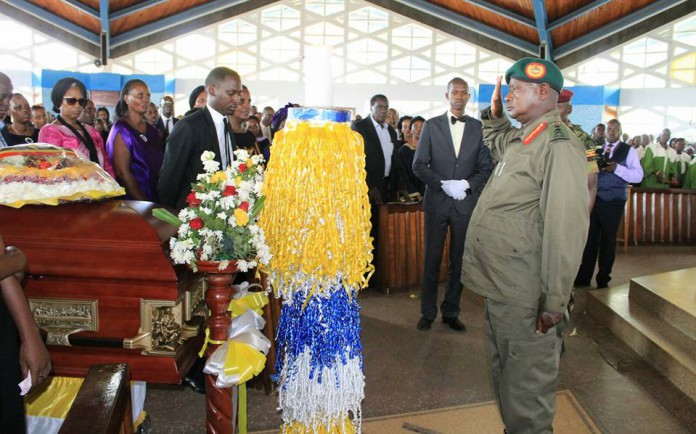
Kivejinja takes EALA oath

The 3rd Deputy Prime Minister and Minister for EAC, Rt Hon Dr. Ali Kirunda Kivenjija signs the Oath as the Speaker, Rt. Hon Daniel Fred Kidega and other Members look on.

The East African Legislative Assembly (EALA) has sworn Rt Hon Ali Kirunda Kivejinja, Uganda’s 3rd Deputy Prime Minister and Minister for East African Community Affairs, as an Ex-Officio Member.

Kivejinja, 81, took the Oath of Allegiance administered by the Clerk of EALA, before the EALA Speaker Rt Hon Daniel Fred Kidega.
Kivejinja, who replaces the late Eriya Kategaya who died in 2013, was ushered into the House by Hon Bernard Mulengani, Hon Dora Byamukama and Hon AbuBakr Ogle. He was appointed to the Ugandan cabinet in November 2015 and took the oath in accordance with Rule 5 of the Rules of Procedure of the Assembly.

The EAC Treaty under Article 48 provides that the Assistant Minister, Deputy Minister of Minister of State may only participate in the meetings of the Assembly when the substantive Minister responsible for East African Community Affairs is unable to participate.

Mr Kivejinja has served in several positions in the Government of Uganda. In 1986, he was appointed Minister of Relief and Social Rehabilitation. He has also since served as Minister of Internal Affairs. Kivenjinja, who holds a BSc in Zoology has been Senior Presidential Advisor for Internal Affairs to President Yoweri Museveni.

Kivejinja, who has also served as the head of the Veterans’ League of the ruling NRM, is also author of Uganda: The Crisis of Confidence, a book about Uganda’s political history. 


Stories Continues after ad
Zuma to repay govt money spent on private home

To repay money spent on Nkandla home: South Africa President Jacob Zuma

South Africa’s President Jacob Zuma has agreed to repay some of the $23m (£15m) the government controversially spent on upgrading his private rural home.

In 2014, a report by the public protector said Mr Zuma had ‘benefited unduly’ from the upgrades, and recently Mr Zuma said the auditor-general and finance minister should determine how much he should repay to end the dispute.

The announcement comes a week before a constitutional hearing on the matter.

The refurbishment of the residence in the village of Nkandla, in Mr Zuma’s home province of KwaZulu-Natal, has turned into a major political controversy in South Africa.

Some of of the money was spent on building an amphitheatre, swimming pool, and cattle enclosure.

The opposition Democratic Alliance (DA) and Julius Malema’s Economic Freedom Fighters (EFF), who have called for a corruption investigation, say they are pressing ahead with their court case regardless of the president’s latest offer.


Stories Continues after ad
Mugabe in another slip up at the AU Summit

Asleep? Robert Mugabe

Swift intervention by security aides saved President Robert Mugabe from another embarrassing fall, as he stumbled while approaching the podium to deliver his last speech as African Union chairman at the continental body’s 26th summit in Addis Ababa, Ethiopia, on Saturday.

Video footage of the incident, which has gone viral on social media platforms, shows the 91-year-old napping shortly before he was led to the podium by an aide, who later saved him from tumbling over after he tripped with his prepared speech in hand.

Presidential spokesperson George Charamba was not available for comment and did not respond to a message sent on his mobile phone.

In one of the videos, Mugabe, who sat next to AU Commission chairperson, Nkosazana Dlamini-Zuma, was captured with his eyes closed and apparently appearing fast asleep, while other Heads of State and government, including Sudanese President Omar al-Bashir and Nigeria’s President Muhammadu Buhari, were engrossed in deep discussions.

This is not the first time Mugabe has been captured on camera sleeping or tumbling.

Last year, Mugabe fell from the stairs at Harare International Airport after addressing Zanu PF supporters shortly after arriving from Addis Ababa, where he had assumed the position of AU chairperson.

Last October, Mugabe almost fell backwards, as he tried to climb a one-step dais in New Delhi, India, at the India-Africa Summit.

Mugabe’s aides have tried to defend his near-falls and sleeping in meetings, with Presidential photographer Joseph Nyadzayo saying his boss would be concentrating with his eyes closed. Mugabe himself has often downplayed the incidents, saying they were nothing unusual.

“Some people do not understand why he closes his eyes at some meetings. One might think he is asleep, but it appears to be one way of deepening concentration,” Nyadzayo wrote as part of a series of articles to be published by those who have worked closely with Mugabe ahead of his 92nd birthday celebrations in Masvingo later this month.

Opposition parties have said the falls and near-falls in Mugabe’s life were a sign that he was old and no longer fit to remain President, as he reaches 92 on February 21.


Stories Continues after ad
Machar softens stance on new States

South Sudan rebel leader Riek Machar Teny has softened his stance on the abolition of the 28 new states created by President Salva Kiir, and now instead says the formation of a unity government is possible after his troops enter Juba in three weeks time.

Previously, Machar, a former Vice President, had said he would not join the Government of National Unity (GNU) if the presidential instrument creating the 28 states is not revoked, but in a recent exclusive interview with Al Jazeera, he said the lead mediators, the Intergovernmental Authority on Development (IGAD) Council of Ministers, had ‘changed sequence’ on the matter, a position he would follow.

‘I think that IGAD Council of Ministers have now changed the sequence of the road map to the formation of the transitional government of national unity. We will now form the government after Juba is demilitarised and our troops go in. So the sequence is slightly changed, we think this is good,’ Machar, the leader of the Sudan Peoples Liberation Movement in Opposition (SPLM-IO) said, adding that the issue of the 28 states would now be shelved for a month after the formation of the GNU.

He also called for international assistance to ensure that the South Sudan capital Juba is dimilitarised and a joint integrated force comprising rebels and government soldiers is effected.

‘We will prepare ourselves and our troops to go to Juba to form the joint integrated security force. In total 2,910 of our troops will be going to Juba and the government will have nearly 3,000 troops, then the rest will go out of Juba. After that, we can start forming the government of national unity’ he said.


Probed further on his commitment to the formation of the GNU Machar, said: ‘I want to be in Juba. I want the government of national unity to be formed as soon as possible. All we need is to ensure that the obstacles that were creating difficulties for us are removed. There should be no reason to delay the formation of the transitional government of national unity. Once Juba is demilitarised – the troops that are supposed to take over the security of the city are deployed from both sides – then I will be in Juba. Juba is my home’.

In August last year, under the mediation of IGAD, the rebels signed an agreement with government, paving the way for a unity government after almost two years of civil strife that has killed thousands and left hundreds of thousands displaced.

Since then a series of reciprocal peace overtures have been ongoing including the return to Juba of an SPLM-IO advance team and the sharing of ministerial posts.

However, the contentious issue of the creation of the 28 new states is still haunting the world’s newest state, created in 2011.


Stories Continues after ad
Pictorial! Besigye’s crowds paralyze Mbarara

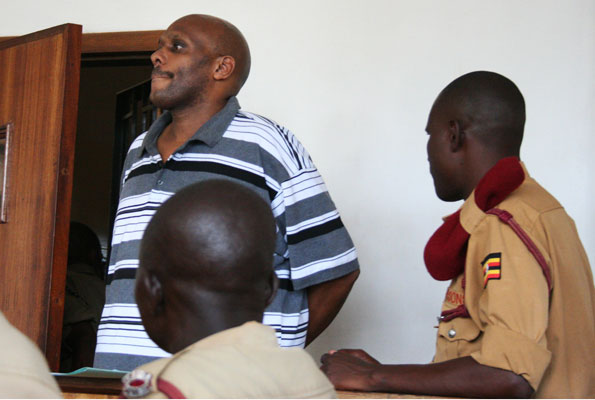
Presidential candidate, Dr Kizza Besigye has brought Mbarara town to standstill as locals have all thronged Boma grounds to receive his ‘defiance’ message. We gathered a few shots for you. All courtesy photos:

12642698_920430301386928_5523409426960775703_n 12642455_920425341387424_1662299424654307665_n

Stories Continues after ad
Women rights organisation to monitor violence in Feb polls

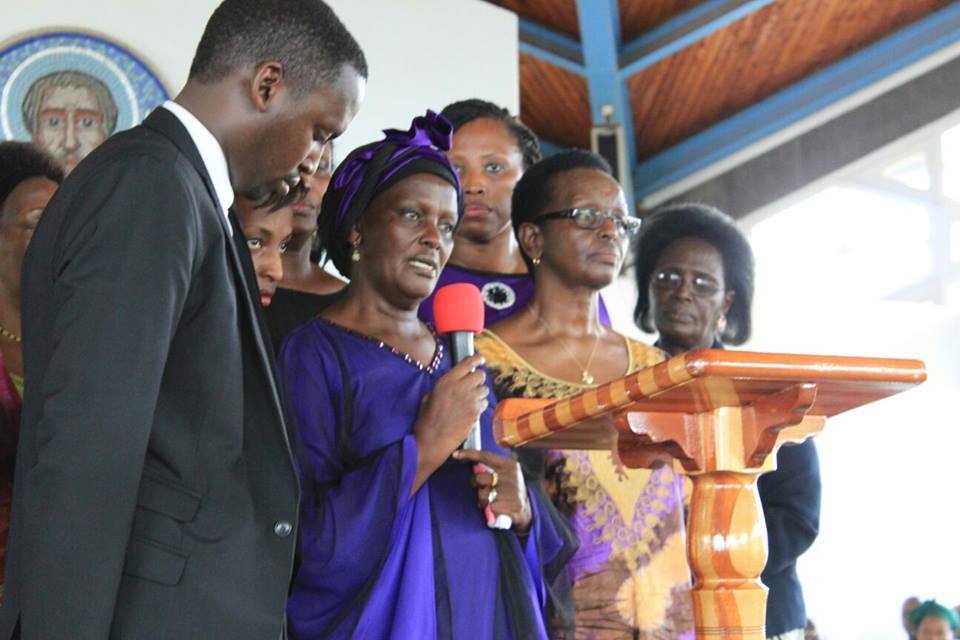
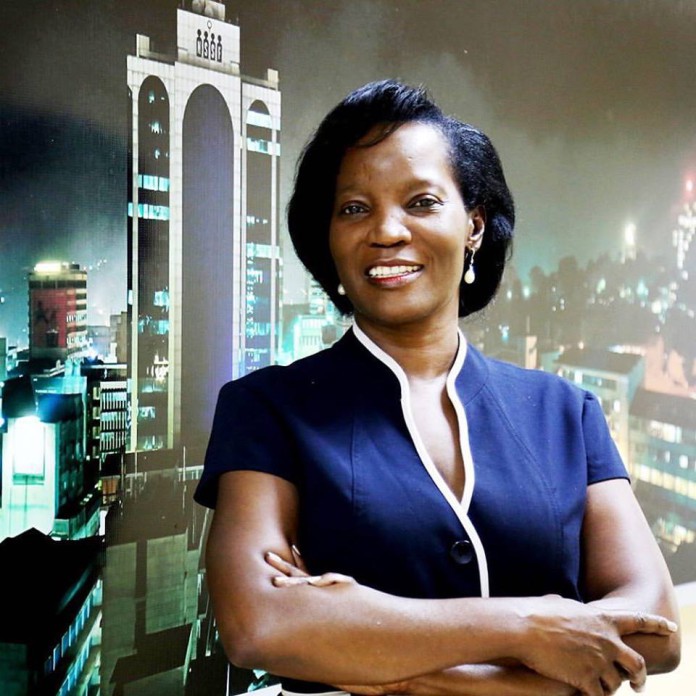
Isis-WICCE boss Ms Kezie-Nwoha

Women rights promotion organization, the Isis-Women’s International Cross Cultural Exchange (Isis-WICCE), has established an election violence watchdog team.

According to the Isis-WICCE, the team will have cluster teams all over the country which will handle or inform relevant authorities about violence related issues.

Addressing the media in Kampala today, the Executive Director Isis-WICCE, Helen Kezie-Nwoha, said that the organisation had trained women and youths from all parts of the country to deal with violence during elections.

She said that the trained groups have the confidence and trust of the people and politicians, to help them reconcile warring sides, and also enable people in communities to solve their differences amicably.

“They are going to be mediators of conflict,” Ms Kezie-Nwoha said. Further, she said, apart from the district and village watchdog monitors, the Isis-WICCE election observers will also handle the minor violence related issues.

According to Ms Kezie-Nwoha, the main watchdog team ‘The Situation Room’ will be at Sheraton Hotel Kampala, and will receive complaints from its teams across the county and then forward them to relevant authorities. The Electoral Commission will also have officials in the room.

“The National Situation Room will handle issues that get out of hand. We will forward the complaint to the EC desk,” Ms Kezie-Nwoha said, adding that prominent women from Liberia, Nigeria, Kenya, and Rwanda will join influential Ugandan women at the Sheraton.

Police has not yet confirmed it will join the watchdog team but Ms. Kezie-Nwoha hopes they do.

Meanwhile, Ms Kezie-Nwoha said the organization was in talks with the Uganda Communications Commission to acquire toll free lines, to help those who lack resources to file their violence-related complaints with the watchdog team.

Other rights organisations on the watchdog team include Angie Brooks International Center Liberia, Institute of Social Transformation, Forum For Women in Democracy  (FOWODE), Women’s Democracy Network (WDN), Uganda Women’s Network (UWONET) among others.


Stories Continues after ad

FDC supporters clash with police ahead of Besigye rally in Mbabara

Francis Mwijukye clashes with police ahead of Besigye's main rally in Mbarara.

Forum for Democratic Change (FDC) supporters have clashed with police in Bwizi-bwera, Mbarara ahead of Dr Kizza Besigye’s rally in Mbarara Town.

BesigyeMbra4
FDC youth wielding sticks confronting police that had blocked the road.

Dr Besigye who has been combing Rwampara county is no heading to Mbarara Municipality for his rally. However, police that has deployed massively on the streets of Mbarara clashed with Francis Mwijukye together with FDC supporters that had become “unruly”.

BesigyeMbra6

Funfair at Mbarara 

"Tight security" ahead of Besigye rally.
“Tight security” ahead of Besigye rally.

BesigyeMbra1 BesigyeMbra3.jpg-large


Stories Continues after ad

Research shows negative attitude towards women candidates

UWONET boss Rita Aciro

A new research carried out by the Women Democracy Group, a secondary body that contains various women activist group, shows that there is increased negativity towards female candidates standing for different political positions in the country.

Speaking at the launch of the second report on Gender and Women’s participation in the 2016 General Elections at Hotel Africana in Kampala, Ms Ritah Aciro, the Executive Director of Uganda Women’s Network (UWONET) highlighted a few findings in the research.

‘’Negative attitudes towards women candidates  still persist for instance, unlike their male counterparts, they are asked about their marital status and questioned why they do not move with their husbands on the campaign trail,” Ms Aciro said.

She added that many voters still believe women should not stand on open seats as they are seen as intruders.

“These challenges are having a greater impact on their access to leadership than male counterparts evident from the number of women nominated for the open seat posts compared to that of the men,” the report states in part.

The report names other hindrances to women’s full participation in Ugandan politics citing heavy burden of work which doesn’t allow women to listen to candidates especially if rallies stretch past 5.00pm since they have to attend to their gender roles hence missing out on critical information especially from candidates who use campaign platforms for voter education. A 2014 study by UWONET shows that women spend 14hours of the day doing care work.

Other hindrances sighted in the report are the constant reports of limited amount of resources to organize rallies, giving an example of presidential candidate Maureen Kyalya, who postponed her campaigns due to lack of funds three weeks into the campaigns.

The media was also mentioned for not giving enough coverage to female candidates in all positions.

Political parties and the electoral commission were also advised to ensure equal participation of women and men in the campaigns by reducing on women candidates nomination fees and allocating them more campaign time.

The report also widely presents key issues in the electoral cycle which include legal framework for campaigns and extent to which women rights are upheld, level of access to resources for women and men candidates and measures by political parties and electoral commission to ensure equal participation of women and men.

The Women Democracy Group is comprised of primary women activist groups like Uganda Women’s Network, Forum For Women Democracy, Women’s Democracy Network,  among others.


Stories Continues after ad
Rwanda denies offloading Ugandan ballot papers

IEC boss Eng Badru Kiggundu at the function to receive the first batch of ballot papers at Entebbe International Airport last Thursday

The Rwanda Civil Aviation Authority has denied allegations that the plane carrying ballot papers for the 2016 elections in Uganda, first landed at Kigali International Airport (KIA) and offloaded some ballot papers before proceeding to its final destination, the Entebbe International Airport.

According to Silas Udahemuka, RCAA boss, there are no reports at the KIA of any such activity or recordings of any flight from South Africa enroute Entebbe in the recent past.

‘According to the flight data information by the Air Traffic control Unit at Kigali International Airport, in the past four to five days and earlier, no flight of that nature from South Africa made a stopover or landed at Kigali International Airport and the ground handling department doesn’t have recordings of the alleged flight,’ Udahemuka, said in a statement yesterday.

While receiving the ballot papers at Entebbe last Thursady, January 28 the Independent Electoral Commission (IEC) boss Eng Badru Kiggundu, said the Ethiopian Airlines plane that delivered the papers had delayed. He did not give details of the delay, sparking off a social media speculative banter that the plane first landed in Kigali and offloaded some ballot papers before landing at Entebbe.

Meanwhile, Ms Paarl Media of South Africa which printed the ballot papers, the Ethiopian Airlines which transported them and the South African aviation regulator are yet to explain what caused the delay.


Stories Continues after ad