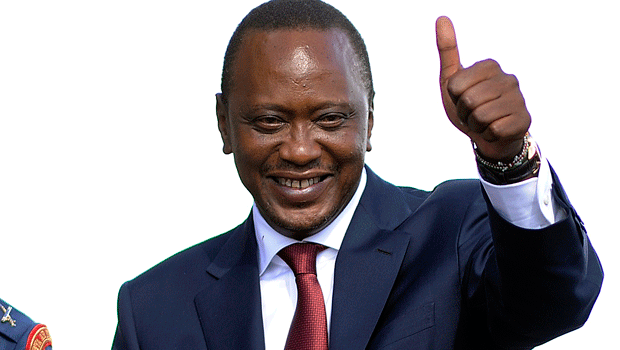
The President of Kenya Uhuru Kenyatta on Saturday 8 arrived in Uganda for a three day state visit. He visited the Quality Chemical Industries, was hosted to a State Dinner by President Museveni and on Monday 10thaddressed the Parliament of Uganda.
At all these occasions President Kenyatta has been keen to emphasize the issue of regional cooperation for the purpose of economic integration. “We are safer and stronger when together, the boundaries that separate us were not created by us,” he is quoted in his statements at one of the events.
Kenyatta’s advice is critical for development and it would be good if the other East African leaders take it up with zeal in order to realize economic benefits for citizens in the region.
Indeed, the leaders should preach messages of unity amongst people in the member countries and in the process ensure shared prosperity through the EAC.
Economic projects like the standard gauge railway (SGR) will lead to the modernization of the railway, easily linking Kenya to Uganda and Rwanda and in effect reduce traffic on our roads.
Further, the SGR will also go a long way in enabling Uganda and Rwanda, which are landlocked countries, to easily export and import goods compared to the past.
Indeed, the SGR should be given the utmost priority and measures should be put in place to ensure such projects are not mishandled and are completed in time.
Also, curbing corruption should be high on the agenda since corruption retards economic development and prosperity; corruption concentrates public money in the hands of a few people!
It is also important that members of the East African Legislative Assembly (EALA) ensure that the community is strengthened.
The EALA legislators should make laws that help uplift the EAC and make sure that any such laws are implemented rather than introduced.
The issue of regional security must also be given critical attention because without security neighbors cannot interact.
And where differences may occur, measures should be put in place to quickly resolve any matter of contention amicably as this would go a long way in ensuring peace and security in the region.
That way president Kenyatta’s counsel on economic development in the EAC region won’t be in vain.
Moses Mapesa, is seeking financial support in order to undergo cancer of the bone marrow.
Moses Mapesa, is seeking financial support in order to undergo cancer of the bone marrow.
The former Uganda Wildlife Authority (UWA) Executive Director Moses Wafula Mapesa is on August 11, 2015 traveling to Mayo Clinic-Arizona, US to have preliminary tests and assessments carried out before he undergoes a bone-marrow transplant in October this year.
Mapesa needs a bone marrow transplant as a result of Myelodysplastic Syndromes (MDS), a disease he has suffered from for eight years now. This is a disease that affects the bone marrow, making it incapable of manufacturing blood. In due course, a patient might require blood transfusion after a week of even days.
The length between the intervals Mapesa got blood transfusions gradually became shorter and shorter. Doctors then advised that he gets a bone marrow transplant. Until recently he had to travel to Kampala after every seven days to get new blood transfused into his system.
According to Dr. Henry Ddungu, a Hematologist and consultant at the Uganda Cancer Institute-Mulago, MDS are a group of cancers from the bone marrow where there is a problem with maturation of cells.
Dr Ddungu said since a patient suffers damage to their stem cells, as a result, what comes out would be inadequate. Normal blood is made up of three cells, red and white blood cells, and platelets. Dr Ddungu says that these cells have to mature in the bone marrow before blood is released into the body.
In MDS, the problem is within the bone marrow at the roots, which are also known as stem cells. Here the bone marrow fails in cell making, in other words; the bone marrow cannot manufacture its own blood.
Dr Ddungu says MDS can be described as primary or secondary. “Primary MDS is where you cannot identify the cause, while secondary MDS follows injury to the bone marrow,” he said.
Types of the disease
According to Dr Ddungu, MDS is classified depending on severity. There is refractory anemia, a condition where there are few red blood cells in the blood and the patient then develops anemia. Here, the number of white blood cells and platelets is normal.
Refractory anemia with ring sideroblasts is the second classification; where there are too few red blood cells in the blood and the patient develops anemia. The red blood cells also have too much iron but the number of white blood cells and platelets is normal.
The third category is refractory anemia with excess blasts: There are too few red blood cells in the blood and the patient has anemia. Here most of the cells in the bone marrow are blasts or immature cells. Here a patient is moving to stages of acquiring leukemia. The other classification where a patient actually goes into acute leukemia is acute myelogenous leukemia.
Risk factors
Risk factors are those things that make one susceptible to suffering from the disease. However, Dr Ddungu, who is the most senior doctor in treating MDS at the cancer institute, said the occurrence of the disease is not necessarily tagged to the presence of a risk factor.
“The injuries to the bone marrow that could cause MDS are caused by some cancer treatment like chemotherapy, exposure to pesticides and solvents like Benzene, and old age. Primarily, MDS is a disease for the elderly,” Dr Ddungu said.
Signs and symptoms of MDS
Ddungu said the commonest sign of MDS is fatigue because of decreased levels of red blood cells. Red blood cells help to carry oxygen and food, without which the body is weakened.
Sometimes patients have recurrent infections because their white blood cells are affected.
Patients also bleed, including spontaneous bleeding from any part of the body; including the skin.
How is MDS diagnosed?
According to Sam Mwandha, a member of Mapesa’s family, they first discovered that he had a problem with his blood in 2008. Mapesa had gone to South Africa for an operation when the doctors realized he did not have enough platelets to clot the blood.
MDS is diagnosed by specialists called Hematologists, who examine one’s blood to look out for abnormalities that might point towards damage in the marrow.
Treatment of MDS
Dr. Ddungu said there is no definitive treatment for MDS and that patients basically depend on supportive care.
“Because cells are low, sometimes we stimulate the bone marrow to produce more cells. The boosters are called growth factors and the most common form of supportive care is the use of blood products or rather blood transfusion,” Dr Ddungu said.
After the preliminary tests scheduled for August 11, 2015, Mapesa will travel back to USA in October for the transplant procedure and then stay there for a period of three months to one year under observation.
Dr Robert Nabanyumya, another relative of Mapesa, said the doctors recommended a trial drug to reduce on the intervals between which he requires a new blood transfusion while they wait for August.
And Dr Ddungu said that a number of medicines have been tried out around the world, including 5-Azacitidine, a drug which was recently approved by the Food and Drug Administration (FDA), in the USA but has not yet been registered or availed in Uganda because it is too expensive.
“As of now, the only potential cure is a bone marrow transplant from a related donor otherwise called an allogeneic donor. This donor might not be a relative, but as long as you have the same genetic makeup, they can work,” Dr Ddungu said.
However, such a service is not yet available in Uganda and Dr Ddungu said the Uganda Cancer Institute is planning to have it as one of the services offered in future. “We are putting in place all the necessary infrastructure so in the near future we also can start small cell services,” he said.
Chances of treatment success
Chances of recovery are not 100%. According to Ddungu, survival depends on factors such as if the transplant is not rejected, the level of the patient’s complications and whether the centre from where the transplant is to be carried out has the potential to take care of the patient.
“Bone marrow transplant has better chances and is still seen as the only potential cure of MDS,” said Dr Ddungu.
History of patients in Uganda
According to Dr Ddungu, they do not have a registry as yet but he has treated over 10 patients in the last three years.
Prevention
Sadly, MDS cannot be prevented and has no vaccine.
However, Dr Ddungu said it can be detected early if a person goes for routine checkup. He said if a patient begins early treatment, the disease can be controlled.
“These are diseases that are not of public health concern but are really dangerous,” he says
In May this year, tenants at Pioneer Mall went on strike as a result of increasing rent and charges for other services like water and electricity. The tenants claimed the increment was unfair, considering the dollar rate and poor services provided by the mall owners.
The media often runs such and many more stories of traders protesting hiking of rent by landlords, and people often wonder if there is a law to this effect. The answer is yes, and that law is called the Rent Restriction Act 1949 Cap: 231. However, according to Gerald Abila, the Managing Director of barefootlaw; a fee online legal service provider, this law is not actively in place to govern the relationship between tenants and landlords.
Section 2 (1) of this Acts provides that rent should not exceed a certain amount. It states that “no owner or lessee of a dwelling house or premises shall let or sublet that dwelling house or premises at a rent which exceeds the standard rent”.
“Ideally, there is supposed to be a committee set up to determine rent for a particular area. But because it is nonexistent in Uganda, that is why you can find an area like Ntinda having one tenant pay Shs. 500,000 and the other $1000,” Abila said. He added that for tenants to be protected, Parliament needs to come up with a new and valid law to this effect.
How can tenants protect themselves?
According to Abila, tenants should not enter premises without signing a tenancy agreement. It is advisable that one gets a lawyer to look through the agreement so that in case a disagreement arose, court can always refer to the tenancy contract.
However, if one cannot afford a lawyer’s services, they can write their own tenancy agreement. The agreement must include the name of both tenant and landlord, the village, parish, sub-county and district where they are both located.
The agreement should also include the rental agreement, i.e. amount to be paid, to whom, date of payment, duration of rent, expiry date and what the rent is being paid for (farming, office or work space or place of abode).
It is also important the agreement indicates how the rent will be paid i.e. if it to be paid in installments, or full, it should also indicate the date and amount for each installment, which should also be signed against by both the tenant and landlord/lady.
“In the absence of an agreement or an agreement without a rent restriction clause, if your Landlord/Lady increases the price inequitably, you either comply or look for another place to rent,” Abila advised.
The other way tenants can be cautious is by ensuring that the person they are entering the agreement with is the one authorized to carry out transactions for the premises. “This will help avoid situations of paying rent to impostors. Tenants ought to be really careful about who they pay their rent to,” Abila said.
In case of a dispute arising from rent, is advisable that it is settled amicably before considering other options. According to the law, Distress for Rent (Bailiffs) Act 1933 Cap: 76, a landlord has a lot more power over the tenant and usually the remedy for a tenant is to look for other premises.
“It is also important that before entering any premises, a tenant should visit the area and speak to other residents and find out about the area’s security. Also ask the landlord about the security measures put in place. Do not forget to also include that in the tenancy agreement,” Abila said.
The landlord
In case you have a dispute with a tenant, it is important that it is solved lawfully. Section 2 of the Distress for Rent (Bailiffs) Act 1933 Cap: 76, provides that “no person, other than a landlord in person, his or her attorney or the legal owner of a reversion, shall act as bailiff to levy any distress for rent unless he or she shall be authorized to act as bailiff by a certificate in writing under the hand of a certifying officer, and such certificate may be general or apply to a particular distress or distresses”.
This implies that it is illegal to break a tenants padlock and confiscate or sell his belongings to recover rent in case of failure to pay arrears, without a written order from a certifying officer who is the Chief Magistrate or Grade 1 Magistrate.
Forum for Democratic Youth League (FDCYL) is set to hold elections for new leaders in September, three months ahead of the expiry of their mandate in January.
Although the term for the current youth leaders expires in January next year, the party’s Electoral Commission and the FDCYL have agreed that elections be held on September 18.
Speaking to the press at the party headquarters in Kampala, the FDCYL spokesperson Mr. Meddy Mbentyo Junior said all party youth leaders agreed to cut short their terms to pave way for others to take over. “The move is aimed at giving others an opportunity to lead,” Mbentyo said.
He commended the outgoing youth cabinet for their selflessness. “The mindset change and spirit for someone to leave power and say let’s give someone a chance, that’s an achievement,” he noted.
Mbentyo also lauded the youth leaders for the achievements registered during their time in office. “We have won many guild seats and the FDC youths are united,” he added.
He called upon all FDC youth members to participate in the election exercise stressing that “FDC isn’t a one man party and all qualified members are free to contest.”
Picking of nomination forms ends on August 28 and grass root elections are expected to commence on September 18.
Meanwhile, the FDC youth leaders are going to hold a consultative delegates conference this month. The three day event will commence between August 16 and 18 will be held under the theme: “the Uganda we want, the role of the youths.”
According to Mr Mbentyo, they have invited FDC youth district chairpersons, vice chairpersons and over 20 representatives from institutions and universities.
He added that the times of the National Resistance Movement dominating youth leadership positions are over. “That’s intoxication by the NRM; we are now here. This is for all of us.”
The youths will also hold a procession on August 17 from Kireka to Railway Grounds in Bweyogerere where they will be addressed by senior FDC members.
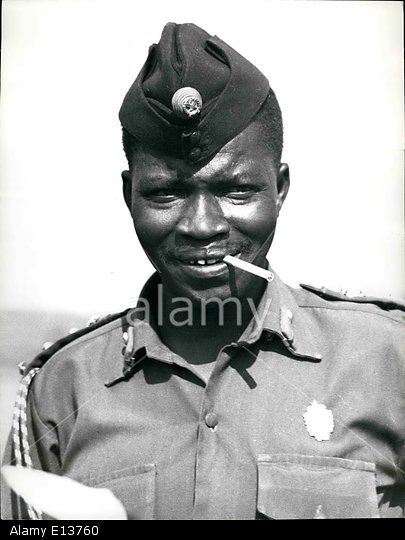
E13760 Feb. 29, 2012 - Uganda: Maliyamungu: Colonel Isaac Maliyamungu, Uganda Army Officer. , NAIROBI
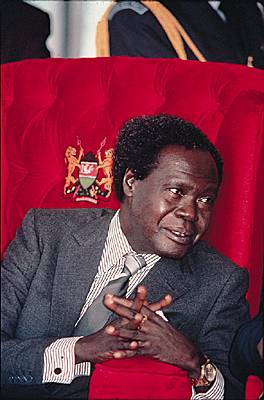
Apollo Milton Obote
After the overthrow of Idi Amin in 1979, Uganda was governed by Yusuf Lule and Godfrey Binaisa. But when the 1980 elections were held amid claims of rigging, then Chairman of the Military Commission Paulo Muwanga decreed that he was the only person to announce the results, prompting then Electoral Commission Secretary Vincent Ssekono to flee the country.
In December 1980 Muwanga declared the Uganda Peoples’ Congress (UPC) under Apollo Milton Obote as the election victors after which he was rewarded with the position of Vice President.
It is at this time that his vice chairman at the Military Commission Yoweri Museveni declared war against the UPC regime, leaving for the Luwero jungles on February 6, 1981. Obote was to be ousted by troops loyal to his Chief of Defence Forces General Tito Okello Lutwa and then Northern Brigade Commander Brigadier Bazilio Olara Okello on July 27, 1985. Six months later the Okellos were also to be bundled out by Museveni’s National Resistance Movement/Army (NRM/A) on January 26, 1986.
After his ouster Obote fled to exile in Zambia where lived with his family but was to die in a south African hospital in 2005.
Idi Amin Dada
Idi Amin Dada was born around 1925 in and little is known about his birthplace and schooling. However, he joined the Kings’ African Rifles in 1946, serving in Kenya till 1949.
He returned to Uganda and was promoted to Lieutenant. At Independence, Amin was promoted to captain and rose through the ranks to become Commander of all armed forces in 1970 while at the rank of Major General.
Earlier, on the instructions of Obote, Amin had attacked the Kabaka’s Palace at Mengo. He was later to fall out with Obote and the rift led to a coup in January 1971, while his boss attended the Commonwealth Conference in Singapore.
He promised to hold elections ‘in a short period’ and also ordered for the return of the remains of the Kabaka of Buganda, Sir Fredrick Mutesa II in April 1971. Generally, Amin’s government was characterized by the army, with the biggest decisions resting on his shoulders, and a week after he took power, he suspended certain provisions of the Ugandan Constitution, and instituted an Advisory Defence Council composed of military officers with himself as the chairman.
In 1975 Amin played host to the organiosation of African Unity (OAU) Summit, which was held at the then newly-constructed Nile Mansions Conference Centre (Serena Hotel Conference Centre). However, his regime is known more for bloodletting, with unofficial figures of the state-orchestrated deaths flying in the hundreds of thousands, something that made those who survived run to exile.
It is these exiles including current Ugandan president Yoweri Museveni, who allied with the Tanzanian forces, the Tanzania Peoples Defence Forces (TPDF), to overthrow Amin in 1979. He fled to exile in Libya and later Saudi Arabia, where he passed on in 2003.
He was survived by three wives and several children and one of his wives, Sarah Kyolaba passed on recently at a London hospital. Her body was returned to Uganda for burial.
Yusuf Kironde Lule
Yusuf Kironde Lule was born in 1912 and went to Kings College Buddo, Makerere University College and at the Fort Hare University at Alice, SouthAfrica. He was as well a reknown athelet and he was a national champion in 888yard dash.
He was the Principal of Makerere University College from 1964 to 1970 and later became Assistant Secretary General of the Association of African Universities in Accra, Ghana between 1973 and 1978. He also served as the Assistant Secretary General of the Commonwealth Secretariat.
He went into exile when Idi Amin came into power and returned to Uganda as president in 1979 under the Uganda national Liberation Front (UNLF). He was to rule for only two months before the NCC kicked him out of power in June 1979 and replaced him with Godfrey Lukongwa Binaisa.
Disgruntled, he fled the country and formed a rebel group, the Uganda Freedom Fighters (UFF). It is this group that was later to fuse with Yoweri Museveni’s Popular Resistance Army (PRA) in 1981, to form the National Resistance Movement/Army (NRM/A), the outfit that ousted the Okello junta in 1986.
At 73 years, Lule died on January 21, 1985 at Hammersmith Hospital in the UK and was accorded a state funeral in Uganda at the Kololo ceremonial grounds’ Heroes Corner. He was survived by a widow Hannah Lule, who has since also passed on. And one of his sons, Wasswa Lule had a stint in Museveni’s government as the Deputy Inspector General of Government (D/IGG) and later joined politics where he became Member of Parliament for Rubaga North in the Sixth Parliament.
Godfrey Lukongwa Binaisa
Born in 1920, Binaisa was educated at Kings College Budo, Makerere College (expelled) before getting a degree of law (LLB) from Kings College, London in 1955. He was called to the Bar at Lincoln’s Inn in 1956 and later appointed a Queen’s Counsel (QC) before returning home and being appointed Attorney General from 1962 to 1968, when he resigned and went into private practice. Formerly a staunch UPC functionary, Binaisa is famously remembered for the ‘pigeon-hole’ Constitution of 1966, which effectively made Obote president of Uganda after he assumed the powers of Fredrick Mutesa II, the then president.
When Amin captured power in 1971, Binaisa went into exile in London and later America, only to return and become president in June 1979 after Yusuf Lule had been deposed by the NCC, the then supreme governing body of the Uganda National Liberation Front (UNLF), a coalition of former Ugandan exiles who joined efforts to remove Idi Amin under the umbrella of the Uganda National Liberation Front (UNLF).
Binaisa was also to run into trouble when he attempted to remove then powerful army Chief of Staff Brigadier David Oyite Ojok, who he had named Ambassador to Algeria.
He was removed from office on May 12, 1980 by the Military Commission, then a powerful organ of the UNLF headed by Paulo Muwanga and deputized by Yoweri Museveni.
Throughout the early 1980s and 1990s, Binaisa lived in New York while practicing law and later returned to Uganda, where he led a quiet life in retirement. He died in 2010 aged 90.
Gen. Tito Okello Lutwa
A military officer and politician, Gen.Tito Okello Lutwa was born in Kitgum district and joined the Kings African Rifles in 1940. Tito Okello was instrumental in the removal of Amin from power in 1979, and became Army Commander of the UNLA after the war, between 1980 and 1985
In July 1985, together with Bazilio Olara Okello, Tito Lutwa Okello staged a coup that ousted president Milton Obote. He ruled as president for six months until he was overthrown by the National Resistance Army (NRA) of current president, Yoweri Museveni . After he was ousted he fled to exile in Kenya but later came back. He died in 1996 aged 82.
His wife Esther also died in but the couple is survived by children including Henry Okello Oryem is the current State Minister for Foreign Affairs/International Relations.
Paulo Muwanga
Born in 1921, Paulo Muwanga served in various capacities, rising up to the position of Vice President under the second UPC government.
At one time he was the chairman of the Military Commission, the de facto President of Uganda for a few days in May 1980 until the establishment of the Presidential Commission. As members of the Military Commission, Muwanga together with Yoweri Museveni, Oyite Ojok and Tito Okello deposed Godfrey Binaisa in a coup on May 12, 1980. During the 1980 elections Muwanga arrogated himself the powers of the Electoral Commission and declared Milton Obote’s Uganda People’s Congress the winner. The elections were contested, prompting his erstwhile deputy at the Military Commission Yoweri Museveni to wage a guerrilla war in protest. Museveni eventually became president in 1986 and Muwanga later on died in 1991.
Gen. Mustafa Adrisi
Gen. Mustafa Adrisi was born in 1922 in the West Nile District of Arua. He served as the Vice President of Uganda from 1977 to 1978 under Idi Amin.
In 1978, Adrisi was injured in a suspicious motor accident, prompting troops loyal to him to mutiny.
He died in 2013 aged 91, and was buried in Arua. He was survived by several wives and children.
E13760 Feb. 29, 2012 – Uganda: Maliyamungu: Colonel Isaac Maliyamungu, Uganda Army Officer. , NAIROBI
Col. Isaac Maliyamungu.
It is said that Maliyamungu was a gate man at the then Nyanza Textiles factory in Jinja before joining the army.
At the time of the 1971 coup, Maliyamungu rose to fame as he commandeered a tank at an entrance to a terminal at the Entebbe International Airport. Reports indicate Maliyamungu was responsible for the gruesome killing of several perceived regime opponents including the then Mayor of Masaka Francis Walugembe, killed in 1972.
He also rose through the ranks, at one time serving as Army Chief of Staff. In 1979, Maliyamungu was to command an elite tank crew force that gave the TPDF a hard time in areas near the Uganda border with Tanzania. But after the defeat of the Uganda Army (UA) Maliyamungu fled to Congo (present day Democratic Republic of Congo), where he reportedly died in the 1980s.
Prof. Edward Rugumayo
A renowned scholar and politician, Prof Rugumayo was born in 1934 in Kyenjojo District. He attained his university education at the University of London, graduating with a Bachelor of Science degree in Botany and Ecology.
After graduation, Rugumayo worked at Kyambogo (the Uganda Technical Institute) before moving to Makerere as warden for Mitchell Hall. After the 1971 coup he was appointed Minister for Education by Idi Amin but was to resign in 1973, making him one of the few persons to openly snub Amin. He fled to exile in Kenya, and returned to Uganda in the Uganda National Liberation Front (UNLF) government after Amin’s ouster in 1979.
In the subsequent government he was to hold the all-powerful position of Chairman of the National Consultative Council (NCC), the de facto Parliament of the time and reports indicate he was instrumental in ousting the first post-Amin president, Professor Yusuf Lule.
Lule was replaced by Godfrey Binaisa. In May 1980, while Rugumayo was in Arusha Tanzania, Binaisa was also deposed in another coup d’état and this time Rugumayo stayed in exile until 1992, they year he returned to Uganda and joined the National Resistance Movement (NRM) government of Yoweri Museveni.
Under Museveni Prof Rugumayo served as Ambassador to South Africa, Minister of Internal Affairs and Minister of Tourism, Trade and Industry. In 2005, he was appointed Ambassador to France but he declined.
Ali Fadhul being helped by his son to walk.
Brig. Ali Fadhul
Brig Fadhul reportedly hailed from Busoga, and was a provincial administrator under Idi Amin and is said to have committed a lot of atrocities during his time in government.
After the overtrow of Amin in 1979, little was heard of him till 1987, when he was arrested from his home in Bulamagi and charged with the murder of the former Administrative Secretary of Ankole, Xavier Tibayungwa in 1972.
President Museveni pardoned Fadhul and he was released in 2009. He stays at his home in Bulamaji.
Wanume Kibedi
A prince from Busoga, wanume Kibedi studied Law in London. Upon his return to Uganda, he was appointed Assistant Administrator General in the Ministry of Justice, a position he held up to 1969. That very year Wanuume became an advocate of the High court. He was also a partner with Binaisa and Company Advocates before he was appointed Minster for Foreign Affairs in 1971 by Idi Amin, a position he held up to 1973 when he resigned from his ministerial job and fled to England.
While in England, Kibedi taught law at the College of Law in Lancaster before forming Kibedi and company solicitors in London in 1975. In 1986 when Yoweri Museveni captured power, Kibedi was appointed ambassador and Uganda’s Permanent Representative to the UN, a position he served for a few years before returning to private practice in London.
He later returned home and is the current Chairman of the Immigration and Citizenship Board.
Cecilia Ogwal
Born in Dokolo (formerly Apac District), in 1946 Cecilia Atim Ogwal graduated from Nairobi University in 1970 with a Bachelor of Commerce degree. In the early 1980s Cecilia was to get involved in politics under the UPC, where she served as Assistant Secretary General between 1985 and 1992. She was also a Constituent Assembly Delegate (CAD) and participated in the making of the 1995 Constitution. She also serve3d as Member of Parliament for for the Lira Municipality, a seat she lost to UPC founding leader Obote’s son Jimmy Akena in 2006.
However, in 2011 Cecila Ogwal was to bounce back to Parliament this time as the Woman MP representing the newly-created Dokolo county. At the time she had defected from UPC to the Forum for Democratic Change (FDC).
She is the current Opposition Chip Whip in Parliament.
Prof. Yash Tandon
Yash Tandon was born in 1939 in Kaberamaido, Teso District and graduated with a B.Sc. in Economics from the London School of Economics in1961. He completed his doctorate studies in International Relations at the LSE in 1969 and returned to Uganda. Following Iddi Amin’s expulsion of Asians, Prof Tandon fled to exile in Kenya and later to the United Kingdom. He later got involved with politics and joined the anti-Amin forces, the UNLF, which toppled the latter in 1979.
On his return Prof Tandon was named to the National Consultative Council (NCC) where, together with other professors Dani Wadada Nabudere, Edward Rugumayo and Omwony Ojok, they became known as ‘the Gang of Four’.
When Binaisa’s regime collapsed in May 1980, Prof Tandon was to go back to exile again Kenya.
Dr John Luwuliza Kirunda
A medical doctor, John Luwuliza Kirunda was born in 1940 and was one of the strongest ministers in the Obote II regime, where he served as UPC Secretary General. Also, his stint at Internal Affairs between 1980 and 1985 is remembered for ‘detention without trial’ and the operation ‘panda gari’, where thousands of Ugandans were forced by soldiers and other security operatives to board trucks to unknown destinations, at times never to be seen alive again.
But after the ouster of Obote in 1985, Luwuliza Kirunda fled to exile in Zimbabwe, where he died in 2005 aged 65. His body was secretly returned to the country and buried at his home in Bulugodha, Busembatia in Busoga.
Yona Kanyomozi
A veteran politician, Yona Kanyamozi hails from western Uganda. He was and still is one of Uganda People’s Congress strongmen from that part of the country. In 1989 he participated in Constituent Assembly and from 2001 to 2006, he represented Uganda at the East African Legislative Assembly (EALA). He is currently in private life but is rumoured to be eying a seat in Ntungamo.
Sam Tewungwa
He served as Minister for Regional Cooperation in the Obote II regime from 1980 to 1985.
PatrickMasette Kuuya
A teacher by profession, Patrick Masette Kuuya hails from Manafwa formerly Mbale District. He was one of the Uganda People’s Congress (UPC) strongmen in Mbale and served as Minister for Rehabilitation in the second Obote government between 1980 and 1985. When the regime was overthrown in 1985 he fled to exile in Kenya where he is teaching Applied Economics at Kenyatta University. It is said President Museveni has tried to persuade him to return in vain.
Prof. Adonia Tiberondwa seen this photo standing behind Obote.
Prof. Adonia Tiberondwa
A teacher and politician, Prof Tiberondwa hailed from Bushenyi district. He was the first indigenous headmaster of Teso College Aloet, and also served in the second Obote government as Minister for Industry between 1980 to 1985. He also lectured at Makerere University and by the time of his death he was a member of the Uganda People’s Congress (UPC) Presidential Policy Commission. He died in December 2004.
Maj. Edward Rurangaranga
A staunch UPC supporter and close confidant of Apollo Milton Obote, ‘Major’ Edward Rurangaranga hails from Kitagata in Bushenyi District. He fled to exile after the coup of January 25, 1971 and although he has no known military background to his name, Rurangaranga was instrumental in the military efforts to oust Amin’s government. He returned to Uganda after 1979, and was to be appointed Minister of State in the Office of the Prime Minister after Obote won the contested elections in December 1980.
When the Obote II regime collapsed in 1985, Rurangaranga fled the country and returned in March 1986, only to be arrested by the NRA and detained at Luzira for five years. On January 21, 1991, he was set free and up to now he is still a staunch member of the UPC.
Chris Rwakasisi
In the 1960s Chris Rwakasisi rose through the UPC ranks to become the party’s youth organizer at the headquarters. In 1963, he got a scholarship to study in Russia, graduating in 1968 and later getting a job at the National Trading Corporation, as the the company’s legal secretary and public relations officer.
After the 1971 coup Rwakasisi was arrested and held in Makindye military barracks for six months and when he was released he went into private business. In 1972 he fled to exile in Nairobi until 1979 when he returned as one of the liberators under the UNLF.
After the 1980 elections Rwakasisi was appoimnted the Minister of Security under the second UPC regime, serving in that capacity from 1980 to 1985. After the Okello coup of 1985, Rwakasisi was arrested and later in 1988 convicted for kidnap with intent to murder and sentenced to death.
In 2009 he was pardoned by President Museveni and released from Luzira maximum prison, where he had spent twenty years.
He is currently a Presidential Advisor.
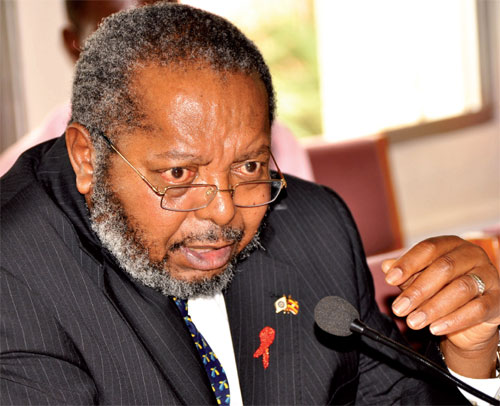
Emmanuel Tumusime Mutebile.
A former Guild President at Makerere University, Emmanuel Tumusiime-Mutebile was born on 27 January 1949 in Kabale District. He studied at Kigezi College Butobero, Makerere College School and Makerere University.
In 1972 criticised the expulsion of Asians from Uganda by Amin and, fearing for his life fled to England where he completed his education Durham University in 1974.
Between 1979 and 1984, Tumusiime-Mutebile held very high profile government positions including Deputy Principal Secretary to the President in 1979; Undersecretary in the Ministry of Planning in 1981; Senior Economist and then Chief Economist in 1984.
In 1992, he was appointed Permanent Secretary of the Ministry of Finance, Planning & Economic Development.
Today, Mutebile is the longest serving Governor of the Central Bank.
Ali Kirunda Kivenjinja.
Al Hajji Ali Kirunda Kivenjija was born in 1935 in Busoga. He studied at Kibuli Junior School, Busoga College Mwiri and at Madras College before obtaining a Bachelor of Science Degree in Zoology at Delhi University.
While in India Kivejinja was active in politics and served as the Treasurer of the African Students Association.
He joined the UPC upon his return to Uganda in 1962 and served a political mobilizer for the then ruling political party.
In the early 1980s Kivejinja joined the Uganda patriotic Movement (UPM) of Yoweri Museveni and when the party lost in the 1980 elections, he fled to exile. He was to return to Uganda after Museveni rode to power in 1986 and has since served in various high profile positions, the highest being Third Deputy Prime Minister. He was also a long-serving Member of Parliament for Bugweri County bfore being trounced by youthful lawyer Abdu Katuntu. He is currently in ‘semi-retirement’ but still hold influence in the ruling party, the NRM, where he serves as the Central Executive Committee member representing the elders.
Boniface Byanyima
Mzee Boniface Byanyima is one the most prominent members of the Democratic Party (DP) in western Uganda and served was the longest serving National Chairman of the party until his retirement. He is also said to have participated in bringing up President Museveni and he is father Engineer Winnie Byanyima, a wife to former FDC President Dr. Kiiza Besigye. The daughter is the current Executive Director of Oxfam International.
Jaberi Bidandi Ssali
Jaberi Bidandi Ssali was born on July 17 1937 in Butambala, Gomba. He studied at a university in Pakistan but did not complete his degree in Agriculture.
During the 1960s Bidandi was a UPC youth mobiliser but kept a low profile after the ouster of Milton Obote in 1971. At one time he coached the Uganda Cranes, playing a pivotal role in their most prestigious placing at the Africa Cup of Nations, when the Cranes were runner-up. Between 1979 and 1980 Bidandi joined the Uganda Patriotic Movement (UPM) but again went silent when Museveni went to the bush. However, he was to resurface on the national scene after 1986, when Museveni came to power and named him Minister for Local Government from 1989 to 2004, making him the longest serving person to hold that portfolio under Museveni.
In 2004, he resigned from the Cabinet after disagreeing with Museveni over the latter’s desire to run for a third term as President. He formed his own party called the People’s progressive Party (PPP) but is currently not active in politics because of health related problems.
Bidandi holds the degree of Bachelor of Arts in Local Governance and Human Rights, obtained from Uganda Martyrs University, Nkozi.
Maj. Gen. David Oyite Ojok
Major General David Oyite Ojok was born in 1942 and rose through the army ranks to become the first post-Amin army Chief of Staff of the Uganda National Liberation Army (UNLA).
A graduate of the prestigious Sandhurst Military Academy, Oyite Ojok was heavily involved in pursuing Yoweri Museveni’s NRA and Andrew Kayira’s Uganda Freedom Movement (UFM) combatants in the jungles of central Buganda, particularly in Luwero, where his helicopter was brought down in December 1982, dying at 40.
The Uganda Police has issued a warning to its officers against engaging themselves in crime.
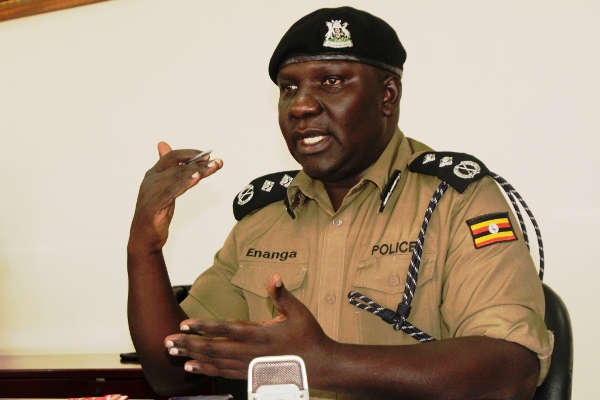
Speaking to journalists at the police headquarters in Naguru today, police spokesperson, Fred Enanga said they will not condone acts like these in the force.
“We are not going to tolerate this and we shall continue to eradicate all the bad apples from the force.” Mr.Enanga said.
Recently, police reports have linked some of their officers countrywide in criminal acts like murder, armed robbery, hiring guns to robbers among others, with many police guns being recovered from robbers.
Mr.Enanga did not dispute this as he admitted that many of such individuals are still in the force.
“We cannot rule out their existence because like in all institutions, such people do exist.” Mr.Enanga said.
However, police maintains that they have started arrests of indisciplined officers and negligent ones in their bid to clean up the force.
“Ninsiima Allan lost his gun loaded with 38 rounds of ammunition in Kigezi when he slept off under the influence of alcohol, we arrested him and charged him with negligence and lost of a police gun.” Mr.Enanga said.
Asked why would a police officer involve himself in committing crime? Outside the police headquarters, an officer who preferred anonymity said conditions may force a policeman to do certain things out of the law.
“Most of us are poor, and we may look for other ways to earn and therefore one can do anything in order to survive.” He said adding, “Some however just have an inhuman heart and are just greedy.”
Kenyan President Uhuru Kenyatta addresses Ugandan Parliament and asks the legislatures to disregard politicians who are ethnical biased.
Uhuru in his address says a country can only prosper with leaders being open and embracing each other.
“It does not mean campaigning on crude ethnic terms to divide people, and even trigger violence so as to be rewarded with government positions. We must be able to make political progress without destroying our countries in the process.” President Uhuru said.
Adding “A living democracy is anchored in love of country, respect for those with different views, an adherence to debate based on facts, and a willingness to learn from one another.”
Uhuru said for any country to succeed, the above shouldn’t be pegged on the sitting government as the principle limited to those in power but applicable to the opposition.
Below is President Uhuru’s full statement
SPEECH BY HIS EXCELLENCY HON. UHURU KENYATTA, C.G.H., PRESIDENT AND COMMANDER IN CHIEF OF THE DEFENCE FORCES OF THE REPUBLIC OF KENYA DURING HIS ADDRESS TO THE UGANDAN PARLIAMENT IN KAMPALA, UGANDA – 10TH AUGUST, 2015
Mr Speaker, Your Excellency President Yoweri Museveni, Honourable Members of Parliament, Ladies and Gentlemen, I am glad to be here today.
Thank you for giving me the honour to address this August House. I speak to you as your closest neighbour, as a steadfast friend in a turbulent world, and a committed partner in our historic task of building a lasting union that is secure and prosperous.
It is my intention today to share with you a glimpse of the destiny that awaits us. So that strengthened by its splendour, we can stand together to defend it with every ounce of our collective strength.
To attain that bright future however, demands we pay heed to where we come from, to what has forged us into the independent and ambitious Africans of Kenya and Uganda. Honourable Members, We rose as independent nations from the ruin and carnage of colonialism. From the damage to our bodies that the coloniser, and before him the slaver, inflicted to try and break our spirits. From his considerable attempts to permanently undermine our sense of selfworth, and our independent spirit.
However, we did not break. There had been civilisations for millennia throughout Africa before the colonial misfortune came upon us. Our people had ruled themselves, inventing and innovating social formulas that became the traditions underlying humane and just societies. They had traded with one another, explored each other’s lands, and signed treaties of peace with one another.
For generations without count, we had raised brave warriors ready to make the ultimate sacrifice on behalf of their people. From these enduring qualities, we rejected and then defeated colonialism. Having done so, we did not go back to re-live the nations of the past. Instead, we forged new nation-states, expanded our sense of national identities, and adopted grander visions than had ever been known. The greatest of them is the African Union whose goal for a half-century has been to erase the borders between us that were drawn in distant imperial capitals. It is in the East African Community where this great African dream is becoming realised most concretely. It is the fastest integrating region in Africa, and one of the fastest in the world. Kenya and Uganda as each other’s leading trade and investment partners are at the heart of this integration. Our Northern Corridor Integration projects have led the way.
One example is the Standard Gauge Railway, whose construction, starting in Mombasa, is progressing on schedule. On its completion, it will dramatically reduce cargo transport costs by 60% to the benefit of Ugandan businesses, farmers and consumers alike. Kenya is expanding the port of Mombasa and taking strong steps to rapidly improve its efficiency to global standards. We are also going ahead with the development of the LAPSSET project, which will offer the region yet another world-class outlet for its goods.
These infrastructure efforts are driven by the recognition that with Uganda as our neighbour and largest trading partner, we must prosper together. We are also working to exponentially increase power generation in both our countries, while looking to make transmission and interconnectivity reliable and broadly accessible. We are going to build pipelines for crude oil and refined petroleum products, as well as to join you, alongside our other East African partners, in the development of an oil refinery here in Uganda whose impact will be regional.
Our governments have worked together to ensure that our borders are far more efficient and people friendly, meaning that our citizens, businesses and investors are becoming ever closer. Ladies and Gentlemen, These are important initiatives but they are only a start to a long journey that we are taking together.
Our destination, to put it simply, is to become a region of dignified, secure, and prosperous people governed democratically and justly. How we achieve it is by understanding and playing our respective roles as branches of government, the citizenry, the political opposition, civil society, and the private sector. I suggest to you that our different efforts, at this time in our history, must be united in seeking, above all else, prosperity for all our people. Every endeavour we undertake, every dream that we have is impacted by a single reality:
That fifty years into our independence we are yet to fully achieve the social-economic aspirations of our people. This is not to say we have not made progress, but much more needs to be done. Changing this reality is our generational responsibility. In the lifetime of all you sitting here, we have been witness to the fastest sustained economic growth in human history. Its benefits have been felt most in Asia, and particularly in the countries of the greater Indian Ocean Rim.
We have observed from afar countries travel from the wretched poverty too many of our people still suffer, to great wealth in two generations. We are now growing at the same pace the Asian tigers did. We understand that the only way to catch up with them is to produce more goods and services that are globally competitive, to trade more regionally, and to access exponentially greater amounts of investment.
Our partnership as countries is critical in making this happen. A connected Kenya and Uganda today are part of that Indian Ocean Rim whose markets, investment and technological know-how have changed the power balance in the world. It has helped harness an African interior with a rising middle class, precious natural resources and societies eager for economic transformation.
Our political, economic and security partnership will be the key to ensuring that East Africa becomes the hub that brings these two worlds together. Adding to this dynamic axis will be the deepening of our trade and investment ties to the markets of Europe and North America. The coming East Africa will be a leading global choice for investment because of our determination to forge a single, uninterrupted market governed by business rules that allow enterprises to be secure and cost efficient. Our growing youth population will draw the world’s manufacturers, banks, technological companies, and a host of others. Its education, connectivity to the world, and aspiration to a better tomorrow will give us a globally competitive labour market. Honourable Members, In order for this project to prosper, we must secure it from its enemies and detractors. In this task, we will draw shared purpose made stronger by the bonds of brotherhood between the people of East Africa. What better example than our ex-Vice President Moody Awori whose brother is none other than Aggrey Awori, a distinguished MP here in Uganda. Our people are to be found on both sides of the borders, interacting and living together as one. There are the Kurias who straddle both sides of the Kenya/Tanzania border at Icebania; the Maasai in Namanga; and the Bagisu and Samia on both sides of the Kenya/Uganda border.
And who can forget Stephen Kiprotich when he won marathon gold during the 2012 London Olympics? Kenyans as one celebrated yet another of our runners winning at the highest level. Only for it to turn out that he is Ugandan. This is who we are: a people virtually indistinguishable from one another! It is such shared identity and people-to-people links that form the sinews and muscles of our partnership. We will need this partnership more than ever in the coming years. We have challenges on every side. Our armies stand shoulder-to-shoulder in Somalia.
Battling a foe whose only aim is the destruction of hope and the bitter division of our people according to their faith. These extremists who use faith as an excuse for their evil ambition to enslave and conquer our people are on the march globally. We will forge an even more powerful security framework to ensure that they do not have the space to operate in the region. Our neighbours South Sudan, Somalia, Burundi and Congo are facing dire security challenges. Our dream of becoming a prosperous hub that connects them to the world will never become a reality if they continue suffering from serious instability.
Kenya and Uganda must work together closely to forge the security and stability that can be turned into sustained peace. This is particularly true of Burundi. Within the East African Community, we are working hard to secure the peace in Burundi, and we will remain on the frontline to ensure it is realized. At home the corrupt, criminals, and the purveyors of ethnic hatred accost us. We must build robust institutions that can face and defeat these enemies of our progress. Corruption especially, damages our ability to grow at the pace we desire.
We in Kenya and Uganda must remain steadfast in fighting this vice because it is one that we must win. If we are indeed to be a single uninterrupted market, our institutions will need to converge around common standards of excellence and effectiveness.
This requires that our parliaments, judiciaries, and ministries remain in constant contact, guided by a strong desire to keep pace with one another. Mr Speaker, Let me be clear. These challenges are the other side of the coin to peace and prosperity.
We must own these challenges because it is in solving them that we will forge the countries and region that we desire. So please do not take my comment on them as occasion to engage in the negative tendency of too many of us to lament as if we are helpless. We are not. I stand before a Parliament representing the incredible vitality and desire for self-improvement of the Ugandan people.
I am the President of a nation that shares precisely those attributes. On the subject of the role of our young people in our future, I want to be especially clear. They are NOT a youth bulge that threatens war and misery. Instead, they are tomorrow’s entrepreneurs and workers in world-class enterprises. They pray to make an honest wage for an honest day of work.
They are a brave multitude that will defend our communities, countries and regions from terrorists and criminals. I have no doubt that it is NOT gold or oil or other precious minerals buried in our soil that will make us wealthy. In our young population, we have the world’s most precious resource. Less than two weeks ago, I co-hosted the Global Entrepreneurship Summit. Young men and women from throughout the continent and all over the world were represented. They had in common budding entrepreneurial success that came from their ability to recognise opportunity where most others see challenges. Their spirit and ability to transform our region is no better exemplified by the story of Clara Masinde. This young woman has brought hope to thousands of women by offering a way out of obesity and helping them to restore good health. She has done this by building Fat Loss Laboratory East Africa.
The business has grown by 400 percent in the last couple of years and is spreading throughout Kenya and East Africa. Then there is a the story of Michal Macharia, who at 25 years of age, founded SevenSeas Technologies that now has over 100 employees in East, West and Southern Africa, and has pushed outside Africa through acquisitions and partnerships. This business is testament to the power of a pan-African and global vision by a young East African. Here in Uganda, large multinationals like Coca Cola and Pepsi are being given a run for their money by Yasser Ahmed of Riham Soda. Along the way, he has produced over 1000 jobs for Ugandans and shown that we have what it takes to be competitive and ambitious enough to take on global players.
Our historic task is to make the way for them and the tens of thousands yearning to join them. We will do this by removing the barriers to their building thriving, growing enterprises. We will know we have succeeded when taxes are low enough to allow them to compete and grow, contracts are enforceable, and rent-seeking and red-tape are made impediments of the past. Honourable Members, It is your duty as legislators to help bring this reality into being. I urge you to regard this duty of ensuring widespread economic participation, in this era of our history, to be as important as the drive to broaden political participation.
Economic marginalisation is not merely the citizen’s distance from government services, it is the inability to have a good idea and get through the painstaking developmental steps of taking it to market. When all branches of Government, and indeed all of society, works together to achieve this vision, we will unleash a great wealth-building machine. Our strong economic growth will transform into a vibrant ecosystem of productive enterprises that provide decent employment and hope for all. Brothers and Sisters, Africans say that “if you want to go fast, go alone.
But if you want to go far, go together. ”This proverb applies to our East African Community. We have travelled far to achieve a common market and a single customs union. Yet these were but transitional stages to and integral parts of a subsequent Monetary Union, and, ultimately, a Political Federation.
The different parts are all interconnected in the long run, and need one another. Their implementation will mean the attainment of a grand Pan African dream of eliminating the remnants of colonial borders and bringing our people together. The Federation that will emerge will be prosperous and secure, it will be a powerful member of the community of nations. It will be able to defend our interests much more robustly and successfully than individual states can manage at the moment. I want to commend President Museveni for his steadfast dedication to this cause of an East African Federation.
He has inspired us leaders and millions of other East Africans. I hope that all of us, and particularly the leadership, truly understand that alone we will only go so far. But together, we can scale the global heights and bring the African back to the peak of achievement he enjoyed when he looked on the world from the mighty pyramids. Ladies and Gentlemen, As I come to a close, I cannot finish without speaking of the future of democracy in our region. For the last half century, it has had trouble flourishing in our region.
Frustrated by the ups and downs of building new countries from rotten colonial foundations, contending with the geopolitics of the Cold War, and some selfish leadership. But this does not mean that democracy is alien to us. Not by any means. The values of open consultation, debate, and accountability of leadership are old in Africa.
The Councils of Elders who guided us, the counsellors to Kings and Queens who spoke up for the people without fear of censure. The long-lasting elders’ consultations under trees seeking wise consensus. Our democratic sensibility is no foreign import. It is a central part of our diverse cultures, and now only need be updated for the new national and regional identities we have built since independence. So it was in the past, so it will be in the future.
Yet even as we recognise this truth, we know from bitter experience, in recent global history, that attempts to impose democracy have led to mass atrocity and state failure. There is no appropriate one-size-fits-all approach, nor should there be attempts to turn countries into similar copies.
In our region, there are countries that have been torn apart by violence brought on by deep ethnic or racial enmity. They now seek, above all, stability, security, and economic growth. That is understandable, and we must support them. In time however, they too must embrace the full democratic character that is part of our African heritage.
That is to say, Ladies and Gentlemen, that even as we all tread different roads, our destination is to become full democracies whose leaders are subjected to the people’s will as it is expressed by the ballot. Kenya has travelled this difficult path. At great cost and pain, we have worked to internalise the principle that political opposition is not enmity.
However, this is not only a principle limited to those in power. The opposition itself must not exploit democratic freedoms and its legitimate platform to try and delegitimise government and undermine the peoples’ will. It should be patriotic, and loyal to the stability and effectiveness of government even as it opposes policies and offers different remedies. Democracy does not mean that we should make political and civil society careers of using distortions, narrow lens and even outright lies to paint our countries as failures.
It does not mean campaigning on crude ethnic terms to divide people, and even trigger violence so as to be rewarded with government positions. We must be able to make political progress without destroying our countries in the process. A living democracy is anchored in love of country, respect for those with different views, an adherence to debate based on facts, and a willingness to learn from one another.
This is its African character, which we must all, whatever means we use to get to it, embrace fully as East Africans. Mr Speaker, Honourable Members As I finish, let me thank Uganda from the bottom of my heart for the sacrifices you have made so willingly in the course of regional security. There are Ugandan heroes outside this country today who are sacrificing to make our region safer. Kenya applauds them, we stand with them, and we pray that they may return home safe.
I also want to congratulate President Museveni’s government for producing such a successful presidency of the United Nations General Assembly. Honourable Sam Kutesa deserves special applause for so ably guiding the General Assembly as its president during this historic 69th Session. Under his watch, the 193 members of the UN agreed on a Post-2015 Development Agenda covering ambitious sustainable development goals. East Africa’s contribution to this achievement has been immense.
Kenya is proud that the tough debates that went into crafting the Sustainable Development Goals and the post-2015 Development Agenda were co-chaired by our Ambassador to the UN in New York. Such achievements go to show the heights we can achieve as a region when we work together, and aim to change the world for the better. I look forward to continuing to work with President Museveni to ensure that East Africa’s children enjoy happier, more peaceful and prosperous lives. Thank you and God bless you.
JOINT COMMUNIQUÉ ISSUED DURING THE STATE VISIT BY
E. UHURU KENYATTA, PRESIDENT OF THE REPUBLIC
OF KENYA
At the invitation of His Excellency Yoweri Kaguta Museveni, President of the Republic of Uganda, His Excellency Uhuru Kenyatta, President of the Republic of Kenya and the First Lady, Mrs. Margaret Kenyatta paid a State Visit to Uganda from 8th-10th August, 2015.
The two Heads of State and their delegations held fruitful discussions on a number of issues of common interest at bilateral, regional and international levels. They expressed satisfaction at the strong bilateral relations existing between the two countries and reiterated their commitment to enhance further these relations.
President Museveni noted that Kenyan exports to Uganda are estimated at USD 700 million compared to imports worth USD 180 million, and commended President Kenyatta for implementing initiatives that would contribute to bridging the trade gap. The two Heads of State observed that bilateral trade has potential to grow further and reaffirmed their commitment to the free movement of goods, labour and services, including the elimination of all trade barriers.
The two Heads of State welcomed the establishment of the Uganda-Kenya Joint Ministerial Commission as an important framework for deepening and expanding bilateral cooperation to a higher and more comprehensive level.
At the instruction of the two Heads of State, the delegations met at Ministerial level and discussed a range of bilateral issues. They decided to concretize agreed areas within the framework of the Joint Ministerial Commission.
President Museveni reiterated Uganda’s position to develop her oil refinery, noting that protracted engagement with the industry on the importance of an oil refinery for Uganda had delayed commercialization of the country’s petroleum resources.
On development of a crude oil export pipeline, the two Heads of State noted that oil in Uganda was discovered 9 years ago and therefore development of a crude oil export pipeline needed to be implemented expeditiously to avoid any further delay in commercializing the petroleum resources. On the refined products pipeline from Mombasa via Eldoret to Kampala, the Heads of State agreed to develop a reverse flow petroleum product pipeline capable of transporting imported petroleum products to Uganda and also from the refinery in Uganda to Kenya.
President Museveni expressed his government’s desire to develop the least cost route to transport her oil to the East African coast. In this regard, the two Heads of State agreed on the use of the Northern Route i.e. Hoima-Lokichar-Lamu for the development of crude oil pipeline, subject to the Government of Kenya guaranteeing the following;
Security on the Kenya side of the pipeline
Financing of the Project
Transit fees/Tariffs in any case not higher than would be payable on an alternative route
Implementation of the Project without further delay
The two Heads of State agreed that regional integration is key to shared prosperity, expressed their deep commitment to integration of the East African Community and reaffirmed their support towards realization of the East African Political Federation.
The two Heads of State exchanged views on the political and security developments in the region. In this regard, they reaffirmed their commitment to continue working together with the respective Governments and other stakeholders in resolving outstanding challenges in Somalia, South Sudan and Burundi.
The two Heads of State expressed their concern on the
continuing peace and security challenges in the region, particularly the emergence of extremism and terrorism. They agreed to intensify joint efforts to counter terrorism.
During his visit, President Uhuru Kenyatta toured CIPLA
Quality Chemical Industries, a Pharmaceutical plant located in Kampala manufacturing Anti-Retrovirals (ARVs) and Anti-Malarial drugs. He applauded the state of the art facility being run by Ugandan professionals and reiterated the desire to support important industries such as CIPLA which are located in the region and to be treated as domestic industries for purposes of procurement.
President Uhuru Kenyatta addressed a Business Forum which
was attended by the private sector from the two countries. He encouraged the use of Forums to strengthen economic cooperation through establishing networks and partnerships to stimulate innovation and competitiveness in businesses. President Kenyatta witnessed the signing of a Memorandum of Understanding between the Uganda National Chamber of Commerce and Industry (UNCCI) and the Kenya National Chamber of Commerce and Industry (KNCCI) to promote common interests
On the third day of his visit His Excellency President Uhuru Kenyatta made a historic address to the Parliament of Uganda where he stressed the need to deepen East African integration. His Excellency urged East Africans to work together for shared prosperity
President Museveni expressed his appreciation particularly to Kenya and other nations that supported Uganda to overcome her past challenges.
His Excellency, President Uhuru Kenyatta, expressed his appreciation to the Government and the People of the Republic of Uganda for the warm welcome and hospitality which was accorded to him and his delegation.
His Excellency, President Uhuru Kenyatta extended an
invitation to His Excellency, President Yoweri Museveni to visit Kenya on a date to be mutually determined through diplomatic channels.
President Museveni gladly accepted the invitation.
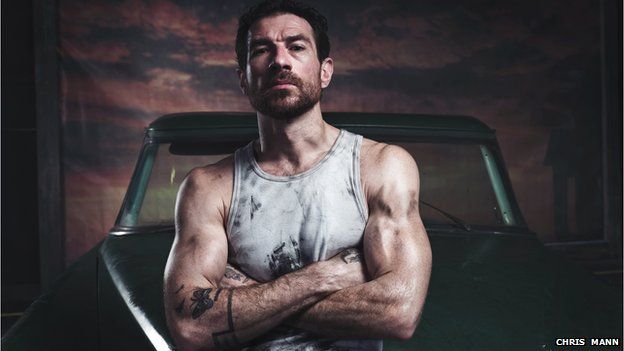
Jonathan Ollivier played Luca in Matthew Bourne's The Car Man.
Jonathan Ollivier was was aged 38 when he died.
Choreographer Matthew Bourne has paid tribute to dancer Jonathan Ollivier who has died in a motorbike accident.
The 38-year-old died on Sunday hours before he was due to perform in the final show of Bourne’s production of The Car Man at Sadler’s Wells Theatre.
Bourne called the ballet dancer “one of the most charismatic and powerful dancers of his generation”.
A driver arrested on suspicion of causing death by dangerous driving has now been bailed.
Ollivier worked on a number of roles with Bourne’s company New Adventures, including The Swan in Swan Lake and Speight in Play Without Words.
His family announced his death. His sister Rachel Ollivier wrote on Facebook that “it is with a heavy heart that we have to tell you that Jon tragically died today”.
She described him as her “beautiful little bro” and said “we love him and will miss him massively xx”.
Ollivier was riding in Clerkenwell in central London when the accident happened, police said.
He was involved in a collision with a black Mercedes shortly after 11:00 BST on Sunday. Paramedics and an air ambulance tried to save his life, but he was pronounced dead at the scene shortly before noon.
A driver arrested on suspicion of causing death by dangerous driving has now been bailed until February 2016.
Sunday’s performance of The Car Man was cancelled.
Jonathan Ollivier played Luca in Matthew Bourne’s The Car Man.
Bourne said: “Yesterday’s events have ripped at the heart of the New Adventures family.
“We join together to send our heartfelt condolences to all of Jonny’s family and friends. In our grieving for this irreplaceable artist we take some comfort in the legacy of memories that he has left behind.”
He described the dancer as “an intensely masculine presence tempered with tenderness and vulnerability”.
“A man of great warmth and charm, Jonny was a true gent, loved and respected by his colleagues and adored by audiences who were mesmerised by his memorable performances on stage as well as his friendly and genuine personality at the Stage Door,” he added.
“He was also an inspiration and role model to several generations of young dancers who strived to emulate his enviable technique and majestic stage presence.”
Jonathan Ollivier as The Swan in Matthew Bourne’s Swan Lake.
The Car Man is a production set in 1960s America and loosely based on Georges Bizet’s opera Carmen.
His lead performance had been praised by critics, with The Telegraph’s Rachel Ward writing that he brought “brooding power and danger of a matador” to the role.
Ollivier also spent eight years at The National Ballet Theatre (now called Northern Ballet).
David Nixon, the artistic director of Northern Ballet, paid tribute to Ollivier and spoke of the shock of learning of his “tragic death”.
“Jon’s untimely death is a loss to the world of dance and unbelievably tragic for his family. Jon’s legacy will live on through the memories of his performances and through the roles which he created. He will be very much missed. Our thoughts are very much with his family.”
Nixon said when he arrived at the company he was “inspired by the engaging charisma, strength and natural acting instincts of Jon”.
“He soon became an integral part of my work and was involved in most of my creations. Most memorable will always be his incredibly powerful and unforgettable Heathcliff opposite Charlotte Talbot’s Cathy. It was an inspired and privileged moment for me as a choreographer,” he said.
Burundi has suffered serious unrest since President Pierre Nkurunziza’s decision in April to seek a third term in office.
Opponents argued this violated the constitution, and protests broke out in parts of the country.
There was also failed coup attempt in May, as renegade generals demanded that Mr Nkurunziza steps down when his term ends.
A presidential election was held last month which Mr Nkurunziza won.
The result was rejected by the main opposition parties, but one of its leading members, Agathon Rwasa, agreed to take the post of deputy parliamentary speaker to promote reconciliation.
‘Act of terrorism’
The prosecutor’s office said in a statement that a military vehicle was used by Gen Nshimirimana’s attackers and it was subsequently burned.
“The identities of the perpetrators are now known. A certain number have been arrested. The rest of them and the masterminds are being sought,” it said.
The attackers targeted the general’s car with machine guns and rocket launchers in the Kamenge district of Bujumbura.
He was widely seen as the most powerful person in Burundi after Mr Nkurunziza.
Pierre Claver Mbonimpa’s work over the years for prisoners and others has won international acclaim.
Meanwhile, Mr Mbonimpa’s daughter said the authorities had allowed him to leave for Belgium, the former colonial power.
“He will be treated there and they can do all the tests that we can’t do here. We are also more reassured about his safety there,” Amandine Nasagarare said, AFP reports.
The government condemned his shooting by a gunman on a motorbike last week as an act of “terrorism”.
Mr Mbonimpa was a staunch critic of Mr Nkurunziza’s bid to run for office again, and was said to be one of the few members of Burundi’s civil society who had not fled the country.
In April, he was held without charge for more than 24 hours by the intelligence services after he called for protests against the president’s efforts to secure a third term.