By last week some schools had started sending pupils and students home, one week ahead of the official closing date set by the Ministry of Education and Sports.
According to the Ministry of Education of and Sports calendar, children are supposed to be at school for a period of about ninety days. It is, therefore, unfair for some schools to cut short the term and send children home a week before the date set by government.
Indeed, this is not only unfair to the pupils and students but also to the parents and guardians. For the pupils and students it affects them in a way that they may not be able to complete covering what is supposed to be handled in a given term. For the parents and guardians, there is no value for the money they pay in terms of fees since the services that their children pay for are cut short.
It seems the schools which are in the habit of doing this aim at saving the money that they should have otherwise spent in terms of feeding, electricity, water, stationery, medical bills and other costs while the children are at school.
So, in order to curb this behavior, the Ministry of Education and Sports officials should act very fast to rectigy the anomaly and Inspectors of Schools must ensure that they visit schools to ensure that school activities carry on up to the very last day of closure set by government.
The excuse by school directors and headmasters that when children finish examinations, they can be sent home and then return later to collect report cards is a lame one and unacceptable. Not only is it inconveniencing to the children but also an extra cost to the parents.
There must be a standard date for all the schools in the country to begin and close and serve the children with assessment report cards.
This would lead to uniformity among different schools all over the country because at the end of the day the pupils and students sit for the same national examinations
The only man to rule for two mandates at different times
The only man to rule for two mandates at different times
As a country, Uganda’s political life dates back to 1900 when Sir Henry Hamilton (Harry) Johnston signed the Buganda Agreement in 1900. Since then Uganda, which was christened the ‘Pearl of Africa’ by former British Prime Minister Sir Winston Churchill, has had several political figures who have in one way or the other played a role in shaping the destiny of one of the world’s most tumultuous countries.
In four-narration series the Eagleonline brings you ‘Voices that are gone or are totally silent if still alive’, beginning with the 1960s.
Edward Muteesa II
Edward Frederick William David Walugembe Mutebi Luwangula Mutesa was born on 19 November 1924, the fifth son of Kabaka Daudi Chwa. He studied at Kings College Budo and ascended the throne in 1939, when he was 15. In 1953, Mutesa was deposed and exiled in the United Kingdom, where he stayed until 1955.
Mutesa was to become the first President
of Independent Uganda in 1962, with Apollo Milton Obote as his Prime Minister. The two were later to fall out in what is today called the Mengo Crisis of 1966. Later Obote abrogated the Constitution in 1967 and abolished monarchies in Uganda.
He died in exile in 1969 and President Iddi Amin ordered for the return of his remains. Kabaka Mutesa is survived by several children among them the current Kabaka Ronald Muwenda Mutebi and Prince David Wassajja.
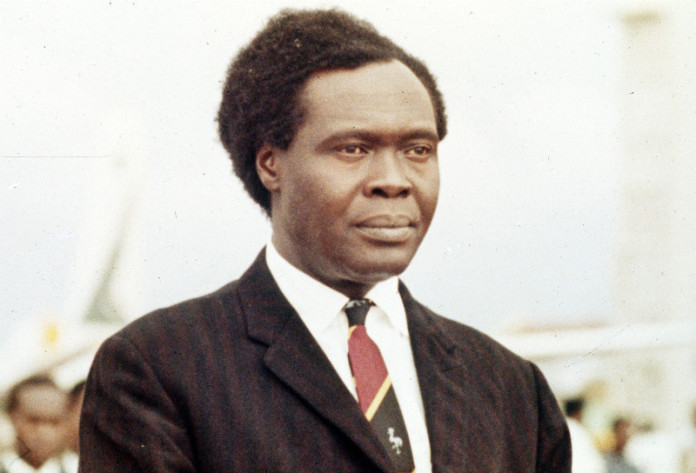
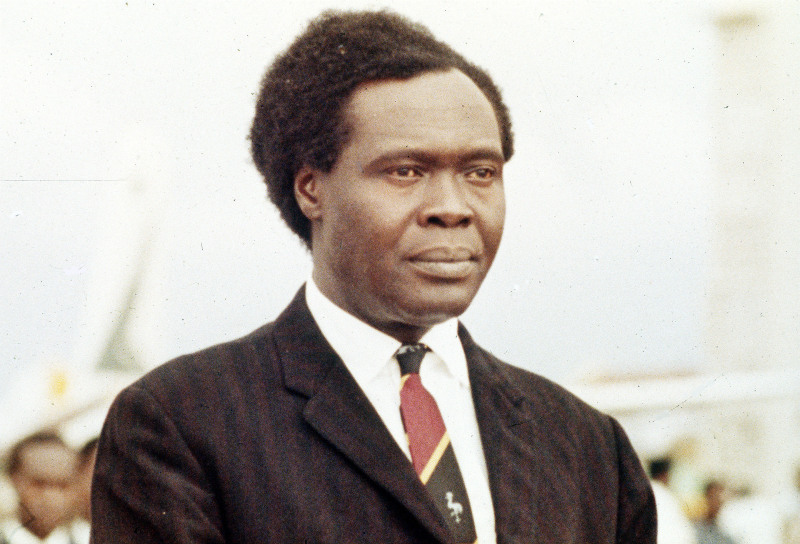
Dr. Apollo Milton Obote
The son of a tribal chief of the Lango ethnic group, Milton Obote was born in Akokoro village in Apac District in 1925.
He went to Busoga College Mwiri, where he was admonished and sent home for wearing brown shoes yet native students were supposed to wear black shoes.
Stubborn and rebellious to the hilt, Obote was expelled from Makerere University College. After the suspension, Obote was to return with a pair ofLugabire (sandals made out of old tyres), claiming his father had ‘used all his money to buy the pair of brown shoes’ he had earlier brought to school.
He was ‘pardoned’ and completed secondary school at Mwiri, after which he joined Makerere University College, where he also led a strike (over ‘bad’ food) that brought his educational journey to an end.
He then settled full time for politics, becoming Executive Prime Minister in 1962. In 1963 Uganda became a Republic and in 1966 Obote attacked the Lubiri, the seat of Buganda Kingdom, forcing Kabaka Mutesa II to flee to exile in the UK. He later abolished the kingdoms and in 1967 he abrogated the Constitution.
In 1969, there was an attempt on Obote’s life and a state of emergency was declared in the country. Then, in January 1971, Obote was overthrown by the army while he was in Singapore to attend the Commonwealth Conference, and Amin became President.
The only man to rule for two mandates at different times, Obote made a comeback in 1980 and ‘won’ elections under the banner of the Uganda People’s Congress (UPC). However, his second stint as president was marred by accusations of military brutality, after current president Yoweri Museveni and other militants like Andrew Kayira of Uganda Freedom Movement (UFM), Fred Nkwanga of the Freedom and Democratic Movement of Uganda (FEDEMU) Gen Moses Ali of Uganda National Rescue Front (UNRF) ‘went to the bush’ to fight his government. But it wasn’t the militants who overthrew his second regime; rebellious soldiers of the Uganda National Liberation Army (UNLA) led by then Brigadier Bazilio Olara Okello ousted the UPC government on July 27, 1985. Subsequently, Obote fled to exile in Zambia and later died in a South African hospital in October 2005, aged 79.
Obote is survived by a widow, Miria Kalule Obote (sister to former minister Lawrence Kalule Settala) and five children including current UPC President Jimmy Akena.
Grace Ibingira
Born on May 23, 1932 in Ibanda, Ankole, Grace Ibingira studied at Mbarara High School [1942-1950], King’s College Budo, [1951-1953],University of Wales [1955 – 1958] and the University of London. He was a member the Legislative Council in 1960 and was re-elected MP for Ankole West in 1962.
A founding member of the Uganda Peoples Congress (UPC) Ibingira designed Uganda’s national flag.
He was the Minister of Justice [1962-1966], Minister of State in the Prime Minister’s Office in charge of Public Service [1964-1966] and Secretary-General of UPC [1964-1966]. A one-time close political ally of Prime Minister/President Dr Apollo Milton Obote, Ibingira fell out with his boss and was imprisoned in 1966 together with among other ministers Balaki Kirya, Dr Emmanuel B Lumu and Mathias Ngobi.
When Obote was overthrown by Amin, Ibingira was named the Permanent Representative to the UN, where he served from August 1971 to 1974. He was a key political player in Uganda politics in the 1960s and was a close ally to Milton Obote. He died in the late 80s.
Al Hajji Ali Akbar Adoko Nekyon
A cousin to former President Apollo Milton Obote, Ali Akbar Adoko Nekyon was born in 1931. He has witnessed a number governments come and go. A lawyer, Adoko Nekyon Member of Parliament for Lango South East, and also served in Milton Obote’s post-Independence cabinet as Minister Information and Broadcasting between 1962 and 1967.
During Amin’s time Nekyon fled to the United Kingdom, where he practiced law.
In the 1980s he briefly returned to the country but was to go back in exile in the UK where he died of cancer in.
Brigadier Shaban Opolot
Born in Namausi Nakaloke, Shaban Opolot joined the army in 1945 under the Kings African Rifles (KAR), rising through the ranks to become the first army commander of the Uganda Army, appointed to the post in 1964.
He fell out with Obote over the differences the latter had with Kabaka Edward Mutesa, and in October 1966 Opolot was dismissed from the army and detained under the emergency regulations.
Joshua Luyimbazi Zake
The Masaka Central Member of Parliament in the Legislative Assembly, Joshua Luyimbazi Zake was the first Minister of Education in 1962.
Dr. Emmanuel Lumu
A Member of Parliament for Kyadondo North, Dr Emmanuel Lumu served as Minister for Health in the first post-independence government.
Lawrence Kalule Settala
Kalule Settala was the Member of Parliament representing Mengo South East and was appointed Minister for Works and Labour in the first post-Independence cabinet. A brother-in-law to Dr Obote, Kalule Settala at one time also worked as Minister of Finance and as Minister for Local Government.
John W Lwamafa
Born in Kigezi John Lwamafa was a Minister in the first post-Independence government.
Cuthbert Obwangor.
He was Member of Parliament for Teso East and Minister for Regional Administration in the first post-Independence government.
Mathias M. Ngobi
The first minister of Agriculture and Cooperatives, Mathiuas Ngobi was also the Member of Parliament for Busoga South. He later fell out with Obote and was imprisoned in Luzira from 1966 t0 1971 when Amin took power.
Wilberforce Wilberforce Nadiope
Sir William Wilberforce Nadiope was Kyabazinga of Busoga at the time of independence and the first Vice President of Uganda (1963-1966). His grandson is the current Kyabazinga William Wilberforce Kadhumbula Gabula Nadiope IV.
Basil Bataringaya
His political journey started when he served as the Guild President of Makerere Univerity College from 1955 to 1956. He was Democratic Party Member of Parliament for Ankole District. But after falling out with then DP boss Benedicto Kiwanuka, Bataringaya switched sides and Obote appointed him to serve as the Minister Local Government in the first post-Independence cabinet. After the overthrow of Obote in 1971 Bataringaya retreated to his village in Igara County, Bushenyi district. At the age of 42. he met his death at the hands of Amin’s soldiers on September 18, 1972.
AL Hajji Abubaker Kakyama Mayanja
‘A man of all seasons’ is the phrase that best describes Abu Mayanja. While still a student at Makerere University College, Mayanja became the first Secretary General of Uganda National Congress, a political organization formed by Ignatius Kangave Musazi. Because of his political activities, Mayanja was expelled from Makerere in 1952. At the behest of Kabaka Mutesa II, Mayanja later joined Cambridge University where he read History.
The first Ugandan Muslim to get a degree, Mayanja later enrolled for a law course from 1955 to 1957 at the Honourable Society of Lincoln’s Inn.
He later went to the United States of America on a Leadership grant and returned to Uganda in February 1960.
In 1961 Mayanja was appointed a Minister of Education in the Buganda government and also participated in the Lancaster House Conference in London prior to Uganda’s independence from Britain on October 9, 1962. Abu Mayanja is the only known politician who served in all post-Independence governments. He died in November 2005 aged 76.
Ben Kiwanuka
He was elected President General of the Democratic Party in 1958, and organized the party to win majority votes in 1961 legislative elections, making him the first Chief Minister in the Uganda.
However, in March 1962 DP lost elections to an alliance of Obote’s UPC and Buganda’s Kabaka Yekka.
Benedicto Kiwanuka was imprisoned by Obote’s government in 1969, but was one of 55 political detainees released by Amin immediately after the 1971 coup. Later Amin appointed him as the first Ugandan Chief Justice in June 1971. The two fell out and Kiwanuka was killed in 1972, after soldiers dragged him out of his chambers at the High Court in Kampala.
Boniface Byanyima
Mzee Boniface Byanyima hails from the western district of Mbarara and unitl a few years ago was the National Chairman of the Democratic Party. He is father in law to Forum for Democratic Change former president Dr Warren Kiiza Besigye Kifefe, husband to fiery politician and international civil servant Winnie Karagwa Byanyima. Said to be in his 90s, Mzee Byanyima stays at his country home in Ruti, Mbarara.
Daudi Ochieng
Born in 1925, Daudi Ochieng belonged to the Acholi ethnic group. His father Rwot Lacito sent him to King’s College Budo, and later on attained a Bachelors degree in Agriculture from Aberyswyth University. He was a close friend to Kabaka Mutesa II and one of the architects of the alliance between Kabaka Yekka and the UPC, the alliance that formed the first government after independence in 1962. As MP, Ochieng pinned both Obote and then Army Commander Idi Amin for stealing minerals from the Congo, something that put him at loggerheads with Obote and Amin. He died in June 1966 at the age of 41.
Felix Kenyi Onama
He was appointed as Minister of Works and Labour in the first post-independence government. He also served as Minister of Defense in the Obote I government.
John K Babiiha,
He hailed from from the Western District of Kabarole and was specially elected Member of Parliament. He was Minister for Animal Industry and Fisheries and later served as Vice president in the Obote I government from 1967 to 1971 when Amin captured power. He died in 1982 and was buried at his home in Kibimba village in Fort Portal. Alex Ojera
He was Minister for Infromation and Broadcasting during the Obote I government, and was killed by Amin’s soldiers in 1972.
Balaki Kebba Kirya
Kirya was born in 1924 in Petete in Bukedi currently Palisa district. He served as a soldier in the King’s African Rifles (KAR) before joining politics under the Uganda National Congress, where he was in charge of the Mbale branch. Kirya, one time an MP representing Bukedi, was also one of the architects of the UPC/Kabaka Yekka Alliance and was rewarded with the cabinet post of Minister without Portfolio immediately after Independence. Two years later Obote appointed him Minister for Water and Mineral Resources but the two were to fall out, with Kirya later being arrested and detained in Luzira prison without trial.
In 1971 he when Amin came to power, Kiirya was released but fled to exile in Kenya when Amin started killing some of Obote’s former ministers.
Unfortunate for Kirya, he was abducted from exile in 1982, and Obote again imprisoned him on allegations of involvement in rebel activities. He was charged with treason and was in prison until the Okellos captured power in July 1985
And when Museveni and his National Resistance Army (NRA) captured power in January 1986, Kirya was appointed security minister in the Office of the President in March 1986. He died in the mid 90s was buried in his home village.
The Port Management Association of Eastern and Southern Africa (PMAESA) and the African Media Initiative [AMI] have agreed to work together to raise awareness on the maritime economy through media related activities.
The agreement was made following a visit by PMAESA Secretary General Ms Nozipho Mdawe and Head of Communications Mr George Sunguh to the AMI headquarters in Nairobi.
The PMAESA delegation met the AMI management team including Mr Eric Chinje, Chief Executive Officer; Mr Wangethi Mwangi, Senior Adviser and Mr Meredith Beal, Technology Advisor.
The meeting discussed possible areas of synergy between the two organizations in raising the profile of the maritime economy and related activities on the continent.
‘Knowledge of the sector remains extremely low in Africa and the dissemination of information on the maritime sector has been a challenge as few journalists understand the sector’ a release by PMAESA states in part.
AMI CEO Chinje noted that the maritime sector would create jobs for Africans and also enhance international trade.
“The public needs to be informed about opportunities that abound in the Blue Economy and about harnessing the potential of Africa’s seas and oceans,” the release adds.
During the meeting Ms Mdawe informed the AMI team of the forthcoming PMAESA annual conference to be held between 15th and 19th November in Dar es Salaam, Tanzania, to discuss ‘Port Strategies for Harnessing the African Blue Economy and Investment Options’.
She said the blue economy could be the next frontier to help alleviate poverty in Africa if properly harnessed.
PMAESA is an intergovernmental agency founded by the United Nations Economic Commission (UNECA) in 1973 to harmonize seaport and maritime activities in 21 countries within the Eastern and Southern Africa and is headquartered in Mombasa, Kenya.
The member countries include: Angola, Burundi, Comoros, Djibouti, Ethiopia, Eritrea, Kenya, Madagascar, Malawi, Mozambique and Mauritius.
Others are Namibia, Reunion, Rwanda, Seychelles, South Africa, Sudan, South Sudan, Tanzania, Zambia and Zimbabwe.
AMI on the other hand is a pan African effort aimed at providing the continent’s private and independent media owners and practitioners with the tools they need to play an effective role in their societies. AMI was founded after a research done under the auspices of BBC World Service Trust and UNECA and is included in the 2005 G8 Gleneagles and Commission for Africa recommendations.
Representatives of eighteen press freedom and human rights organisations have written to the authorities in Burundi, asking the government to investigate attacks on journalists.
The organisations also noted that about 50 journalists had fled from Burundi since civil unrest broke out the tiny central African country following President Pierre Nkurunziza’s announcement to run for a third term.
The organisations also cited the closure of media outlets and castigated the recent attacks on human rights activist Pierre Claver Mbonimpa and journalist Esdras Ndikumana, who was brutalized by police and intelligence personnel.
‘The undersigned press freedom, media development and human rights organizations denounce the continued attacks on and threats to journalists, media workers and human rights defenders, most recently the serious incidents in which human rights defender Pierre Claver Mbonimpa survived an attempt on his life while journalist Esdras Ndikumana was the victim of a brutal attack by police and intelligence officials. Furthermore, we are very concerned by the continued closure of independent media outlets and the consequent lack of access to reliable information in Burundi’ the organisations wrote in an August 5 release.
They also urged the authorities to ensure that the journalists’ tormentors are brought to book and tried before court.
‘ We call on the Burundian authorities to investigate these attacks immediately and to ensure that those responsible are found and brought to justice in a fair trial’ the organisations wrote and implored government to cooperate with local and international stakeholders including the opposition, the UN and AU.
‘Finally, we encourage dialogue between the authorities and media, between the authorities and opposition parties and between authorities and United Nations and African Union representatives to create conditions conducive to building an environment of peace for all Burundians,’ the organisations state.
The communiqué was signed by Henry Maina, Regional Director, Eastern Africa, ARTICLE 19 Tom Henheffer, Executive Director, Canadian Journalists for Free Expression (CJFE) Toby Mendel, Executive Director, Center for Law and Democracy Courtney Radsch, Advocacy Director, Committee to Protect Journalists Caroline Vuillemin, Director of Operations, Fondation Hirondelle, Ruth Kronenburg, Director, Free Press Unlimited Daniel Calingaert, Executive Vice President, Freedom House.
Others are Daniel Bekele, Africa Director, Human Rights Watch, Melody Patry, Senior Advocacy Officer, Index on Censorship, Ernest Sagaga, Head, Human Rights and Safety, International Federation of Journalists (IFJ), Jesper Højberg, Executive Director, International Media Support (IMS), Barbara Trionfi, Executive Director, International Press Insitute (IPI) Elisa Lees Munoz, Executive Director, International Women’s Media Foundation (IWMF).
Karin Deutsch Karlekar, Director, Free Expression Programs, PEN American Center Tamsin Mitchell, Africa Researcher and Campaigner, PEN International, Cléa Kahn-Sriber, Head of Africa Desk, Reporters sans Frontières, Tina Carr, Director, Rory Peck Trust and Ronald Koven the Acting Director, World Press Freedom Committee also signed the communiqué.
The Confederation of African Football has declined to back Liberian Football Association president Musa Bility in his bid to become Fifa president.
Bility, 48, is one of four men to have expressed their interest in standing in next year’s election to replace outgoing Fifa chief Sepp Blatter.
“The Caf executive committee decided unanimously not to give Musa Bility the support he requested,” Caf stated.
“It advised him of this, wishing him good luck in his mission.”
Bility is only the second African ever to make a bid for the job.
Brazilian Zico, Frenchman Michel Platini and South Korean Chung Mong-joon are the other names in the frame to stand in the 26 February election.
Bility has stated his belief that “this is Africa’s time” to take the lead in world football but his lack of support from his continent’s football governing body will be a blow to his candidacy.
The Liberian has had a difficult relationship with Caf in recent years.
In 2011 Bility declared he would vote against Blatter in that year’s Fifa elections, in contrast to most of his African colleagues.
And in 2012 he – and the Liberian FA – took a case to the Court of Arbitration for Sport over changes to the way Caf elects its president, which favoured incumbent Issa Hayatou.
The court twice ruled against the LFA and then in 2013 Bility was banned from all football activity by Caf after the governing body said he “had violated statutes relating to the use of confidential documents”.
While Bility insists that their differences are now a thing of the past, Caf does not appear ready to completely forgive and forget.
Uganda, East Africa’s top ranked soccer-playing country has dropped from 73rd to 74th position.
According to the latest Fifa rankings released August 6, Kenya maintained its 116th slot while Tanzania dropped one place to 140. Rwanda and Ethiopia climbed up the rankings ladder, with the former scaling 13 slots to reach 91st, while the later moved up two places to settle at 91.
But despite dropping one slot Uganda still remains among the top 20 ranked nations in Africa, stationed at 19th position on the continent.
Togo have climbed three places to the 80th position six slots behind Uganda on the continent, it’s opponent in the 2018 World Cup qualifiers.
The top five African countries include Algeria, Ivory Coast, Ghana, Tunisia and Senegal, positioned at 19th, 21st, 27th, 34th and 39th respectively in the world.
Argentina, Belgium, Brazil, Colombia and Germany are the world’s leading five countries.
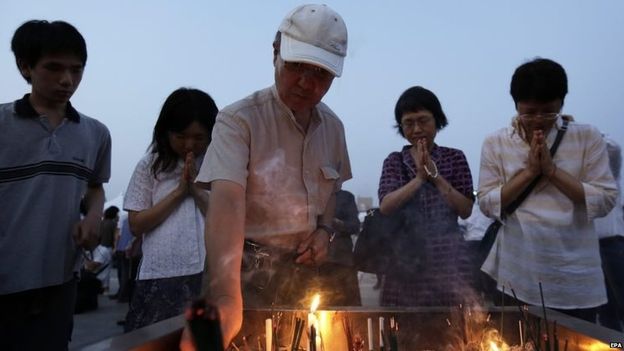
Incense sticks were burnt in the city on Thursday morning. Photo by BBC.
Incense sticks were burnt in the city on Thursday morning. Photos by BBC.
Residents of Hiroshima, Japan commemorated 70 years since the world’s first atomic bomb explosion hit their city during the final stages of the Second World War on August 6, 1945.
The United States, as a counter to the earlier bombings of their fleet at Pearl Harbour by Japan, dropped a Uranium gun-type atomic bomb on the city of Hiroshima that exploded 600 metres above the city killing at least 7000 people, with the acute effect claiming 140,000 lives after the explosion.
During the ceremony held at the Hiroshima Memorial Grounds in Japan, the Prime Minister Shinzo Abe urged the world to fight the use of nuclear weapons.
″We have to collectively contribute to keeping the world atomic bomb free by ensuring that the nuclear states come to terms with non-nuclear states, ″ Mr. Abe said adding that: ″ we as Japan are willing to act as peace makers for both sides.″
A mushroom cloud over Hiroshima following the explosion of an atomic bomb.
Of recent the United States has been instrumental in fighting the use of nuclear weapons with President Barack Obama engaged in the pursuit of a nuclear deal with Iran, which is on the brink of being attained.
In an interview with Aljazeera, Mr Greg Thielmann of the Arms Control Association said North Korea remains the only country testing nuclear weapons today.
Chelsea is topping the battle to sign defender from Augsburg, but the team won’t let go of him for no less the €20m.
According to Augsburg president Klaus Hofmann, Rahman is one of the best players in the world. “We are a very vigorous club,” Hofmann said. “Baba is one of the main gifts in the world. No one should call us and offer €20m,” Hofmann said of the 21 year-old.
Premier league teams like Manchester City and Arsenal had an interest in Rahman, but ESPN FC has been told that Chelsea is in better position to land the left-back, who also played for Greuther Furth.
Ghanaian Rahman was one of the best for Augsburg as they ended fifth in the Bundesliga last season.
Two million euros echoes like a heavy amount, but it turns to less than £30k a week. They’re speaking the exact amount, however, so let’s double that number to justify taxes, which is approximately £55-60k per week for the 21-year-old. It’s not the cheapest, but clearly we can afford it and by all accounts, Baba is pretty good at his job and should only improve.
Earlier this week, Augsburg sporting director Stefan Reuter told Augsburg: “Nothing is new. We are not in contact. There have been no tangible deals for him. It does not concern us at the moment. We are totally relaxed.
“We still want the player at Augsburg, but if exciting sums are offered we will think about it. That’s usual but it does not automatically mean we will sell him.”
Mourinho club has a meeting scheduled with Augsburg to complete the deal for Baba and Chelsea already reached an agreement with the player on a 5 year deal worth €2 million net a season.
Nevertheless, ESPN FC was told that Augsburg have submitted to losing Rahman as they admit they cannot contest with what is on offer from Europe’s top clubs, and the player has an inclination for the Premier League.
The development of an Islamic finance industry in Africa could help plug the regions large infrastructure gaps over the coming decade.
According to Standard & Poor’s Ratings Service Report released Thursday, August 6, ‘a framework of regulation and fiscal adjustments will be necessary to foster African sukuk markets, provide wider investment options for potential Islamic investors, and attract a pool of Islamic liquidity’.
To date, African sovereigns have issued about $1 billion of sukuk instruments, compared with global sukuk issuance of an average $100 billion per year over the past five years. Meanwhile, widening fiscal deficits and large infrastructure gaps will likely require multibillion-dollar additional financing needs over the next decade.
Standard and Poor, the world’s leading provider of credit risk research, says that South Africa and Senegal have shown that a significant amount of time can elapse between a government’s announcement of intent to issue sukuk and their effective issuance, ‘as governments gauge market interests and try to address the legal hurdles and cost of issuance’.
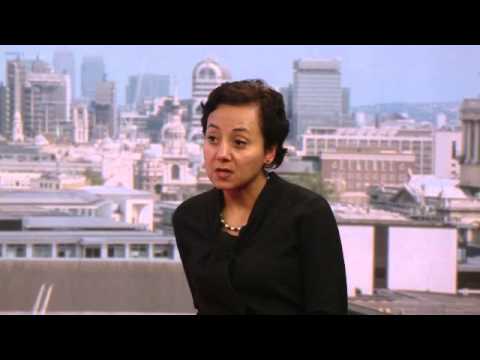
“We believe legislation gaps are the main causes of delay between a country’s intent to issue and its effective issuance of sukuk,” said Standard & Poor’s credit analyst Samira Mensah. The success of Malaysia in South-East Asia as a hub for Islamic finance lies, among other things, in the strong regulatory framework to support the sector’s growth. Malaysia also moved quickly in 2009 to address the standardization of instruments and interpretation of Sharia law.
Tax regimes are equally important to consider when encouraging sukuk issuance. Sharia-compliant instruments require equal treatment with conventional instruments for investors to consider them. Malaysia introduced various tax incentives that made Islamic finance a cheaper economic alternative for institutions to raise funding.
However, increasing technical assistance by the Islamic Development Bank (IDB) and Islamic Corporation for the Development of the Private Sector (ICD), are also gradually facilitating sovereign sukuk issues.
“We believe that a growing interest in Islamic finance could encourage some North African countries, as well as sub-Saharan countries Cote d’Ivoire, Nigeria, and Kenya, which have fairly well developed capital markets by regional standard, to issue sukuk in the future,” said Ms. Mensah.
The Zambia national netball team, Chipolopolo draws fire against She Cranes in their opening match on Friday, with the latter’s win over Singapore in a build-up friendly on Tuesday seemingly inconsequential.
Uganda next plays at netball’s biggest competition in a Group D match against Zambia tomorrow and the Zambians seem confident of victory.
“We are here to win, and we want to take the World Cup to Zambia” veteran shooter Diana Banda, said.
However, the She Cranes coach Rashid Mubiru dismissed the Banda talk as empty threats.
“They can talk. Let’s wait for the right match. We shall beat them like we have always done,” Mubiru countered.
Both Uganda and Zambia are playing their second World Cup, with the former having played its first WC in 1979, 20 years before the Zambians played in Christchurch in 1999.
In the buildup matches, Uganda lost 46-67 against New Zealand and today the She Cranes take on Samoa in the third and final buildup match. Samoa is ranked 13 in the International Netball Federation rankings, with Uganda a slot below.
Besides Zambia, Uganda is also placed alongside Fiji and Wales, the seventh and eighth ranked countries by INF.