He may be a serial world champion but there is something he feels he hasn’t achieved.
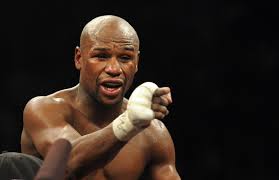
Unbeaten Floyd Mayweather wants to fight Andre Berto and in the process challenge renowned 1950s American heavyweight champion Rocky Marciano, who retired from the game without a professional loss.
Berto, 31 is a former welterweight world champion has 30 wins and three losses before the Mayweather fight, slated for September 12.
“I always bring my A-game and this fight against Andre Berto is no exclusion,” said Mayweather, adding: “He’s a young, strong fighter who is daring to bring down the best. 48 professional boxers have tried before and on 12 September; I’m going to make them 49.”
Mayweather has said that his 49th fight would be his last one before he retires while Floyd Mayweather Sr, his father and trainer said in July his son wanted ‘a couple of easy fights’ before quitting.
But Berto, now languishing at the bottom of the top 20, is confident he can make Mayweather have a bad day.
“Promise you this I’m going to be as ready as I’ve ever been. Don’t act surprised on 9/12,” tweeted Berto.
Renowned BBC boxing commentator Mike Costello weighed in on the fight and said: “Mayweather is resistant to criticism but he will need all his defensive craftiness to evade the insults heading his way.
He added: “His desire to face Andre Berto is one of the matches that will make his last appearance in the ring,”
Mr Odaka seen here in a photo talking to Mr Peter Walubiri.
Mr Odaka seen here in a photo talking to Mr Peter Walubiri.
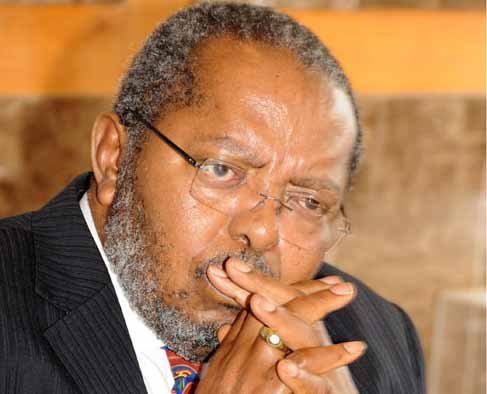
The first post-Independence Ugandan Minister of Foreign Affairs Sam Odaka is dead.
Odaka, 83, died of kidney failure at 2 am on Wednesday, August 5 while undergoing treatment at the International Hospital, Kampala.
In his political life Odaka also served as Minister of Planning and Economic Development, and was also the Chairman of the Board of Directors of the Milton Obote Foundation (MOF), the financial arm of the Uganda People’s Congress (UPC).
He was also instrumental in organizing for the first papal visit to Africa, honoured by Pope Paul VI.
Two years ago, Odaka underwent a successful operation in South Africa and on his return he was put under monitoring by a team of health experts from Mulago Hospital.
Bank of Uganda Governor Emmanuel Mutebile described Mr Odaka as an excellent man whom he will greatly miss.
Meanwhile, by the time of posting this story, the family was embroiled a bitter fight as to where the deceased former Minister would be buried.
One of the family members who spoke to EagleOnline but asked to remain anonymous said Odaka’s wife had insisted the deceased be buried in her home area of Bulemezi in Luwero, while Odaka’s family from Busia are demanding that he be buried at his country home in Lumino.
The two sides failed to agree and the Odaka family has opted to seek a court injunction till the matter is resolved.
“There is a disagreement within the family and we are trying to resolve it. We are trying to secure a court injunction so that he is buried in Busia,” said one of Odaka’s family members from Busia.
Bank of Uganda Governor, Emmanuel Mutebile who closely worked under Sam Odaka in the Ministry of Planning and Economic Development said Odaka can only be summed up as an “excellent man”
Profile
First post Independence Foreign Affairs Minister until 1971 military coup.
After coup went to exile in Tanzania with others
Came back after the collapse of Idi Amin reign and joined private business and reorganizing MoF.
In 1981 elections, won elections as Member of Parliament Jinja Municipality West.
Named Minister of Planning and Economic Development in 198.
After 1985 coup, Odaka retired into private business and named Chairman of MoF in Obote’s absence until 2012 when he was replaced by Ignatius Barungi.
Below is Mr Peter Walubiri’s description of Odaka.
Sam Odaka was one of the pillars of the Uganda Peoples’ Congress (UPC) party and was one of those who could see through any difficult situation. He was among a few UPC Members of Parliament who opposed the Daudi Ochieng motion.
However, during that time, Odaka saw through an attempt to throw out the government through illegal means and stood his group and opposed the motion and now we know it wasn’t a motion but an aim by opposition and Mengo to grab power.
As chairman of Milton Obote Foundation (MoF), through the hard times of 1980s and 1990s Odaka fought hard attempts by three Attorney Generals to take over the property of MoF.
He was among those who held the party together and I know he was party to a small group that advised the party leadership in Lusaka Zambia to form Presidential Policy Commission (PPC) in Obote’s absence.
He was party of the reconciliation groups that brought together the party and this could be seen when Cecile Ogwal, Patrick Mwondha Dick Nyai, Okullo Epak and Ben Wacha returned to the main stream and it is through initiatives like those that we were able to have National Organising Committee (NOC) under for party mobilization and mass registration of members before parties where allowed to operate.
He was critical for thinking and preserving the party but more so, very social but also very principled and such is the man we all miss day. He is a man who believed in unity of the country and the congress.
Mr Walubiri is the chairman of board of trusts of Milton Obote Foundation and Former Secretary of the UPC.
Prisoners like these suffer with children while in prison.
There is a new activity on Kampala’s sports calendar, the Kampala Adventure Cycling, expected to raise Shs100 million, 80 per cent of which will go to children born to inmates at the Luzira Maximum Security Prison.
The first of its kind, the event slated for August 16 is being sponsored by Palm Travel Bureau, Uganda Tourism Board and Kampala Capital City Authority and will bring together tourists and cycling fans from across the world.
“People with a desire for leisure and adventure cycling will come together for fun but with a key message of transforming Kampala into an Eco-friendly city. They will also raise money for charity,” Patrick Mulindwa, the Operations Director at Palm Travel Bureau said.
According to Mulindwa, the idea that was copied from Nordic countries will help market Kampala and endorse all tourism sites within the city.
Both professional and amateur cyclists from Nordic countries, about 150 resident foreign nationals and more than 500 Ugandans will compete in the 15km, 25km cycling, and Mountain Biking races which will begin from Kampala and end up at Lake Bunyonyi, Kabale, in Southwestern Uganda.
Mulindwa also says the managers will also commit a day before the event to set up a free bicycle repair clinic for those who will participate.
The International Amateur Athletics Association (IAAF) has refuted allegations of doping against top athletes.
According to the IAAF, reports by The Sunday Times and German broadcaster ARD/WDR regarding results which were obtained from an IAAF database of 12,000 blood tests carried out between 2001 and 2012 were not positive tests or proof of doping.
Both media outlets had noted that more than 800 athletes and a third of all medallists in events at recent Olympics and World Championships had distrustful blood test outcomes and that they were not trailed up by the IAAF.
The broadcasters had employed two of the world’s ‘chief anti-doping experts’ Robin Parisotto and Michael Ashenden, to critic the data.
But on Tuesday the IAAF rubbished the allegations, saying the reports offer no new evidence that any athlete had failed a drugs test.
“Possessing that data and using it displayed spectacular ignorance or wickedness about asset of readings you simply cannot generalise,” Lord Sebastian Coe, an IAAF vice-president, said.
Lord Coe, an Olympic gold winner in the 1500 metres at the 1980 and1984 games, said and defined allegations of widespread doping in athletes as a ‘declaration of war’.
“The fight back starts here; it is an affirmation of war on my game. Our history of competence and integrity in drug-testing has nothing that permits this kind of attack,” Lord Coe, an aspirant for the IAAF presidency said.
According to IAAF, a large proportion of the blood samples was gathered in a period before the implementation of the Athlete Biological Passport (ABP) and cannot be used as evidence.
“The use of this data and all the exaggerations is an attempt to damage the reputation of the athletes and the game,” Coe said:
He added: “None of us says that the news organisations have no right of questioning but the selective use of the information is not right.”
Ivan Kalyesubula and Nina Nyarwaka, the woman at the centre of the storm.
On Saturday, August 1, Johnnie Ahimbisibwe aka Johnnie Danzel Jermaine left home for town. Smart, the middle-aged man was upbeat, perhaps even thinking of having an evening out. Evening out he did have, but he was never to return to his home alive.
On late Saturday night/Sunday morning, Johnnie, as he was popularly known by friends, breathed his last after being stabbed with a piece of broken glass, reportedly by Ivan ‘Ivyo’ Diesel Kamyuka, an old friend-turned-foe.
It is said the two parted ways when Ivan started dating Johnnie’s baby mama and their meeting in Ange Noir’s Club Guvnor 40+ on that fateful late Saturday/ early Sunday was the last time they would meet as rivals over Nina Nyarwaka, as Johnnie was pronounced dead on arrival at Case Medical Centre where he was rushed for treatment after the gruesome Guvnor incident.
Johnnie Ahimbisibwe killed over a woman.
The world over, there is a tendency of two human beings meeting and realizing that they have a lot they want to share, they are compatible. The two fall in love and voila, we have an inseparable couple who are head over heels in love with each other, simply the Law of Attraction. However, as we all know, not all relationships last forever; some might last for just a day, a week, a month or even longer.
And, there are also some cases where an individual might be involved with more than just one partner and this does not necessarily apply to only Muslims. For example, we have the French who are well known for their open relationships (here an individual is betrothed to one partner but still feels free to have another relationship with another individual outside that relationship).
But when these relationships come to an end, it is mostly a sad time for either both partners or one of them due to a mixture of emotions.
Indeed, the results of such breakups can sometimes be far from pleasant, at times even leading to the death of either both partners or just one of them.
So, let us look at a few examples of relationships that turned sour and resulted in fatal consequences right here in our backyard.
Like any human being even men of prestige and power are
prone to the emotions of any ordinary human being and when former President Idi Amin discovered that his second and favourite wife Kay Amin was having an affair with Dr. Peter Mbalu Mukasa, he was quick to orchestrate her demise by dismembering her body.
Another high profile crime of passion was that of Major Gen. James Kazini, who was killed by Lydia Draru, his then partner outside marriage. Little is known as to what preceded the November 2009 murder but people have attributed it to love gone sour.
Another example of a relationship gone sour was the death of Brenda Karamuzi, who was murdered by her boyfriend Tom Nkurunjira aka Tonku in 2010. Then there was the case of Jackie Uwera Nsenga, who killed her husband Juvenal Kananura Nsenga in January 2013, after the two reportedly engendering a long and troubled marriage. In 2014 Jackie was sentenced to 20 years in prison.
Last but not least, workers at Workers House were shocked when Fiona Mutamba stabbed to death her lover Baker Kirenzi, when she was caught cheating on him with another man.
So, the question is why would one kill or physically hurt one they care for?
In Amin’s case, many say he was driven to kill Kay because he felt the wife had belittled a president of Uganda and military General at that. And, because of his position, Amin was not subjected to a mental check to establish his state of mind at the time of the murder of Kay Amin.
But the ‘smaller’ fish like Draru, Tonku, Jackie Nsenga and Ms Mutamba are normally subjected to a mental check at Butabika Hospital or any other facility with a psychiatry unit. And, once established that a crime of passion was committed, the suspect is then put to trial, charged with either murder or manslaughter, depending on the circumstances.
However some of these individuals are believed to at times become prone to fits of anger that drive them to act irrationally and in the process carry out such gruesome and heinous crimes.
For instance, eyewitnesses say Ms Draru very remorseful after killing Maj. Gen Kazini, wailing her lungs dry and later turning herself over to police. However such crimes do not only occur in Uganda.
Carlos-Castro
In Manhattan Portuguese TV personality Carlos Castro, 65, was murdered by his lover, aspiring Portuguese model Renato Seabra, then 21 in 2011. The male model hit the journalist with a computer screen, then stomped him to death before cutting off his testicles and wearing them as bracelets. According to Rubin Sinins, an attorney, the murder happened during “an hour long psychotic fit”. A Dr. Jeffery Singer went ahead to add that it was ‘insanity’ that led Seabra to murder the renowned fashion journalist.
“He was still breathing in a very heavy way. I was thinking he was the devil. How could he be still breathing?…” afraid the devil would wake up and kill him, the model continued to beat him later cutting off his testicles: “The power of the monster is in the balls. If I cut these he will lose all the power,” Seabra explained.
Another scenario that further proves the insanity that overtakes these people, causing them to murder their partners is when the mutilated body of a transgender prostitute was discovered in an apartment in Brisbane after her fiancé Marcus Volke, a chef, murdered her and begun to cook her body parts. The couple met in a brothel in Melbourne where they both worked as escorts.
Volke was later discovered in a bin with his throat sliced open in what is believed to have been suicide. A high school friend of his described him as normal, although he had a ‘dark side’ to him.
Well, at the end of it all, the question remains: Why would one kill or physically hurt one they care for? A Crime of Passion?
Students from EAC countries are set for debates on regional integration.
The 4th East African Community University Students’ Debate on EAC regional integration is set for September 7 – 8 , 2015 in Kampala, Uganda.
This year’s debate will focus on values, ethics and leadership which are critical in advancing the broad aims of the EAC integration with the youth as key stakeholders.
‘These three virtues are vital in moulding the choices that the youth make by imparting in them the desired morals such as integrity and accountability that are crucial for an integrated East Africa,’ an August 5 release from the EAC Secretariat states in part.
The debate aims to, among other things, promote youth participation in EAC integration issues; encourage networking among university students to enhance regional integration; prepare the youth for future leadership roles and to popularize the EAC integration agenda.
According to the release six participants will be drawn from public and private universities from each of the five Partner States but participation in the debate is limited to students who are in their second year at the university pursuing a degree.
‘Interested applicants with good analytical and communication skills and a good command of English are encouraged to apply. The debate will be conducted in English,’the release adds.
The best debaters will be appointed as EAC Youth Ambassadors 2015/2016 with an obligation to spearhead peer-to-peer learning in their respective universities in collaboration with the EAC Secretariat, the East African Legislative Assembly and Ministries of EAC Affairs in the Partner States.
Arising from the 2ndEAC University Students’ Debate, the EAC Secretariat launched the EAC Youth Ambassadors’ Platform (EAC-YAP) last year to enable structured engagement with the youth at Universities and other Higher Institutions of Learning.
To climax the event there will be a Gala Dinner presided over by the EAC Secretary General Ambassador Dr Richard Sezibera, where cash prizes will be given to the best debaters and the winning team.
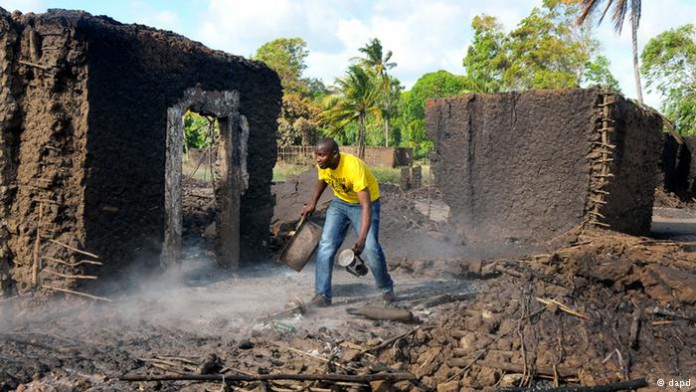
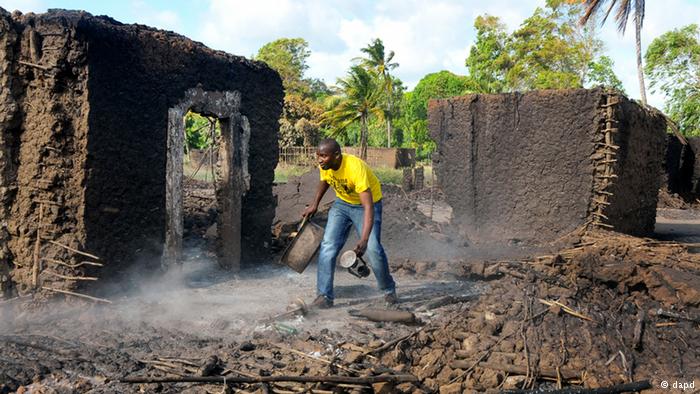
Communal conflicts such as seen in this picture have persisted in Kenya between tribes.
Communal conflicts such as seen in this picture have persisted in Kenya between tribes.
*Teachers, health workers flee north east
Three hundred and ten people have been killed in the northern Rift Valley region between January 1 and June 30, 2015.
According to a report by the UN Office for the Coordination of Humanitarian Affairs (UNOCHA), another 195 were injured while 216,294 were displaced due to border conflicts, cattle rustling and revenge attacks, competition for resources including land and water and, political differences.
The most affected areas are in Turkana, Baringo, Samburuu, Marsabit, and Isiolo, mainly involving clashes between the Pokot, Turkana and Samburu communities.
‘The main areas of inter-communal conflict in 2015 have been the northern counties of Turkana, Baringo, Samburu, Marsabit and Isiolo, particularly between the Pokot and Turkana communities as well as the Samburu and Turkana communities, such as the Nadome incidents in May which killed 100 persons,’ the report states in part.
According to the UNOCHA report, the number of attacks on civilians by armed opposition groups (AOG) at the Coast decreased between January and March 2015, while the period between March and June saw an increased number of attacks mainly in Garissa and Lamu Counties.
In one of the attacks carried out in the north east, suspected Al Shabaab terrorists killed 148 students at the Garissa University on 2 April.
Other attacks include one on Yumbis village close to Dadaab refugee camp and another on the Baure military base in June, attacks which, according to UNOCHA, have led to an increase in risks for non-local staff operating in the north east.
Meanwhile, UNOCHA says that since December last year there has been a massive exodus of teachers and health workers from the north east, resulting in poor quality education and healthcare provision, respectively.
‘Humanitarian access and delivery of essential basic social services has been significantly constrained by continuous inter-communal conflict and AOG attacks, especially in northern, eastern and Coast regions,’ the report states.
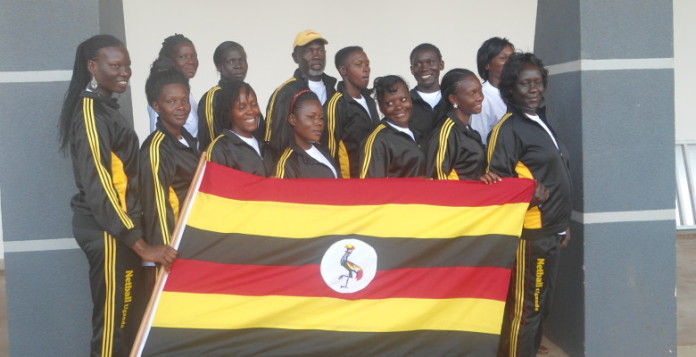
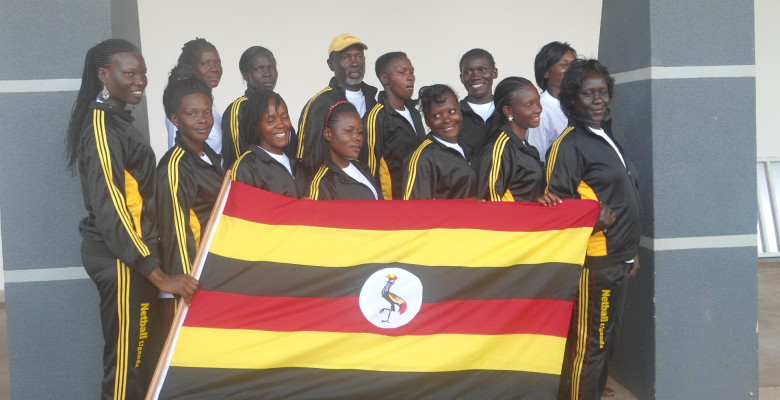
The Uganda national netball team, She Cranes have today won their first World Cup warm up game against Singapore by 39-18 nets.
The She Cranes had earlier lost to New Zealand 46-67 in the first build up game played on Sunday, immediately after the team arrived in Sydney for the gala.
The team will later today face Sri Lanka in the Six Nations Netball Championship at the Toa Payoh Sports Hall, and if they win, the She Cranes will qualify for the finals of the friendly games that will take place at the same venue.
According to Head coach, Rashid Mubiru, the ‘unfavourable weather’ conditions are a bit disturbing but he expects players, who are staying at the Edith Hotel, to adjust ahead of the games which commence on Friday.
“We are adjusting to the weather conditions in a shorter time. Am glad we have recorded a win. We want the same thing against Samoa on Thursday and the real World Cup games” said Mubiru, ahead of the final friendly game.
Currently Uganda is ranked third on the African continent, and the She Cranes start their World Cup bid with a match against Zambiaon Friday before playing Fiji and Wales.
Uganda last appeared for the Netball World Cup in 1979, hosted by Trinidad and Tobago.
About three weeks ago, some people from the Democratic Republic of Congo (DRC) invaded Uganda territory at Vurra, moving the border demarcation barrier deeper into Uganda and illegally erecting structures on the ‘grabbed’ land.
According to some Congolese officials, the area under contention is ‘no man’s land’, and the authorities in the DRC want to construct a parking yard in the area under dispute!
But even before the Vurra debacle recedes, hundreds of marauding South Sudan soldiers attack areas of Lamwo district in Uganda, claiming that it is their land.
That notwithstanding, the disruption of the socio-economic activities of Ugandans by these invaders is disturbing.
Tens of thousands of Ugandans have been displaced, with some going without food and other basic necessities like shelter, leading to despondency.
In fact, in the Vurra case, some young Ugandan men had mobilized themselves into a ‘fighting force’, ready to attack the invaders, only to be restrained by the Uganda Police.
For several years now Uganda has been ‘home’ of hundreds of thousands of refugees from all our neighbouring countries, including those from the DRC and South Sudan, all of who have had a comfortable stay devoid of harassment like happens in other countries.
Border demarcations in Africa were carried out by the colonialists in the early 1900s, and each country has got specific and known coordinates/beacons used to determine its land and water mass. There are also internationally recognized mechanisms to settle such issues and force is certainly not one of them.
Needless to say therefore, there is need for uncooperative parties in the Vurra and Lamwo incidents to follow the established methods of resolving any disagreements involving border demarcations.
And this should be done in the spirit of having and maintaining peace in the region.
Mr Malema formed the Economic Freedom Fighters (EFF) party in 2013 following his expulsion from the governing African National Congress (ANC).
He is a fierce critic of President Jacob Zuma, and has campaigned against corruption.
Correspondents say the ruling is a big boost for Mr Malema’s career, and will fuel perceptions that he is the victim of an abuse of power.
Judge George Mothle said the case had dragged on for too long, and this was “prejudicial” to Mr Malema, South Africa’s News24 site reports.
“For now, the case is over, you are free to go,” the judge told Mr Malema.
However, he added, the defendant not been formally acquitted, so prosecutors could still charge him again.
Analysis by Pumza Fihlani, BBC News, Johannesburg
They may now be arch rivals but it seems Mr Malema has learned survival skills from President Zuma, his former ally.
Mr Malema has had a couple of brushes with the law, the first being a tax evasion case which was withdrawn, and now a corruption case which has been thrown out.
Like Mr Malema, the president had his share of legal problems before he took office – he was acquitted of rape and had corruption charges dropped. He emerged from the cases stronger, using them to cast himself as the victim of a conspiracy aimed at destroying his political career.
The controversial Mr Malema, who heads South Africa’s second-biggest opposition party, will now look to strengthen his position in a similar way. There is real skill to his game – he is not just a boisterous populist.
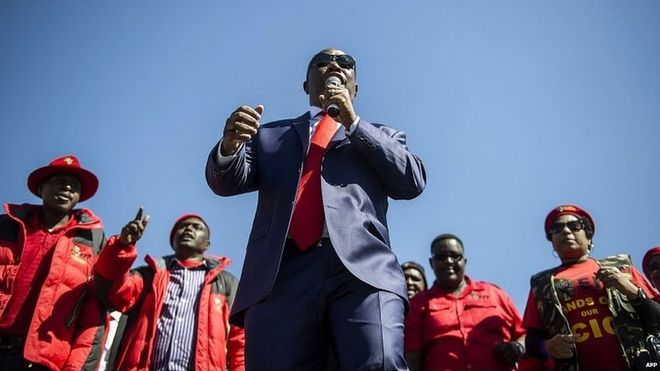
Addressing his cheering supporters outside court, Mr Malema said the prosecution had “messed up” its case.
“Let them manufacture any new charges against me. They will never win,” he said.
“It is going to keep happening; there will be attempts on our lives,” Mr Malema added.
The charges related to a government contract awarded to a company in which Mr Malema held a stake through his family trust.
The contract was for the construction of roads in Mr Malema’s home region of Limpopo, when he was still the head of the governing party’s youth wing.
He was accused of “improperly” receiving money for the contract.