Stanbic Bank
Stanbic Bank
18.4 C
Kampala
Stanbic Bank
Stanbic Bank
Home Blog Page 2342

UTB launches Jinja sports tourism event

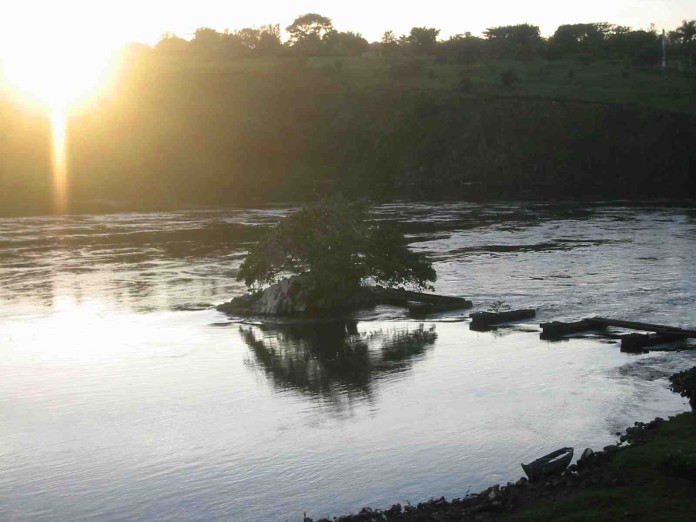
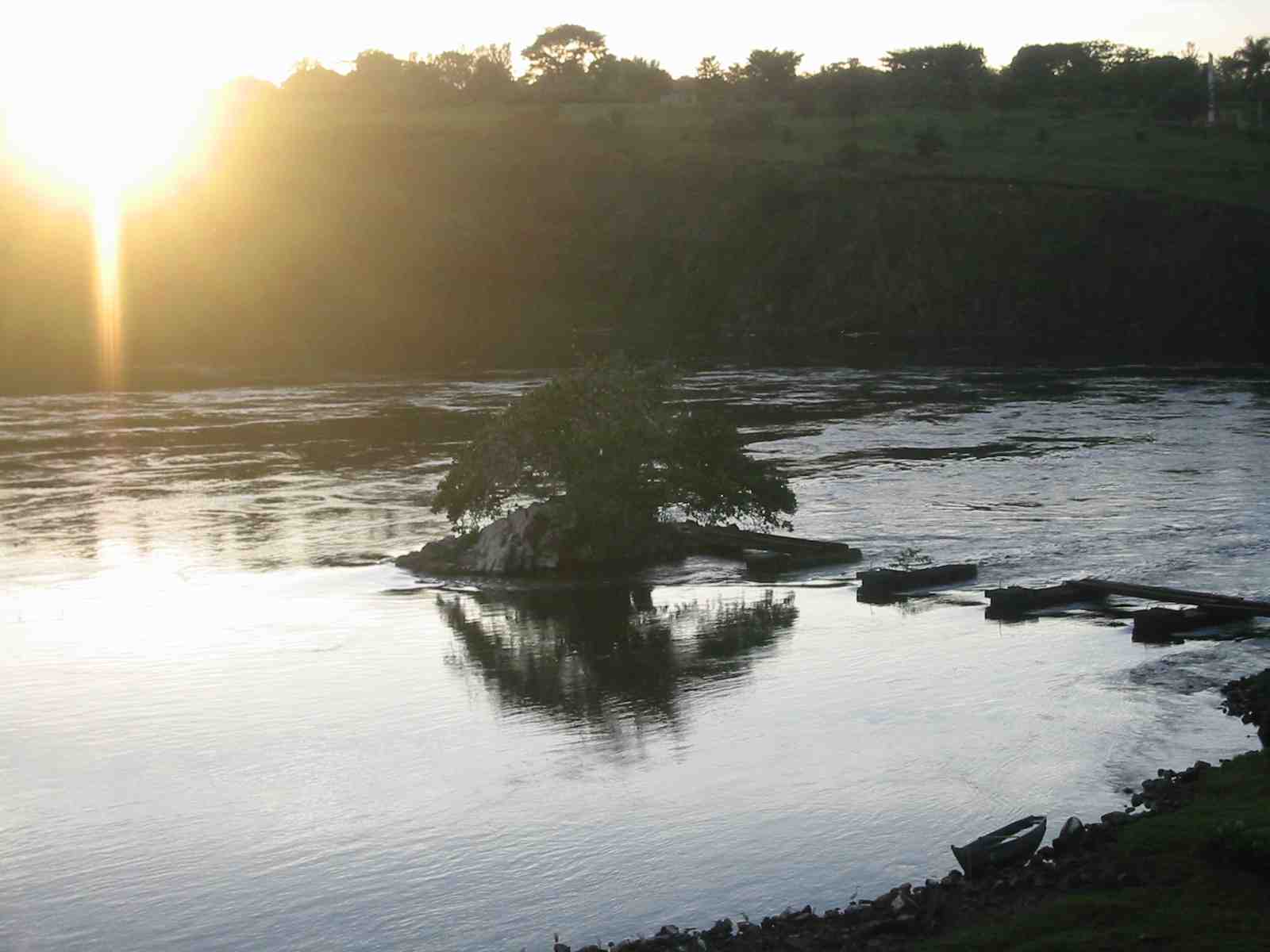
Source of the Nile where sporting activities will take place.


Source of the Nile where sporting activities will take place.

Source of the Nile.

For years, Ugandans considered tourism an exclusivity only enjoyed by foreigners and the local rich who can afford to go out on holiday. And, in many minds, Tourism has for long also been restricted to ‘knowledge about the fauna and flora’.

However, this trend has changed over time with more locals participating in tourism; and also through the diversification of the industry to include so much more than just wildlife, birds and steaming water and waterfalls.

One of Uganda’s tourism destinations is Jinja, known as the ‘Adventure capital of East Africa’ that is located in the Busoga region in Eastern Uganda, sitting along the northern shores of Lake Victoria, near the Source of the Nile.

The bustling town has for long attracted thousands to the magnificent Source of the Nile, and while in Jinja the tourists also enjoy activities such as the water rafting at former Bujagali and Itanda falls and Bungee Jumping. They also visit the Sailing Club on the shores of Lake Victoria, the animal sanctuary in Buwenge and lots of other exquisite sites.

According to the Jinja Town Clerk, Mr David Kyasanku, the district attracts approximately 110,000 tourists annually and, with its mix of activities and several hotels, Jinja is an ideal location for all types of tourism.

So, in a bid to boost and diversify tourism in the town, Sports Tourism International (STI) has partnered with the Uganda Tourism Board (UTB) to launch an annual Source of the Nile Corporate Challenge, the first sports tourism event in Uganda.

According to the UTB Chief Executive Officer Mr Steven Asiimwe, over 100 corporate teams are expected to attend. The participants will include corporates from Uganda and East Africa; and other countries like Nigeria, South Sudan, Egypt and Ethiopia.

The Source of the Nile Corporate Challenge will be a three-day activity running from Friday July 28 through to July 30, and will begin with a birding race at Kasenge Forest Resort/ Samuka Island, off Jinja in Njeru, on the first day, followed by football, netball, volleyball, adventure sports, swimming, barbeque dinner, kayaking, dance and quiz at the Source of the Nile, Rafters and Nile Village hotels over the next two days.

The sports tourism activities will be climaxed by amateur golf, launch of the Sports Tourism Magazine and a prize giving ceremony at Jinja Golf Course, Source of the Nile and Jinja Sailing Club, respectively, on Sunday, July 30.

STI is a private initiative that champions the promotion of sports tourism as one of the key tourism products in Africa.  This event will be held in partnership with among others, Azam TV, Civil Aviation Authority, Ci’Sand, Mada Hotels Jinja, Nile Breweries and Bella Wines.

In a related development, in a bid to boost tourism in Jinja and the Rwenzori region, the government of Uganda recently set aside Shs18 billion to face-lift and promote aqua tourism, a project which now only awaits execution.


Stories Continues after ad

Museveni proposes tribunal for Tooro Kingdom conflict

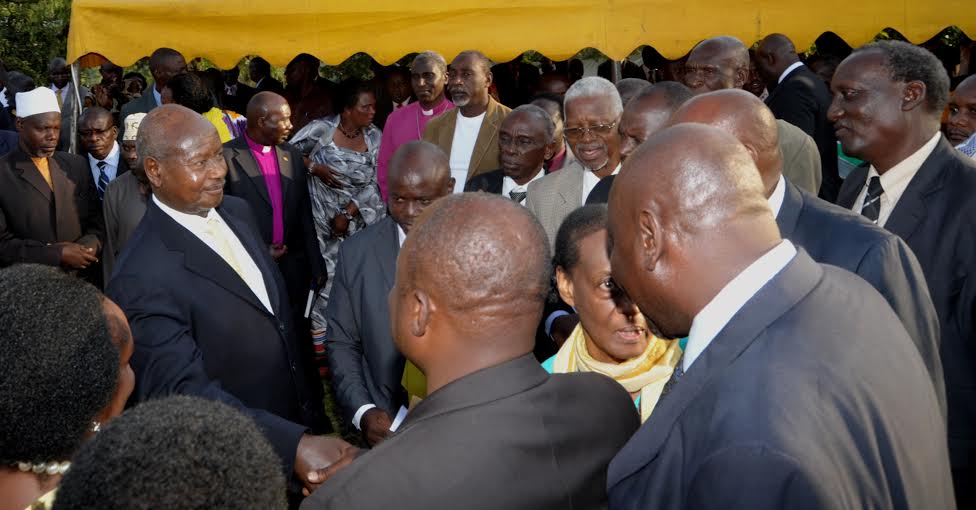
President Museveni with some members of the Tooro Community who attended a meeting to try and find a solution to the conflicts in the Kingdom.


Museveni-Tooro conflict

President Museveni with some members of the Tooro Community who attended a meeting to try and find a solution to the conflicts in the Kingdom.


Taking court action will deepen conflict.

President Yoweri Museveni has said a tribunal composed of various known neutral leaders known be appointed to help resolve the issues dividing the Tooro kingdom.

“I propose that you appoint a tribunal of religious leaders who are known to be neutral in this matter. You should utilize the talent of talking and listening to others and to each other,” the President cautioned following a heated meeting that he called to try and resolve the conflict.

His proposal was unanimously supported by the Tooro Kingdom stakeholders who immediately appointed Bishop Robert Muhiirwa of Fort Portal Catholic Diocese, the Anglican Bishop of Rwenzori Diosese Reuben Kisembo and Bishop Jimmy Katuramu of the Pentecostal Churches. The regional Kadhi Sheikh Habib Monday, who is also an advisor to the Mufti of Uganda Sheik Shaban Mubajje, was also appointed as a member of the tribunal.

President Museveni who was on a two-day working visit of Kyenjojo and Fort Portal, yesterday told leaders who included Supreme Council, Principal Advisors of King Oyo Nyimba Kabamba Iguru Rukidi IV, religious leaders, clan representatives and Prince David Kijanangoma and his supporters, that he has no powers to intervene in cases that are in court but cautioned that this can deepen the conflicts in Tooro Kingdom. He concurred with the Bishops who proposed that the two sides meet and resolve their misunderstandings.

The President had invited the leaders to a meeting at the State Lodge in Fort Portal to try and find a lasting solution to the conflict. According to Museveni, the conflict between King Oyo and Prince Kijanangoma over alleged poor management of the Kingdoms Affairs threatens to divide the people of Tooro and to derail development.

“If the institution is used progressively it can be very useful. When you meet challenges you need to meet and resolve your conflicts. You need to discuss these conflicts confidentially,” Museveni observed.

He thanked the leaders for supporting the Kingdom particularly after the death of Omukama Kaboyo and also thanked the Queen Mother Best Kemigisa for having worked hard and cooperated with him and other stakeholders in ensuring the good growth of the King.

Further, he warned the people of Tooro not to mix kingdom matters with politics, urging them to live in harmony and to also promote culture with particular reference to language and developmental initiatives.

The president said that Kabarole District has got an HIV/AIDS prevalence rate of 12%, adding that the leaders must work hard to sensitize the masses against the killer disease.

“AIDS is not a medical problem but a social one. The Kingdom can continue to support the Government in its efforts to fight the Aids scourge. If the Church and the Kingdom cooperate in fighting the scourge we shall make a lot of progress,” he said.

Bishop Reuben Kisembo of Rwenzori Diocese who spoke on behalf of the religious leaders proposed that there should be dialogue between the two groups and called on the Central Government to protect King Oyo. They proposed that the Tooro Kingdom Constitution be revised and that supporters of Prince Kijanangoma respect king Oyo.

The Omuhikirwa (Prime Minister) of Tooro Bernard Tungwako welcomed President Museveni to the Kingdom and thanked him for the peace he ushered in the Kingdom, Uganda and the Great Lakes region.  He thanked him for nurturing the King and saluted him for the capture of the Allied Democratic Forces leader, Jamil Mukulu and said that the murder of students of Kicwamba (Technical Institute) remains in the people’s memories.

About a month ago Mukulu, a Christian-turned Muslim, was arrested in Tanzania and last Sunday he was extradited to Uganda where he is expected to face multiple murder charges in relation to the heinous activities reportedly carried out by his rebel outfit, the ADF.

Mukulu was arrested in March as he tried to secure travel documents for his children. At the time of arrest, he was using the aliases James Amos Mazenjo.

However, Interpol had listed Mukulu on its ‘Red Notice’ and the United Nations had declared him a wanted man. Consequently, his extradition was processed and on  June 26,  a Tanzanian court ruled that he to be sent back to Uganda to face the various charges levied against him but a date for his appearance in court is yet to be announced.


Stories Continues after ad

Museveni in Burundi for mediation

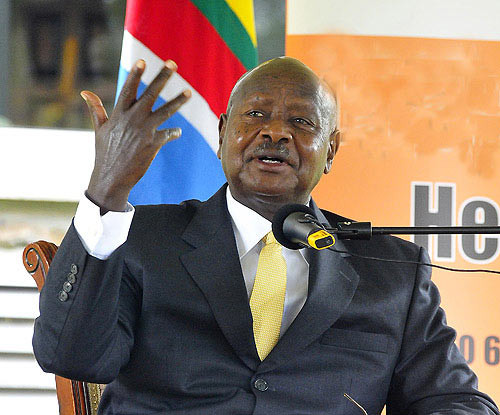
Ugandan leader


Ugandan leader
Ugandan leader

Ugandan President Yoweri Museveni is in Burundi to facilitate dialogue that will lead to peaceful elections in the tiny central African country.

Museveni, who was recently named as the lead mediator by his East African counterparts, is expected to hold talks with President Pierre Nkurunziza and opposition members, in a bid to resolve the conflict that has engulfed the troubled Burundi.

In April this year Burundi was thrown in turmoil when president Nkurunziza declared he would stand for elections that had been scheduled for June 15. In the resulting chaos, on May 13 as he was attending the East Africa Summit on Burundi, Nkurunziza was temporarily deposed by army and police officers, only to bounce back as president a day later.

Since then he has announced that the elections will instead be held at the end of July, a development regional analysts and his counterparts are afraid might spark off another round of deadly protests.

In power since 2005, President Nkurunziza argues that his first term that ended in 2010 was not attained through universal adult suffrage, and that constitutionally he is entitled to another five years as president, should he seek to stand, something he has already done.

However, his opponents have shredded his assertions, arguing he has served his two five-year mandate, and as such should not seek re-election for the ‘third term’.


Stories Continues after ad

Kobs prepare for Egypt test

Kobs prepare for Egypt


3rd round, 1st Leg
Match details:
Egypt v Uganda
Date: July 18, (Saturday) 2015
Venue: Borg Al Arab Stadium in Alexandria
Time7.15 pm-local time in Alexandria, 8.15 pm EAST.

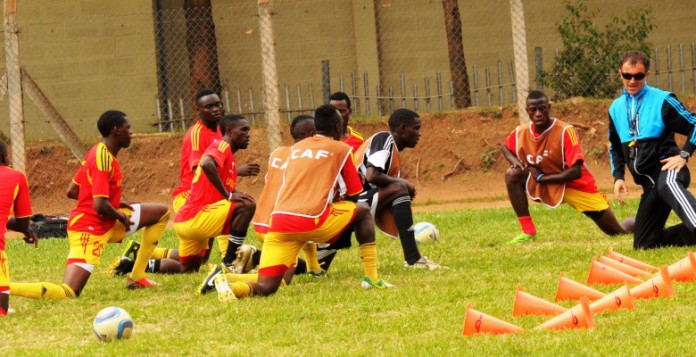
The Kobs, Uganda’s under-23 team are just two games away from
qualifying for the Africa under-23 football championship in Senegal at
the end of this year. Also, qualification for that youth championship
will get them closer to making it to the 2016 Olympics in Rio de
Janeiro in Brazil.

However, to realize the aforementioned, The Kobs have the herculean
task of demystifying Egypt’s under-23s this weekend. This is a nation
that Uganda has had a poor record against over the years in football
terms, on top of the domineering psychological edge teams from the
Magreb region have.

Milutin ‘Micho’ Sredojevic, the Kobs coach said that he isn’t at all
delusional that the game against Egypt is going to be easy. Of all the
opponents they have played thus far, Micho stressed that Egypt is a
big kind of fish, and therefore won’t be easy to catch.

In essence, Egypt won’t be anywhere near the likes of Rwanda or even
Tanzania, teams that a host of his under-23 players have faced and put
to the sword over the last few weeks in different competitions. Micho
observed that this Egypt team has been together from under-20 level,
winning things and subsequently, building cohesion.

That, compared to Uganda, who were assembled at the beginning of this
year, will prove to be a big test. Yet, to Micho, it’s also an
opportunity to show how far they’ve come as a team. “I don’t think
we’ve anything to lose. We’re underdogs in this tie, so, that should
ease the pressure on us,” Micho said.

Micho’s stance seems to represent a man who is resigned. But don’t be
fooled. He said that whatever the case may be, his team will be ready
for battle to get a decent result away from home that leaves them with
a chance in the second leg.

Stories Continues after ad

Kagame’s ‘third term’ debate on today

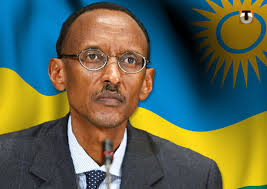
Paul Kagame Rwanda's strongman.


Paul Kagame Rwanda's strongman.
Paul Kagame Rwanda’s strongman.

-Elections in EA countries heat up

The two legislative bodies in Rwanda, the Lower Chamber and Senate are set to debate the petitions of millions of Rwandans who want President Paul Kagame to stand for office after 2017.

Of recent over three million Rwandans have petitioned Parliament to amend Article 101 of the Constitution to allow Kagame stand for a third seven-year term.

Kagame, a former guerilla leader of the Rwanda Patriotic Front/Army (RPF/A), was first elected civilian president under universal adult suffrage in 2003, stood again in 2010 and won both elections with landslide victory. Before that he had been elected by the Parliamentarians to replace Pasteur Bizimungu, after members found the former president culpable of several misdemeanours.

According to a release by Parliament, the debates in both the Chamber of Deputies (MPs) and the Senate chambers that began at 9am, are taking place simultaneously.

The third term debate in Rwanda has caused serious anxiety and the Speaker of Parliament, Donatilla Mukabalisa, has urged all Rwandans to follow today’s proceedings.

According to the Rwandan Constitution that was promulgated in 2003, the President of Rwanda is supposed to serve a maximum of two-seven year terms, non-renewable.

Kagame’s ‘third term’ debate comes in the wake of other east African regional countries: Uganda, Burundi, Tanzania and the Democratic Republic of Congo, getting ready for elections between now and 2016.

But the leaders of both Burundi and the DRC have encountered strong resistance to their presidential bids, with thousands of citizens in both countries thronging the streets in protest.

In a related development, Tanzania is set to hold elections in October this year, and the ruling party, the Chama Cha Mapinduzi has already zeroed on on its presidential flag bearer, Dr John Pombe Magufuli, a minister of works under President Jakaya Kikwete.

And in Uganda, incumbent president Yoweri Museveni has come under intense competition from his erstwhile Prime Minister John Patrick Amama Mbabazi, who is seeking both the presidency and the chairmanship of the ruling party, the National Resistance Movement (NRM).

Though Museveni has not yet declared his candidature for the 2016 elections, political observers say he may seek the position of NRM flag bearer for president. Other Ugandan politicians who have already declared their presidential ambitions include the Forum for Democratic Change President Major General (rtd) Gregory Mugisha Muntu and his predecessor, Colonel (rtd) Dr Warren Kizza Besigye.

Meanwhile, in troubled Burundi elections have been scheduled for the end of this month, with embattled President Pierre Nkurunziza insisting on standing for the presidency under the CNDD/FDD party, while the opposition says it will boycott the polls should he stand.

Since April when Nkurunziza declared he would contest for the presidency for what some Barundi have described as his ‘third term’, the president has come under intense pressure not to offer himself, resulting in a temporary coup on May 13, carried out by disgruntled army anf police officers led by the former intelligence chief, Major General Godefroid Niyombare.


Stories Continues after ad

Dialogue will go a long way in enhancing peace

Last week was hectic, at least for the leading opposition politicians and the Uganda Police Force.

There was massive deployment of police to block aspiring presidential candidates Colonel (rtd) Dr Kizza Besigye and former Prime Minister John Patrick Amama Mbabazi from inaugurating their bids in Kasangati and Mbale, respectively.

For the better part of the day, both men were held at different police stations, one at Naggalama and the other at Kira Road.

Then parliament weighed in on the matter, opining and correctly so, that Dr Besigye’s arrest and detention on that day was not in good faith, as his party, the Forum for Democratic Change (FDC) had endorsed him to canvass support for his presidential bid. However, it still remains a contentious point as to whether their interpretation of the law in regard to Amama Mbabazi’s arrest, is indeed consistent with the Constitution.

It is pertinent to remind politicians, mostly our Members of Parliament who are charged with making the laws that they should desist from making ‘bad laws’ aimed at ‘clipping the wings’ of particular people they may not necessarily like politically. In Uganda such a thing has happened before, and interestingly we know better because it was the proponent of that law who was one of its first victims. Does anybody care to remember the name Grace Ibingira?

That notwithstanding however, it came as a relief when parliament weighed in with a rational guidance and better still when the police seemed to take heed and clear Dr Besigye to begin his ‘meet-the-people’ rallies.

The police is not supposed to take sides, or even appear to do so as this would undermine its public image and also compromise its vital role of keeping law and order.

And, as the country gears up for the 2016 presidential elections, it will be important that the police plays its role professionally, so that the citizens of Uganda benefit from the process of a peaceful, free and fair election.

That is why the ‘fresh settlement of scores’ between the police and Dr Besigye is a good starting point that should be applauded because as a country we need to strengthen dialogue on key national issues.


Stories Continues after ad

Barack Obama goes back to Kenya: ‘It’s like JFK going back to Ireland’


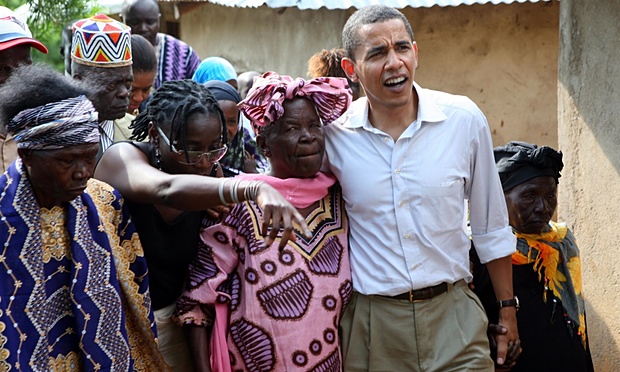
Obama in Kenya


There’s excitement on the streets at the president’s visit, which offers a chance to mend strained relations with the west

The silver-grey walls of the Godown Arts Centre, a sprawling converted car repair warehouse that offers a home to many of Nairobi’s most creative minds, usually feature a rotating cast of murals celebrating sports stars, freedom fighters and screen sirens such as the Oscar-winning Kenyan actress Lupita Nyong’o.

In recent weeks all those figures have been overshadowed by the likeness of one man. At the gate a whole section is taken up by a full-face painting of PresidentBarack Obama looking into the distance and wearing a wistful expression.

In the warrens of cubicles in the theatre, the star painting is an acrylic and oil portrait of Obama, seated on a still growing tree in a lime-green jungle, striking the pose of a Roman emperor with his shoeless feet dipping into a stream. “We are very excited about his visit,” says Evans Yegon, 30, who painted the portrait. “We are just curious to see how things will be and we just can’t wait.”

Kenya is in the grip of Obama-mania. For weeks, newspapers have led with numerous articles describing preparations for the trip at the end of the month and analysing its importance. Readers have been inundated with every detail about efforts to keep Obama safe, with tales about his limousine, “a tank on four wheels” (the Star), a favourite.

Roads have been relaid, malfunctioning street lights fixed, billboards erected and the highway between the airport and the central business district boasts a new garden – although social media users have been quick to note, witheringly, that the newly planted flowers are unlikely to have blossomed before Obama arrives.

It is hard to overstate Obama’s popularity in Kenya, the land where his father was born, and in the rest of sub-Saharan Africa, one of the few places where his stock has remained undimmed through the course of his presidency. Yet his visit to Kenya will also highlight the changing dynamics of the relationship between the west and a continent that has grown more assertive with improving economic fortunes at a time when new powers, especially China, are making a big play for prominence in Africa.

Advertisement

At the airport, Obama will be received by Uhuru Kenyatta, whose presidential bid Washington semi-openly campaigned against because, at the time of the election in March 2013, he was facing indictment at the International Criminal Court for his alleged role in post-election violence that rocked the country at the end of 2007. The case has since been withdrawn.

The election of Kenyatta and his deputy, William Ruto, was seen as a significant embarrassment for western envoys who had warned the electorate that “choices have consequences” and their entry into office led to a deepening of Kenya’s relationship with China and strained ties with western allies.

“This will be a very significant visit,” says Professor Winnie Mitullah of the University of Nairobi. “Relations with the west hit a low not witnessed for decades in recent years and it will be a chance, in effect, to reset the partnership and create a new narrative.”

Some analysts say the rise of China has seen US administrations grow averse to criticising the governance and human rights records of governments in Africa. Campaigners complained that a summit of African heads of state in Washington last August focused on trade and security with little discussion on human rights, and many will be watching to see how Obama, whose strong words against official corruption in Kenya on his last visit as a senator in 2006 stirred a ruckus, will handle the issue.

Scott Gration, a retired general and former US ambassador to Kenya who grew up in east Africa and was an early supporter of Obama’s presidential campaign, says Obama remains a champion of the good governance agenda but argues that US dealings with the continent have to reflect shifting dynamics. “I believe we are witnessing a change in the international community’s engagement with Africa. President Obama’s focus on entrepreneurs [he will attend a global entrepreneurship summit] continues the positive shift from historical political-military relationships in Africa to a new series of economic-centric associations on the continent. To be truly successful, his visit must translate into substantial results that are sustained beyond the visit itself.”

Beyond the complex calculations of various actors, including some evangelical pastors and conservative MPs whose demands that Obama not advance the gay marriage agenda have stirred national debate, most Kenyans are simply happy to host a man many see as one of their own. Nowhere is the excitement at a greater pitch than in K’Ogelo, the village in Siaya, a county on the fringes of Lake Victoria, where Barack Obama Senior grew up. “Obama is my brother,” said Michael Ochiel, 42, reflecting the tendency of many Africans to ascribe kinship to anyone from their locality. “By coming to Kenya he will put the country on the world map, making Kenyans all over the world a proud people. I hope he extends his visit to K’Ogelo.”

Musa Ogilo, 67, a maize miller, said the area had witnessed a quick transformation since Obama became president, citing the levelling of roads and extension of the electricity grid to the village by local authorities. But he called on Obama to build a proper hospital in the village, illustrating the fact that many Kenyans struggle to distinguish between the president’s duty to US citizens and to the land of his father’s birth.

Commentators caution that the excitement surrounding the visit may cloud the main objective – the global entrepreneurship summit, which the White House describes as an effort to gather entrepreneurs and investors from around the world with the aim of spurring economic opportunity.

Despite its ethnicised and occasionally violent politics – and the growing menace of the al-Shabaab terror group which has carried out attacks and triggered fears it might try to disrupt the visit – Kenya boasts one of the best developed middle classes on the continent and has proved a big draw for US and European investors in recent years.

A financial analyst, Aly Khan Satchu, says Kenyan authorities would make a mistake if they allowed themselves to be caught up in the excitement surrounding the trip, which he compared to John F Kennedy’s trip to Ireland in 1963, and passed up the opportunity to sell the country’s merits to the world: “Kenya, and Nairobi in particular, is globally fluent, has 21st-century connectivity and an impressive pool of human capital.”

It’s a view echoed by Chad Larson, one of three co-founders of one of the most successful enterprises driven by the success of mobile money transfers in Kenya, M-Kopa. The business, incubated in part in chats between Larson and fellow students at Oxford University, sees users pay a deposit of about $35 for a solar system worth about $200 before settling the balance using mobile money transfers over a year.

The firm has sold 200,000 systems in Kenya and Uganda since its launch in 2010 and shifts about 500 a day. “We could not have properly gotten off the ground without the support of international investors who were willing to allow us to try different iterations and ultimately succeed,” says Larson. “It would be great if more local Kenyan investors were willing to back local enterprises and support the next M-Kopa. I hope Obama’s visit is a catalyst for that.”

Evans Yegon’s expectations are decidedly more straightforward. “I just hope I can reach him and that he takes this painting away with him.”

Stories Continues after ad

Nigeria’s Buhari sacks military chiefs


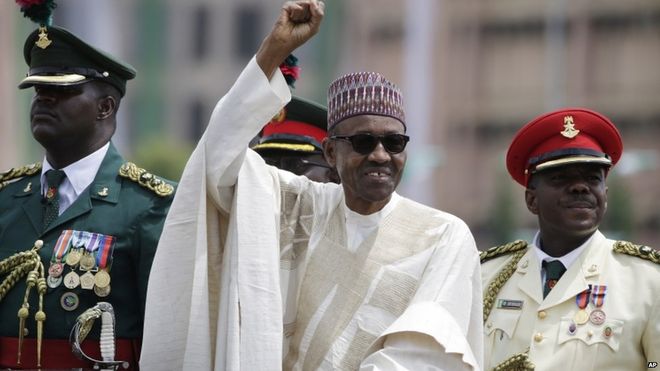
Nigerian President Muhammadu Buhari.


Nigeria’s President Muhammadu Buhari has appointed new defence chiefs after sacking the heads of the army, navy and air force.

The sackings were expected as the president has repeatedly criticised the military’s inability to defeat Islamist group Boko Haram.

The Islamists have recently launched a series of deadly guerrilla attacks, killing more than 250 people.

Boko Haram is thought to be responsible for more than 10,000 deaths since 2009.

The new military chiefs will be expected to work closely with neighbours Chad, Cameroon and Niger as they join forces to tackle Boko Haram.

The group has also stepped up attacks on these countries.

At least 12 civilians were killed in Cameroon in a suspected Boko Haram suicide attack on Sunday evening, a military source told the BBC.

Two soldiers also died, along with two bombers who blew themselves up in Fotokol, near the border with Nigeria.

Chad will be the headquarters of an expanded Nigeria-led regional force of around 7,500 troops.

Its formation has gained momentum since President Buhari took office in May.

On Saturday morning, 15 people died in the main market in Chad’s capital, N’Djamena, when a man dressed in a burka blew himself up.

Boko Haram claimed responsibility for the attack.

The BBC’s Nigeria correspondent, Will Ross, says just hours before his sacking, army chief Lt Gen Kenneth Minima said the upsurge in violence was the result of military success against the jihadists.

Lt Gen Minima suggested Boko Haram no longer had the capacity to fight the army and so had resorted to attacking soft targets with bomb blasts.


Boko Haram at a glance

  • Founded in 2002, initially focused on opposing Western-style education – Boko Haram means “Western education is forbidden” in the Hausa language
  • Launched military operations in 2009
  • Thousands killed, mostly in north-eastern Nigeria, abducted hundreds, including at least 200 schoolgirls
  • Joined Islamic State – now calls itself “West African Province”
  • Seized large area in north-east, where it declared caliphate in 2014
  • Regional force retaken most territory


Stories Continues after ad
Somalia takes Kenya to Court over sea border

Contested water boundaries between Somali and Kenya.
Contested  water boundaries between Somali and Kenya.
Contested water boundaries between Somali and Kenya.


The Somali government has submitted its dispute with Kenya over their sea border to the International Court of Justice.

The disputed ocean territory stretches for more than 100,000 sq km.

Tests have shown potential reserves of gas in the area.

The dispute has been going on for the last six years, keeping investors away because of a lack of legal clarity over who owns potential off-shore oil and gas reserves.

The BBC’s Rage Hassan says Somalia wants the maritime border to continue along the line of the land border to the south-east, while Kenya wants the sea border to go in a straight line east.

Somalia’s Attorney General Ahmed Ali told the BBC that his government would present a 150-page document arguing its case at the ICJ, which is UN’s top judicial body, based in The Hague.

Kenya’s Attorney General Githu Muigai told the BBC that Somalia had no right to claim what is Kenya’s territorial water. He also confirmed that some concessions have been given to foreign companies to explore oil and gas.

The application comes days after the Kenyan government said it had received a pledge from Mogadishu that it wanted to solve the case out of court.

In 2014 the ICJ gave Somalia the go-ahead to file the case after efforts to settle the dispute outside the court had failed.

The ICJ has asked the Kenyan government to respond by 27 May 2016, after which hearings will begin formally.

It may take several years before the court rules on the matter.


Stories Continues after ad

Tanzania’s CCM picks works minister for presidential race

John Magufuli .


John Magufuli addresses delegates after the ruling party Chama Cha Mapinduzi (CCM) elected him as the presidential candidate for the October 25 election in the capital Dodoma, July 12, 2015.

Tanzania’s ruling party on Sunday named Works Minister John Magufuli as its candidate for this year’s presidential race, making him the most likely next leader of the east African nation.


The Chama Cha Mapinduzi (CCM) party has ruled Tanzania for five decades and its candidate is widely expected to take over from President Jakaya Kikwete, who has served a maximum two terms, after the Oct. 25 election.

Tanzania has been one of Africa’s most politically stable nations and has not been torn by the debate raging in parts of the continent, where some presidents have sought third terms despite constitutional restrictions.

From a final list of three, Magufuli, 55, beat two female contenders: former senior U.N. official Asha-Rose Migiro and African Union ambassador to the United States Amina Salum Ali.

“I hereby declare John Magufuli winner after he got 87.1 percent of all the valid 2,416 votes cast,” parliament speaker Anne Makinda said.

Magufuli named Samia Hassan Suluhu, 56, as running mate, setting her on course to be Tanzania’s first woman vice-president.


CCM Presidential hopeful John Magufuli and outgoing Tanzanian President Jakaya Kikwete discussing party issues with a supporter.


The short list did not include Edward Lowassa, 61, a former prime minister who had been seen as potentially leading the field. He quit as premier in 2008 over corruption allegations that he denies.

Party officials did not say why he was not on the short list that initially included five candidates, whittled down from 38 by CCM’s central committee, which is chaired by the president.

Lowassa has yet to comment. But one aide had said that he if he was not picked he could still make a bid for the presidency as an opposition candidate.

The main opposition parties promised last year to field a single candidate in the election, but experts say they may struggle to overcome years of mutual suspicion and infighting.


Stories Continues after ad