Stanbic Bank
Stanbic Bank
27.6 C
Kampala
Stanbic Bank
Stanbic Bank
Home Blog Page 236

Ugandans demand for global treaty to address plastic pollution

A recent survey conducted by Ipsos, commissioned by WWF and the Plastic Free Foundation, reveals that an overwhelming majority of Ugandans support a global treaty to address plastic pollution. The survey, which polled 24,727 respondents in 32 countries, including Uganda, found that almost all Ugandan participants (97%) support specific rules to ensure accountability and action against single-use plastics.

The survey found that 97% of Ugandan participants believe it’s important to reduce global plastic production, a crucial step in mitigating the harmful effects of plastic pollution on the environment and human health. This overwhelming support indicates a strong desire among Ugandans to address the plastic pollution crisis, which has severe consequences on the country’s waterways, soil, and wildlife.

Furthermore, 96% of Ugandan participants believe it’s important to ban chemicals used in plastic that are hazardous to human health, wildlife, and the environment. This finding highlights the urgent need to address the harmful impact of plastic chemicals on human health and the environment.

Additionally, 93% of Ugandan participants believe it’s important to ban unnecessary single-use plastic products most likely to become plastic pollution. Single-use plastics, such as plastic bags, straws, and water bottles, are a significant contributor to plastic pollution, and banning them would significantly reduce the amount of plastic waste that ends up in the environment.

The survey also found that 96% of Ugandan participants believe it’s important to ban types of plastic that cannot be easily recycled in practice. This finding underscores the need for a more sustainable approach to plastic production and consumption, one that prioritizes recyclable and biodegradable materials.

Moreover, 96% of Ugandan participants believe it’s important to require transparent labeling on plastic products, indicating a strong desire for accountability and transparency in the plastic industry.

A significant 97% of Ugandan participants believe it’s important to require manufacturers and retailers to provide reuse and refill systems, a crucial step in reducing plastic waste and promoting sustainable consumption.

Furthermore, 93% of Ugandan participants believe it’s important to require all plastic manufacturers to pay fees that cover the costs of reuse, recycling, and safe management of plastic waste.

Moreover, 89% of Ugandan participants agree that a global treaty should include rules that ensure all participating countries have access to funding, technology, and other resources to comply with the rules, significantly higher than the global average.

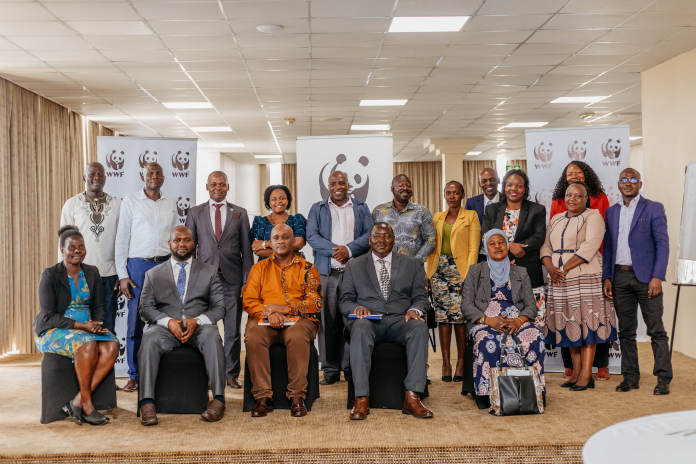
The survey report was released on Tuesday, May 28, at Skyz Hotel Naguru, and was attended by policymakers, civil society, and other stakeholders. The findings demonstrate that Ugandans are willing to take action to combat plastic pollution and support global efforts to reduce plastic waste. The survey’s results serve as a call to action for policymakers, manufacturers, and consumers to work together to address the plastic pollution crisis and create a more sustainable future.


Stories Continues after ad

 Kamwenge residents tasked to intensify efforts on fighting malnutrition

Legislators of Uganda Parliamentary Alliance on Food and Nutrition Security have urged residents in Kamwenge district to intensify efforts of fighting malnutrition, after a survey placed Kamwenge as the district with the second highest number of malnutrition cases in Uganda.

The lawmakers made the appeal while addressing residents at Biguri Town Council during the assessment of the burden of malnutrition in Kamwenge district.

“Stunting is brought on by prolonged periods of not having enough nutrients in the bodies and this is due to the fact that nutrition is very poor from pregnancy up to five years that is where the problem is. When you compare our stunting levels, they’re far beyond 30%, we are above. Even when you compare with the national levels at 26% and you can see at Kamwenge, we are at 41%. If there is a delay to seek management services, in some cases we lose them. Where I work, averagely, we lose 2-4 children in a year. For severe malnutrition cases, we have 1-2 cases a week, totaling to 6-10 in a month and when you multiply by 12 months, it’s usually 36-38 cases in a year,” Emmanuel Tumusiime, Nutritionist at Rukunyu Hospital.

Tumusiime also explained that the kind of malnutrition in Kamwenge is chronic, as it starts way back from pregnancy, and it’s carried into adulthood and if the same malnourished adults conceive, there are high chances of them giving birth to stunted babies

Tumusiime explained, “When we study about stunting, it is a generational problem. A mother who doesn’t feed well, will give birth to an underweight baby who will grow into an adult who is underweight and that underweight adolescent will become a malnourished mother, who will not grow well the embryo again now at pregnancy, you find that cycle continues. Because when the body isn’t well developed, you will find that the fetus will also not develop well.”

Robert Kato, Senior Clinical Officer at Buguri Health Center III in Kamwenge district said that as they are concentrating on under nutrition, there are also cases of over nutrition. 

“Sometimes we have 14 cases of children who are malnourished, so this is a significant number that should be well addressed. The good thing is that for clients who come to us with cases of HIV or Tuberculosis, malnutrition is subsiding, but for the community, we need a common approach that is aggressive to get these clients from the community,” Robert Kato said.

Stanley Mwesige, Village Health Team (VHT) in Buguri Town Council decried that whenever the residents harvest paw paws, all they think about is selling them. If they get eggs, instead of preparing it for the children to eat, they sell them in the market and buy pancakes for the kids.

“The residents have the food, but they don’t know how to prepare this food to benefit the kids. The parents don’t know that they can prepare lunch, supper, breakfast and change the foods like posho, matooke, all they do is cook food once for the week, they prepare matooke or cassava that they feed on the whole week,” Mwesige said.

He attributed the high malnutrition rates to poverty noting, “Many of the parents struggle to raise income and they ask us, if I give the kids eggs, where will I get money to buy salt? That is why some of them prefer selling the eggs. We would like Government and Parliament to send professional people to Kamwenge to teach people on how to prepare food for the children to come to the villages and teach our people on how to prepare nutritious food for the children.”

Milton Muwuma Chairperson Uganda Parliamentary Alliance on Food & Nutrition Security said that there is a lot of food production going on but the way it is consumed calls for awareness creation.

Muwuma said, “People have food, but most of the food is sold to get money, instead of retaining some food for domestic consumption, so we need to encourage farmers to do domestic gardening where some vegetables and fruits are missing. People can consume cassava or matooke for a full week, so we need to advise them that it isn’t about the quantity of what you can consume but the quality matters a lot for us to minimize on the cost of treatment because if you eat well, food is medicinal it can help in boosting the immunity of the bodies,”

“We found teenage mothers, a girl of 15-16 years being pregnant, this threatens her life specifically when it comes to giving birth, she has got maternal challenges she is bound to face, but also the care is wanting because the girl is living with her parents who feel this is an extra burden, we should do some more awareness about girls remaining in school because some of them are stunted and end up producing underweight babies. We need to salute Kamwenge because the national figures given don’t tally with what is on ground, so Kamwenge district began scanning, screening and documenting what other districts aren’t doing,” added Muwuma.

Stories Continues after ad

 Why Brig Charity Bainabaabo was sent for military course

SFC Deputy Commander Brig Gen. Charity Bainababo making his remarks during the SFC Celebrations of the good 2023 PLE results of the Pupils from Nsamizi, Marine and Summit view Army Primary Schools at the SFC headquarters Entebbe on the 10th February 2024. Photo by PPU/Tony Rujuta.

Internal fights and intrigue at Special Forces Command have pushed the deputy commander Brig Charity Bainabaabo out of her job.

Brig Bainabaabo who is also a Member of Parliament will be away for one year to attend National Defence College in Buikwe in July this year.

With her absence for a year, it’s not clear how she shall balance being a Member of Parliament representing the UPDF and her absence from the House for the next one year.

According to sources close to SFC, the one-star General who is also related to the First Lady is an ambitious officer who was giving her boss, Maj Gen David Mugisha hard time to run the command.

“There were lots of fights and it was increasingly becoming a concern,” the source said.

In the UPDF, it’s a known secret when an officer is sent for a military course is always seen as an indirect way of sacking them.

Who is Brig Bainabaabo?

She joined the military in 1998 for basic training at Kabamba military School before doing a cadet course in Jinja in 1999. She attended Company Commander’s Course in Jinja in 2008 before doing Senior Command and Staff College at Kimaka.

Brig Bainabaabo has been accused of being rude to his subordinates and the reports reached the president who decided to send her for a course.

In 2023, there were media reports that she had insulted a Foreign Officer called Solomon Kasasira working at Uganda’s embassy in Burundi.

Brig Bainabaabo will be among the third lot of the officers who will be attending the new NDC which was opened two years ago.

The second cohort is finishing its one-year course in July this year. Among those attending the second cohort is the former UPDF Spokesperson Col Paddy Ankunda and the former Third Division Commander Brig Joseph Balikkudembe.

Stories Continues after ad

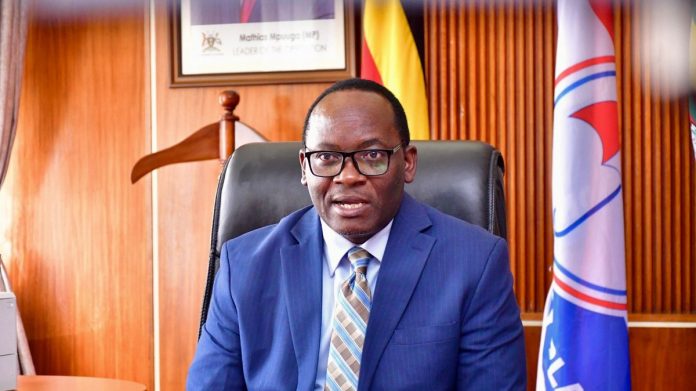
LoP, Minister Namuganza signs censure motion against Mpuuga and other commissioners 

UNDERFIRE: Former LoP Mathias Mpuuga.

The Leader of Opposition in Parliament, Joel Ssenyonyi, Minister of State for Lands, Housing, and Urban Development, and a section of opposition MPs have appended their signatures to the motion seeking to censure parliamentary commissioners.

Last week, a section of legislators led by Lwemiyaga County MP Theodore Ssekikubo and Sarah Opendi embarked on collecting signatures to censure Parliamentary Commissioners. The commissioners are accused of allocating themselves Shs1.7 billion.

The Parliamentary Commission’s leaked resolutions from May 2022 implicated the former Leader of the Opposition (LoP), Mathias Mpuuga, commissioner Solomon Silwany, Prossy Akampurira, and Esther Afoyochan.

According to the leaked document, Mpuuga was awarded a one-off service payment of Shs500 million, while three commissioners from the National Resistance Movement each received Shs400 million. the National Unity Platform (NUP), resolved to recall Mpuuga as the Parliamentary Commissioner.

The party said that although he responded to the NEC’s request to show cause why he should not be recalled from the Parliamentary Commission, he did not provide any satisfactory explanation for engaging in this grave action, which goes against the mission, values, and objectives of the party. In particular, he did not make any attempt to respond to the specific accusations levelled against him.

“This is very imperative for us in the NUP, it vindicates us. We raise alarms against our commissioner; some people think it is an internal party fight. What happened is an irregularity for leaders to sit and award themselves money.”

He said the proposal has to go through the legal and parliamentary affairs committee before it is brought to the floor of parliament for discussion. Every individual who gets retirement benefits, be it the speaker, vice president, or others, was discussed and passed by parliament.

He noted that on matters to do with taxpayers’ money, MPs need to detach their parties and make the right decisions.

Namuganza urges other party members to sign the censure motion and warns individuals who are telling their colleagues that the president said they should not sign.

She noted that the president has formal ways of communicating, which include writing to them and calling the NRM caucus.

“Let’s stand against corruption. I was personally censured even when there were no grounds,” she said.

Stories Continues after ad

What makes Sudhir beat other Ugandan investors in business

Chairman Ruparelia Group, Sudhir Ruparelia.

Investing is both an art and a science, a delicate balance between risk and reward, analysis and intuition. At its core, investing is about allocating resources with the goal of generating profitable returns over time. But what truly defines a good investor? Is it the size of their portfolio or the ability to predict market movements accurately? While these aspects are important, the essence of a good investor goes beyond mere numbers. It encompasses a set of traits, strategies, and a particular mindset that distinguishes the exceptional from the ordinary, notes Grid Capital Incorporated.

Ugandan businessman Sudhir Ruparelia is considered one of the richest in East Africa by Forbes. He is the chairman and majority shareholder in the Ruparelia Group of companies. His investments are mainly in banking, insurance, education, media, real estate, floriculture, and tourism sectors.

His business diversification also has Sudhir investing in the Uganda Securities Exchange (USE) where he buys shares in profitable companies, but also was able to start his own Crane Bank Limited, although regulation issues brought it down unfairly.

As a young man in England, Ruparelia successfully established a number of small businesses before returning to Uganda in the 1980s to take advantage of the improving political and business stability.

In Uganda Sudhir started Ruparelia Group as a small trading firm in 1985 at 29 years of age with $25,000 he returned with as savings accumulated from several jobs in the UK where his family had sought asylum after expulsion of Indians from Uganda.

From this humble beginning Sudhir is known for running serious businesses such as Speaker Resort Munyonyo, Kabira Country Club now under expansion, Speke Apartments, Kingdom Kampala, and has acquired buildings like Simbamanyo, and Lotis, after their owners failed to pay their debts to commercial banks.

“Instead of avoiding risk altogether, good investors like Sudhir manage risk effectively. They diversify their portfolios across different asset classes, industries, and geographies. This approach helps mitigate losses during downturns while providing exposure to potential high-growth opportunities,” says an investment advisor.

According to economists, Sudhir businesses in Uganda are doing well because he does not start them without considering the opportunities available. There is talk that Sudhir is so cunning that he will go for a business that others fear, and he ends up succeeding.

Long-term vision: An expert says Sudhir as a good investor focuses on the bigger picture and avoids getting caught up in short-term noise. He understands that market fluctuations are temporary, and the true value of their investments will reveal itself over time. Probably thus why he is serious about investment in real estate even though the market is not good right now.

Trust: Watchers of Sudhir rise in business say he is trustworthy to the extent that he has several business partners to deliver say construction projects

They further that diversification ensures that his businesses support each in many ways including financing, office space. For instance, Crane Bank used to operate in branches owned by a sister company Meera Investments which is into property development.

Exposure: Unlike other Ugandan businessmen/investors, experts say Sudhir is highly exposed to international business platforms where he gains investment knowledge. This has helped him to guard himself against procuring unnecessary loans he cannot service. This is the reason why Sudhir is not in courts of law over non-payment of loans, trying to dodge paying the loans, using lawyers.

Involving and training family members in business: There is no doubt that Sudhir runs his business empire together with his family. His wife, and children are serious businesspeople, who are determined to steer the Ruparelia Group of companies to greater heights, and for many generations, ahead.

Discipline: Following a well-defined investment strategy and sticking to it is crucial, Sudhir has a good investor has resisted the temptation to chase after fads or jump on bandwagons. Their decisions are guided by a disciplined approach, preventing emotional biases from clouding their judgment.

Analytical skills: Successful investors like Sudhir possess strong analytical abilities. They conduct thorough research, scrutinizing financial statements, market trends, and economic indicators. This analytical prowess enables them to make informed investment choices.

HumilitySuccessful as he is, an expert says Sudhir acknowledges that he doesn’t have all the answers. “He is open to learning from their mistakes, seeking advice from experts, and adapting their strategies as needed,” he says.

Value Investing: This strategy involves identifying undervalued assets that have the potential to appreciate in the future. Good investors seek assets trading below their intrinsic value, providing a margin of safety and potential for significant gains.

Experts say a good investor is more than just someone who generates profits. They embody a combination of traits, strategies, and a mindset that positions them for long-term success. Patience, discipline, analytical skills, risk management, continuous learning, and a strategic approach all contribute to their ability to navigate the complex world of investing.

Ultimately, the definition of a good investor extends beyond the financial realm—it encapsulates a philosophy of prudent decision-making, resilience, and the pursuit of sustainable wealth creation.

Stories Continues after ad

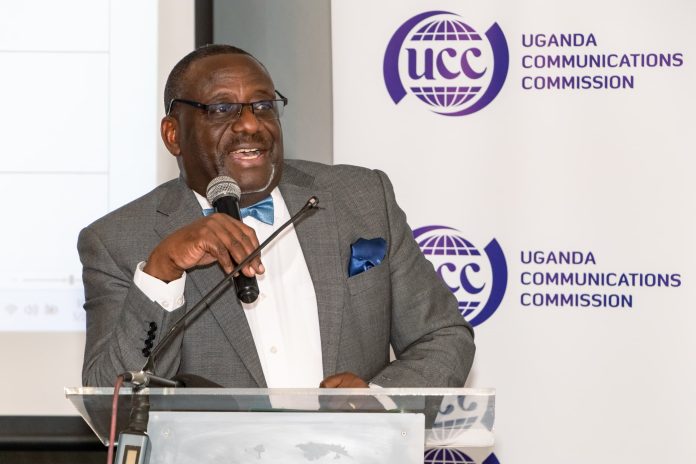
UCC gives 30 days ultimatum for online media publishers to get licenses

UCC Executive Director, Nyombi Thembo during the engagement with Online Publishers.

The Uganda Communications Commission (UCC) has given up to June 30 for online media operators to formalise and get operating licenses. 

The revelation was made during the sensitization engagement of online publishers in the country.

The ultimatum was given following overzealous unprofessionalism, blackmail and extortion exhibited by some of the publishers.

George William Nyombi Thembo, the Executive Director of the Uganda Communications Commission said he noted that UCC doesn’t intend to guard the media or stifle freedom of expression but to establish a proper working arrangement that benefits both the regulator and the online media service providers.

“We encourage those who are currently not licensed to take the necessary steps to regularise their operation in accordance with the law. We only have 38 online publishers who have some kind of license, yet there are more than 200 in this space. We encourage all operators to collaborate with us in this endeavour,” he noted.

He noted that as regulators, they are entrusted with the vital role of ensuring that the communication sector operates smoothly and effectively as mandated by the law. Everyone operating within the sector should be informed about the legal framework to ensure compliance and foster a cooperative relationship between the regulator and the service providers.

The UCC Act Regulation 2019 was established to protect and promote the interests of viewers and listeners. The regulations are designed to ensure that the content you provide meets the necessary standards. It also aims to protect various groups, including children, by preventing exposure to harmful content such as pornography, glorified violence, offensive communication, and material that could create public insecurity. By adhering to these standards, we can create a safer and more restricted online environment for all of us.

“People who give us news online should embrace high standards of professionalism. Professionalism should not be compromised. When you are in a media space, giving everybody an equal opportunity when you are reporting on something is paramount,” he said.

“We want to be looked at as professionals, and that is the journey we want to walk. When we walk that journey, it will help us regulate you together. He noted that because the ICT space is so wide, we cannot have the resources to regulate everybody,” he said.

He urged online journalists to be knowledgeable; you can’t know everything. If you don’t know something, ask people who do.

“Form organisations for the first level of regulation amongst yourselves, just like medical practitioners regulate themselves under the medical council; core regulation is on another level; and the third level is headed by the UCC”.

Stories Continues after ad

UNOC generates Shs37b profits

The Uganda National Oil Company (UNOC) has recorded a profit of Shs37.6 billion surpassing their projected revenue of Shs6.989 billion.

This revelation was made during a meeting between officials from UNOC and Members of the Public Accounts Committee (PAC) on Monday, 27 May 2024 where the Auditor General’s report on UNOC’s financial statements for the year ended 30 June 2023, was considered.

The recent audit of UNOC revealed an impressive financial performance that caught the attention of the committee.

Initially slated to generate Shs6.989 billion in revenue, UNOC ended the fiscal year with Shs37.6 billion. This was attributed to strategic investments in treasury bills and fixed deposits.

The Auditor General’s report highlighted that the windfall was a result of UNOC’s decision to invest a portion of its funds in the money markets.

According to the report, the investments were not initially included in the budget estimates due to the unpredictability of interest rates and project expenditures.

Consequently, the company saw a surplus of Shs30.686 billion above the approved revenue estimates.

While some Members of Parliament praised UNOC’s strategic acumen, others, led by the Chairperson of the committee, Hon. Muwanga Kivumbi raised concerns about the transparency and framework of the investment. The controversy sparked debate over UNOC’s financial practices and the oversight of public funds.

UNOC’s Chief Financial Officer, Emmanuel Mugagga explained that the extra revenue stemmed from interest income on fixed deposits.

He added that the deposits involved funds from the East African Crude Oil Pipeline (EACOP) project, which were temporarily invested while awaiting project cash calls.

The revelation of the surplus led to mixed reactions from Members of Parliament. They questioned the lack of transparency and the absence of this investment strategy in the initial budget plans.

Herbert Tayebwa (Kashongi County) expressed his concerns regarding UNOC’s sudden decision to invest in treasury bills.

“They decided to buy treasury bills. My question is why it came so abruptly at the time of budgeting?” he said.

Amuria District Woman Representative, Susan Amero commended UNOC for their transparency in revealing the surplus stating that they could have kept quiet and misused the money.

Kassanda North Representative, Patrick Oshabe raised concerns about the potential temptation for UNOC to invest more project funds for profit.

“That money to do a project will be invested like that because there is a profit that will be made. Do we have a legal background to that decision?” Oshabe said.

However, Mugagga clarified that the decision to invest followed clearance from the board and was made considering that the money was not urgently needed, despite being paid earlier by the government.

UNOC’s Chief Executive Officer, Proscovia Nabbanja said that they had anticipated collecting Shs6.989 billion based on revenue streams such as bulk trading, bid submissions and fees from the Jinja storage terminal.

“We invested out of the money that was given for the East African Crude Oil Pipeline (EACOP) in anticipation of the cash calls. Instead of holding the money in the account, we invested in the treasury instrument which created the surplus,” Nabbanja said.

The Auditor General recommended that the Accounting Officer revise the approved budget when significant changes in financial circumstances occur, aiming to ensure transparent communication and approval of all revenue-generating activities by the appropriate authorities.

Stories Continues after ad

CDF Muhoozi pledges to maintain relations with Uganda and India

The Chief of Defence Forces, Gen Muhoozi Kainerugaba, has pledged to enhance and maintain the cordial relations between Uganda and India.

This was during a meeting with a National Defence College – India delegation at the Ministry of Defence and Veteran Affairs, Mbuya.

The Chief of Joint Staff, Maj Gen Jack Bakasumba, who represented the Chief of Defence Forces, commended the delegation for choosing Uganda as part of their case study and pledged to continue strengthening the existing friendship for the development of both countries.

Maj Gen Bakasumba told the delegation that the foundation of the Uganda Peoples’ Defence Forces is built on its relations with the civilian population, making it a pro-people Army.

He said, “For us, we believe that people are the biggest tool, and whatever we do, the civilians are the foundation; that’s why we’re called the Peoples’ Army.”

The Chief of Joint Staff observed that despite the UPDF being a young army, it has achieved a lot in Uganda and across Africa. He added that Uganda has exported peace to several African countries, such as Somalia and the Democratic Republic of Congo. He said that Uganda subscribes to regional peace mechanisms like the Eastern Africa Standby Force (EASF), which aims to improve the region’s security.

The Head of the Indian delegation, Air vice Marshal Manish Kumah Gupta, said that course participants are in Uganda for a study tour to learn and understand Uganda better. He added that the tour will equip them with knowledge and experiences to help and guide them in their studies and daily duties.

AVM Manish Kumah Gupta said that he learned the history of Uganda after reading “Sowing the Mustard Seed” by H.E. Yoweri Kaguta Museveni, which was gifted to him by Colonel Nelson Aheebwa.

He said, “I read about the spirit of Pan Africanism, Economic Development, among others President Museveni has for Africa, and now we’re here to listen from the people on the ground.”

Uganda and India’s relations span decades. Indians play a significant role in Uganda’s economy, especially in manufacturing, trade, and banking, which provides employment opportunities. India military officers offer and conduct training for UPDF personnel in Uganda and India, which has enhanced the capabilities of the UPDF.

Stories Continues after ad

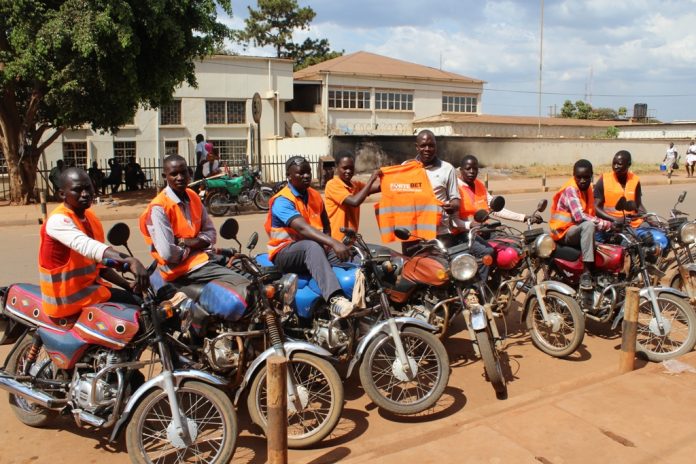
Boda boda rider suspended from stage over love affair with colleague’s wife

Boda-Boda operators at one of the Kitgum municipality stages.

KITGUM-Boda Boda Association in Pader town Council has suspended its member, Okot Geoffrey Amuti for three months after he was accused of having love affair with the wife of a fellow member

In the letter dated May 22, 2024, Oyoo Ben Mark, Association Chairman (Disciplinary) said that this act is a clear violation of the association’s code of conduct and a betrayal of the trust that exists among our members. 

“We cannot tolerate such behavior and we will take all necessary steps to protect the integrity of our association,” Oyoo said. 

The association’s disciplinary committee conducted a thorough investigation and found Amuti guilty of violating Article 14, Section 17 of the association’s by-laws, which strictly prohibits members from engaging in romantic relationships with the spouses of fellow members or connecting them with others.

“This is a very sad and unfortunate situation,” Oyoo said. 

He added, “We urge all members to respect the decision and maintain the integrity of our association. We will do everything possible to support the affected member and his family during this difficult time.”

 “How could he do this to a fellow member?” asked a shocked colleague, who wished to remain anonymous. “We trusted him and considered him a friend. This is a huge betrayal and we demand justice!”

A one social media viewer worried, “Imagine common boba boda men can suspend a colleague over indiscipline and fraudulent behavior but MPs cannot do the same to thieves among them.”

The association further warned that “failure to comply will lead to fines or further action as prescribed in the constitution.”

Stories Continues after ad

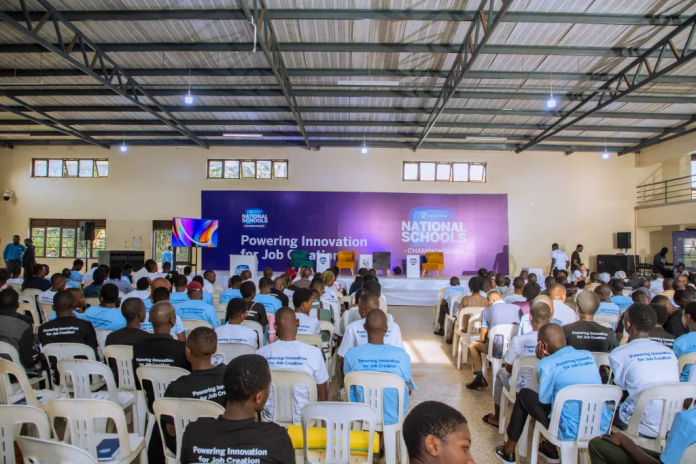
Stanbic Boot Camp initiates innovation, entrepreneurship skills among learners

The 2024 Stanbic National School’s Boot Camp has come to a close, leaving behind a trail of innovative ideas, entrepreneurial spirit, and a new generation of job creators. The five-day boot camp, hosted by Gayaza High School, brought together hundreds of students and their teachers to showcase their creativity, innovation, and entrepreneurial skills.

The boot camp aimed to instill a mindset change among learners aged 13-18, equipping them with skills to become part of the solution to societal challenges. Through various training sessions, students learned about psychosocial/mental health, starting a small business, building a successful brand, marketing, and understanding customer needs.

During the market stimulation activity, students demonstrated their ability to drum up sales, showcasing their innovative business ideas. The program’s impact has been significant, with over 480,000 learners, teachers, and community members benefiting directly and indirectly since its inception.

Stanbic Uganda Holdings Limited’s Chief Executive, Francis Karuhanga, expressed his gratitude to the Ministry of Education and Sports for supporting the initiative. He emphasized the need to reach millions of youths, not just thousands, and encouraged more schools to undertake this innovation quest.

The National School’s Championship, now in its ninth edition, runs under the theme ‘Empowering the job creators of tomorrow’ with the 2024 tagline ‘Powering Innovation for Job Creation.’ The competition has helped develop over 200 successful businesses, addressing youth unemployment and bridging the gap between education and job creation.

This year’s competition features four main categories: Student Grow Challenge, Student Spark Challenge, AlumGrow Challenge, and Teachinnovate for Teachers. The best group generated revenues of Shs260,000 and a profit of Shs210,000 from an initial Shs50,000, demonstrating the potential of these young innovators.

As the boot camp concluded, it was clear that the next generation of job creators is ready to make a mark. With the right skills, mindset, and support, they are poised to become people of value in society, driving innovation and entrepreneurship forward.

Stories Continues after ad