Stanbic Bank
Stanbic Bank
20.8 C
Kampala
Stanbic Bank
Stanbic Bank
Home Blog Page 278

Meet Samuel Mwogeza, the new acting CEO of Stanbic Bank Uganda

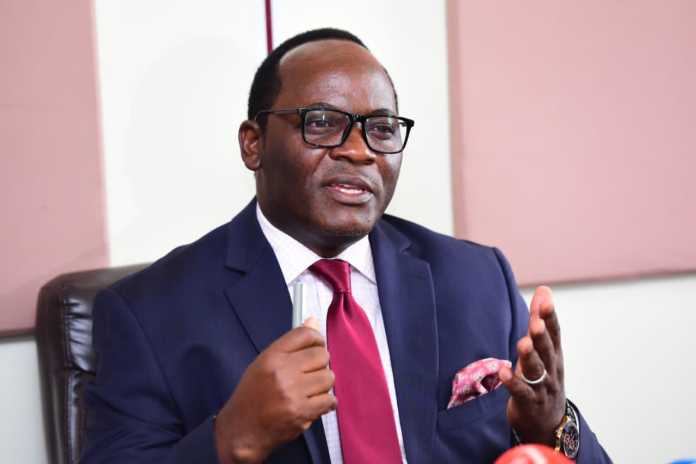
Mr Mwogeza.

Samuel Frederick Mwogeza has been appointed the interim Chief Executive Officer of Stanbic Bank Uganda.

He replaces Anne Juuko who has been appointed to a regional role within the Standard Bank Group.

He has been working with Stanbic Bank Uganda Limited as the Executive Head: Personal and Private Banking.

 Immediately prior to this he worked as the Global Chief Financial Officer (CFO) for Vision Fund International and prior to this as the CFO of Stanbic Bank Uganda Limited.

He has also worked in other countries with time spent in Uganda, Zambia, Tanzania and the Democratic Republic of Congo while working for Citibank and Standard/Stanbic Bank respectively; where he was central to strategy formulation and leading and managing change leading to improved sustainability.

Samuel has received multiple individual accolades. He was recognized as the top CFO in Uganda at the Deloitte-ACCA awards in 2018 and the Certified Public Accountant (“CPA”) of the year 2019 by the Institute of Certified Professional Accountants of Uganda. He was further awarded as top contributing CFO to the financial services industry by the Uganda Bankers Association in 2019. He has also been recognized as Best Chief Financial Officer; Strategy Execution – 2018 and Best Chief Financial Officer; Finance transformation – 2017 by ACCA Uganda & Deloitte Uganda.

Samuel also led the finance team to “Best Finance team of the year” by Institute of Certified Public Accountants of Uganda (“ICPAU”) in 2019 and under his leadership as Executive Head for Consumer and High-Networth, the bank also won the 2021 and 2022 Consumer Choice awards in “best Commercial and development bank” category.

Samuel has contributed as a non-executive director (NED) in various organizations as below;

Uganda Securities Exchange (NED and Chairman Audit and Risk Committee)

International Coaching Federation-Uganda Chapter (NED; Chair Finance Committee)

The Leo Africa Institute (NED)

Stanbic Properties Limited (Board Chairman)

Liberty Life Insurance Uganda Limited (NED)

Stanbic Pension Fund (Chairman)

He has also served on voluntary basis on the entities below;

ICPAU-Finance, Planning and Administration Committee (Member)

Uganda Bankers Association-CFO Executive Committee (Lead Technical matters)

Samuel is a Harvard Business School – Executive programme alumni, an MBA (Edinburgh Business School) and Bachelor of Commerce degree honors (Makerere University).

Mwogeza’s interim appointment comes after Bank of Uganda rejected the proposal by Stanbic Bank Board of Directors to appoint the CEO of Stanbic Bank Eswatini in Southern Africa as the replacement for Anne Juuko.

Anne Juuko was recently transitioned to another leadership role as Global Markets Regional Head for East Africa, effective April, 2024.

Presently the Executive Head of Compliance, Dokoria’s interim appointment follows Emma Mugisha’s resignation as Executive Director and Head of Business & Commercial Banking, to pursue opportunities outside of the Standard Bank Group.

Kitabire congratulated the incoming leaders and thanked Juuko, and Mugisha for their notable contribution to the sustained success of the organisation over the years.

“On behalf of the Board, I thank Anne, and Emma for their leadership over the years and contribution to the sustained growth of Stanbic Bank Uganda; we wish them success in their next respective assignments,” said Kitabire.

Stanbic Bank is the country’s largest commercial bank by assets, profits, and deposits as of December 2022.

Stories Continues after ad

Minister Musasizi asks parliament to waive off Shs13.313b in taxes owed by individuals

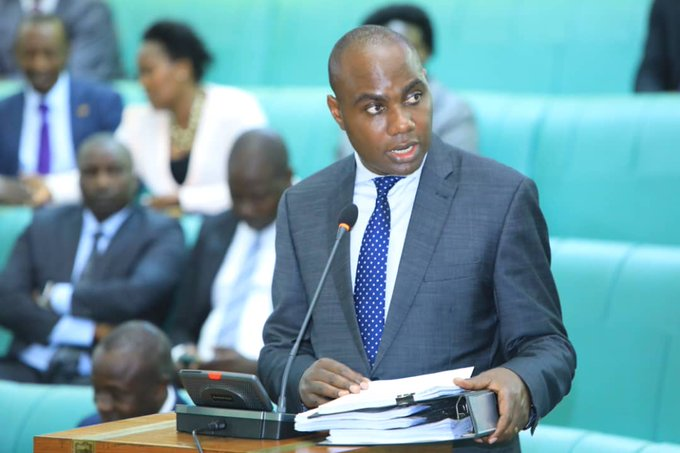
Henry Musasizi, Minister of State for Finance made a case for the loan.

The Minister of State for Finance, Henry Musasizi, has asked Parliament to waive off taxes to the tune of Shs13.313 billion owed by several individuals in the country.

Musasizi said the decision to waive off tax is in accordance with Section 40(2) of the Tax Liabilities Act. The waive-off tax comes at a time when the Uganda Revenue Authority (URA) has a deficit of over Shs1 trillion in terms of revenue collection, three months before the close of the financial year. 

The beneficiaries include Nkumba University, Makerere Business Institute, and businessmen Peter Lokwang and Donati Kananura, among others. 

Appearing before the Finance Committee, the MPs on the Finance Committee wondered how the list of beneficiaries increased from three to seven, contrary to an earlier list tabled before Parliament.

The list includes: income tax liability amounting to Shs239,306,340 owed by Makerere Business Institute; pay-as-you-earn (PAYE) liability amounting to Shs4,479,421,1902 owed by Nkumba University; and value-added tax (VAT) liability amounting to Shs2,718,116,5923 owed by J2E Investment Corporation. 

Others are VAT and Rental Income Tax amounting to Shs2,080,641,683 and Shs1,695,713,952, respectively, owed by Donati Kananura; Value Added Tax Liability amounting to Shs931,935,420 owed by Nicontra Limited; Holding Tax amounting to Shs385,145,772 owed by Peter Lokwang; and Pay as You Earn Tax amounting to Shs783,180,494 owed by Busoga University.

Stories Continues after ad

Health Ministry decries Uganda’s over reliance on foreign donor funding

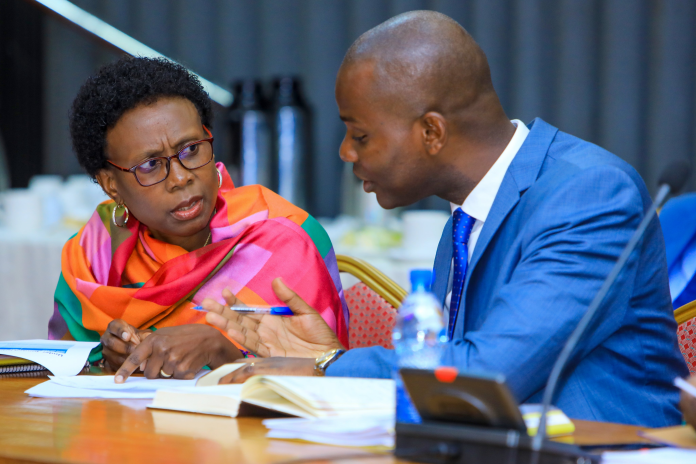
Minister Aceng consulting a colleague.

The Minister of Health has decried Uganda’s over reliance on foreign donors in funding Uganda’s health sector budget, saying that in the 2024/25 national budget the Ministry of Health has been allocated Shs1.328Trn, of which 85% of this total budget is being financed by donors.

“In the 2024/25 national budget, the Ministry of Health has been allocated Shs1.328Trn. We take note that external financing takes a greater percentage. The budget under the Ministry of Health is highly subsidized by external donors at 85% and these funds are earmarked for health commodities like Global Fund and GAVI that benefit the entire health system. There is a need to mobilize domestic resources in a phased manner in the mid-term,” said Aceng.

The decry comes shortly after Minister of Health Ruth Aceng revealed that the international donors announced plans to end funding malaria projects in Uganda and the government has to raise its own funds to fight against malaria, because the donors have now turned their focus on other global issues like wars in Ukraine and Gaza as well as climate change activities.

“Our partners are no longer willing to increase any more funding for malaria, they have all leveled off.  We were invited to Cameroon recently, I was there in person and we were told the world has moved on to climate change issues, global health, and security and to wars in Ukraine and Israel. So, we were told to sign a declaration that each of the 10 high burden countries will look for their own domestic resources and bring their malaria pandemics or epidemics to an end by themselves. So, we are not looking for any additional increase of resources for malaria, it has to be domestic resources,” said the Minister.

Jane Aceng, therefore declared that all organ transplant activities in Uganda have been halted until Shs5Bn is availed for the training and operations of the Human Organ Transplant Council.

The Minister explained that the Shs5 billion is required for functionalization of the Human Organ Transplant Council of which, Shs3.6 billion will be for training and benchmarking, whereas Shs1.4 billion will be spent on operations of the Council.

“We have halted all transplant activities because we need a Council in place. Yesterday as you were touring the surgical exhibition, you saw the facilities that are ready, they cannot operate unless we have a Council and the Council has to be trained because it is virgin land in Uganda,” Aceng said.

Stories Continues after ad

UNDP Report: Uganda has met requirements for lower-middle income status

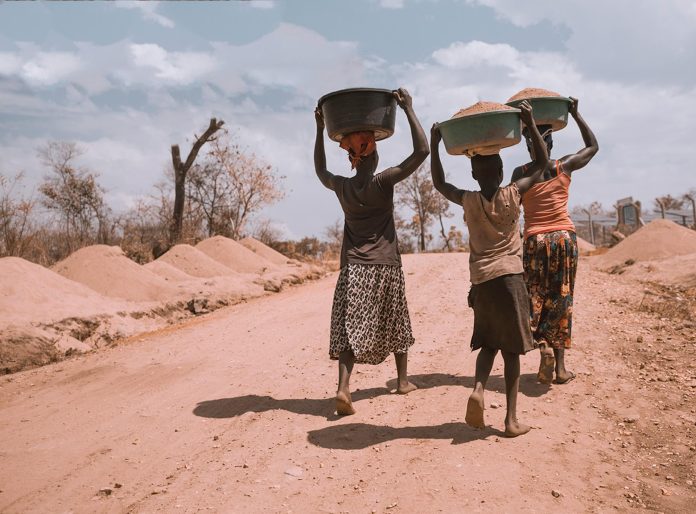
Photo by Ninno JackJr on Unsplash

According to the most recent United Nations Development Programme (UNDP) Human Development Report, Uganda has met the criteria to graduate to a lower-middle income economy. The authors said the country had elevated its human development indicators across income levels, health, and education and reduced inequalities.

The highly anticipated 2023/2024 report, launched at Makerere University in Kampala, painted an encouraging picture of Uganda’s development trajectory. The country now ranks 159th out of 193 countries and territories assessed, a big jump from its previous ranking of 166th in the 2021/2022 report.

“In the 2023/2024 Human Development Report, Uganda has for the first time moved to the category of medium human development,” announced Ms. Nwanneakolam Vwede-Obahor, the UNDP Resident Representative in Uganda. “This is something we need to recognize and celebrate the progress the country is making on the human development front.”

A Multifaceted development journey

The UNDP report sheds light on several human development areas where Uganda has made notable progress between 1990 and 2022. During this period, the country’s Human Development Index (HDI) value increased by an impressive 67.2 percent, rising from 0.329 to 0.550.

One of the most notable achievements is the significant increase in life expectancy at birth, which rose by 17.2 years. The authors of the report attributed it to enhanced access to healthcare services, better nutrition, and targeted public health programmes implemented by the government.

Education has been another area of remarkable progress, with the adult literacy rate (ages 15 and above) climbing by 5.8 years during the same period. The report commends the government’s efforts to promote lifelong learning and expand educational opportunities, often in collaboration with private and charitable sector partners.

Economic growth and income levels

The most striking indicator of Uganda’s development strides is the substantial increase in Gross National Income (GNI) per capita, surging by an impressive 153.1% between 1990 and 2022. This robust economic growth has been fueled by various factors, including increased foreign investment, diversification of industries, and the promotion of entrepreneurship.

According to the World Bank’s classification, lower-middle-income economies have a GNI per capita between $1,086 (Shs4.2 million) and $4,255 (Shs 16.4 million) as of 2023. Uganda’s achievement in crossing this threshold is a testament to the country’s dedication to fostering an enabling environment for sustainable economic growth.

Implications, opportunities, and policymaking

Attaining lower-middle-income status is a significant accomplishment for Uganda, as it signifies the country’s integration into a new era of development opportunities. This classification opens doors for increased access to international funding on more favourable terms, advantageous trade agreements, and enhanced cooperation with global partners.

“Uganda’s transition to the medium human development category aligns with an exciting message that I got a few days ago. The UN committee for Development Policy has announced that Uganda has now fulfilled the criteria for graduation from the least developed country to the lower-middle-income country category for the first time,” remarked Ms. Susan Ngongi Namondo, the UN Resident Coordinator in Uganda.

With its newfound economic status, Uganda will enjoy more favourable loan borrowing terms and grants from institutions like the World Bank, African Development Bank, and other multilateral development banks. This increased access to financial resources, coupled with an influx of international trade and foreign investments, is expected to support the country’s ongoing development and economic expansion in the coming years.

Of course, as with many nations in the medium human development category, Uganda must implement regulations to foster growth in sectors beneficial to public welfare while restricting potentially harmful industries. Just like they banned primetime TV ads for companies that sell cigarettes, promote alcoholic drinks, or allow citizens to demo roulette casino online, lawmakers will pass a raft of incentives to encourage development partners, private sector, and civil society organisations to help solve challenges outlined in the report.

Challenges and the road ahead

While the report highlights Uganda’s move to a higher economic tier, it also points to areas that require continued attention and strategic policymaking. Income inequalities and disparities in access to healthcare and education remain pressing concerns, as the top 10% of earners receive 35.7% of national income, compared to just 2.5% for the bottom 10%.

“We have the opportunity, as we move into that lower-middle-income category, to plan for it because it will cause short-term disruptions in the budget. Some things will disappear. So, we need to plan and make sure that we can adequately handle the move smoothly into lower-middle-income countries categories,” cautioned Ms. Namondo, the UN Resident Coordinator.

To address these challenges, the Ugandan government has pledged to increase investment in initiatives like the Parish Development Model (PDM) to ensure no citizen is left behind. Prime Minister Robinah Nabbanja called upon all stakeholders, including government agencies, development partners, civil society organisations, academia, and the private sector, to join hands in addressing the issues outlined in the report.

“We must combat divisions and strengthen service delivery to address the common needs of our population and pave the way for a more equitable and sustainable future,” she said. “As we work on this journey, let us draw inspiration from the progress we have so far made. As a country, we are remaining firm in our commitment to human development.”

As Uganda embarks on this new chapter, sustained efforts and strategic policymaking will be crucial to consolidating the gains made thus far and propelling the country towards even greater heights of development. The UNDP report serves as a beacon of hope, highlighting the vast potential for Uganda and its people.

Stories Continues after ad

Mpuuga no longer represents us on Parliamentary Commission, NUP hits back to Speaker Among’s decision

Embattled former LoP, Mathias Mpuuga.

The National Unity Platform top leadership has refuted Speaker Anita Among’s decision of blocking the removal of Mathias Mpuuga as a member of the Parliamentary Commission.

NUP’s statement came out yesterday, after Among blocked the removal of Mathias Mpuuga as member of the Parliamentary Commission, saying the letter authored by the National Unity Platform (NUP) has no basis or foundation in law because, once any MP is elected by Parliament as Commissioner, they cease to serve individual party interest and serve Parliament as a whole.

NUP stated, “For clarity, when we communicated to Parliament our decision to withdraw the mandate we had given Mathias Mpuuga to represent us as a Commissioner, we were aware that Ms. Anita Among would seek to protect him like she has previously done. Just this past weekend, Dictator Museveni praised her for having brought (read bought) many opposition leaders to him. Her ways are therefore well known. In any case, Ms. Among chaired the Parliamentary Commission meeting that illegally and immorally allocated the 500 million shillings to Mpuuga.”

NUP noted that one of its objectives is to be on record and officially communicate to Parliament the disapproval of corruption and abuse of office.

NUP also aims at reaffirming that given the facts available now, Francis Zaake remains the Party’s legitimate representative on the Parliamentary Commission as he was unconstitutionally removed from that role.

“We ensure that when the Parliamentary Commission engages in more forms of corruption as it surely will, no wrongdoing shall be imputed on the National Unity Platform.” NUP stated.

In a letter dated March 25, 2024, directed to the NUP Secretary General David Lewis Rubongoya, Among stated that under the law, political parties are limited to nominating candidates for the election to the office of Commissioner of Parliament.

She was referring to Rubongoya’s letter dated March 18, 2024, addressing her of the NUP’s decision to recall Mr Mpuuga as the Commissioner of Parliament and replace him with Mityana Municipality MP, Francis Zaake.

“Parliamentary Commissioners are elected by Parliament by virtue of section 2 of the Administration of Parliament, Cap 257 and rule 11 (4) of the Rules of Procedure of the Parliament of the Republic of Uganda. The role of the parties under the law is limited to nominating candidates for election to the office of the commissioner of parliament as stipulated in sub-section 2(2b),” Ms Among’s letter reads in part.

According to her, NUP’s letter has no basis or foundation in law.

“To do so as you (NUP) request would amount to fettering the authority vested in the House by the clear and unambiguous section 5 of the Administration of Parliament Act resulting in undesirable legal consequences in line with the decision of the Constitutional Court of Uganda in Fox Odoi-Oyelowo and James Akampumuza Versus Attorney General, Constitutional petition number 8 of 2003,” Mr Among responded, adding: “I can, therefore, not implement it.”

The Speaker’s response was made public just hours after Mr Mpuuga on Tuesday addressed journalists and vowed not to leave NUP or step down from the parliamentary commission.

 “I will not respond to that letter, save to restate my position as communicated earlier to the Party and nation that I affirm the fact that I confess no wrongdoing whether in law or elementary common sense. The position of the law has been clarified to whoever wishes to understand but not to deliberately slander me or gain short-term political capital out of the current situation. So, I do state my position, it is the position of the law and common sense. I wish to reassure all comrades in the struggle for a fair Uganda that my commitment has never waned and I will not and shall never be part of any form of corruption. I have never been indicted of corruption, I am never corrupt and nobody will invite me into corruption,” Mpuuga told journalists during a press briefing at Parliament.

He added that he would not quit a party he helped found like many wanted him to. Instead, he would stay and help streamline its operation and ensure discipline among members.

 “I am a founder of NUP, I did not just join from nowhere but I was part of the founding blocks – where I serve as the deputy president in charge of Buganda. I am also here to reaffirm that I am not leaving NUP, I am not here to do anything to destroy or kill it. So, whoever thought they were hounding me out… I am here for keeps,” Mr Mpuuga vowed.

Stories Continues after ad

Uganda to host 22nd International Water Congress and Exhibition

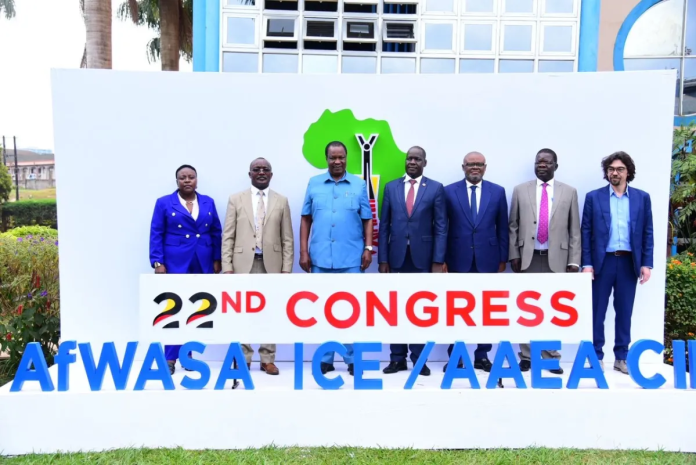
Uganda is set to host the 22nd AfWASA International Congress and Exhibition (AfWASA ICE2025) which will bring together water sector players from across the world.

National Water and Sewerage Corporation (NWSC), an agency of the Ministry of Water and Environment will host the high-level event, organized by the African Water and Sanitation Association (AfWASA) Board under the theme: Water and Sanitation for All: A Secure Future for Africa.

The event slated to take place from February 16-20, 2025 at the Speke Resort Convention Centre brings together different water and sanitation actors from various parts of the world to share experiences, exchange ideas, and collaborate on the best practices and policies for growing the sector.

Speaking during the launch at the NWSC resource centre in Bugolobi, Dr. Silver Mugisha, NWSC MD said the self-sustaining event will provide opportunities for networking for delegates to leverage and build business partnerships.

“We are going to be talking about issues affecting the water sector. The issues are very clear, we know we are lagging behind as a continent as far as water and sanitation coverage is concerned. Very few people have water and safe sanitation and there are many more who need to be served,” said Dr. Mugisha who is also the President of the African Water and Sanitation Association.

He said that the conference which will be hosted in Uganda for the 3rd time to discuss leadership and governance misalignment including how the water and sanitation sector is managed in Africa.

“In that congress, that’s when we shall be celebrating the establishment of the African Water and Sanitation Academy (AWASA) which is going to be a subsidiary of AfWASA, but it is ongoing to be based here in Uganda and it is going to be a model institution,” added Dr. Mugisha.

The academy to be hosted by NWSC, Uganda is a center of excellence aimed at improving the water and sanitation sector’s performance in Africa. Its primary purpose is to build the capacity of water and sanitation utility managers and African decision-makers in the sector.

Dr. Mugisha said the centre hopes to encourage their growth in the various aspects of leadership and change management. This goal will be achieved by innovatively combining the scientific, technical, and governance structures of the water and sanitation sector as part of a specific African identity. “The official launch of the AWASA will be one of the Congress’ key activities,” he said.

Sam Mangusho Cheptoris, the Minister of Water and Environment said that hosting the 22nd AfWASA International Congress and Exhibition aligns with Uganda’s vision of achieving SDG 6.

“This is timely, as Africa grapples with the various challenges facing the water and sanitation sector. Most African countries, especially Sub-Saharan Africa, are off track to meet SDG 6 by 2030 I’m sure that bringing together experts to share knowledge experiences, and new breakthroughs during the Congress will provide the necessary impetus to accelerate the attainment of SDG 6 and also ensure a secure future for Africa,” the Minister said.

Cheptoris said that the government of Uganda recognizes that access to safe drinking water and sanitation services is a basic human right and that it has put water and sanitation at the forefront and an enabler to sustainable development.

“As a country, we have made strides in enhancing water and sanitation services, which we are proud of but we are also cognizant that more still needs to be done to achieve the SDGs,” he said, adding that the government is committed to ensuring water and sanitation for all.

Emmanuel Otiam Otala, Chairperson of the Parliamentary Committee on Natural Resources said water is an essential commodity that needs to be given the priority that it deserves in terms of sector funding.

“When our people don’t get clean and safe water, many things come in including diseases, malnutrition, and of course, the overall agricultural productivity in a country like this one will be affected,” he said.

Stories Continues after ad

Kira Motors Skills 53 drivers in Electric Bus Operations

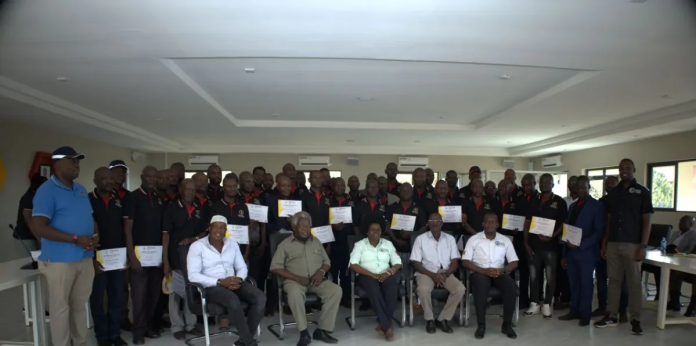
Kiira Motors Corporation and the Ministry of Science, Technology and Innovation under the Office of the President yesterday passed out 53 bus drivers under the E-Bus Operator Skilling Program during a ceremony held at the corporation’s plant in Nakasongola.

The fully-funded program – which commenced in December 2023 at Luwero Industries Limited, Nakasongola – is intended to build 100 bus drivers into experts in the operation of the Kayoola electric buses and related infrastructure made in Uganda.

While speaking during the graduation ceremony, Dr Monica Musenero – the Minister for Science, Technology and Innovation in the Office of the President said that in addition to the technical elements, the training was meant to teach the drivers customer service and how to handle travelers with respect.

“We designed this course intending to change the mobility industry and revolutionize the public transport system,” she added. 

The training involved skilling on: Handling and operation of the Equipment on duty; Operating the Charging Systems; Routine Service Maintenance and Repair of the Equipment; Customer Experience and Traffic Rules and Regulations.

Paul Isaac Musasizi – the Chief Executive Officer of Kiira Motors, said, “To be able to run this pilot E-Bus Operator Skilling Program, we designed a comprehensive curriculum which lends itself to international standards and best practices, and our strategy is to work with the Ministry of Science, Technology and Innovation to have it accredited to enrich the program and skill even more drivers and trainers for the good of the mobility industry.”

Stories Continues after ad

Speaker Among trashes NUP’s decision to recall Mpuuga as Commissioner of Parliament

Speaker Anita Among

Speaker of Parliament, Anita Among has trashed the National Unity Platform’s (NUP) decision to withdraw the nomination of Mathias Mpuuga and replace him with Francis Zaake.

Mpuuga is accused of engaging in acts of corruption and abuse of office when he reportedly, together with the NRM Parliamentary Commissioners irregularly allocated themselves Shs1.7 billion Service Awards in a meeting chaired by Speaker Among.

On March 18, 2024, NUP Secretary General Lewis Lubongoya petitioned the Speaker Among about the party’s decision to withdraw Mpuuga. The petition followed the National Executive Committee of NUP meeting which convened on March 15, 2024, to consider Mpuuga’s response to the accusations that he engaged in acts of corruption and abuse of office.

“Although he responded to NEC’s request to show cause why he should not be recalled from the Parliamentary Commission, he did not provide any satisfactory explanation for engaging in this grave action which goes against the mission, values and objectives of the Party. In particular, he did not make any attempt to respond to the specific accusations leveled against him” the party said.

“NEC has resolved to recall Mathias Mpuuga from the Parliamentary Commission on account of corruption, dishonesty and abuse of office, and to notify Parliament of the same. NEC further resolved to nominate Francis Zaake Butebi as Parliamentary Commissioner,” the party resolved.

In her response, Among said Parliamentary Commissioners are elected by Parliament. The role of parties under the law is limited to nominating candidates for election to the office of Commissioner of Parliament.

“Once elected by Parliament, the commissioners cease to serve individual party interests and serve Parliament as a whole. As such, they can only vacate the position or be removed therefrom in conformity with the law,” she said.

Section four of the Administration of Parliament Act states that a member of the Commission shall cease to hold office on vacating his or her seat in accordance with article 83 of the Constitution:

She said a member of the commission, other than the Speaker and the Leader of Government Business, may be removed from office by Parliament for inability to perform the functions of his or her office arising from infirmity of body or mind, misbehaviour, misconduct, or incompetence.

“The process of removal of a commissioner is by a motion for a resolution for removal of a commissioner initiated by a notice in writing to the Clerk to Parliament signed by not less than one-third of all the voting members of Parliament indicating their intention to remove the member. This means that with the total voting members of Parliament being 529 the notice should be supported by not less than 177 members of Parliament.” She said.

She stated that Mpuuga has neither vacated his seat as a member of Parliament nor has he been, upon a motion moved in strict compliance with the rules of procedure, found guilty by Parliament for inability to perform the functions of his office arising from infirmity of body or mind, misbehaviour, misconduct or incompetence.

Among noted that Political Parties lack the requisite legal mandate to recall a commissioner of Parliament once elected by Parliament. To do as you request would amount to fettering the authority vested in the House by the clear and unambiguous section 5 of the Administration of Parliament Act resulting in undesirable legal consequences. Your letter, therefore, and desire for the National Unity Platform, has no basis or foundation in law. I can therefore not implement it.

Stories Continues after ad

Housing Finance Bank facilitates dialogue among stakeholders to ease vehicle and asset acquisition for Ugandans

Kampala- According to the recently released Bank of Uganda monetary policy statement, Uganda’s economic growth is projected to perform at ranges of 5.5%-6.5% in the short-to-medium term premised on the projected activity in agriculture, the extractives sector, and infrastructure development. This growth prospect also points to an increasing demand for vehicles and equipment by Ugandan individuals to businesses which can only be fulfilled by collaborations between financiers, asset vendors, and independent leasing firms offering a suite of solutions that make vehicle acquisition more accessible.

In full recognition of the need for collaboration, Housing Finance Bank recently convened a vehicle and asset financing (VAF) partners’ forum that brought together various players in the VAF ecosystem such as CFAO Mobility, MAC East Africa, RentCo, SKENYA Motors, Pacific Diagnostics, Atlas Cargo, Double Q, Babu Motors, and Victoria Motors, and insurers such as CIC Insurance and SWICO. The forum aimed to share industry insights, best practices, and opportunities that can drive Uganda’s socioeconomic growth and prosperity.

This initiative is integral to the Bank’s ongoing commitment to serving business needs and cultivating partnerships that foster enterprise growth while enhancing customer satisfaction, with a target of exceeding 90% by 2027.

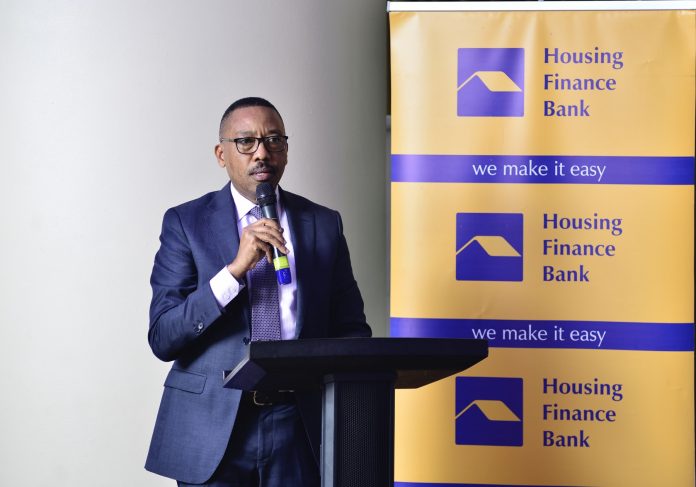
Led by a distinguished team comprising Mr. Michael K. Mugabi, Managing Director; Ms. Peace K. Ayebazibwe, Executive Director; and Angela Ndawula, Head of Business and Institutional Banking, alongside other senior executives, the Bank’s vehicle and assets financing forum provided an invaluable platform for comprehensive discussions on the effectiveness and impact of Housing Finance Bank’s suite of VAF solutions within the vibrant market potential for ecosystem partners, businesses, and consumers in the asset financing sector in Uganda.

During the forum, Peace Ayebazibwe, Executive Director at Housing Finance Bank noted that whereas the Bank is popularly known for its legacy mortgage solutions, it goes beyond to provide mainstream financial solutions within its scope as a fully-fledged commercial bank that includes VAF solutions implemented alongside strategic partners focused on respective productive movable assets in all the economic and social sectors.

“As asset vendors and insurers, you form an integral part of the delivery process of our Vehicle & Asset Financing (VAF) solutions as partners. And this is why we are intentional about engaging you directly on how we can enhance our collaboration to increase uptake and value in this space,” she said.

In his remarks, Michael Mugabi, Managing Director of Housing Finance Bank, reiterated the importance of partnerships and synergies for mutual business prosperity and socioeconomic development.

“Uganda’s positive economic growth outlook speaks to the huge opportunities for all of us as players in the vehicle and asset financing market. This will lead to an exponential increase in the uptake of our respective services by Ugandans since the demand for vehicles and equipment, financial services such as asset financing, and insurance in addition to auxiliary services is rising,” he said.

He also added that Housing Finance Bank is looking to utilize partnerships in the asset financing sector to advance the Bank’s Environmental, Social, and Governance agenda through working with ecosystem players within eco-friendly technologies, electric vehicles (Evs), and Hybrid Electric Vehicles (HEV) spaces.

Richard Elimu, Group Chief Executive at the Riel Group Africa, a dealer in pre-owned heavy commercial trucks, shared his perspective on the partners’ forum and highlighted Housing Finance Bank’s continued support to players in the asset financing sector.

“I would like to thank Housing Finance Bank because we have walked this journey of asset financing together for about ten years. And within this period, most of the customers I have referred to the Bank have gotten the facility they require for their assets. So, I request that Housing Finance Bank has more of these engagements. And also as suppliers, we should understand what the Bank needs so that they can take the customers through this process to ensure a smooth process with the Bank,” he said.

Housing Finance Bank remains steadfast in its ongoing efforts to create avenues for stakeholder engagement across the business community. These endeavors not only drive business growth but also make a lasting impact on Uganda’s socioeconomic development.

Stories Continues after ad

Strengthening public communication: PS Ministry of ICT, ISO tip Uganda’s government communicators

The Ministry of ICT and National Guidance, in collaboration with the Internal Security Organization (ISO), is pioneering initiatives to refine the approach to government communication in Uganda.

This partnership is key to ensuring that the actions and priorities of the Ugandan government are communicated effectively, aiming to positively impact the citizenry’s quality of life.

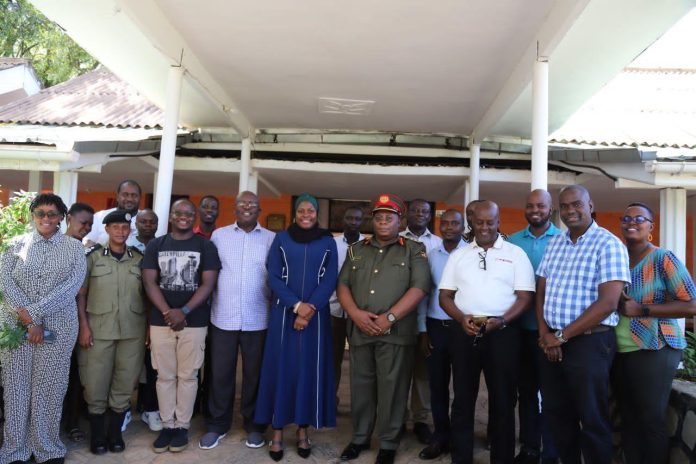
During a retreat in Moroto on March 19, 2024, Dr. Aminah Zawedde, the Permanent Secretary of the Ministry of ICT and National Guidance, highlighted the significance of collaborative effort among government communicators. She stated, “To reach out and effectively inform the various audiences about the government’s endeavors, it’s crucial that we operate not as isolated entities but in a concerted manner.”

The agenda of the retreat revolved around modernizing government communications to match the pace of technological advancement and to utilize these developments for public benefit. Objectives include enhancing the credibility and efficiency of government communication, building public trust, and nurturing top-notch communication talent within the government sector.

Col. Emmy Katabazi, the Deputy Director General of the Internal Security Organization, emphasized the necessity for a paradigm shift in the mindset of government communicators to support the revolutionary goals of the government. He asserted, “We need to adopt a revolutionary mindset. The challenges we face are significant, and they require us to think and act broadly, not narrowly.”

The gathering also saw participation from Ambrose Byoona, CEO of Sanny Bird, who discussed the economic and social impact of a new cement factory in Moroto, projected to be the largest in East Africa and a major employer in the region. This venture is expected to significantly reduce the cost of cement production and play a role in regional community development, including food security and educational scholarships.

This retreat, organized by the Ministry of ICT and National Guidance in partnership with the ISO, was an opportunity to come up with concrete plans to improve how government communicates with the people. The Government Communication Officers Forum (GCOF), established in 2012, is now being revitalized to ensure that government spokespeople and communicators work together effectively to convey the government’s social, economic, and development messages to the public.

Overall, the retreat in Moroto was a step forward in improving government communication in Uganda. By working together, understanding the changing technology landscape, and staying connected to the communities they serve, government communicators are becoming better equipped to share information that can truly make a difference in people’s lives.

This collaborative retreat aimed to formulate actionable strategies to overcome the challenges in government communication. Dr. Zawedde and Col. Katabazi’s remarks underscore the commitment to a renewed and effective communication framework that aligns with the needs and aspirations of the Ugandan populace, promising a future where government communication is more interactive, transparent, and transformative.

Stories Continues after ad