Stanbic Bank
Stanbic Bank
28.3 C
Kampala
Stanbic Bank
Stanbic Bank
Home Blog Page 61

First-ever Uganda Real Estate & Housing Expo 2025 to attract 300 exhibitors, 5000 attendees

Real Estate dealers.

The first edition of the Uganda Real Estate & Housing Expo (UREHE) 2025, a new landmark event for the Ugandan real estate and housing sector, has been launched at the Uganda Media Center and will from September 26-28, 2025, at the Kati Kati Grounds, Lugogo, Kampala.

 Organized by the Ministry of Lands, Housing and Urban Development in partnership with Douglas Events Ltd together with other key organizations, the expo’s theme is “Resilient by Design, Affordable by Intent: Shaping the Future of Real Estate”.

Mr. Dave Khayangayanga the Ag. Director Housing Directorate representing the State Minister for Lands and Housing, Persis Namuganza said the expo aims to bring together government leaders, investors, developers, and innovators to explore investment opportunities, discuss market trends, and showcase sustainable building practices, financial solutions, and new technologies shaping the future of Uganda’s real estate. 

 ‘’There is a housing deficit in Uganda, which stands at approximately 2.4 million units, mostly impacting low-income earners, therefore there is need for inclusive housing solutions’’, he stressed

Khayangayanga noted that Uganda’s population urbanizes at a rapid rate of 5.2% per year, creating a crucial demand for affordable housing and sustainable infrastructure adding that the Uganda Real Estate & Housing Expo 2025 serves as a critical platform to unlock real estate potential and ensure a sustainable, inclusive future for all citizens, urging everyone not to miss it

Announcing the inaugural Uganda Real Estate & Housing Expo 2025, Douglas Mukwaya, CEO of Douglas Events Ltd said the event is a groundbreaking initiative that will transform how we approach housing and urban development in Uganda.

‘’We are honored to welcome our partners from government agencies, including the Uganda Land Commission and the National Housing and Construction Company; professional bodies such as the Uganda Society of Architects, the Surveyors Registration Board, and UNABSEC and our NGO partners, notably Habitat for Humanity Uganda for your tireless efforts in championing decent and affordable housing for all’’,said Mukwaya.

Mukwaya commended the invaluable support of the private sector partners, whose investments and innovation continue to drive growth in Uganda’s real estate sector including; Centum Real Estate, developers of Pearl Marina and Mirembe Villas; Footsteps Furniture; KCB Bank; Housing Finance Bank; Liquid Intelligent Technologies; Universal Multipurpose Enterprises; Fakhruddin Properties; Pool Doctors (U) Ltd; Bulwadda Real Estates; Regal Paints; and MTN Uganda for their collective commitment to shaping Uganda’s housing future.

 He also commended the organizing partners, including the Uganda Society of Architects and the Surveyors Registration Board, for working closely with Douglas Events Ltd and the Ministry of Lands, Housing and Urban Development to bring this vision to life.

Mukwaya said the expo will serve as Uganda’s premier real estate platform, bringing together over 300 exhibitors and more than 5,000 attendees from across the East African region. It will also create a space where policy makers, developers, investors, technology innovators, and communities can collaborate on sustainable solutions.

Uganda’s real estate sector contributes approximately 11% to the national GDP, with growth evident across residential, commercial, and mixed-use developments. In the FY 2022/23, the real estate and construction sector accounted for 20.3% of total approved credit—second only to household loans. This reflects strong investor confidence and a resilient lending environment, even amid a tightening monetary policy, according to data from the Uganda Bureau of Statistics (UBOS).

Mixed-use developments, affordable housing models, and technology-driven construction are increasingly transforming Uganda’s urban landscape. However, housing affordability remains a persistent challenge. The high cost of construction materials, reliance on imported inputs, and limited access to green and innovative financing instruments continue to constrain inclusive growth—particularly within the lower-income housing segments.

At the press conference, Mr. Isaac Mukiibi, Head of Mortgages, KCB Bank Uganda reaffirmed its commitment to making this possible with flexible mortgage solutions, trusted developer partnerships like Bakaima Real Estates and Reportage, and on the spot financial guidance.

He added that at KCB bank they are not just financing homes, they are building legacies and shaping Uganda’s real estate future.

Sandra Kanyiginya, Marketing Manager at Regal Paints, reaffirmed their commitment to supporting the real estate sector urging the public to embrace the event at Katikati Grounds, Lugogo as they inspire new possibilities in housing.

Stories Continues after ad

NIRA assures Ugandans on security of National ID data

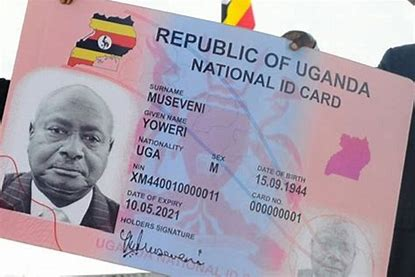
The National Identification and Registration Authority (NIRA) has assured Ugandans that the security, confidentiality, and integrity of the National Identification Register (NIR) remain fully protected amid rising public concern about personal data safety.

In a press statement, NIRA emphasized that safeguarding citizens’ personal and biometric data is its top priority.

“NIRA wishes to reassure all Ugandans that their personal and biometric data remains confidential, secure and intact,” the Authority stated.

The agency outlined a three-pronged approach to data security that includes strong legal, technical, and institutional safeguards. It added that continuous system improvements are being made to align with global best practices.

According to the statement, Uganda’s Registration of Persons Act (ROPA) provides the legal framework for the collection, storage, and use of personal data. It mandates that data can only be accessed and used for lawful purposes such as identification, verification, and government service delivery.

“The Register cannot be accessed and used, including ID and passport issuance, without lawful authority and strict quality assurance controls,” NIRA explained.

The Authority also cited the Data Protection and Privacy Act, 2019, which sets clear obligations on the processing of personal and biometric data. These include enforcing principles of purpose limitation, accountability, data minimization, and security safeguards.

To protect against unauthorized access, NIRA has deployed multiple technical safeguards. These include encryption of data at all levels, use of secure server facilities with redundancy and backup, and advanced intrusion detection and monitoring systems.

On the institutional front, NIRA has put in place a dedicated Data Protection Officer, mandatory staff training, and strict confidentiality agreements with employees and third parties.

“Our systems are monitored 24/7, and all actions are logged and reviewed regularly to ensure accountability,” the Authority said.

NIRA further noted that only authorized officers can access data under strict internal controls. It stressed that the organization operates under a zero-tolerance policy for breaches and that any violations are subject to investigation and sanctions.

The Authority concluded by reassuring Ugandans that it remains committed to transparency, accountability, and compliance with the law.

“Ugandans can be confident that their data is protected and that NIRA takes the security and integrity of the Register very seriously,” the statement affirmed.

Stories Continues after ad

How Masunga Doctors Cleanse Family Land from Generational Curses

In Uganda, family land is more than just soil it represents history, heritage, and future security. Yet, for many families, land has become a source of endless conflict, mysterious misfortunes, and unexplainable setbacks. Across the country, people whisper of generational curses tied to ancestral land curses that block prosperity and sow division for decades.

This was the reality for several families who turned to Masunga Doctors, spiritual healers renowned across East Africa, for help in cleansing their land and breaking free from generational bondage.

The Luwero Family: From Conflict to Unity

In Luwero district, James and his siblings were locked in bitter disputes over their late father’s farmland. Every attempt to use or sell the land ended in disaster.

“We would plant crops, but they withered before harvest. Buyers who wanted to purchase portions of the land always pulled out at the last minute. My brother even suffered strange accidents whenever he visited the farm,” James recalls.

Out of desperation, James contacted Masunga Doctors. After a consultation, the healers confirmed that the land carried ancestral curses traces of old family conflicts and unfulfilled promises to ancestors.

The team performed a cleansing ritual involving ancestral prayers, protective herbs, blessed water, and charms placed at the four corners of the land.

“After the cleansing, everything changed. For the first time in years, my siblings and I spoke peacefully. Our bean harvest was abundant, and land disputes stopped immediately,” James says.

The Mbale Case: A Stalled Home Project

In Mbale, Sarah and her husband had struggled to build their dream home on inherited land. Each time construction began, something went wrong—workers quit, materials went missing, or sudden sickness struck the family.

“We spent over five years trying to raise the house, but every attempt collapsed. Neighbors even whispered that the land was cursed,” Sarah recalls.

Masunga Doctors visited the site and confirmed that the land carried blockages from unresolved ancestral rituals. After a thorough cleansing with sacred herbs and rituals of reconciliation, the construction project moved forward smoothly.

Today, Sarah and her family live happily in their completed home, free from the shadow that once hovered over their land.

Gulu: Breaking Free from Mysterious Deaths

In Northern Uganda, Gulu district, a family suffered a disturbing pattern every young man who inherited their land died within a few years. Elders whispered of a curse tied to unresolved disputes between their great-grandfathers.

“We lost three brothers in less than 10 years. All of them had started farming on the land before tragedy struck. We were terrified,” narrates Peter, a surviving brother.

When Masunga Doctors were called, they conducted deep ancestral cleansing and performed rituals of release and protection. They invoked ancestral spirits, sought forgiveness, and neutralized the curse with strong protective charms.

Since then, no deaths have occurred, and the surviving family members now use the land peacefully without fear.

Why Land Cleansing Matters

Masunga Doctors explain that land carries spiritual memory. If ancestors were wronged, if blood was shed, or if spiritual rituals were neglected, the land can hold negative energy that passes from generation to generation.

This manifests as:

  • Endless land disputes among relatives
  • Failed projects on ancestral land
  • Strange illnesses or deaths tied to the land
  • Poverty despite having fertile soil
  • Buyers pulling out mysteriously when land is put up for sale

Through land cleansing, families restore balance, invite blessings, and ensure future generations inherit peace and prosperity.

The Process of Cleansing Land

Masunga Doctors use a detailed process that includes:

  1. Consultation & Diagnosis – listening to the family’s story and spiritually examining the land.
  2. Ancestral Appeasement – seeking forgiveness for past wrongs and honoring forgotten ancestors.
  3. Cleansing Rituals – using herbs, incense, blessed water, and oil to purify the land.
  4. Protection – placing charms at strategic points to guard against future spiritual attacks.
  5. Blessing the Land – inviting prosperity, unity, and peace.

A Growing Demand Across Uganda

From Luwero to Mbale, Gulu to Masaka, families continue to seek Masunga Doctors’ help. As word spreads of successful land cleansings, more people are realizing that what seemed like ordinary misfortune might actually be a generational curse.

📞 Contact Masunga Doctors Today
If your family faces endless disputes, failed projects, or mysterious misfortunes tied to ancestral land, don’t suffer in silence. Seek spiritual cleansing and protection.

AFRICA OFFICES
🌍 Locations: Uganda, Kenya, Tanzania
📱 Phone Number: +256 769 678 458
📧 Email: info@masungadoctors.com

Stories Continues after ad

NUP protests continued exclusion from IPOD discussions

NUP Secretary General David Lewis Rubongoya.

The National Unity Platform (NUP) has protested what it calls the “continued illegal exclusion” from discussions of the National Consultative Forum (NCF) and its constituent organs including the Inter-Party Organisation for Dialogue (IPOD).

In a letter dated 17th September 2025 and addressed to the Electoral Commission Chairperson, NUP Secretary General David Lewis Rubongoya accused the Commission of sidelining the party despite recent amendments to the Political Parties and Organisations Act.

“We protested against the illegal exclusion of the National Unity Platform from discussions relating to the National Consultative Forum and its constituent organs, including the Inter-Party Organisation for Dialogue,” Rubongoya wrote.

He expressed concern that the party was once again being left out of IPOD’s upcoming summit, scheduled for 18th September which is deliberating on issues connected to the amended law.

“Yet again, the National Unity Platform is being illegally excluded from these discussions,” Rubongoya noted.

Rubongoya said that any meetings or resolutions made under the current structure of IPOD are unlawful, as the framework has not yet been aligned with the amended Political Parties and Organisations Act.

“To the best of our knowledge, the ongoing discussions and decisions which are being undertaken under the auspices of IPOD as it existed before the coming into force of the amended law are illegal, in the absence of a statutory instrument prescribing how political parties join or leave the National Consultative Forum in accordance with the amended law,” he stated.

Rubongoya further insisted that political parties cannot legally be bound by decisions made by IPOD until Parliament approves and publishes regulations to operationalise the amended law.

NUP has now called on the Electoral Commission, as custodian of political parties in Uganda to ensure that all discussions are inclusive and conducted within the boundaries of the law.

“We therefore request the Electoral Commission… to ensure that all discussions related to the amended law are inclusive and are conducted in accordance with the law. We also call upon the Commission to exercise its constitutional independence and not comply with any unlawful processes,” Rubongoya emphasized.

The letter was copied to the Speaker of Parliament, the Leader of the Opposition in Parliament, the Minister of Justice and Constitutional Affairs, the Attorney General and other key stakeholders.

Stories Continues after ad

UGEFA and Housing Finance Bank Announce New Partnership to Boost Green Business in Uganda

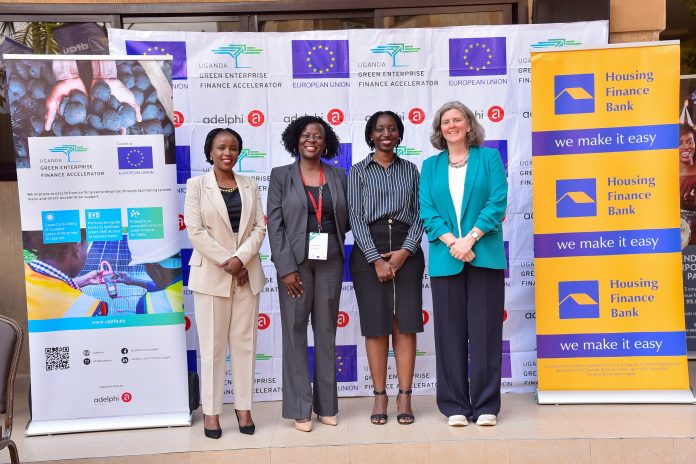
Housing Finance Bank team, Marrietta Naiga, Chief Risk Officer, pose for a group photo with Cristiana Banuta the programme manager

SEPTEMBER 18, 2025 | KAMPALA, UGANDA The Uganda Green Enterprise Finance Accelerator (UGEFA) is pleased to announce a new partnership with Housing Finance Bank, marking a significant milestone in the drive to support sustainable enterprise across Uganda. This collaboration combines UGEFA’s expertise in green business development with Housing Finance Bank’s commitment to innovative financial solutions, creating new pathways for small- and medium-sized enterprises (SMEs) in the green sector.

As part of this newly established partnership, UGEFA and Housing Finance Bank will work hand-in-hand to provide tailored financing and specialised business support to SMEs engaged in clean energy, sustainable manufacturing, eco-friendly tourism, waste management, and green mobility. By leveraging the strengths of both organisations, the partnership aims to empower forward-thinking entrepreneurs to scale their impact and contribute to Uganda’s green transition.

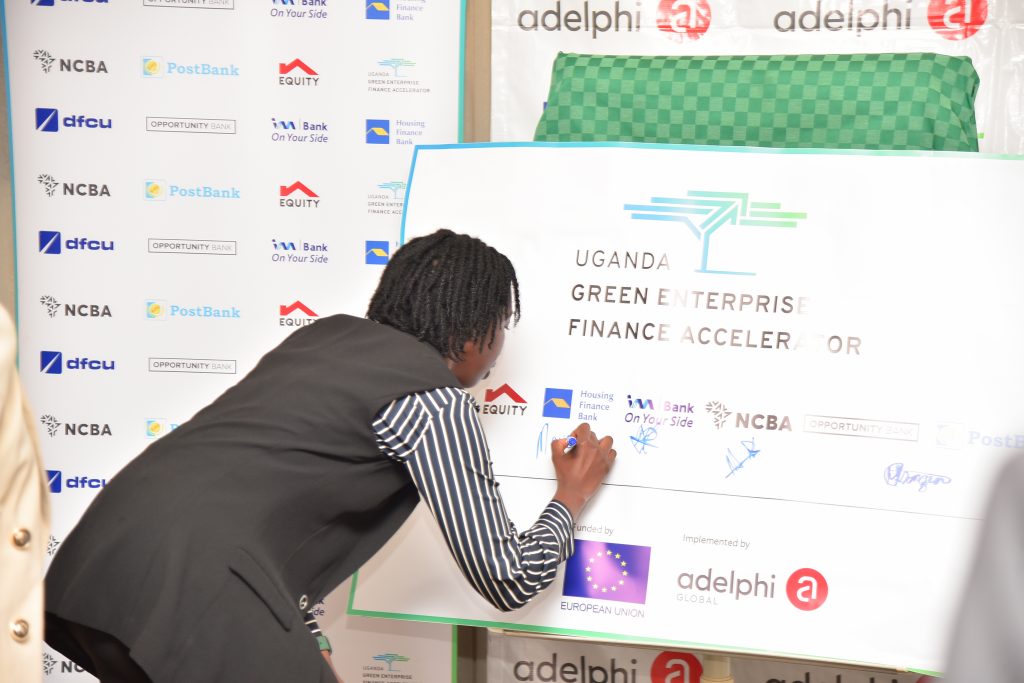
The official launch event, hosted at Protea Hotel in Kampala, marks the beginning of this exciting collaboration, which is supported by the European Union and implemented by adelphi global gGmbH. The occasion also celebrates the opening of a new call for applications, inviting green enterprises to join the UGEFA programme and access capacity building, advisory services, and financial opportunities through partner banks, including Housing Finance Bank.

Leadership Perspectives

Marietta Naiga, Chief Risk Officer, stated: “Housing Finance Bank is proud to embark on this partnership with UGEFA because it marks a bold commitment to the kind of future we are determined to build together where finance drives transformation, empowers innovation, and supports enterprises that are shaping Uganda’s green economy.”

Cristina Bănuţă, Programme Manager – Access to Finance, Agribusiness and Land at the Delegation of the European Union to Uganda, commented: “The European Union welcomes the collaboration between UGEFA and Housing Finance Bank as an important step towards strengthening Uganda’s green economy. By expanding access to finance for environmentally conscious SMEs, we are fostering sustainable growth and resilience. We look forward to seeing the positive outcomes this partnership will bring.”

Christine Meyer, Project Lead at UGEFA, said: “We are delighted to welcome Housing Finance Bank to the UGEFA family. This partnership underscores our commitment to broadening the reach of green finance and supporting Uganda’s entrepreneurs in delivering sustainable solutions. With the launch of our new call for applications, we invite green businesses across the country to join us in accelerating positive change.”

Applications for the UGEFA programme are now open. Green enterprises interested in accessing tailored support and finance are encouraged to apply via the UGEFA website at www.ugefa.eu/apply 

About UGEFA:

The Uganda Green Enterprise Finance Accelerator (UGEFA) is a transformative initiative focused on driving green growth and sustainable financing in Uganda. Fully funded by the European Union Delegation to Uganda and implemented by adelphi global gGmbH, UGEFA supports green enterprises and collaborates with financial institutions and key stakeholders to facilitate access to green finance for Uganda’s SME sector.

Stories Continues after ad

Equity Bank, UGEFA renew partnership to boost green finance in Uganda

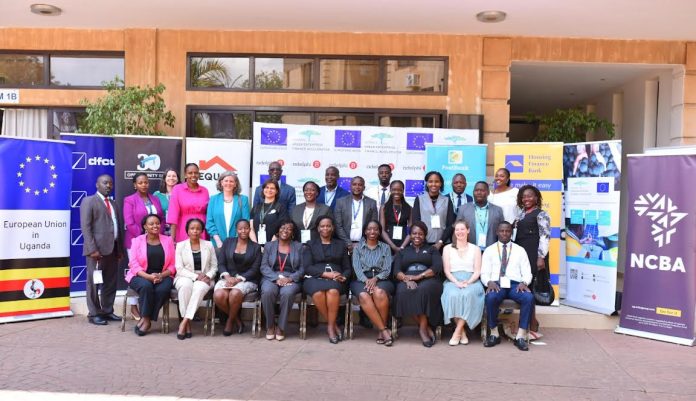
The UGEFA team, together with the bank representative.

The Uganda Green Enterprise Finance Accelerator (UGEFA) and Equity Bank Uganda have renewed their partnership to expand access to green finance, launching Phase II of the programme at a ceremony held at Protea Hotel, Kampala.

The collaboration builds on Phase I, which saw over 100 loans disbursed to small- and medium-sized enterprises (SMEs) in key green sectors such as renewable energy, sustainable tourism, waste management, green manufacturing, and green mobility. The initiative is supported by the European Union and implemented by adelphi global gGmbH.

Speaking at the launch, Equity Bank’s Director of Public Sector and Social Investments, Catherine Psomgen, said the Bank views finance as a transformative tool for climate action.

“Our experience in Phase I of UGEFA is proof of this, where together we financed 85 green businesses, disbursing over Shs27 billion to enterprises working in renewable energy, sustainable agriculture, waste management, and other critical green sectors. These businesses are not only driving climate solutions, but also creating jobs, improving livelihoods, and strengthening resilience in our communities,” Psomgen said.

She added that the second phase presents even greater opportunities, “With over 340 enterprises in the pipeline, new financial facilitation mechanisms, and tailored technical assistance, we see a real chance to scale up green lending while addressing challenges such as collateral gaps, cash flow constraints, and access to long-term capital. For us as a financial institution, UGEFA is more than a programme, it is a partnership that helps us build an inclusive and sustainable economy.”

Christine Meyer, Project Lead at UGEFA, welcomed the renewed partnership, saying it would expand opportunities for green entrepreneurs across Uganda.

“We are thrilled to continue our collaboration with Equity Bank, whose commitment and leadership have been instrumental in supporting green enterprises. With the launch of the new call for applications, we invite even more entrepreneurs to join us in building a sustainable, resilient future,” Meyer said.

Cristina Bănuţă, Programme Manager at Access to Finance, Agribusiness and Land at the Delegation of the European Union to Uganda, commended the achievements of the partnership so far.

“The European Union is pleased to support the ongoing partnership between UGEFA and Equity Bank. Their achievements in expanding access to green finance set a powerful example of how financial institutions can drive inclusive, sustainable growth,” she said.

The event also celebrated the launch of a new call for applications to the UGEFA programme. Successful applicants will access capacity building, business advisory services, and financing through Equity Bank and other partners.

Applications are now open via the UGEFA website, using the code EQUITY25

Stories Continues after ad

Parliament halts debate on energy efficiency bill over redundancy concerns

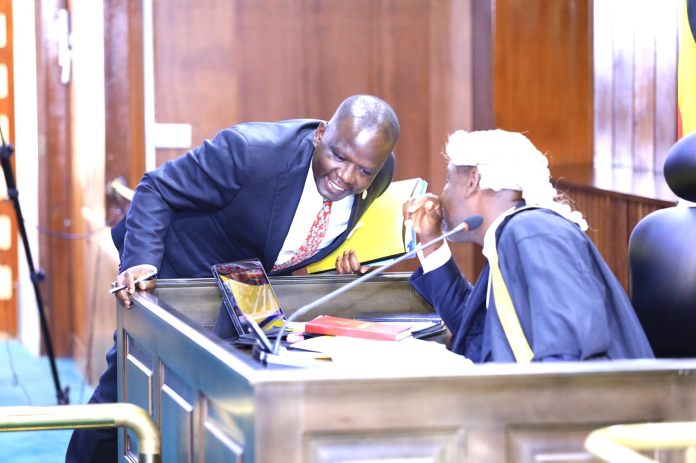
MP Herbert Ariko consulting with the Deputy Speaker after presentation of his committee report on the Energy Efficiency and Conservation Bill, 2024

Parliament yesterday stood over a debate on the Energy Efficiency and Conservation Bill, 2024, stopping the proposed law from progressing to its second reading.

According to the report of the Committee on Environment and Natural Resources, the object of the Bill is to establish a legal, institutional, and regulatory framework to enhance energy efficiency and conservation in Uganda.

“Energy efficiency entails the use of technology that requires less energy to perform the same function. Currently, energy efficiency initiatives are voluntary and lack regulation, making Uganda susceptible to becoming a dumping ground for outdated technologies, resulting in significant energy waste,” Herbert Ariko said.

Ronald Kanyike (NUP, Bukoto County East) and Christine Kaaya (NUP, Woman MP, Kiboga District), however, had a dissenting report, wherein they argued that the proposed law is misaligned with Uganda’s realities, duplicative of existing laws, impractical in its provisions, and silent on critical issues of biomass, affordability, and financing.

Presenting the minority report, Kanyike cited existing laws, such as; Electricity Act (1999), National Environmental Act (2019) and Uganda National Bureau of Standards Act (1983) as sufficient enough to ensure regulation of the energy sector.

“We, therefore, recommend that instead of passing this Bill, government should; issue statutory instrument under Climate Change Act and other laws, strengthen the enforcement and coordination of existing laws and policies on energy efficiency, prioritise biomass transition and clean cooking solutions in accordance with Uganda’s energy mix and lower electricity tariffs and incentivise uptake of modern sources,” said Kanyike.

Tayebwa then asked the Minister of Energy AND Minerals Development to meet with the Attorney General, Kiryowa Kiwanuka, Ariko, and Kanyike, before the Bill progresses to second reading.

“The member has raised salient issues, he is saying that the proposed law is redundant. We need to scrutinise this well and to answer questions raised. The questions asked are:- can we solve these issues with regulations, or do we need a law? Because of that, I say we stand over this,” Tayebwa said.

Mawogola County South MP, Gorreth Namugga contributing to the debate

Jonathan Odur (UPC, Erute County) agreed with Tayebwa, stating that the proposed law is confined to only issues of electricity and yet the country has several sources of energy.

“There seems to be a narrow target, limited to cooking and road transport, and yet we have railway, water, air and water transport. We need justification as to why other sectors are being left out,” Odur said.

Peter Okeyoh (NRM, Bukooli Island County) and Hon. Jane Pacuto Avur (NRM, Pakwach District Woman Representative) challenged the relevance of the proposed law, since some areas in Uganda do not have electricity.

“How then are you passing a law and yet electricity has not reached every part of Uganda. Why don’t we first have electricity in all areas?” asked Avur.

Shadow Attorney General, Wilfred Niwagaba, punched holes in the Bill, saying that it does not mention all forms of energy. 

“When you look at the definition sections of the Bill on energy efficiency and conservation, these are matters that can be provided for in statutory instruments and regulations and not an Act of Parliament. We do not need to legislate on this,” Niwagaba said.

The legislators were also concerned that the proposed law, if enacted, will subject electricity end users to high tariffs, thereby affecting businesses.

Stories Continues after ad

2026 Elections: Thirty presidential aspirants return forms

EC Chairman, Justice Simon Byabakama.

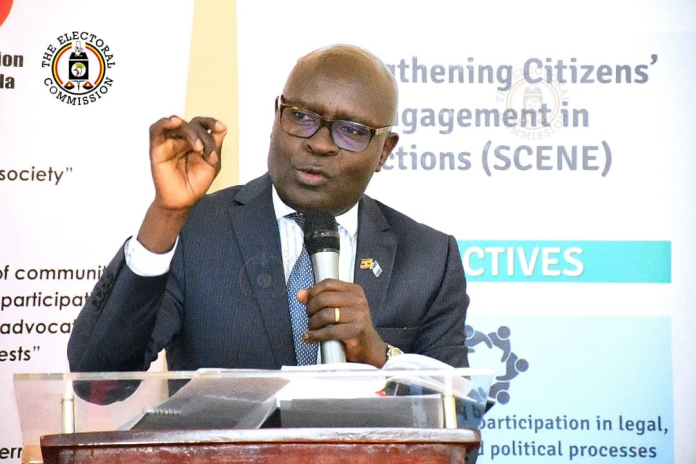
The Chairperson of the Electoral Commission (EC), Justice Simon Byabakama has confirmed that 30 presidential aspirants have so far returned their supporter forms, ahead of the nomination exercise scheduled for later this month.

Speaking to the media at the Commission offices, Justice Byabakama explained that each aspirant is required by law to present signatures of at least 100 registered voters from a minimum of 98 districts across the country. He noted that the Commission’s task is to carefully verify the authenticity of these supporters, ensuring that they are indeed registered voters in their respective districts.

“Our work is to cross-check those names and signatures. Once we are satisfied that you have fulfilled the required numbers, we issue you a certificate of compliance. That certificate allows you to proceed and pay the nomination fees,” Byabakama said.

He added that aspirants are also expected to book a slot for nomination, either on the 23rd or 24th of September, to avoid congestion.

While appreciating those who have already submitted, Byabakama cautioned aspirants who are yet to hand in their papers to act urgently.

“We gave sufficient time since 11th August. A serious aspirant should not struggle to get 100 signatures per district. I urge those who haven’t returned the forms to do so quickly, so that we have enough time to verify their papers,” he emphasized.

The EC chairperson revealed that although the verification process is ongoing, some irregularities have already been detected. These include underage supporters as young as 13 and 16 years old, and cases where voters were listed in districts where they are not registered.

“We have discovered errors such as minors being listed as supporters, and mismatched voter details. Such mistakes can easily disqualify a candidate, so we urge aspirants to be more careful,” Byabakama warned.

On petitions from local government elections, Justice Byabakama noted that nearly 100 complaints have been filed so far, with about 30 already heard. The Commission has been handling these petitions, giving all parties — including petitioners, respondents, and returning officers — an opportunity to present their cases.

“Where we find that an aspirant was wrongly denied nomination, the law empowers us to order their nomination. We want to give justice to everyone,” he explained.

The EC has also begun engaging political parties embroiled in internal disputes over leadership and flag bearers, including the Democratic Party (DP), Uganda People’s Congress (UPC), and the National Economic Empowerment Dialogue (NEED). Hearings are underway to determine the rightful party representatives for the presidential race.

Justice Byabakama assured the country that the Commission remains committed to transparency and fairness in managing the 2025 electoral process.

Stories Continues after ad

Scandal in Nakasongola: How a Headteacher’s Secret Affair Was Exposed After His Wife Turned to Masunga Doctors

It was a Friday evening in Nakasongola, around 5:30 PM, when the school compound had started to empty. Teachers were marking their books while children prepared to go home. For most, it was just another day. But for one school, this evening would change everything.

A faint noise coming from the headteacher’s office drew the attention of a passing staff member. At first, she thought it was laughter, but the closer she moved, the more she realized it was something unusual. Gathering courage, she pushed the office door slightly open and what she saw sent her running in shock.

Inside, the headteacher and a newly recruited female teacher were locked in an intimate act. The teacher later told colleagues:

“I could not believe what my eyes were seeing. On the office table, of all places! I rushed back because I feared if I stayed, I would collapse.”

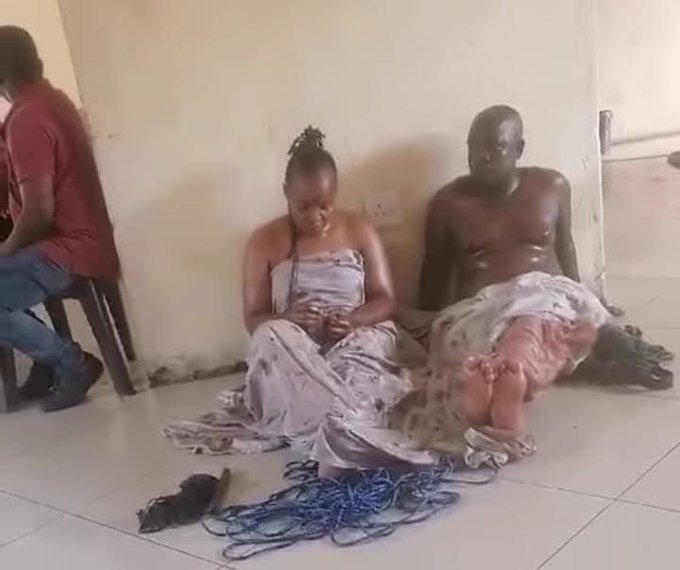
Within minutes, a group of teachers gathered, and when they stormed into the office, the shocking reality was undeniable. The two lovers were entangled, their clothes scattered across the floor. Strangely, they could not separate from each other. The young woman sobbed:

“Please help me… I don’t know what is happening! I can’t move. We are stuck!”

The headteacher, drenched in sweat, stammered:

“What is this witchcraft? Please, somebody help us! This has never happened to me before.”

As confusion grew louder, the door opened again this time revealing the headteacher’s wife. She stood silently at the entrance, her eyes filled with both tears and a burning sense of justice.

She walked slowly into the office and, without raising her voice, declared:

“I warned you. I told you to stop chasing after young women. You thought I was a fool, but today you will know that a woman’s heart is not to be played with.”

When the headteacher begged her to intervene, she shook her head and revealed what she had done:

“I went to Masunga Doctors because you humiliated me. I asked them to show you the shame you kept bringing into our marriage. They told me that if you tried to cheat, you would be caught and today, everyone has seen the truth.”

The entire staffroom was left stunned. Some whispered in disbelief while others nodded, saying they had always suspected the headteacher’s wandering eye.

Moments later, two men in dark attire, believed to be representatives of Masunga Doctors, arrived. They carried a small bag with herbs and charms. One of them spoke firmly:

“We were sent to finish what was started. This was not to destroy you, but to remind you of your home and your vows.”

They performed rituals quietly, sprinkling powder and uttering incantations. Within minutes, the headteacher and the young woman were freed, collapsing separately to the ground. The silence in the room was so heavy you could hear the ticking of the clock.

The wife, still standing, added one final blow:

“From today, respect your family. If you think you can fool me again, remember that Masunga Doctors do not play. This was only a warning.”

The headteacher, now trembling with shame, whispered:

“Forgive me… I will never do this again. Please, don’t let this story leave the school.”

But it was too late. By the next morning, word had spread across Nakasongola town. Residents filled trading centers with heated discussions. Some argued it was proof that Masunga Doctors’ powers are real, while others warned that such practices should never be underestimated.

One boda boda rider outside the trading center remarked:

“These things we hear on radio, today they have happened here in Nakasongola. If you think Masunga Doctors are a joke, ask the headteacher. He will tell you the truth.”

Another shopkeeper added:

“Sometimes men push their wives too far. Now you see what happens when a woman decides to take action.”

For many, the incident was a lesson. A reminder that betrayal can come with consequences, especially when someone decides to seek help from Masunga Doctors.

AFRICA OFFICES

📍 Locations: Uganda, Kenya, Tanzania
📞 Phone Number: +256 769 678 458
📧 Email: info@masungadoctors.com
Visit us: www.masungadoctors.com

Stories Continues after ad

Uganda Expands Conservation Efforts with Six New National Parks

An Elepahant in the Jungle of Muchision falls National Park, credit Environmental Governance Institute

Uganda, long celebrated as the land gifted by nature, has made a bold stride in conservation by creating six new national parks. This initiative, recently approved by Cabinet, transforms existing wildlife and forest reserves into fully fledged parks, strengthening biodiversity protection while diversifying tourism opportunities. The Uganda Wildlife Authority (UWA), a government parastatal managing Uganda national parks will assume management, ensuring legal protection, improved enforcement, and a boost to eco-tourism.

The following are the new national parks added to the 10 existing ones under the management and protection of Uganda Wildlife Authority. 

Kyambura National Park 

Kyambura, often called the “Valley of Apes,” lies on the eastern side of Queen Elizabeth National Park in Rubirizi District. Its signature feature, the Kyambura Gorge, is a dramatic sunken forest carved by the Kyambura River. It is one of the few places in Uganda where chimpanzee tracking is possible outside Kibale National Park. The gorge also supports hippos, elephants, and countless bird species, making it a natural laboratory for eco-tourism and research. Elevating Kyambura to park status gives it independent recognition, improved infrastructure funding, and tighter protection against encroachment.

Kigezi National Park 

Kigezi Wildlife Reserve, also adjacent to Queen Elizabeth National Park, spreads across open savannah grasslands. It serves as a migratory corridor for elephants, buffaloes, and antelopes moving between different sections of Queen ElizabethPark. Its wildlife diversity is complemented by rich birdlife, making it a hidden gem for birdwatchers. As a national park, Kigezi is expected to draw more investment in game drives, community tourism, and scientific studies. It also plays a crucial role in expanding the Queen Elizabeth landscape, creating a vast conservation block in western Uganda.

Bukaleba National Park 

Situated in Mayuge District on the shores of Lake Victoria, Bukaleba Forest Reserve spans nearly 100 square kilometres. This unique ecosystem merges tropical forest with lake shorelines, providing habitats for monkeys, antelopes, reptiles, and diverse birdlife. Its location near Jinja, a tourism hub famous for the Source of the Nile, makes it strategically positioned for eco-tourism. Once a colonial plantation forest, Bukaleba has gradually regenerated into a biodiverse habitat. With its elevation to park status, it promises new opportunities for guided forest walks, birding, and lake-based activities that integrate conservation with community tourism.

Echuya National Park 

Echuya, straddling Kisoro and Rubanda districts, is among the most important montane forests in the Albertine Rift. Famous for its extensive bamboo stands, the forest shelters rare bird species such as the Grauer’s Swamp Warbler and a wide range of primates. Its strategic location along the road to Mgahinga and Bwindi makes it an attractive stop for tourists heading for gorilla trekking. Designating Echuya as a national park will provide strong protection for its fragile montane ecosystem and create new tourism circuits, particularly for birding and cultural experiences with the Batwa community who historically lived in the forest.

Kalinzu National Park 

Though less publicised, Kalinzu Central Forest Reserve in Bushenyi District is also among the candidates for elevation. Known for its large chimpanzee population, Kalinzu already receives visitors for guided primate tracking. It is also home to colobus monkeys, baboons, and over 300 bird species. Researchers from Japan and elsewhere have long studied chimpanzee behaviour in Kalinzu, giving it an academic reputation. Upgrading it into a national park will strengthen chimpanzee conservation while opening new avenues for eco-tourism infrastructure, scientific collaboration, and forest-based adventure tourism.

Otzi East National Park 

Located in Moyo District in the north-west near the South Sudan border, Otzi East Central Forest Reserve is a relatively unknown biodiversity hotspot. The forest harbours elephants, primates, and numerous bird species, acting as a crucial ecological buffer in the region. Given its transboundary position, it could also serve as a link for regional conservation efforts with South Sudan. As a national park, Otzi East would expand Uganda’s conservation footprint into the northern belt, ensuring representation of ecosystems beyond the Albertine Rift and Lake Victoria basin.

Broader Conservation Goals

Together, these six parks- Kyambura, Kigezi, Bukaleba, Echuya, Kalinzu, and Otzi East, reflect Uganda’s determination to scale up protection in diverse ecological regions. From the bamboo forests of Echuya to the lakeside woodland of Bukaleba and the savannah corridors of Kigezi, the additions expand habitat coverage, reduce fragmentation, and secure corridors vital for wildlife migration.

Tourism and Economic Prospects

Uganda’s tourism industry, heavily reliant on nature and wildlife, is set to benefit. Each park offers unique attractions: chimpanzee tracking in Kyambura and Kalinzu, birdwatching in Echuya, boat-based eco-tourism in Bukaleba, savannah game drives in Kigezi, and cultural encounters in Otzi East. The government projects that these parks will diversify Uganda’s tourism, drawing not just gorilla trekkers but also birders, primate enthusiasts, and eco-cultural tourists. Communities around the parks are expected to gain through revenue-sharing schemes, job creation, and sustainable enterprises.

Challenges Ahead

However, the success of these parks depends on addressing pressing challenges. Encroachment, agricultural expansion, and illegal logging remain threats in several of the sites. Effective management will require adequate ranger deployment, community sensitisation, and infrastructural investment. Human–wildlife conflict, especially in areas like Otzi East and Kigezi, must be mitigated through compensation schemes and buffer zones. Partnerships with conservation NGOs and donor agencies will be critical to sustain the parks.

Conclusion

The creation of six new Uganda national parks marks a historic expansion of its protected area network. By diversifying habitats and enhancing legal safeguards, Uganda positions itself as a regional leader in conservation and eco-tourism. From the gorge of Kyambura to the bamboo stands of Echuya and the lakeshore forest of Bukaleba, each park tells a story of resilience, biodiversity, and opportunity. If well managed, these new parks will not only protect Uganda’s natural heritage but also drive economic growth through tourism and community development.

Stories Continues after ad