Stanbic Bank
Stanbic Bank
19.1 C
Kampala
Stanbic Bank
Stanbic Bank
Home Blog Page 62

Sudanese plot to usurp trade protocols thwarted  

South Sudan Revenue Authority boss, William Anon Qual.

A very well calculated scheme by a section of South Sudanese individuals to orchestrate trade protocols across the border with Uganda has left many stakeholders in utter shock about the management of public revenue and regional economic integration.

This calls for the intervention of the two governments to investigate why some officials from the South Sudan Revenue Authority are usurping powers of the relevant ministries to push for measures that may result in non-tariff barriers. This has not only sparked debate about compliance with regional trade protocols, but it has also instilled fears about the motives of these individuals. It would be prudent for the respective finance ministries to intervene and restore order at the border before the situation gets out of hand.
 Following the letter dated November 21, 2025, and referenced RSS/SSRA/J/CG/OUT/2025/547, the SSRA CG notifies the URA Commissioner General about the unscheduled urgent meeting regarding the implementation and enforcement of the E-Permit system between the two administrations.

However, the URA Commissioner General has taken a lead in protecting both Ugandan and Sudanese traders by swiftly suspending the E=Permit enforcement for the destined goods to South Sudan due to predicted and detected adverse effects of the system.

Following the controversy, there is already suspicion, delays, and rising business costs that have continued to cast a long shadow over cross-border trade, fueling fears that private enrichment is taking precedence over public revenue and regional integration.

URA boss Muzinguzi Rujoki.

It should be noted that SSRA introduced the use of electronic import permits, a system they argue has been interpreted by some Ugandan enforcement teams as mandatory for goods entering South Sudan through Uganda whereas not.

Stakeholders claim that this has led to instances in which officials on the Ugandan side began enforcing requirements that are not yet harmonized under regional frameworks.

Business associations, traders and transporters contend that such actions could contradict regional trade agreements governing the free movement of goods and persons, including protocols under the East African Community (EAC) and related bilateral trade arrangements. They warn that additional layers of documentation may create delays, raise transport costs, and disrupt supply chains vital to both economies.

“We are concerned that these new procedures, which appear to be outside the agreed regional frameworks, are slowing down trade and causing uncertainty for businesses,” said one of the concerned traders. “We need clarity from both governments.”
Persistent confusion at the Uganda–South Sudan border points has intensified after traders, transporters, and civil society monitors alleged that a private company, working in connection with officials in South Sudan, is behind a controversial electronic import-permit system that many believe is driving unofficial fees and double taxation on goods bound for Juba.
According to multiple trader associations, the electronic import permit system appears to have been initiated through a private company whose role has not been publicly clarified. Transporters report that they are often told they cannot proceed without purchasing these electronic permits, even when they have already paid customs duties at designated points.
The way this system is designed, there are fears of double taxation as well as revenue leakage. Economic analysts monitoring the situation warn that if the allegations are verified, the scheme could be siphoning significant revenue away from official South Sudan government channels, leaving both traders and the state short-changed.

The innocent traders are subjected to paying normal customs duties, border processing fees and additional charges linked to the electronic permit system. This is unfair because the receipts issued allegedly lack clear government coding, and this may lead to funds being diverted to private accounts rather than the national treasury.

A regional trade expert said, “South Sudan’s economy is fragile; any unmonitored extractions, legal or otherwise, directly undermine public revenue and distort the cost of goods in the market.”
On the Ugandan side, enforcement officers appear to be acting on what traders describe as ambiguous directives. This has created a scenario in which Uganda may inadvertently be enforcing requirements not recognized under regional law, potentially placing the country in conflict with EAC commitments.
Prominent traders contend that neither the EAC nor the bilateral Uganda–South Sudan agreements provide for electronic import permits issued through private intermediaries.
The confusion has also strained the crucial Elegu–Nimule corridor through which a significant share of South Sudan’s essential imports pass. The transport delays and informal fees are already contributing to higher commodity prices in Juba and the surrounding counties.

Calls for policy clarity

Civil society groups, chambers of commerce, and logistics unions are now demanding a formal investigation into: the legal authority behind the electronic permit scheme, the identity and mandate of the private company involved, the transparency and accounting of fees collected and Uganda’s basis for enforcing a system not formally recognized regionally.

Stories Continues after ad
Ruparelia Foundation launches Christmas charity drive in honour of late Rajiv 

RIP: Rajiv Ruparelia.
Rajiv Ruparelia, owner of Premier Recruitment Limited

The Ruparelia Foundation is set to bring festive joy to vulnerable communities across Uganda this December, as it launches its annual Christmas outreach in honour of the late Rajiv Ruparelia.

The Foundation, known for its philanthropic initiatives in education, health and community development is inviting Ugandans from all walks of life to join in giving back to those in need.

The celebrations will take place across multiple locations, targeting orphanages and community centers.

The Foundation believes that Rajiv Ruparelia’s laughter lives in every heart he touched. 

This Christmas, the Foundation wants to continue his legacy by spreading love, joy and hope to children and families who need it most.

The schedule of events includes: 5th December 2025, 3 PM – Ghetto Research Lab, Mulago Kamwokya, 6th December 2025, 10 AM – Chrystal Children’s Centre, Sebuliba Kitale, 12th December 2025, 10 AM – Ekikalu Community, Kyebando and 13th December 2025, 10 AM at King’s Ways Academy Junior School, Nansana Town Village

The Foundation is calling on well-wishers to support the cause by volunteering their time or donating items. Donations can be dropped off at the Kabira Country Club reception, with a reminder that only clean and usable items are accepted. For more information or to get involved, members of the public can contact +256 756 777 646.

This initiative reveals Ruparelia Foundation’s commitment to uplifting communities and ensuring that the spirit of Christmas reaches those who need it most.

Stories Continues after ad
Works Ministry dismisses bribery allegations, reaffirms fixed fees for digital number plates

Digital number plates being fixed.

The Ministry of Works and Transport has dismissed allegations of bribery and illegal charges in the issuance of digital number plates, insisting that all official fees are predetermined and publicly known.

In a statement issued on November 21, 2025, Permanent Secretary Waiswa Bageya acknowledged public concern over reports of illegal payments and delays but emphasized that the Ministry is already taking action to address the matter.

“The Ministry regrets the inconvenience caused to clients who have experienced delays in the vehicle registration and number-plate issuance process,” Bageya noted. 

He added,“These concerns are not taken lightly, and investigation s have commenced to bring the culprits to book.”

He clarified that fees for number-plate issuance and vehicle registration, such as the Shs714,300 charge for first-time registration and Shs150,000 for exchanging old series to digital plates, are standard and apply uniformly to both motor vehicles and motorcycles.

The Ministry strongly warned the public against paying unauthorized charges.

“Any demand for additional facilitation fees is illegal, unauthorized, and is condemned in the strongest terms. Clients who pay illegal fees do so at their own risk,”Bageya said. 

He urged the public to report any suspected bribery in confidence to the Permanent Secretary, the Chief Licensing Officer, Uganda Police, or the Inspector General of Government. Reports can also be made via 0200420000 or inquiries@mvr.go.ug

The Ministry further advised motorists to seek services directly at the Government Motor Vehicle Registration Office at the URA Headquarters in Nakawa to avoid exploitation by middlemen.

To enhance transparency, the Ministry has also introduced a real-time Dashboard Monitoring Tool that allows applicants to follow the progress of their number-plate registration.

“This is aimed at eliminating delays, closing loopholes, and giving every Ugandan a seamless experience,” Bageya stated.

He reaffirmed the Ministry’s commitment to clean service delivery, urging the public to remain vigilant and reject any illegal transactions within the registration process.

The clarification was in reference to an online whistleblower who petitioned the President, the office of the Inspectorate of Government, and key government departments, alleging extortion and bribery within the number plate insurance department.

Stories Continues after ad
Museveni commissions Shs180b Dei Biopharma Starch Plant in Kamuli

President YKT Museveni commissioning a Shs180.49 billion starch processing plant in Namasagali Sub-county, Kamuli District.

President Yoweri Museveni on Thursday, November 20, commissioned a Shs180.49 billion starch processing plant in Namasagali Sub-county, Kamuli District.

The new facility, developed by Dei Biopharma founder Dr Matthias Magoola will manufacture starch, glucose and maltose for the pharmaceutical and food sectors. The plant will rely heavily on cassava, requiring about 500 metric tonnes per day, and is designed to generate more than 100 product derivatives from cassava, maize and potatoes.

The starch plant is part of the $10 billion biotechnology vision that includes a 1,000-bed specialised hospital, a vaccine manufacturing centre and advanced pharmaceutical production facilities.

While commissioning the plant, President Museveni praised Magoola’s persistence and contribution to Uganda’s scientific growth.

“I commissioned the Dei Group Advanced Agro-Processing Park and the new starch plant here in Busambo, Namasagali,” he said.

He noted,“I congratulate Mr Magoola for his innovation and resilience. From his early work in Matuuga on malaria remedies rooted in our ancient knowledge, to the vibrant progress we see today, he continues to make a real contribution to Uganda’s wealth creation journey.”

The President also reflected on his longstanding support for the scientist.

“I met this young man through his uncle, and I helped him when he faced difficulties in India. I facilitated his legal processes, and today we appreciate his innovation. We should support people like him,” Museveni said.

He urged Ugandans to embrace rather than discourage innovators.

“I don’t know why Africans don’t like innovation,” the President remarked.

He added,“Many prefer sleeping and criticising. Magoola, forgive everyone disturbing you. Even when I began my struggle, people thought I was mad.”

Museveni emphasised the central role of industrialisation in job creation, noting that manufacturing employs more Ugandans than the public sector. He pledged to establish an industrial park in Namasagali once land is made available.

Dr Magoola said the new facility would significantly cut the cost of pharmaceuticals on the continent, since almost all starch and related ingredients used in tablet and capsule production are currently imported. He said the plant positions Dei Biopharma among the first African firms capable of producing its own pharmaceutical inputs.

According to him, the project will also create thousands of jobs and provide a reliable market for farmers across Busoga, Bukedi, Lango and Teso.

President Museveni commended international partners involved in the project.

“I thank the partners, including our friends from the United States, who are supporting these efforts,” he added.

The commissioning took place during the President’s re-election campaign tour of Kamuli District and was attended by First Lady Janet Museveni alongside local leaders and residents.

Stories Continues after ad

Kabira Country Club showcases top-tier facilities as it hosts SFA All Africa Squash Championship 2025

Kabira Country Club Squash Court.

Kabira Country Club has taken centre stage as the main venue for the SFA All Africa Seniors Squash Championship 2025, a continental showdown of elite players from across Africa.

The inaugural championship, running in Kampala from November 17 to 22, has attracted top athletes and national teams from more than twenty countries, including Egypt, South Africa, Nigeria, Zimbabwe, Zambia, Kenya, Ghana, Namibia, Rwanda and hosts Uganda.

Organised by the Squash Federation of Africa (SFA) and hosted by the Uganda Squash Rackets Association with support from the National Council of Sports, the tournament features both individual and team events, with a combined prize purse of 15,000 dollars.

Matches are being played across three locations—Kampala Club, Pearl of Africa Hotel courts and Kabira Country Club, which is showcasing its international-standard squash courts, floodlit clay tennis courts, basketball court, swimming pools and modern gym.

Kabira Country Club said it is proud to provide a world-class environment for athletes, officials and spectators, reinforcing its reputation as a premier sports and hospitality destination in East Africa. 

Management noted that hosting the championship demonstrates the facility’s commitment to promoting sports excellence and continental competition.

The milestone event is also being celebrated by SFA President Dr Lucky Mlilo, who has hailed for strengthening the growth of squash across the continent and fostering unity among African nations.

The championship is being streamed live on YouTube, giving fans across the world an opportunity to follow the action.

Stories Continues after ad

Storm at Gender Ministry as whistle-blower questions appointment of Kenyan to top youth programme job

Ministry of Gender, Labour and Social Development.

A fresh controversy has erupted at the Ministry of Gender, Labour and Social Development following a whistle-blower petition questioning the integrity of a recent appointment a Kenyan to a top youth sector position. 

The dispute has triggered a hot debate, revived old allegations and reawakened divisions within the ministry and the former National Youth Council.

The petition, authored by Dr Ogwang Liboni Okwirot and dated 11 November 2025 has been circulated to some of the highest offices in government, including the Vice President, Prime Minister, Attorney General and Inspectorate of Government. 

In the letter, he calls for an immediate halt or judicial review of the appointment of Kenyan Diana Evusa Libese as Programme Manager for Youth.

Dr Okwirot’s protest hinges on concerns surrounding the ongoing merger of agencies under the Rationalisation of Government Agencies programme. He claims that certain officials have taken advantage of the transition to insert unqualified individuals into strategic positions within the ministry. 

He argues that the vacancy for Programme Manager was originally intended for staff of the former National Youth Council under an internal advert issued as No. 4/2024.

Ms Diana Evusa Libese 

The whistle-blower alleges that the recruitment process was manipulated to favour Evusa, whom lacks the necessary qualifications and experience required for the senior role. He insists that the post, graded at U1, was unfairly awarded despite the availability of a more experienced and better-qualified candidate, Agnes Angiro Ogwang. 

He cites her extensive curriculum vitae, which includes an MBA, a Bachelor’s degree in Commerce and nearly two decades of public service, most notably as Executive Secretary of the National Youth Council.

In his petition, Dr Okwirot notes that senior government officials had reportedly acknowledged Angiro’s suitability for the position during earlier engagements. 

Alex Asiimwe, Commissioner Labour, Industrial Relations, and Productivity.

He further alleges that the appointment of Evusa was engineered by senior ministry figures, accusing them of fast-tracking her application, ignoring established recruitment procedures and clearing her for publicly funded academic programmes to enhance her eligibility.

He describes the incident as a serious breach of public service standards. 

“This is corruption of the highest order,” he writes in the petition, insisting that the irregularities undermine the purpose of the rationalisation process and erode public trust in the ministry.

As the new claims gain traction, attention has shifted back to unresolved accusations that emerged during Angiro’s previous tenure at the National Youth Council. Youth representatives at the time accused her of financial mismanagement and administrative irregularities. They cited issues related to her salary, expenditure reporting, procurement decisions and the length of her acting term at the council’s helm.

The youth leaders had argued that with an annual budget exceeding four billion shillings, the council needed stronger accountability mechanisms, warning that resources were being drained by salaries and travel-related expenditures at the expense of critical programmes for young people across the country.

The renewed tension has left the ministry grappling with a big rift as stakeholders await a formal response from the responsible authorities. The petition has intensified scrutiny into the recruitment processes within the Gender Ministry and raised questions about whether the current restructuring is being handled according to the principles of transparency and merit.

Stories Continues after ad
JSC appoints new deputy registrars, chief magistrates and magistrates grade I to boost judicial efficiency

H W Kayizzi Ronald.

The Judicial Service Commission (JSC) has announced a new round of appointments to the Lower Bench to strengthen service delivery and improve access to justice across the country. 

The appointments were made in accordance with Article 148 of the Constitution of the Republic of Uganda.

According to the Commission, the recruitment includes new Deputy Registrars, Chief Magistrates, and Magistrates Grade I, expanding the Judiciary’s human resource base at a critical time when caseloads continue to grow nationwide. The list issued by the JSC features five newly appointed Deputy Registrars, six Chief Magistrates, and seven Magistrates Grade I.

Chief Justice Alfonse Chigamoy Owiny-Dollo welcomed the development, describing the appointments as a strategic boost to Uganda’s justice system.

 “These additions will significantly enhance access to justice for the people of Uganda,” he said, noting that the expansion of the judicial workforce is essential for ensuring timely, efficient, and people-centered justice.

The Acting Chief Registrar, HW Lamunu Pamella Ocaya also commended the appointments, emphasizing their immediate impact on court operations. 

“These deployments will expand court coverage, take judicial services closer to the people, and fill critical staffing gaps within the Judiciary Service,” she said.

She added that the Judiciary remains committed to assigning newly appointed officers to areas where their service is most urgently required.

The new Deputy Registrars appointed from the rank of Chief Magistrate include HW Kasibayo Kosia, HW Kabombo Andrew, HW Kayizzi Ronald, HW Toloko Simon, and HW Nakyazze Racheal.

Those elevated to the position of Chief Magistrate from Magistrate Grade I include HW Ainemmbabazi Doreen, HW Mwesigye Julius, HW Ayebare Daphine, HW Tukundane Patience Lorna, HW Orya Conrad Obol and HW Muhumuza Asuman.

Newly appointed Magistrates Grade I include Mr Nanyumba Nicholas, Ms Namugoma Flavia, Mr Chemutai Ceasor, Ms Twesigye Nattukunda Phiona, Ms Nakabira Brenda, Ms Akorimo Edina Cox and Ms Khayyij Joy Janet.

The appointments are aimed at improving case management, reducing delays, and ensuring that judicial services are readily accessible to all Ugandans.

Stories Continues after ad

BoU Governor urges COMESA central banks to strengthen resilience as global shocks redefine monetary policy

BoU Governor, Dr Michael Atingi-Ego.

Bank of Uganda Governor and Chairperson of the COMESA Committee of Governors of Central Banks, Michael Atingi-Ego has called for stronger regional coordination, credible policy frameworks and renewed vigilance as African economies continue to grapple with overlapping global shocks.

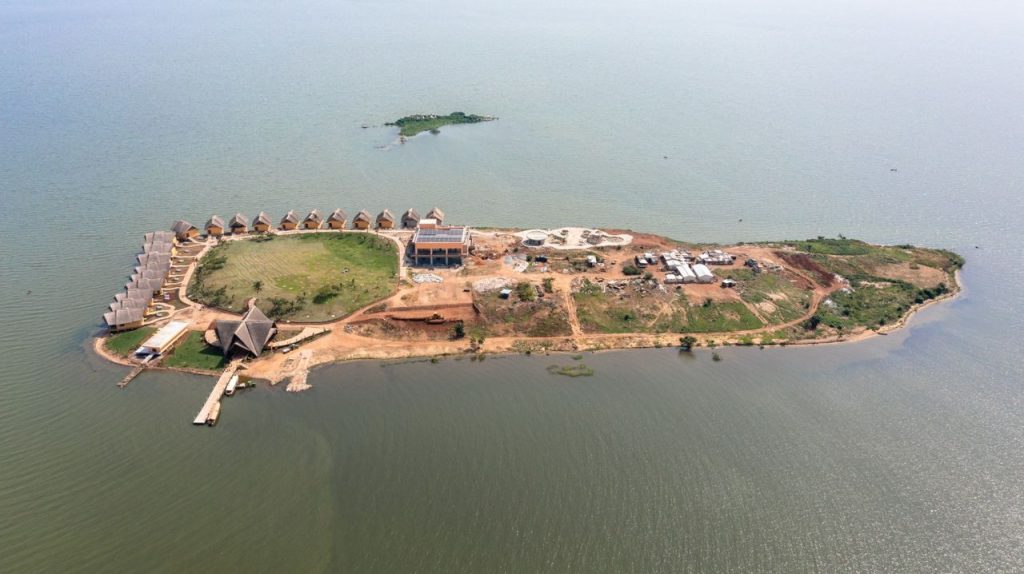
Speaking on Thursday, 20 during the opening of the COMESA Central Bank Governors’ Symposium at Kigo, Atingi-Ego said the meeting comes at a time when uncertainty has become a defining feature of the global economy.

“Today, we do more than exchange ideas; we reaffirm a shared mission to safeguard stability in a world where uncertainty has become the only certainty,” The Governor told delegates gathered on the shores of Lake Victoria.

He commended participants who travelled from across the continent, saying their presence reflects a collective determination to confront economic turbulence with coordinated action.

“Your presence signals a collective resolve: that in times of turbulence, we do not retreat, we respond, we adapt, and we lead,” Atingi-Ego said.

Atingi-Ego highlighted the themes guiding the symposium, including monetary policy under global shocks, managing commodity booms and busts, and assessing financial sector resilience in the COMESA region. He stressed that these are not abstract policy conversations but urgent priorities shaping the region’s economic future.

He noted that COMESA economies continue to face asymmetric impacts from crises such as the Covid-19 pandemic, geopolitical conflicts, tightening financial conditions and climate-related disasters. These disruptions, he said, have amplified the vulnerabilities of commodity-dependent markets.

“Each shock has tested the resilience of our monetary frameworks,”he said.

He added that inflationary pressures transmitted through food and energy prices hit the poorest households hardest.

The Governor warned that when advanced economies tighten monetary policy, African countries often experience immediate capital outflows, exchange rate pressures and rising debt service costs.

“In such times, central banks must be more than technicians of interest rates they must be anchors of confidence, stewards of trust, and guardians of credibility,”he emphasised.

Atingi-Ego commended COMESA member states for the resolve shown in recent crises. He cited liquidity support during the pandemic, regulatory forbearance, decisive tightening when inflation surged, and cautious interventions to manage exchange rate volatility.

“The lesson is clear: credibility and clear communication are as vital as the policy rate itself,”he said, urging governments to preserve fiscal discipline and safeguard the independence of central banks.

Atingi-Ego said commodity price volatility remains a structural challenge for many African economies. He called for stronger monetary frameworks, reserve accumulation during booms and the deployment of macroprudential tools to smooth shocks.

He also stressed the importance of sovereign wealth funds and fiscal stabilisation mechanisms to prevent procyclical spending during commodity upturns.

Turning to financial sector stability, the Governor highlighted the need for enhanced early-warning systems, improved liquidity management and stronger coordination between fiscal and financial authorities.

He said regional initiatives including the COMESA Committee of Governors, the African Continental Free Trade Area (AfCFTA), and the Regional Payment and Settlement System are strengthening the continent’s ability to withstand shocks.

Atingi-Ego also pointed to Uganda’s own progress, noting that the Bank of Uganda has implemented risk-based supervision, regular stress testing and integration of sustainability into monetary and regulatory policy.

“Despite global fuel price surges and pandemic aftershocks, our financial sector remained stable supported by prudent regulation and adequate capitalisation,”

he said.

He added that the expansion of mobile money has driven financial inclusion but introduced new risks requiring consistent oversight.

The Governor noted that new technologies such as FinTech, digital currencies and data analytics present both opportunities and vulnerabilities.

“Our role is to create an enabling environment where innovation thrives within a framework of trust, transparency, and resilience,”

he told participants.

He urged central banks to adopt forward-looking policies that anticipate crises rather than simply respond to them.

Atingi-Ego also thanked the symposium’s guest speakers, Prof. Njuguna Ndung’u and Prof. Victor Murinde, whose insights, he said, would enrich the day’s discussions.

Stories Continues after ad

EC announces recruitment of biometric voter kit trainers and operators ahead of 2026 general elections

The Biometric Voter Verification Kit.

The Electoral Commission (EC) has announced nationwide recruitment of Biometric Voter Verification Kit (BVVK) Trainers and Operators in order to strengthen the integrity and efficiency of the 2025/2026 General Elections.

According to EC spokesperson Julius Mucunguzi, the exercise is aimed at ensuring that the Commission deploys highly skilled and disciplined personnel capable of managing Uganda’s Biometric Voter Verification System (BVVS) during the election period.

“The Electoral Commission is seeking competent Ugandans of proven integrity, excellent work ethic, and the right technical skills to support the management of the Biometric Voter Verification System in the upcoming elections,” Mucunguzi said.

He noted that the recruitment is open to all eligible and qualified citizens across the country, adding that the Commission upholds a fair and merit-based selection process.

“As an Equal Opportunity employer, we encourage all qualified persons to apply for these short-term contract roles,” he emphasized.

The EC is hiring 1,050 BVVK Trainers—three per county who will be stationed at district EC offices. Their primary role will be to train BVVK operators and provide on-site technical support before, during, and after polling.

Mucunguzi explained that the trainers will play a crucial part in preparing field teams to competently operate the biometric system.

“These trainers will ensure that every operator understands how to use the equipment, troubleshoot issues, and maintain system integrity throughout the electoral process,” he said.

The trainers’ duties include preparing training materials, conducting sessions, assessing trainees, documenting challenges, and providing technical reports. They will also be deployed on polling day to offer hands-on support.

Qualified applicants must possess at least a diploma, preferably in IT-related fields, be registered voters, and be able to work long and irregular hours.

The Commission is also recruiting BVVK Operators, who will form the frontline of voter verification at more than 30,000 polling stations.

“Each BVVK operator will be responsible for verifying voters and scanned ballots using the biometric kits, under the supervision of the Presiding Officer,” Mucunguzi said.

Operators will ensure the kits are fully charged, secured, and used strictly according to EC guidelines. Their responsibilities will also include scanning the Declaration of Results forms and accountability documents before sealing them in tamper-proof envelopes.

Applicants must have at least an A-Level certificate, basic skills in operating Android devices, and must be registered voters in the districts where they intend to serve. Application Deadline: 21 November 2025

Both BVVK Trainers and Operators must submit typed applications, certified academic documents, passport-size photos and valid National IDs to their respective District Election Administrators by the deadline.

Shortlisted candidates will be notified through district notice boards.

Mucunguzi urged the public to take this opportunity seriously.

“This recruitment is a vital component of our preparations for the 2026 General Elections. We want dedicated Ugandans who are ready to serve with professionalism and uphold the credibility of the electoral process,” he said.

He further reminded applicants to strictly follow submission procedures.

“Applications must be hand-delivered and clearly marked with the position being applied for. Any incomplete submissions will not be considered,” he warned.

The engagement period for both categories will run for three months, covering pre-election training, polling day activities, and post-election tasks.

Stories Continues after ad

Works Ministry updates on major road constructions across the country

Some of the ongoing road projects.

The Ministry of Works and Transport has announced updates on ongoing maintenance works across several key road networks, following weeks of heavy rainfall that have affected transport and community access in multiple regions. 

The ministry’s station teams have been deployed to grade worn-out sections, clear blocked drainage channels and restore safe travel conditions on gravel roads nationwide.

In its latest update, the Ministry said its emergency maintenance response remains active across districts experiencing flooding and landslides. 

“Nationwide Road Maintenance response: Our station teams are grading roads, reopening clogged drainage channels to ensure safe and reliable travel conditions across gravel roads,” the statement noted.

Works Ministry, Permanent Secretary Bageya Waiswa said the Ministry continues to closely monitor the entire road network, especially areas prone to weather-related damage. 

“With the current heavy rains, our teams will keep monitoring the network and restoring any sections affected by floods or landslides,” Bageya said.

Several key roads have been listed among those currently under maintenance. These include the Adjumani–Simanya Road, where grading works are underway to improve surface conditions; the Bukwiri–Kyankwanzi Road, where teams are restoring failed drainage channels; and the Hamurwa–Karere–Kanungu Road where heavy equipment is already deployed to smoothen deteriorated sections.

In Kigezi sub-region, station teams are working on the Kanyantorogo–Butogota–Buhoma Road, an important route for residents, farmers and tourism operators connecting to Bwindi. 

The Ministry has also confirmed active maintenance on the Ocher–Namasale Road, aimed at improving accessibility for communities that often face isolation during peak rainfall seasons.

The Ministry said the southwestern team in Kabale is making significant progress on multiple routes where road shoulders and surfaces have been severely affected. 

“Our station team in Kabale is carrying out grading works to improve the surface condition and restore smooth, reliable travel for all road users,” the update added.

The ministry reiterated that maintenance operations will continue across the country for the duration of the rainy season, with priority given to routes that support trade, tourism and essential community movement and also emphasised its commitment to ensuring that roads remain open and communities stay connected.

“Keeping roads alive and communities connected!” he rallied.

Stories Continues after ad