Stanbic Bank
Stanbic Bank
18.8 C
Kampala
Stanbic Bank
Stanbic Bank
Home Blog Page 61

URA urges early tax filing ahead of election day amid fears of internet disruptions

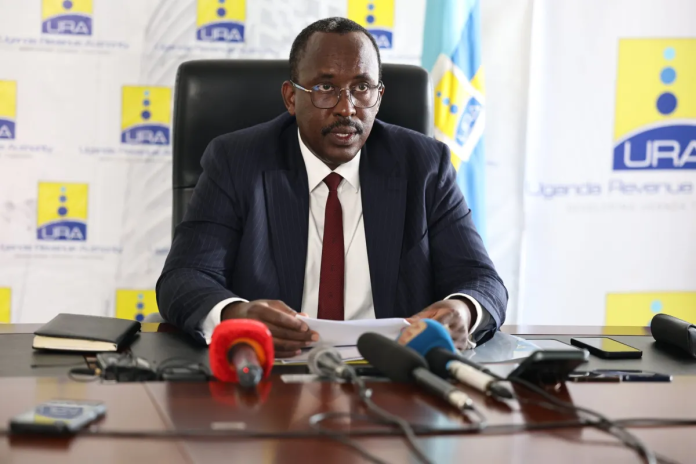
John Musinguzi, Commissioner General, URA.

The Uganda Revenue Authority (URA) has advised taxpayers to file and pay their monthly taxes earlier than usual this week, citing possible disruptions linked to the general elections scheduled for Thursday.

In a public notice, the tax body urged taxpayers to submit returns for value-added tax, pay-as-you-earn, withholding tax and other statutory levies by Monday, January 12. Ordinarily, under Ugandan law, such taxes fall due on the 15th day of every month.

The advisory comes amid public anxiety over the stability of internet services during the polling period. Uganda’s tax system relies heavily on digital self-assessment platforms, meaning any interruption in connectivity could prevent taxpayers from meeting the statutory deadline.

“Timely compliance will help taxpayers avoid penalties and interest arising from late payment of taxes,” the URA said in its notice.

However, tax experts have pointed out that the guidance does not alter the legal deadline. Trevor Bwanika, an associate director at PwC Uganda, noted that while the commissioner is mandated to guide the public, the law still provides that taxes are due on the 15th.

“The law has not changed. This is essentially an alert to create awareness so that people do not miss the deadline,” Bwanika said.

The issue is further complicated by the fact that January 15 falls on election day, which is also a public holiday. Under the Interpretation Act, when a statutory deadline falls on a public holiday or a Sunday, it is typically extended to the next working day.

Some players in the business community have criticized the URA’s call for early payments, arguing that it adds pressure on firms already grappling with a slow start to the year and election-related uncertainty. Justin Osillo, a partner at TGS Osillo, questioned why the authority did not instead consider extending the deadline.

“Why don’t you move this deadline ahead instead of carrying it forward?” Osillo asked, suggesting that an extension would offer more practical relief to taxpayers.

Non-compliance with tax deadlines attracts stiff penalties. Failure to file a return on time can result in a fine of 200,000 shillings or 20 percent of the tax due, whichever is higher.

Although authorities have said there are no plans to shut down the internet, the URA’s advisory suggests a precautionary move aimed at protecting both taxpayers and government revenue from any unforeseen technical or social disruptions during the election period.

Stories Continues after ad

Equity Bank backs Kibirige’s Q-School quest with Shs7.6m sponsorship in India 

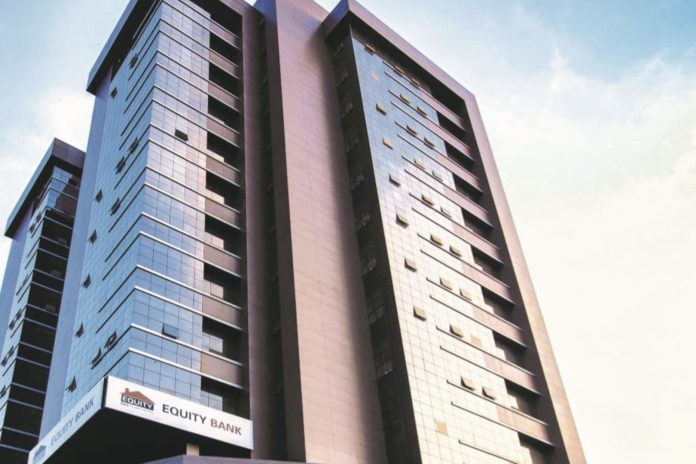
Equity Bank Uganda.

Equity Bank has extended a financial boost to Uganda’s top professional golfer, Marvin Kibirige, handing over a dummy cheque worth $2,000 (Shs7.6 million) to support his participation in the 2026 Q-School Golf Tournament in India.

The handover ceremony took place on Saturday at the Uganda Golf Club, marking a major step in Kibirige’s quest to break onto the global professional golf scene. The Q-School tournament is a highly competitive qualifying event that offers golfers a pathway to major international professional tours.

Kibirige’s participation is being hailed as a milestone for Ugandan golf, opening rare opportunities for local players to gain exposure and compete at the highest levels of the sport worldwide.

Speaking at the event, Equity Bank Head of Marketing and Communications, Clare Tumwesigye, reaffirmed the bank’s commitment to empowering individuals with global potential.

“At Equity Bank, we are driven by a mission to transform lives. Supporting Marvin Kibirige is part of our belief in nurturing talent, building long-term partnerships, and enabling Ugandans to compete and succeed on the global stage,” Tumwesigye said.

Uganda’s number one professional golfer, Kibirige described the sponsorship as a defining moment in his career, saying it goes beyond personal ambition to inspire a new generation of golfers.

“This support is a dream come true. Q-School represents hope for young golfers across the country. It shows that with discipline, hard work, and the right backing, Ugandan players can compete internationally,” Kibirige said.

Kibirige’s journey is one of resilience and determination. A former caddie who grew up around the Namulonge Golf Course, he has steadily risen through the ranks to become a consistent member of the national golf team since 2018.

In addition to financial support, Equity Bank’s sponsorship includes logistical assistance and playing gear, easing the heavy costs associated with international competition. The move also underscores the growing importance of corporate partnerships in developing and professionalising sports in Uganda.

Stories Continues after ad

CID, State House Anti-Corruption launch investigations into Uganda Airlines top bosses

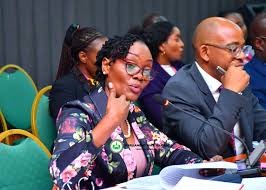
Uganda Airlines CEO, Ms Jenifer Bamuturaki, and Chief Finance Officer Allan Kyeyune. The two are under probe by the CID and the State House Anti-Corruption Unit.

Sources at CID headquarters told Eagle Online that top officials of interests are Chief Executive Officer, Jenifer Bamuturaki, and Chief Finance Officer Allan Kyeyune

The State House Anti-Corruption Unit in collaboration with the Police Criminal Investigations Directorate have launched investigations into alleged abuse of office, embezzlement of funds and false accounting against officials of Uganda Airlines.

The CID has, in a letter dated January 7, 2026, signed by Lumala Fed on behalf of the Deputy Director of CID in charge of Economic Fraud and Anti-Corruption, addressed to the Chief Executive Officer of Uganda Airlines, requested extensive financial, procurement, and operational documents to aid ongoing investigations into the national carrier’s financial transactions.

Among the certified copies of documents sought after by the joint investigation team are the approved national airline business and implementation plan, budget for the F/Y 2024/2025, contracts committee minutes that approved the purchase of Boeing Aircraft, and procurement files for Mix jet flight support services, Associated Energy Group, Nyanzi Tours and Travel, and Aircraft leasing services (ALS) Limited.

Additionally, the police have asked for documents on the procurement file for the construction of Uganda Airlines offices in Entebbe, the internal audit report for the Financial Year 2024/2025, revenue accounting and ticketing records for the Year 2024/2025, and Banking and cash receipts for FY 2024/2025.

Furthermore, investigators are seeking for the expenditure and supplier transactions for fuel for FY 2024 / 2025 and a list of companies which supported the launch of the Uganda Airlines London Route which marked the national carrier’s entry into long haul operations.

The CID has since tasked the Uganda Airlines officials to hand over the documents to D/SP Nakatudde Winniefred, whom it assigned to receive the requested documents.

Since mid-last year, the National Airline has been in the spotlight over a number of issues including several corruption allegations, lack of spare parts, flight disruptions and un notified flight cancellations among other woes.

By the time of this publication, Uganda Airlines had not yet released a statement on the inquiries.

Stories Continues after ad

Former Nigerian President Goodluck Jonathan leads AU, COMESA, IGAD election observers to Uganda

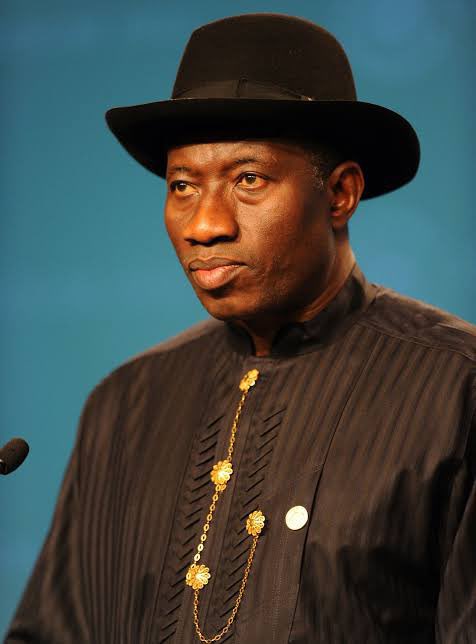
Former Nigerian President Goodluck Jonathan.

Former Nigerian President Goodluck Jonathan is leading a joint African Union (AU), Common Market for Eastern and Southern Africa (COMESA) and Inter-Governmental Authority on Development (IGAD) Election Observation Mission to Uganda’s January 15, 2026 General Elections.

The statement dated January, 9th seen by Eagle Online announces the mission’s arrival, the three regional bodies said the deployment follows an invitation from the Government of Uganda and the Electoral Commission.

 “The African Union, COMESA and IGAD announce the arrival in Uganda of the election observation mission to the 15 January 2026 General Elections in the Republic of Uganda,” the statement read.

The AU–COMESA–IGAD Election Observation Mission (EOM) is headed by Jonathan, with support from Ambassador Shemsudin Ahmed Roble of the COMESA Committee of Elders and IGAD’s Commander Abebe Muluneh Beyene. 

The mission comprises 84 short-term observers drawn from across the continent, including ambassadors accredited to the AU, election management officials, civil society actors, election experts, human rights specialists, gender and media experts, as well as youth representatives.

According to the statement, “The Mission comprises 84 short-term observers (STOs) drawn from ambassadors accredited to the AU, officials of election management bodies, members of civil society organisations, election experts, human rights specialists, gender and media experts, and representatives of youth organisations.”

The observers hail from more than 30 African countries, including Algeria, Botswana, Burundi, Cameroon, Central African Republic, Chad, Côte d’Ivoire, Djibouti, Eswatini, Ethiopia, The Gambia, Ghana, Kenya, Mauritius, Nigeria, Rwanda, Seychelles, Sierra Leone, Somalia, South Africa, South Sudan, Sudan, Tanzania, Zambia and Zimbabwe, among others.

The mission will be deployed across all regions of Uganda to observe key electoral processes. 

“The observers will be deployed across all regions of Uganda where they will observe the election day procedures including the opening of polls, voting, closing and the counting processes at the polling stations,” the statement said.

The joint mission noted that its assessment will be anchored in Uganda’s legal framework as well as continental and international democratic standards. 

“The AU–COMESA–IGAD EOM will base its assessment on the legal framework governing elections in Uganda and the OAU/AU Declaration on the Principles Governing Democratic Elections, the African Charter on Democracy, Elections and Governance, and the International Declaration of Principles for International Election Observation,” it added.

During its stay, the mission will engage a wide range of stakeholders, including state authorities, the Electoral Commission, political parties, the media, civil society organisations and members of the international community based in Uganda.

The observers are expected to issue a preliminary statement on January 17, 2026, outlining their initial findings at a press conference in Kampala. A final comprehensive report will be released within one month after the announcement of final election results and will be made public.

Stories Continues after ad

From Download to Matchday: How Betting Apps Prepare Users Before Kickoff

The work a betting app does on matchday starts long before the first whistle. By the time a fixture appears on screen, a series of quiet technical decisions have already shaped how confident and prepared a user feels. From installation to the hours leading up to kickoff, modern betting apps are designed to remove friction early so that matchday feels familiar rather than rushed.

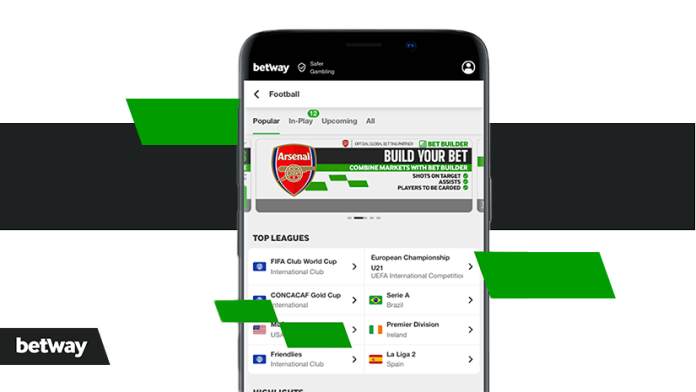
That preparation often begins with the download itself. An install process that runs smoothly, loads quickly, and opens without visual noise sets expectations immediately. Even something as simple as choosing a trusted source, such as the betway app download apk, can influence how the rest of the experience unfolds, not because of promotion, but because it reflects how clearly the platform structures access and updates from the start.

First Impressions Are Technical, Not Visual

When an app opens for the first time, most users are not thinking about odds or markets. They are judging responsiveness. Does the screen settle quickly? Do menus open without delay? Are sections clearly separated? These early moments are driven by technical choices around loading order, caching, and layout stability.

A well-built app introduces its structure gently. Sports are grouped logically. Live and upcoming matches are easy to distinguish. Nothing demands attention too early. That calm introduction helps users build familiarity long before they need to act quickly during a live moment.

Learning the App Before the Pressure Arrives

The hours before kickoff are often spent browsing rather than betting. Users scroll through fixtures, check how markets are organised, and explore features without urgency. This is where good apps quietly teach people how they work.

Consistent navigation patterns matter here. When the same gestures, buttons, and layouts behave the same way across sections, confidence builds naturally. Platforms like Betway are a good example, as their sports areas follow a predictable structure that stays consistent as matchday approaches.

Matchday Is About Stability, Not Speed

When matches begin, everything speeds up externally. Goals, injuries, and momentum shifts arrive quickly. Internally, however, the app’s job is to slow things down. Stable interfaces, controlled updates, and clear feedback prevent information overload.

Behind the scenes, this relies on selective updates rather than full screen refreshes. Only what needs to change changes. The rest stays fixed. That technical restraint keeps users oriented even when matches become chaotic.

Casino Games Prepare Users Differently

Many betting apps also include casino games, and these play a different role in preparation. Casino sections are often used during quieter periods, helping users become comfortable with the app’s overall behaviour. Familiar controls, clear feedback, and predictable pacing in games reinforce trust in the platform as a whole.

That familiarity carries over. When matchday arrives, the app already feels known. Users are not learning a system under pressure. They are using one they recognise.

Preparation Is the Real Advantage

By kickoff, confidence is already formed. A betting app that behaved well during calm moments tends to feel reliable during intense ones. The technology has done its work quietly, guiding users without instruction.

From download to matchday, preparation is not about adding features. It is about removing uncertainty. When that happens, the app becomes part of the routine, supporting the experience rather than competing with it.

Stories Continues after ad

Museveni declares Jan 15, 16 as public holidays for general elections

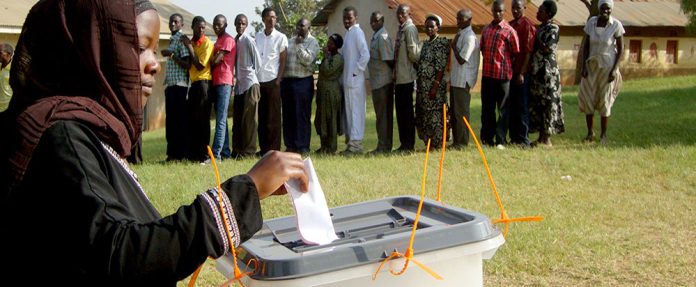
Ugandans captured in this photo lining up for voting in the previous elections.

President Yoweri Kaguta Museveni has declared January 15 and 16, 2026 public holidays to allow Ugandans to fully participate in the presidential and parliamentary elections.

In a statutory instrument issued under the Public Holidays Act (Cap. 174), the President exercised powers granted under Section 2(2) of the Act to clear the two polling days of official work and business across the country.

“In exercise of the powers conferred upon the President by Section 2(2) of the Public Holidays Act, I declare 15th and 16th January, 2026 to be observed as public holidays throughout Uganda for the purpose of enabling citizens to participate in the Presidential and Parliamentary elections,” the notice reads in part.

The declaration, dated January 8, 2026, shows the government’s position that civic participation in the electoral process should not be hindered by work or other official obligations.

“Given under my hand and the Public Seal this 8th day of January, 2026,” the instrument further states.

The announcement comes as Uganda enters the final days a highly competitive election season, with several candidates already confirmed for the presidential race.

The presidential contenders include Robert Kyagulanyi Ssentamu, popularly known as Bobi Wine of the National Unity Platform (NUP); incumbent President Yoweri Kaguta Museveni of the National Resistance Movement (NRM); Elton Joseph Mabirizi of the Conservative Party (CP); and Robert Kasibante of the National Peasants Party (NPP).

Other candidates in the race are Nathan Nandala Mafabi of the Forum for Democratic Change (FDC); Mugisha Muntu of the Alliance for National Transformation (ANT); Munyagwa Mubarak Sserunga of the Common Man’s Party (CMP) and Bulira Frank Kabinga of the Revolutionary People’s Party (RPP).

The holidays are intended to promote maximum voter turnout and ensure that all eligible citizens have the opportunity to cast their ballots without constraint.

Stories Continues after ad

Gov’t releases Shs16.5t for third quarter of 2025/26 financial budget

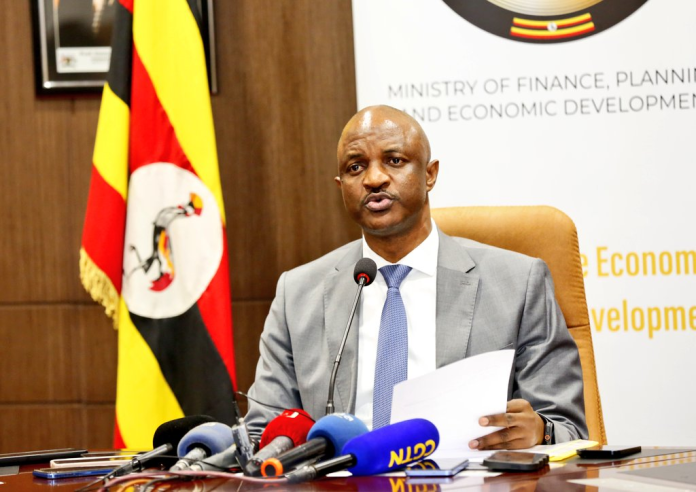
The government has released Shs16.537 trillion to finance public expenditure in the third quarter of the 2025/26 financial year, with a strong focus on wages, debt obligations and strategic investments under the ATMS tenfold growth agenda.

The funding framework was outlined by the Permanent Secretary and Secretary to the Treasury, Ramathan Ggoobi, who said the releases are aligned with fiscal discipline and the government’s development priorities.

“The total release for Quarter Three for FY 2025/26 amounts to Shs16.537 trillion,” Ggoobi said.

He noted that the allocation covers wages, non-wage spending, development financing, external financing, treasury operations and local revenue support.

Of the total release, Shs2.175 trillion has been allocated to wages and salaries across government, Shs2.898 trillion to non-wage recurrent expenditure, Shs514 billion to Government of Uganda development spending and Shs3.277 trillion to externally financed projects. Treasury operations, largely debt-related, take the biggest share at Shs7.591 trillion, while local revenue support amounts to Shs82 billion.

A significant portion of the funds will go towards statutory obligations and constitutional institutions. These include Shs7.59 trillion for debt and treasury operations, Shs318.24 billion for pensions and gratuity, Shs91.65 billion for Parliament, Shs28.27 billion for the Judiciary, and Shs18.351 billion for the Office of the Auditor General.

The government has also prioritised financing of the ATMS pillars—Agro-industrialisation, Tourism development, Mineral-based industrialisation, and Science, Technology and Innovation—which are central to Uganda’s tenfold growth strategy.

“Agro-industrialisation has been allocated Shs167 billion to support research and innovation, including fast-tracking the roll-out of the anti-tick vaccine,” Ggoobi said. Tourism development has received Shs32.8 billion to support promotion initiatives such as the “Explore Uganda” campaign and the development of the Uganda Martyrs Shrine at Namugongo.

Mineral-based industrial development, including oil and gas, has been allocated Shs469.69 billion to accelerate interventions aimed at achieving first oil, while Science, Technology and Innovation will receive Shs166.15 billion to expand internet connectivity and drive digitisation of the economy.

Security agencies, described as key enablers of economic growth, will also receive substantial funding. The Ministry of Defence and Veteran Affairs has been allocated Shs270.05 billion, Uganda Police Force Shs42.12 billion, Uganda Prisons Service Shs73.04 billion, and State House Shs17.92 billion, among others.

Infrastructure development remains a major priority, with the Ministry of Works and Transport receiving Shs1.34 trillion, largely under external financing, to support Uganda Airlines, railways, the Standard Gauge Railway, and road infrastructure. The Ministry of Energy and Mineral Development has been allocated Shs468.48 billion for rural electrification, transmission lines and power generation projects.

In the health sector, the Ministry of Health will receive Shs344.67 billion, while National Medical Stores has been allocated Shs245.52 billion to procure essential medicines, including bridging gaps created by the withdrawal of USAID support. Education will also benefit, with Shs115.50 billion allocated to the Ministry of Education and Sports and Shs107.453 billion to public universities.

Local governments will receive Shs519.87 billion to support service delivery and capital development projects, while revenue-generating agencies such as the Uganda Revenue Authority, National Citizenship and Immigration Control, URSB and UNBS have also received targeted funding to strengthen domestic revenue mobilisation.

As he concluded, Ggoobi urged accounting officers to focus on results and timely implementation.

“All Accounting Officers should prioritise and fast-track implementation of programmes and projects to sustain momentum for the realisation of the development results envisaged under the tenfold growth strategy,” he said.

He added that the government remains committed to macroeconomic stability, transparency and fiscal discipline. “As we continue to implement our fiscal consolidation agenda, we shall endeavour to live within our means, while keeping citizens informed on budget execution and service delivery outcomes.”

Stories Continues after ad

Gov’t injects Shs28b to unlock financing for Uganda’s creative industry

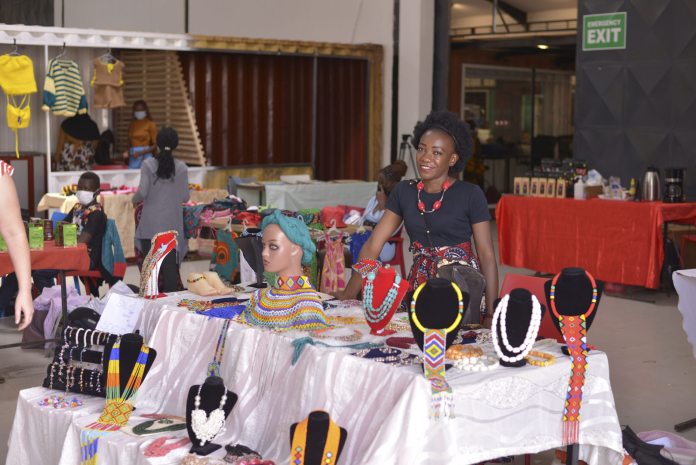
Uganda’s creative industry is set for a significant boost after the government earmarked Shs28 billion in the 2025 2026 national budget to expand access to financing for artists and cultural entrepreneurs.

The sector, which spans music film fashion, visual arts crafts publishing digital content and the performing arts, has become an important driver of economic growth, job creation and cultural expression especially among young people and women.

Despite its growing influence, the industry has struggled to access affordable and patient capital. Most creatives operate within the informal economy lack collateral and are routinely excluded from traditional financial services, a situation that has limited expansion and kept much of the sector undercapitalised.

To address these challenges, government has introduced a structured financing mechanism designed to respond to the specific needs of the creative economy.

The Minister of State for Gender and Culture Affairs Peace Regis Mutuuzo said the funding arrangement was deliberately tailored to support both growth and formalisation within the sector.

Of the total allocation Shs5 billion has been earmarked for Musician SACCOs under the Uganda National Musicians Federation while another Shs5 billion will be directed towards strengthening copyright management including the acquisition of a Copyright Management System and support to Collecting Management Organisations.

A further Shs18 billion will be channelled through Savings and Credit Cooperative Organisations serving nine creative domains namely performing arts film and video visual arts and crafts fashion and design books and press interactive media software and digital innovation cultural and natural heritage and culinary arts.

Mutuuzo said the Creative Uganda Revolving Fund will expand access to affordable capital by offering financial services suited to the realities of creative enterprises while encouraging informal businesses to register and operate within the formal economy.

Funds disbursed through artist domain based SACCOs will be repaid under agreed terms allowing the facility to revolve and support a wider pool of beneficiaries over time.

Uganda’s creative industry currently contributes an estimated three to four point one percent of Gross Domestic Product equivalent to about Shs4.2 trillion while generating employment fostering innovation supporting exports and strengthening cultural identity despite persistent challenges in infrastructure regulation and access to finance.

Stories Continues after ad

Mayiga: Uganda Cranes’ AFCON exit exposes identity crisis and lack of inspiration

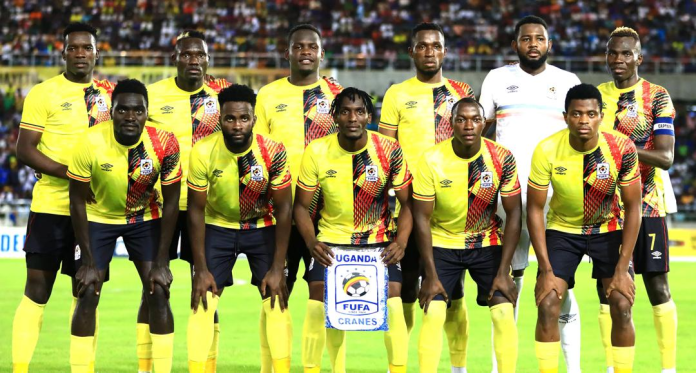
The Prime Minister of the Kingdom of Buganda, Charles Peter Mayiga has attributed Uganda’s early exit from the Africa Cup of Nations (AFCON) to a lack of inspiration within the national football team and called for reforms to ignite national pride and competitiveness.

Reacting to Uganda’s failure to progress beyond the group stage, Mayiga argued that while several factors contributed to the disappointing campaign, inspiration or the lack of it remains a critical missing link.

“Uganda didn’t get out of the group stage at AFCON for a number of reasons, but lack of inspiration is one of them,” Mayiga said.

He questioned the current identity of the team, suggesting that even its name fails to inspire fear or confidence.

“The name Cranes is so docile, the national bird is so lazy,” Mayiga said.

He argued that the team’s branding does not reflect the aggression and courage required at the highest level of competition.

“Why not name the National Team the Spears, which signifies courage and victory?” he added.

Mayiga also criticised the absence of a strong and consistent national identity in the team’s colours, noting that Uganda lacks traditional colours that fans can emotionally connect to.

“The National Team lacks a colour premised on the origins of the National Team, not on colours of sponsors like Airtel or MTNNational teams of other countries have traditional and specific colours,” he said.

The Buganda Premier further pointed to the lack of a unifying anthem that fans can rally behind during matches, saying this denies both players and supporters a powerful source of motivation.

“The National Team doesn’t have an anthem which the fans can echo throughout the matches,” he noted.

Beyond the national team, Mayiga turned his attention to the domestic league and argued that structural weaknesses in the Uganda Premier League are undermining the national side. He criticized the dominance of government parastatal teams, saying they lack organic fan bases and therefore weaken competition.

“Government parastatals and agencies shouldn’t have football clubs since they lack a fan base, and hence the Uganda Premier League can’t grow a fan base,” Mayiga said. “A league that lacks a strong fan base is never competitive and cannot produce a strong National Team.”

Instead, he called on state agencies to redirect their resources towards supporting community-based clubs with established followings.

“Parastatals like UPDF, Police and URA should sponsor community-based clubs such as SC Villa, Vipers, Express and Wakiso Giants,” Mayiga said, arguing that this would strengthen the league and, in turn, the national team.

Uganda’s AFCON campaign ended at the group stage after a mixed run of results against seasoned continental opponents, leaving the Cranes short of the points needed to advance. Despite moments of resilience and disciplined defending, Uganda failed to register a decisive victory, finishing the group with limited goal output and conceding at crucial stages of matches.

Stories Continues after ad

Mityana–Mubende road progress stands at 32%, set for completion in March 2027

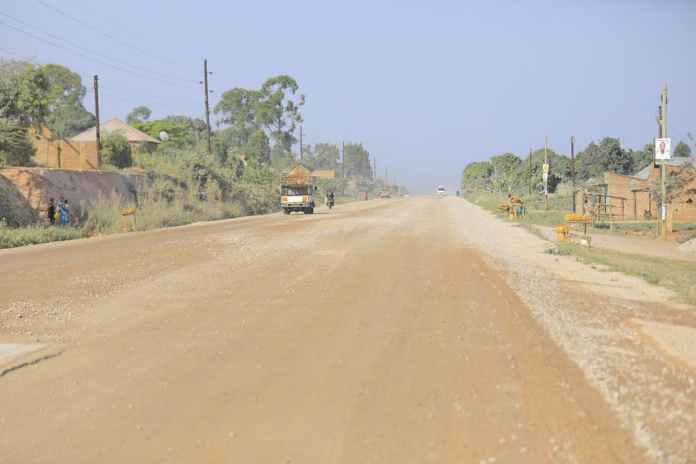
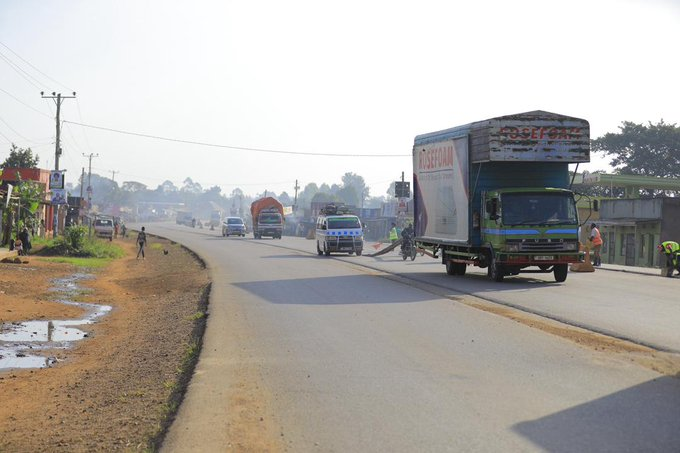
Construction works on the Mityana-Mubende road.

Works and Transport Minister, Gen. Katumba Wamala, has provided a detailed update on the status of the Mityana–Mubende road reconstruction and associated town road upgrades, saying the project is making progress despite significant financial challenges that have slowed momentum.

Addressing officials during an inspection tour of road works this todsy, Gen. Wamala said the cumulative physical progress of the Mityana–Mubende project stands at 32.40 percent as of December 2025. The main road spans 86 kilometres, while an additional 14 kilometres of urban roads within Mityana Town form part of the overall contract.

“The road is progressing, but the pace has been affected by funding constraints which have delayed several phases of the works,” Gen. Wamala said.

He noted that contractors have resumed activities after periods of slow or halted work due to delayed payments.

The project, which commenced in 2021 has faced repeated setbacks because of financial shortfalls. Originally expected to be completed earlier, the timeline has now been rescheduled to March 2027 to accommodate delays caused by funding gaps.

Gen. Wamala said his visit marks the beginning of an extended review of key road projects as he crosses from the Central region into the Western region, underlining the government’s commitment to infrastructure development that is critical to Uganda’s Vision 2040 goals.

The reconstruction contract was awarded to Energo Project Company Uganda Limited, a subsidiary of the Serbian firm Energo­projekt Niskogradnja A.D., at an initial cost of approximately Shs395 billion (about $105 million). The works include widening the road, stabilising the pavement, constructing wider shoulders, improving drainage channels and culverts, and bringing the surface up to modern standards. The contractor is also responsible for upgrading the 14 kilometres of town roads in Mityana.

However, the project has been hampered by delayed payments to the contractor, forcing the temporary suspension of works and the accumulation of claims. By mid‑2025, the contractor had submitted 17 Interim Payment Certificates totaling Shs165.19 billion, of which 16 had been paid, reflecting efforts to clear arrears and bring activities back on track.

Funding constraints have also forced the ministry to adjust priorities across the national road programme, affecting multiple strategic corridors and contributing to the slow implementation of several critical projects. A broader funding shortfall of about Shs2.472 trillion has been reported for the national roads sector in the 2025/26 financial year, underscoring the challenge of meeting delivery timelines amid tight fiscal conditions.

The Mityana–Mubende corridor serves as a vital link between central and western Uganda, facilitating trade, the movement of agricultural produce and access to services. But road users have increasingly expressed concern about deteriorating sections of the highway, which have slowed travel, raised transport costs and posed safety risks due to potholes and uneven surfaces.

Gen. Wamala said the road inspections aim to monitor progress, identify bottlenecks, and ensure corrective measures are implemented, reinforcing the government’s resolve to deliver improved road infrastructure that supports economic growth and regional connectivity.

He reiterated the importance of steady funding releases and timely payment to contractors to avoid further disruptions and ensure that roads like Mityana–Mubende are completed efficiently and to the expected standards.

With the project now targeting completion in March 2027, the ministry has pledged to maintain oversight and engagement with stakeholders, including local leaders and engineers, to safeguard progress and ensure the road meets functionality, safety, and durability expectations upon completion.

Stories Continues after ad