Stanbic Bank
Stanbic Bank
22.9 C
Kampala
Stanbic Bank
Stanbic Bank
Home Blog Page 802

Nile Breweries donates oxygen cylinders to Jinja regional hospital


Nile Breweries  has this Thursday afternoon supported Jinja Jinja Regional referral hospital with 15 Oxygen Cylinders of 75 kilograms each.

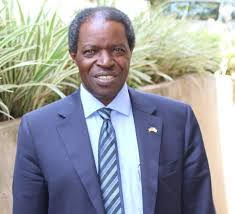
The hospital Principle Administrator, David Ssemakula received the donation on the behalf of hospital.

Ssemakula thanked Nile Breweries for its generosity and for joining hands with government in the fight against #Covid -19.

He said lack of oxygen has been one of the biggest problems with the high number of patients admitted into ICU from the region.

Hospitals were recently hit by shortage of oxygen when cases of Coronavirus surged.

This is the second time during this lockdown that Nile Breweries has extended support towards the fight against #Covid-19.

The first time the Jinja City Task Force was facilitated with 1500 litres of fuel to enable travel of the frontline fighters.

Nile Breweries was represented at the handover by Nicholas Lubwama the Quality Manager and Rogers Sentongo the Distribution Specialist District East.

Lubwama said that Nile Breweries is committed to saving Ugandans by providing major hospitals with the much needed Oxygen Cylinders.

Stories Continues after ad

We want more money for cars says Butembe MP as parliament gives out Shs105b

Butembe County MP, David Livingston Zijjan


As Ugandans continue to express discontent over the timing and manner in which government has given each Member of Parliament Shs200 million to buy vehicles, Butembe County legislator, David Livingstone Zijjan says government should have given each MP at least Shs300 million.

Zijjan says whoever ‘misadvised’ government to revise the budget for procurement of new vehicles for the legislators in the 11th parliament from Shs321 million to Shs200 million is an enemy of Uganda and the environment.

“Someone is misadvising this government. There is a law against importing vehicles older than 14 years. Most constituencies need off road terrain vehicles. Just buying such at CIF Kampala is $50,000 which is Shs175 million now taxes will be another about Shs130 million thereby making Shs305 million then tyres and service ” reads Zijjan’s post on the Busoga leaders forum.

The first time MP was responding to fellow leaders who were expressing their displeasure of the MPs taking home Shs200 million each at the time when the country is begging for money to procure #Covid 19 vaccines.

Zijjan argues that giving the MPs [only] Shs200 million is another way of saying go buy Dangerous Mechanical Condition vehicles which can’t be imported because they are older than 14 years.

Zijjan said the MPs would taken the Shs200 million only after revising the law to that bars the importation of cars older than 14 years.

“We need to revise the law and allow importation of 20 year old cars. The Shs200 million has showed that we are not at par with our East African neighbours,” he asserted before quickly vowing to even table the amendment on the floor of parliament.

Eagle Online couldn’t readily establish when Zijjan and his colleague were to reject the Shs200 million but another MP, Mariam Naigaga of Namutumba district says “we need a top up.”

Reports indicate that the Ministry of Finance has already released the Shs200 million to the accounts of each of the 520 MPs and 26 ex-officios in the 11th parliament.

Chris Obore the Director of Communications and Public Affairs Department in Parliament confirmed the money had by Thursday July 22 morning reached the legislators’ accounts.

“We received the money for MPs’ car ……. it has already been paid to them. It’s the same amount – Shs200 million that MPs of the 10th parliament got and it’s a one-off payment in five years.

Members of the public especial those on social media say such comments as those of Zijjan are angering.

“I am not against the Shs200 million. They deserve it. But if MPs complain that it’s not enough. We are in a worse economic depression. No single day for many years has the central business area been totally forbade to be accessed by the business community. It’s a crisis already. I would humbly beg Shs200 million to be enough,” said Jillian Nakato a Democratic Party Youth Leader in Jinja.

Stories Continues after ad

Petroleum Authority,Total E&P and CNOOC dragged to court over flouting local procurement rules

Workers are seen at an oil exploration site in Bulisa district approximately 244km (152 miles) North-West of Kampala January 20, 2012. Uganda said on January 27, 2012 the proposed sale of stakes by UK-based explorer Tullow Oil in its fields in the east African country to France's Total and China's CNOOC had been delayed by disagreements over protective clauses. Picture taken January 20, 2012. REUTERS/Stringer (UGANDA - Tags: POLITICS BUSINESS COMMODITIES EMPLOYMENT) - RTR2X2Y2


A Kampala advocate Andrew Oluka has dragged Petroleum Authority of Uganda, Total E&P and CNOOC to court over disregarding the local procurement laws in regard to the East Africa Crude Oil Pipeline (EACOP), Tilenga Upstream Project  and the Kingfisher Development Area Project.

Advocate Oluka in his affidavit that was filed on June 24 at the High Court Commercial Section, wants court to take declare the previous and ongoing procurement process illegal and are being done in contravention of articles 2, 26, 40 and 244 of the constitution and all enabling laws providing for national content in the petroleum sector.

“An order directing the respondents to conduct a legal audit of all the petroleum procurement activities in the (1)above to ensure compliance with the national content provisions of the law. An order of injunction restraining the respondents from continuing to conduct any further procurements in the petroleum sector which do not comply with the national content provisions of the law” reads the affidavit.

The applicant further prays that a declaration be made that all business income derived from procurement under the projects in (1) above is taxable in Uganda. He argues that he aggrieved that the respondents are engaged in procurement under the EACOP, the Tilenga Upstream Project and the Kingfisher Development Area Project  which procurement processes are giving preference or priority to foreign companies/ entities over Ugandan owned companies in contravention of the law.

“The impugned procurements if allowed to continue, shall occasion loss of public revenue and property unless restrained. The application raises matters of broad public concern that affect all citizens of Uganda and it is a legal matter that requires addressing pro bono publico” it further reads.

Oluka is represented by Counsel Fred Muwema of Muwema and Co. Advocates and court has set September 1, 2021 as the hearing date for the case.

Stories Continues after ad

Gov’t declares S.1 online admission illegal, orders schools to stop it

Dr. Joyce Moriku Kaducu


Government has through the State Minister for Primary Education, Dr. Joyce Moriku Kaducu has ordered for the suspension of online admission of senior one students saying it is illegal.

She said government has not authorised the admission process to begin and schools registering students should stop.

No sooner had UNEB released the 2020 Primary Leaving Examinations (PLE) results than some secondary schools started requesting parents whose students are eligible to apply for vacancies in S.1 using online platforms.

“We have not pronounced ourselves on online registration or online selection, and I want to make this very clear for those schools who are calling parents (be private, be government schools) who are trying to use the online for filling forms, and getting money from parents that that is very illegal.”

Several schools, mostly private have sent our circulars on social media asking parents to follow a few guidelines issued by the school and start registering their senior one students.

Minister Kaducu said that such schools, should stop the illegal registration.

No one is certain yet on when the Ugandan education system will resume normal operations that were disrupted by the outbreak of the #Covid 19 pandemic last year.

Stories Continues after ad

Progress towards ending AIDS among children, adolescents and young women stalled- UNAIDS

UNAIDS and partners have warned that progress towards ending AIDS among children, adolescents and young women has stalled and none of the targets for 2020 were met.
The report shows that the total number of children on treatment declined for the first time, despite the fact that nearly 800 000 children living with HIV are not currently on treatment. It also shows that opportunities to identify infants and young children living with HIV early are being missed—more than one third of children born to mothers living with HIV were not tested. If untreated, around 50 per cent of children living with HIV die before they reach their second birthday.
“Over 20 years ago, initiatives for families and children to prevent vertical transmission and to eliminate children dying of AIDS truly kick-started what has now become our global AIDS response. This stemmed from an unprecedented activation of all partners, yet, despite early and dramatic progress, despite more tools and knowledge than ever before, children are falling way behind adults and way behind our goals,” said Shannon Hader, UNAIDS Deputy Executive Director, Programme. “The inequalities are striking—children are nearly 40 per cent less likely than adults to be on life-saving treatment (54 per cent of children versus 74 per cent of adults), and account for a disproportionate number of deaths (just 5 per cent of all people living with HIV are children, but children account for 15 per cent of all AIDS-related deaths). This is about children’s right to health and healthy lives, their value in our societies.  It’s time to reactivate on all fronts we need the leadership, activism, and investments to do what’s right for kids.”
Start Free, Stay Free, AIDS Free is a five-year framework that began in 2015, following on from the hugely successful Global Plan towards the elimination of new HIV infections among children by 2015 and keeping their mothers alive. It called for a super Fast-Track approach to ensure that every child has an HIV-free beginning, that they stay HIV-free through adolescence and that every child and adolescent living with HIV has access to antiretroviral therapy. The approach intensified focus on 23 countries, 21 of which were in Africa, that accounted for 83 per cent of the global number of pregnant women living with HIV, 80 per cent of children living with HIV and 78 per cent of young women aged 15–24 years newly infected with HIV.
“The HIV community has a long history of tackling unprecedented challenges, today we need that same energy and perseverance to address the needs of the most vulnerable our children. African leaders have the power to help us change the pace of care and should act and lead until no child living with HIV is left behind,” said Ren Minghui, Assistant Director-General of the Universal Health Coverage/Communicable and Noncommunicable Diseases Division of the World Health Organization.
Although the 2020 targets were missed, the 21 focus countries in Africa made better progress than the non-focus countries. However, there were major disparities between countries, and these countries still bear the highest burden of disease: 11 countries account for nearly 70 per cent of the “missing children” those living with HIV but not on treatment. There was a 24 per cent decline in new HIV infections among children from 2015 to 2020 in focus countries versus a 20 per cent decline globally. Focus countries also achieved 89 per cent treatment coverage for pregnant women living with HIV, compared to 85 per cent globally, but still short of the target of 95 per cent, and there were huge differences between countries. For example, Botswana achieved 100 per cent treatment coverage, yet the Democratic Republic of the Congo only reached 39 per cent.
“While we are deeply distressed by the global paediatric HIV shortfalls, we are also encouraged by the fact that we largely have the tools we need to change this,” said Angeli Achrekar, Acting United States Global AIDS Coordinator. “So, let this report be a call to action to challenge complacency and to work tirelessly to close the gap.”
The report outlines three actions necessary to end new HIV infections among children in the focus countries. First, reach pregnant women with testing and treatment as early as possible 66 000 new HIV infections occurred among children because their mothers did not receive treatment at all during pregnancy or breastfeeding. Second, ensure the continuity of treatment and viral suppression during pregnancy, breastfeeding and for life 38 000 children became newly infected with HIV because their mothers were not continued in care during pregnancy and breastfeeding. Third, prevent new HIV infections among women who are pregnant and breastfeeding 35 000 new infections among children occurred because a woman became newly infected with HIV during pregnancy or breastfeeding.
There has been some progress in preventing adolescent girls and young women from acquiring HIV. In the focus countries, the number of adolescent girls and young women acquiring HIV declined by 27 per cent from 2015 to 2020. However, the number of adolescent girls and young women acquiring HIV in the 21 focus countries was 200 000, twice the global target for 2020 (100 000). In addition, #Covid-19 and school closures are now disrupting many educational and sexual and reproductive health services for adolescent girls and young women, highlighting the urgent need to redouble HIV prevention efforts to reach young women and adolescent girls.
“The lives of the most vulnerable girls and young women hang in the balance, locked into deeply entrenched cycles of vulnerability and neglect that must urgently be interrupted. With the endorsement of United Nations Member States, the new global AIDS strategy recommits us all to address these intersecting vulnerabilities to halt and reverse the effects of HIV by 2030. We know that rapid gains can be achieved for girls and young women; what is needed is the courage to apply the solutions, and the discipline to implement these with rigor and scale,” said Chewe Luo, United Nations Children’s Fund Chief of HIV and Associate Director of Health Programmes.
UNAIDS and partners will continue to work together to develop new frameworks to address the unfinished agenda. New targets for 2025 were officially adopted by United Nations Member States in the 2021 Political Declaration on HIV and AIDS: Ending Inequalities and Getting on Track to End AIDS by 2030 in June this year, providing a road map for the next five years.
“It is clear that ending mother-to-child transmission requires innovative approaches that support the whole woman throughout the life course, including intensified primary prevention efforts, such as pre-exposure prophylaxis (PrEP), access to comprehensive reproductive care, and focused attention on adolescent girls and young women. The Start Free, Stay Free, AIDS Free report includes new the new targets for 2025 that, if met, will propel a new era of HIV prevention and treatment for women, children and families. This is not the time for complacency, but rather an opportunity to redouble investments to reduce and eliminate mother-to-child transmission,” said Chip Lyons, President and Chief Executive Officer of the Elizabeth Glaser Pediatric AIDS Foundation.
Stories Continues after ad

Absa Bank: Oil and gas industry brightens Uganda’s longer term economic outlook 


Uganda’s economy contracted 1.1 per cent in 2020 because of the #Covid-19 pandemic and related containment measures, a research report released by Absa Group on the performance of economies in Sub-Saharan Africa has revealed.

Nonetheless, the economy expanded 1.6 per cent y/y in Q4 20, one of the few countries in the region to experience growth in Q4 2020  and expanded an impressive 6.2 per cent in Q1 2021. Strong growth in Q1 was driven by the industry sector where construction was an important contributor to the sector’s recovery. The services sector also expanded a robust 6.6 per cent, helped by strong growth in the information & telecommunications and public administration sectors.

Despite the reintroduction of virus containment measures as Uganda is faced with the second wave of the pandemic, economic recovery is forecasted to be driven by developments in the oil and gas sector, ongoing monetary and fiscal policy support, favourable agriculture conditions, improving global backdrop and ongoing infrastructure investment.

“#Covid-19 infections remained under control in the first quarter of the year, allowing for an improvement in economic activity as life slowly returned to normal with only limited containment measures still in place at the time. However, the PMI fell to 34.9 in June from 56.5 in May as the impact of the 42-day lockdown brought the recovery to a halt and could suggest downside risks to our projected growth rate of 4.1 per cent for the year,” said Mr David Wandera, Head of Financial Markets at Absa Bank Uganda.

The report further reveals that recent progress in the Uganda’s long-delayed oil development has brightened Uganda’s longer-term economic prospects following the agreements signed by Uganda and Tanzania on the construction of the $4 billion cross-border oil pipeline between the Lake Albert region in Uganda and the port of Tanga in Tanzania.

“Recent developments in oil and gas industry will transform the economy in the coming years, boosting investment into related sectors and pushing economic growth higher. Total aims to commence oil exports by 2025, with a total of 230,000 barrels per day expected to pass through the East African Crude Oil Pipeline,” Mr Wandera added.

The near-term outlook for inflation remains muted as the lockdown is likely to depress demand further. Headline inflation stood at 2 per cent y/y in June from 2.7 per cent in March, helped by persistent food deflation. According to the report, headline inflation is expected to edge higher towards year-end drive by a rise in health and transport inflation.

“We anticipate headline inflation will edge higher towards year-end, on base effects and a rise in health and transport inflation. We project headline inflation at around 4.5 per cent y/y by year-end and therefore do not expect further reductions in the policy rate. The cumulative policy rate cuts of 250bp by the Bank of Uganda since the advent of the crisis last year should support the economic recovery further,” Mr Wandera concluded.

According to the report, recent renewed foreign investor interest, flows from coffee exports, solid diaspora remittances and external borrowings will support a stable currency with the USD/Uganda Shillings year-end forecast at 3,650. With the focus on more external borrowings and recent IMF funding, forex reserves are expected to remain buoyed going forward. The last forex reserves figure reported was $3.5 billion in April.

Stories Continues after ad

Youth skilling is crucial to attaining socio-economic transformation Agenda

Youth as these need specialised skills to attain their potential.


Youth empowerment has been at the forefront of the efforts of both the government and the private sector in Uganda. In 2014, the government responded to the high rates of youth unemployment and poverty with a holistic intervention called the Youth Livelihood Program (YLP).

One of the main objectives of the program was to support the development of marketable skills that create opportunities for self–employment among the poor and unemployed youth. The government’s key areas of investment included traditional vocations like Masonry, carpentry, metal fabrication, hairdressing, tailoring, leather works. Alongside this, was the promotion of non-traditional skills areas such as Information Communications Technology (ICT), agro-processing among others.

In January 2021, an impact evaluation team of the Youth Livelihood Project in its YLP Implementation Progress Report revealed that YLP had contributed 4 per cent to job creation in Uganda. This was achieved through the creation of over 200,000 direct jobs and 500,000 indirect jobs through multiplier effects at household and community levels.

With these efforts in place, the pandemic that has rocked the country in the past year and a half has put in place a lot of setbacks.

According to the 2020 United Nations Development Programme (UNDP) report on the socio-economic impact of COVID-19 in Uganda, the closure of business is already affecting millions of Ugandans who depend on them for employment. With the informal economy employing 84.9 per cent of the population, 90 per cent of whom are youth (10-30 years) according to the National Labour Force Survey of 2017, a crucial segment of the population is out of work.

While youth employment has taken a regression, so has youth education. In 2021, United Nations Children’s’ Emergency Fund (UNICEF) reported that since March 2020, 15 million Ugandan learners have been disrupted by the pandemic. The report further predicts that if this goes unchecked, it will have a profound impact on their future.

Since 2020,  the Innovation Village has had a mega drive towards youth empowerment through various programs that have been put in place to skill the youth.

Under its venture Tukole, youths that have undergone vocational training in various trades are prepared for a market that is digitally inclined. Tukole supplements vocational education with soft skills and other practical skills like financial management and digital skills to help blue-collar workers have a competitive edge in the market.

Another arm of skilling at The Innovation Village is Upskill, an academy that is training young people in in-demand skills that are appropriate to today’s labor market. It does this through info sessions on digital marketing, data analysis, basic business development, entrepreneurship, accounting and finance. Its eight weeks course leaves young people ready for not only the job marketplace but also ready to eke a living as freelancers in the fields of their choice.

Take for instance Allen Nanyonjo, despite having a Bachelor’s Degree in Information Technology (IT), there was no courage to get back into coding. The Science Technology Engineering & Maths (STEM) Educator with E- squared Young Engineers revived her passion at the Code Queen bootcamp run by Upskill and Educating The Children.

“I really enjoyed the hackathon portion of the program, where I was coupled with a group of ladies from diverse science backgrounds and professions,” Nanyonga shares gleefully. She further highlighted that she was particularly ‘appreciative of the Sisterhood Fridays because the conversations aligned well with her interests and passion in STEM Education and opened her mind to fresh ideas.”

Now, her desire is to become ‘a well-known STEM ambassador for girls’ in addition to building a career as a professional software developer. She is currently using her newfound skills to build a website for her company, the Stem Hub, an NGO that she hopes will inspire other young girls to learn software development.

In February, The Innovation Village’s Tech and Data department in partnership with the CODEIT Institute of Technology, put together a six months program providing education and training in the field of technology to those who may be least likely to afford opportunities at the highest levels of technology. In charge of this programme is the Tech Community manager, Solomon Opio.

Opio said “Our courses are chosen based on trending technologies and the most marketable skills. From our survey, Python is ranked among the top programming languages that developers like and would like to use. Right now, Cloud and Blockchain are seen to have a big impact on the future of Technology. This is why we found it imperative to teach these.”

He added, “To achieve the mandate of having thousands of developers linked to jobs, we believe that one of the ways is to partner with reputable institutions in skilling developers. So far through the department’s Developer Communities such as the Google Developer Groups, we have been able to link learners to mentors and make available learning materials prepared by Google experts.”

These and more are some of the efforts that are happening in the ecosystem towards skilling the youth. With all hands-on board in a collaborative ecosystem, not even a sustained pandemic will stop the youth from functioning to their maximum potential, Opio emphasized.

As we continue to commemorated the World Youth Skills Day this Month under the theme “Reimagining skills post-pandemic, the experiences of Nanyonjo and Nassiwa indicate that there will be a need to reinvent not just the skills youths take on but how we deliver them. Whichever way the government and private sector choose, there ought to be a practically skilled youth workforce to help Uganda attain its long-term vision 2040 agenda of sustainable growth and development.


Stories Continues after ad

Prof. Owgang gets Shs5b and Investment license for Covidex manufacturing plant

P

Professor Peter Owgang has been granted Shs5 billon and Investment license to set up Covidex manufacturing plant in Soroti.

Prof Ogwang is the brain behind the innovation of Covidex, a herbal remedy which helps in the treatment of #Covid-19.

Recently, National Drug Authority (NDA) cleared the herbal drug following the establishment that it’s components play a vital role in the treatment of #Covid-19.

The certificate has been granted by Uganda Investment Authority (UIA).
The processing of a certificate which normally takes two days, has been generated in one hour and handed over to Prof Ogwang and Jena Uganda Limited to go on with the activities set up the factory.
According to State Minister for Investment Everyn Anite, Prof Ogwang has been given Shs5 billion and five acres of land in Soroti Industrial Park.
“Prof Ogwang will benefit from other government incentives like a 10 years tax holiday which has always been given to other investors,” Anite said
Soroti Industrial Park was chosen because most of the raw materials like Lemon grass are mostly grown in Teso subregion.
“The setting of Jena manufacturing plant in Soroti, will help the country to save over Shs4 billion that has been used to import drugs,”Prof. Ogwang said
Currently, Prof Ogwang and his company employee 200 people at the factory and 300 collecting raw materials. Upon complication, the factory is expected to employ over 1200 people.
Stories Continues after ad

Moroto prison break ringleader arrested by joint security team

Lochu after being arrested.


The ring leader in the September 2020 Moroto prison break in which guns and rounds of ammunition were looted has been netted in Kotido district.

Security forces have for the last 10 months been on a hunt for the 40-year-old Lokolikau Lochu and others. Over 80 escapees have been rearrested.

Lochu was found with a gun with 14 rounds of ammunition. Police say the gun belongs to Uganda Prisons Services.

In September last year , a total of 219 inmates overpowered prison warders at Singila prison in Moroto District, broke into the armory and went away with a total of 15 guns and 480 bullets. Efforts to pursue them yielded no results then but the forces did not give up.

In the 10 months hunt, the security forces have put out of action (killed) several members of the group while others have been arrested.

With Lochu’ arrest and recovery of the gun he was carrying, the forces continue to hunt for the 13 more stolen SMG guns still missing.

“As we continue with disarmament operations, today morning 20th/7/21 at around 8:30 am, the joint forces recovered smg.no.UG.POL.56-5968030-40693 with 14 rounds from Kotido district belonging to prisons service after arresting one of the escapees who broke into the Moroto prisons armoury last year by names Lokolikau Lochu aged 40 years,” said one of the police officers who carried out the operation in which Lochu was arrested.

Police says Lochu has been using the same gun to carry out cattle raids in the neighbouring districts.

Stories Continues after ad

Whoever touches our country should get burnt – Gen Mohoozi

Gen.Muhoozi walking towards the UPDF detachment.

The Commander of UPDF Land Forces Lt Gen Kainerugaba Muhoozi has visited the detach in Zombo district that was last Friday attacked by rebels from the neighboring Democratic Republic of Congo.

The Land Forces commander commended the soldiers for successfully repulsing the rebels, urging them to continue defending their nation.

Gen Kainerugaba said he had visited to personally appreciate the soldiers, listen to their issues, and generally understand the environment in which his soldiers operate.

Emphasizing the soldiers’ mandate, Gen Kainerugaba said: “We are the fire of our country and therefore, whoever touches our country should get burnt.”

He was speaking after touring the encampment and part of the Uganda-DRC border in Zombo.
The UPDF chief was furnished with first-hand details of attack.

This past Friday UPDF troops fended off Lendu militias of Cooperative for the Development of Congo (CODECO) that targeted their base in Zombo.
According to the UPDF spokesperson Brig Flavia Byekwaso, the Force’s unit at Zeu in Zombo repelled 20 men disguising as forest workers.

They captured two, put four out of action and recovered one gun and bows/arrows, but sadly lost a soldier.
CODECO is an armed group that has been carrying out attacks in the DRC province of Ituri.

The militia is drawn from the Lendu ethnic group, a predominantly farming community that has historically clashed with the Hema, a group of traders and herders.
Since March 2020, CODECO members are said to have killed over 300 people in Ituri province.

Stories Continues after ad